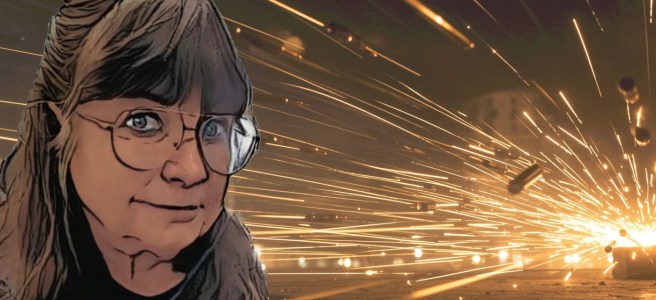
I was watching an Amazon movie the other night, and doing what I so often do, especially when I’m bored. I try to write the scene. It is a sort of mental exercise, meant, I hope, to sharpen my writing skills. Especially for action sequences.
I practice while watching boring scenes of mayhem. That night, the first description that came to mind was: “He landed on his feet in a hail of bullets and leveled everything and everyone standing.” But who is that guy on the right? “A man emerged from the shadows cast by the lowering sun. His assault rifle leading the way.” Why did the pillar just explode? “Another figure stepped into a sheen of light, a silver box clutched in his left hand, his index finger tapping a red button.” Why did he hesitate in his tapping? “A slim figure emerged, a revolver pointed at the back of his dark curls.” Then, he, I, the hero, leveled everything and everyone standing. “The structure roared with the sound of weapons. Ragged breaths and soft moans punctuated the silence that followed.”
I see the scene in my head as I write. My fingers pound it out on the keyboard. I mutter the next sentence, the words coming in a rush. I’ve been stopped by difficulty breathing from the effort of creating mayhem.
Then I read what I’ve written aloud. Is it even possible (cue the research)? Does any element fight the immediacy? Is it the scene I dreamed, saw, thought I wrote? Does it promote the emotions I want? What does it say about my characters? Good and bad, does it show what each character is willing to do to survive, win, be triumphant? Will the reader be caught up in the moment?
Here’s an action passage from “Saving Calypso”, which I’m glad no one observed me writing:
“Grieg elbowed downhill to the flipped travois, where it angled over Boomer’s broken body and considered the tools at his disposal. Rex. Frisco.* The broken branch from the travois. He searched Boomer’s pockets for anything he could use as a weapon. Nothing, except the arrow lodged in the dead man’s throat and Callie’s pocketknife.
Grieg steeled himself before yanking the arrow from Boomer’s neck. It was as awful as he anticipated; Boomer’s blood splattered the front of his shirt and his forearms. He wiped the arrow with leaves, not questioning why it mattered given how he planned to use it, then fingered the two-inch blade out of the pocketknife. Armed, he cozied up to Boomer’s cooling body for cover. A sharp whine descended. An arrow bored into the uphill side of the travois. Grieg counted the fletched shafts he’d seen in Bolt’s quiver. Six, maybe seven. He’d lofted three at Grieg the day before. One in Boomer. Two now. One left. Then, the knife or a bullet.
The next arrow pierced the blanket, lodging in Boomer’s right shoulder. Grieg grunted for effect. The third arrow grazed Grieg’s right calf. Okay, eight.”
And, in reverse, I cast the parts and imagine the scene on screen. In this case, Ryan Gosling, as my lost soul geologist with “a certain set of skills” and wry self-awareness, and Tom Hardy as the newly revealed arrow-launching predator. I have Gosling dye his hair, and Hardy grow his, then I play the scene in my head.
Does it work? Is it too gross for the genre? Yes, I can get pretty gritty. That pops when you cast the parts and play the reel out in your head. If it works, it works; if it doesn’t, it’s back to retooling, jiggering, and writing.
In other words, writing a great action sequence is as easy as landing on your feet in a hail of bullets.
Note: Rex and Frisco are horses. In Grieg’s words: “As for my buddy Frisco, make sure he gets a good scrubbing, groom him until he purrs and feed him as much as he can eat. Believe me, I’d stand him to a beer if I could.”
Visit my website: https://dzchurch.com to read more about me, my books, or to sign-up for my newsletter.
Where your characters live, work, and solve mysteries can be central to the story. Or not. I’ve discovered that location is not a requirement or an irrelevancy. It is a spectrum.
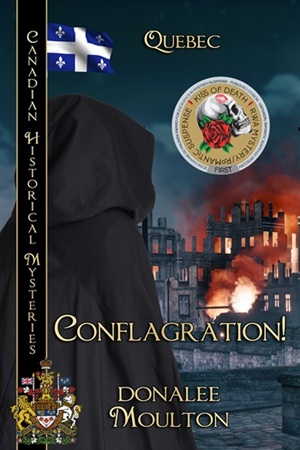
At one end of the spectrum, location is essential. As a result, you spend time bringing that location to life, making it real, and of real interest to readers. This requires knowing whereof you write or researching whereof you write. Or both. Conflagration!, a historical mystery, is based on the real-life story of Marie-Joseph Angélique, an enslaved Black woman accused of burning the lower town of Montreal to the ground in 1734. Montreal as a place and as a community is intertwined with the plot and the characters, fictional and otherwise. As a result, I had to immerse myself in a time and place that no longer exist.
Move further along the location spectrum and you’ll arrive here: the location could be anywhere. The town, island, futuristic community where your characters go about their daily lives is woven into the story but not predetermined. It’s up to you. You may choose a place that is familiar, that fits within the theme of the book, or simply resonates with you.
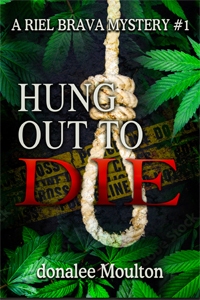
My first mystery book Hung Out to Die introduces Riel Brava to readers. Riel is originally from Santa Barbara but now living in Nova Scotia, which is where I live. Fact is, Riel could have been uprooted to almost any location where cannabis production is legal. (Riel is CEO of the Canadian Cannabis Corporation. He’s also a psychopath (not the nasty kind), but we’ll save that for another blog.) I chose Nova Scotia because I know this location. Less research would be required, but I also have a deeper connection to this place because it is my place. Many readers have told me how the book feels so much like Nova Scotia. That was not intentional, but it reflects a knowledge of place that goes beyond street maps, tourist locations, and Yelp reviews.
Finally, we reach the other end of the spectrum: place is irrelevant. Indeed, a specific geographical location may not be necessary. I wrote a short story called “Moist,” that for the most part takes place in the main character’s home. Where that home is situated doesn’t matter.
After the story was published, there was a call for stories for an anthology Santa Cruz Ghost Stories. I reached out to the editor to explain that my story wasn’t really set anywhere so it could be set in Santa Cruz. She agreed. Minor changes were made (like changing Canadian spelling to American (“savour” became “savor”) and using the name of a dollar store Santa Cruz residents would easily recognize.
Ultimately, location is about character. The two go hand in hand.
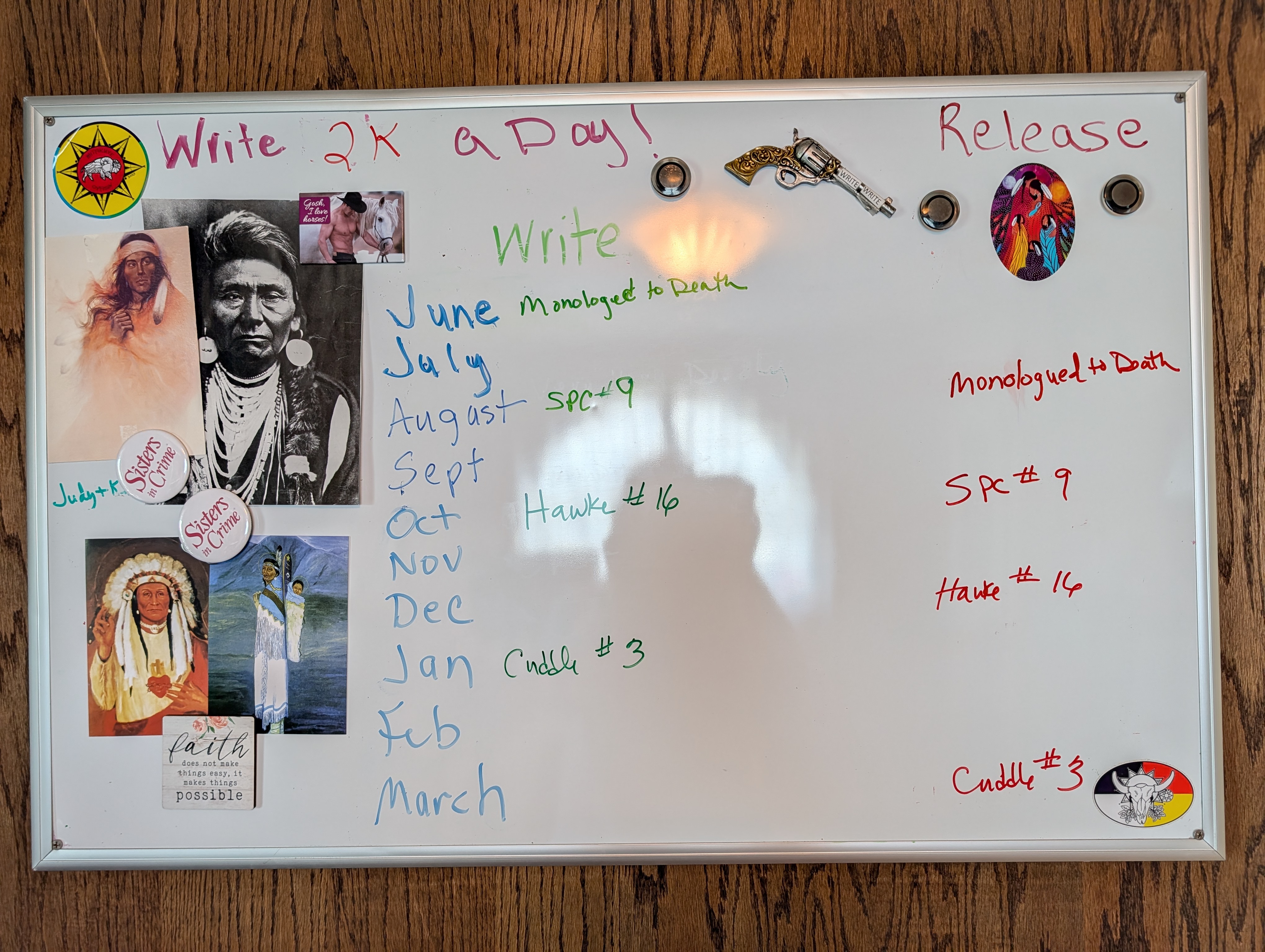
I’m an Indie author. That means I make all the decisions from characters to plot to the endings of my books and when they will be published. I have a whiteboard that I use to keep track of a year’s work/publishing schedule. When I get behind or have to erase and change the dates, it makes me edgy and angry. I like to stay on schedule.
I knew the move I made in March would mess up my schedule. I made concessions for it on my whiteboard. Fast forward to June when I had expected to have a good chunk of the next Cuddle Farm book written and I was slogging in indecision.
Sorry about the reflections in the middle of the photo.
From the moment I finished book 1, Merry Merry Merry Murder, I knew what book 2 would be about. I’d run some scenes in my head and had already researched what I needed to know. I started the book, but it wasn’t flowing. Things didn’t feel right.
I took a break and went to a play with my daughter in an opera house built in 1912. I fell in love with the building and the ambiance, and then my height-conscious daughter walked along the balcony railing and was scared. The railing didn’t come to her knees, and the balcony felt as if it were pitching you forward onto the stage.
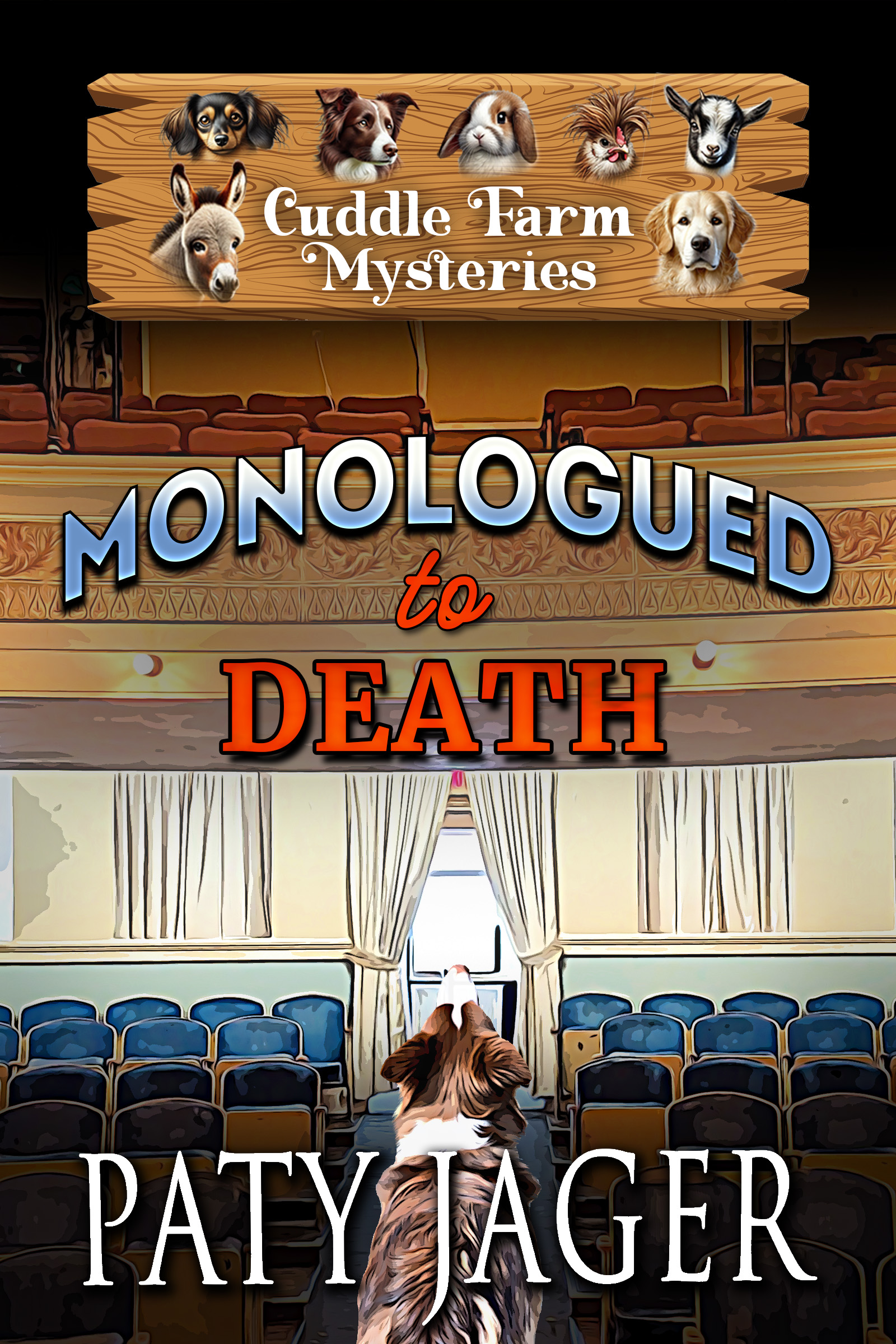
After that visit, I couldn’t stop thinking about that opera house. A story was forming in my mind and I had to go back. I bought tickets to the next play and dragged my daughter along again. The play was good, I paid more attention to the stage, the exits, and the short railing. When the play finished, we waited for everyone to leave the balcony and I did some experimenting and then we went down and I took pictures of the balcony from the stage. I wanted one for the cover the next Cuddle Farm book.
Yes, I set the book I’d been working on aside, realizing I needed more time (another book) in between book 1 and the book I’d been writing. It has to do with the discord between the main character and her sister. I wanted to show a bit of a change there before, what is now book 3, is written since it deals with the reason for the discord.
Back to my switching books. Because what had started out as book 2 was now book 3, and I had been brewing that story in my head for almost a year, I was switching to a book I hadn’t even thought of until 4 months ago. As I’d glance up at my whiteboard and see the looming date for the release of book 2 in the Cuddle Farm mysteries and I was still trying to pull all the suspects, the motive, and everything else into place so I could start writing it, my tension grew that I was going to miss the publish date and it would throw off all of the release dates through the rest of this year.
When I was complaining to a friend, she asked me, “But will it be a better book for the series if you write it now?”
My answer was yes.
“Then that’s the book you need to write and move the other publish dates out. They aren’t made in stone.”
Oh, but they are chiseled in my head. My greatest flaw is my greatest strength. I don’t like to be late for ANYTHING. It makes me nervous when I think I’m going to be late. I purposely give myself extra time for everything. And I had for book 2 in the Cuddle Farm Mysteries. But I had to wipe off my whiteboard and redesignate publish dates for this book, the next Spotted Pony Casino book, and the next Gabriel Hawke book. I wasn’t happy, and it made my stomach twist as I erased the dates and reset them.
However, this is going to be a good book and will hopefully pull more readers into this series. It also gives me more time to decide the direction I’m going with the next Spotted Pony Casino book. I’ve been back and forth on how to approach it, and hopefully by the time I am ready to start, I’ll have that story ready to rock and roll.
When I think about summer, I remember my parents’ screened porch.
The house I grew up in had a large square porch, with a sturdy roof to shade us from the sun and three walls made of mesh screening to let in the breeze and keep out the mosquitoes. I lived on that porch in the summertime.
A chaise lounge angled out from one corner, offering a view of the holly tree in the backyard and the umbrella table on the patio. It was a heavy piece of furniture, crafted from redwood, with a thick, dark green cushion for sprawling on. Next to it was a table just the right size for a tall icy glass of lemonade and a book or two.
Nowadays my summers are much like any other season. Sure, daylight lasts longer and temperatures are hotter, but the patterns and rhythms of my routine are much the same in the summer as the rest of the year. But when I was a kid summer was different. Summer was magic. Summer was freedom, and an endless opportunity to do what I wanted to do.
And what I wanted to do was read.
I did plenty of other things too, of course. My summer memories include swimming and biking and going on family vacations and playing hide-and-go-seek and hanging out with my friends. But I reveled in having lots of time to read, and to read anything I chose, just for fun, no homework assignments or book reports required.
I spent long hours on that porch, reading. Depending on what book I was immersed in, the chaise lounge became my pirate ship, my covered wagon, my police car, my rocket to the moon. I’m sure other people – my parents, my sisters – spent time on the porch too, but I thought of it as my private domain.
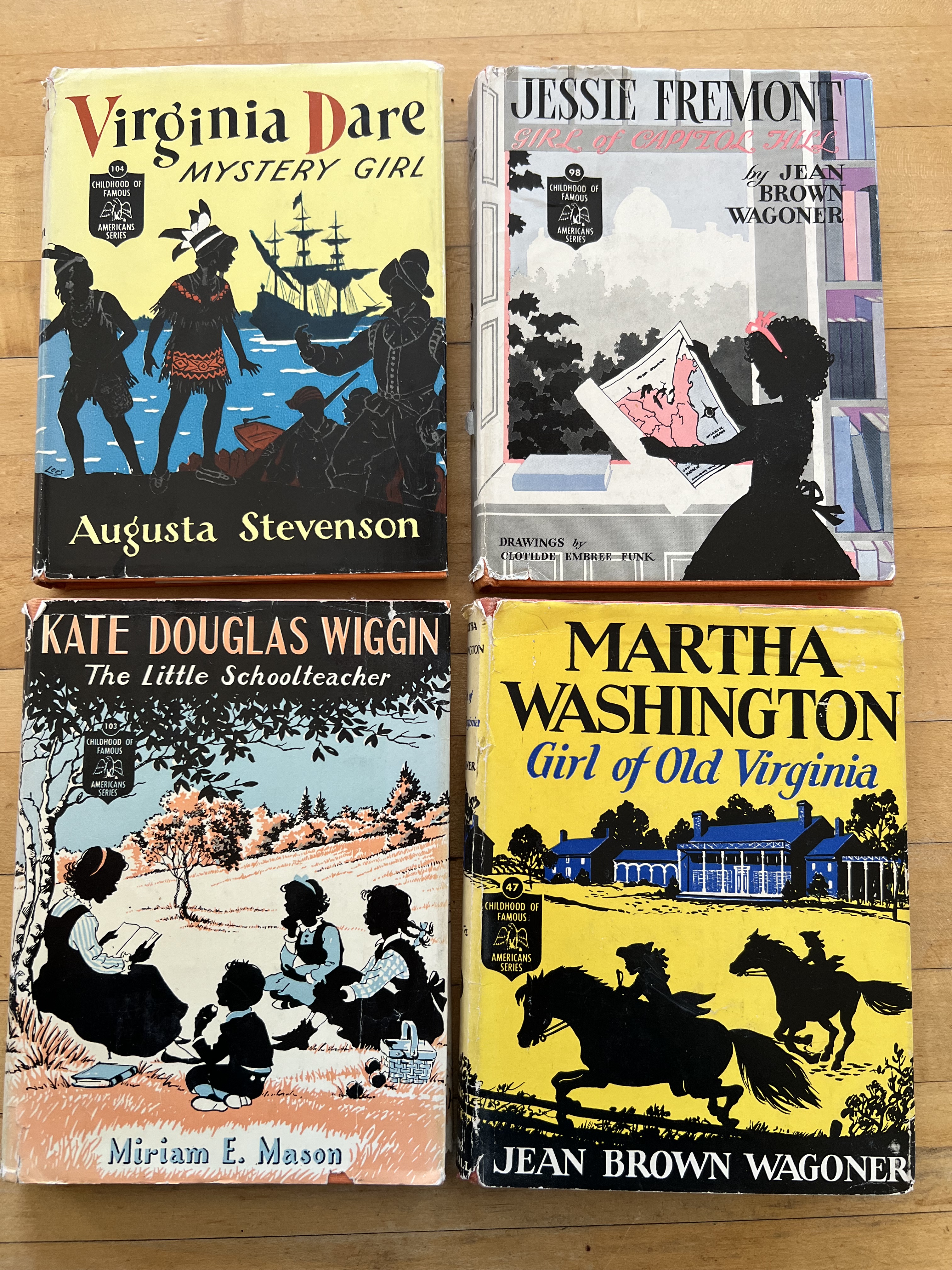
When I was eight I read my way through the Bobbsey Twins. About that same time I discovered the wonderful Childhood of Famous Americans series. Unlike most biographies, these concentrated on what a person of accomplishment was like as a kid, someone I could relate to. The books had bright orange covers and were illustrated with silhouette drawings, and I loved them. I still have half a dozen in my personal library. (The series still exists, but with different packaging, and it’s just not the same. Buy the old ones used for some child you love.)
A year or two later I fell in love with mysteries. I started with Trixie Belden, Ginny Gordon, and Nancy Drew, then graduated to my mother’s shelves of Agatha Christie and Ellery Queen. I dabbled in science fiction and Westerns and an occasional romance. I read The Secret Garden more than once, and I loved books like Little Women and Black Beauty and Caddie Woodlawn and The Witch of Blackbird Pond. But I always came back to mysteries.
When I was twelve I put kids’ books aside in favor of Gone with the Wind, The Diary of Anne Frank, and Marjorie Morningstar. My mystery reading branched out to include the likes of Dorothy L. Sayers, Rex Stout, Ross Macdonald, and John D. MacDonald.
As much as the books themselves, what I loved was having long stretches of interrupted time to read. That’s a luxury now. On average I manage to read three books a month, one every ten days. In the Julys and Augusts of my childhood, stretched out the green cushion on the screened porch, I might polish off five or six times that many.
How about you? What are some of the books and reading experiences you remember fondly from when you were a kid?
Okay, I was trying to be provocative. There isn’t a perfect anything, not even a perfect mystery. Although Agatha Christie’s Murder on the Orient Express comes awfully close. Daphne du Maurier’s Rebecca does, too. And there are more modern reads like Gone Girl by Gillian Flynn. But I digress. Back to me writing a perfect whodunit. It’s a worthy goal.
I am heartened by the fact that writing a good mystery is a practiced art. If I play tennis five hours every day, which I don’t but let’s just say I do, I’m going to get pretty good at it. Same with writing a mystery. I keep in mind that a mystery is a well-written novel that happens to center around a dead body done in by person or persons unknown.
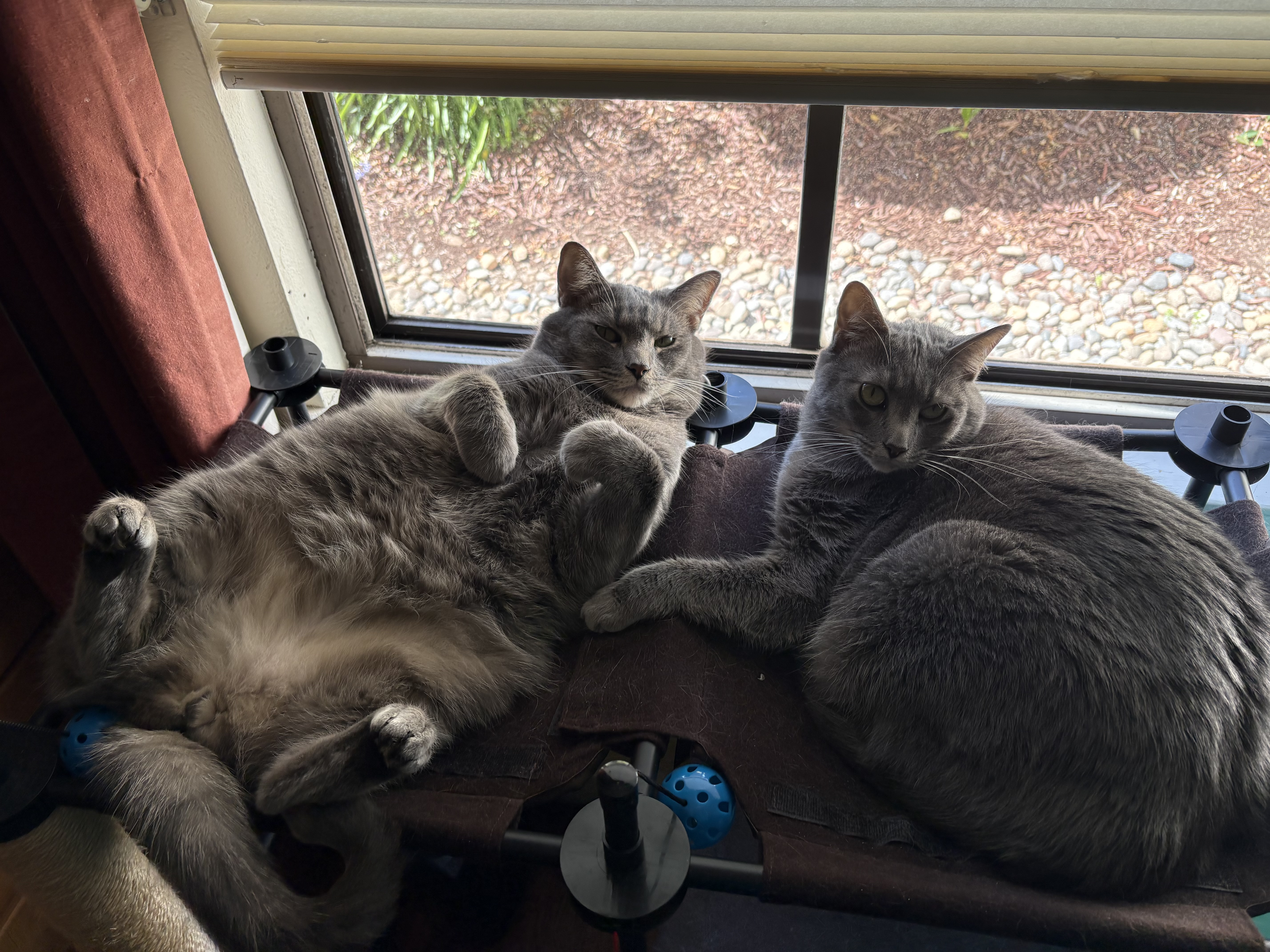
There are some who believe there is a definite separation between the genres of mystery, suspense, and thriller, although many of us combine the three elements when writing our novels. I certainly do. Regardless, I like to keep the definitions straight in my head in case one of our two cats ask what’s the dif. Daphne and Niles are an inquisitive pair (Niles is the one with his belly hanging out).
Mystery – A puzzle of person, place or thing, a ‘whodunit.’ The reader is given clues but has no idea, along with the protagonist, what the outcome will be. If the protagonist is in danger, it’s only when s/he is getting closer to the truth. Mysteries are more of the mind than anything else. Will the protagonist solve the mystery?
Suspense – A ticking time bomb that must be resolved. It has danger but not necessarily action. The reader is often aware of the clues sooner than the protagonist, who must work against time. Suspense plays more on the readers’ emotions. Will the protagonist stop the culprit in time?
Thriller – From the onset, the protagonist is in jeopardy and knows it. The protagonist and reader share the same information at the same time. The thriller has lots of action and keeps the reader on the edge of the seat. No time for thinking or feeling. Will the protagonist survive?
The Cozy Mystery is usually solved by an amateur, often someone who just ‘happens’ to be around at the moment or ‘happens’ to become involved no matter how many books there are in the series. This person does something else for a living but is always bright and committed. The plus side for this type of mystery is the writer ‘merely’ needs to come up with a good story and run with it. No special knowledge is necessary. The protagonist often doesn’t know much more than the reader from the onset of the story. The protagonist learns as s/he goes along, often helped out by a loved one or friend, who tends to have ‘insider info’ that’s missing from our hero. Well, someone has to help advance the plot!
The Detective Mystery revolves around a professional private investigator or law officer, someone who does this for a living. The plus side of this kind of mystery is the writer can dig deeper, go into more detail, reveal maximum facts to the reader, often getting into scenes and places otherwise not available to the average Joe Schmoe. This protagonist is usually more committed to the cause than anyone else, for whatever reason. When I find that reason I’ve got the heart of my story.
Speaking of protagonists, it is essential to have an interesting protagonist, not necessarily likeable, but one with redeeming characteristics. This protagonist should be intelligent and different, someone who knows the rules, but breaks them. S/he has something personal to overcome such as yearning to be a better person or feeling guilty because s/he can’t be. They should also want something, even if it’s a glass of water. Nothing propels a character forward more than wanting something.
When I read mysteries containing successful protagonists, from Miss Marple to Nero Wolf, Sam Spade to Hamish Macbeth, Sherlock Holmes to V.I. Warshawski, I find they all have one thing in common: they are unique. It is essential the protagonist is someone I would want to spend time with at a dinner party, even if once I get home I say, “Wow! What an oddball. I’m glad I don’t have to live with her/him.” Being normal and ordinary just isn’t part of the package. I tend to save that for my youthful love interests.
After I’ve created my protagonist, I occasionally do an essay or interview with her/him in order to flesh the character out. I ask questions, such as: How do they react under pressure? What do they cherish? What do they abhor? Do they believe in justice above all else? Where is their point of mercy? Would they, themselves, take a life? If so, how do they live with that? Then of course, I have to ask what is their favorite color? Not only does that make them feel more ‘real’ to me, but sometimes the mundane can be very revealing.
Now I’ve got the protagonist who’s going to solve the crime(s). Good for me. But where’s my plot? It’s murderous, of course, but I’ve got 175 plus pages to fill out. When I have no idea what kind of plot to wrap around my victim(s), I pick up a magazine, newspaper, listen to a newscast, or search the internet. Sometimes people in my own life have weird stories they love to talk about. So, I listen, absorb, and delve.
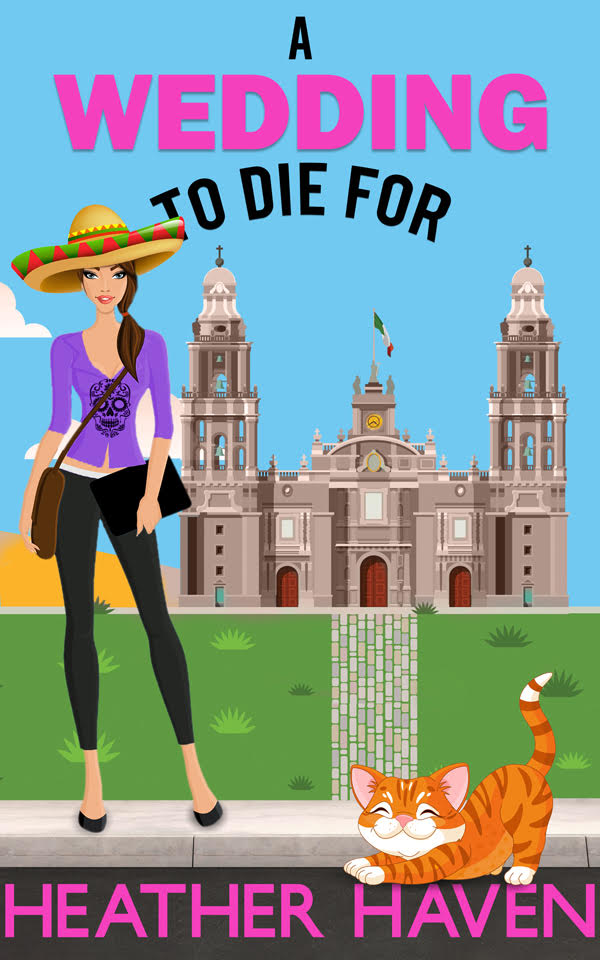
The 2nd novel of the Alvarez Family Murder Mystery Series, A Wedding to Die For, started with an article from National Geographic. It was about an extended family of Egyptian grave robbers, who discovered an ancient royal burial chamber containing precious artifacts. They kept the knowledge to themselves and pilfered from the tomb taking one piece at a time. They did this for generations. They took just enough to feed, clothe, and educate themselves. After decades of careful use of the money, this family came into positions of power within their community and Egypt. Unfortunately, one of them got greedy. Their chicanery was revealed, but it took 60 years to do so. I was entranced. I knew I wanted to take this situation, transfer it to Mexico, and create a powerful family to become the nemesis of the Alvarez clan.
The sub-plot of A Wedding to Die For was a mythical search engine start-up company, Bingo-Bango, and its inhabitants. I felt the sub-plot added a lot of fun and depth to the story, even though it had little to do with the main plot. I did manage, however, to have a situation arise from the sub-plot that gave the protagonist, Lee, an answer to a big problem in the main plot. That was yummy. The finale was the wedding, of course. When I tied everything together, I had the skeleton of my book.
Finally, I go on to the dastardly deed of the murder itself. When my imagination is doing the victim in, the sky’s the limit. What I need to keep in mind, though, is the type of mystery I’m writing. Soft and sweet? Hard-boiled and gritty? Having a disabled little old lady, raped, mutilated and dismembered on page 5 of a story sets up a dark flavor, no matter how many doilies and kittens I throw in.
I have discovered with the cozy it’s best to have the murder victim go in a way that’s more palatable to the reader and off-scene, if possible. But that doesn’t stop me from trying to make it inventive. Drowned in a vat of cabernet sauvignon comes to mind. Someday I may try that. I live in wine country, so forgive me.
If I’m writing a hard-boiled detective story where the protagonist eats rusty nails, drinks rotgut, spits on people’s shoes, and hasn’t talked to his mother since he was eight, dismemberment might not be a bad way to go. Hmmm. Decisions, decisions.
After choosing the protagonist and victim, I try to provide a myriad of suspects with access to the victim(s) at the time of demise. Or just the opposite – no one at all. Right away tension is created. Who, who, who? How, how, how? I ratchet it up whenever I can because I have a pretty fertile imagination. Some say demented. Whatever. You say potato, I say potahto.
Whatever method I choose, I try to do something unusual with it. The method of death, the way the body is discovered, the person discovering it, etc., might have an unusual bend. If I go for the disabled little old lady, for instance, I might have my protagonist find out she was a scam artist on the side, bilking widows and orphans. If I have my victim drown in a vat of 1997 Mouton-Rothschild Bordeaux Blend, maybe I’ll have him be a tea-totaler.
Now that I have some sort of murder going, I start popping in characters that might work with the story. Sometimes I have a chat with these characters as I drive to the supermarket. Maybe when I stop for a light or while standing in the checkout line I’ll go through a scene in my head, acting out certain things. Thank God for cell phones. Nowadays, those nearby assume I’m having an animated conversation on my phone and not demented. Ah! There’s that word again.
When the plot and characters come together, and I’ve eliminated things that don’t work but glom on like crazy to things that do, I sit down and start writing. This is usually the time when the first draft almost writes itself. I just try to keep up.
Hanging over my head all the while is the fervent prayer that this novel will get as near as possible to the proverbial perfect mystery. Wish me luck.







You must be logged in to post a comment.