Guest Blogger ~ Julie E. Eble

When Words Don’t Come by Julie Eble

I sit at my desk, thinking, researching and tapping out intriguing stories when my brain freezes, and not from eating ice cream too fast. I’m mired, stymied, frustrated. I’m trapped in a lonely, silent space crowded with self-doubt and growing angst. Not even my thesaurus shakes me from this synaptic tundra. My brain repeats the same words, like Jack Torrance in Stephen King’s “The Shining”. Okay, that’s over the top, but you get the idea.

The dreaded block strikes most often when I’m stuck in a sentence that cries out for more imagery. A character whose fingers were cold. Just cold? No, no. This character is worthy of more. Somewhere in my loony cranium, I hear “SIMILE”, like, uh… “cold as ice”. Way too obvious. “Cold as a cucumber.” Used too much. “Cold as…,” “Cold as…” I stare at my screen. “Cold as a fish?” Again, too hackneyed. Ack! The block has me in its clutches!

A group of treasured friends from my grade school years once asked how I come up with funny, unexpected phrases. My confession surprised them. For me, they seldom just pop onto the page. I work at it. And when I’m truly stuck for a scintilla of an idea, I stop staring at the screen. I tap my pencil, swivel in my chair, study the scenery outside my window. Whatever it takes. Deadlines be damned.

One day as I stared at a recalcitrant phrase and my thoughts drifted into an epic, redundant stupor, I pushed back my comfy, wheeled, stuffed chair from my paper-strewn desk. I decided to walk around the house. If my brain cells were stuck, at least my body could get in some steps. I paced around the dining room table, circled the kitchen island, hiked up the steps, down the hallway and back, thinking: “Cold as a walrus’ tusk.” “Cold as a penguin’s flippers.” Did I tell you I booked a cruise to the Antarctic? “Cold as a granite coffin.” Oooh, that’s dark. “Cold as the frozen crab legs in my freezer.” Now that’s just silly. “Cold as a viper’s stare.” Oh, that fit.

I now use the walking-around technique whenever I’m truly struck. And that might be the end of this story, except for a little adventure I had with my 10-year-old granddaughter.

On a recent babysitting gig, my husband and I took her to the American Dream Mall. “Sprawling” doesn’t capture the mammoth structure. We wandered about and bumped into the New Jersey Hall of Fame. What a treat. We could select various questions for which each honoree had recorded answers. A video of each famous New Jerseyite popped, and we heard their answers. So cool. Bon Jovi, Connie Chung, Mark Kelly, and Jason Alexander, to name a few. But my “ah-ha” came from… are you ready… Judy Blume.

Yes, Judy Blume hails from New Jersey, and what she said fascinated me.

When she was a young girl, she spent hours bouncing a ball against a wall. So much so that her mother worried about her mental health. You know how moms can be. Judy said she was working through issues, ideas, plots, whatever. And she told us, science has confirmed a link between movement and creativity.

In 1997, the British Journal of Sports Medicine reported that physical exercise can improve creativity. In 2021, Austria’s University of Graz found a relationship between physical exercise and imagination. I expect further research is being done by human scientists that artificial intelligence will tell us all about it.  

I continue to wear out my carpets to capture just the right bit to slip into a sleek, cheeky, glum or silly sentence. And it’s not bad for my waistline either.

Her ex-husband. His billionaire fiancée. One final negotiation. What could go wrong?

With spunk in her step and humor as her shield, Emma faces her ex at the fabled Vanzetti estate to cut the final cords of their ill-fated marriage. When the demanding heiress threatens her, she erupts.

Hours later, the bride-to-be gasps her last breath.

The police zero in on Emma at her cozy nest at the corner of Apple Road and Apricot Lane. A hunky but stoic detective and his team unearth evidence that incriminates her. Evidence that can’t exist. Can it?

Emma, still mourning her father’s death and armed only with her innocence, fights back. When she flounders, her cynical roommate, the elusive private investigator Stevie Rivers, teaches naïve Emma key lessons of detecting. Together, the stalwart and the cynic dive into Brandywine Valley’s world of wealth and equestrian eventing.

Their wry banter deepens their friendship, but the cloud around Emma continues to thicken. They must unearth the real killer before cold steel doors close behind Emma.

But as the horses clear the cross-country hurdles, the murderer strikes again. Emma and Stevie must risk their lives in a deadly race to stop the killer before they become the next victims.

“With punchy humor on every page, Dad Didn’t Prep Me for Murder takes the reader into the world of equestrian eventing with skill, wit, and a perceptive understanding of both people and horses. Julie Eble provides a compelling mystery with well-developed characters and an action-packed ending, and I enjoyed every minute of it.”

Lucinda Gerlitz, Author of Etiquette Can Be Murder newsletters

Buy links: Amazon

Barnes & Noble

BAM!

Bookshop.org 

Julie Eble is an author and award-winning playwright and entrepreneur. As an amateur birder, she often travels with her husband seeking out new species for their life list. She is member of Sisters in Crime, an avid reader, and huge fan of Philadelphia sports teams. 

Her debut amateur sleuth mystery, “Dad Didn’t Prep Me for Murder” published on 15 April 2025. You can find Julie on her website www.julieeble.com

Titles: How does an author choose them?

In case you couldn’t guess by the title of this post, I’m having trouble figuring out a title. Not for the book I’m writing but the next one in the series. Yes, when I know what the book is going to be about, I start trying different titles to see what fits the story and how to make it fit with the series.

I didn’t have any trouble with titles for my Shadra Higheagle series, they came from the story I was telling: Double Duplicity, Tarnished Remains, Deadly Aim, Murderous Secrets, Killer Descent, Reservation Revenge, Yuletide Slaying, Fatal Fall, Haunting Corpse, Artful Murder, Dangerous Dance, Homicide Hideaway, Toxic Trigger-point, Abstract Casualty, Capricious Demise, Vanishing Dream, Christmas Chaos.

As you can see, they were all two-word titles with some reference to murder or mystery.

Then I have the Gabriel Hawke novels. I wanted these to have animals in the title because he is a Fish and Wildlife State Trooper, and I wanted them to sound like the title of an Indigenous story. Murder of Ravens, Mouse Trail Ends, Rattlesnake Brother, Chattering Blue Jay, Fox Goes Hunting, Turkey’s Fiery Demise, Stolen Butterfly, Churlish Badger, Owl’s Silent Strike, Bear Stalker, Damning Firefly, Cougar’s Cache, Wolverine Instincts, Wolf Moon, Captured Hummingbird.

Sometimes it is hard to decide which animal to use in the title. Some stories have the animal in it, and some, I allude to the animal. Then, coming up with other words for the title can take a bit of time. As Heather said in her last post, finding the perfect word is sometimes a struggle.

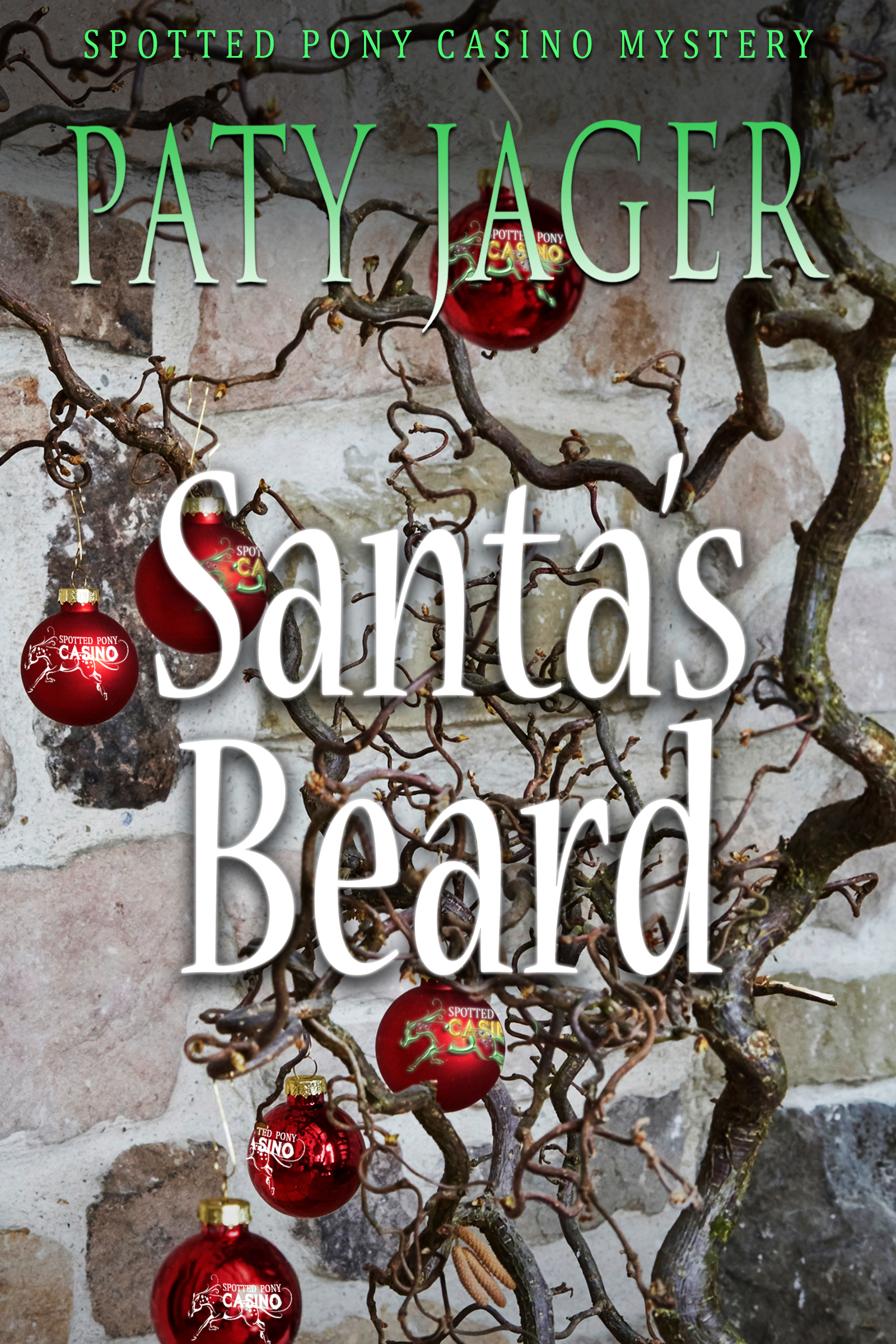
When I began plotting the Spotted Pony Casino Mysteries, I decided to use gambling terms as the titles. Poker Face, House Edge, Double Down, The Squeeze, The Pinch, Down and Dirty, Crapshoot, Full House.

I have the list of gambling terms and when I decide the plot of the story, I go down the list and figure out which term best fits. Which makes coming up with a title much easier.

But now, I have the Cuddle Farm Mysteries, which I am trying to keep on the lighter side, more cozy than the Shandra Higheagle series. The first book’s title, Merry Merry Merry Murder, came from a Christmas song. As you can guess, the story was set during the Christmas holiday. This second book is set in a century-old opera house during the rehearsal of a local play. I’ve come up with the title, Monologued to Death. It shows there is a murder and with the cover of the old opera house I have been frequenting and Monologued, the reader should figure out the death happens in the opera house. It doesn’t have the same wording as the first book, but with the Cuddle Farm logo across the top, the same font in the titles, and a similar look, I’m hoping it will work to make them look like a series.

My problem? Book three is a bit darker than the first two. It has to be the third book to make the secondary plot work right. I’m struggling with the title of that book, because I don’t want it to be too dark, and all the titles I come up with have been overused as titles.

It has to do with an evil that has been lurking within a character for decades. And the body that is dug up and upsets the world of my main character. Here are what I have so far:

Fiendish Folly – feels like a cozy, but it also feels too cutesy for the storyline.

Wicked Ways – has about 8 other books with that title, and it sounds morel like a witch is involved.

Evil Never Sleeps – This one has been used many times.

The Water Knows – again it has been used multiple times.

Haunting Memory – Used a lot.

Hints of Evil – This one I like, but not sure it fits with the series feel.

Here is the gist of the book if you want to help me with some titles: A child’s body is found when the river that runs through Auburn is diverted to work on drainage culverts. The body turns out to be a boy. The brother of Viola. He had been missing for decades, last seen with his sister, Andi (my main character), and Nina( her sister). The older girls said he was taken by a man in a blue car. Andi doesn’t remember very much about the day because she was only 4 and Nina was 9, Viola 10, and her brother was 6.

Guest Blogger ~ Lois Winston

Don’t Measure Yourself Against Another Writer’s Yardstick

By Lois Winston

My critique partner thinks I’m an organized person. When she told me this, I laughed. Like Santa, I make lists and check them, not twice, but multiple times. For instance, I have a list on my phone of items I need to pack for trips, but every time I go away, I invariably wind up forgetting to pack at least one of those essentials and need to find the nearest Target.

I walk into my office to do something, get distracted, and forget to do what I came in to do. Is it age-related? Possibly. I’m the first to admit I’m not as young as I used to be. But if I’m honest with myself, this isn’t a recent development. It’s occurred for as long as I can remember, going all the way back to my childhood. A touch of ADHD? Perhaps. Or maybe I just have an overactive imagination and so much going on in my brain that the less important things get pushed to the side.

Nowhere is this more evident than in my writing. I often can’t remember the names of all the characters in my books. Or the titles. However, I’ve been writing for more than thirty years, and most days, I can’t remember what I ate for dinner last night. So how can I be expected to remember all those characters’ names from books written decades ago? Then again, twenty-four novels, five novellas, and several short stories in three+ decades isn’t that much. It’s not like I’m Nora Roberts or James Patterson, knocking out three, four, five or more books a year. (I wonder if they remember all their characters and titles.)

When it comes to sitting down to write, I’m a pantser, not a plotter. Plotters are far more organized, but the few times I’ve tried plotting a book, I became bored with it, deleted the outline, and started over with either the barest bones germ of an idea or maybe only an interesting opening sentence. Rarely more than that. Pantsing is what I do. Trying to write like someone else is counterproductive to achieving an end result that I will be proud to release into the world. Plain and simple: Plotting just doesn’t work for me.

Like readers of mysteries, I want to be surprised. If I already know the who, what, where, when, and why of a story before I write the first sentence, I’ve eliminated the surprise. Writing becomes drudgery, and I know I’ll be letting my readers down. Readers are savvy. They can tell when an author is phoning it in, and when that happens, they toss the book aside.

This is not to say that pantsers are better writers than plotters. They’ve simply found a different path to The End. One that works for them. I wish I could be a happy plotter. Plotters probably don’t write themselves into corners as often as this pantser does. However, I’ve learned plotting is not an option for me. I’m unhappy when I plot, and it shows in my writing. I imagine a diehard plotter would be equally unhappy if forced to sit down and start writing without a clue.

In life, there’s never one right way that works for everyone. The same is true for writers. You can’t measure yourself against another writer’s yardstick. No two brains work the same way. We all learn differently. We each bring unique experiences and knowledge to our writing. Every writer takes a personal path to creating a novel. We all need to find the path that works best for us.

We all choose paths as we go through life. Whether you’re a reader or a writer, have you found the paths that works best for you? Post a comment for the chance to win a promo code for a free audiobook download of any available Anastasia Pollack Crafting Mystery or Empty Nest Mystery.

Embroidered Lies and Alibis

An Anastasia Pollack Crafting Mystery, Book 15

A Stitch in Time Could Save a Life…

When Anastasia’s mother Flora is offered a free spa vacation from Jeremy Dugan, a man connected to her distant past, Anastasia and husband Zack suspect ulterior motives. After all, too-good-to-be-true often spells trouble. Their suspicions are confirmed when the FBI swoops in to apprehend Dugan. However, Dugan isn’t who he claimed to be, and his arrest raises more questions than answers.

The Feds link Dugan to a string of cons targeting elderly single women across the country, but his seemingly airtight alibi leaves investigators stumped. Then, shortly after his release on bail, he’s kidnapped. A certain segment of New Jersey’s population is known for delivering deadly messages, and the FBI believes Dugan received one of them.

Meanwhile, bodies begin showing up in the newly created public garden across the street from Anastasia and Zack’s home. With two baffling crimes, no clear suspects, scant evidence, and every possible motive unraveling, both the FBI and local law enforcement are once again picking Anastasia’s brain. This time, though, her involvement is far from reluctant. Will she stitch together enough clues before she or someone she loves becomes the killer’s next victim?

Craft project included.

Find Buy Links here.

USA Today and Amazon bestselling and award-winning author Lois Winston writes mystery, romance, romantic suspense, chick lit, women’s fiction, children’s chapter books, and nonfiction. In addition, Lois is a former literary agent and an award-winning craft and needlework designer who often draws much of her source material for both her characters and plots from her experiences in the crafts industry. Learn more about Lois and her books at www.loiswinston.com, where you can sign up for her newsletter to receive an Anastasia Pollack Crafting Mini-Mystery.

Having Too Much Fun!

I just spent a week on the Oregon Coast with a granddaughter. She is the one most like me. Whenever we’re together we have lots of laughs and fun conversations.

Nearly every day as we were out walking, either on the beach, around town, or through an old growth cedar walk, we would have different versions of things.

On the beach, she saw a man digging with shovel at the base of the grass embankment. She said, “Look he’s digging for gold.” I said, “He could be preparing a hole to bury someone. But in the daylight that’s kind of risky.” My granddaughter looked at me and said, “Why would it be risky?” “Because it’s daylight and someone could mention they saw him digging.” She shook her head and said, “It’s gold.”

As we were walking through four foot high skunk cabbage, old growth cedar trees, bushes, and water on a wood walkway, we noticed there were some houses not too far away and then a trail leading off through the marsh toward the houses. My granddaughter said, “Looks like some people like to go exploring off the walkway.” “I said, “No that’s the trail of the serial killer who lives in one of those houses and comes here to find a victim.” She stopped stared at me, then the trails and said, “Thanks. Now I’m not going to be able to enjoy it.” When we reached the end where this hundred year old, deformed and huge tree was, there was a picnic table and a bench. A man in his thirties sat on the bench wearing a hoodie and sunglasses. We walked by him and my granddaughter whispered, “There’s the serial killer.” I nodded and said, “He’s waiting for an unsuspecting woman who is alone.”

Walking around the small beach town, we were admiring the kept up yard and looking at the cute little houses. We passed a house that had a couple of boards on the windows and looked uninhabited. My granddaughter remarked how it was out of place among the other well kept houses. I said, “There’s probably a body in there and whoever put the body in there didn’t want it to become known, so they don’t live there and won’t sell it. Just let it decay like the corpse inside.”

My granddaughter stopped, put her hands on her hips and said, “Grams, you are always thinking about murder.” I replied, “That is what I write. I’m always working out ways a body can be killed or how someone might try to cover it up for my books.”

“Doesn’t that depress you?” she asked.

“Nope. I find it fascinating and exhilarating to come up with something that readers may not have read before.”

And that is how my brain is working 75% of the time. Even on vacation.

This month I’m celebrating my 20th year as a published author. Come by my Author Paty Jager Facebook page and leave a comment to win prizes.

Guest Blogger ~Michelle (M.M.) Chouinard

It all started in my car, outside a veterinary office during the pandemic.

You remember how it was back then, how you had to wait outside while your beloved pet disappeared into the bowels of the building, not sure which of the two of you was more freaked out about the separation. I knew it was going to be a long visit (it ended up being over four hours, but I digress) so I had a bunch of true-crime podcasts lined up and ready to go. I started with one about The Doodler, a San Francisco serial killer who’s never been caught. As I sank into the story, the references to places in San Francisco rankled my exposed emotional nerve endings—at that point it had been close to a year since I’d been able to go pretty much anywhere, and the mental images set off a strange form of homesickness. “I’m so tired of this,” I blurted out aloud. “When this pandemic is over, I’m going to go to every single place they mention in this podcast. I’m going to do my own little tour, like a serial-killer tour of San Francisco—”

 My brain stutter-stepped over the phrase. Not so much as a concept for an actual walking tour of San Francisco—although that would definitely be awesome and I’d go on that tour in a hot second—but as a concept for a book. How cool would it be to write about someone who gave true-crime tours? Someone who knew of all the most notorious crimes that had taken place in the City, and who used their extensive knowledge of true-crime cases to help solve murders that came their way?

As I waited for my sweet kitty to return to me, my mind raced on down those mental tracks. What sort of person would find themselves making a living giving serial-killer tours? What sort of ‘wound’—life trauma they were still working through—would draw them to such a profession and keep them stuck in that world? The answer came to me in a rush: someone related to a serial killer.

I’d seen more than one interview with parents, siblings, and children of serial killers, and had always wondered what it would be like to live with that legacy. How did people treat you when you were related to a serial killer? Did they assume you must have known what the killer was doing? Did they assume there must be something in you that could do the same thing since you share some portion their genes? And what would that do to your own psyche, to wonder about those shared genes? Was it easy to dismiss any possible similarities you shared with the killer, or did little doubts always linger at the back of your brain about what might be buried deep inside you?

And so Capri Sanzio, granddaughter of the fictional serial killer Overkill Bill, was born. Or rather, she was the granddaughter of the man who’d been convicted of the Overkill Bill murders, but who’d always protested his innocence. Separating her by a generation would allow me to explore how different people in the family had been impacted by Overkill Bill, and how they dealt with that relationship differently. In Capri’s case, since she never really knew her grandfather, she’d spend her life wondering whether he’d been telling the truth or really was a serial killer, and she’d be desperate to get those answers. Except that Capri’s father, the son of Overkill Bill, would forbid anyone from ever mentioning the name Overkill Bill in the house, because of the judgment and bullying he’d had to endure his whole life because of what his father had purportedly done. He just wanted peace, to be able to move on with his own life, and despite Capri’s obsession with knowing the truth, she loved her father dearly and didn’t want to hurt him. So, they’d be caught up in an uncomfortable detente where neither of them really got what they wanted and the generational trauma simmered under both of their surfaces.

Until something came along to boil that trauma right over the top—a series of new murders that copycatted Overkill Bill’s distinctive methods. To paraphrase Michael Connelly, the most interesting mysteries are the ones where the murders involved tap into whatever trauma the protagonist is trying to avoid dealing with; so of course Capri would become a suspect in the investigation of those new murders—I’d make sure of that by making one of the victims her ex mother-in-law—and she’d have to solve both the contemporary murders and the vintage Overkill Bill slaying in order to keep herself out of jail. But, by raking up the past, she’d have to risk fatally damaging her relationship with her father.

And with that, I was off to the races, and I’ve never looked back. Writing Capri has been one of the deepest, most interesting journeys I’ve taken with any of my characters, and I quickly fell in love with her. She’s flawed, she has self-doubts, and nobody would call her choices safe—but she’s passionate about the people she loves and about getting justice for victims who can’t get justice for themselves.

And, in the process, I get the perfect excuse to write up real stops on that awesome serial-killer tour of San Francisco that I promised myself in the vet parking lot that day. 

A Tour to Die For: 

In Michelle Chouinard’s A Tour to Die For, Capri Sanzio is back, giving a true crime tour her guests won’t soon forget. After all, a tour guide who specializes in serial killers knows better than most that San Francisco is a city with killer charm.

Capri Sanzio knows that when you give serial killer walking tours for a living, unexpected situations are more common than San Francisco’s famous fog. So, when one of her guests claims to see a woman being attacked during a tour, Capri remains unphased. The police search the apartment in question and find no evidence of anything amiss, so they chalk it up to a false report from a true crime fanatic looking to be a part of a case. And Capri thinks they might be right, since lately her tours have been attracting even more obsessives than usual—as it turns out, finding the actual serial killer who committed the “Overkill Bill” murders didn’t stop the constant questions about her grandfather’s supposed crimes, it only intensified them.

But Capri would never forgive herself if someone is in trouble and she walks away. Plus, something about the whole situation has every one of Capri’s investigative journalist instincts going haywire—why would someone lie about seeing an attack? So Capri starts to dig, and when her questions lead to a body, she finds herself at the center of another murder investigation.

Buy link: https://read.macmillan.com/lp/a-tour-to-die-for-9781250910011/

Michelle (M.M.) Chouinard is the Mary Higgins Clark Award nominated, USA Today, Publishers Weekly, and San Francisco Chronicle bestselling author of The Serial-Killer Guide to San Francisco series, the Detective Jo Fournier thriller series, and the standalone psychological thriller The Vacation. She has a Ph.D in developmental psychology from Stanford University and was one of the founding faculty members of U.C. Merced. She enjoys caffeine in all forms, amateur genealogy, crafting, baking, and Halloween. She’s owned by three cats and a dog, and is held together by caffeine and dry shampoo. 

Website: http://www.mmchouinard.com

Facebook: https://www.facebook.com/mmchouinardauthor/

Twitter: https://twitter.com/m_m_chouinard

Instagram: https://www.instagram.com/mmchouinard/

TikTok: https://www.tiktok.com/@m.m.chouinard?lang=en