
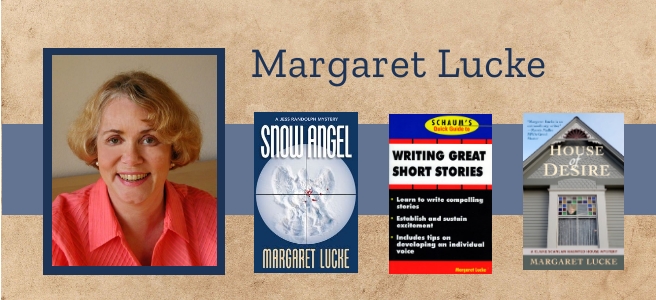
by Margaret Lucke
“There are 3 rules for writing a novel,” British novelist W. Somerset Maugham once announced. Then, to the disappointment of writers everywhere, he added, “Unfortunately no one knows what they are.”
If only there were rules, a way to know for sure that if you just do this, this, and this, your book will be a success.
I just finished teaching a course called The Craft of Writing for UC Berkeley Extension, where I’ve taught for many years. The students were a talented group, and I’m sure that if they persevere, they will succeed as writers. I gave them tips, tricks, feedback, and guidelines. But what I couldn’t give them was guarantees.
In every class, some of the students love the idea of having complete freedom to write however they please, while others crave the comfort of having defined rules and structures to adhere to. And no, I can’t tell which attitude produces the best writers. I’ve read brilliant work and terrible work from both groups.
At the start of the first class, I explain that while the classroom has a few rules (summarized in the statement Be respectful of others), writing does not. Then I proceed to give them some anyway, only I call them reminders. Why is that? See Number 1.
1. There are no rules. As the instructor my role is to provide suggestions, observations, and insights that might be helpful. I’ll explain what has and hasn’t worked for me and for other writers I know. But writing is a trial-and-error process—all writers have to discover what works for them. I think of a class as being like a smorgasbord, where you can sample the ideas that suit your own appetites. The only thing you can be certain of is that no matter what you’re told about how to write good fiction, you’ll find outstanding novels and short stories that do it a different way.
2. There is no magic formula for how to write or what to write. One time, during the lunch break of an all-day seminar, I heard one of the participants grumble to another, “This class is just like all the others. They never tell you the secret. The published writers always keep it to themselves.”

That’s because there is no secret, no wand you can wave, no wizardly trick, no abracadabra to mutter. Part of growing as a writer is discovering your own passions, and developing your own sense of what works for you and why. And being willing to get muddy in process. As novelist Margaret Atwood has observed: “In school … you probably got the idea that the novelist had an overall scheme or idea and then went about colouring it in with characters and words, sort of like paint-by-numbers. But in reality the process is much more like wrestling a greased pig in the dark.”
3. You don’t have to get it right the first time—there’s a wonderful invention called the second draft. Or more—it’s said that Ernest Hemingway rewrote the ending to A Farewell to Arms 47 times. The trick is to figure out what your story is and concentrate on getting it down on paper (or the electronic equivalent) in all its raw, creative glory. Plugging the plot holes and refining the language can come later. If you put your internal editor in charge too soon, you’ll have desk drawers full of half-written stories.

4. If you don’t write your book, it won’t get written. No one else can do it for you. There’s a saying among writers: “I don’t want to write. I want to have written.” But you can’t reach to that second place until you’ve gone through the first one. Time management experts are big on delegation, but writing your novel is one endeavor you can’t turn over to someone else. Which brings us to the final rule:
5. Apply seat of pants. I got this advice long ago from a mentor of mine, the late screenwriter Lawrence Menkin. It means you need to put the seat of your pants on the seat of your chair, with your work in progress in front of you. If you don’t do that, no writing rules or lack thereof will matter.
After all, as writer Rick Bylina puts it: “The only rule: writers write! Everything else is a guideline.”


