Too Much Imagination?

Writing has always been therapy for me. A way to put my vivid imagination to good use instead of making me fearful and worried.

Early in my married years, when my hubby was a truck driver, my imagination would play scenarios in my head about things that happened to him while he was driving. Or if my parents were coming to visit and they were late, my mind would jump to all the tragic things that could have happened.

Once I started writing, sitting down nearly every day and putting my imagination to work writing stories, I rarely envision harm coming to people I know anymore.

What does happen is that my mind is constantly finding ways to bump off people in my mystery books. Ways that are unusual or that are everyday things that can become deadly. I haven’t asked other murder mystery writers if they do the same thing. I need to do that the next time I’m at a conference.

My latest was an innocent trip to the local theater group to watch the play “Oklahoma!” I had been toying with going, and then a friend said the Elgin Opera House put on the best plays, that most of the actors were actually people wanting to get into the field, and used the Opera House as a way to pad their résumés.

So I called my daughter, who lives halfway between the Opera House and me, to ask if she wanted to go with me. She said yes and I purchased the tickets online.

I have driven by the Opera House a hundred or more times, but I’ve never been inside the historical building built in 1912. We parked and entered the building, purchasing water and popcorn before finding our seats in the balcony section. I was impressed by the tin ceiling, the sloped seating, and the excellent sound. Very historical looking. The chairs were a bit hard, even though they were padded. I’m pretty sure it was the old wood shaving stuffing that had been packed down over decades of use!

We were a little bit early and entered the balcony from the top, found our seats, and took in the surroundings. After visiting and talking about the stage and my daughter having been in the building before, when her daughter was in a play, we decided to use the restroom before the play started. I stayed seated as my daughter went to use the facilities. The balcony didn’t have any lights on. The light came from down below on the stage. My daughter doesn’t like heights,. She came back from the restroom and said she didn’t like walking along the edge of the balcony to go to the door leading down to the restrooms.

I laughed at her and said, at least it wasn’t as high as the Church tower we’d climbed up to in Holland. Then I went down to walk along the balcony railing. It came to my knees, and the walking area between the railing and the front row seats was maybe 24 inches. I stopped to look down at the seating below and felt a little dizzy from the darkness above, the light below, and the sense that I was tipping toward the railing.

I continued on and then as I came back, the idea hit me that having a character be at the opera house for a play and seeing a person fall from the balcony would make a good start to a murder mystery. And as I sat in the balcony watching the play, more and more scenes flashed through my mind.

At the end of the play, when the spectators in the balcony had left, I sat in the front row and envisioned how someone could orchestrate an accidental fall.

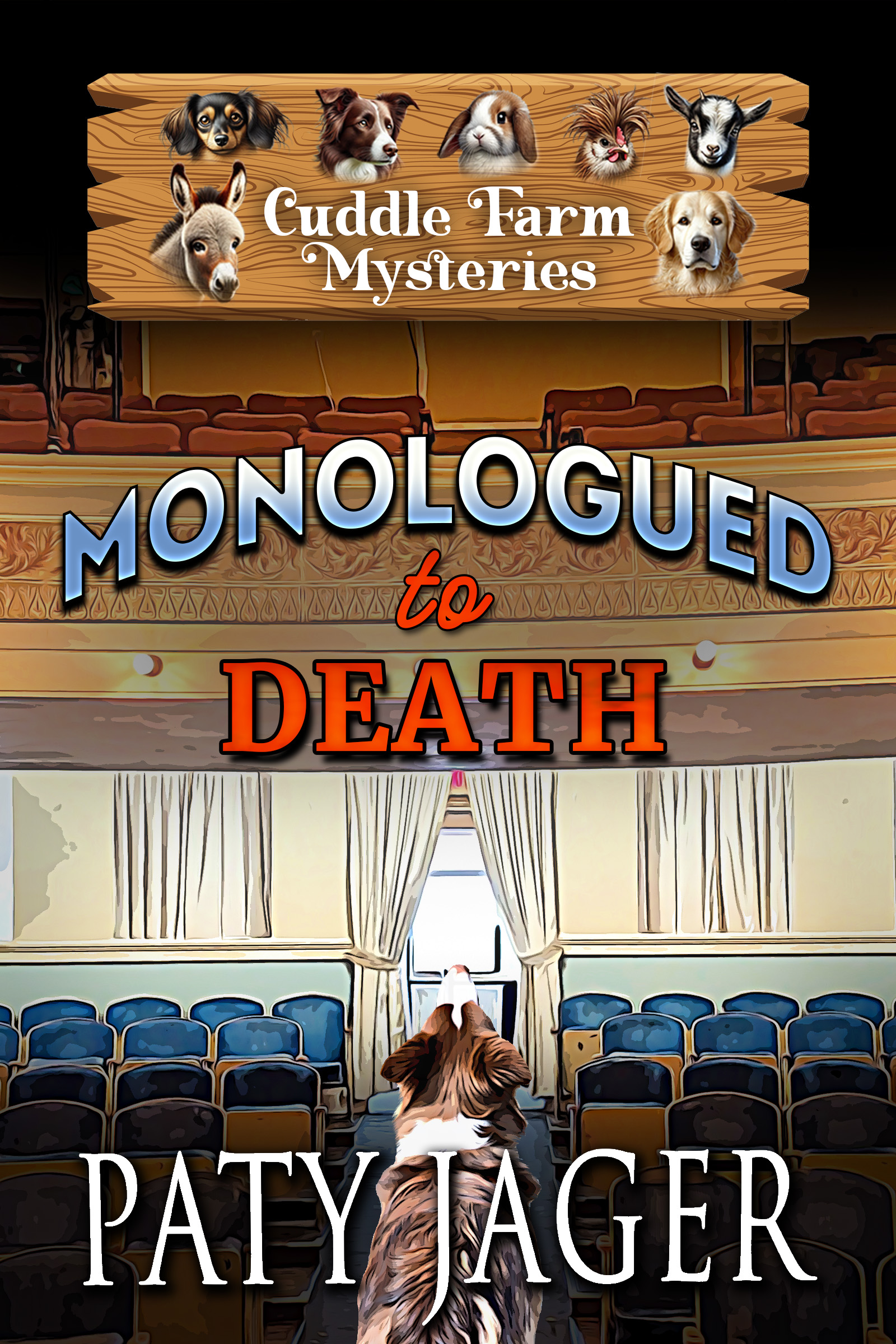
So stay tuned for book three in the Cuddle Farm Mysteries. The death at the beginning of the book may or may not have been an accident! 😉

I’m having a 20th-anniversary bash to mark 20 years of being a published author. Follow my Facebook page or sign up for my newsletter to be part of the celebration and win prizes the whole month of May. I’m giving away a prize every day on my Facebook Page and giving my newsletter subscribers a Bingo game to play for a chance to win prizes.

Link to Facebook Page: https://www.facebook.com/AuthorPatyJager

Link to subscribe to my newsletter: https://bit.ly/2IhmWcm

In Search of a Writing Routine

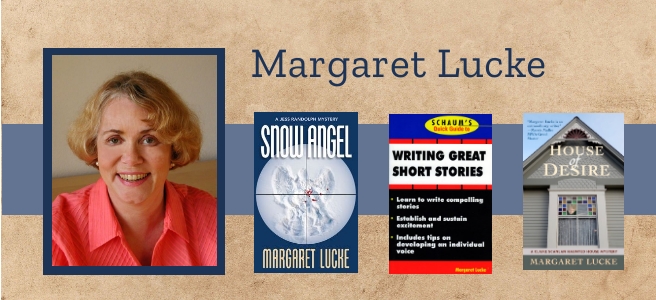
Banner showing author Margaret Lucke and some of her books

By Margaret Lucke

“A writer who waits for ideal conditions under which to work will die without putting a word on paper.” — E. B. White

The other day a nonwriter friend asked me if I write every day. With regret and some embarrassment I had to admit that despite my desires and good intentions, days (okay, weeks) often slip by without my having written a word. I mean, sure, I jot down grocery lists and dash off responses to emails, but that’s not my friend meant. She was referring to making progress on my current novel.

It’s not hard to come up with reasons not to write. Important and meaningful reasons. Errands need to be run, laundry must be done, good friends deserve a visit, the genius level on the New York Times Spelling Bee game insists on being achieved. But something feels off when I reach bedtime and realize that my protagonist has done nothing all day except sit there and twiddle her thumbs

I do believe in the value of writing routines. I’m convinced that having a good routine ensures a writer will be more productive, more focused, more intelligent, more witty and clever, more successful …

If only I could come up with one.

It’s not that I haven’t tried. In fact I’ve made quite a study of what works for others in the hope that I’d find a routine suited to my habits and temperament. What I’ve discovered is that routines are as varied as writers themselves, though they tend to fall into several categories.

>> The up-before-dawn writer

“Do they know I get up at five o’clock every morning to write 1,000 words before breakfast?” — Margaret Meade

These are the people who set the alarm for 4 or 5 a.m., get up and write for two or three hours, and then go off to report to their day jobs or whatever else places demands on their time. Anthony Trollope, who worked as a civil servant, wrote 46 novels this way. I have several friends who swear by this method and write fine books in the tender hours before sunrise.

>> The grab-bits-and-pieces-of-time writer

“The way you define yourself as a writer is that you write every time you have a free minute. If you didn’t behave that way you would never do anything.” — John Irving

Another friend, before she retired, spent all of her lunch hours at work in the parking lot, where she would sit in her car and write. Mystery writer and attorney Michael Gilbert wrote 23 novels on the train as he commuted from his home in Kent to his law firm’s London office. William Carlos Williams, a physician, scribbled stories and poems on prescription pads in between patients. I admire the way writers who do this can shift gears so quickly from other activities and home in on their writing.

>> The quota-system writer

“All through my career I’ve written 1,000 words a day — even if I’ve got a hangover.” — J.G. Ballard

These are the writers who set a daily goal and refuse to leave their desk until it is accomplished. The goal might be to write for a set number of hours or to achieve a specific page count or word count. This was the principal behind the sadly demised Nanowrimo, or National Novel Writing Month, which challenged writers each year in November to a produce a novel of at least 50,000 words. Producing 1,667 words a day would get you there. Note that the folks behind Nanowrimo didn’t insist that the novel be any good.

>> The ritual writer

“I had a ritual once of lighting a candle and writing by its light and blowing it out when I was done for the night.” — Jack Kerouac

Writers are not necessarily superstitious, but we know that sometimes we must do certain things to draw the muse to our side and appease her when she’s present. This can lead to some peculiar writing routines. Victor Hugo would shed his clothes and instruct his valet to hide them; being nude, he couldn’t leave the house so he might as well write. Charles Dickens carefully arranged certain items on his desk to foster his creativity, among them a vase of fresh flowers and a bronze statuette of dueling toads. Natalie Goldberg often wrote with a cigarette in her mouth; she usually didn’t smoke it but used it as “a prop to help me dream into another world.”

I’ve dabbled in variations from each of these categories, but I haven’t found the perfect routine for me. How about you? What works? I’m open to your suggestions.

Self-Discipline at 5 in the Morning

By Margaret Lucke

How do you define self-discipline? To me, it’s the quality that enables you to force yourself to do something you know is good for you when you’d rather do something else.

It’s focusing on business rather than pleasure.

It’s favoring long-term goals (lose five pounds, meet the deadline) over short-term benefits (eat the chocolate, spend the gorgeous afternoon taking a walk).

It’s getting up way too early in the morning, when any normal person would still be tucked up comfortably in bed.

But not everyone agrees with me.

Quite a few years ago, as an aspiring mystery novelist, I attended the late, great Cabrillo Suspense Writers Conference, a wonderful event held annually for a decade at a rustic lodge in the Santa Cruz Mountains. One day I had a conversation over coffee with a fellow writer. At that time he had published two well-received mystery novels, but he was still working long hours at his day job at a local college. Finding time to write was a challenge for me, and I asked him how he managed to do that while dealing all of the other demands in his life.

“It’s simple,” he explained. “Every morning, seven days a week, I get up at 5 o’clock and sit down at his desk to write.”

Seriously? There’s a 5 o’clock in the morning? I thought 5 o’clock automatically meant late afternoon.

I am not a morning person. I’m fine with being awake when it’s dark outside, but only if I’ve approached it from the other end, the gradual fading of daylight into night. But wake up while it’s still dark? Impossible. Until daylight touches my bedroom window, my eyes refuse to open and my brain is on strike. I can’t find the floor at 5 a.m. unless I fall out of bed. There’s no way I can write a coherent sentence.

But I have a high regard for writers, and I’ve known several, who regularly rise before dawn to produce pages. Good pages too, not the gibberish I’d come up with.

I said as much to my coffee companion: “You know, I really admire your self-discipline.”

His response surprised me. “Oh, that’s not self-discipline.”

“What do you mean?” I said. “You just said you make yourself get up every morning when you want to be sleeping and force yourself to sit and write.”

“That’s right.”

“How is that not self-discipline? It sounds like the perfect example to me.”

He took a sip of his coffee. “It’s not self-discipline because I don’t enjoy it.”

What? To me, if he didn’t enjoy it, then his peculiar (to me) habit fit the definition even more. Obviously we had different takes on what self-discipline means. I prodded, but I couldn’t get him to explain his concept any further.

Self-discipline or not, whatever he was doing worked. He went on to considerable success and acclaim as a mystery writer, with almost three dozen novels to his credit and several awards on his shelf. My track record, on the other hand, is considerably shorter.

Maybe I should try setting my alarm clock just a little bit earlier.

Moving + Writing = Behind

I am just about moved into our new-to-us home. One more week and I’ll have everything moved and will be settled into the smaller house. Downsizing is not easy! After 47 years, 4 kids, 12 grandkids, 2 great grandkids, I have boxes of photos that I’ve been going through. getting rid of duplicates and bad images from the days when you took the film in to be printed.

I have more furniture than this house can hold, but at the same time, I need to purchase furniture to fit in smaller spaces.

And don’t get me started downsizing from a walk-in closet to a 7 ft long closet in a 1952 older house. I see some remodeling going on in the bedroom down the road. Right now we are concentrating on making the kitchen and dining area larger.

  • Many of the things I’m doing to move relate to my writing.
  • Watching for duplicate words or words that aren’t strong enough.
  • making better word choices that fit the scene or the character even if the word had worked well before.
  • Shortening sentences to be more concise and not take up so much space in the story.
  • And expanding on the mystery and subplots to show the development of my characters and explore more reasons for the murder.

While I’m making the 4-hour drive back and forth from the old place to the new, I’ve summoned up several scenes and reasons for the actions of my characters in the work in progress.

But the words aren’t popping up on the computer screen because when I do finally have time to sit down at the computer, I have emails and promotions to tend to before my brain gives out.

In the last couple of days, I’ve thought about moving my deadline for this book out, but then it feels like I’m copping out. Instead, I’ll spend the rest of the month pushing to finish the book and know it will be published a bit later than I’d planned, but I managed to write it within my deadline.

That is the hardest part of writing for me. Not lambasting myself when I miss a deadline. When I put it out to the universe that something will happen or be finished, I don’t make excuses. I push and make it happen. It is my greatest strength as a writer. Self-discipline.

I can’t remember if I mentioned that Book 8 in the Spotted Pony Casino is now available in print and ebook.

When the past knocks on their door, the future they planned begins to unravel.

On the brink of their wedding, Dela Alvaro and Heath Seaver’s plans shatter when a ten-year-old boy appears, claiming to be Heath’s son. The truth is even darker: the boy’s mother—the woman Heath thought died years ago at Pine Ridge—was an FBI informant hidden under a new identity, left to raise his child alone before dying of addiction.

As Heath wrestles with awe for the son he never knew and fury at the FBI’s deception, the past turns deadly. When the agent who lied to him is found murdered in Pendleton, the FBI shows up on Dela’s doorstep, bringing danger straight to their home.

With their future on the line, Dela and Heath must confront a web of secrets before it destroys the family they’re just beginning to build.

Universal book link: https://books2read.com/u/3LzAxJ

Buy direct from the author: ebook – https://www.patyjager.net/product/full-house-ebook/

Autographed print book – https://www.patyjager.net/product/full-house/

You can also now purchase Merry Merry Merry Murder in audiobook format.

Where comfort and cheer meet scandalous secrets—A holiday mystery set in a small town.

Audiobook website – https://www.patyjager.net/product/merry-merry-merry-murder-audiobook/

In my next post, I’ll be talking about my 20th anniversary as a published author.

Transitioning

Life has chapters, just like books.

Right now I’m transitioning from rural life to town life. We purchased the house in town the fall of 2024 because we were putting our farm up for sale and wanted to know where we would be going when it sold. That chapter was exciting and full of wistfulness of finding the right home.

We did. I love the view from all of my windows. We are isolated enough that we aren’t looking into any neighbors’ windows and we have a gorgeous view of the Eagle Cap Mountains that I write about in my Gabriel Hawke books and the Elkhorns which will be referred to in my Cuddle Farm Mystery series. Out the dining room window we see a couple of rooftops and a hill my hubby knows elk are going to come over when there is a bad winter. 😉

Eagle Caps from my living room window.

It’s an older house so there has been painting, fixing, and soon a remodel because the kitchen and dining room are too small. But first I will be moved into the house by April 1st. That’s when we are to be off of our farm. Hubby will stay on helping the dairy that he’s been managing hay fields for the last twelve years. Just for this summer to help the person taking over. He’ll stay there in a mobile home on the hay ranch and come help make out new place the way we want on long weekends.

I’m excited about a smaller house to clean, I can run to the store whenever I want, not make a list when I run out of things and have to wait until someone goes to town. I’m excited for the things I can attend without having an hour drive to and from the event. I’m also close to all the areas I write about in my mystery series. That is a real plus. I hope to get to more Native American events and culture a few more connections.

Hiking a wash in Hurricane, UT.

This is not the last chapter in my life but it is certainly one of the most looked forward to. I’ll continue to write, but we also hope to do a bit more traveling around the U.S.

We spent a week last month in southern Utah, hiking in parks and enjoying the weather and scenery. We plan to do that for a couple weeks every winter to get out of the longer, colder (usually) winters than we are used to.

I’m excited to see how the changes, might enhance my stories by living so much closer and being able to do even more trips to locations. I’m only an hour and a half away from the Umatilla Indian Reservation the location of my Spotted Pony Casino Mystery series.

Right now, I’m trying to get all the rooms ready to put the furniture that will fit in and try to keep up with writing on my current book, Captured Hummingbird, book 15 in the Gabriel Hawke novels.

As a reader can you tell when a writer knows the area they are writing about?

Writers, do you like to see places first hand if you write about real places?