August by Karen Shughart

Here up at the lake we’re surrounded by orchards, vineyards and farmland; gently rolling hills and meandering streams with an abundance of fish. It’s a beautiful place any time of the year, but the end of summer, the month of August, is special in so many ways.

Sunrise is a little later this time of year, we can hear the morning music of birds at around 5:30 or 6:00 a.m. rather than 3:30 or 4:00 as in June. There’s something peaceful and magical about waking early in August to see the sun rise, it’s rose-gold rays casting brilliant diamond-like shards across the water. It’s a quiet time.

Warm days are the norm; some days the humidity rises, but on others bright blue skies, lazy white clouds, and a lake sluggishly rolling its waves onto the shore are a welcome change to the previously fetid air.  Sailboats dot the horizon, pontoons chug lazily about and motorboats slice through the undulating sea. Families play on the beach and picnic under a pavilion where long ago children laughed with delight as they rode a carousel.

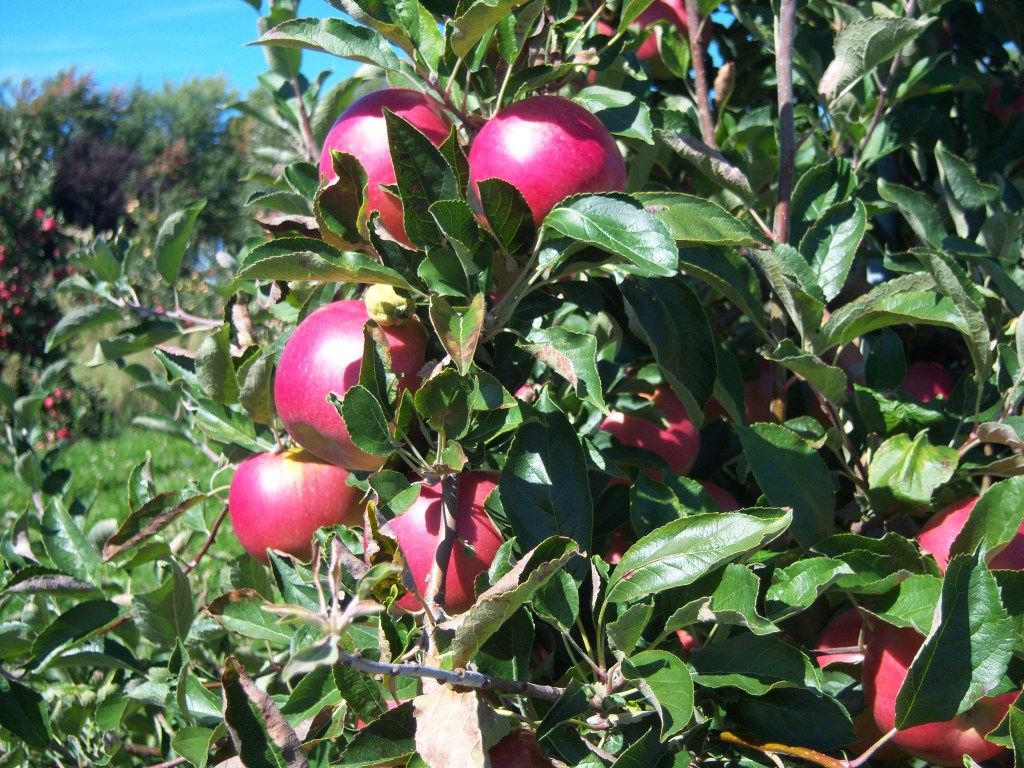
A cornucopia of fresh produce offers up its bounty at a multitude of farm stands and markets. Lovely squashes, tomatoes, blueberries, cherries, corn, beans, and herbs create a riot of color far more beautiful than any still life painting.  And the fecund ripening of the fruit on trees in the orchards, especially the apples, the first of which will soon be ready for harvest, remind us that fall is on its way. The green, green grass of past months starts to brown, the flowers lose some of their bloom, and the limbs on deciduous trees, with their lush dark leaves, droop with anticipation as they begin to fade. In a month or two, their bright, warm hues will beckon an onslaught of sightseers.

Photo by Karen Shughart

Something about the light and the air bring visions of fall: bright, sunny days as crisp as biting into a just-picked apple.  It smells different, too. The air is perfumed, but in August, with a rich, heavy sweetness mingled with the beginnings of the decay that precedes fall and winter.

Later in the month, when the tourists and those who spend their summers at simple cottages here have gone, there’s silence  interrupted only by the occasional droning of a lawn mower,  the buzz of insects, the bark of a dog or the subdued chatter of friends and neighbors who pass by.

Guest Author- Leslie Wheeler

An Unexpected Encounter with Wildlife Becomes a Magical Moment in Fiction

By Leslie Wheeler

One of the pleasures of having a house in rural Western Massachusetts is the opportunity to see wildlife at close range. I’ve observed deer, bear, bobcats, foxes, beavers and otters on my property, and every time this happens, I feel like I’ve been given a gift. But there is one species of wildlife I didn’t think I’d ever see–a moose.

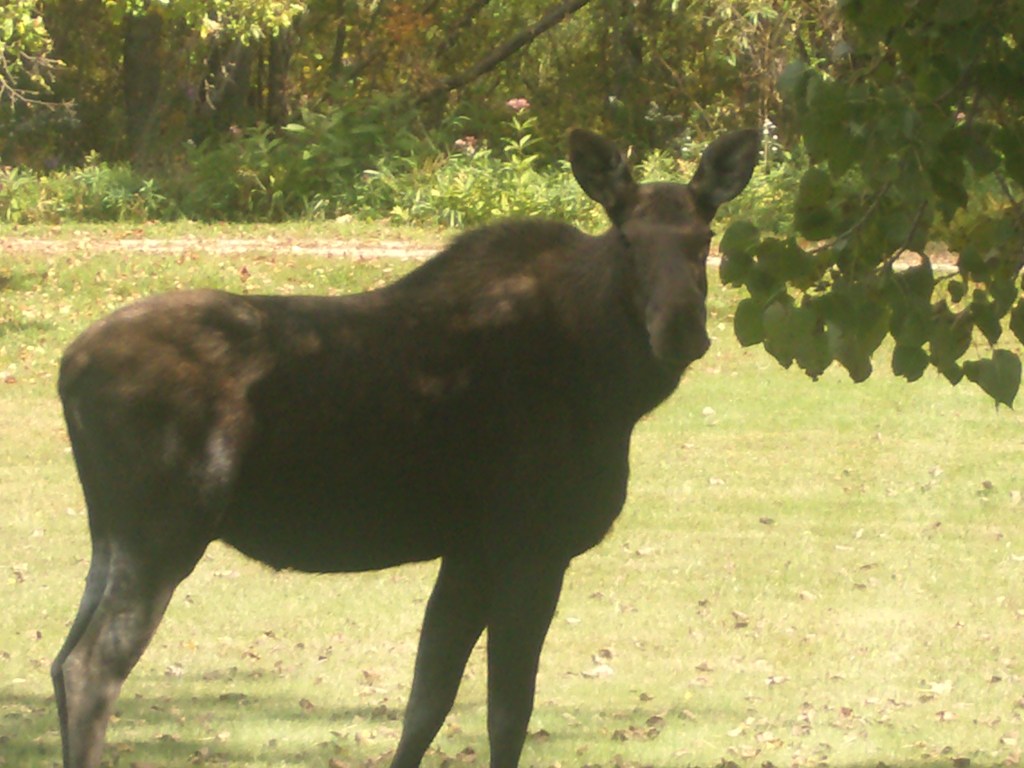
Then one Friday in September, a few years ago, I went to my house in the Berkshires, and discovered that a cow moose, about a year old, had taken up residence, drawn by the pond on the property, the old apple trees laden with fruit, and also perhaps by the hope of finding a mate. She followed a track that took her out of the woods, onto the back field, across it, around the pond, and down the front field to the driveway, which she crossed to return to the woods and begin another circuit.

Around dusk on Saturday, I’d gone into my fenced-in vegetable garden when I looked up and saw her standing a few yards away, watching me. She was so quiet I hadn’t heard her approach. I froze, fearful that a sudden movement or sound would frighten her away. After a few moments, I slipped carefully from the garden, and stood stock still, returning her curious and unafraid gaze. Although not a bull moose with antlers or a cow with a calf to protect, she was still a very large animal. Finally, breaking eye contact, she continued on her leisurely circuit around the property.

Sunday morning, I watched from indoors as she made yet another circuit. She even ventured onto the patio, the closest she’d come to the house. And there I was without my camera, knowing full well that this might be my last chance to get a shot of her before I returned to town. Then, as I began to pack up, she made a second circuit, and armed with my camera I followed her along the patio to the front of house, where she stopped and regarded me with the same unafraid eyes. I took two pictures before she finally hoofed it away.

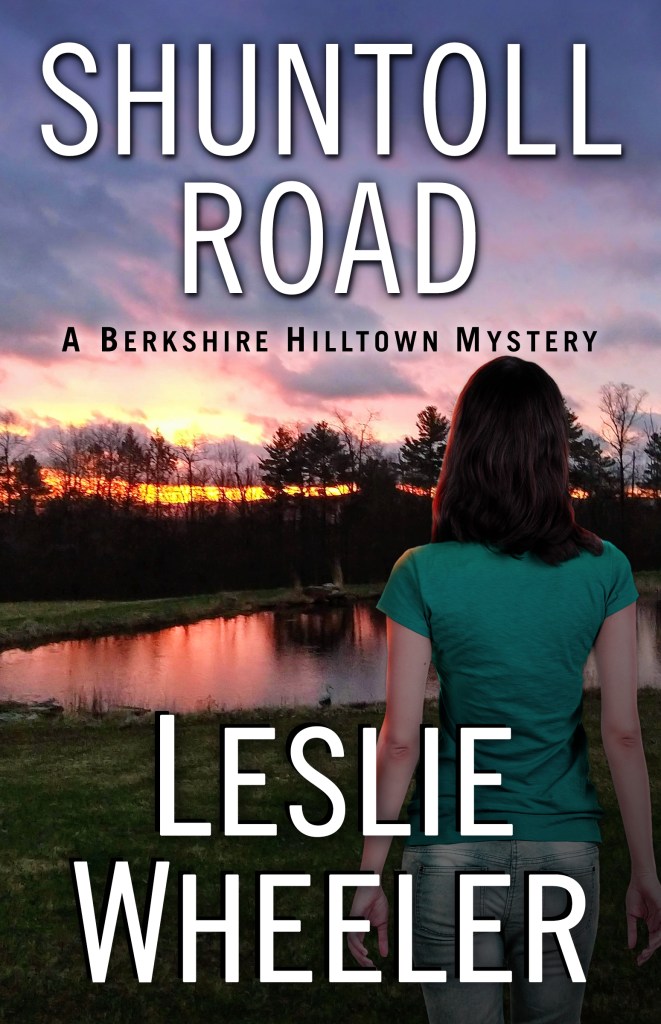
I returned to Boston, never to see that moose again, but the experience inspired me to write a scene in my new mystery, Shuntoll Road.  In it, the main character, Kathryn Stinson, wakes up at dawn the day after a fire has raged in the woods around the house she’s renting. She goes outside to see if it’s still burning and spots a big animal on the far side of the pond. It’s not a moose, but a white stag, a legendary creature, which does exist in real life. To her surprise, the stag approaches her, stopping a few yards short of the patio, where she’s standing. Then it turns around and bounds back to the pond, where it stops and looks back at her. The white stag does, this enough times for her to think it wants her to follow it—into the burnt woods where she makes an important discovery. Later when Kathryn expresses her wonder at why the white stag appeared to her of all people, her boyfriend says, “It’s a mystery. And a gift.”

Readers: Have you have had encounters with wildlife that you’ve used in your fiction?

Shuntoll Road

Boston library curator Kathryn Stinson returns to the Berkshires, hoping to rebuild her romance with Earl Barker, but ends up battling a New York developer, determined to turn the property she’s been renting into an upscale development. The fight pits her against Earl, who has been offered the job of clearing the land. When a fire breaks out in the woods, the burned body of another opponent is discovered. Did he die attempting to escape a fire he set, or was the fire set to cover up his murder? Kathryn’s search for answers leads her to other questions about the developer’s connection to a friend of hers who fled New York years ago for mysterious reasons. The information she uncovers puts her in grave danger.

Paperback

Amazon – Note they do not show this as a pre-sale, but if people order from Amazon it will still get to them at a reasonable time not what they show on their site.

https://www.amazon.com/Shuntoll-Road-Leslie-Wheeler/dp/1645990346

Barnes and Noble

https://www.barnesandnoble.com/w/shuntoll-road-leslie-wheeler/1136500170?ean=9781645990345

E-books

Amazon

https://www.amazon.com/dp/B08DCZYR3M

Apple

https://books.apple.com/us/book/id1524348304

Kobo

https://www.kobo.com/us/en/ebook/shuntoll-road

Barnes & Noble

https://www.barnesandnoble.com/w/shuntoll-road-leslie-wheeler/1136500170

An award-winning author of nonfiction, Leslie Wheeler writes the Miranda Lewis Living History Mysteries which began with Murder at Plimoth Plantation, recently re-released for the first time as a trade paperback, and the Berkshire Hilltown Mysteries which began with Rattlesnake Hill and continue with Shuntoll Road.

Check out my books at my website: http://www.lesliewheeler.com

Find me on Facebook

Follow me on Bookbub

Truth vs Stereotypes, or Do Grandmothers Giggle?

by Janis Patterson

In these days of fraught political correctness when being offended at something has become almost a career choice, we as writers have to be very careful about what we say. We must always be on our guard against using stereotypes and prolonging misconceptions. But sometimes it’s hard.

A couple of years ago I wrote a short story for inclusion in an anthology centered on wedding days. I thought it was a pretty good piece – four generations of women in a family (girl, mother, grandmother, great-grandmother) and their reactions to a wedding coming up the next day. Of course – as you have doubtless already noticed – I am a dyed in the wool contrarian, so naturally I had to do something different. The bride in this case was the grandmother, who was marrying against her mother’s and daughter’s wishes – the granddaughter was in favor of the match. During the course of this familial sturm und drang the grandmother/bride and granddaughter have a special moment and the grandmother giggles. This is when the reader first realizes that the bride is the grandmother, not the granddaughter.

I thought it was a special moment.

The editor thought differently. She almost exploded with angry disbelief. “You mean the bride is the grandmother? And she giggled? Grandmothers,” she stated unequivocally, “do not giggle.”

I replied with my usual tact and polite restraint that I was a grandmother, and I giggled frequently. In fact, a dear friend once stuck me with the nickname of ‘Giggles.’ The editor was openly disbelieving. Well, after a lengthy and sometimes acrimonious discussion the giggling stayed in the story, but the editor was most vocally unhappy about it and we’ve never worked together since.

Another story, this time a stand-alone novel, another year if not another decade and another editor. I had my characters out driving in the remote wastelands in the Texas panhandle. This is the area where you can drive for two hours and never see another car or sign of human habitation. My characters found a bad car wreck, but the driver was still alive. They picked him up and drove him to the hospital in whatever town was closest. (It’s been years, and I don’t remember…)

Well, the editor went ballistic. How, she asked, could I be so uncaring and stupid as to move an accident victim? My characters should have called (as if there were any cell service out there) for an ambulance and waited with him until the ambulance arrived. To do anything else, she yelled, was irresponsible.

I tried to explain that in that part of Texas it would be irresponsible not to get the man to the hospital as quickly as possible, as he might die in the time it took an ambulance to respond. This editor – who, by the way, was openly proud she had never been west of the Alleghenies – was completely disbelieving, and turned down the book simply because of that. She had offered me the out of rewriting, and (if I really insisted) making them closer to a town where an ambulance was a logical inclusion, but I declined. The loneliness and isolation of the area were too deeply interwoven into the story – almost a character in itself – and part of the moral understructure of the book. We agreed to cancel the contract.

Yet one more story about a New York editor, though it has little to do with a book. I had worked with this editor several times, and was tossing around an idea about a couple being trapped in an ice storm. She absolutely hooted at my idea of setting it in North Central Texas, because, as she said “everyone knows Texas is tropical!”

Well, apparently the weather gods were tired of Yankees being so ignorant about Texas, because within a very few weeks we had a paralyzing ice storm that pretty much shut down the city… and it was the middle of April. There were photos on the front page of our newspaper of horizontal winds and trees breaking under an inch thick coating of ice. Smiling with unrepentant glee, I risked life and limb skating over the ice to get a fresh copy of the paper from a nearby box, stuck it into a big padded envelope and sent it to her. I didn’t even include a note. The subject was never mentioned again.

So – even when it does not even touch on the ungodly mess of political correctness (which to me brings up images of the Fire Swamp in The Princess Bride) we all have to be very careful about indulging in the lazy shortcut of stereotypes and misconceptions. We write fiction, but to be believable fiction, it has to have a firm grounding in basic truths.

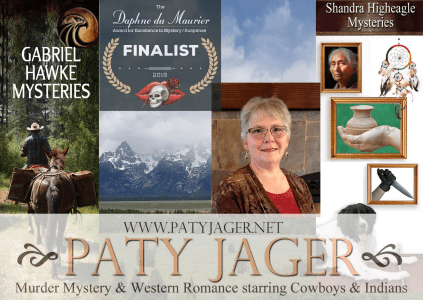
Narration Fears by Paty Jager

Due to the covid and so many conferences and events I’d planned to attend being cancelled, I am now putting those dollars into getting more books narrated. Which is a good thing, except…. I’ve caught up to the last book written in the Gabriel Hawke series, Fox Goes Hunting.

It’s nice to have the audio book ready close behind the release of the ebook and print, but… this book is set in Iceland. My poor narrator is having to learn how to pronounce a lot of words in Icelandic.

Ragnar, our guide, explaining the living situations of the Viking settlers at pingvellir.

The guide I met on my trip to Iceland has been a HUGE help with my book. He answered questions when I was on my trip and later via email. He also read the book to make sure the way the Icelanders in my books expressed themselves was correct and that I conveyed the spirit and feel of his homeland.

And I have once again reached out to him as this book is beginning to be narrated. I asked if he could give me a pronunciation guide for the Icelandic words. He came through, but said if the narrator needed more detail in the saying, he could do an IPA system but it would take him much longer to do.

Thankfully, my narrator has already reached out to some other narrators for help in the pronunciation of the words. I feel for him. He was excited to do this book, but he will have a lot more work than he usually puts into the Hawke books.

If you would like to listen to one of the first five Gabriel Hawke audio books for free, I have some Author Direct codes you can use to listen to the books.

Here’s to hoping my narrator can channel his inner Icelander.

“Patience, Hummingbird”

Authors of this and other platforms are still writing of the Chinese Virus and its effects now and long term. Stretching finances so hard you’re scared how bad the recoil will sting if you dare let go. How do first-time homeschoolers keep from going bats. An uptick in board game sales (I’d give almost anything to be that monarch butterfly on an overhead wall of the group playing Monopoly, The Cheaters Edition!). A new spin on old leftovers. Staying connected and sane despite isolation–is this really an introvert’s paradise? New hobbies found after streaming service binges become one day of the week into the next. The dozens of notables who’ve passed during this rotten transition into a new normal. Despite their death and we’re all sick of all things COVID to the back teeth, life goes on. But the deaths seem to punch a bigger, nastier, hurting hole into this reality more than any of us are ready for.

So I’m doing a first, hours before this post is due for my 2nd Saturday monthly jam: the patience I need is–
–Woth myself
–With other authors
–With God
–With other mere mortals.
I’m burned out from Monopoly, Uno, Duraq, and Jenga, yet my mind’s too wired to read. My phone’s storage is near tapped in Ooooh-look!-Shiny app downloads, but I’m grouchier with myself, God, my loved ones, my characters. My writing life, upheaval aside and not for lack of trying, is at a standstill. Family members have COVID updated or took their leave of this dimension, I’m now neck-deep in toiletries to open a small supply depot over. And tthe next salon/spa/massage visit feels like it’s twelve light years out waiting for my turn to feel normal again.

A study in my phone’s Bible app talking about this Jumanji event had a line that jumped out at me this past June–

“Don’t expect people to live up to my standards, since I don’t have any clue what those are in these times. This IS a new normal, like it or not. Nobody has a playbook to be guided by, not even you. Be especially patient with others, with God, with the circumstance, and most impotanrly, with myself. Whatever or whomever is perplexing you, just let it go, let it ride, or let it be.”

.

Well, that wrecking ball of straightshootin’ common sense snacked me upside my stubborn head. Aren’t we patient with ourslves in learning a new skill, working with a new hire, or wrestling with a storyline, for whichever unexplicable reason, isn’t coming together as it should?

You sure are. I sure am.

So why contradict this?

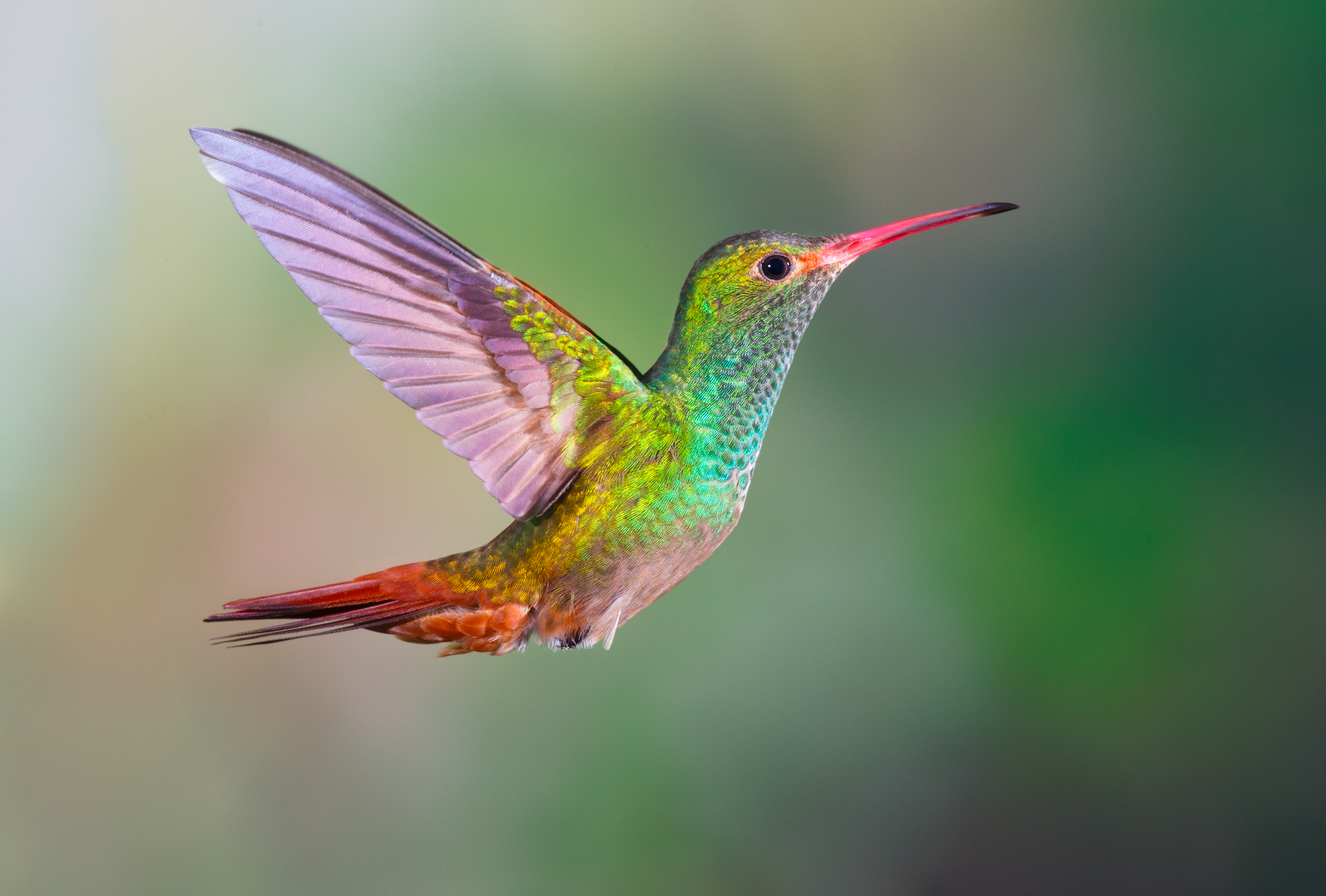
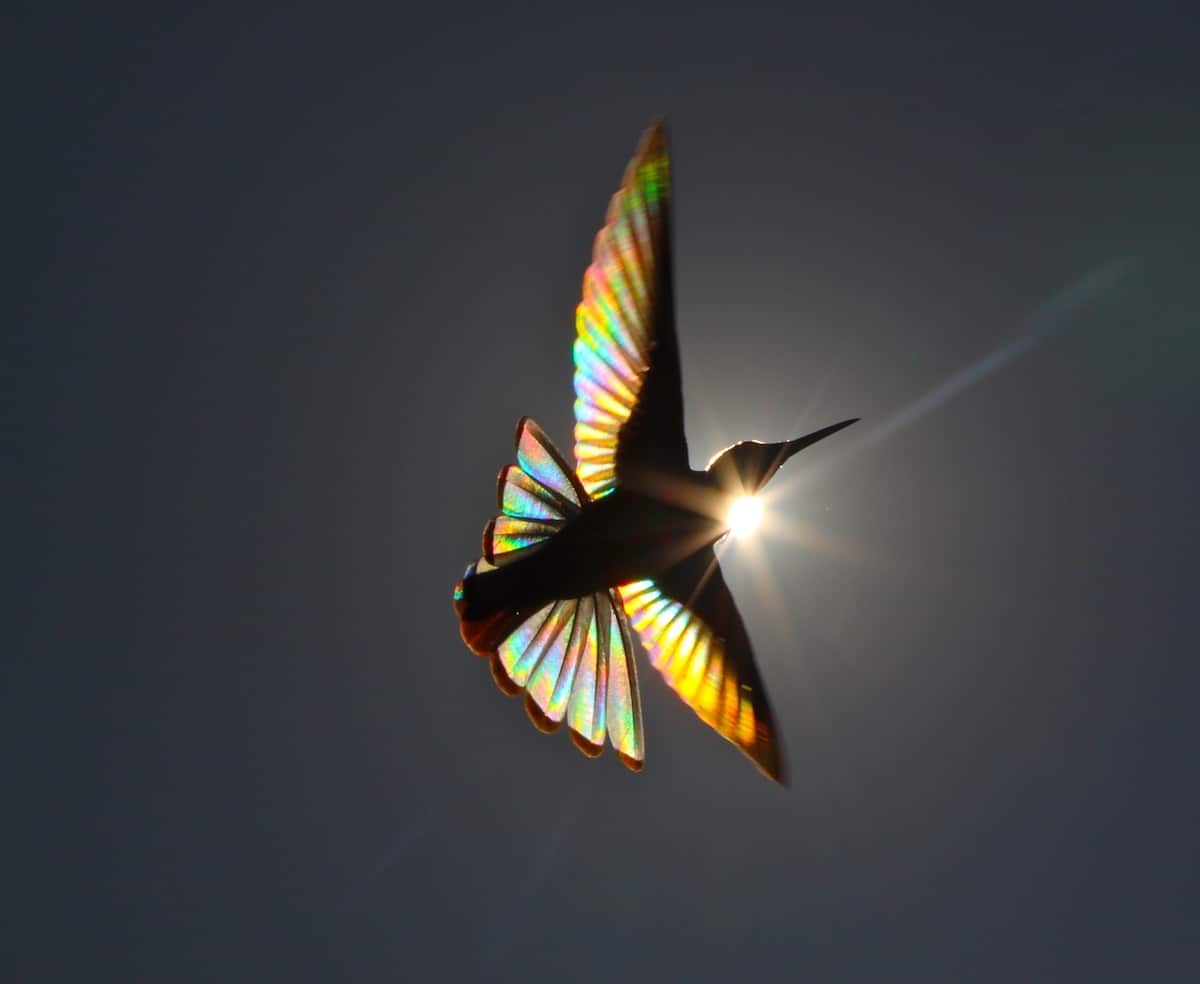
While following a streaming yoga workout this week past, during it, the camera guy caught a gorgeous hummingbird outside the instructor’s patio window. I’m a sucker for anything flying on its own power, so my ADHD mind went nuts over this. But his soothing voice and telling the followers to not move a muscle, lest he startle the bird away, was that stroking-a-ferret-to-sleep to my ADHD thoughts, and they soon Zen’ed out. In a balmier frame of mind, the paradox of the hummingbird surfaced. The wings beat blurringly fast, but even this creature knows when to slow or when to move on when it’s time. Fast as it moves, it has to be patient with itself, or die burning itaelf out before its work is finished.

As I work this, Sweet Reader, you may enjoy and be entertained and informed by my nimble fingers feverishly keeping pace with my Road-Runner-on-‘roids thoughts, two scenes are marinating for my projects I’m thisclose to getting down. I’m a monthly subscriber to a writing box company to spur creativity again (and of course, LoM gets first review dibs when I’ve played with the goodies for a stretch). I’m planning a near-year end trip with my husband to New York’s Howe Caverns and the Corning Glass Museum, and to visit a friend whose husband died this past spring in a freak work accident. Trips like these do FAR more for my writing mojo than the traditional and indie industry gatherings do. And I’ll call a spade a spade–who needs a weekend-long pissing contest in the guise of friendly camaraderie with fellow authors over strategies we’ve heard inside out? I don’t.

I sip Harney & Sons Earl Grey as Paul Simon’s “Kodachrome” on my TV music channel beckons I harmonize with it as I type. Even with this COVID clusterfuck we’re still untangling from, I’m in a good and bad place with writing. This, too, can use a needed reboot, or that I’m crying for change to supplement this part of the creative craft with something else communally. Whereever I land, what some of you call in a good place after sorting, dusting off, spring-cleaning and the like, untreated ADHDs like me always find a good and not-so-cool place to be in simultaneously. How can we live like this, you’re wondering? ‘Taint easy. But maybe the magic of the hovering hummingbird is a lovely reminder to be patient while moving quickly, but to know when to stay patient as I’m moving, be it slow or fast, or I die before it’s time. And to extend this same allowance to humanity, regardless who they are or if they’re clueless in which next to go as I am, is the “wisdom” in the hummingbird’s work.