And I wrote . . .

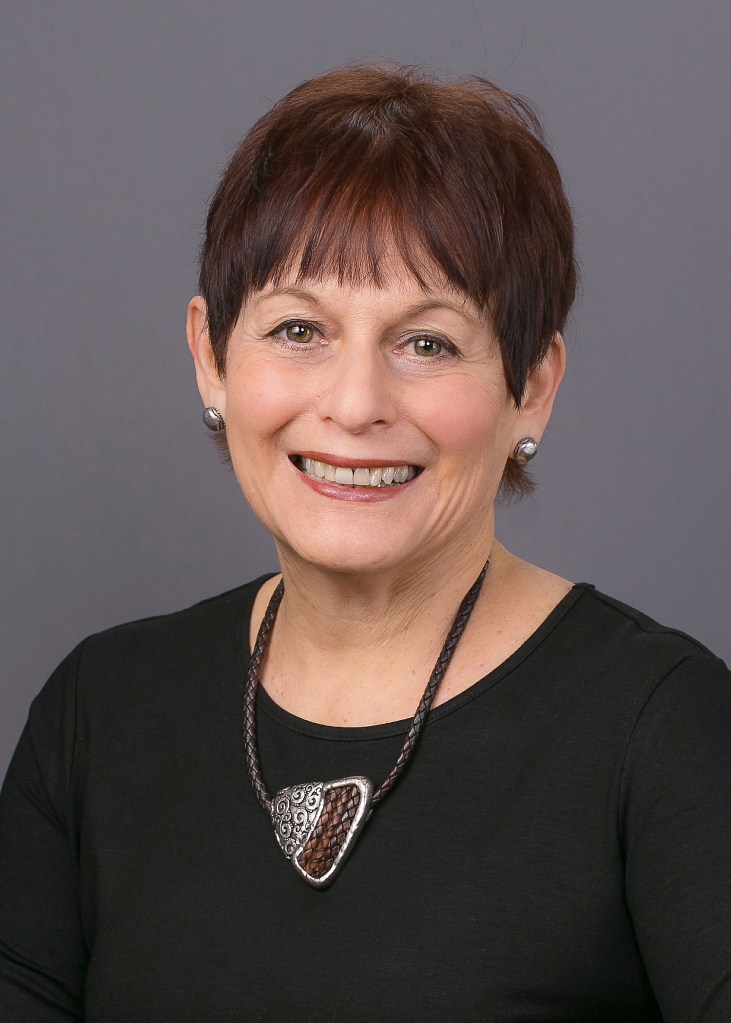
This is my first outing for Ladies of Mystery, and it is an honor. I should introduce myself. First and foremost, I consider myself a Mid-Westerner, though I’ve lived in most parts of the country and in Barbados. I come from a long line of Illinois farmers who produced my wanderlust father. When my family moved from the Mid-West to Colorado, my classmates were worried that I wouldn’t be able to keep in contact. I assured them that phones and mailboxes existed out there, too. But what a change! I went from a large multi-racial high school to a wee one with one Hispanic and one Asian in my class. Holy smokes!

I became an officer in the U.S. Navy right out of college, a B.S. in Journalism from the University of Colorado clutched in my fist. When I mustered out, I used my GI Bill to help fund an M.S. from Northwestern University. I clearly have an affinity for working in male-dominated environments. First, the Navy, then years in advertising, think Mad Men.

Along the way, I met this guy. After the yes, I worked in educational assessment for a Fortune 500 company, trained readers to score student writing, worked as a consultant to State Departments of Education, and as Director of the Proposal Development Center responsible for obtaining multi-million dollar contracts.
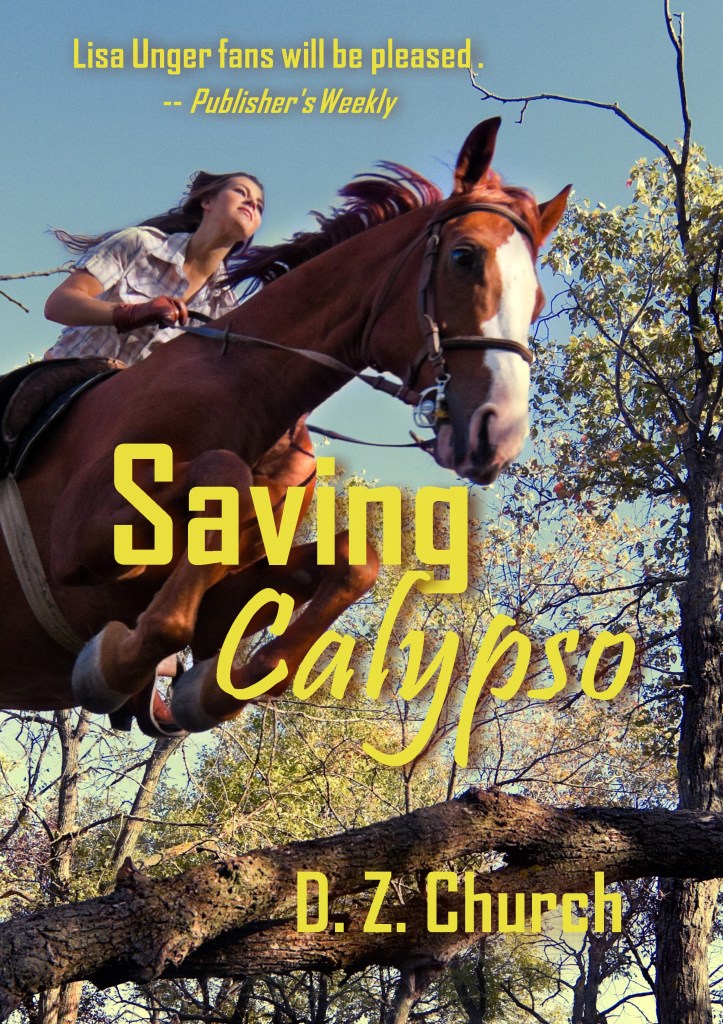
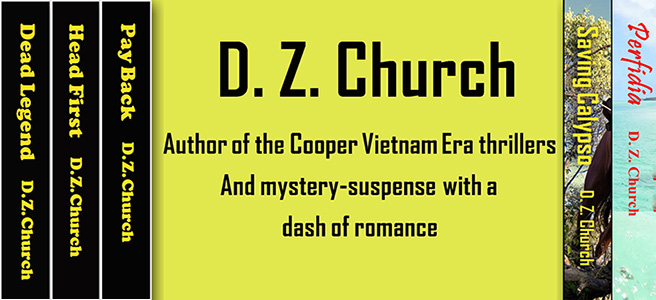
And I wrote. You’ll find my two standalone thrillers, Perfidia and Saving Calypso, and the first two books of my series, the Cooper Vietnam Era Quartet, on Amazon.

The Cooper Quartet is dear to my heart. I served in the Navy at the bitter, and I mean bitter, end of the Vietnam War. I worked alongside Navy pilots at my command. I had many carrier pilot and rescue pilot friends at Naval Air Station Lemoore. And befriended one special SEAL. And they talked about the War.

For years, I carried around their stories and hurt, enhanced by my travails as a young woman in the Navy. Frankly, the stories gnawed until I started writing Dead Legend, the first book in the Cooper Quartet. I thought Dead Legend would be a standalone, then Head First challenged me to spit it out. Are the stories true? I assure you that in all matters Navy, Ensign Robin Haas speaks for me.

The third book in the series, Pay Back, is available on September 1. It propels the Cooper saga through the Fall of Saigon (April 1975) and the changing world back home. According to BookLife: “This wartime thrill ride turns the waning days of the U.S.’s involvement in Vietnam into a pulse-pounding, smart tale of suspense.”  Pay Back is available at : https://www.amazon.com/Pay-Back-Cooper-Vietnam-Quartet-ebook/dp/B08CJDHP92

Over the four books, the Cooper Quartet covers the arc of the War’s impact on Americans, the Vietnamese, the French colonialists, as well as the women who served. It would be wonderful if the Quartet enhanced readers’ understanding of how the Vietnam Era changed our society, and, ultimately, our country. To celebrate the publication of Pay Back, Dead Legend is free on Amazon September 1 – 5 for anyone wanting to begin where the saga began.

For more about my books or me, check out https://dzchurch.com. Leave me a note if you’d like me to blog about a specific topic. I can hardly wait for the next fourth Thursday of the month.  See you then!
Today is My Birthday!

I never thought I’d live this long–but it’s been great. I’ve had many blessings and achieved a lot.

The celebration will be limited to birthday cake and ice cream with my family, which is perfect.

Even with the pandemic, my life has been much the same as usual except for the cancellation of all the mystery and writers’ conferences and conventions and book fairs. (And yes, I really do miss them.)

This month began with a trip to see our youngest daughter and her family: husband, two sons and their wives and children. It had been a long while since my husband and I had seen any of them. We had a great time! We ate wonderful meals prepared by our daughter and a special treat prepared by one of the grandsons.

We had wonderful conversations, played UNO and Mexican train. We spent time with four great grandkids. I learned a lot about Rumbas from a 6 year-old great-grandson who has 9 of them, and takes them apart and puts them back together. Got to chat a lot with a 5 year-old great granddaughter, and had fun with a 2 plus-year-old great granddaughter with the most amazing copper-colored curls, and met the newest great granddaughter who has just turned one.

I learned a lot about Covid 19 from a granddaughter-in-law who is a nurse at a busy hospital and sanctioned our visit. Her husband, my grandson, is a police officer and he  told me what is going on in his town. The other granddaughter-in-law is busy working from home as is her husband, my other grandson.

We couldn’t have done any of it if it hadn’t been for my middle daughter and husband who drove and accompanied us. (Neither my husband or I drive out of town any longer.)

The rest of the month has been filled with the usual: grocery shopping, a couple of doc visits (one over the phone), some work from home stuff for me and of course my writing and some online promotion.

My eldest daughter (and Facebook) has kept me up on the news about a great-granddaughter who has moved to Pennsylvania and is busy doing make-up and hair for brides and others, as well as another great-granddaughter who has started college at St. Mary’s (Notre Dame).

Because a grandaughter, her husband and three girls live with us, a lot of other interesting things happen, such as one of the great grands had a drive through birthday party which, though different, was lots of fun.

I am more fortunate than most because I do have an enormous family, and many of them live so close.

And that’s what’s going on with me this month.

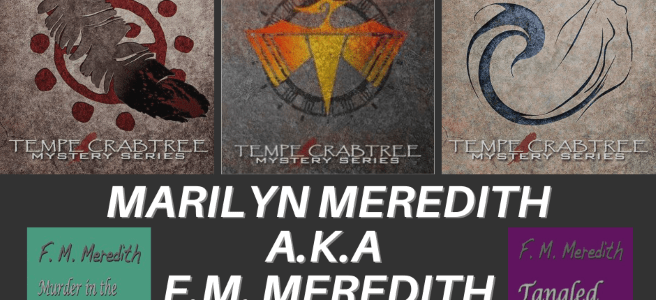
Marilyn who also writes as F. M. Meredith


From First to Third

Since publishing my first mystery in 1993, my preferred point of view has always been third person. In the Mellingham/Chief Joe Silva series I used multiple points of view, and in the Anita Ray series and later the Felicity O’Brien series I used only one. All were third person. But a few years ago I wanted to try first person, and started a stand-alone. After numerous rewrites I had something my agent liked, and out it went to editors, where it has died a pandemic death of neglect.

While I’ve been waiting for responses I’ve had time to think about all the parts of the story I couldn’t tell because I’d committed myself to first person and one main character. I had no interest in adding other points of view in either first or third, but the initially quiet moments of dissatisfaction at what I’d left out grew and I wondered what it would have been like to write the story in third person. Immediately I was reminded of why I liked that particular voice—for the intimacy and also the flexibility it allowed me as the narrator. And that did it. I decided to rewrite the mystery in third person.

Over the years I’ve heard plenty of writers groan about an editor’s or agent’s suggestion that they rewrite the entire book from first to third (or third to first), always with the reminder drumming in their brain that this means more than changing “I” to “she” (or “she” to “I”), along with all the other pronouns as well as correcting the verbs. But the thought of what I could also do prodded me forward and I began. The first discovery was the opening. I needed a different opening, and once I began that I could feel the difference in how the story would unfold.

One of the reasons I’ve avoided first person for so many years comes down to the voice. Too many of the voices in crime fiction seem flip, sarcastic, chip-on-the-shoulder tough, the teenage swagger, a voice that doesn’t sound authentic to me and one I didn’t want to imitate. The strongest people I know are also the gentlest, and that was something I couldn’t seem to capture in first person, at least to my satisfaction. Now that I’ve moved back to third person I feel the other characters opening up, and exploring them more has given the story new dimensions that I’m eager to learn and write about.

In some parts of the novel I’m rewriting an entire chapter—the same plot steps but rewritten line by line. I’ve added new scenes and chapters, but in other instances all I’m doing is changing pronouns and verbs or crossing out entire paragraphs or scenes.

When I began the rewrite I thought about how much work it would be, but still I was curious. I wondered if I’d get bored or frustrated reworking a story whose characters and details I already knew too well. But once I got into a new perspective on the main character, much of the story began to feel new to me (and much of it is new to me). I’m energized every morning as I sit down to work. The characters and plot are the same, but this mystery unfolds like an entirely new experience. For once I’m not cursing the pandemic; it has given me the time to rethink and rewrite a story I care deeply about and want to see succeed. And when this is rewrite is done, I want the pandemic to be over so my new novel can go out into the world and be read by others.

And now, for a little chaos…

I became a “Lady” (although I’m not sure I’ve ever been called that before) only a few days ago, so I’m going to introduce myself today. My path through life has been a meandering one. I have worked as a translator, a mechanical and architectural drafter, a technical writer and editor, a senior editor of a multimedia department, and a private investigator, and of course an author. I’ve been both traditionally and indie published, with 11 “how-to” books and 13 full-length works of fiction, along with a few advice ebooks, short stories, and two dust-collecting screenplays. I paint, do western line dance, hike, kayak, snowshoe, and sometimes scuba dive. I’m originally from the Kansas hills (yes, there are hills in some parts), but I’ve called the Pacific Northwest home now for decades.

All this chaos might explain how I’ve ended up with four different mystery series. (What was I thinking?) My Sam Westin wilderness mysteries are about crimes on public lands. Wilderness and wild animals are my biggest passions in life, and I spend a lot of time hiking and kayaking in wild places. There are so many ways to get into trouble “out there,” and calling 9-1-1 is not going to bring help any time soon, so suspense is naturally built into the setting.

My Neema series revolves around a gorilla who has been taught sign language. When I worked as a PI, my cases sometimes involved testimony from young children, so I’ve done a lot of thinking about who makes a credible witness. I’ve always been fascinated by animal intelligence, and a gorilla is estimated to have the intelligence of a five-year-old child. My poor human detective soon learns that while Neema knows some sign language, she doesn’t think like a person, and she doesn’t have a large vocabulary. So, when Neema offers clues like “skin bracelet” and “tree candy,” it’s up to the humans to figure out what this gorilla could possibly be trying to say. I didn’t intend for Neema to star in a series, but when readers loved The Only Witness, I had to write two more books.

I wrote the Run for Your Life trilogy for anyone who loves the Hunger Games books. I was inspired by the incredible young female athletes we see today. The protagonist, Tanzania Grey, 17 years old in the first book, is a champion runner who competes in extreme endurance races around the world, while living under a false identity and trying to evade the unidentified killers who murdered her parents.

The Langston Family Stories include Shaken, about a young, dark half-Hispanic woman managing a plant nursery she inherited after her father’s sudden death. The business has been plagued by an earthquake, vandalism, and arson. With so many damage claims, Elisa Langston becomes the target of an insurance investigation. As a PI, I am well aware of how hard it is to defend yourself after you’re accused (or even suspected) of a crime. Again deals with Elisa’s adoptive mother, Gail Langston, who lost three lovers (most recently, Elisa’s father) to violent deaths, so she’s afraid to love again. A handsome EMT, Leon, is pursuing Gail, but another person is shadowing her, too—a psychotic woman who wants Leon for her own. Eventually, I’ll write book #3 about Charlie, Gail’s beautiful blond biological daughter and Elisa’s stepsister.

Feel free to check out my writing on https://pamelabeason.com. I look forward to sharing my fractured imaginings with you all in more coherent future posts.

August by Karen Shughart

Here up at the lake we’re surrounded by orchards, vineyards and farmland; gently rolling hills and meandering streams with an abundance of fish. It’s a beautiful place any time of the year, but the end of summer, the month of August, is special in so many ways.

Sunrise is a little later this time of year, we can hear the morning songs of birds at around 5:30 or 6:00 a.m. rather than 3:30 or 4:00 as in June. There’s something peaceful and magical about waking early in August to see the sun rise, it’s rose-gold rays streaking the water with brilliant light.

Warm days are the norm; some days the humidity rises, but on others bright blue skies, lazy white clouds, and a lake sluggishly rolling its waves onto the shore are a welcome change to the previously fetid air.  Sailboats dot the horizon, pontoons chug lazily about and motorboats slice through the undulating sea. Families play on the beach and picnic under a pavilion where laughing children used to ride a carousel.

A cornucopia of fresh produce offers up its bounty at a multitude of farm stands and markets. Lovely squashes, tomatoes, blueberries, cherries, corn, beans, and herbs create a riot of color far more beautiful than any still life painting.  And the fecund ripening of the fruit on trees in the orchards, especially the apples, the first of which will soon be ready for harvest, remind us that fall is on its way. The green, green grass of past months starts to brown, the flowers lose some of their bloom, and the limbs on deciduous trees, with their dark, heavy leaves, droop with anticipation as they begin to fade. In a month or so, their bright, warm hues will beckon an onslaught of sightseers.

The days are getting shorter, but still, because we are so far north, it stays light until  after 9 p.m. and the cicadas, dormant since last year, add a soft, musical background to the fireflies that sparkle and dance their way across our yard . On clear nights, when humidity is low, the sky is awash in stars so dense to appear as a carpet covering an inky background.  Unlike earlier, warmer summer evenings, we can now, more frequently, sleep with the windows open.

Photo by Karen Shughart

Something about the light and the air bring visions of fall: bright, sunny days as crisp as biting into a just-picked apple.  It smells different, too. The air is perfumed, but in August, with a rich, heavy ripeness and the beginnings of the decay that precedes fall and winter.

Later in the month, when the tourists and those who spend their summers at simple cottages here have gone, there’s a quiet  interrupted only by the occasional droning of a lawn mower,  the buzz of insects, the bark of a dog or a the quiet chatter of friends and neighbors passing by.