Accentuate the Positive

“The worst enemy to creativity is self-doubt.

                                                                                                         Sylvia Plath

               If I had a thousand good reviews and one bad one, I’d concentrate on the bad.

               Recently, I’ve heard from three writing friends who’ve had negative comments on their work. One was from agents, another from a family member, and the other a critique partner. All three felt like the comments were unwarranted, but they were still upset.

Why do we dwell on bad comments? It seems that we all do. Is it that self-doubt cretin that sits on our shoulder telling us that we’re not good enough, not smart enough, not creative enough to be a writer? Are we so convinced that it’s right that we have our feelings confirmed when someone says something is wrong?

I’ve heard many times that a bad review is just one person’s perspective. I’ve even said it myself. And it’s true, but it still lingers in our mind for days, a month, a year until we get enough distance and move on. A great review never stays in our mind that long!

               One of my writing friends never looks at her reviews. I think that’s smart, but I’m too nosey. I have to know what people say. Most of my written reviews on Amazon have been good, but I’ve gotten some one or two stars. Those never come with a written review and usually come when a book is first out. The last time this happened my book had only been out for a day. I don’t think they had time to read it before they went in and gave it a one and two star. Other authors I’ve talked to have had the same experience. Are there trolls out there who just love to mess up an author’s reviews?

               My books are on Goodreads, but I’ve never really paid a lot of attention to the reviews. The other day I went on their website and looked and there were a couple reviews that were hard to read. Did they have merit? Maybe if I look closely at what was written but I’m still dealing with the condescending way the writers gave their opinions. 

               I know we need to try and take the good out of a bad review and move on. But, oh my goodness is that hard to do. It’s the same with being rejected. They both sting.

               When I decided to write this article, I went online and typed “famous authors whose books were rejected” into google. There was quite a list. What if they all quit before they received a yes? We’d be missing some great literary works. J.K. Rowling, Stephen King, Dr. Seuss, John Grisham, Madeline L’Engle, and Frank Herbert to name a few. Some famous writers gave up on traditional publishing and went on to self-publish and were discovered and have gone on to have great success. What if they’d given up instead?

               My dad loved Louis L’Amour’s books. He read them all many, many times. So many that we’d tease him and tell him there were other authors out there who were just as good. He agreed, there was also Zane Grey, and he read his books over and over too. I don’t know about Zane Grey, but Louis L’Amour was rejected 200 times and went on to sell 330 million copies. My dad was glad he persevered.

               I guess the takeaway of this post is don’t let one bad review or a hundred rejections determine whether your book or short story is good or not. It’s your story. You know in your heart whether it’s good or not. And I’m certain that if you love it, there will be readers out there who will also love it. Everyone has opinions and likes and dislikes about stories. Just like a painting. You may look at a painting and think it looks very amateurish, while I look at it and think it’s amazing.

               I’m sure that we all feel the sting of a rejection or a bad review but try to put it in perspective. Don’t let one bad comment define your work. Do the best you can and keep sending your work out into the world. It will find its way to someone who will love it.            

The 30,000-foot view of writing

We’ve been talking about editing, an essential element in the writing process that writers relish. When you’re creating characters, polishing plot, and tossing red herrings around to mystify readers, it can be easy to lose sight of the book as a whole, to remember what happened in chapter four when you’re on chapter fourteen.

Writers also get close to their work, sometimes too close. We spend time, often at 4 a.m., thinking about the novel, the action, the actors, the unfolding of the story. It’s hard to see the whole when you’re immersed in the parts.

That’s where editing comes in. But we’ve been talking about editing as if it’s one thing. It isn’t. There are several kinds of editing, and they take place at different points in the writing process.

Substantive Editing.

This is where the high-level work begins, the 30,000-foot view before we delve into the weeds. It involves rethinking and rewriting. This may mean rewriting whole paragraphs or the entire document. It may involve restructuring or reorganizing parts of the text. It may include identifying where new information is required or existing information should be deleted.

Editors Canada has this to say about substantive editing, which is also called structural or developmental editing.

Structural Editing.

Assessing and shaping draft material to improve its organization and content. Changes may be suggested to or drafted for the writer. It may include:
– revising, reordering, cutting, or expanding material
– writing original material
– determining whether permissions are necessary for third-party material
– recasting material that would be better presented in another form
– revising material for a different medium (such as revising print copy for web copy)
– clarifying plot, characterization, or thematic elements

Substantive editing is major surgery. It is about ensuring the medical team is ready to operate. Blood work has been analyzed, the plan for the procedure reviewed, the instruments lined up neatly, everything and everyone sterilized. The goal: to ensure a successful outcome.

That’s what writers want for their readers. Substantive editing helps them do that. Editors Canada notes that this type of editing supports writers as they define their goals, identify their readers, and shape the manuscript in the best possible way. It enables writers to clarify the argument, fix the pacing, suggest improvements, and draw missing pieces from the author.

It makes the view from 30,000 feet truly spectacular.

Learn More.

cover of Thong Principle by donalee Moulton
Saying what you mean and meaning what you say

You can learn more about this in donalee’s book The Thong Principle: Saying What You Mean and Meaning What You Say.

Author, Entrepreneur, Wearer of Hats

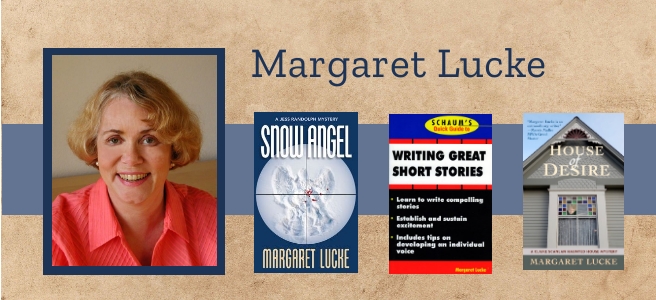
By Margaret Lucke

Recently I came across a quote I wrote down several years ago when I attended an event at my local public library. The speaker was mystery author Stella Baker, who talked about her adventures in writing and publishing her debut novel 4 Gigs of Trouble. I was particularly struck by one comment she made, so I scribbled it down:

“A book begins as an act of creativity, is finished by an act of will, and once published is a business.”

How true, I thought. But then it occurred to me that maybe this statement doesn’t go far enough. Because in reality, most writers I know who succeed in reaching readers and earning money in this crazy profession treat it like a business from start to finish. That’s especially true these days, when the publishing industry is going through a transformation and no one is certain how all of the changes will sort out. It can pay off for authors to think of themselves as entrepreneurs.

Some years ago, when my husband and I owned a printing business, we enrolled in a series of small business workshops. They were organized into three topics – the three basic functions of any business:

1. Production – manufacturing the product, or providing the service.

2. Marketing – finding customers and persuading them to buy.

3. Administration – doing all of the tasks of running the business and enabling the first two functions to happen, including managing the finances.

In other words, a business needs someone to make it, someone to sell it, and someone to count the money.

Once upon a time, a writer’s business model looked like this. The writer concentrated the most important part of the production–writing the book. Then she engaged a representative (the literary agent) to secure a partner (the publisher) for the enterprise. The partner would handle the rest of the production tasks, like editing, design, typesetting, creation of a cover, and printing, as well as the administrative the administrative aspects of their work. And, oh yes, everything involved with marketing. In fact, a friend of mine whose publishing credits go back to the 1970s has told me that her early contracts with publishers expressly forbade her from doing any marketing for her books.

All the writer had to do was write – and, with any luck, count some money.

How times have changed!

Gradually publishers pushed more and more tasks onto the writer’s shoulders. Skip the typesetting; we’ll use the author’s electronic files. Skip the marketing, except at the most basic level; if the writer wants to have the book promoted, she can do it herself.

Many writers still prefer to pursue the traditional writer-publisher partnership. But now, with the rise of independent publishers, more and more authors have decided that the partnership is no longer working to their advantage. So they’re skipping the partnership with a publisher and taking charge of the entire enterprise of placing a book into a reader’s hands. I’ve formed my own mini-publishing company to help me do just that, for myself and a handful of writer friends.

With the industry in flux, none of us knows what its future business model will look like. I’m reminded of a headline I saw a couple of years ago, when Penguin Random was facing an antitrust lawsuit stemming from its ultimately unsuccessful attempt to acquire Simon & Schuster: “Big publishers spend three weeks in court trying to prove that they have no idea what they’re doing.”

Last month, the Northern California chapter of Sisters in Crime sponsored a talk at Oakland’s main library by publishing guru Jane Friedman. Her message: The author has become the protagonist in the publishing industry’s story. The percentage of sales that goes to the big publishers’ books is slipping, while small and independent publishers are rising in terms of sales and clout. The publishers can’t do it without us.

But whatever our route to publication, succeeding in the writing business will involve wearing a lot of different hats. Not only that, it will mean balancing them all on our heads without letting any fall off. We’re more than writers; we’re producers, marketers, administrators, tellers of stories, suppliers of entertainment and inspiration to the world.

In other words, we’re entrepreneurs. Whether we like it or not. Even though what most of us want to do is simply to write.

Hey, it’s my book. I’ll kill whomever I want

I wrote my first book, The Death Contingency, when I was an active realtor. It became part of a seven-book series, the Regan McHenry Real Estate Mysteries, but when I was working on that first book, it was only a game for me, a puzzle to be solved, and an opportunity to right a few wrongs in dealings where I felt slighted or abused by the realtor on the other side of a transaction. You might say in addition to being a murder mystery, it was a revenge book.

Most realtors are nice hard-working people who care about their clients, but if you work in that business long enough, you come across people who aren’t. Writing a book outing some shady dealers promised to be satisfying.

 I assumed the people who read the book would be realtors holding open houses so it was designed to be read in small bursts during downtime between visitors. I thought if I carefully dropped clues about the identities of the real agents I turned into villains, astute fellow realtors would figure out who they were even if their names had been changed.

I was mistaken about that first book on many levels. It turns out most realtors don’t read books, or at least not mysteries written about their associates.  The few local realtors who did read my first book didn’t have any idea who I used as my characters even when it was incredibly obvious and it was great fun when they argued with me about the real identity of a character.

But based on the messages I received from realtors working in other communities, there must be many people out there who’s actions are similar because they’d say things like, “You never met Kathy from my office, but you sure nailed her.”

I always use the phrase, “This is a work of fiction. Unless specifically credited, names, characters, places, and incidents are either products of the author’s imagination or are used fictitiously. Any resemblance to actual events, locales, or persons, living or dead, is entirely coincidental.” It’s a lie.

I eavesdrop unabashedly. I freely steal snippets of other people’s lives to use in my books. The admonition, “Be nice to me or I’ll kill you in a book,” works for me. And that’s not all. Some of my best side stories come from writing about the foibles of others. (I’m not proud, though.  Sometimes I’m the one being parodied.) When I speak at book clubs or in front of audiences about the Regan McHenry Real Estate Mysteries, I always tell people that the murders are made up but the real estate stories, no matter how farfetched they seem, are real and happened to me or to an associate.

I have the feeling other writers do the same sort of things. The baker-protagonist writer has probably seen real flour-throwing incidents similar to the one she used to help her character escape from a killer. The yachting-protagonist writer may have watched an attempted drowning. The chef-protagonist writer has all those handy knives to work with not to mention flaming cooktops and opportunities to add poison to a dish.

Who knew writing murder mysteries could be so much fun…and so therapeutic?

Bella Italia!

I rode in the gondola. Of course I did. It’s one of those touristy things I just had to do.

I was in Italy, after all. In Venice, built on 126 islands, separated by expanses of water and canals, linked by 472 bridges. Away from the Grand Canal, the main thoroughfare of the largest island, one can get lost in those narrow canals, with their pathways and bridges. Public transit is water buses, known as vaporettos.

My recent trip to Bella Italia started farther south, in Naples. I wanted to see Pompeii and Herculaneum, both cities destroyed by the 79 AD eruption of Vesuvius. On the first day in Napoli, I went to local museums. I also met some fellow travelers in the hotel courtyard who invited me to join them for dinner that evening. That’s one of the delights of travel.

The next day was my guided tour. According to my Fitbit, I logged six miles walking around the two ancient cities. Which are now surrounded by modern cities. In the distance, Vesuvius looms, looking benign—for the time being.

Herculaneum first, a rather compact footprint. It was buried under 20 feet of ash when the volcano erupted. The vast acreage of Pompeii was subjected to 18 hours of falling pumice, then a pyroclastic flow of dense, fast-moving ash that buried everything in its patch, suffocating those inhabitants who had been unable to escape. Most of the city has been excavated, but they are still digging. While I was there, our tour looked at one site that was recently uncovered. In one of the rooms, the eye is drawn to a donkey’s skeleton.

From Naples, I took a high-speed train to Rome. It took all of one hour and 10 minutes. I wish we had such efficient and comfortable transport here in the United States. Ah, that’s a subject for another blog.

In the Eternal City of Rome, I joined a Road Scholar tour, logging more miles on my Fitbit as we marveled at the Forum and the Colosseum, hiked from the Piazza di Popoli to the Spanish Steps, Trevi Fountain and the Pantheon. On the way, we passed the oldest existing aqueduct in Rome, built in 19 BC by the Emperor Augustus. It’s still in use today.

On the following day we went to the Borghese Gallery. I love the sculpture of Paulina Bonaparte Borghese, by Antonio Canova. It was considered quite scandalous in its day. And of course, all the beautiful sculptures by Gian Lorenzo Bernini.

Then a side trip to the Vatican where I saw Michelangelo’s jaw-dropping works of art—the ceiling of the Sistine Chapel and inside St. Peter’s Basilica, where I stood staring at the Pieta, now behind a glass wall since someone whacked it with a hammer back in 1972, causing serious damage.

Another day, another high-speed train, to Florence. The stunning Michelangelo painting of the Holy Family in the Uffizi Gallery. Berlusconi’s Duomo. The adjoining museum contains a remarkable Donatello sculpture of Mary Magdalene. And then the Accademia Museum, where Michelangelo’s beautiful David stands, ready to confront Goliath.

One of my fellow travelers and I went to the Pitti Palace, another museum full of paintings and sculpture. We stood on line at the entrance with three Greek Orthodox nuns from Macedonia and had a pleasant conversation, also one of the delights of travel.

Venice next, with the riches of St. Mark’s Basilica and the Doge’s Palace. We also saw something of workaday Venice, when our vaporetto went through the port, seeing boats loaded with packages and luggage. Boats pick up the hotel’s laundry every day. And at one vaporetto stop, a woman got on wearing a Post Italiane uniform, pushing a cart full of mail to be delivered.

When my tour was over and it was time to head for the airport, I traveled by water taxi, speeding over the lagoon to the docks outside the airport.

The food! Wonderful pastas and salads, delicious pizza, and I must confess that I sampled gelato everywhere. My favorite is stracciatella, vanilla ice cream drizzled with strands of chocolate. Good thing I was doing all that walking.

I just returned from my trip a few days ago. It was late evening, so I unearthed my toothbrush from my bag, took a hot shower, and went to bed. After my two-week absence, my three cats were ecstatic to see me. Unpacking could wait until the next day, after the necessary grocery run and laundry. The jet lag is kicking my butt, of course.

I do have my plot, however. Yes, there will be a novel set in Italy. The idea is taking shape in my mind.

In the meantime, I have some fiction suggestions. Pompeii, by Robert Harris, historical fiction that takes place before and during the eruption. An official from Rome arrives in Pompeii to check out problems with the local aqueduct and suspects that Vesuvius is the cause. North from Rome, by Helen MacInnes. Set in the 1950s, a playwright travels to Rome when his fiancée, a secretary at the U.S. Embassy, ends their engagement and accepts a proposal from an Italian businessman. Soon he and the other characters are caught up in deadly Cold War intrigue.

For Florence and the Tuscan countryside, I recommend Turn to Stone, by James Ziskin. It’s part of his series set in the early 1960s featuring reporter Ellie Stone, in Florence because her late father is being honored at a symposium. The event organizer winds up dead in the Arno River. Was it an accident, suicide, or murder? Ellie’s search for answers leads back to the traumatic years before and during World War II. As for Venice, Donna Leon’s Commissario Brunetti novels have been recommended but I haven’t read one, yet. I will soon remedy that.

Ciao! Here’s to pasta and gelato!