Imagining Murder

.

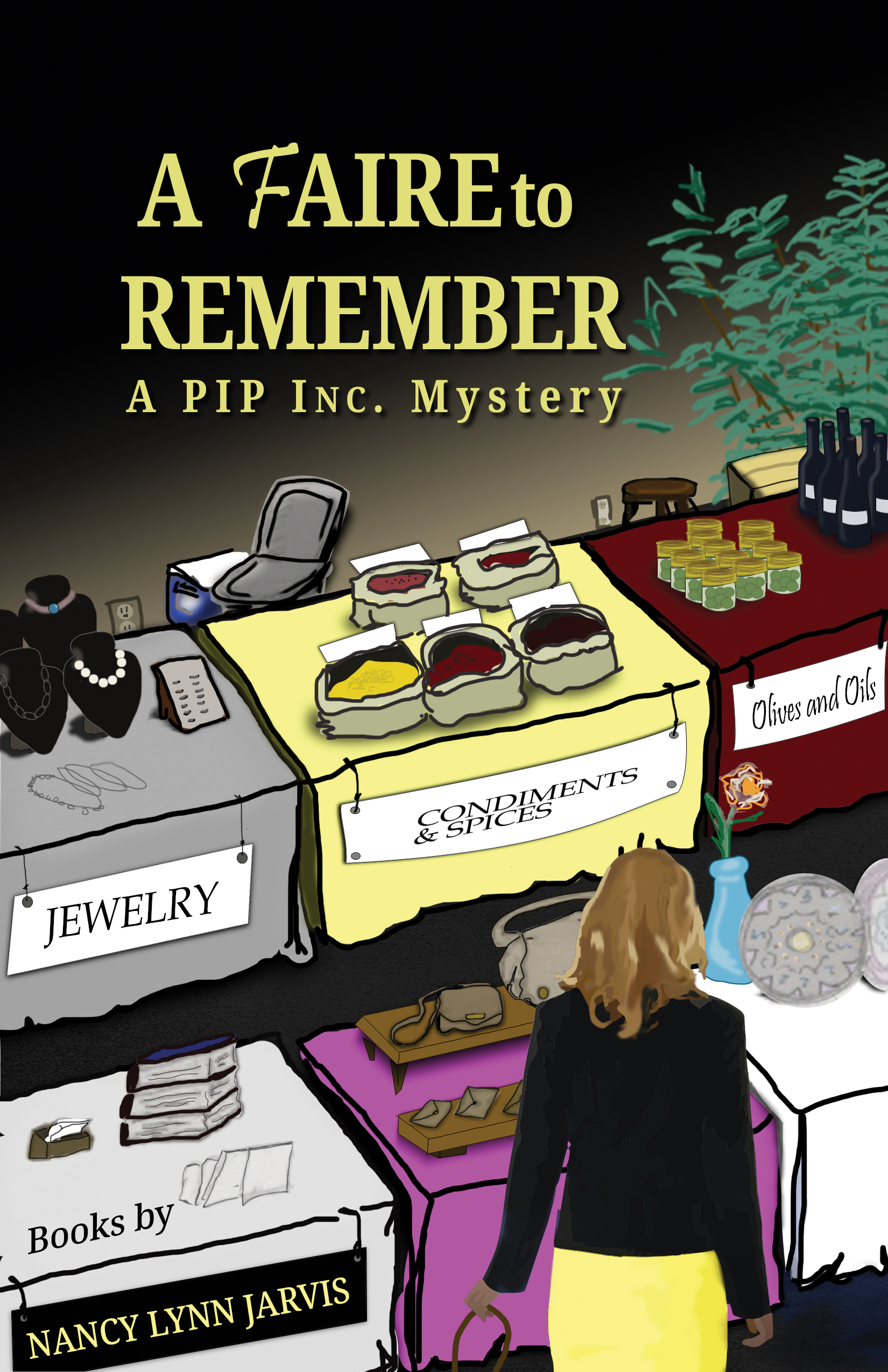
I’m a setting thief. Lots of writers are, but I always set books where I can see what’s happening which probably isn’t true of all writers. I also steal dialogue, people, and events. What that means right now is book seven in my PIP Inc. Mysteries series isn’t the one I expected to be writing. Originally, I had a great idea about using AI to facilitate a murder, and I will get around to that book, but as number eight, not number seven. What changed the story order was what happened at a two-day Christmas faire last year where I was selling my books when opportunities for theft of setting, dialogue, characters, and of course murder, presented themselves and I decided to steal all of them.

The faire was held at the fire station in spaces normally reserved for huge engines and in the other rooms reserved for meetings, food prep, overnight sleeping, and storage of all sorts of equipment and supplies the firefighters use. The engines were discretely relocated outside for the event and I was lucky enough to be assigned a booth in the part of the fire station where they normally were housed.

Fire engines are incredibly tall vehicles so the garage part of the firehouse had ceilings high enough to accommodate them. Lighting was supplied by banks of lights built into the ceiling. As we vendors began setting up our booths on Saturday morning, one of the lights over where I was started strobing, flashing on and off with bright bursts of light. It was disturbing and likely to cause headaches or worse if we had to try and work under such conditions.

The firefighters, as firefighters do, rushed to help. They took a tall ladder off one of the engines and placed it under the offending light. A brave young firefighter climbed it and decided which florescent lightbulb was the trouble maker. He shouted down to us that he thought it would be an easy fix, but when he removed the bulb, the whole bank went dark. A search for a replacement bulb was started, but it seemed the fire station with its vast stores of equipment was out of lights of that length. He replaced the bulb, towels were collected, and an attempt was made to wrap them around the offending bulb. It didn’t work. The only way to stop the light from causing us all to lose our sanity was to cover the entire bank of lights.

The strobing stopped, but some of us were plunged into late-afternoon-post-time-change darkness. We needed light to show off our wares. Many vendors were distraught. We tried to help one another with some booth occupiers switching places, but there were still problems. Lamps, hurriedly gathered from other rooms in the fire station satisfied some of our needs, but there were many unhappy people and one vendor remained outraged at how dark his space was and caused a scene. At that moment, I decided to kill him.

The light situation presented a great opportunity to do so. No stabbings or poisonings for him. No gunshots. He was going to die by electrocution. My creative, or should I say warped, mind immediately came up with some ideas for how his murder would take place and a clever twist about who his killer was. All I was missing was a motive for his murder since it didn’t seem reasonable to kill him for being annoying. By the time the faire was over on Sunday afternoon, I had watched how other vendors moved around the faire, who covered for whom for food runs and bathroom visits, and where firefighters slipped off to for breaks. I had many red herring suspects with opportunity…but still no motive.

Writers know that sometimes you just have to stop pondering and sleep on it; which was exactly what I did. The motive came to me in the middle of the night, not exactly in a dream, but in a moment of sleepless restlessness.

 “A Faire to Remember” will be out later this year. A cover reveal and more about the book in next month’s post.

 I can’t read while I write

Which is a shame because my to-be-read pile is growing every day, filled with intriguing titles, but I’m working on book seven in my PIP Inc. Mysteries series which means no reading until it’s finished. You might wonder why I can’t read when I write. I’m a very undisciplined writer so it’s not like I sit at my computer tapping away all day long. Why, then, can’t I read when I take a break from writing?

I consider my particular writing and reading impairment as the result of being a good realtor for almost twenty-five years. Realtors are taught to mimic clients talking speed, body language especially use of hands, emotions, and language as much as possible. Classes are taught in how to do those things. I dropped out after the first class because I’m a natural mime, always have been. That helped me as a real estate agent and probably has helped in other situations, too, but as a writer it’s a problem for me.

Many cozy mysteries are written in first person. I don’t do that. I write in third person. But if I’m reading a good cozy written in first person, I start to slip into that style of writing which makes a mess of the POV and my manuscript in progress.

There are other distractions, too. Dialogue is a potential problem. After fifty pages of another writer’s dialogue, my characters begin to mimic their phraseology and start to take on their use of language. Mime time again.

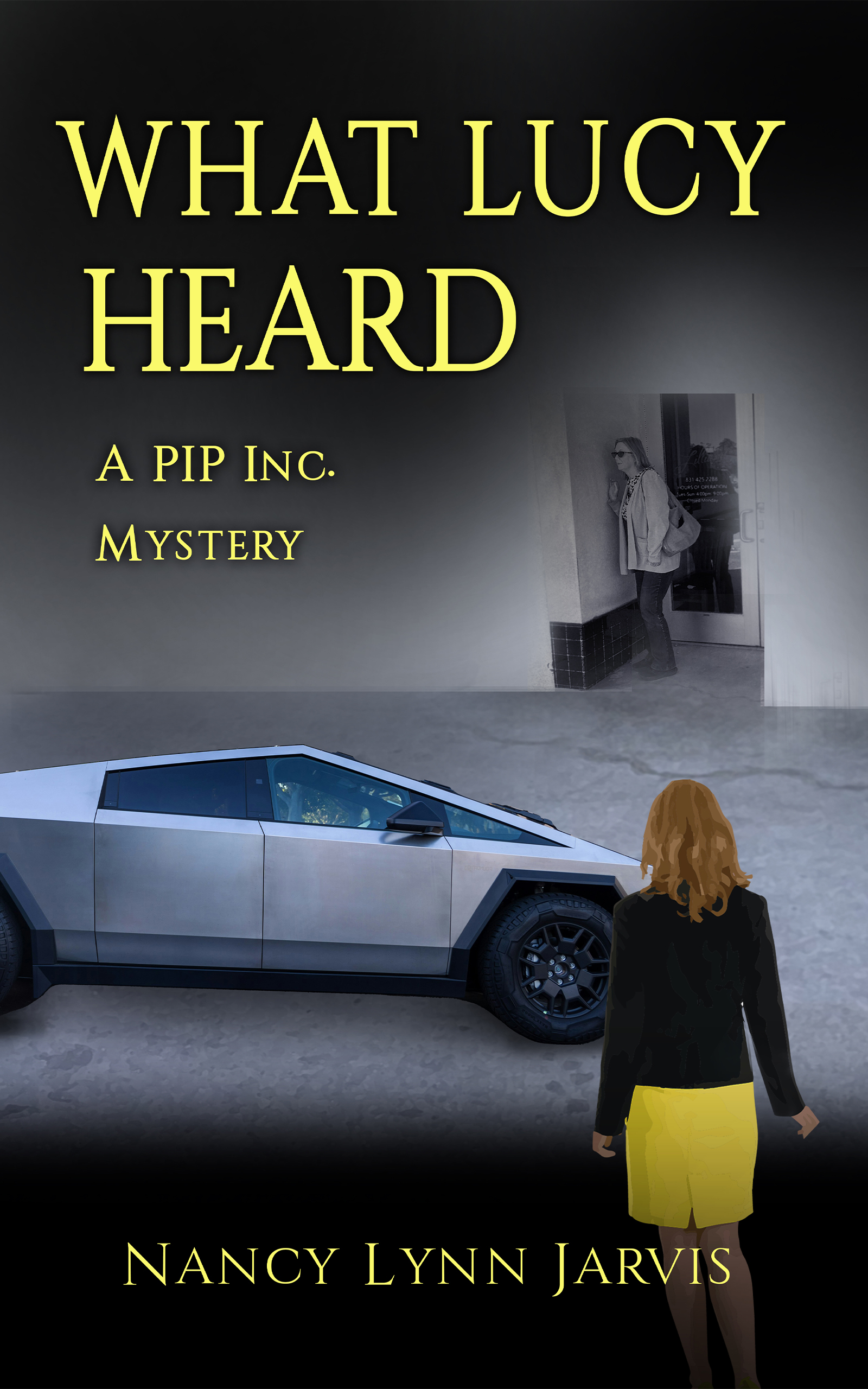
My storyline suffers when I read while writing. I do a short psychological profile and background history for most of my characters before they head for their places on my pages. I do use a timeline because I need to know who knew what when or I get lost having, for example, a clue about when a character who had taken her hearing aids out in a noisy restaurant, put them back in (critically important in What Lucy Heard, for example) and why her dinner companion didn’t know she had.

My outlines are a lot more flexible, though. Before starting a book, I know who the killer is, how and why the murder victim was killed, how the story will begin and how it will end, and have characters I want to introduce to move the story forward, but there’s a great deal of flexibility in how all those pieces come together. If I read while writing, the mimic in me invariably spots a clever plot twist in the work I’m reading and wants to incorporate it in what I’m writing, which as you can imagine, makes a mess of my plot. I do wonder if it’s just me or if other writers have the same problems?

Until my book is finished and off to the editor, I’m sorry Nicole, Vinnie, Mary, Robin, Valerie, Claire, Genevive, Richard, and Verlin. Your books will have to wait a bit longer to be read, but I do know how important reviews are so I promise to leave one as soon as I finish reading your book.  It’s the least I can do for keeping you waiting while I write.

Hey, it’s my book. I’ll kill whomever I want

I wrote my first book, The Death Contingency, when I was an active realtor. It became part of a seven-book series, the Regan McHenry Real Estate Mysteries, but when I was working on that first book, it was only a game for me, a puzzle to be solved, and an opportunity to right a few wrongs in dealings where I felt slighted or abused by the realtor on the other side of a transaction. You might say in addition to being a murder mystery, it was a revenge book.

Most realtors are nice hard-working people who care about their clients, but if you work in that business long enough, you come across people who aren’t. Writing a book outing some shady dealers promised to be satisfying.

 I assumed the people who read the book would be realtors holding open houses so it was designed to be read in small bursts during downtime between visitors. I thought if I carefully dropped clues about the identities of the real agents I turned into villains, astute fellow realtors would figure out who they were even if their names had been changed.

I was mistaken about that first book on many levels. It turns out most realtors don’t read books, or at least not mysteries written about their associates.  The few local realtors who did read my first book didn’t have any idea who I used as my characters even when it was incredibly obvious and it was great fun when they argued with me about the real identity of a character.

But based on the messages I received from realtors working in other communities, there must be many people out there who’s actions are similar because they’d say things like, “You never met Kathy from my office, but you sure nailed her.”

I always use the phrase, “This is a work of fiction. Unless specifically credited, names, characters, places, and incidents are either products of the author’s imagination or are used fictitiously. Any resemblance to actual events, locales, or persons, living or dead, is entirely coincidental.” It’s a lie.

I eavesdrop unabashedly. I freely steal snippets of other people’s lives to use in my books. The admonition, “Be nice to me or I’ll kill you in a book,” works for me. And that’s not all. Some of my best side stories come from writing about the foibles of others. (I’m not proud, though.  Sometimes I’m the one being parodied.) When I speak at book clubs or in front of audiences about the Regan McHenry Real Estate Mysteries, I always tell people that the murders are made up but the real estate stories, no matter how farfetched they seem, are real and happened to me or to an associate.

I have the feeling other writers do the same sort of things. The baker-protagonist writer has probably seen real flour-throwing incidents similar to the one she used to help her character escape from a killer. The yachting-protagonist writer may have watched an attempted drowning. The chef-protagonist writer has all those handy knives to work with not to mention flaming cooktops and opportunities to add poison to a dish.

Who knew writing murder mysteries could be so much fun…and so therapeutic?

Karan Made Me Do It!

For the longest time and in increasing numbers, people I meet at fairs and book shows have been asking if my books are available on Audible. I’m a paper book aficionado; I don’t enjoy reading on my iPad and would never dream of reading on a phone. Oh, I do listen to podcasts which are short and usually newsy regularly, but the only book I’ve ever listened to was “1776” read by its author, David McCullough. I found it mesmerizing, and even after a seven-hour drive home, I stayed in my car until almost midnight to hear the last few pages.

In the past year the pressure to make an audiobook has been increasing, but I still successfully avoided doing it. My neighbor Karan was the pushiest. “I listen to audiobooks every day,” she said. “Please, please, please do audiobooks.”

I’m a master at finding excuses for things that scare me. I’d say “I’m in the middle of writing another book and can’t think about audiobooks until it’s finished.” When a book was finished, I’d move on to, “I can’t do anything about an audiobook right now because I’m trying to promote my new book.” If I had free time I’d say “I’m a technophobe; I could never deal with audiobook production.” And, then there was always my personal favorite: “Hey, I’m just a poor writer who could never afford to pay Meryl Streep to read a book of mine.” (Not that she would anyway.)

On January 1st, I came dangerously close to running out of excuses.  At a New Year’s Day brunch my daughter-in-law’s brother mentioned he had been setting up podcasts and book readings and said he would be happy to produce an audiobook of “The Glass House,” the first book in my PIP Inc. Mysteries series.  Panic time. But then I remembered the getting a professional to record issue. Whew.

That final excuse soon fell, too. No, Meryl Streep didn’t agree to record a book for me, but I discovered listeners are often willing to let an author read their book to them. I learned a number of other things about audiobooks, too, things like what’s happening to their market share of books consumed each year. Statistics from 2024 stated there were 270 million audiobooks sold that year and 7.93 billion dollars in revenue was generated by eager listeners. The most shocking statistic was that listeners were increasing 15% per year. I’m not great at math, but even I understood the implications of numbers like that.

So, Karan, I don’t pretend to be an actress and the results of trying to do a male voice might be questionable, but per your demands, the book came out on March 13th. Audible gave me a bunch of free codes and told me to give them to family, friends, fans, and anyone who would agree to listen to the book and promise to leave a review. The goal is to get fifty reviews; that’s evidently a magic number in Audible land.

If you are willing, please email me at nancylynnjarvis@gmail.com and I’ll send you one. At the very least, you can do more than read my posts. You can find out what I sound like.

The Glass House: A PIP Inc. Mystery (PIP Inc. Mysteries Book 1)

The Glass House: A PIP Inc. Mystery (PIP Inc. Mysteries Book 1)

By Nancy Lynn Jarvis

Stealing the identity of a real-life friend

I probably should connect more with Regan McHenry, the realtor-protagonist in my first series, Regan McHenry Real Estate Mysteries because Regan started out as me. But “Nancy” only made it until she found a body. I was so disturbed by that event that I had to put some distance between me and make believe. So, the truth is, I connect much more with downsized-out-of-her-Santa-Cruz-County-Law- Librarian position and newly minted private investigator, Pat Pirard.

It’s not unusual for my characters to start out as people I know. Starting with real people works well for me until I want a character to do something my real person wouldn’t do. Often, they refuse to do what the story demands quite forcefully. Rather than argue with my characters, I have learned the best way to handle the situation is to change their name so they will become more mailable and bend to my will, although sometimes not without an argument.

There are only two exceptions in my name changing strategy. The first is Dave in the Regan McHenry Real Estate Mysteries. The other character who has always retained her real name is Pat.

The real Pat is one of the most interesting people I know. She’s inquisitive, daring, friendly, resourceful, and curious, traits she retains in the books.  it’s fun to take some of her idiosyncrasies and incorporate them into my written protagonist. The real Pat giggles. In my books I say she sometimes giggles; the real Pat insists she never does. Both Pats, real and written, are incredible markswomen who always carry a 357 Magnum revolver with them, the real Pat in her purse, my Pat in the leopard briefcase she sports. Both Pats love bold jewelry and wear it liberally.

In the past, both Pats were the Santa Cruz County Law Librarian. The real Pat retired from that role and was happy to devote more time to the side hustle she had: being a PI. My Pat was downsized out of her job on her thirty-fifth birthday and had to become an unlicensed private investigator, not so much because she loved being a PI, but out of necessity to pay the bills.

The real Pat is confident about who she is and what she wants. Pat Pirard started out unsure about how to be a PI, struggled with deciding about a romantic relationship, and wondered if she could solve a case and get a paycheck before she and her pets, Dot, her Dalmatian, and her ginger tabby cat, Lord Peter Wimsey, got evicted because of non-payment of rent.

      In the series, time moves realistically with Pat getting her next assignment at the end of each book or immediately after the previous book ends. What Lucy Heard is my Pat’s sixth job and begins with her taking on a jury selection assignment, a role the real Pat has done but says was so stressful she will never do it again. My Pat, who has no experience with jury selection, reluctantly agrees to give it a try even though she isn’t looking forward to working with the famed attorney who has made her feel manipulated when she worked for him in the past. With each of Pat’s cases she’s been gaining experience and confidence and has learned to trust her instincts, but in this book, it feels like she’s starting over and will have to build belief in her abilities from scratch.

She accepts the challenge, though, and does a credible job with jury selection, happy to help because she believes the accused man’s bizarre story about how his fingerprints wound up on the murder weapon and why he was at the murder scene. The problem is that Pat sits in the courtroom and hears all the witness testimony which contradicts what the accused man told her. Self-doubt swamps her and she becomes concerned she’s helping a guilty man get away with murder.

She decides the only way she’ll be able to sleep at night is to solve the murder, something the police feel they’ve already done. After investigating and looking at things differently, she thinks she’s finally figured out what really happened. Unfortunately, her solution to the murder seems as far-fetched as the story the accused man told. How Pat tries to prove her thesis makes for some silliness and a few story kinks.

Thank goodness the real Pat approves of how my Pat solved the murder so I’m free to keep using her as a character and delighted to continue to bring a friend to the pages of mysteries.