
Lessons from Outside My Genre, or, How Reading History Informs Writing Mystery

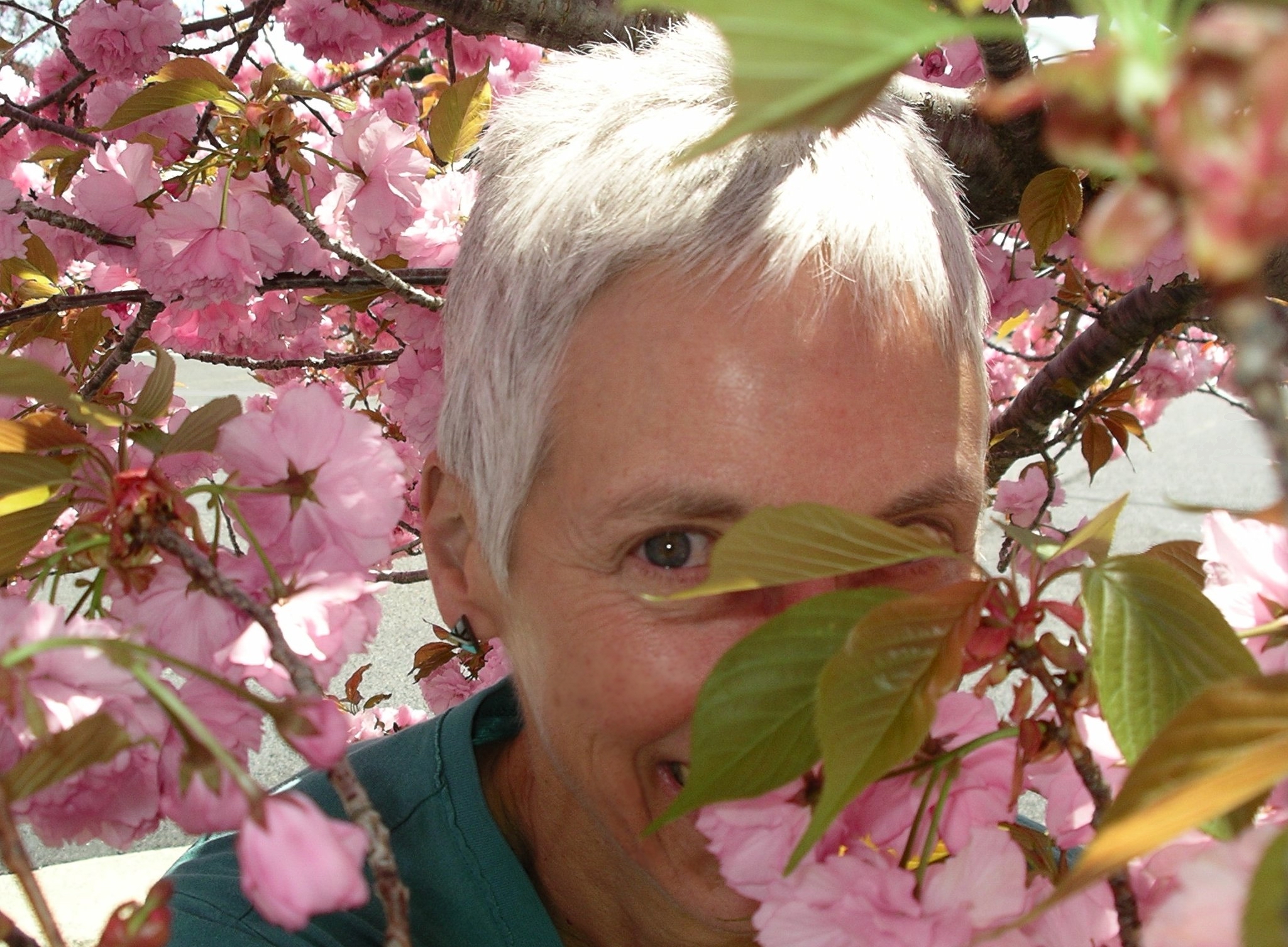
My book-related gratitude this year is for my book club. One of many things I love about Amber in tree finalbeing in this club is the diversity of genres we explore. I’ll always read mysteries, but I need to go outside my genre. It challenges me to learn new information and do more critical thinking. Reading other genres also makes me a better writer.
For October’s read, we chose Ron Chernow’s extensive biography of George Washington, an 800-plus- page book. We had to postpone our discussion into November so we could finish it. Many times, we select a book that one or two members decide not to finish or that someone feels no need to have completed before we meet. This book was different. We all wanted to read every page before we talked about it. What makes this enormous volume so compelling? After all, we know the plot—the main character’s career, who he marries, who won the war, and of course, who won that first presidential election.washington_1772
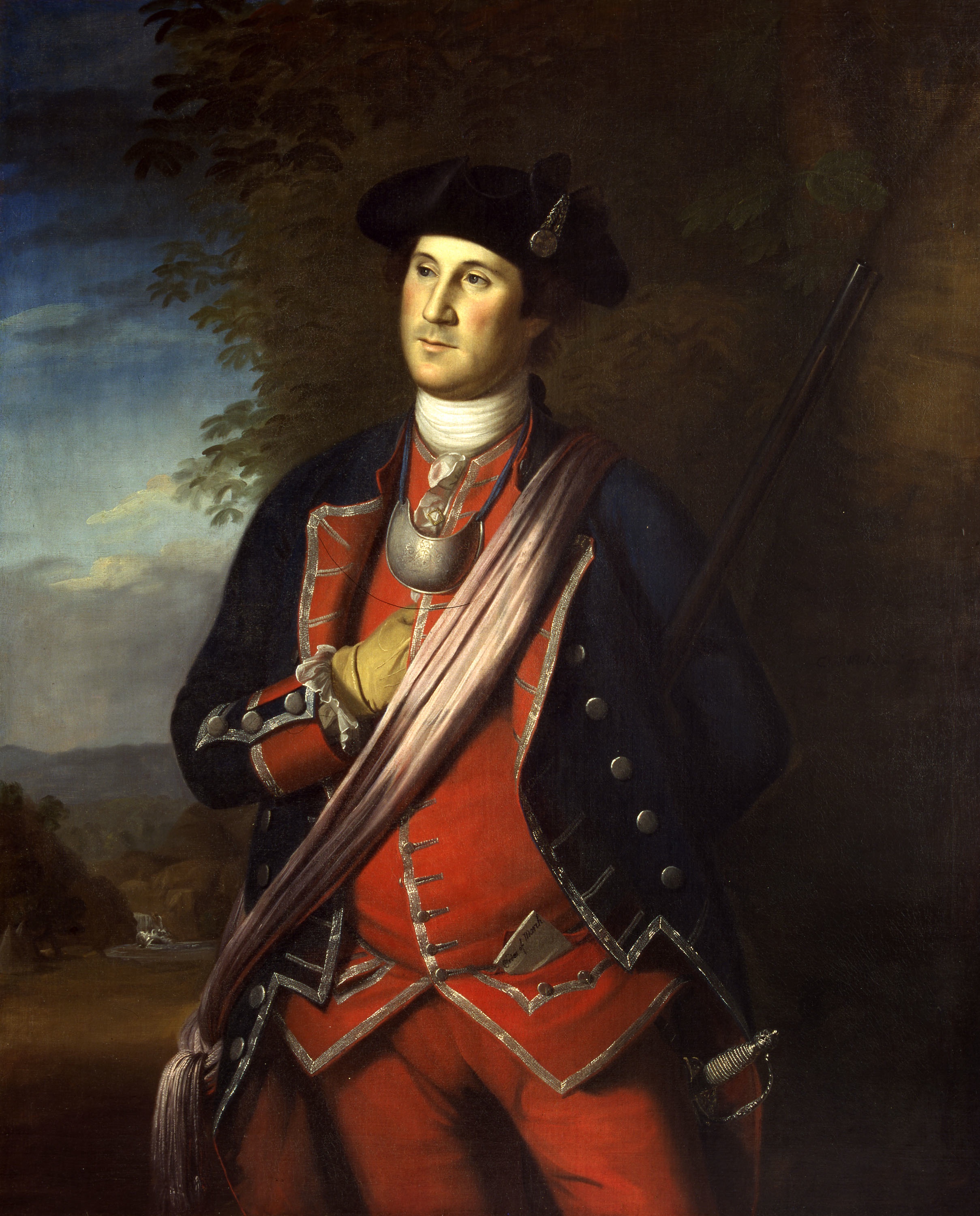
I’ve tried to identify the features of this biography that could provide lessons for any story-teller and which make it a page-turner above and beyond the question that keeps a lot readers going in fiction—“how will it end?”

Friendships make great stories. It’s easy to think the strongest drama is in romantic love, but in some lives it isn’t. George and Martha Washington’s marriage was long, affectionate, stable and free of scandal. His friends provided more drama—not that he liked drama, but a reader does. Alexander Hamilton was a powerful, valuable and difficult friend, a needed ally but not an easy one. Lafayette was loyal and affectionate, almost like a son to Washington. The contrast between his emotional, open personality and the reserved Washington makes the reader care about both of them and understand their rapport. A story about friendships could be filled with enough variety that no romantic drama is needed: Friends who support the main character and friends who undermine or disappoint him; friends who fail in their struggles; friends who challenge and refine his character and ideas. Washington had all of these.

Enemies make great stories, too, of course, if they are well-developed characters. Washington’s colleagues who wanted to supplant him in the army provide some lively incidents. The way he let these ambitious fellow generals destroy themselves without his taking any action against them is amazing. He could foresee how his enemies might trip themselves up and then wait and let them do it. Once in a while, however, he failed to read character well. Benedict Arnold and his wife Peggy are fascinating, more so than any British general. Betrayed trust makes a more complex story than frank, constant opposition. (Historical fiction writers: There’s potential for a novel in Peggy Arnold.) Do you know if Thomas Jefferson and James Madison were Washington’s friends or enemies? Did he know? Read the book and find out. It gets complicated.

Unexpected characteristics are engaging: Imagine a president who hopes he’ll only be needed for two years and can then resign. (Obviously, he didn’t get his wish.) Washington described being elected in dismal terms. In a letter to his friend and trusted general Henry Knox, he said this of being elected president: “…movement to the chair of government will be accompanied by feelings not unlike those of a culprit who is going to the place of execution.” Martha dreaded being first lady, too, and felt like a prisoner in that role. The aversion this couple had to being famous and powerful is a trait that contrasts with our common expectations of people in politics.

Secondary characters can be compelling—and reveal a lot about the main character. Washington’s mixed feelings about slavery show in his relationships with his slaves, refusing to permanently separate married couples or to break up families. His personal attendant, William Lee, who went through the war with him, married a free black woman in Philadelphia and asked that she be brought to Virginia when Washington returned home. He didn’t like Lee’s wife and yet he did as Lee asked. (What a complicated life this couple must have had when she arrived. Lee is another figure would make an intriguing central character for a historical novel. My book club told me I have to write it. I think someone else should.) In many ways, Washington treated Lee like a valued employee, but he owned him. He showed solicitude about all of his slaves’ health and family relationships, but they still were slaves and he expected them to work as if they were being paid for the labor. The inconsistency in his behavior reveals what he felt inside. It took him his whole life, literally, to resolve his inner conflict about slavery.

Washington’s attitude toward women was positive. He found them better company than men socially. A dinner party was disappointing if it was lacking ladies. He admired female historians and poets, and never seemed to think them inferior to male writers, and he conversed with intellectual women like Elizabeth Powel as his equals. The idea that women might vote never came up, of course, no matter what political insights Mrs. Powel could give him. And, as a man of his times, he advised a headstrong niece that she should learn to submit her will more to her husband’s.

Family conflicts create empathy. Who would imagine that a great leader had a whiny, you-never-take-care-of-poor-me mother? Think of the Dwayne-and-Mom sketches on Prairie Home Companion and take them back to the 18th Century, and you have an idea what it was like for our first president to deal with Mary Washington.

Flaws and failures are important. If the main character doesn’t have pain and weakness, there’s no interest. No matter how strong someone is, that person has troubles—family, health, finances, all of the above—and sometimes makes major blunders. A character who can hold a reader’s attention usually has more virtues than flaws, but the balance can be close to fifty-fifty, if the flaws are traits readers can identify with and are paired with the opposite virtue, or are its shadow side. Washington tried to keep his temper but he couldn’t always. He tried to be honest, but he could tell a lie, even though he preferred not to. His respect and admiration for women was a virtue, but it was a blind spot that let Peggy Arnold get away. His generosity was a good trait, though he often spent money he couldn’t spare, being short of funds due to crop failures and because he shopped, redecorated and remodeled far more than he reasonably should have. This didn’t stop him from paying for the college education of various young relatives and other deserving young men, and entertaining every stranger who dropped by Mt. Vernon. It would be hard to like a character who only spent too much on his home décor, but when his extravagance is extended to paying tuition also, the reader’s feelings lean in his favor. Some of the provisions made in his will say even more about his character, but to reveal them would be a spoiler.

I opened the first page already knowing how the main character lived and died, but all of the features above kept me turning the pages.

Flying High

by Janis Patterson

The Husband is an avid rocketeer and even has a Level 1 High Power rating. That’s heavy, folks, and means he can send up huge rockets. So why am I talking about rockets on a mystery writing blog?

I could say it’s a mystery to me why anyone likes sending up rockets, but that would be a cheap shot. I just know he’s not alone. There are thousands of hobbyists across the country and at least two national organizations. (I don’t pay that much attention to that part of it.) Our local chapter has at least two dozen members, and I remember being surprised that several of them were women. Of course, I am a member, but that’s only because of a family membership. Plus the fact I like some of our local members very much, and our group’s going out for dinner after a meeting is always a delight.

The rockets not so much. First of all you have no idea of how many parts go into a rocket, and considering how spread out they are during construction apparently not one can touch another while the rocket is being built. Second, every rocketeer needs multiples of different sizes of rocket bodies, which to me look just like cardboard tubes. Frankly, our sunroom (rocket central in our house) looks as if a pipe organ had exploded in there.

Thirdly, building a rocket takes an unimaginable amount of time, energy and money. Especially money. A dedicated rocketeer can spend up to a year building a rocket – deciding the size, creating the fins and attaching them, putting in the motor mount, calculating motor size, choosing a parachute, deciding whether or not to have a GPS and/or a camera, choosing the paint colors and design, then doing a base coat while the thing is still in pieces… then once the rocket is finally completed spending endless hours putting on the final finish. Sanding, painting, buffing, sanding again, painting again, buffing again… all for the dubious joy of sending the thing aloft with a whisssth, as likely as not never to be seen again! AAAAUGH!

Once in an attempt to understand I talked to The Husband about this. He didn’t see anything that wasn’t immediately obvious. “What’s to understand?” he asked. “It’s fun.”

Fun. Humph. I would really just as soon watch paint dry. Which, if I think about it, is not a very fair statement. The Husband seldom (like once every couple of years) reads fiction, yet he accompanies me to my local MWA meeting, whether or not the subject is one that interests him. Of course, directly after that I go with him to his rocketry meeting, where I know I won’t find anything that interests me beyond the cameraderie of dinner afterward.

However… I was born with an overdeveloped fairness gene, and must look at the other side. He finds fiction boring, much prefering history. He has always been absolutely astonished that I can spend an entire day at the computer wrestling with a storyline, weighing one word against another over and over again, sometimes barely conscious of what is going on around me (do NOT ask about the burned roast!) until I am so knackered I can barely stand and still enjoy it thoroughly… most of the time.

“It’s fun,” I tell him. The look he gives  me is probably equal to the one I give him. If I have learned anything it’s that we must be tolerant and supportive of our spouse’s passions, no matter how incomprehensible they might be to us!

What Scares You?

screaming-face

Since we’re so close to Halloween, I thought I’d explore my one venture into writing horror. The plotting workout of going outside my genre was educational, as it made me study the art of scaring people.

I’m at home writing paranormal phenomena. My mystery series features a psychic protagonist and there are ghosts and spirits in two of the books, Shaman’s Blues and Soul Loss. However, their roles are more mystical than frightening, and while the ghost in my prequel short story The Outlaw Women delivers some disturbing news, he’s actually quite benevolent. Mystery involves suspense and tension, and sometimes fear for the main character’s safety, but not the kind of fear that that makes the hairs on the back of your neck stand up.

In Stephen King’s analysis of horror, Danse Macabre, he has a chapter on monstrosity in which he examines the fine line between the strange and the monstrous. It’s the walk on that line that I find chilling. When the transition into monstrosity is too extreme, the impact is lost. To me, the scariest part of a horror story isn’t the gore. The blood and guts or weird slime or whatever is supposed to deliver peak terror is usually so over-the-top or icky that I’m not scared anymore. It’s the build-up that creeps me out, the sense that something is wrong at a deep, perhaps supernatural level, making it hard to fight or prevent.

Though I read horror stories occasionally, I never planned to write one. I ended up doing it on kind of a dare. In a discussion with several other authors, I brought up the fact that when author earnings are sorted by genre, the most money was in romance. None of us wrote romance. A horror writer said he’d have to try. I asked, “Horror-romance?” Next thing I knew, we were working on an anthology of horror-romance short stories based on the seven deadly sins. I picked sloth, since it was a challenge. How could I make laziness frightening? And romantic, in a scary way?

The Apache concept of bear sickness, a condition of unnatural lethargy, struck me as good starting place. Loss of control at the mental level, the feeling that something is invading and taking you over against your will, would have to be terrifying. I explored other Apache myths about bears and came up with a horror story without gore, an appropriate choice for the author of series of mysteries without murders. I was working on Ghost Sickness at the time, which is set, in part, on the Mescalero Apache reservation, so I used that locale—the same powwow, and even a couple of the minor characters from Ghost Sickness— in my horror story. When it turned out to be too long for the anthology, I set it aside for a while. Last year I released Bearing as a stand-alone for Halloween. Most people have liked it and found it creepy or chilling. However, the only review on Barnes and Noble says “Not at all scary.” The same things don’t frighten all of us. What gives you a good scare?

Bearingbearing-copy

 A tale of paranormal horror based on Native American myths.

Mikayla, young Apache woman attending a powwow with her family, becomes entranced by an outsider, a Cree man who shows up without his Apache girlfriend. As her fascination consumes her, Mikayla changes in ways both pleasurable and frightening, powerless to overcome his dark magic until it may be too late.

*****

The Calling, the first book in the Mae Martin Psychic Mystery series, is on sale for 99 cents through Oct. 28th on all e-book retail sites.

It’s Not Always About Winning by Paty Jager

This past weekend I attended the InD’Scribe Conference and RONE awards.  My book Double Duplicity was a finalist in the mystery category.

Double Duplicity (652x1024)I hadn’t planned on attending the conference, but I received an email that said my book was a finalist in the RONE contest. A contest that was vetted three ways. First the book had to have a 4.5 or better review from the InD’Tale review magazine. Then it was left to readers to vote for it. After that round it was read by people who work in the publishing industry. The scores were tabulated and the winners were picked.

At the conference, I was also a member of a 4 person panel that talked about writing paranormal. I was happy to find I wasn’t the only person who had shape-shifting Native American tales. My book, Double Duplicity, that was up for the Mystery RONE award has a deceased Nez Perce woman who visits her granddaughter’s dreams and helps her solve mysteries. I believe being a finalist helped put me on that particular panel.

The mystery category had stiff competition. I didn’t read each finalists books but I looked them up. A funny thing happened when I first arrived. A young man saw my finalist badge and asked what category. I told him mystery. He was a finalist for paranormal.  He asked if I’d read my competition. I replied I hadn’t. “That was probably smart,” he said. “After reading mine, I know I don’t have a chance.” Which was pretty much why I didn’t want to read the competition.  It would have taken the wistfulness of perhaps winning away, if I felt I didn’t have a chance.

me-rone-awardI dressed up for the event and sat through the two hour long celebration. Of course mystery and suspense were the last categories to be given out.

I’m the first to admit when I saw they were making the people who won the top spot give a speech, I was hoping to not be the winner, only a runner up so I didn’t have to give a speech. And my wish came true. They called the winner of the mystery category and then the runner up. Which was me! While winning and having the crystal trophy would have been awesome because the InDTale magazine would have also given my book free promotion, I’m happy with the certificate naming me the runner up. It validated I didn’t make the wrong decision by writing the genre of my heart.

And even though I’m a runner up, TJ Mackay, the head of InDTale magazine, said that many of the categories the difference between the winner and 1st runner up was by 1 point and one category by half a point. I like to think the mystery category was one of the close ones and that makes my runner up all the more sweet.

You can download the first book of the Shandra Higheagle Mystery Series, Double Duplicity, for free at all ebook venues. Watch in November for the 7th book in the series, Yuletide Slayings.

Paty Jager is an award-winning author of 25+ novels and over a dozen novellas and short stories of murder mystery, western historical romance, and action adventure. She has a RomCon Reader’s Choice Award for her Action Adventure and received the EPPIE Award for Best Contemporary Romance. Her first mystery was a finalist in the Chanticleer Mayhem and Mystery Award and was 1st runner up in the RONE Award Mystery category.  This is what Mysteries Etc says about her Shandra Higheagle mystery series: “Mystery, romance, small town, and Native American heritage combine to make a compelling read.”

blog / websiteFacebook / Paty’s Posse / Goodreads / Twitter / Pinterest

SH Mug Art

Guest – D.J. Adamson

18c9df8f-826a-4eda-93a2-fc844dea3118  The act of self-promotion. Getting Out There!
I worked in sales and marketing before deciding to self-publish. This background gave me the confidence to go forward. I’d trained many people to successfully sell and market. Combining what I knew before with what I know now, allows me to pass on some of the tips I’ve learned about selling and marketing my books.

At the beginning, I mimicked what others were doing.  I played with social media, went to conferences and networked, purchased promotional packages.  Did I have success?  Some. But nothing that put me on the Amazon’s  “most sales list” or matched Hugh Howie’s numbers.

As a past business person, I know a business needs to eventually run in the black. Maybe not the first year, but eventually.  So after two years, I pulled up my expenses and balanced them with my assets.  DEPRESSING.  Yet, instead of discouraging me, it has motivated me to do it all differently. Here is what I have found:

  1. I no longer go to conferences unless the attendees include readers as well as writers.  Writers don’t buy books. Or very few. I’m a reader and have an addiction for anything on paper.
  2. I go to conferences that are close by and don’t cost a flight and hotel to attend. One conference cost me two thousand dollars and I sold one book. I joined active association, like Sisters in Crime, National Women’s Book Association, SCBWI, Mystery Writers of America. I became active. If I wasn’t active, I generally found excuses not to go to the meetings. Kind of like having a gym membership.
  3. I remind myself that I am as good as my last book. I have received one award and was nominated for another. I have received 4+ stars on my novels. Many Goodreads people “Want to Read” my work. But, sales diminish after the book has been out there for a year. I need to produce one to two novels a year. And let me emphasis, Good Novels. That means, I need to be disciplined in my schedule, working on my writing at least four to six hours a day, and I spend about five hours a week on social networking and promoting.
  4. I used to work many social networks. Now, I am only on Facebook and Twitter. Trying to do it all meant I didn’t do any of it very well.  I also limit how much I promote my books, only doing so when I have a special promotion going on, revealing a new cover or mentioning a launch.  Don’t you thumb right past those twenty posts requesting, “Read My Book”?

I use social networking for networking, not marketing. I meet new people in the industry and by putting myself out there, I am received.

  1. I use my Kindle freebies only before I launch a new book.  I hold maybe one/two .99 cent promotions. I try to do a Goodreads giveaway once a month.  I offer two, sometimes three books.  I send them by camel.
  2. I use snail mail to keep others updated on my new work. I’ve found postal mail more beneficial than email. It takes nothing to hit the delete button on a computer. The person getting the postcard has to see what the card is about and who it’s from before giving it a toss in the trash basket.
  3. I set a dollar limit for promoting a book. If you look around, you’ll realize a whole industry has been developed to swallow author’s dollars, promising to get their books noticed. I have limited my promotional money to $500 a book. I know that sounds low, but I think I have sold more books in this past year than the two years combined. I advertise on free or low-cost sites. Amazon ads have been very successful, and the cost is low. Finding a way to get to readers or promote without spending a lot of money has become actually very fun. I had Fiverr.com create my book trailers. Go to my website http://www.djadamson.com to see for yourself. They aren’t bad. They are also on YouTube, and go figure this, the trailer of Outré has been seen by almost five thousand viewers. Did that turn into sales. Probably not. But five thousand people learned my name. Like a shampoos brand, Clairol. You may not buy it, but you recognize it as a shampoo.
  4. I put myself out there by creating a newsletter. Le Coeur de l’Artiste reviews books and interviews authors. I publish it monthly. It comes out, like any other deadlined project, on the 15th of every month. Sometimes not until midnight, but one minute before, I press the send button. The newsletter has not necessarily created sales, but it has branded my name a bit as a writer. Plus, I find a great satisfaction in promoting other authors.

Stephen King said in his work On Writing that to write you need to read a lot. You need to read what is good and what is bad. I read at least 5-6 books a month, just for the newsletter. I also try to read one or two books on promotion and craft.

  1. I began accumulating email addresses as soon as the newsletter idea came to me. So far, my Le Coeur de l’Artiste list is almost two thousand readers. I don’t promote myself in the newsletter, but it can be found on my website. I also offer it to many readers as a PDF. The newsletter has been so well accepted that I now have a blog, L’Artiste, that spends a little longer with an author and their work. I produce it three times a month. I also include others besides authors: musicians, scriptwriters, playwrights, etc. The blog emphasizes that getting the story out has many forms.
  2. There are great books out there by people offering promotional ideas. Read them all. Take an idea, put it on a card, then try it out. One idea at a time. If it doesn’t feel good to you or didn’t pan out, throw the card away and pick up another.  Don’t be bashful, ask others for their promote stories. I have rarely been told to “beat it.” In fact, I think it’s a writer’s responsibility to help other writers. We all know how defeatist we can feel when things aren’t going well.

I am not sure I was helpful to anyone reading this. I am merely sharing my experience so far. I want to write for a long time, which means I need to be sensible about what I do, both with time and money. It might also sound like my whole life is consumed behind my computer.  I still teach a full load of classes, grade papers, make dinner, clean house, and find the time to give my family a hug. Keeping to a schedule helps manage everything. Plus, I am my own boss when it comes to this publishing gig. If I want to take a day off, I do. I just don’t miss a deadline. Readers might fire me!

Putting yourself out there is the ultimate KEY to being SUCCESSFUL.  Please share with me your promotional stories, both the horror stories and those that gave you some success. You can reach me on Facebook, Twitter, or my Website. And don’t miss the latest issue of Le Coeur de l’Artiste.

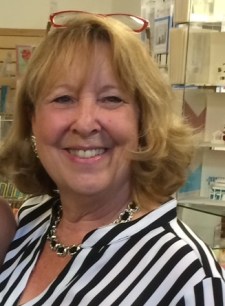
me-3D. J. Adamson is the author of the Lillian Dove Mystery series and the Deviation science fiction-suspense trilogy.  Suppose, the second in the Lillian series has just been released.  She also teaches writing and literature at Los Angeles colleges. And to keep busy when she is not writing or teaching, she is the Membership Director of the Los Angeles Sisters in Crime, Vice President of Central Coast Sisters in Crime and an active member of the Southern California Mystery Writers. Her books can be found and purchased in bookstores and on Amazon. To find her, her blog L’Artiste, or her newsletter that interviews and reviews authors go to http://www.djadamson.com. Make friends with her on Facebook or Goodreads.