Brainstorming another Series by Paty Jager

Besides loving thinking up ways to kill people and how to fool readers about who did it, I love coming up with a new series and characters.

That’s where I’m at now. I have three more Shandra Higheagle Mystery books to write and I’ll introduce the two main characters of my next mystery series in that third book.  I’ll keep writing the Shandra books, but plan to bring out another series in 2019 that will be written this coming year.


The main character of the next series will be a male Nez Perce Fish and Game warden.

IMG_0115
Wallowa Lake

He’ll be working the area his ancestors once roamed during the summer and winter months. He’ll be a proficient tracker, asked to come help find people, and to train others. This will take him not only around the state but also to seminars, giving him an expanded area to help solve the murders.

To make this even more unique, he will spend time at a remote hunting lodge in the mountains where he works that is owned by a woman who he respects and is in love with but who he feels doesn’t deserve someone the likes of him.

She will be an independent woman who runs the hunting lodge and flies an airplane, which is one of the two ways to get to the lodge. The other is by horseback.

So far these are the only two characters I know and am still fleshing them out. There will be a superior of Hunter, that’s my name for the character right now but that could change. Still working on it. And there will be employees for the lodge.
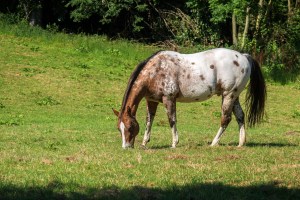
spotted appaloosa horse in white and brown grazes on the green p
photo from depositphoto

I also need to come up with a name for Hunter’s horse. A sturdy Appaloosa/Quarter horse cross gelding. I’m also thinking about him having a dog. Perhaps part wolf or husky. Still working out these details.

I’ve been reading books by Craig Lesley. He has a male Nez Perce main character in his books. It is giving me the “feel” for how a man such as my character would think and talk.  I’m enjoying the books and the getting to know my character through his characters.

As I start working on this series, I’ll keep you updated on how it’s coming along and when you can find the books.

SH Mug Art

photo of Wallowa Lake by Paty Jager


What is “Real”?

by Janis Patterson

Writing is a time consuming occupation. Not only do we have to spend time plotting, thinking, and constructing our stories, we spend time putting them into a concrete form and then making them as polished a form as we possibly can. Then – if we want respectable sales – we must spend egregious amounts of time doing publicity and interacting with our readers.

Sounds easy, doesn’t it? Well, it ain’t.

It wouldn’t be easy even if life didn’t intrude. Writers have families and jobs and lives, to say nothing of accidents and incidents and attacks of the unexpected. There are writing gurus who say you must write every day for a certain amount of time. That’s great, if your life allows and that works for you. I’m certain that somewhere there is someone who does this, but I don’t know any.

So what do we do? My answer is, the best we can. It’s not only a matter of time management, it’s a matter of priorities. When your granddaughter is in a life-threatening accident your focus should not be on writing. When the laundry reaches Matterhorn proportions or your living room needs dusting, that is no excuse not to write. (Of course, The Husband says I take that last dictum much too much to heart, and lately he has started muttering about finding a sharecropper for the parlor.)

The question devolves down to : Are you a writer or a hobbyist? Assuming that there is nothing life-altering going on (dust does not count) you have to decide just how important writing is to you.

In my case, it’s very important. I am a professional novelist, and a few days ago finished my fifth book this year. Because of this job, I miss shopping expeditions and luncheons with girlfriends, theatre trips and even some family gatherings – as tempting as such frivols sound – and have to plan my books around the trips The Husband and I make. (And I have never journeyed anywhere in the last decade that a laptop or tablet did not go with me!)

I also have a life. While I am blessed not to have to have a regular-in-an-office job, there are still lots of things that must be done. Groceries must be bought and eventually cooked. Pets must go to the vet. The car must be attended to. Extended family needs attention. The minutiae of living must go on, whether you work outside the home or not. My family is very important to me, as is my activism for animal welfare and conservative causes. The Husband’s happiness is always paramount in my priorities, and there is no way either he or I will ever give up our interest in and studies of Ancient Egypt and the Civil War. Health issues also raise their ugly heads from time to time.

But I am a writer, and after the really important things – family, beliefs, home – writing comes first, before nearly all social events, before frivols, before self-indulgences. Most self-indulgences. Some of my friends become insulted when I cannot go to lunch or take the afternoon off to go shopping, though they would never have such a reaction if I worked a 9-to-5 in an office. It’s disheartening to think that after all this time so many people still think that if you work from home you don’t have a ‘real’ job… Or that if you’re a self-employed writer, you still don’t have a ‘real’ job… Or that if you’re self-publishing and don’t have a big contract with a major publisher you really don’t have a ‘real’ job. After all, aren’t all self-published writers just wanna-bes or hobbyists who couldn’t get a ‘real’ publisher?

Yes, I have heard almost those exact words from people who are otherwise intelligent and sophisticated. Some of them I have given up trying to convince that I do have a ‘real’ job. Some truly do equate writing with lounging around, tossing off X number of words in a string, having them published immediately and then sitting back while unbelievable riches roll in.

Don’t we all wish!

In the Dark: About Titles, Writing and Eclipses

thumb_IMG_1225_1024

I usually develop the titles to my books somewhere in the early stages of writing. I know the theme, I know the murder weapon and motive, and I know the red herrings that will be swimming through the story. The title usually comes from one of those. This time around, I find myself in the dark.

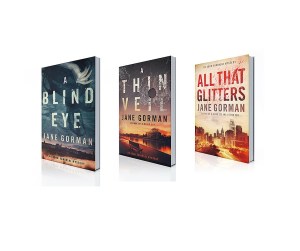
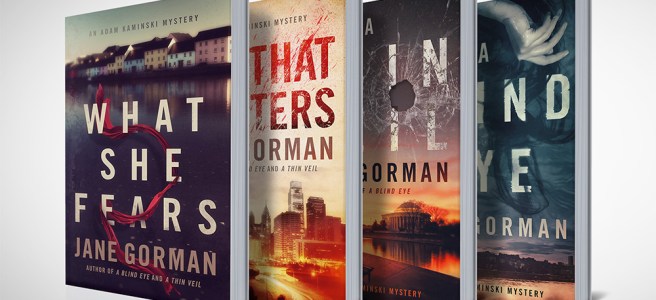
Simple three books

My current work in progress takes place on a cruise ship traveling from New York to Bermuda. Our hero, Philadelphia detective Adam Kaminski, must figure out who poisoned the Claypoole family patriarch—and how—before the ship docks and all the witnesses (and suspects) hit the open seas. But first he has to convince himself that he still has what it takes to catch a murderer.

I really want to title the book, Through a Glass Darkly. It’s part of a verse from the bible, 1 Corinthians 13:12, “For now we see through a glass, darkly; but then face to face: now I know in part; but then shall I know even as also I am known.” I love the poetry of the words and also the theme it implies—being in the dark but eventually finding your way to the light. After all, isn’t that what happens in most mysteries?

It didn’t take much polling of friends and readers to realize my working title wasn’t a hit. Too many people didn’t get the reference. And my books are not religious in any way, shape or form, so I really don’t want to give the wrong impression.

That led me to working title number two, Voices Carry. It fits with one of the elements of the story. It’s short, kind of catchy. It would work as a title. But I just kept thinking about the darkness.

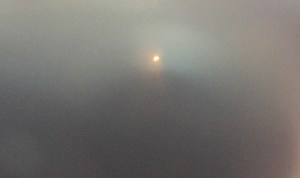
Eclipse

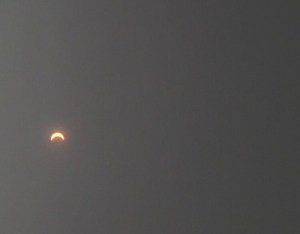
Today is an appropriate day to think about darkness, obviously. I’m not on the path of the total eclipse, sadly, but I was able to see a partial eclipse. I loved watching not only the eclipse itself, but also its effect on the shadows on the ground around me. They became visibly crisper, cleaner. I’m a huge fan of shadows, so for me that was one of the highlights.

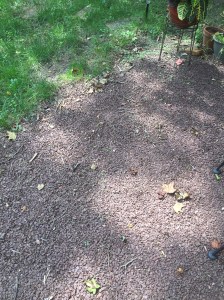
IMG_3434

Light and dark, shadows and sun. I need a title that captures it all. Being in the dark, then seeing clearly.

Right now, I’m on working title number three, A Pale Reflection. I’m toying with changing that to A Dark Reflection.

Eclipse2

At some point soon, I need to make a decision! I’m still hoping the right title with come to me, focused like an eclipse-sharpened shadow. Or perhaps a sign from above, like the blotting out of the sun.

If any of you have any suggestions, I’m open to ideas! Let me know what you think!

For more information about Jane Gorman’s books, visit janegorman.com or follow her on Facebook or Twitter.

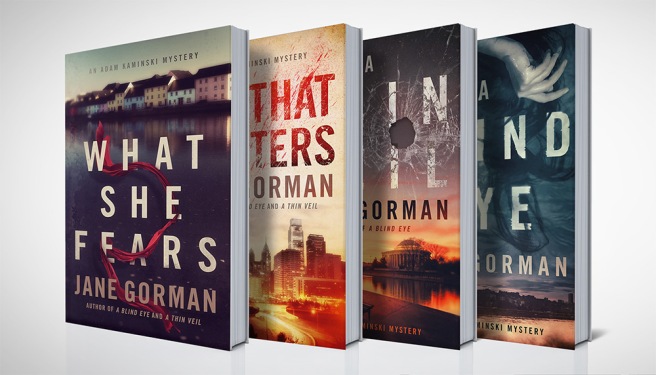
Adam-Kaminski-Mystery-Series


What Makes a Book Great?

thumb_IMG_1225_1024

I just finished the seventh book in a seven book mystery series. I picked up the first because I loved the cover. Also because it had a good blurb and some good reviews and it was set in a little town in France that appealed to me, but mostly because it had a beautiful, tantalizing cover.

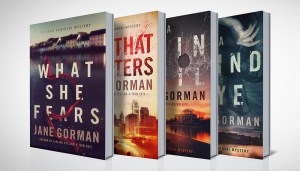
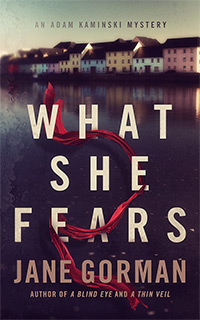
What-She-Fears-Web-Small
I like to think this cover is just as captivating!

I bought the second book as soon as I’d finished the first, and kept going that way straight through book seven. As an author, I have to ask myself, why did I find this series so compelling?

There were several ways in which the writer didn’t follow the “rules” that writers are so often warned about.

She bounced around between points-of-view. For every book you read, there is one— or two or three or more—point-of-view characters. That’s the character through whose eyes you get the story. In a cozy, which this series was, that’s typically the amateur sleuth—the little old lady or librarian or divorcee or pet shop owner or knitting club president who can’t help but get involved and who solves the crime in the end.

Writer are always warned not to bounce around between points-of-view, and if you must have more than one point-of-view character, then change points of view between scenes, not within a scene. That’s how I do it when I write. Each of my stories is told partly from the point of view of Adam Kaminski, the hero, and also partly through the eyes of another important character. And sometimes through the eyes of the killer.

But this series jumped from one person to another to another to another all within the same scene. The writer used a striking combination of the omniscient point of view (when the reader hears all the thoughts of all the characters) and a second person point of view.

cartoon-people-with-colores-speech-bubbles_23-2147529518

It broke the rules and it was wonderful!

Other aspects of these stories could have irritated other readers. There were some editing errors. Not little typos, but pretty major issues such as a character not speaking French in one scene then speaking French in another (I actually thought that was a clue and it proved the character was lying about himself, but it turned out just to be an error!).

So why did I love these books so much?

The characters. The juicy, crazy, emotional, fascinating, sometimes twisted, sometimes bizarre characters that populate the little town in which the stories take place.

Though I should clarify, the town itself was one of those characters. A beautifully crafted and gorgeously described town in the south of France.

Focus groups and marketing studies are clearly important, but not something I can do within my budget. Instead, I base a lot of my decisions about my books on what I like or don’t like. And this series proved a few things I kind of already knew.

I will choose a book by its cover. And I will keep reading a book because of its characters.

What do you look for in the books that keep you reading?

Learn more about the Adam Kaminski mystery series by Jane Gorman at janegorman.com or follow her on Facebook, Twitter and Instagram.

Adam-Kaminski-Mystery-Series

Clues, Magic and Little Cat Feet

by Janis Patterson

I’ll admit I get a little put out when people (including some writers) say “Oh, I could never write a mystery – how do you think of all those clues and where to put them?” Usually, when I’m wearing my romance-writer hat (yes, I write both, along with several other genres), these are the same people who say “Oh, I could churn out one of those stories if I ever had the time.”

Grrrr.

To me that is as stupid as someone saying they can cook a roast but could never cook hamburgers. Or vice-versa. Writing is a learned craft, and the basic tools are the same whether you write confession stories or blockbuster action-adventures or small town cozy mysteries with a bakery shop (sometimes a needlework store) and a romance.

Yes, I am the first to admit that there is an element of magic in writing, of taking twenty-six simple symbols and turning them into a story that will touch and enthrall the reader, but magic – like luck – really does seem to prefer the prepared who have worked like the devil to learn their skills.

But magic aside, writing is a craft. Sometimes when I start a mystery I have a hazy idea of who and why, and that often changes, sometimes several times, but as I write along I leave a strong story behind me. If I may steal Deborah (Debra?) Dixon’s mantra of ‘goal, motivation and conflict’ I’ve found that following that guideline for almost every scene (excluding a very few, very short ones used mainly for transition from one arena of action to another) as well as for the entire book makes it much easier. In real life we sit around, we dawdle, we have purposeless (though sometimes pleasant) conversations, we sit in traffic, we… whatever, but in a book we don’t have that luxury. Every word, every action has to count and either explain why our characters/events are the way they are and/or bring us closer to the climax/resolution.

I’ve told this story before, but in my mystery THE HOLLOW HOUSE for the first two thirds of the book I was absolutely positive I knew who the killer was. Then – boom! All of a sudden I realized that wouldn’t work. Well, it would have worked because I’m the author and what I say goes – sort-of, but dramatically it was a bust. Rather than start over again or back up and throw out great chunks of wonderful, deathless prose <grin> I kept on writing and within a few pages I knew who the murderer really was. Except – another chapter, and the whole thing started over again. He couldn’t be the murderer. Gritting my teeth I forged on.

To make a long story short, if it’s not too late, this process repeated itself five times during the last third of the book. I was getting alarmed, as I was running out of potential villains, and will never subscribe to the ancient trope of a convenient homicidal maniac wandering around who just happened by and had never been mentioned before. Grimly I went on, and in the next to the last chapter suddenly all was revealed to me. I will admit that by this time I had ceased to feel like a writer and more like a scribe, just taking down what I couldn’t control.

But the final solution was perfect. Things could not have worked out better. The only thing that made me sigh with apprehension was that now I would have to go back through the entire manuscript and put in clues. I was as astonished as anyone could be when on rereading I found that they were already there. Who knew? Magic? Anyway, I think I put in two or three more, just so I would have the illusion of being in charge…

So perhaps I should restate my premise – writing is work, writing is a skill is available to just about anybody who will study and practice. And the magic? I think it comes creeping in on little cat feet (sorry, Mr. Sandburg) under the cover of study and practice just waiting to jump out when you expect it the least. And it doesn’t make any difference whether you write mystery or romance or horror or action-adventure or any of millions of other kinds of stories – the building blocks are the same. But you do have to learn how to use them.