Fictional Crime

thumb_IMG_1225_1024

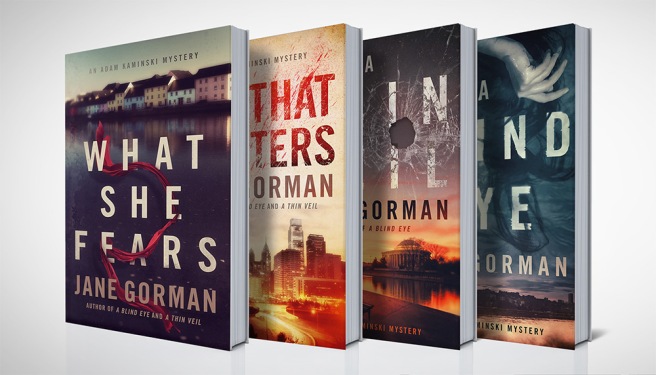
The Adam Kaminski Mystery Series are fiction. I base the stories on some true events — historical events, for example, or crimes I read about in the newspapers, or interactions I’ve had in the past with diplomats and law enforcement officers. But in the main, the stories originate in my head. No one was hurt in the making of these books.
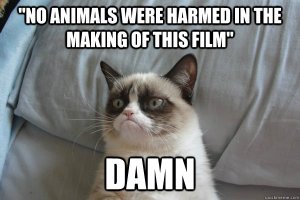
No Animals Harmed

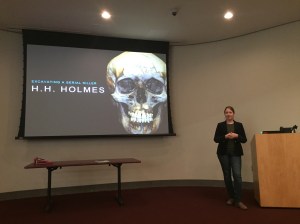
This past weekend, I was thrilled to once again join the Delaware Valley Chapter of the Sisters in Crime for a lecture by a local expert in crime and murder. Of the true variety.

I’m not usually a fan of true crime stories. I love reading about fictional murders, with fictional victims and fictional sleuths. Hearing about grisly murders that really took place, about a sick, twisted individual who really did kill innocents, is disturbing. Fascinating, yes, but disturbing.
IMG_3757

Our speaker this month was Sam Cox, an archaeologist at the University of Pennsylvania. Sam spoke to us about her involvement in the exhumation and identification of the remains of H. H. Holmes, commonly known as America’s first (known) serial killer.

Holmes is suspected of killing as many as 200 people. During the 1893 World’s Fair in Chicago, he ran a hotel just off-site that was later determined to have a lime pit and large incinerator in the basement — handy for getting rid of unwanted bodies.

Hearing Sam tell this story, I was hooked. Sam’s work was included in a recent series by the History Channel, American Ripper. Her team is featured in the final episode. I recommend it!
History Channel
I loved hearing her talk about the techniques they used to dig up his grave then identify the bones they found. She told us about what was actually proven in the case and what was still conjecture. She explained how the detectives at the time tracked him and the bodies he left in his wake as he ran.

As a writer, this lecture was invaluable as a source of ideas and information. We learned about investigative and exploratory techniques that law enforcement can use in identifying victims and killers. We got a glimpse behind the scenes.

As a reader, I’m intrigued by the personalities involved. The nonchalance of the serial killer, the determination of the detective who finally tracked him down.

That said, I don’t think I’ll become an avid reader of true crime stories. There’s something comforting about murder mysteries: the killer always gets caught, the hero always saves the day (well, not for the victims, but for those who survive).

I like the feeling that once you’re done, all is right with the world. And I try not to think too much about the true killers still lurking, out there, in the real world…
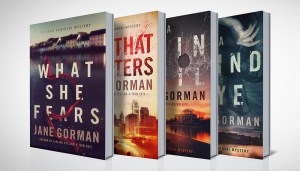
Adam-Kaminski-Mystery-Series

Learn more about Jane Gorman at JaneGorman.com or follow her on Facebook or Instagram.
Who Saw That?

thumb_IMG_1225_1024

Julia Kaminski, sister to the hero of the Adam Kaminski mystery series, is a photographer. A good one. She’s still figuring out how to make a living in her chosen profession. In an ideal world, she’d earn her money by showing and selling her photographs at galleries. But until that happens, she’s getting by by taking on gigs as a photographer at wedding or parties. And still holding out for her big break.

Julia’s photographs take on new meaning in book 5 in the series, A Pale Reflection. Julia finally gets a leading role, after appearing as a side character in the first four books, and jumps into the chance to use her photographic skills to help her brother Adam figure out whodunnit.

27591728_Unknown

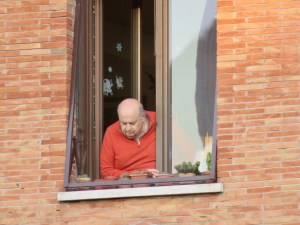
The thing about photographs is they capture more than you might realize. You, the tourist, for example, sees a beautiful scene and snap a shot. It may only be later, as you go back to look through the photographs, that you notice someone or something in the picture you hadn’t previously realized was there. Or someone watching when you thought you were alone.

27599568_Unknown

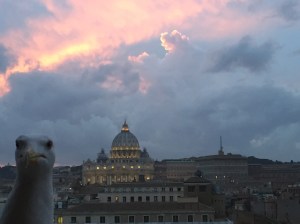
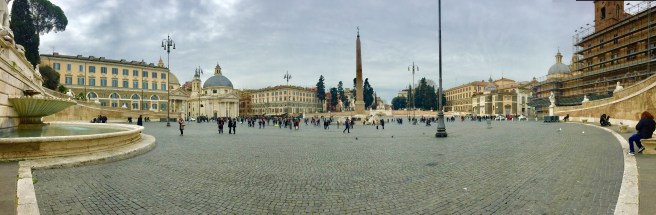
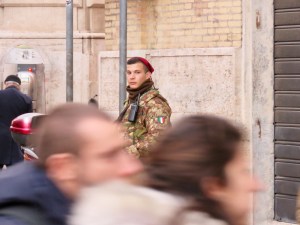
In my family, my husband is the photographer. We just had the amazing opportunity to spend a glorious week in Rome. (Will Adam Kaminski be solving a murder in Rome in the near future? Stay tuned!).

Chuck, my husband, takes spectacular photographs of traditional scenes — statues, artwork, natural beauty and urban beauty. But he also finds joy in surprising details. For example, catching an unexpected eye.

IMG_3708

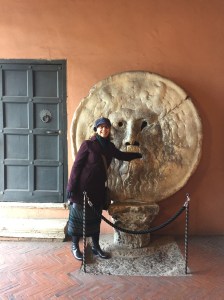
For us, it’s fun. We use these photographs to share our experiences with friends and family and to refresh our own memories of the time we spent there. And if we were trying to catch a killer, the “mouth of truth” pictured here would be a huge help!

IMG_6641

Of course, we’re not trying to solve a murder. For Julia and Adam, a photograph can mean so much more. Even the difference between life and death.

IMG_6700

Learn more about Jane Gorman and the Adam Kaminski mystery series at janegorman.com or follow her on Facebook. For some great photographs of Rome and her other travels, check out her Instagram page!

Adam-Kaminski-Mystery-Series

When Words Matter

thumb_IMG_1225_1024

I was working on my current manuscript the other day, when the idea for a short story came to me. I’m not a short story writer. I’ve tried. I did not succeed. But I was struck by the idea, wondering why it came to me. At this point, I’m more interested in the idea than in writing the actual story.

The story would go something like this: an average guy accidentally gets involved in a battle between good guys and bad guys from the future (yes, I’m a Sci-Fi fan). He doesn’t have the skills or knowledge that the future warriors do, but he has a good heart and a lot of courage. He joins the battle and helps the good guys win. They invite him to join them, to travel to the future with them, where he can have a better life. He’s thrilled. He’s got no family he’ll miss (maybe his wife just died in childbirth or something tragic like that).

He travels to the future with his new friends, excited for the life that awaits him. When he arrives, he’s processed into his new community. You know the type of thing: paperwork, blood tests, analyses to make sure he’s safe. To make sure he’ll assimilate well. Everything goes great, until they get to the final page of the questionnaire.

“What is—well, ahem, I suppose I should say what was your profession? What can you do to contribute to our society?” The future agent man asks him.

“I’m a writer,” our hero replies. “I write fiction. Books. Stories.”

Future agent man blanches. He stands, the papers he holds shaking in his hands. He glances at the two-way mirror on the wall and jerks his chin toward it in some sort of signal.

Our hero, for the first time, starts to worry about his decision. Two burly men in white suits carrying long, silver tubes enter the room.

“I’m sorry, but we can’t let you stay,” future agent man explains apologetically. “Writers are too dangerous. Too subversive. We don’t allow those types here.”

Our hero doesn’t feel a thing as he is humanely euthanized.

IMG_0894

Sometimes I feel powerless. Sometimes I feel like I’m just a cog in a machine that I can’t control. But we all have our own way of moving our little part of the machine. Maybe we can’t steer, maybe we can’t even control our speed, but for each of us there’s something we can do. For me, it’s writing.

author pic
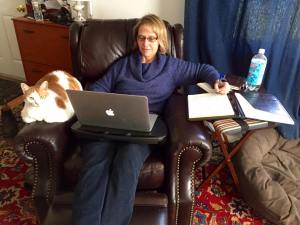
The author in her natural habitat

I love the fact that I can build my own worlds, create my own characters, heroes and villains. Bad things happen, but they generally end well. (Alright, not for the people who get killed, obviously. But usually for everyone else!)

When I write, I need to remember to do it with intention, with thoughtfulness (my fellow Lady of Mystery, Amber Foxx, might say mindfulness). Because what I write matters.

I think my idea was connected to the fact that today is Martin Luther King Day. He was a man who knew how to use words, as well as actions. His words had power. They still do.

I’m inspired by him in many ways. One of those ways is recognizing that words matter.

To learn more about Jane Gorman and the Adam Kaminski Mystery Series, visit her website at janegorman.com or follow her on Facebook.

Adam-Kaminski-Mystery-Series

Fairy Tales, The Easter Bunny and a New Touchstone

by Janis Patterson

Every year I look forward to the holiday season. I love Christmas – the decorations, the carols, the promise and reassurance of my faith, the bonhomie, the electric excitement in the air. New Year’s is the symbol of new beginnings and though I have never been able to keep a New Year’s resolution for more than a few weeks there is always a clean, untried ‘blank-slate’ feeling to a new year.

Every year I look forward to the end of the holiday season and the return of real life. While wonderful, the holidays are exhausting and pretty much take over your life. Parties to give and attend. Presents to buy. Calls to make. Lunches with friends. Wrapping presents. Visiting family for extended gatherings with out-of-town members. Taking down and putting away decorations. Getting the house back to the familiar chaos we call ‘normal.’ Thank-you notes to write. Yes, it’s tiring, to say the least.

Now we’re eleven days into the New Year, which makes it not so new any more. And, usually after all the holiday hubbub dies down, it’s not so different from the year before. I still have deadlines and stories crying to be written. The laundry pile stays pretty much the same no matter how many loads I do. Since the holiday leftovers are long gone I must contrive something for dinner every night and fix a lunch for The Husband to take to work. Not so different from last year and many years before that.

Still, there is something about the turn of the year – as artificial a delineation of time as it might be – that makes us think. Personally I want to make it a touchstone for upping my career game. A touchstone, not a resolution. Resolutions are usually regarded as hard things, immobile things, things you must do every single day for the rest of the year. I don’t respond well to hard, immobile and must do. Never have, and probably never will.

So what did I do? In between huge meals with family and much-needed naps I spent New Year’s Day thinking about what I wanted to accomplish career-wise in the new year and what it would take to get it done. Of course I thought about a few things that are definitely ‘wish list’ and probably never going to happen, but I did try to keep things ‘real.’

First of all, I know that no matter how much I hate it, I’m going to have to do a lot more publicity. I have an extensive backlist in several genres and yet my sales would have to work for a week to get up to pathetic. It’s all about discoverability, and that means getting your name and your work out there.

For a long time I followed the fairy tale that if your book is good, it will sell. (I refuse to tell you how long I believed in the Tooth Fairy and the Easter Bunny…) As nice and tidy as that would be, it doesn’t work. People don’t buy what they can’t see, and well-promoted garbage will pretty much always outsell a good book buried in the ever-increasing tsunami of available books. While a writer can live in the ivory tower and do nothing but write (my personal dream) it’s time for me to realize that if I want to be a selling writer, I need to get out there and sell. The Tooth Fairy has retired.

Neither can you live on your backlist alone. New releases feed the machine. It’s the genre writer’s version of publish or perish. Readers – especially genre readers – are exceptionally voracious, with some reading more than one book a day. Writers can no longer afford the luxury of doing just one book a year if they want to keep their name in front of the reading public.

Last year I wrote five books. This year I have to get them all out. (Last year was an ivory tower year for me for several reasons.) This year I hope to do – and release – four. Remember what I said about a touchstone? I didn’t promise myself or make a resolution to write and release four; that’s too solid, too demanding. During the year when I hit a wall, when my career seems more trap than joy, I’ll think back to that food-stuffed, family-surfeited New Year’s Day and remember what I thought about the forthcoming year. Then I can decide if it is still what I want, still feasible, still relevant to my current reality.

I hope it will be. But it doesn’t have to be. But whatever I decide, though, I have to do what needs to be done to make it come true.


Understanding Your Characters

Part of what makes a great story is great characters. Any reader can tell you that. Writers talk about developing characters, fleshing them out, giving them back story, making them flawed and relatable. These are all vital steps in creating great a character.

But once the character is created, I find I have yet one more hurdle that I have to jump: I have to understand my characters.

A young couple in Galway contemplate the evening

But you created them, you might say with surprise. You wrote their background, you devised their likes and dislikes, fears and dreams. What’s left to understand?

Lots.

Characters run the show. They get away from you, the writer, taking their own story in directions you hadn’t anticipated. Yes, I know that sounds ridiculous. Yet it happens to all writers.

In my current work in progress, I realized after finishing the second draft that I had the wrong killer. A different character was standing in the wings looking guiltily around, trying not to make eye contact with me. Ah-hah, I thought. That’s the real killer!

Trying to pull a fast one on me, I might add.

In several of my books I have another problem of understanding with some of my characters: I write characters who are not native English speakers.

My mother and grandmother in Warsaw

As we all know, language affects not just the way we talk but even the way we think. Writing a foreign character (foreign to me, that is) means not only understanding their native tongue enough to be able to replicate their thoughts, but also understanding the way they frame their thoughts in the first place.

A Pole, an American and an Irishman walk into a bar…. They’re all thinking a little differently and it’s my job to understand those differences.

A woman examines a grave in Warsaw. What might she be thinking?

I’m not complaining. I love that job! I spend time improving my language skills. (By the way, for anyone interested in learning French, I recommend the lessons by Paul Noble. They’re very good!). Extra bonus, it helps when I travel the world and meet new people. So it’s a good problem to have. And one that I hope I have succeeded in overcoming.

But you tell me. If you’ve read any of my books, I’d love to hear your thoughts on my foreign characters and how well I’ve captured their differences.

Learn more about Jane Gorman and the Adam Kaminski mystery series at janegorman.com.