The Magic of Families

From the first Thanksgiving to this…there is magic in our past, and in families who share their stories across that long linen-covered table filled with the food of our nation. As Americans, we often mourn the loss of the nuclear family, but that loss is as old as this country. Those who came first left the safety of a more settled world for the new. And boom! (That’s my version of a nuclear explosion.) They didn’t all stay put; some moved, east to west century after century, connecting, shifting and moving on.

The magic that links us is in the details.

My husband’s family (both sides) came to America shortly after the Mayflower landed. You can call them early adopters, or people seeking religious freedom, either works. Though one group was from the Netherlands and the other from Great Britain, they both left the Netherlands for Massachusetts on the same boat. I have visions of them, one group in their wooden shoes and pointy white hats, the other in their black-and-white Puritan best, huddled in steerage, having a golly-really conversation about Puritanism. Neither group took to it. Those from England stayed in the Bay Colonies before heading south to Rhode Island, then to New Jersey, and finally to Pennsylvania.

The Nederlanders migrated to what became Johnson County, Indiana, where they farmed and became Presbyterians, producing many ministers. Then, almost three hundred years later, the offspring of these immigrants met in Syria, one as a missionary, the other teaching, and, well. Think of the time they could have saved if the two families had married into each other on the way to the Massachusetts Bay Colony.

More magic

My father’s mother’s family were Cumberland gappers and verified DARers (yes, they’re in the book). The Alsace-Lorrainian farmers on the other side arrived in the 1830s. Reports handed down through the family drum, which has proven quite accurate, and, with a family bible as evidence, claim that one of those pesky people who keep marrying into families (you know the sort) also hung out in Johnson County, Indiana and married into my father’s line.

If the evidentiary bible is correct, that family sported a Low Countries surname, not dissimilar to that of my husband’s mother’s family.

So, did my husband’s relatives and mine coffee clatch back in Johnson County before each packed up and moved further west? My family to Illinois (is that really west?), my husband’s to Oregon, back when, though a state, it was pretty frontier-ish.

Ruminate on this: How do two people, one from Oregon and one from Pennsylvania, whose families shared passage on the same boat to the New World in the 1600s, end up in Syria about a day after Lawrence of Arabia left and marry each other? And how does their offspring end up marrying a woman in California whose family roosted in Johnson County, Indiana, in the 1800s, when one was born on the East Coast and the other in Illinois?

Gabble away over your turkey

You might discover connections to your past that lead to a future. I urge you to remember, as you write your next tale, nothing is too weird or coincidental when it comes to a family’s past (translation: the duck might be somebody’s uncle).

Happy Thanksgiving. Lots of Turkey. And hugs to all.

Update: For those of you who worried about my lost file. I found it!!!!!! And restored it!!!!! And the book, ‘The Orleans Lady’, is being beta-read right now!!!!

For more about me and my books, go to https://dzchurch.com, where you can sign up for my newsletter and find juicy facts about all my books, including The Wanee Mysteries and The Cooper Quartet. You might even find yourself clicking through to buy one or two, or, heck, all.

EMOTIONAL BAGGAGE

Hello, Ladies ~

As Thanksgiving approaches, I find myself reminiscing about last year’s holiday, which was the last family celebration I had with my sister, Lori, and uncle, Terry. Of course, we never truly know when we’ll be called home, but I sensed at the time that it would be their last holiday season here on earth.

Every effort was made to enjoy all the trappings and food that come with Thanksgiving and Christmas. We cooked, laughed, and took lots of pictures to capture the special moments.

As I put up my authentic, fake Christmas tree today, a pang of nostalgia pricked my heart knowing I will most likely never trapse through the woods in search of the perfect Noble tree. Large family holiday gatherings are now a thing of the past with the loss of my sister and uncle.

My mini-melancholy vacation was interrupted when one of my Beta readers called with input on “Chaos in Cabo.”

“I loved this book, Kimila,” she said. “I think this is the best book you’ve written so far. I loved all of the emotional turmoil your main characters faced. Their struggles brought them to life, and I couldn’t wait to see how they worked through their issues.”

I choose Beta readers who I know will always be honest with me. I appreciate being told what is wrong with a character or storyline. Knowing where the problems are helps me rewrite the book and bring everything into a better light.

When I finished “Chaos in Cabo,” I didn’t think it was very good. I attributed my concerns to the fact that the book had been written in starts and stops due to the rough journeys of my sister and uncle. Every time I stopped working on the book, I would lose track of the character arcs and storyline. When I was able to get back to writing, I’d have to read from the beginning to reintroduce myself to the story and find my rhythm.

I’ve never suffered from writer’s block, but the weight of my family’s struggles kept me off balance. And then there are those emotions … sadness, anger, confusion, hopelessness … and many more.

Had my emotions bled into my writing? Did the upheaval in my life thread its way into my characters’ lives? Could it be I had channeled my cornucopia of feelings into my story?

“Chaos in Cabo” had three Beta readers, and I was anxious to hear what the other two had to say. When my next reader texted to see if I could talk about the book, I said I’d call her from my car. “No,” she texted, “I want you to focus on what I have to say, so call when you can listen.”

Alarm bells went off, but I called as soon as I could. Her first words were, “This is the best book yet! The characters were so interesting, I didn’t want their stories to end.”

The conversation continued and was similar to what my first Beta reader said. Imagine my delight when I received the same fabulous feedback from Beta reader number three.

I think as writers we bring parts of ourselves and our lives into the stories we write. Maybe it’s a favorite childhood memory that we have a character share with readers. Or a broken heart served up at the hands of a partner who cheated or left without a valid reason. Then there’s the void left in your life when someone dies.

In “Chaos in Cabo,” my heroine, Detective Socorro Cortés, enlists the help of her former fiancé to solve the murder of his niece’s boyfriend. While trying to solve a murder that she thinks is linked to a scam calling crew, she has to deal with another ex who is trying to win her back. Oh, the emotional rollercoaster she rides!

Lieutenant Amado Peña just wants to help his niece and leave Cabo San Lucas as soon as possible. He knows he can’t risk having Coco break his heart again. But when he’s drawn into her efforts to solve two crimes she believes are connected, he finds himself also wondering whether he still has feelings for Socorro Cortés. Can a broken heart learn to love again?

Alida Burton has two goals in life: to remove abusive men from the planet. And to make as much money as possible from unsuspecting marks. Given her cruel treatment at the hands of previous males, Alida has no intentions of falling in love—ever—until she meets Antonio Ruiz. Could it be that even someone as damaged as Alida can overcome her hatred and trust a man?

The wonderful feedback from my Beta readers has reminded me that even the hardest times in our lives can produce small blessings. “Chaos in Cabo” might have taken longer than my normal timeline to write, but I’m thankful that my emotional baggage allowed me to create unforgettable characters with stories that readers don’t want to end.

Ladies ~ I hope your Thanksgiving holiday brings much joy and many blessings. Gobble, Gobble!!!

I write like I pack a suitcase

I write like I pack—I take whatever I need and stuff it into story or suitcase. This is good for writing, but not for packing—or the trip I’m going on. I recently attended Crime Bake, our annual systery writers conference in New England, and I arrived with the same suitcase I used for a recent three-week vacation overseas.

The conference runs two full days, which is really one full day and two half days, the latter being Friday afternoon and evening and Sunday morning. Saturday is a full day, and runs well into the evening. Do I really need a full suitcase for this? 

My wardrobe for Friday night is settled because I drive down with a friend, and I’m fully prepared. It’s like the opening scene in a short story—I include all those details that tell the reader exactly where she is. No wondering if this story is set in India or along the Eastern seaboard or on a farm. No wondering if the year is now or the 1950s. No wondering if that thing I refer to is sci-fi madness or just a bizarre way of describing the most ordinary things. I know what I’m wearing to the conference on my first appearance and plan to stay that way throughout the day because the arrival is well choreographed. But the rest of the time (and the story) . . . is a problem.

I want the reader to slide into the story and immediately be engaged in the surprises and developments. This is no time to get lazy. Or sloppy. With my wardrobe, I want to be comfortable and informal, so that means regular clothes, but my regular clothes are boring. There they sit in my suitcase, so I toss in a brighter sweater and nicer black pants (you can never have enough pairs of black pants). I can’t wear the same kind of outfit I wore on Friday for the same reason the story after the opening has to be more, something more than the opening, something surprising, different. I really have to “up my game,” or more simply, “something has to happen.” My main character is a middle-aged woman faced with upheaval in her life, lots of change—not very original. The ordinary needs work, so I introduce a compelling secondary character who tosses in a complication, a character who cheated on all his university exams and is now applying for a job in the CIA. Riveting? Hardly. But who knows about this? My main character remembers the guy from school. So the complication is good for my story, but my suitcase is filling up with more attractive options for Saturday (because, just like the story, I don’t know where I’m going during the day while I pack). And I haven’t yet gotten to Saturday night.

In preparation for my recent three-week trip overseas, the organizers made a point of telling the attendees that this was mostly walking in neighborhoods, woods, rural areas, etc. There was nothing fancy about this trip—very casual outdoor clothes were all that was needed. Great, I thought. Except, of course, someone added in small type, you might want to dress up a bit for a night out for dinner. I looked at the schedule, and there were several nights out for dinner. I loaded up my suitcase with several more pairs of black pants.

By now in my story I’ve come to the middle, which often sags. I don’t like sagging in fiction or in clothing. So worried that I’ll look dull Saturday night I rummaged through my closet for something dressier than a plain turtleneck sweater. But my brain was stuck on the sagging in my main character’s ability to tackle the threats and problems facing her. She has to do something to show she deserves to be the main character—break out of her dull pattern of living safely. Since she often works with hunters—issuing licenses, reporting on weather in the area, and the like—in her quiet Town Hall job, I make her familiar enough with weaponry to know which is the business end of a gun or rifle—just enough information to make her dangerous. And she responds by shooting one of the applicants for a hunting license (this is the CIA hopeful). She’s about to get away with it all—until it turns out she knew the man from college, and he “done her wrong.” So, is she guilty—the once demure lady now in a flamboyant see-through blouse—or the steady dull neighbor in the beige turtleneck? My suitcase is filling up and now I have to press down to make sure I can close it and I’m not done yet. I have to get through Sunday. My story isn’t doing any better. I’ve tossed in so many possibilities that I’ve probably overdone it.

My main character has to prove herself. She’s either guilty of murder or she isn’t. Which is it? Or is it something else? She makes bail—after all, she’s a known quantity, a longtime resident of the town, steady employee, spotless record (very plain wardrobe)—and sets about proving her innocence or at least figuring out a way to get off, one or the other. That means she’s no longer exactly the same person she was at the outset. It’s like Sunday at the conference—we have to be different from the first day; I can’t wear the same thing as Friday. Don’t ask me why. I don’t know, but I have an idea.

Sunday is a step up from Friday, something to show I’m more accomplished than I was at the beginning, that I’ve learned something over the last day and a half, that I’m a better writer, my money well spent. Just like my main character, I have to demonstrate I now have the needed abilities and good sense that I’ve been hiding. I’m different—black pants, yes, but a brightly colored blouse with a spiffy vest.

My main character is different too and has to demonstrate this in her explanation of what happened. And lordy knows I can do this because I’ve gone back and planted clues, changed clues, added a character or an incident—I’ve restructured the story to end up wherever I want. This means a lot more words and a lot of rewriting and adding and rearranging. It’s the same for my conference wardrobe. I now have the extras to pack in—underwear, jewelry, scarves, toiletries, all those things that are almost more important than a pair of black pants. 

My suitcase is close to too packed to close, but close it I must. I have so much folded into it by the time I’m ready to zip it shut that I can make anything work, any outfit, for any event, any contingency. This is the skill of the writer—I can pack whatever I need into my story, move it around, match it up with anything anywhere, a small detail about a character’s hearing or missing an appointment, and I have a plot (like an outfit) that works. My story ends up a marvel of subtle misdirection and character revelation, a neat perfection with an unimaginable twist and not a single unnecessary word. This is where my suitcase and story diverge, and I’m glad to leave both as they are. Time to move on.

Thankful, grateful

Since this is Thanksgiving season, I decided to ask myself what is it about my writing career that I’m most thankful for. There are so many things to be thankful for, and I feel I need to remind myself once in a while just what they are.

I was listening to a podcast the other day and the narrator asked the author what part of the writing process she would outsource if she could.

This writer is a quite successful independent author. She said that when she started out, she did everything. But she’d become quite successful and was able to hire a personal assistant to help her. One of the things her PA does is format her books.

Since that is one of the hardest parts of the job for me, I laughed and told a friend, “When I get rich and famous, I’m going to outsource formatting my books!”

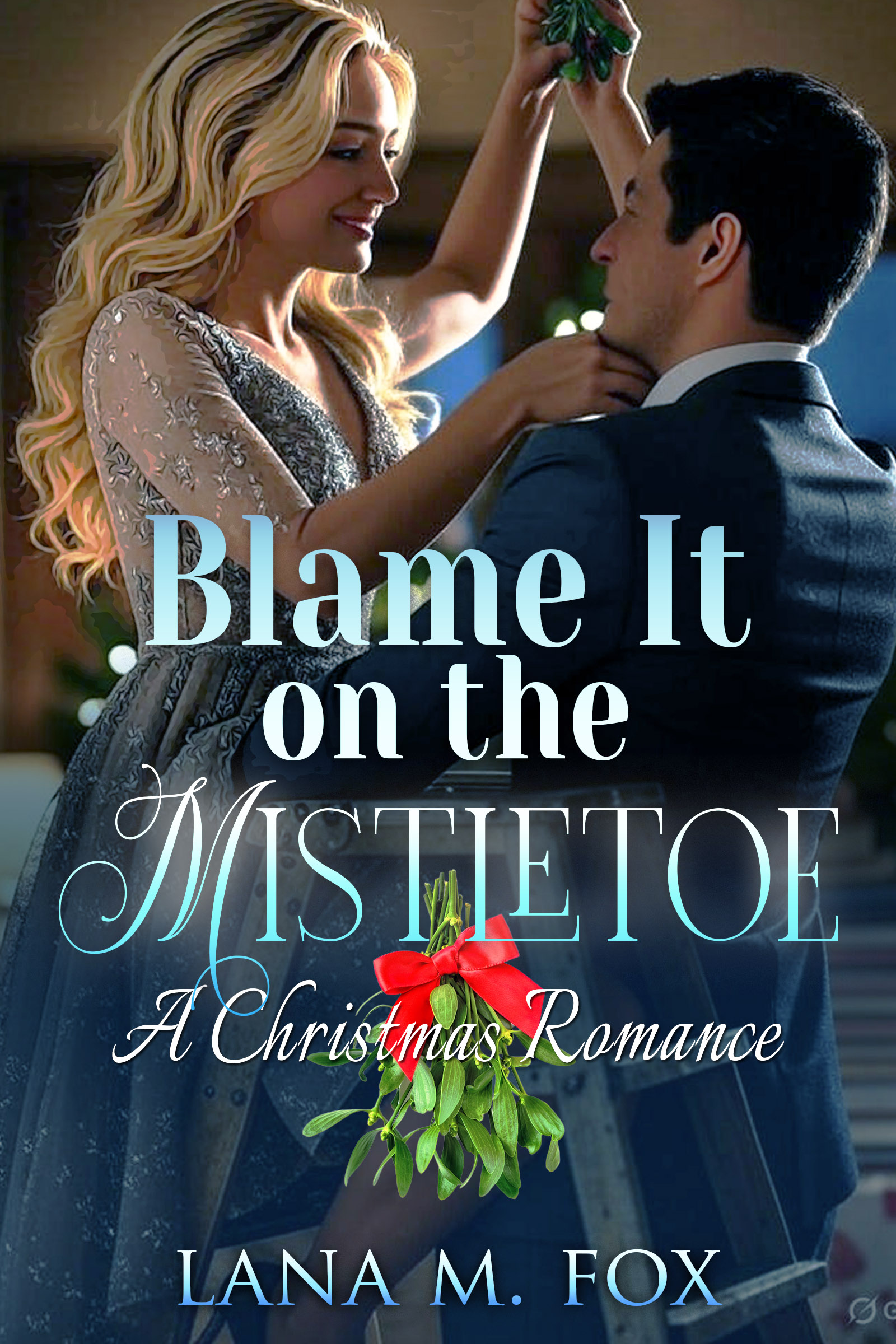
I’ve already hired two editors and a cover designer. But I felt like I wasn’t making enough money to source anything else out. Then I noticed on the email I got from the woman who designed the cover for my Christmas Romance she had added, please talk to me about formatting.

I took a chance and asked her. Her prices were so reasonable I didn’t have to wait until I became rich and famous. I told her what a nightmare it was for me. She said she’d be happy to do it because she’d done so many it wasn’t a nightmare for her. I was thrilled by how fast she got it done. And when I tried to upload my files to Amazon and Ingram they went through without a glitch. I am so thankful to Paty Jager who told me about Covers by Karen. Paty has always patiently answered my questions.

On the podcast they suggested doing the parts of the writing business that you love and hiring the rest out. I like marketing my books. I know I’m not that successful at it, but it’s a part of the business that I enjoy. So, for now, I’ll continue to try and market them. If I could afford to have a marketing person, you can be sure I would.

My books are so much better since I hired my editors. They go through my books and give me feedback, and correct grammar and spelling. They are incredible.

I’m so thankful for my cover designers. I used 99 Designs for the first four books and Covers by Karen for the last one. They all did such a great job. I know writers who design their own covers, and they are beautiful. I think that’s great, but I’m not a designer. I have no idea how to even begin to do that, so I’m thankful for artists who are good at what they do and design the covers for me.

I love having the freedom to pick the titles and the cover design. And I love to write, of course, or I wouldn’t be doing this.

I love my readers and I’m so thankful for them. Even though my tribe isn’t that big yet, they are wonderful. They share my social media posts and tell their friends to read my books. A couple of my readers have asked their libraries to carry my books. They are amazing!

 It makes my day when one writes to say they enjoyed my book and couldn’t put it down. Or they stayed up all night reading. One reader told me this about the Christmas Romance I just published: “I loved every page!”

I’ve been so lucky along my journey to meet so many wonderful people. From the writing instructors to other writers who have gone out of their way to offer help when I’ve needed it. I’ve also reached out to industry professionals who’ve been more than kind and answered questions about law enforcement.

I’m thankful for my family who have encouraged me and helped in any way they can, from designing and maintaining my website, to taking my author picture to reading early drafts and giving input and editing.

I love this job. As I read back over this blogpost, I realize how lucky I am to have so many people who have helped me along the way. I hope to write for many more years, and I hope that I’ll look back often and think about all that I’m grateful for.  It’s easy to get caught up in the grumbling, and I do from time to time. But when I stop to think about it, there is a lot more to be grateful for than to grumble about.

Happy Thanksgiving! I hope you are counting your blessings too.

And the answer is…

Scroll down for the answers. Next month I’ll share the questions about theft.

#1: When were the first portable timekeeping devices — in other words, the world’s first watches — first invented?

A. 16th century (the Early Modern Age)
B. 18th century (the Age of Enlightenment)
C. 20th century (the Age when Bind’s characters were born)

#2: Who were wristwatches originally designed for?

A. Men, because men get everything first
B. Women, because they are the smarter sex
C. Police officers, because they carry guns

#3: When did wristwatches gain popularity among men?

A. During the Roaring Twenties
B. During the Industrial Revolution
C. During World War 1

#4: Which old Hollywood movie star’s watch shattered records when it sold at auction in 2017?

A. Clark Gable, The King of Hollywood
B. Archibald Alexander Leach (you probably know him as Cary Grant)
C. Paul Newman aka Cool Hand Luke

#5: From 2021 to 2022, luxury watch thefts rose by 65% in London. What happened as a result?

A. A petition to ban the sale of machetes
B. An ordinance prohibiting anyone wearing a luxury watch in public
C. A law forbidding anyone to take a photo of the Crown’s wristwatch

#6: If not for a Rolex watch, Albert Johnson Walker might not have served 26 years in prison. Where was he incarcerated?

A. England
B. Canada
C. St. Pierre

Question #1: The answer is A. German clockmaker Peter Henlein is credited with inventing the first watch around 1510. Because of its size (about 3 inches), it was best suited to be worn on a pendant or attached to a belt.  

Question #2: The answer is B. Wristwatches were originally created for women. They were seen as both elegant pieces of jewelry and functional timepieces. According to the Guinness World Records, Swiss watchmaker Patek Philippe made the first wristwatch in 1868 for a Hungarian Countess. Men preferred pocket watches at that time.

Question #3: The answer is C. During World War I, wristwatches became a necessity because soldiers needed to tell time quickly and easily. This translated to civilian life after the war. By the 1930s, wristwatch sales had surpassed pocket watch sales.

Question #4: The answer is C. Movie star and race car driver Paul Newman’s Rolex Daytona sold at auction for $17.8 million in 2017. The watch had been a gift from his wife actress Joanne Woodward—engraved with the words “Drive Carefully, Me.”

Question #5: The answer is A. A London councillor launched a petition to ban the sale of machetes after having his watch stolen by a machete-wielding thief in 2022. The petition got almost 140,000 signatures.

Question #6: The answer is both A & B. In 1996, British police used a Rolex watch to identify a body found in the English Channel. When they visited the home of Ronald Platt, they discovered his business partner, Canadian-born Albert Johnson Walker, pretending to be him.  In 1998, Walker was convicted of first-degree murder and incarcerated in England. In 2005, he was allowed to transfer to a Canadian prison where he was further convicted of embezzling millions from his Canadian clients. In 2024, he was still in prison in B.C.

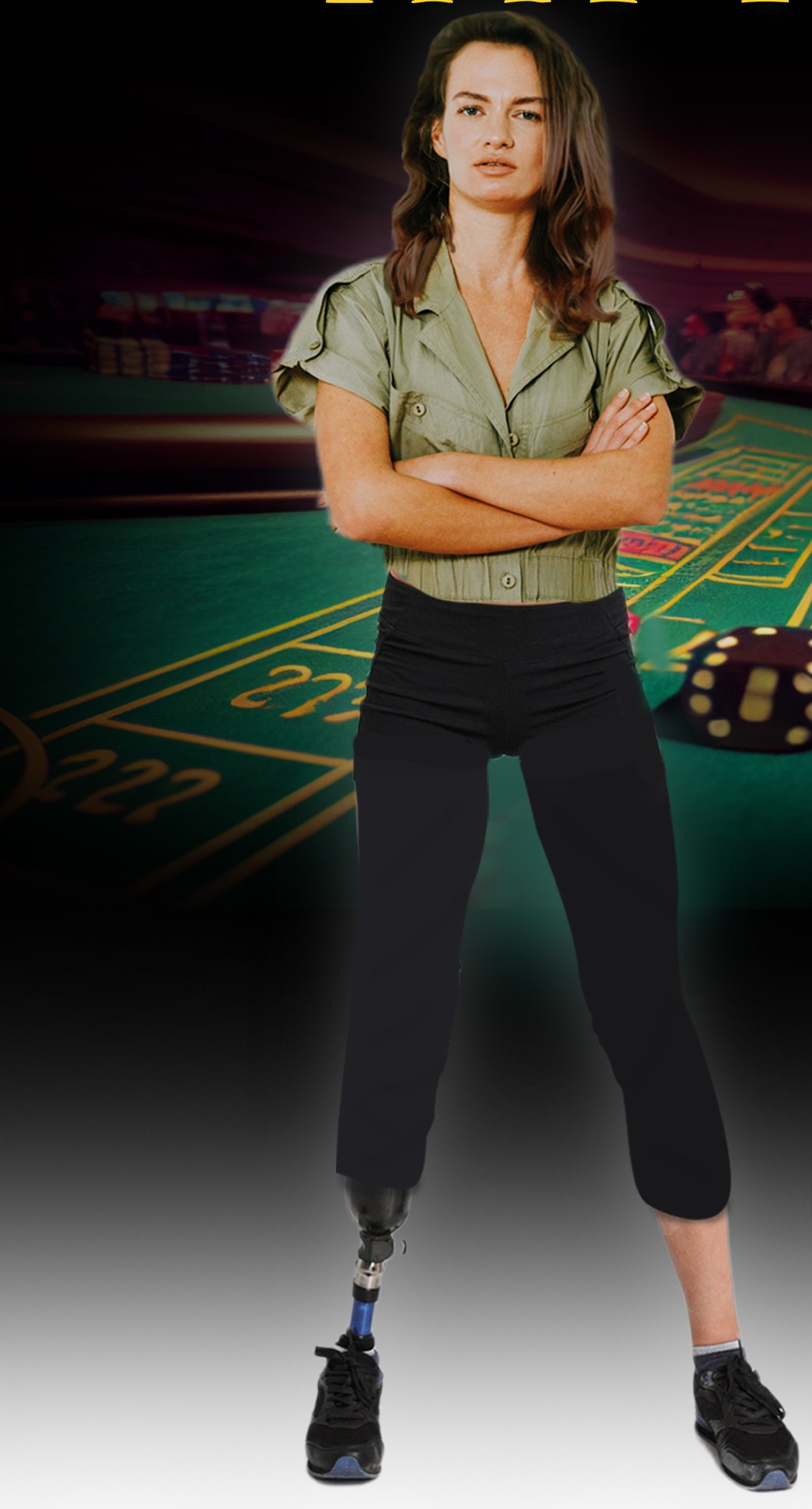
cover of donalee Moulton's book Bind