Hold, Enough!

by Janis Patterson


The cry ‘Hold, Enough!’ comes from a quote from Macbeth (or as stage people call it, The Scottish Play) which I can drag only as a paraphrase from my memory – “Lay on, MacDuff, and curst be he that first cries, “Hold, Enough!””


So why am I writing about The Scottish Play?


Because I have cried, ‘Hold, Enough.’


As writers we soon become accustomed to playing God. We can, as P. D . James so famously said, ‘kill with a glance and leave the body lying right there on the page.’ We can create towns, people, populations, even worlds to our own specifications. Want to change it? Toss in a hurricane or a plague, or just toss the whole thing and start over. The only rules in our writing are the ones we set for ourselves.


Sounds perfect, doesn’t it? In many ways it is. Unfortunately, though, sometimes such an arrogant attitude seeps into real life. We forget we can’t change the timeline, or change the cast of characters, or eradicate anything that annoys us. (Well, we can, but it can be illegal, to say nothing of quite messy.)


We write in a world of endless possibilities and power. We live in a world of concrete limitations and restrictions. No wonder writers are both frustrated and a little testy.


So what brings on this rant? Once again I have been brought up short by the constraints of reality. Time is a constant. Energy is entropic. We can’t have/do everything we want.


When I am presented with a project that excites me it doesn’t really matter what I have on my plate already. Of course I can squeeze it in. If I do X number of words a day it will be easy…


Well, not always. Maybe I am just getting older, or slower, or just choosier – or more disinterested – but I find myself getting more interested in luxuries like sleeping, cooking something that doesn’t have air fryer directions on the box, spending quality time with friends and family… The tipping point might have been when I could not make my hot tub exercise time and my poor arthritic joints went into rebellion, so I joined them and revolted.


I still make my word count… most days… but the cost is higher. More contracts equal more projects equal more demands on my time… and the bitter knowledge that the problem is all my fault. I took on the projects. I signed the contracts. It’s like being in front of the largest candy counter in the world – I’ll take two of those, and a half dozen of those, and a pound of those… all the while you know you should be eating sensibly. You want, but you know you can’t have. At least, not everything.


So I did something I have only done once before in my life. I cried “Hold, Enough!”


After a dispassionate analysis I bought back one of my contracts. Now I only have two projects, both partially completed and fairly short, due before the end of the year. And they truly will be easy.


Yesterday I wrote only half a day; I did make my word count easily enough, then ‘frittered’ (as I once would have called it) the afternoon away making a holiday Rumtoph. The kitchen is redolent with the scents of fruits and the enticing aroma of rum. It should be ready to use in about six weeks, when I will bake some holiday cakes. It is a heady prospect in more ways than one.


Life without writing is unthinkable, but life with writing has to be balanced.

Fact and Fiction by Dwight Holing

Because I am one day away from taking off on my month-long vacation, my friend and author, Dwight Holing is filling in for me this month.

Spare me the moldy one-liner about journalism being the world’s second-oldest profession and nowhere near as well-compensated as the first or the old saw of never letting facts get in the way of a good story. After years as a freelance writer covering environmental issues and nature travel, I’ve learned that facts not only give fiction more depth, but create greater reader engagement.

     Characters, conflicts, and settings were always the keystones to the articles and nonfiction books I wrote. It’s the same with fiction, but bringing facts about the backdrop of the southeastern Oregon setting for my Nick Drake Mystery Series to the forefront has been a game changer. Be it geography and geology or wildlife and weather, realities about the natural world provide ready-made ingredients for crafting a story’s arc and layering in suspense, action, and mood.

     By doing so, I can pit my US Fish & Wildlife ranger hero not only against villains, but have him battle searing heat, wildfire, snowstorms, and raging rivers. How he deals with nature’s adversity bares his strengths as well as his weaknesses. I also use the sublime beauty of nature to reveal his spirit and that of the other principal characters. All provide insights and revelations that help them continue to develop as “real” people and make them all the more endearing to readers.

     Chiseled on a tablet somewhere is the adage Write about what you know. I’ve found that even more important is Write about what you want to know. Why? Because my excitement of discovering something new and infusing it into my novels is shared by readers. How do I know that? Nick Drake readers tell me by email and in person at book talks and writer conferences.

     Some say they read my mysteries while Googling at the same time to learn more about the subjects I explore, such as why there’s such an abundance of archaeological sites in southeastern Oregon or how come so many different bird species migrate through the national wildlife refuges there or what were the forces that sculpted and shaped such an amazing landscape. Others have sent me photos of the trips they’ve taken that were matched to the settings of my stories. Still more email notes with ideas for the next Nick Drake Mystery. Now, that’s reader engagement!

     I’m certainly not the first author to discover the natural world delivers honesty as well as a roundhouse punch to a mystery story. Raymond Chandler’s opener to “Red Wind” shows—not tells—what I mean:

There was a desert wind blowing that night. It was one of those hot dry Santa Anas that come down through the mountain passes and curl your hair and make your nerves jump and your skin itch. On nights like that every booze party ends in a fight. Meek little wives feel the edge of the carving knife and study their husbands’ necks. Anything can happen. You can even get a full glass of beer at a cocktail lounge.

     While the high lonesome setting of my Nick Drake Mysteries is the gift that keeps on giving, it’s up to me to listen to all of its natural elements and give them voice. That takes more than online research—it takes being there.

     I need to drive every dirt road that I put Nick Drake and the flinty old county sheriff on as they chase vicious killers. I have to talk to ranchers about caring for livestock so I know what Nick’s romantic partner is up against as she works as a large animal veterinarian. Chatting with long-time residents about everything under the desert sun is a joy while sleeping beneath a blanket of stars that has no beginning or end is a must.

     Most of all, I need to stand atop Steens Mountain and in the middle of Diamond Craters and on the edge of Blitzen Valley so I can feel the wind, watch the birds gather, and admire pronghorns racing across the sage scrub. Like my characters, I rely on the sublime beauty of nature to unlock my own spirit so I can capture the creativity blooming both inside and all around me in order to share it with readers who love learning while kissing their nights goodbye turning the pages of an unputdownable mystery.

+++

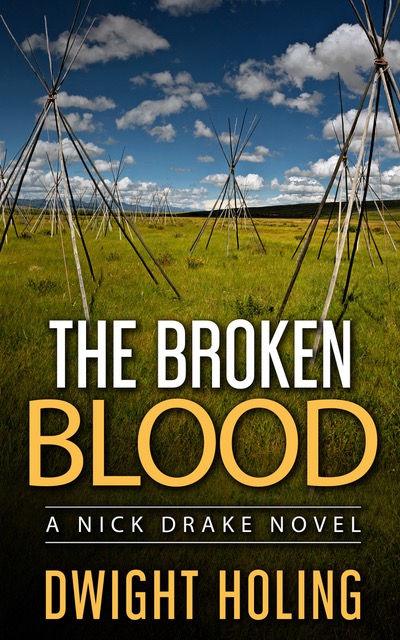
Wildlife rangers Nick Drake and Loq take separate paths, but both lead to action, murder, and mystery in a thrilling and emotionally charged chapter in this bestselling series.

When his sister goes on the run with a charismatic Indian rights activist wanted for murder, Loq risks everything to find her. He teams up with a beautiful police officer tracking a member of her own tribe who joined the fugitive too. Danger, desire, and treachery test the pair as they follow a trail through the wilds of Oregon, Idaho, and Montana made famous a century before during a legendary and bloody flight for freedom.

Can they stay ahead of a ruthless federal agent, solve who’s responsible for leaving bodies on the trail, and rescue people who don’t believe they need to be saved?

Meanwhile, Nick Drake embarks on a hazardous undertaking of his own when his adopted son continues to be haunted by his traumatic childhood in war-torn Vietnam and a loved one is stricken with terminal cancer. Father and son go in search of healing and meaning, but deadly forces turn their quest into a fight for survival.

BUY LINK: https://books2read.com/TheBrokenBlood

Dwight Holing lives and writes alongside a river in California. His mystery and suspense series include The Nick Drake Novels and The Jack McCoul Capers. The stories in his collections of literary short fiction have won awards, including the Arts & Letters Prize for Fiction. He is married to a kick-ass environmental advocate; they have a daughter and son, and two black labs who’d rather swim than walk.
Buy Link: https://dwightholing.com/nick-drake-novels/

Website: https://dwightholing.com
Facebook: https://facebook.com/dwight.holing

Instagram: @dwight_holing

Guest Blogger ~ Lori Robbins

It is never too late to be what you might have been. George Eliot

Central to my identity as a writer is that I’m a serial late-bloomer. This pattern began when I was a teenager and decided to ignore conventional wisdom that dictated dancers had to begin training at a very young age. The result of my quixotic effort was a ten-year career onstage that defied the odds. Success as a dancer, of course, meant that I didn’t attend college until long after my peers got their degrees and began their grown-up lives. Luckily, the New York City public university system welcomes nontraditional students like me, and I graduated from Hunter College shortly before giving birth to my third child.

The habit of late starts didn’t end there. I was the oldest beginning teacher at my first job and didn’t publish my first book until the youngest of my six kids graduated high school. This personal history may explain why I love reading and writing stories about people who reinvent themselves. There are many examples of writers who find their voice later in life, but my favorite is Frank McCourt, who published Angela’s Ashes at 66 after spending much of his adult life as a high school teacher. As a former high school English teacher, the trajectory of his career has particular resonance for me.

Reinvention is a central theme in my books as well as my life. I write two mystery series and am in the process of writing a standalone thriller. Series often feature protagonists who deliver a comforting sameness. Miss Marple and Hercule Poirot investigate different crimes but those endeavors don’t materially change who they are. My characters, however, aren’t the same people at the end of the book as they are in the beginning.

The On Pointe series is set in a New York City ballet company and features a ballerina on the wrong side of thirty with two surgically reconstructed knees and an uncertain future. What I didn’t want was an ingenue who triumphantly overcomes obstacles and in the end, becomes a star. Leah is more complex than that. She defies expectations, both fictional and factual. Yes, she’s embroiled in a murder mystery, but the stakes are higher for her than they would be for someone at the start of her career.  Those challenges make her observant, wary, and more than a little cynical. In other words, the perfect amateur sleuth.

The Master Class mysteries leap across the Hudson River to suburban New Jersey and feature an English teacher who also is at a crossroads in her life. Although this marks her as different from someone like Miss Marple, she does share that redoubtable amateur detective’s skill in analyzing personality, means, and motive. Miss Marple draws upon her experiences in the tiny town of St. Mary Mead but Liz Hopewell’s expertise is in literature. It’s her superpower, and she uses it to untangle mysteries when concrete, forensic evidence fails to provide answers. I love puzzles and had a lot of fun integrating clues from books into the narrative. Every chapter title includes a reference to a famous poem or book that might help the reader solve the mystery. Or, it could be a red herring. Teasing out truth from lies is at the heart of these books.

Work is central to the identity of both protagonists. It’s how they define themselves and how others define them. And yet, both rebel against those easy labels to forge an identity filled with the possibilities of what might be next.

Me too.

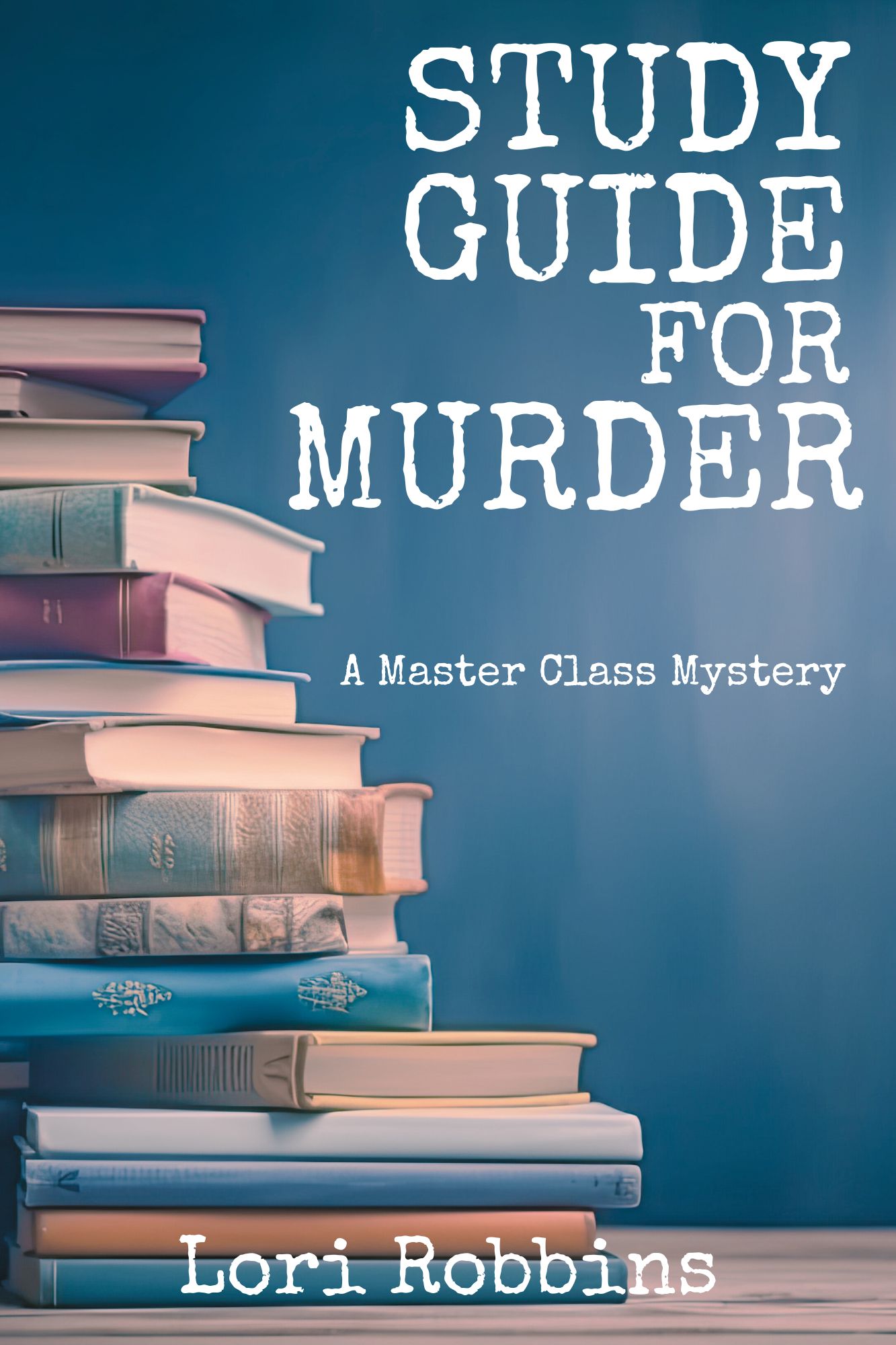
Study Guide for Murder: A Master Class Mystery

Murder has no place in Liz Hopewell’s perfect suburban life. She left her complicated past behind when she moved from Brooklyn to New Jersey, and she’s determined to forget the violence that shadowed her early years. As an English teacher, wife, and mother, Liz now confines her fascination with dark themes and complicated topics to classroom discussions about Frankenstein and Hamlet. But violence follows her from the mean streets of her childhood home to the manicured lawns of suburbia when Elliot Tumbleson’s head has an unfortunate and deadly encounter with a golf club. Her golf club.

A second murder, a case of mistaken identity, and a rollicking trip back to Brooklyn all point to one prime suspect in each crime. Liz embarks upon a double investigation of homicides past and present, using her gift for literary theory to unearth clues that she finds as compelling as forensic evidence. But the killers, like her students, don’t always read to the end.

Amazon Buy Link: Study Guide for Murder

Lori Robbins writes the On Pointe and Master Class mystery series and is a contributor to The Secret Ingredient: A Mystery Writers Cookbook. She won two Silver Falchions, the Indie Award for Best Mystery, and second place in the Daphne du Maurier Award for Mystery and Suspense. Her short stories include “Leading Ladies”which received an Honorable Mention in the 2022 Best American Mystery and Suspense anthology. A former dancer, Lori performed with Ballet Hispanico and the St. Louis Ballet, but it was her commercial work, for Pavlova Perfume and Macy’s, that paid the bills. After ten very lean years onstage she became an English teacher and now writes full-time.

Her experiences as a dancer, teacher, writer, and mother of six have made her an expert in the homicidal tendencies everyday life inspires.

You can find her at lorirobbins.com

https://www.lorirobbins.com/

https://linktr.ee/lorirobbinsmysteries

https://www.instagram.com/lorirobbinsmysteries/

https://www.facebook.com/lorirobbinsauthor/

https://twitter.com/lorirobbins99

https://www.bookbub.com/profile/lori-robbins

https://www.goodreads.com/author/show/16007362.Lori_Robbins

Mother/Daughter Characters By Heather Haven

Friends and readers ask me where I find my characters, especially the women. I can’t buy them from Walmart, although I did purchase a nifty shower cap there the other day. Even Amazon doesn’t have such a product. I suspect I could buy a new husband on Amazon, should mine start acting up. But characters? Unfortunately, no. So, I tend to draw traits from women around me.

A lot of people suspect the protagonist in the Alvarez Family Murder Mysteries, Lee Alvarez, is based on me. Nope. Many of Lee’s character facets are actually lifted from my mother. Even her name. While Mom wasn’t christened Lee, she’d taken the name at an early age and when I was born, gave it to me as a middle name. Heather Lee Haven. I dropped the Lee, myself, because I feel that spoken in toto, I sound a bit like a rest home. “You, too, can enjoy your golden days at the Heather Lee Haven.”

But back to my characters. I wanted the protagonist, Lee Alvarez, to be bright, beautiful, quick-witted, spirited, savvy, and a huge lover of life. My mom was all those things. Insecurity was the other side of the coin for her. I never quite knew why my mother had these feelings of insecurity; sometimes people just do. Nonetheless, I handed this dichotomy off to my protagonist. It has a certain charm about it i.e., someone who has everything going for them but is constantly on the lookout for Life’s banana peel.

With Lee, however, I give several reasons for her insecurity. One, since being a small child, she wanted nothing more than to be a professional ballerina but could not make the cut. Mediocre is mediocre. The second reason is having the “perfect” mother.  Step forward Lila Hamilton Alvarez, mother and CEO of the family-owned detective agency, Discretionary Inquiries.

Lila is a cool, aristocratic blonde who wears confidence like a crown on a head that’s never had a bad hair day. As a backstory, this Palo Alto blueblood married a Mexican immigrant, Roberto Alvarez, a scholarship student she met at Stanford U. This marriage surprised no one as he was her equal in every way and theirs was the love affair of the century. A running thread in the series is Lila’s inability to recover from his recent and unexpected death. Their daughter, Lee, takes after her father, even to her dark hair and twilight-blue eyes. But most of the things Lila found irresistible in Roberto, she finds annoying in Lee. They have an edgy relationship, as neither understands the other. But genuine affection is there, and they keep on trying. That’s the key to everything, as we know. Keep moving forward, keep trying.

Don’t let this get around the neighborhood, but I based Lila’s character on two people, my mother-in-law and my then boss. Both were highly intelligent women who liked to put you in your place even before you entered the room. I have a certain amount of sympathy for these real-life women – they were not always well liked – but they serve the strained relationship between the mother/daughter Alvarez women well.

Moving on to the Persephone Cole Vintage Mysteries. Percy Cole, the protagonist, is also a PI. Unlike Lee, who sits at a desk wearing designer clothes and sipping a latte, Percy’s a where-the-rubber-meets-the-road sleuth. She’s also a unique kind of woman, one I’d not tackled before. I had been challenged by my writing instructor to come up with a non-conforming female protagonist. Thus, Persephone Cole was born, and I love her. She’s self-assured and sharp, and by no means the average beauty or thinker of the time. Or of any time.

At five foot eleven in her stocking feet and, for lack of a better word, zaftig, Percy is as physically big, if not bigger, than the average man of the time. She handles herself like a champ. She even takes boxing lessons at the local Y should the occasion arise when she needs to slug a villain. My redheaded, green-eyed gumshoe functions in the 1940s man’s world better than many a man and it all comes naturally to her. As for most other 40s women, they may be helping the war effort by temporarily taking a man’s job on the home front, but they know their place is in the kitchen when the war is over. In Percy’s mind, her place is wherever she wants it to be. What softens this steamroller of a woman is a wicked sense of humor, and being the single mother of an eight-year-old boy, Oliver, a child who gives her life meaning.

Her mother, Lamentation Cole, understands her daughter even better than Percy does herself. Indeed, Mother, as she’s called, has a deep understanding of all three of her children and their father. She has a gift for always honing in on the truth and you will never fool her. Mother is reminiscent of a walking dandelion, being five foot eight, weighing maybe a hundred and ten pounds, topped off by long, wild white hair. She may have many of the characteristics of ZaSu Pitts, a well-known comedic actress of the time, but no one who knows her, especially Percy, underestimates Mother’s astuteness or that she is the glue that holds the family together.

The Alvarez Family Murder Mystery series is based in today’s Palo Alto, California, and the Persephone Cole Vintage Mysteries take place in 1940’s Manhattan. They are for the most part humorous. Although you’d never know it by this post. But in order to be funny, truly funny, you often have to base your humor on sadness or loss, confusion or misunderstanding, and sometimes downright anger. But in both these series, there is familial love which rushes in when all else fails.

My job as a fiction writer is to shine a light on the truth. And my truth is that family is what keeps us going. I believe there are two ways to have a family. Some you are born into. Others you create through love, respect, and honor.

As a side note, on September 1st Bewitched, Bothered, and Beheaded was awarded the Readers’ Favorite Bronze for Best Fiction Mystery Sleuth, 2024. That would be Lee. And she couldn’t have done it without her mother, Lila’s, help!

Time and Characters—Fixed and Fluid

Jeri Howard is aging a lot slower than I am. She was in her early thirties when I wrote and published Kindred Crimes, the first book in my long-running series, in 1990. Last year, I published the fourteenth book, The Things We Keep. By now Jeri is in her late thirties.

As for me, well, we won’t talk about how old I am, but it’s been a while since I graduated from college. I admit to the aches and pains of what I prefer to call upper middle age.

Jeri is a private investigator in Oakland, California. Way back when, she used paper maps to find her way from place to place and worked on a dual disk drive computer with floppy disks. Remember those? I do! Jeri was always looking for a pay phone when she needed to make calls.

How things have changed. These days, she relies on her smart phone to make calls and get her where she needs to go. She still gumshoes around and talks to people in person, so she can read facial expressions and body language. The internet has been a great help in her detective work. Using the technology available to her, she researches online. In The Things We Keep, she uses a missing persons database as well as online copies of old newspaper articles to get information about the people who inhabit the book, past and present. And that cell phone comes in handy when she needs to take photos or record an interview with a witness.

I recall Sue Grafton, whose book A is for Alibi was published in 1982. Through 25 books, Grafton made the decision to leave her character Kinsey Milhone fixed in time, in the 1980s. She didn’t have to deal with the world progressing and tech marvels like smart phones and the internet.

I chose to go another way. That means I ignore the fact that the Jeri books are getting a bit long in the tooth. It seems that readers don’t mind. Jeri is as popular as she ever was, discovering new readers via ebooks. I’m happy to report that they want more. Thank goodness for that! Note to readers—the plot for the next Jeri Howard case is currently bubbling in my head, waiting to get out.

My series featuring protagonist Jill McLeod is a different matter. Jill is a young woman in her twenties who works as a Zephyrette, or train hostess, on the streamliner train known as the California Zephyr. I’m talking about the original that ran from 1949 through early 1970, not the Amtrak version of the train. These are historical mysteries, set in a particular time. The first in the series, Death Rides the Zephyr, takes place in December 1952 and by the time Death Above the Line rolls down the tracks, it’s October 1953. So, less than a year has passed in Jill’s life.

There are advantages to a series that’s fixed in time. I don’t have to worry that a reader will notice that the books have aged. They’re supposed to be historical. I concern myself with researching what was going on in a particular month in 1953, so I can drop in details that give the flavor of life in the fifties. That includes the books Jill is reading, the music she listens to, and the movies she sees.

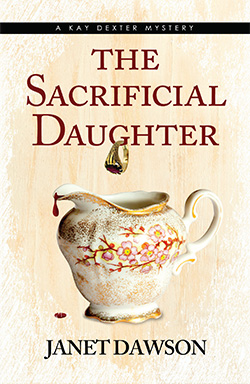
My third series takes place in the present day and it features Kay Dexter. She’s in her fifties and has her own business, working as a geriatric care manager, one who assists families with care of older adults, usually aging parents. Kay puts in her first appearance in The Sacrificial Daughter. I figure Kay is not aging as fast as I am either. Like the Jeri books, Kay operates in the contemporary world, so she’s using the technology that implies.

As always, it will be a challenge to keep writing contemporary stories without letting the ages of characters, and events, get in the way.