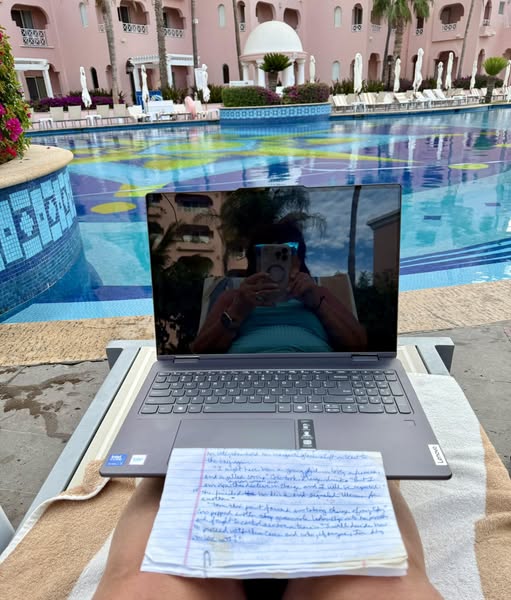
From the very beginning, I was taught that writing should be a business. Good in theory, not so much in reality. If I think about my salad days, I made about 5¢ an hour. When I got a real job writing humorous ad copy for No Soap Radio, I made $125 a week. Even in New York City’s late 1970s that wasn’t enough to pay your bills, so I worked backstage doing costumes on Broadway to supplement my income. I was in my early 20s then and doing two jobs I loved was no hardship at all, especially if one was in the theatre. I love the theatre. Lots of talented people inhabit the theatre. I am proud to say I’ve met friends I’ve kept throughout the years. Certainly worth more than 5¢ on the dollar.
As for writing ad copy for No Soap Radio, every morning in a round table sort of setting – literally – is where I learned it was my job to produce something, whether I felt like it or not. For decades after that’s how it went. Recently, however, I took on the luxury of writing when I felt like it. It’s only been for the past 4 months and hard though it is to admit, now writing feels more like a hobby than a job. It comes, it goes, and so what? This hobby approach to things is not my style. I’m a workhorse type of person. I need to feel useful and committed. And as John Adams said, one of our founding fathers and presidents, “There are only two creatures of value on the face of the earth: those with the commitment, and those who require the commitment of others.” I knew I liked the man.
I’ve discovered — or rediscovered — it’s not the money that spurs me on. It’s the commitment. True, this has been an important break after 40 years of daily writing no matter what was otherwise going on in my life. It’s been a test of what writing means to me. But this new thing, writing whenever the mood strikes me, just isn’t working. I need to get back to work, scheduled and at the forefront. I need to get up every morning and feel driven. I need to rekindle the fire in the belly. In short, pass me the matches.
I write because I love it. I write because I have to. I write because it’s me. So I greet 2025 most welcomingly. A new year and back to being me — a crazy, driven, committed writer — who puts her work above everything else except for maybe the occasional glazed donut. Well, come on. Let’s get real.
Happy New Year to all the other crazy, driven, committed writers in my life. 2025 is going to be great.
The Devil’s in the Details: Eco-fiction in the mystery genre
When my husband, John Yunker, and I embarked on a four-day hiking trip in one of the most remote areas of the world, we had no idea we’d bring home the idea for a novel we would write together. (We also had no idea we would survive writing a murder mystery together.)
But though Devils Island is our first co-authored book, it’s not our first collaboration. In 2011, noticing a dearth of opportunities for authors writing environmental fiction, we co-founded Ashland Creek Press, a boutique publisher focused on books about the environment and animal protection. From the day we opened for submissions, we’ve received far more environmental novels than we could ever publish — and now, thirteen years later, “cli-fi” has become a genre of its own.
Both John and I have written our own novels about endangered species — John in The Tourist Trail, and me in My Last Continent and Floreana — and once we learned about the plight of Tasmanian devils in Australia, we knew we’d found our next project.
But we had to ask ourselves: Can a serious environmental topic like endangered species be addressed in a genre often considered “beach reading”? The answer we came up with is: Absolutely. And perhaps it’s even more effective than tackling such subjects in a more “literary” genre.
Here’s why: We’ve seen, over the years, as both writers and publishers, that readers can be wary of environmental books. When it comes to climate change and animal protection, the news out there can be difficult: the planet is heating up; species are disappearing. Readers like to read, in part, to escape to somewhere else — mentally and emotionally, even if not physically. So we aimed, with Devils Island, to write a story that offers a fun escape (a glamping trip in one of the most beautiful places in the world), while also sharing what makes the real-life island of the novel so important (it is part of the conservation effort to save Tasmanian devils).
Maria Island
What we learned during our journey to Maria Island, a tiny island off the coast of Tasmania, is that Tassie devils are being reintroduced there because it is so remote; it’s the one place offering them hope for survival from a contagious facial tumor disease. To give ourselves literary freedom, we call our fictional island Marbury, and we created Kerry, a naturalist-turned-guide who herself is escaping the tough world of rescue to lead tourists on a trip where she’ll get to feel the optimism of sharing a place of hope with travelers. (Little did she know one of her guests would go missing, and a storm would cut off all communication with the outside world.) The secrets and lies of the hikers — and the disappearance of one of them and the death of another — is the focus of the story, but along the way, we’ve snuck in myriad details that will teach readers about the amazing Tasmanian devils (among other creatures) and the efforts to protect them.
And this is where eco-fiction meets mystery — in the details. Locked-room and closed-room mysteries are nothing new to the genre, but by setting a suspense novel on an island where conservationists are rehabilitating an endangered species is a detail that goes a long way toward readers’ understanding of the issues. And while the human characters are center stage in Devils Island, an individual devil character plays a small but important role — and myriad other animals make appearances as well.
Mystery novels include plenty of red herrings — but these don’t have to be limited by human plot twists. We decided that one subplot of Devils Island would be all the more resonant if it was about another issue facing Australia, that of poaching and wildlife smuggling.
Maria Island Lagoon
And mystery writers never neglect setting — and this, too, can be effective in an eco-mystery. Nearly every part of the world is suffering the effects of climate change, from stronger hurricanes to increasing wildfires. In Devils Island, it wasn’t a stretch to conjure a storm that would cut off all contact between the hikers and the outside world. Alternatively, climate change can provide an atmospheric backdrop, as in Jane Harper’s bestseller The Dry, in which the tinder-dry farming community that has suffered from years of drought reveals the stress of the climate crisis on this community and ratchets up the tension in the story as well.
Characters, of course, propel stories forward — and they can also provide details of context and backstory for animals and the environment. In Devils Island, Kerry brings both naivete (this being her first time around as a lead guide) as well as expertise (she knows everything about devils and most of the wildlife from her former job). Another thing characters provide is conflict, and author Cher Fischer provided plenty of this in her eco-mystery Falling Into Green (published by Ashland Creek Press) in which ecopsychologist Esmeralda Green, a vegan with an electric car, falls in love with a carnivorous, Hummer-driving television reporter.
Mystery novels are all about figuring out who did what, and an eco-mystery is no exception. But adding details that reveal environmental issues, the plight of animals, and our changing world can create stories that are not only fun to read but make us think about our planet as well.
Devil’s Island
On a remote island off the coast of Tasmania, an Australian wilderness guide embarks on a four-day hike with six guests—and arrives at their destination with only two.
Devils Island is home to abundant wildlife and is the ideal place to re-introduce endangered Tasmanian devils. It’s also a region where travelers can see firsthand the unspoiled drama of Australia’s wild places. For naturalist guide Kerry, the trip offers a respite from the grueling work of trying to save an endangered species. American college classmates Brooke and Jane have a chance to reconnect after years of estrangement. Two Australian couples hope to escape their big-city lives and enjoy the company of longtime friends.
When Jane disappears on the first night, the group assumes she has wandered too far in the stormy weather. Yet it turns out she has a secret connection to one of the other guests—and when another hiker is found dead in camp, the group finds itself isolated by the worsening storm and wondering who among them might be responsible.
Devils Island is the debut collaboration by Midge Raymond and John Yunker. Midge is the author of the novels Floreana and My Last Continent and the award-winning short-story collection Forgetting English. Her writing has appeared in TriQuarterly, American Literary Review, Bellevue Literary Review, the Los Angeles Times, the Chicago Tribune, Poets & Writers, and other publications. She earned a certificate in private investigation from the University of Washington. John is the author of the novel The Tourist Trail; editor of the Among Animals fiction series and a nonfiction anthology, Writing for Animals; and his plays have been produced or staged at such venues as the Oregon Contemporary Theatre, the Source Festival, the Centre Stage New Play Festival, and Association for Theatre in Higher Education conference.
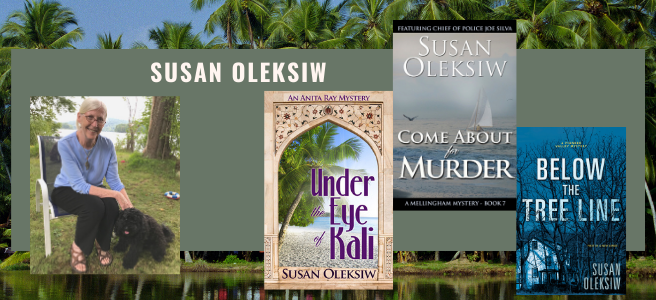
Beginnings and endings are the hardest part of writing for me. (That’s today. On other days it’s the muddled middle.) Some writers have arresting, captivating openings that grab the reader and carry her along into a ninety-thousand-word novel. I’m not one of those, but I can eventually get a few words on the page to get the story moving. For me the greater challenge is endings.
Some years ago I listened to Andre Dubus III talk about his new book, House of Sand and Fog, which led him to talk about how he’d grown as a writer. He didn’t like his first book, Bluesman, because he considered it sentimental. His disdain for this failure in craft was obvious, and when I met him at a writers’ event years later, the subject came up again. As I listened to him touch on the challenges in his work, I understood that for him an ending that is sentimental is also in some ways dishonest, an inability to reach deeper for something that was true. I had just purchased TheGarden of Last Days, and read it with that in mind. There is nothing sentimental in that book, least of all in the ending.
Several critics have explored the link between the traditional and cozy mystery and comedy; noir crime fiction has been linked to tragedy. At the end of the cozy mystery, the world is set right again; the villain has been identified and brought to justice of some sort; the lesser crimes of other characters are brought to light and justice is visited on them in various ways, perhaps public censure or shame or remorse; and the minor romance barely acknowledged sometimes comes to light and there is a new beginning for a young couple. All is right with the world. From Restoration Comedy to Agatha Christie and writers today, it is hard for a reader of cozies or traditional mysteries to be satisfied with less. An unrequited love or an unchallenged con artist will annoy some readers as much as a dangling participle will menace the peace of mind of a copy editor. And I understand this. There is something deeply satisfying about the comedic ending, a moment that reassures us that the world aslant can be righted, that our inchoate ideals can be realized.
So how does a writer of traditional crime fiction compose an ending that is both true to the story being told and unsentimental? Sometimes I think this question is just one more obstacle to writing a satisfactory ending, and all I’m doing is complicating matters, making life harder for myself. I’m not unsatisfied with the ending of Family Album, the third in the Mellingham series, but I acknowledge that it is a tad sentimental (maybe more than a tad). But readers loved it because it fulfilled one of the hints at the beginning of the story, and a promise fulfilled, particularly about a possible romance, always brings a frisson of delight. But it was sentimental. At least it wasn’t mawkish.
I don’t remember most of the endings in my books and stories but some stand out, for me at least. The ending of When Krishna Calls in the Anita Ray series required research, rethinking, and stepping back. A woman sentenced to prison looks out on her new world, listening to another prisoner, and is satisfied with the choices she has made. She won’t forget why she is where she is, and she won’t regret it. The ending of Friends and Enemies in the Mellingham series required several versions before I finally landed on the one that worked and fit with the rest of the story. An editor who read the ms and considered acquiring it mentioned how much she liked it (but not enough to take the book). Another ending that satisfied me is that in “Coda for a Love Affair,” in Devil’s Snare: Best New England Crime Stories 2024. The ending is simple, clear as cut glass and sharp.
Endings are hard because the easy ones come fast, are easy to write, and sit well on the page. And that’s the problem. They tempt us to take them, give a sigh of relief, and pat ourselves on the back for coming up with (rather than running carelessly into what looks like) the perfect line or paragraph to close out three hundred pages. Depending on how tired we are of the story and working on it, that ending will appear reasonable, acceptable, or a gift from the writing gods. So this is where I step back and wonder what Andre might think. I don’t have to get far into that mental exercise to admit that the first or even the thirtieth ending is not what I want.
If nothing else, writing keeps us humble. In our heads we hear perfect dialogue, snatches of prose so brilliant we’ll never need the sun again, but on the page, our pen does not cooperate (or the computer keyboard), and we end up with the mundane, the ordinary, the usual. I keep working on endings but I know I fall short most of the time. As do we all. It’s encouraging to know that greater writers have the same struggles, the same challenges, the same doubts. With one eye on writers whom I admire, I keep at my own work, striving to meet my standards even if that means sometimes disappointing some readers. If I want better endings, I just have to keep at it until I get there.
It’s that time of year when we all do a gut check on our writing and output. Well, my guts all like wombaldy-peg (something my mother used to say among many other sayings she had that made no sense – ever – but were highly descriptive).
I had a goal for book sales. I don’t think I’ll make it, but it will be disgustingly close. Just off—a wee. My gut doesn’t like that. I’m not the: well, maybe next year sort of lady. Now – please.
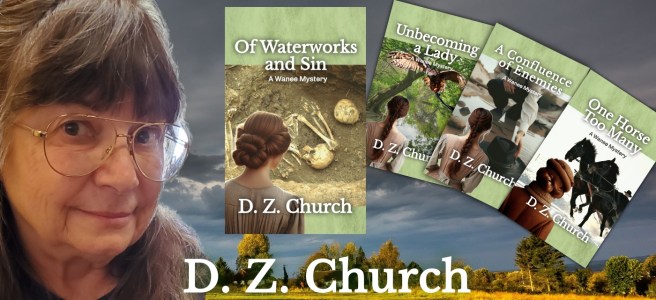
Faced with a gut rumble, I rewrote the ending of the latest Cora Countryman book, Of Waterworks and Sin, and sent it out to my beta folks weeks after the text. Second guessing is my problem, well, no, endings are my problem. I think I’ve rewritten every one of the endings to all four Cora books at near the last minute (as Cora would say). My gut tells me that’s not professional, my brain isn’t listening. It says it is more important to get it right than to worry about the timing of getting it done. Okay, I can live with that. Maybe. Just.
The thing is this. If the last sentence of a book in a series isn’t gut-checked and perfect, where do you start the next book? Well, I’m sure the writers with their wallboards, index cards or Scrivener have it all charted out. Me, not so much. I need to leave myself clues like Hansel and Gretel did breadcrumbs.
I’ve been staring at the beginning of Cora’s next book, the fifth in the series, for what seems like weeks. Partially because I have a cabin in the mountains and my fire insurance was pulled. I thought I had it until the insurance company’s threats arrived, and I found myself wrangling contractors to get upgrades made so I could overpay for fire insurance when my place is a mile from a park service fire training station. It occupies your mind, not to mention the thumping and bumping on the walls as your deck is destroyed and your siding comes down.
Still, I had a good start on No-Name Book 5 until I realized I needed to explain how Cora came to be on a riverboat on the Mississippi. When I put the backstory in, it was like blah, blah, blah — blah. Why was the blah-blah needed? I stewed about it, especially at 4:00 am just after I got through tallying my finances for all the fixes required by the insurance company. The gut came to the same conclusion every time. The ending to Of Waterworks and Sin wasn’t doing its job. Cute, fun, and dangly, but totally responsible for the fix I was in with the No-Name Book 5.
Thus, the new ending Of Waterworks and Sin sent to the beta folks. Now, No-Name Book 5 is off and running; the plot unfolding before me, not exactly the one I have diligently outlined. It never is. That gut again. But a great plot, action, romance, mystery and redemption all while floating the characters down the Mississippi and through history.
My head tells me I need to do more period research. My gut says hit it at a gallop and fix it later. If that sounds like Nora Roberts, so be it. Sometimes you just need to quit with the research and go. That’s what resource books and the internet were bred for – checking and double-checking facts as you write.
I have a fledgling plot for book 6 (I can’t wait to write it). I hope with insurance coverage and a restored cabin. If my gut tells me the ending of No-Name Book 5 is off, I’ll listen. This time before it goes out for review. That way, I can avoid a visit from the Pooeyanna Bedhunters (another mother-ism – don’t ask) and have a happy gut. Who knows, maybe next year I’ll make my goal.
Don’t forget to check out The Ladies of Mystery Cavalcade of Books at https://bodiebluebooks.com/ladiesofmystery. The prices listed are good through December 31st. The mysteries offered inside are great anytime.
Find more about me or sign up for my newsletter and https://dzchurch.com. And watch for Of Waterworks and Sin sometime in Spring 2025, the date depends on my reviewers, don’t you know?
Since my Saturday guest didn’t get their post to me I decided to promote the Ladies of Mystery Cavalcade of books. This is an online site where you can find books by the ladies who post once a month on this blog. There are 29 books of various subgenres of mystery. Head on over and browse the selection.
You must be logged in to post a comment.