Farewell, Bulwer-Lytton

By Margaret Lucke

As April 15 rolls around, I’m saddened to report of the demise of one of that date’s most cherished annual events.

No, I’m not talking about the deadline for filing your federal income taxes. You still have to do that, and if you haven’t yet started dealing with all of those numbers and all of that paperwork, I recommend you stop reading this blog right now and get busy with that task.

What I’m referring to is the late, great Bulwer-Lytton Fiction Contest. It was announced not long ago that 2024 would be this beloved competition’s final year.

While entries were accepted any time, the official deadline was each year April 15 –which, as the contest’s organizer, Professor Scott Rice, noted, is “a date that Americans associate with painful submissions and making up bad stories.”

The English Department of San Jose State University began sponsoring this annual wordfest in 1982. Writers were urged to come up with the opening sentence to the worst of all possible novels.

It’s a challenge for any writer to come up with an opening line that will grab our readers and pull them into reading the rest of the book. With the Bulwer-Lytton winners, there was no rest of the book.  They were often complete single-sentence stories. Anything more would have been superfluous.

The contest was named for Edward George Earle Lytton Bulwer-Lytton, 1st Baron Lytton, a minor (perhaps deservedly so) but prolific British novelist of the Victorian era. His best-known title is probably The Last Days of Pompeii, and he originated the saying “The pen is mightier than the sword.” But he is most famous today for penning the immortal opening line: “It was a dark and stormy night … ” Thus begins the novel Paul Clifford, the story of an English gentleman man who moonlights as a criminal.

The complete sentence reads:

“It was a dark and stormy night; the rain fell in torrents–except at occasional intervals, when it was checked by a violent gust of wind which swept up the streets (for it is in London that our scene lies), rattling along the housetops, and fiercely agitating the scanty flame of the lamps that struggled against the darkness.”

Snoopy, famed beagle from the Peanuts comic strip, appropriated the first seven words for the title and first sentence of his own novel. Snoopy is not one to waste words. His entire novel is only 214 words, not all that much longer than Bulwer-Lytton’s single sentence. A born mystery writer, he jumps straight into a suspenseful plot with his second sentence: “Suddenly a shot rang out.” 

Back to the Bulwer-Lytton contest: In its first year it attracted three submissions. In its second year, thanks to a little publicity, the number grew to 10,000. Writers were invited to submit as many abysmal first sentences as they like. One year a hopeful author sent in more than 3,000. If he had strung them together he would have had an entire book, which surely would have qualified as a the worst of all possible novels.

I submitted my own masterpiece of a first line one year. Sadly it didn’t win, possibly because it exceeded the recommended length of not more than 50 of 60 words. I’m fond of it anyway, and I can’t resist including here:

“Until the night he set her house afire, burning down the only home she’d ever known, incinerating the manuscript of her nearly completed novel, turning her cherished photos of Daddy to ash, though thank goodness the cats escaped … until the hour when sparks soared across the heavens like shooting stars and the smoke from the conflagration carried away all her hopes and dreams … until the moment when a firefighter squelched her screams and drenched her nightgown with a well-aimed hose … until that very instant Isabelle believed her love affair with Rolf would last forever.”

Hmm, maybe I should think about writing the rest of that book.

If you’re interested in reading the sentences that the judges, in their wisdom, preferred to mine, you can find an archive of the winners and dishonorable mentions here: https://www.bulwer-lytton.com/winners

Souvenirs and Memories

by Janis Patterson

As most of you know, I just returned from several weeks in Egypt and Jordan. Fascinating… and exhausting, but I’m covering that in the Trip Diary that will be on my website. What I’m going to talk about now is souvenirs. Souvenirs are something to remind you of what you did/saw… or to take home to friends and family so they will know where you went and what you did.


The Husband and I quit the souvenir train a long time ago – mostly. He always buys a few postcards and I usually pick up something small, like a refrigerator magnet. (Though I did buy a spectacular gold-embroidered dress in Cairo – have no idea where I will wear it in the foreseeable future, but I do know I couldn’t have left without out it.)


Back to souvenirs. Whether for us or for others ‘small’ is the operative word. We always try to travel light, especially on a ‘rough’ trip like this one, so space is limited. Plus, one must consider the egregious baggage charges the airlines are extorting from us. No space, no extra charges = small. Very small.


But… as pleasant as little trinkets can be, they are not necessary to life. All they really do is stimulate our memories and feelings of pleasant or adventuresome times, and we can call forth those memories on our own, because what is really important is the memory – not the trinket purchased there, though the trinkets are nice to have.


To drag this post to the business of writing, in a not-too-unusual way a well-crafted story is a souvenir – a memory that you might have not had yet, but once the story is read it stays with you forever. How many of us have favorite scenes, favorite stories, that always evoke a reaction within us? Isn’t that like how a souvenir can in the blink of a memory bring back sights and sounds and actions previously experienced? Just because it is not brightly colored or even physical doesn’t mean that it isn’t a sort of souvenir… an encapsulated memory.


That means I can forget small. I live in a house with four libraries, each simply bulging with books, most of which I have read. I can pick up almost any one of them and suddenly there is a memory, a feeling inspired by something in that book. A souvenir of a life – an event – a something that I might or might not have experienced in the flesh, but which still arouses not only a memory but an emotion in me… just like when I pick up the embroidered shawl my husband bought for me in a small shop in Petra, or the tiny terra cotta Mayan figure I found in Mexico, or… I could go on and on. Like you and probably everyone else on the planet I have more souvenirs and more memories than I can handle.


So… when you are writing your books, remember that you are not only creating a story, you are creating a souvenir of a life the reader never lived.

Time Available, Plus

My cousin has a catchphrase about stuff. She opines that one’s stuff expands to fit the space available, plus two boxes.

My variation on that theme is this: The number of tasks demanding my attention expands to fit the time available, plus five or six more tasks, all with screaming deadlines, taking up line after line on my to-do list.

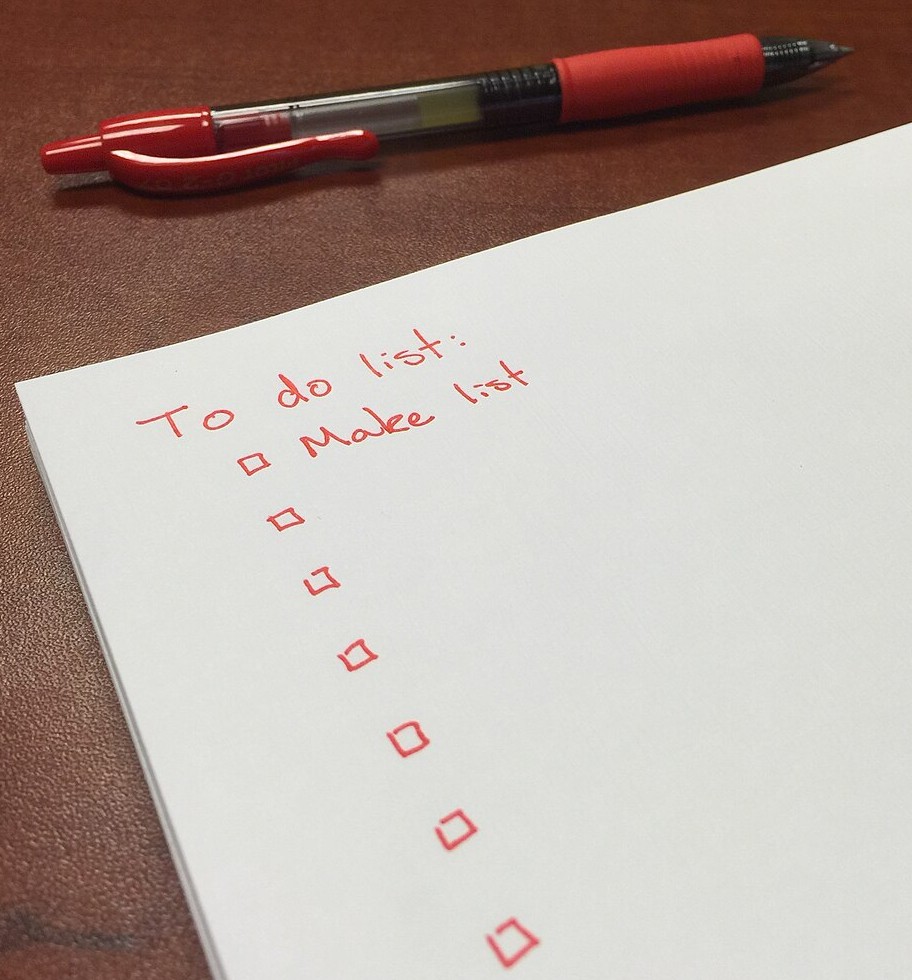
Yes, I keep a to-do list. It’s satisfying to check off those items. But I keep adding more, until the page is covered with scribbles, some of them in the margins, and hand-drawn stars indicating the urgency. Oh, the tasks that make their way onto that list—and get in the way of writing. There are so many.

I retired from my day job more than a decade ago. I figured I would have more time to write. Not unlimited, never that. But more. Hah! Like that worked.

“I don’t know how I got anything done before I retired.” When I was working full time, I used to hear people say that. After I retired, I was the one saying it. However, I do know how I got things done. I didn’t sleep—much. During those last few years, what with the day job and the commute, I got up at 4 AM so I could write before making that rush-hour drive to my office. Once I retired, sleeping in past 6 AM was pure joy. So is reading my morning newspaper in the morning, a mug of coffee beside me, instead of catching a few pages while eating lunch at my desk.

It’s amazing what crops up to fill the time. Tasks, some pleasant, some routine and necessary. I need to clean my home from time to time, because I like to walk through the rooms without tripping over the clutter. In the spring and summer, I look at the proliferation of weeds in my garden, thinking I’d better haul on the gloves and deal with them.

Exercise is a desirable routine. I have a weekly tai chi session that has been good for me. And walks. Because you never know, I might work my way through that thorny plot issue while walking along the beach near my home.

Errands, always errands. Grocery shopping for me. Stocking up on cat food for my four-pawed furballs. Library visits, to pick up or take back books. Visits to the doctor or dentist. And those trips that are good for the soul, such as meeting a good friend for lunch or coffee, always with plenty of conversation. Or an outing to a museum or the theatre.

I treasure those days when my dance card isn’t crowded, just my morning session with the newspaper, a walk (if the weather permits), and the rest of the day spent in front of the computer, writing and polishing my work in progress. That is so satisfying. But lately, things are getting in the way. I’m thinking of that daylight-savings-time mantra: “Spring forward, fall back.” The term “fall back” makes me think about falling behind. I have certainly felt that way over the past two years, when family and personal issues got in the way of writing.

The tasks are always expanding to fill up the to-do list. That’s always going to be the case, I suspect. One issue gets taken care of, and then another crops up to take its place. And always, things that get in the way of writing, if I let them.

So on to checking off one more thing on the to-do list: this month’s blog!

Guest Blogger ~ Skye Alexander

Clothes Make the Woman

The fashion world is ever-changing, and in the 1920s when my Lizzie Crane mystery series takes place the clothes a woman wore not only expressed her sense of style but also the changing ideas and mores of the Jazz Age. Modern ladies were shedding outdated social roles and restrictions as fast as they cast off their corsets. Hemlines rose to previously shocking lengths, baring ankles and calves. Some daring young women even painted images of their beaus on their knees––their short skirts revealed the pictures when they danced the Charleston. Glittery flapper dresses, resplendent with sequins and fringe, exposed plenty of skin. On the beaches, swimming costumes crept up high enough that policemen known as “beach censors” trod the sand, measuring ladies’ legs to make sure no more than six inches of flesh showed between hem and knees.

Wearing trousers, too, signaled not only a desire for comfort and convenience, but a shift toward equality between women and men as well. In most circles at that time, a lady dressed in pants raised eyebrows. Some towns in the Midwest and South even outlawed wearing trousers and fined brazen women for doing so. In the first novel in my Lizzie Crane mystery series, Never Try to Catch a Falling Knife, my jazz singer heroine from Greenwich Village gets off to a rocky start her first day on the job by wearing trousers when she meets her conservative Yankee employer. Sportswomen, however, were grudgingly allowed to don knickers on the golf course or men’s white trousers while playing tennis. Although off-the-rack pants for ladies weren’t available in the early Twenties, the 1927 Sears catalog offered tweed woolen knickers to golfing girls for $2.98. If you wanted something more in line with what Katherine Hepburn popularized a decade later, you had to have them custom-made or buy men’s and alter them yourself.

The Inside Scoop on Intimate Attire

As women’s outer garments changed, so did their underwear. No longer confined by tight corsets and multiple petticoats, liberated ladies shed the many layers their mothers wore in favor of slinky teddies, camisoles, and bloomers that slid comfortably beneath their slim-fitting dresses. Nylon, polyester, and other synthetic materials didn’t exist at that time, so wealthy women chose undies made of silk whereas ladies of lesser means garbed themselves in cotton, rayon, and wool. Instead of only boring white, lingerie now became available to style-conscious women in pink, peach, beige, light green, and naughty black. https://www.sewhistorically.com/dressing-the-1920s-woman-1920s-lingerie/

Prior to the Roaring Twenties, women wore thick stockings primarily for warmth. Now, with their legs on display in their new short skirts, modern ladies switched to sheer stockings that showcased their calves. Silk stockings were the preferred choice for those who could afford them at $1.48/pair in 1925 (the equivalent of about $25 in today’s money), in colors ranging from champagne to black. Rayon provided a cheaper alternative for cost-conscious women––and if they objected to the material’s sheen, they dusted their legs with powder to soften it.  

Women who still chose to wear girdles clipped their stockings to attached garters. Free-spirited fems rolled their stockings into place and fastened them just above the knee with elastic bands. The bands, sometimes called “jazz garters,” soon became a fashion statement in themselves, decorated with lace, ribbons, and rhinestones in sexy colors such as purple, red, and black. And if a woman wanted to keep a nip nearby in defiance of Prohibition, she could wear a garter flask that featured a pocket with a small silver container to hold her drink of choice.

Shopping for Clothes in the Roaring Twenties

Prior to the 1920s, most women made their own clothes. But as more entered the workforce during the Jazz Age––half of single women were employed outside the home in 1930––they had less time to devote to sewing. In response to this trend, department stores such as Macy’s and Bergdorf Goodman began selling off-the-rack garments. Now, busy ladies could purchase ready-made dresses, coats, and other clothing rather than engage in the time-consuming task of creating their own wardrobes or paying seamstresses to fabricate them.

For people who couldn’t afford to buy at upscale department stores, a shopping alternative arose during the 1920s: thrift shops. Prior to this time, peddlers hawking used clothing and other goods were common in America’s cities and towns––especially in less affluent neighborhoods. Many of these merchants were Jewish immigrants. But during the Twenties, Christian churches began establishing outlets to sell clothing and other products donated by parishioners with the goal of raising money for their churches. Goodwill trucks collected used clothing from more than a thousand households in the Twenties. Proceeds from thrift stores funded half the Salvation Army’s budget. Chanteuse Lizzie Crane, my style-savvy protagonist, realizes that wealthy ladies wouldn’t be caught dead wearing the same evening gown twice, and she buys most of her attire secondhand at church charity stores.

Hemlines and the Economy

Not only do the clothes a woman wears reveal her personal tastes, social class, and ideology, they may also be an indication of the economy. According to the “Hemline Index,” skirts rise during periods of prosperity and lengthen during leaner times. The short skirts of the Twenties celebrated a post-war boom as well as newfound freedoms for women. During World War II and the recession that followed, women’s hemlines dropped again. When times were good in the 1960s, the fashion world gave us the miniskirt and the bikini.

That’s not to say investors should take tips from haute couture––it’s likely that the fashion industry follows economic trends rather than predicting them. But perhaps something more than personal taste or vanity influences a woman’s choice of clothing. Risqué styles reflect a sense of playfulness, confidence, and freedom from limitations or worries, whereas more serious garb suggests a desire for protection, endurance, and the security of tradition. Whether or not these psychological connections have any merit, certainly the Roaring Twenties transformed the way women thought of themselves and their place in the world––and their clothes reflected that transformation.

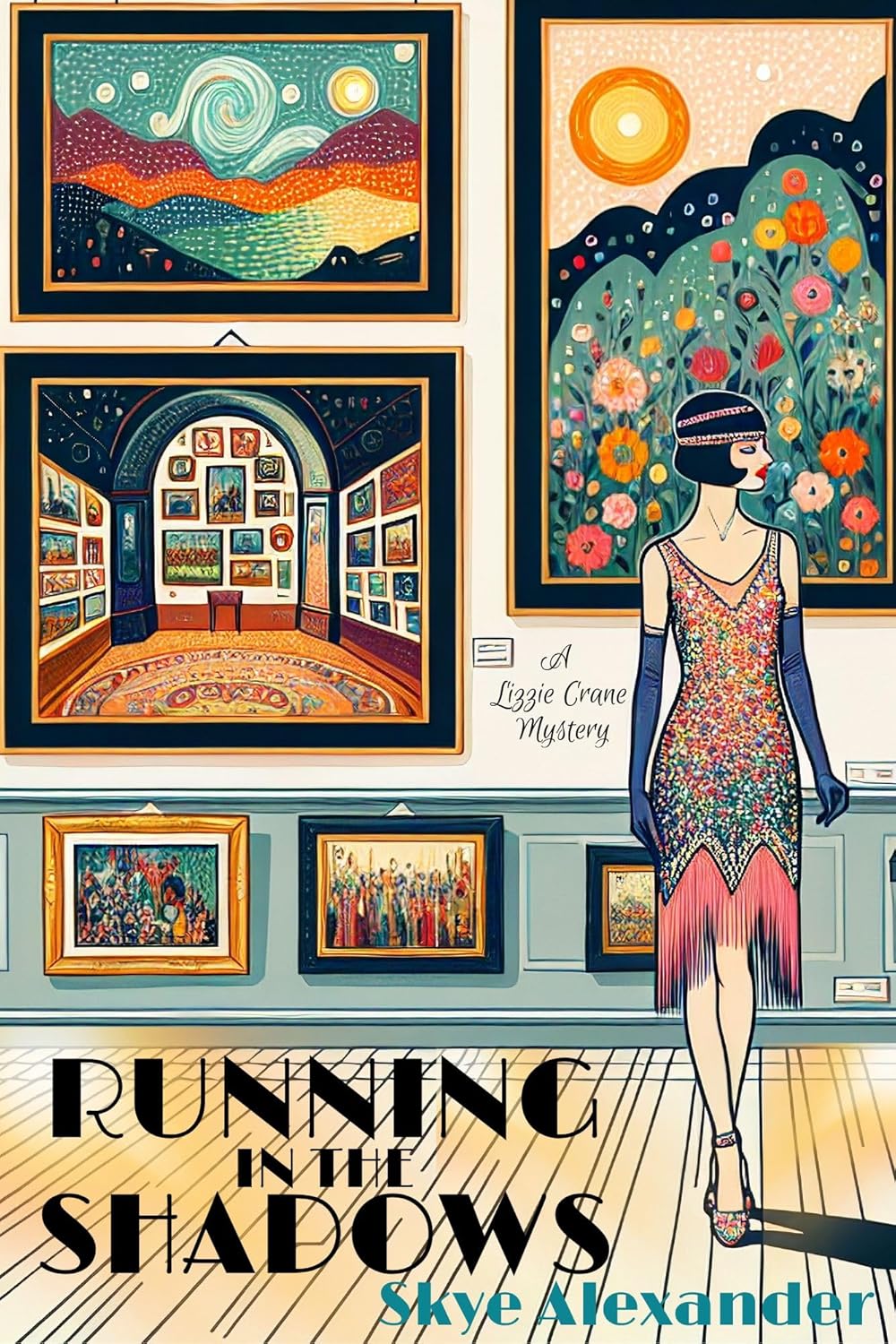
Running in the Shadows

March 1926: Salem, Massachusetts

A spring equinox party at the mansion of a rich, flamboyant, and controversial art collector promises New York jazz singer Lizzie Crane and her band a fat paycheck, lucrative connections, and plenty of fun. She’ll also have an opportunity to reconnect with a handsome Boston Brahmin she fancies.

But the excitement she hopes for doesn’t turn out the way she expected. On the night of the musicians’ first performance, a naked young woman trots into the ballroom on horseback, sweeps up a talented artist named Sebastian, and rides off with him into the night. The next morning, Lizzie discovers the artist’s body tied to a tree, shot full of arrows like the martyred Saint Sebastian in Botticelli’s painting.

            Soon Lizzie learns that her business partner, pianist Sidney Somerset, once had a close relationship with the dead man––and police suspect Sidney may have murdered him. As she tries to protect her friend and discover the killer, Lizzie gets swept up in the treacherous underworld of art theft and forgery, a world where fantastic sums of money change hands and where lives are cheap. 

Buy links :Amazon – https://www.amazon.com/Running-Shadows-Lizzie-Crane-Mystery/dp/1685127061/

Barnes & Noble – https://www.barnesandnoble.com/w/running-in-the-shadows-skye-alexander/1146168035?ean=9781685127060

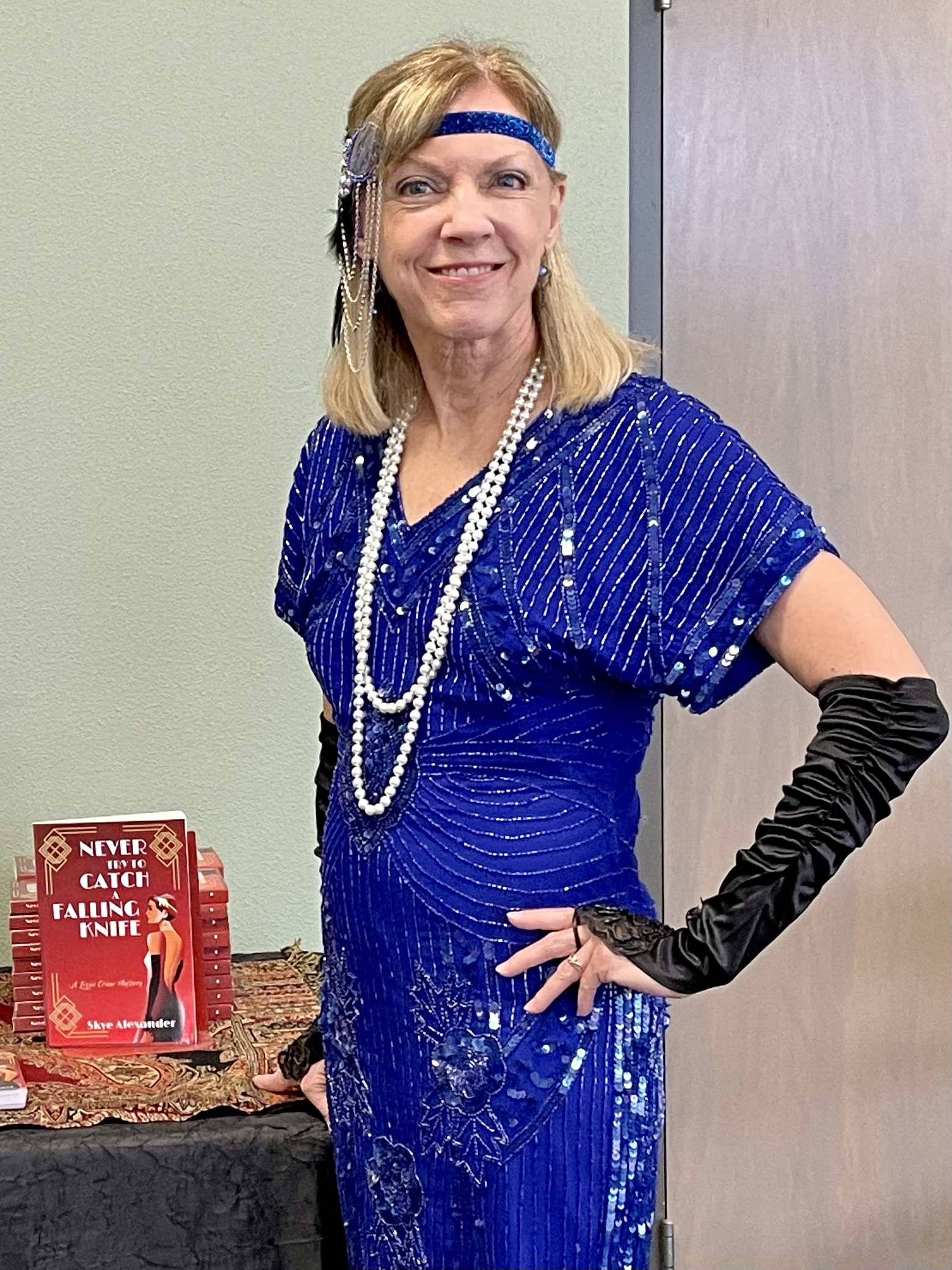
Skye Alexander is the author of more than 50 fiction and nonfiction books. Her stories have appeared in anthologies internationally, and her work has been translated into fifteen languages. In 2003, she cofounded Level Best Books with fellow crime writers Kate Flora and Susan Oleksiw. So far her Lizzie Crane mystery series includes four traditional historical novels set in the Jazz Age: Never Try to Catch a Falling Knife, What the Walls Know, The Goddess of Shipwrecked Sailors, and Running in the Shadows. Her fifth, When the Blues Come Calling, is scheduled for release in September 2025. After living in Massachusetts for thirty-one years, Skye now makes her home in Texas.

Visit her at https://skyealexander.com

Report On The LCC Conference I Didn’t Attend by Heather Haven

I’d been waiting all year for the 2025 Left Coast Crime Conference to happen. I signed up for it sometime in the summer of 2024. My husband, Norm, and I made reservations on the Amtrak going from Emeryville, California, to Denver, Colorado. We were going to join friend and fellow writer, Janet Dawson, on the 36-hour train ride across the Rockies, play cards and scrabble, eat wonderful meals, and arrive in Denver in time to check in for the conference on Wednesday evening. I had registered and paid for the conference and bought tickets to the Awards Dinner for Norm and me. I was on a fun panel. We had airline tickets to fly home Sunday evening at the end of the conference. There was even an afternoon tea at the famous Brown’s Hotel on the agenda. All was right with the world, and the trip was planned to the last detail. But pass the cheese, please. The best-laid plans of mice and men.

6 days before we were to leave, I started coughing. I wasn’t too worried. I had nearly a week to shake this, right? Besides, I had all the vaccinations you can have. Nothing could happen, right? Wrong. Each day the coughing, sneezing, wheezing, and congestion got worse. On the 4th day of this scourge, I saw my doctor and got tested. No Covid, RSV, or flu. Just one of your common, every day, unnamed viruses that knocks your socks off for at least 10 to 14 days. Stay home, drink plenty of liquids, take whatever over-the-counter meds make you feel better, and ride it out. That’ll be $25, please. Thank you, Doctor. I could have told you that and saved myself 25 bucks and a trip to Kaiser. I have since named the unnamed virus. After all, they name hurricanes, and this was my very own personal hurricane. I call it Fred.

But I digress. So, home I went, feeling enormously sorry for myself. I crawled back into bed, Norm brought me chamomile tea, the cats cuddled, and I resigned myself. We were scheduled to leave for Denver in three days, and I could barely lift my head from the pillow. There was no way I could make this trip. Even Norm, Mister-You-Can-Do-It, shook his head in sympathy. Time to put on my Big Girl Panties, so to speak, and let friends, associates, and fellow writers know I wasn’t coming to LCC this year. My life was over. Well, not really. But when one feels like a bucket of horse manure and locked out of one of the most wonderful and fun times of the year, one is allowed to go there. So, there I went.

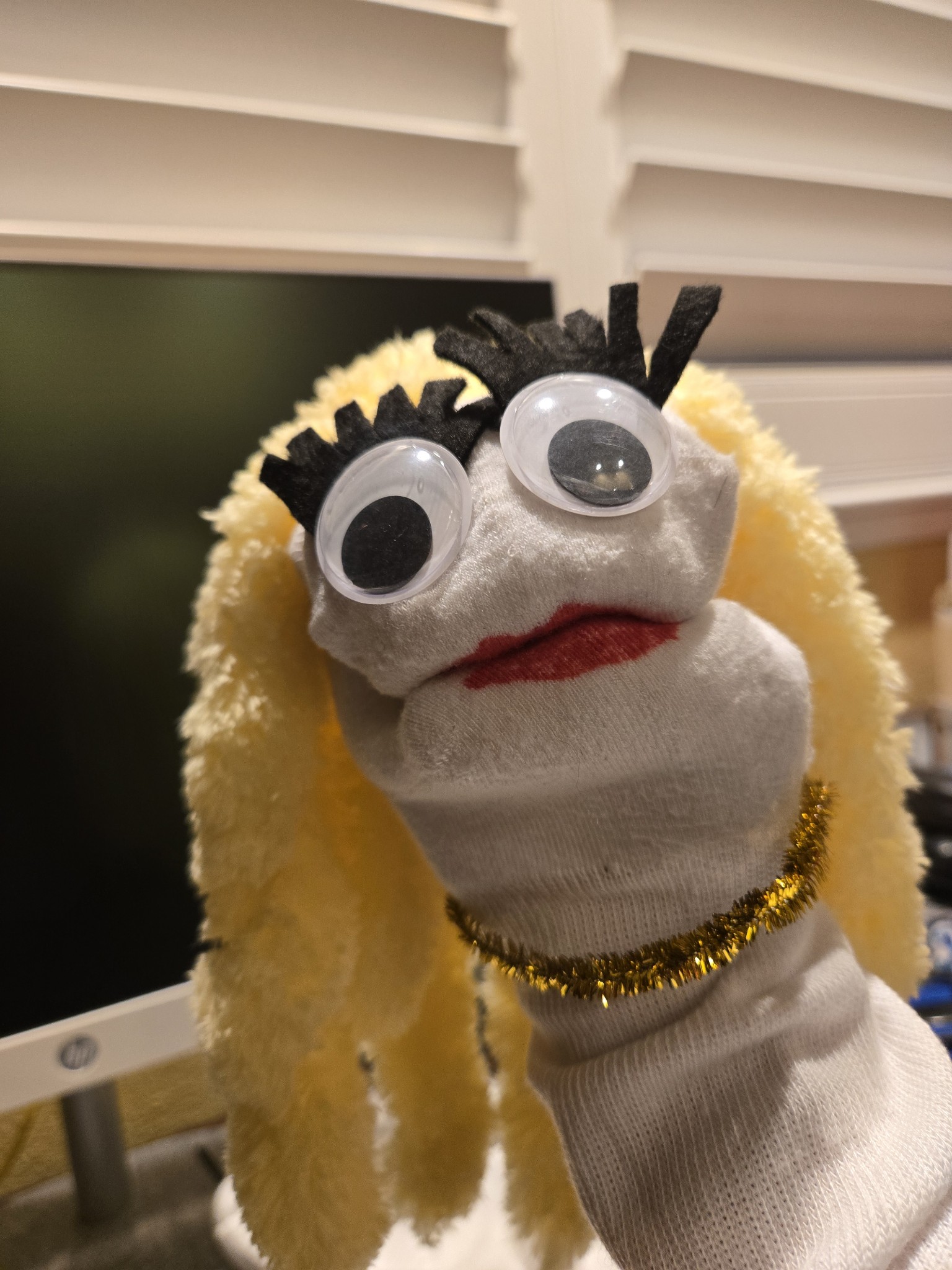
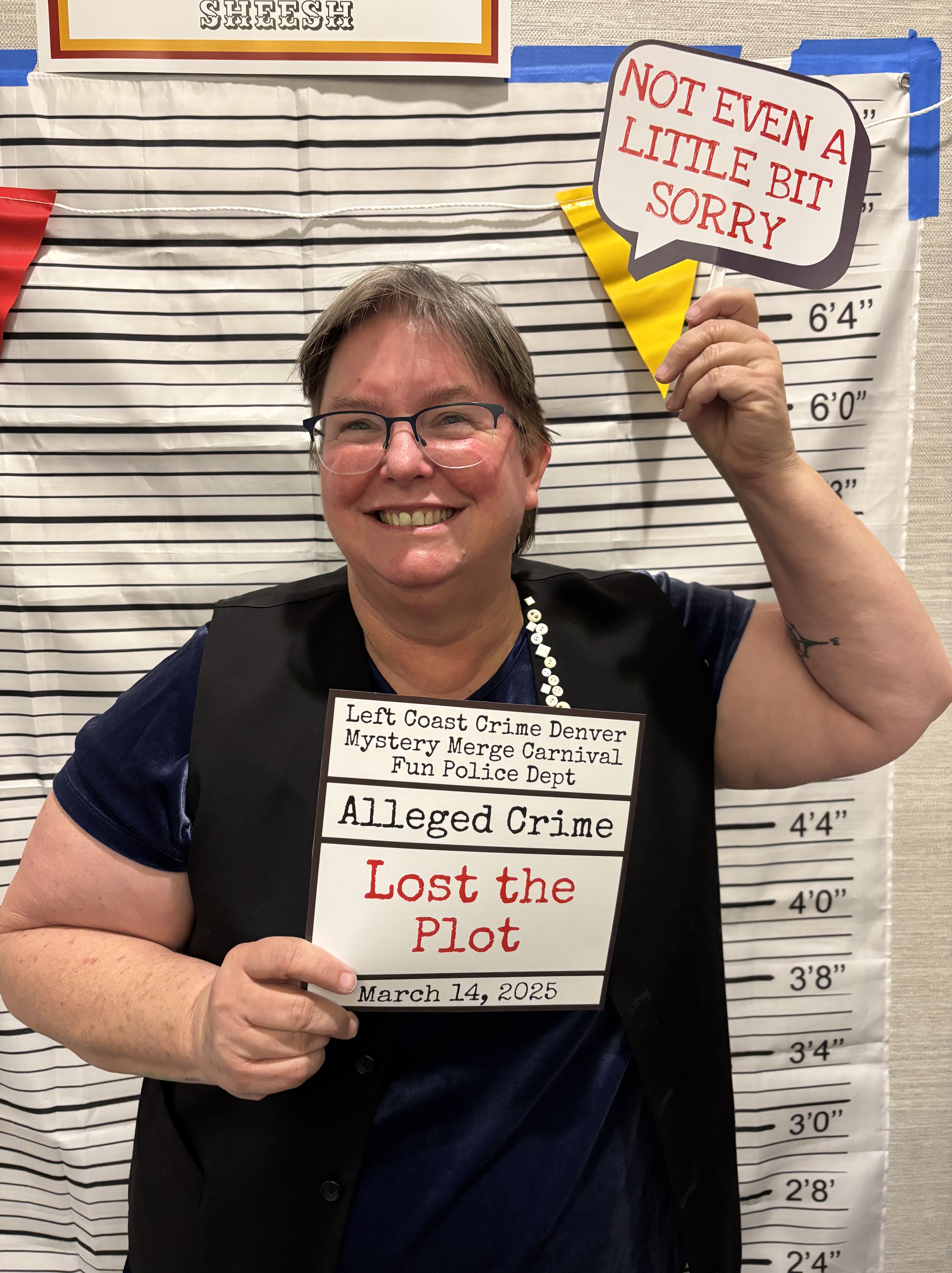
It was short-lived. Soon, I got texts and pictures from the train taken by our wonderful Janet, who was disappointed we couldn’t join her but was making the best of it. In those brief moments, I felt a part of the trip, enjoying the shared moments. Janet continued to send me highlights of the trip, conference, and even the high tea at Brown’s. Then a few other pals wrote emails or sent me texts, some with pictures. Even the panel moderator, Chris Dreith, decided not to replace me with another writer but wanted me to answer the same questions she would have asked had I been there. Chris made a sock puppet in my image. I gotta tell you, the resemblance is uncanny. See right. Using her ventriloquist skills, Chris used the sock to voice my answers. Then she gave the puppet sock and my latest book to a contest “winner,” Grace Koshida, who happens to be the Fan of Honor at the conference. Because Grace is a sweetheart, she alerted me on Facebook about this and included more wonderful pictures.

I may not have been at the conference, but so many people went out of their way to include me and make sure I knew I was missed, like Baird Nuckolls pictured left, that I feel warm all over when I think about it. I am well now, but I am keeping the emails, texts, and pictures sent by my friends and associates from LCC 2025 for the future. If I ever feel sorry for myself, that nobody cares, and I’d better eat some worms, before I get out the frying pan I’m going to remember this incident. I’m going to be thankful I live in a world with friends who are mystery writers and readers because, surely, they are the most thoughtful and kindest people on the planet.