Time enough for a good story

By Sally Carpenter

Some time ago I re-watched the “Back to the Future” movie trilogy, of the intrepid Marty McFly journeys in the past and future to correct certain “mistakes” in the time line. The films are highly entertaining and great food for thought. What if time travel was possible? How would humans use—or misuse—that power?

Time travel has long been a subject for the science fiction genre but not so much for mysteries. After all, if the hero could go back in time and actually witness the crime, we’d have swift justice but a very short story.

Just what is “time,” anyway? Is it a man-made construct? Watches, clocks and calendars only measure time but do not create it. And time is not universal. With the various time zones, we are not all “in” the same minute.

Calendar use is not consistent. While most of the world uses the Gregorian calendar, the Orthodox Church still goes by the Julian calendar. In the Jewish calendar, this is year 5777. The traditional Chinese calendar has a leap month rather than a leap day.

If humans achieve space travel, how will they age in space, since time is different on planets with a longer or shorter orbit around the sun than Earth? Are human biological clocks so ingrained that the astronauts will continue to function on a 24-hour rhythm, or will they adapt to their new surroundings?

 Back here on Earth, what would be the practical uses of time travel? Humans could go back in time to correct certain “wrongs”: stop the assassination of Abraham Lincoln; prevent the birth of Adolph Hitler, save communities from natural disasters.

 But if John Wilkes Booth were stopped, would another man have killed Lincoln at a later time? If Hitler was never born, would a man even worse would rise to power, since at that time Germany needed a strong leader to pull the country out of an economic shambles.

 If the good guys had access to time travel, that means the bad guys could use it too. What if a Neo-Nazi prevented Oskar Shindler and many others from rescuing Jews during the Holocaust? What if a criminal made sure John Hinkley or Mehmet Ali Agca succeeded in their assassination attempts (President Ronald Reagan and Pope John Paul II, respectively)?

 Since time travel would be horribly expensive and not all “wrongs” can be righted, who would decide which historical events to change? The government? The millionaires who could afford the equipment? The poor? Victims of violence? Historians?

 What of the ramifications? If John F. Kennedy had not died in Dallas, how much history after that event would change?

Or would time travelers simply go to observe if certain events actually occurred, such as stories in the Bible? What kind of proof could they bring back? Would modern-day cameras and recording devices work in past times? How could one make selfies in first century without anyone noticing?

While this is gist for speculative fiction, it’s doubtful that time travel is possible. Events happen and disappear. While past events are recorded in memories and photographs, one can’t make history happen again. One can’t return 1500 France because 2016 France is occupying that ground. The World Wars are not still being replayed in an alternative universe; at least I hope not.

Attempts to recapture the past usually fail. Promoters tried to recreate the original Woodstock feel-good festival with Woodstock ’94 and ‘99. The first attempt suffered from security breakdown, and ’99 was marred by high vendor prices, violence, rape and fires. The love and goodwill of the original concert got lost in translation.

What your thoughts on time travel? Should humans attempt to change the past or let bygones be bygones? Are there events or choices in your life you’d like to go back and change?


Guest Blog – Bridges Del Ponte

Diverse Voices in our Mysteries

In a changing publishing landscape, many readers are actively seeking out more diverse voices in our mysteries.  This demand may flow from our readers’ desires to more closely identify with characters in our mysteries that better reflect their own life stories.  In other instances, our audience may want to enrich their reading experiences by learning more about others’ distinct backgrounds.  The concept of writing across cultural backgrounds or “transcultural” writing may include characters and situations involving different ethnicities, races, genders, sexual orientations, religions, ages, gender identities, or geographic locations.  In creating diverse protagonists and supporting characters, here are several key points to consider when making our mysteries more inclusive.

Write What You Know.  Writers are often advised to write about what they know.  The protagonist of my new mystery series is Marguerite “Monty” Montez, a young lawyer who straddles the old world of her immigrant Portuguese family and her contemporary world as a homicide prosecutor.  My parents were the children of immigrants from the Azores and Madeira who settled in a Portuguese neighborhood in East Cambridge, MA.  As a young attorney, I later lived in this same neighborhood next door to my maternal grandmother.  Based on my background, I am able to intertwine aspects of Portuguese-American culture and generational conflicts from an intimate perspective into my mystery.  But no group is monolithic, so my take on my Portuguese-American heritage is simply my personal view, and not that of an entire group.  Think about how your own background may inform a diverse voice in your mystery.

Do Your Homework.  Whether borrowing from your own background or injecting other distinct voices into your mystery, be sure to do your research.  Nothing will throw a reader out of your story more than a diverse perspective that does not ring true.  You will need to do research on gaps in your own cultural history or your lack of first-hand knowledge about another culture.  That research may involve interacting with members of that diverse group, interviewing local or national experts, participating in cultural events, listening to relevant podcasts, attending speaker panels, and reviewing online or print sources.  The greater exposure you have to and the more information you learn about a relevant group, the better prepared you will be to channel diverse voices in your mystery.  If you have the opportunity, consider asking someone from that culture to serve as a beta reader of your work.  They may be able to provide valuable feedback by illuminating cultural nuances and helping you avoid major mistakes.

Recognize Cultural Sensitivities.  The introduction of diverse voices into your mystery can be fraught with challenges.  Some readers may raise concerns about improper cultural appropriation, superficial characterizations, and offensive stereotypes.  Yet the mystery field needs to be more inclusive by offering more diverse voices in our books.  Mystery writers are expected to imagine a broad range of characters in their fictional tales, including those from other backgrounds.  For example, the late Tony Hillerman featured Navajo protagonists and culture in his mysteries, and ultimately received an award from the Navajo nation for his culturally accurate and respectful portrayals.  As stated above, doing your homework will help to avoid potential inaccuracies or shallow representations.  But be aware that certain readers may be sensitive to your efforts to represent individuals and circumstances derived from other cultural groups.  Respect these criticisms and think about how you might address any inaccuracies in future books in your series.

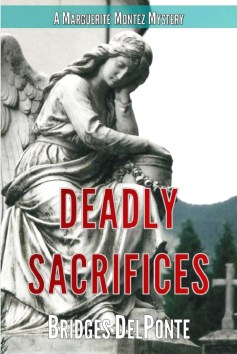
frontcover_july5_2016kindle-700x1047Deadly Sacrifices – A Marguerite Montez Mystery
You always remember your first time.  Monty’s first happened in St. Stephen’s church, directly beneath a statue of the Virgin Mary, right after morning mass.  A local soccer mom is bludgeoned to death in her suburban parish chapel outside of Boston.  In her first homicide case, prosecutor Marguerite “Monty” Montez endangers her life digging up evidence that shows the police nabbed the wrong man.  Monty’s investigation uncovers disturbing memories and fresh leads in an unsolved murder of a childhood friend in her close-knit Portuguese community.  Her dauntless search for the true killer is a wild thrill ride into a dangerous world of lethal secrets.

Amazon Print: https://www.amazon.com/Deadly-Sacrifices-Marguerite-Montez-Mystery/dp/1533376697/ref=tmm_pap_title_0?_encoding=UTF8&qid=&sr=

Kindle Version:  https://www.amazon.com/dp/B01I0VK28A

 About the Author

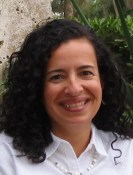
pontesmpic-341x450-2Bridges DelPonte has published two novels, Deadly Sacrifices and Bridles of Poseidon, three non-fiction books, several science fiction, fantasy, and mystery short stories, and numerous legal, travel, and business articles. Her mystery, Deadly Sacrifices, received a Royal Palm Literary Award (2nd place – unpublished mystery) from the Florida Writers Association (FWA) and her underwater fantasy, Bridles of Poseidon, was a finalist for a Royal Palm Literary Award (unpublished fantasy). She is a member of FWA, Sisters in Crime, Inc., and Citrus Crime Writers. When she is not tapping away on her laptop, she teaches law courses, creates educational game apps, and lives happily in sunny Central Florida. To learn more about Bridges DelPonte and her writing, please visit her author web site at http://www.bridgesdelponte.com or her Amazon Author Central page at http://www.amazon.com/Bridges-DelPonte/e/B00BW7BZYU.


What Scares You?

screaming-face

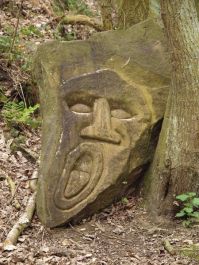
Since we’re so close to Halloween, I thought I’d explore my one venture into writing horror. The plotting workout of going outside my genre was educational, as it made me study the art of scaring people.

I’m at home writing paranormal phenomena. My mystery series features a psychic protagonist and there are ghosts and spirits in two of the books, Shaman’s Blues and Soul Loss. However, their roles are more mystical than frightening, and while the ghost in my prequel short story The Outlaw Women delivers some disturbing news, he’s actually quite benevolent. Mystery involves suspense and tension, and sometimes fear for the main character’s safety, but not the kind of fear that that makes the hairs on the back of your neck stand up.

In Stephen King’s analysis of horror, Danse Macabre, he has a chapter on monstrosity in which he examines the fine line between the strange and the monstrous. It’s the walk on that line that I find chilling. When the transition into monstrosity is too extreme, the impact is lost. To me, the scariest part of a horror story isn’t the gore. The blood and guts or weird slime or whatever is supposed to deliver peak terror is usually so over-the-top or icky that I’m not scared anymore. It’s the build-up that creeps me out, the sense that something is wrong at a deep, perhaps supernatural level, making it hard to fight or prevent.

Though I read horror stories occasionally, I never planned to write one. I ended up doing it on kind of a dare. In a discussion with several other authors, I brought up the fact that when author earnings are sorted by genre, the most money was in romance. None of us wrote romance. A horror writer said he’d have to try. I asked, “Horror-romance?” Next thing I knew, we were working on an anthology of horror-romance short stories based on the seven deadly sins. I picked sloth, since it was a challenge. How could I make laziness frightening? And romantic, in a scary way?

The Apache concept of bear sickness, a condition of unnatural lethargy, struck me as good starting place. Loss of control at the mental level, the feeling that something is invading and taking you over against your will, would have to be terrifying. I explored other Apache myths about bears and came up with a horror story without gore, an appropriate choice for the author of series of mysteries without murders. I was working on Ghost Sickness at the time, which is set, in part, on the Mescalero Apache reservation, so I used that locale—the same powwow, and even a couple of the minor characters from Ghost Sickness— in my horror story. When it turned out to be too long for the anthology, I set it aside for a while. Last year I released Bearing as a stand-alone for Halloween. Most people have liked it and found it creepy or chilling. However, the only review on Barnes and Noble says “Not at all scary.” The same things don’t frighten all of us. What gives you a good scare?

Bearingbearing-copy

 A tale of paranormal horror based on Native American myths.

Mikayla, young Apache woman attending a powwow with her family, becomes entranced by an outsider, a Cree man who shows up without his Apache girlfriend. As her fascination consumes her, Mikayla changes in ways both pleasurable and frightening, powerless to overcome his dark magic until it may be too late.

*****

The Calling, the first book in the Mae Martin Psychic Mystery series, is on sale for 99 cents through Oct. 28th on all e-book retail sites.

65 Years Together!

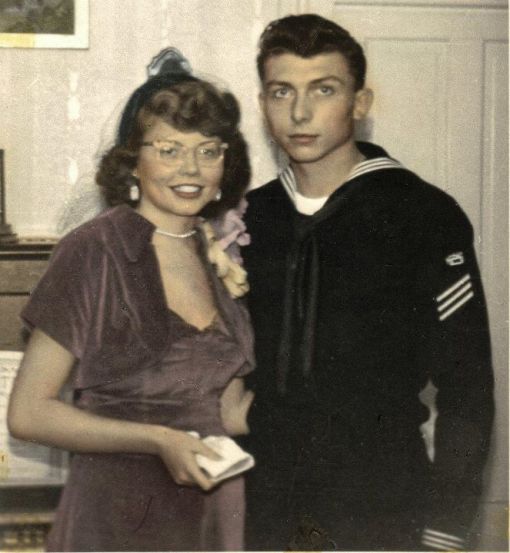
On October 24, 1951, this Los Angeles girl married the handsome young man she met on a blind date in the spring of that year. And no, I don’t remember exactly when, but I do know where–on the sidewalk between my house and a friend’s who lived about two plus miles away. She and her two sisters, and three other service men, and Hap and I caught a street car to go to Chinatown. And that’s how it all began.

A lot has happened during that time–and no, it wasn’t always easy. He spent 20 years in the Seabees, and I mainly stayed home–as we became the parents of 5 children.  He went to exotic places–I lived with him in Norfolk and Little Creek VA, Cambridge MD., but mostly in Oxnard CA.

Our family grew, I had many jobs with PTA including president 4 times, two different schools, had a Camp Fire group for 10 years, worked as a telephone operator, 10 years as a teacher in a school for child development, and  in a couple of day cares and pre-schools.Hubby retired from the Navy and worked for Sears for 15 years and retired again.

We moved to Springville CA where we are now and together opened a licensed residential facility for women with developmental disabilities and we did that for 23 years. I also taught classes on various subjects to administrators in this industry.

All the time I was writing too–finally got published, and kept on writing and as you all know, am still at it. Hubby has been supportive through it all, and when we were younger we traveled all over the country to various mystery conferences and conventions–and made many  good friends.

We experienced hard times, and wonderful times– and despite being old, it’s even better now. Our philosophy as with most things, is never give up. We learned along the way to put our trust in God.

hap-and-me-on-our-wedding-day
Two innocents who had no idea what was ahead for them.

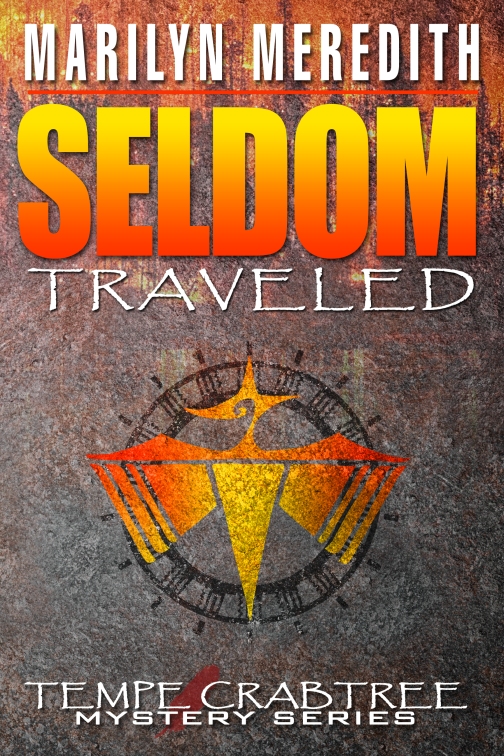
And of course, these days, besides writing, and enjoying family, especially the grand and greatgrands, I’m still promoting my books. If you haven’t yet had a chance, I hope you’ll try the latest Deputy Tempe Crabtee mystery, Seldom Traveled, available as a print and e-book in various places including:  http://mundania .com and Amazon

SeldomTraveledFrontCover new

Yes, we celebrated–but it was very low key.

Marilyn Meredith


The Fun Kind of Research

thumb_IMG_1225_1024

I had the great pleasure this month of conducting some serious research for one of my upcoming books.

img_2850


Each of my books takes places in a different city, town or country. I’m currently working on book 5 in the series (as yet untitled), which takes places on a cruise. But I’m also planning ahead to book 6 in the Adam Kaminski mystery series, and that takes place in Provence.

img_4417

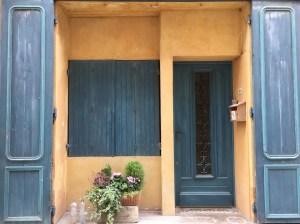
The beauty of the small towns and villages that thrive in this part of southern France is astounding. The cracks and crevices that add character to the facades of houses built hundreds of years ago, the color of the fading limestone contrasted with the bright pinks and greens and blues of painted shutters.

img_4620

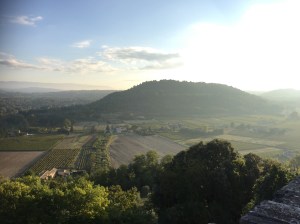
The Mediterranean-style roof tiles, red and pink and brown in the golden, late afternoon sun. The air that smells of the vines, freshly cut and burning in small piles in the small vineyards that dot the countryside.

I am grateful to be fortunate enough to be able to travel, to see parts of the world so beautiful they make me stop, take a deep breath, and think of all the things that are good and sweet in my life.

img_4562

My goal with my writing — what I strive to achieve — is to share that joy, that beauty, with my readers. To let you see this world through my eyes, so that you, too, can stop and breathe and be happy.

And, yes, of course there’s always a murder to solve, too.

Adam-Kaminski-Mystery-Series

Learn more about my books at janegorman.com.