Lie, Lady, Lie: A Grammatical Short Story

In which a liar lying on a beach lays to rest all possible confusion about the words for reclining, telling falsehoods, and setting things down.

Lie, Lady, Lie

I should be at home laying tile in the kitchen, but I instead I’m lying on the beach. I called my husband—ex-husband-to-be—and lied, telling him Grandpa’s home health aide had called in sick and that I’d have to stay with Grandpa all day. The kitchen can wait. We’re only fixing it up so we can sell the house for a higher price after we move out and go our separate ways. I lie on my back and close my eyes, lay my phone on the blanket, and then remember to turn it off. When I’ve lain here long enough, I’ll get up and wade in the waves. But not yet. When was the last time I was free to just lie around and be lazy? I swear, I married a slave-driver. I’m not going to miss him. Once, I lay in bed until nine o’clock and Dan listed all the things I could have accomplished if I’d gotten up at seven. On a Saturday. Today, I’m making up for lost time

I wake with a start, wondering how long I lay asleep in the sun. I reach for my phone to check the time, but it’s not where I laid it. My hand grabs a man’s ankle instead. I look up to see Dan’s attractive young assistant, Sebastian, holding my phone and smiling down at me.

“Bad lie.” His voice is low and teasing. “Your grandfather’s house is on Dan’s way to the office. Your car wasn’t there. And he said he heard gulls in the background when you called.”

Darn. The best-laid plans of weary wives … “And he sent you to make me go home and lay tile? You’ve got to be kidding.”

“He sent me to go look at a property we’re leasing for the business.” Sebastian takes off his shirt and lays it on the sand, then lies beside me, propped up on his elbow, grinning. “Of course, when he mentioned your call, he complained about what a lazy wife he has. He doesn’t appreciate you, Celia. So, I lied, too. And here we are.”

His half-bare body is as beautiful as I’ve often imagined it would be. The longing that has lain dormant in both of us for years awakens, and we embrace. On someone’s radio in the distance, Bob Dylan’s classic love song, “Lay, Lady, Lay” is playing. Sebastian laughs. I ask him what’s so funny, and he says, “It’s such a sexy song, but I always wonder what he wants her to lay across his big brass bed? A silk duvet? Granny’s crocheted afghan?”

“Her body, silly.” I kiss his neck and nibble his earlobe. “He wants her to lay her body down.”

“Then he should be asking her to lie—”

“I already did. ” My fingers caress his lips.  “We both did.”

*****

For more fun with lie and lay, check your mastery of these words with a couple of quizzes.

http://www.grammarbook.com/grammar_quiz/lie_vs_lay_1.asp

https://journalism.ku.edu/interactive-quiz-lielay

I’ve never written anything in first person present tense before, so this experiment was fun for that reason as well as my attempt to incorporate every possible variation on lie and lay in a story as short as NPR’s three-minute fiction. (I’m sorry it’s not a mystery, but with the characters both lying and lying, the thematic words lent themselves more to a tryst.) I was inspired by Jane Gorman’s entertaining homophone post and by my encounters with lie/lay confusion in print and in speech.

Occasionally, I take yoga classes taught by a young woman who understands the human body and teaches well, but she uses the transitive verb lay for the intransitive verb lie. When she wants her students to assume a supine or prone position, she says, “Lay on your back,” or “Lay on your stomach.”

In some parts of the country, this is a regional speech idiom, and of course it occurs in popular music. Perhaps that’s why it’s confusing for writers. I’ve found lay/lie errors in published books, overlooked by editors and proofreaders. Even the grammar-check function in Word is confused, and occasionally tries to supply the incorrect word. It found fault with one of the two quotations from the ungrammatical yoga teacher and not with the other.

I can’t bring myself to make any of my characters talk the way she does, even though it would be more realistic if a few of them did.  What about you?

Comments welcome! Lay it on!

Photo credit: The lead image was originally posted to Flickr by J.C. Rojas at http://www.flickr.com/photos/jcrojas/194663540

 

In the Dark: About Titles, Writing and Eclipses

thumb_IMG_1225_1024

I usually develop the titles to my books somewhere in the early stages of writing. I know the theme, I know the murder weapon and motive, and I know the red herrings that will be swimming through the story. The title usually comes from one of those. This time around, I find myself in the dark.

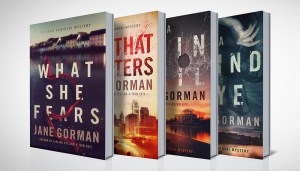
Simple three books

My current work in progress takes place on a cruise ship traveling from New York to Bermuda. Our hero, Philadelphia detective Adam Kaminski, must figure out who poisoned the Claypoole family patriarch—and how—before the ship docks and all the witnesses (and suspects) hit the open seas. But first he has to convince himself that he still has what it takes to catch a murderer.

I really want to title the book, Through a Glass Darkly. It’s part of a verse from the bible, 1 Corinthians 13:12, “For now we see through a glass, darkly; but then face to face: now I know in part; but then shall I know even as also I am known.” I love the poetry of the words and also the theme it implies—being in the dark but eventually finding your way to the light. After all, isn’t that what happens in most mysteries?

It didn’t take much polling of friends and readers to realize my working title wasn’t a hit. Too many people didn’t get the reference. And my books are not religious in any way, shape or form, so I really don’t want to give the wrong impression.

That led me to working title number two, Voices Carry. It fits with one of the elements of the story. It’s short, kind of catchy. It would work as a title. But I just kept thinking about the darkness.

Eclipse

Today is an appropriate day to think about darkness, obviously. I’m not on the path of the total eclipse, sadly, but I was able to see a partial eclipse. I loved watching not only the eclipse itself, but also its effect on the shadows on the ground around me. They became visibly crisper, cleaner. I’m a huge fan of shadows, so for me that was one of the highlights.

IMG_3434

Light and dark, shadows and sun. I need a title that captures it all. Being in the dark, then seeing clearly.

Right now, I’m on working title number three, A Pale Reflection. I’m toying with changing that to A Dark Reflection.

Eclipse2

At some point soon, I need to make a decision! I’m still hoping the right title with come to me, focused like an eclipse-sharpened shadow. Or perhaps a sign from above, like the blotting out of the sun.

If any of you have any suggestions, I’m open to ideas! Let me know what you think!

For more information about Jane Gorman’s books, visit janegorman.com or follow her on Facebook or Twitter.

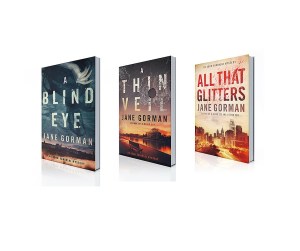
Adam-Kaminski-Mystery-Series


CHARACTER ARC

The main character in any story needs to transform in some way or the story doesn’t go anywhere. If the main character remains the same throughout, there isn’t any story.

The narrative tells the story of how the main character grows or changes. But the character may not develop or change but remain even more intensely the same, that is, recommitted to the way he or she is at the beginning of the story. This is harder to write than a story in which there is clear character growth or change.

In a clear character arc, the narrative is the story of the change to the main character. Ths may happen through experience, the learning of new skills or simply through the passage of time. The character starts out in one way, and throughout the story, he grows and changes. The narrative arc of the story is that of the main character’s growth, however it is accomplished.]

But in some stories, there seems to be no change in the character, no character arc. The main character remains who he or she was at the beginning throughout the story. But, when you read the story carefully, you see that there is character movement. The character does not perceptibly change, but becomes even more steadfastly what he was at the outset.

A class I was in read a novella by Cynthia Ozick called THE SHAWL It’s the heartbreaking story of a woman in a concentration camp who has only the shawl which held her now-dead baby and its smell as a memory. The class members, as I remember, argued with the teacher that there was no discernable character arc in the novella, that she had not changed from beginning to end, and that this was a flaw, but as we talked, we saw that the essence of the story was the protagonist’s steadfast memory of her child and her commitment to that memory.

My novel PSYCHIC DAMAGE is a story of growth and change. In that story, Eva Stuart, addicted to allowing advice from psychics to guide her life and unable or unwilling to make decisions on her own, learns to be strong and independent, to make decisions and even to rescue her partner when he is kidnapped. Her character arc is clear.

This is more difficult to do in a series because the changes are often incremental and not as striking as they would be in a standalone novel. Still, within each story in a series, the protagonist, who doesn’t start out being perfect, gains new knowledge and becomes more adept at what he or she does.

For example, in the first book in my Florida series, A REASON TO KILL, the protagonist, Andi Battaglia, new on her job as a detective, learns through her work on the case to question suspects, evaluate informations for its truth or falsity and determine the solution to the murder. In the second book in the series, SO MANY REASONS TO DIE, Andi defies her supervisior in the hunt for the murderer, ending up suspended from duty but solving the murder.

How do those of you who write series create the incremental changes that contribute to the growth of your character? Do you find it difficult to do and do you plan those changes ahead or do they occur as the novel progresses?

Modus Operandi by Paty Jager

canstock keyhole knife graphicModus Operandi: Noun – is someone’s habits of working, particularly in the context of business or criminal investigations, but also more generally. It is a Latin phrase, approximately translated as method or mode of operation.

This is where I’m at in the stage of writing my next Shandra Higheagle mystery. I have the victim, but I’m figuring out why and who would want the victim dead.  And so I turned to one of the books that helps me with my mysteries. Modus Operandi: a writers guide to how criminals work by Mauro V. Corvasce and Joseph R. Paglino.

Here is what I’m looking at: The chapter on homicide and the reasons a person might kill.

Passion Killing – This takes place usually without much forethought or planning. it could be an argument gets out of control and one of the two people concerned gets caught up in rage and uses whatever weapon is close at hand.  These are usually domestic assault, homicide-suicide, or a disgruntled employee.

Premeditated Domestic Killing  – This could be one spouse killing another for insurance money or other financial gain.  It is also known as profit murder.  Or because of threats of divorce or personal disclosures. They usually act like the grieving spouse  even though they have the murder planned out and prearranged scenarios to cover up their involvement.

The cover-up murder – In the perpetrator’s mind, they may feel justified in killing people to cover up other acts of crime and violence.

Sex Offenders – Some sex offenders will kill at the conclusion of the sexual assault or even to obtain their sexual gratification.

There are also serial killers, contract killing, and ritualistic cults. These last three reasons won’t work for the story I’m building.  The sex offender won’t work either.

In my mind the murder has to be one of passion. Because the murder is happening at a small event- a bridal shower. The victim is a friend of the bride-to-be. Someone she grew up with. So the scenario for when and where the murder happens is at a remote place with all women. Which would lead one to believe that the killer should be one of the women… but I want to put a twist on the story.  It will be a crime of passion, but maybe, just maybe, there is someone lurking in the woods….

This is the best part of writing a blog post. It lets me air out my thoughts and have the real story flood in!

Thanks for helping me!

SH Mug Art

blog / websiteFacebook / Paty’s Posse / Goodreads / Twitter / Pinterest

Confession of a Homophone-Phobe

by Janis Patterson

How would you act if you read in a story how a character discovered a grizzly site? Well… how you feel might depend on the situation in the book – and the writer’s command of the English language. A grizzly site is a location where there are large and usually cranky bears. A grisly sight means you are seeing something that is horrible or disgusting. These are called homophones – words that are spelled differently and have different meanings but sound the same.

A few more are brooch/broach, new/knew, great/grate, heir/hair, steak/stake, cash/cache, packed/pact, hear/here, and the two great triads cent/scent/sent and there/their/they’re. These sound-alikes are all over the place; there are lists of such linguistic traps on the internet, many with over 500 entries.

So why the differences? Who knows? English is a powerful but mysterious language with many oddities, and I personally believe these oddities are what makes English great – and when improperly used most definitely grate on one’s sensibilities.

And if one does know English well, grate they do. A misused homophone can yank an intelligent reader right out of the story, which is a horror for good writers. Say you’re reading a romance and the two lovers have a joyous role in the hay. Are they acting? (No, I’m not going down the rabbit-hole of are they faking it…) Is it some form of summer put-on-a-play-in-the-barn theatre? Worse, if the characters are back in the house eating a role it gives me visions of two sitting people at a kitchen table gnawing on play scripts, which as we all know have very little nutritional value.

Another example: in a dark and tortured tale of mean streets and meaner crimes the burnt-out alcoholic police detective stumbles into an alley and finds a grizzly murder. What? Immediately my first thought is how in the world did a large Northern bear find his way into such an urban setting? Sometime it takes a full page before I can become immersed in the story again. And sometimes that never happens, because from then on I have difficulty trusting the writer.

Good writing is easy to read and gently leads the reader into a world that is not their own. Good writing keeps them there for the duration of the story. Good writing is a window into a story, and anything that yanks a reader out of that story is bad. Misuse of homophones is more than bad – it is insulting and a sign of sloppy craftsmanship. Yes, this is one of my pet peeves. Why write a story and expect people to read it if you aren’t going to do it well? Should anyone even try to write a story if they disrespect their readers so much that they don’t care if they are jerked out of it by such egregious misuse of common words?

You would think that learning to use the English language properly is one of the first steps to becoming a writer. I really don’t understand how anyone dares call themselves a writer if they don’t bother to do so.