I have written two mystery series with Native American characters, while I am not Native American. I’ve read books by Native American authors, have a friend who lives on the Colville Reservation with her Native American husband, and I have lived in an area that has so much Native American history I feel it seeps into you.
But I am facing my biggest challenge as a writer, now, when it is more politically correct to be of the same heritage as the characters you write.
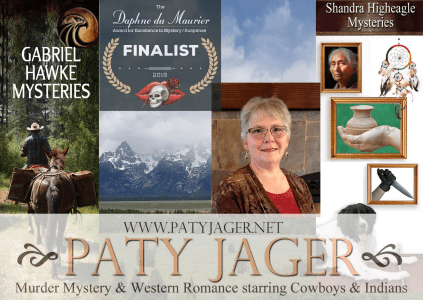
I started slowly, with my heroine, Shandra Higheagle being only half Native American so I could have her raised without that influence and have her discover it as I did writing her story.
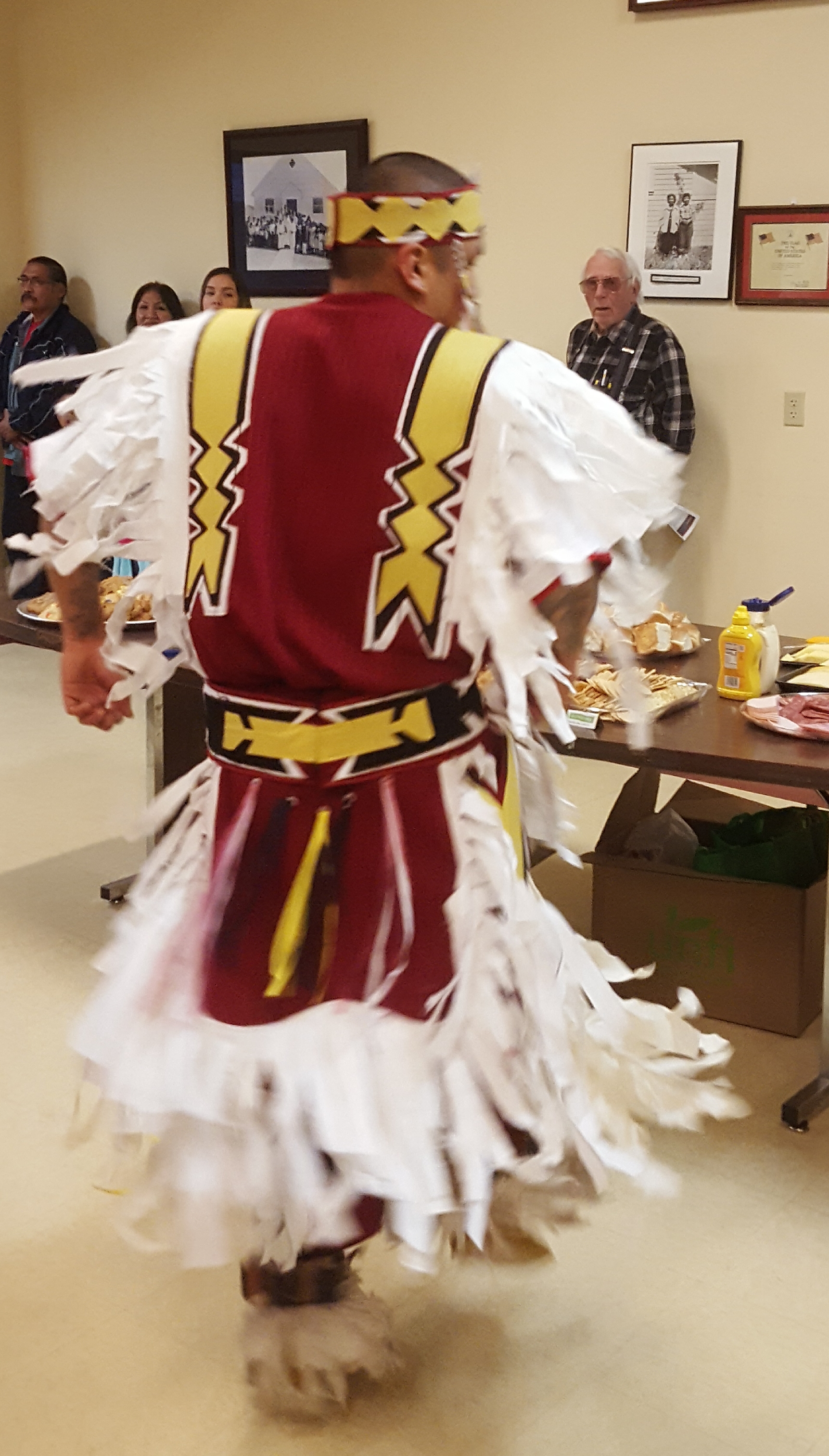
Paiute Dancer photo by me
But I felt the area where I grew up, needed more exposure about the people who lived and were stewards of the land before if was favored as lush feed for cattle. And that was how my character, Gabriel Hawke, came to be. He is of Nez Perce and Cayuse heritage. He is working as a State Trooper with the Fish and Wildlife Division in Wallowa County, the land where his ancestors summered and winter. While he hasn’t lived on the reservation since graduating high school, I feel I can pull off his loyalty to his ancestors and still have him respect his culture but not be fully immersed in it.
Now, as I am writing the last Shandra book and moving onto a new character, I have to tame the lump in my gut and start contacting people on the Umatilla Reservation. My next character will be living and working on the reservation. I will need first hand knowledge to make this character ring true and to make her not only show the life of someone trying to end the cycle of prejudice and move on, but also someone who values her people’s culture.
That my writer and reader friends is what I will be trying to achieve the next few months. Connecting with people who are willing to allow me into their world and to show a life that I am not a part of but believe in.
Wish me luck! And let me know if you have anyone on the Confederated Tribes of the Umatilla Reservation who would be willing to help me. I’m sending out feelers this week.
Hi, Ladies of Mystery bloggers, LoM readers, and the general public! Has it been another month already? Good grief! Two more to go before we hit Level 12 of Jumanji how this dumpster fire of a year’s turned out to be. I don’t know about the rest of you, but I can’t wait to put 2020 in my rear windshield.
So . . . as the title indicaes, I’ve found some Easter egg writing-related goodies to keep my untreated ADHD mind happy as my imagination marinates on WIPs. These are fairly inexpensive and lots of fun if you’re bored of your typical writing routine, or are in the market of shaking up your writing arsenal. In either case, I hope you’ll have as much fun as I’m having.
DABBLE
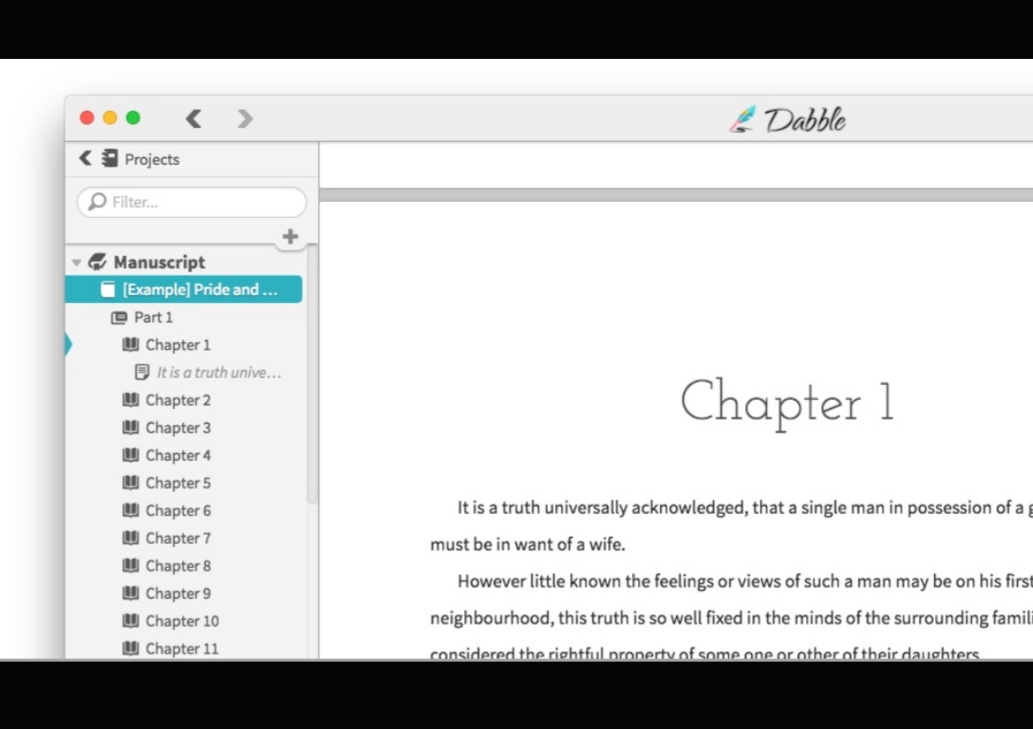
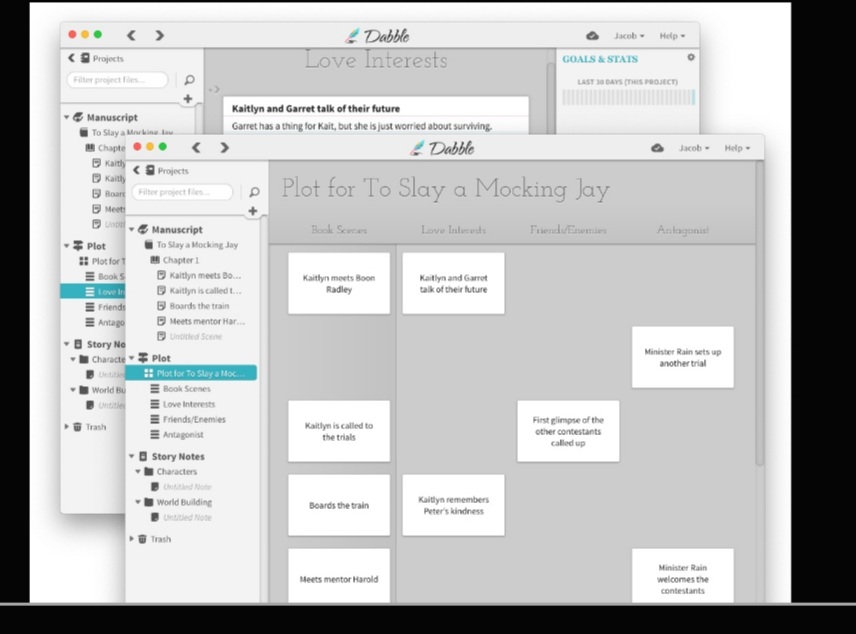
Dabbleis a monthly subscription writing platform and a fantastic alternative to Scrivner or Microsoft Word if these software programs aren’t optional. This platform’s more user-friendly for the visually impaired or needing low vision assistance than Scrivner is, and has its own cloud service to store only your WIPs. Unlike Reedsy Editor, Dabble is laid out as Word is. But unlike Reedsy Editor, more font selections are available on Dabble, users can switch the screen to dark mode when writing during the day, and Dabble’s left side menu offers sections to organize scenes, world-building artifacts, a place to blueprint your plot, a built-in dictionary and spell-check, a trash bin to cut what isn’t working, and a progress and goal tracker for daily word counts and days spent on your project. It reminds me of digital 4×6 tacked, corkboarded note cards to keep your story on task. Depending on which best fits your pocketbook for a monthly or annual package, you’ll have access to live-time support assistance if you aren’t tech savvy to ough some of this service’s features. I happened to find Dabble during 2019’s NaNoWriMo when the company offered a discount for completing the month-long marathon. I’m especially impressed with the tech team making this platform possible, and especially love the CS’s team’s patience with my seemingly endless questions of the platform’s bells and whistles, levelheadedness, and courteousness. On a deeper personal note, with what’s been recently disocvered about the Chinese virus, I’m thrilled to use a service or two with zero political skin in the game on the world’s stage. I’m especially happy both Reedsy Editor and Dabble make it possible to end my monthly dimes going into that nasty MS Word creator’s unethical, worldly pockets.
SCRIBBLER
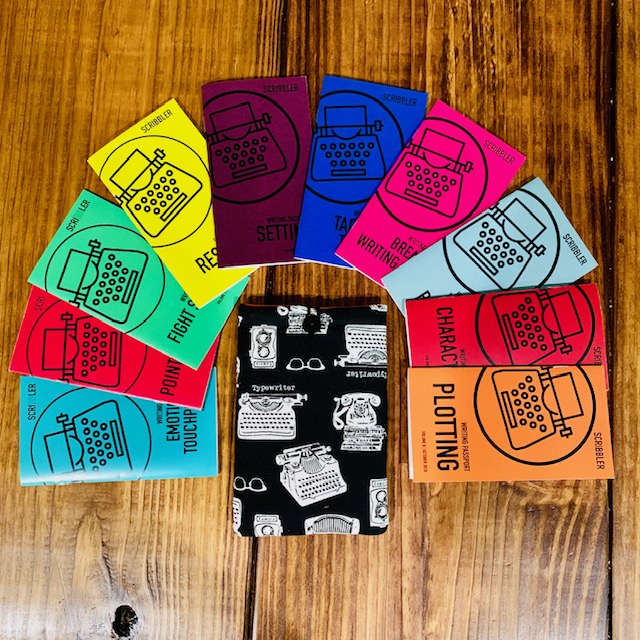
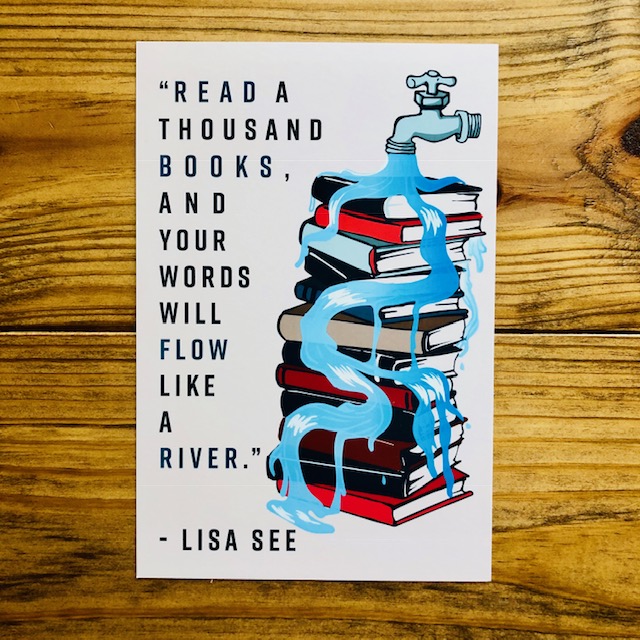
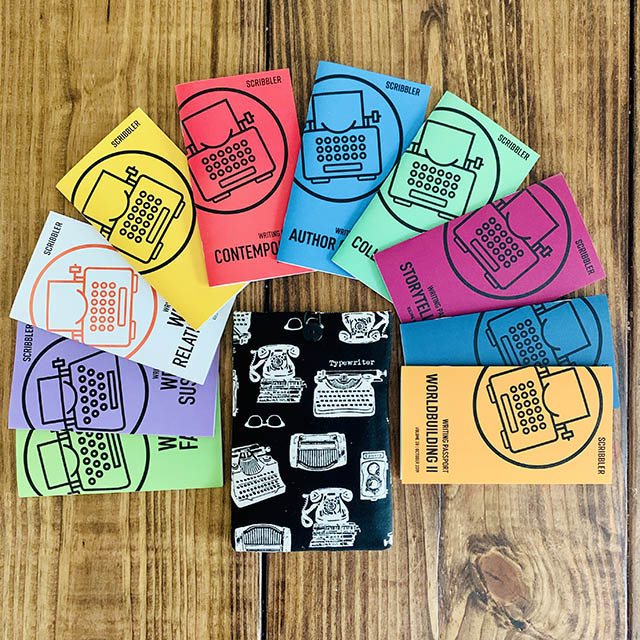
Thrown over my social feed’s news and ads transom, Scribber is a monthly box subscription created by two authors with seventeen published books between them. Created by writers for writers, the Scribbler service has a private social group for support and advice, offers critiques from scenes to full MSs (pricing reflecting), and sells other writer merch. Each box comes with goodies like a Writer Passport deep-diving a specific craft area (pacing, setting, tension, humor, and so on.); a book by the author the passport’s based on; and a pamphlet called Publishing Process Inside Look! also authored by month’s featured novelist. My September box had Opium & Absinthe by Lydia Kang in the goodies–which opened one drawback in this service: The purchaser doesn’t get to select the box’s title book. Past boxes, unless you’re part of the social group’s sister book club to find previous titles, aren’t accessible unless you contact support for this information. Although I found the writer tchotchkes a trememdous help–one’s a yellow “Eureka!” lightbulb stress ball squeezie-thingy with “Bust Writers Block!” printed on its side, and super-adorable—the book itself after reading a few pages in, not so much. It’s in 3rd POV set in 1899 about a possible homicide under the cover of a vampire attack and a possible connection with Jack the Ripper. This subgenre is out of my preferential and craft wheelhouse; I don’t do vampires, zombies, werewolves, Satanic worship, demons, Godzillas, anything involving dark magic and worse. If that makes me a shitty writer for not reading this stuff someone else slaved over, so be it–but I do congratulate them in getting it done (#IAintSorry #GetOverIt). Sidenote: if any LoM ladies are interested in my September tale, inbox me this week only for details. Otherwise it’ll just be donated to a new forever home like my August title was.
Overall, both products look to be the hands-on tools needed for my craft. Both services are set up to cancel at any time (before your next charge hits, that is). The box exposes you to an author happy you’re reading his story and sweet swag getting you jazzed for the next box or inspired to write on. They even hold a monthly contest on a Scribbler postcard based on the theme to win a prize. Dabble is the Little Engine That Could as a writing software program. Both companies are open for future changes, product implements, and offer stellar CS. That’s rare in this otherwise brutally lonely and huckster-happy industry, so research these gems and kick the tires whenever you have a moment before taking the plunge.
&
No, you read right. This heading’s an ampersand. It’s intentional. Got your attention, though, like a good headline should do.
She’s real gone, you’re telling yourself. Old news, says I, but that dun bother me none–we both know darn well you secretly love it. **smirk**
Okay . . . back to our story.
This particular symbol of the English languange charaters has an interesting history. If you’re old enough to remember when you learned the alphabet, you recited “and per se and”–& this said as such–after Z. In time, and per se and merged into the word ampersand you know today. While on the topic of mashing words together from a string of them said either too fast, said or accented incorrectly, misheard, or misused, ampersand became part of the mondergreen crowd. Explains why you thought the mondergreen, “You are caught up in me” from the chorus of Elton John’s “Daniel” is really “You were older than me.”
Ampersand, the & symbol, originally combined the capital letters of E and T. When everyone way back when wrote in gorgeous penmanship, E and T, especially next to one another in cursive, sure looked an awful lot like the &. Over time, and with differeing fonts, the two merged to become the punctuation we know.
And of course, what would our peek into the writing life be without this symbol helping others used to replace foul language? Cartoonists and comic strip artists from the 1920s to as late as the 1970s, while syndicated with national and global newspaper chains, had to find a workaround to express salty language without overtly using it. Hello, &%*$#@! Ingenuity! Excelsior! Rather than be cited for cultural impropriety, or tired of just plain getting the business over such use, comic strip and editorial cartoonists used these to skirt, and maybe flaut a little, censorship rules. So for you cozy mystery creators where sewer talk isn’t allowed, this #%*&$@! is perfect to show over tell–zing!–the preferred stronger word(s). Think of it as a visual version of cartoon starbursts, comets, squiggles and whorls when one of the Looney Tunes cast actually sees–as does JERSEY DOGS narratorCasper McGuinness–after getting his noodle clonked for doing something stupid. This could be a delightful change for your readers no other cozy writers are doing, much to your surprise.
Another lovely reading ride comes to a close. I’d wish you an early Happy Halloween, but with the spooktacular clusterf*ck this year’s been, you hardly need my OK to get your Jolly Rancher, candy corn, & dark chocolate Snickers bites freak on like it’s Donkey Knng. Now let me git before I share what next month’s punctuation cornucopia’ll be–the almighty asterick that turned a Roger Maris record into Babe Ruth’s baseball side chick.
Nope–I’ve a fantastic post in store you may enjoy more, but it ain’t that. Gotcha again. **smirk**
& with that, God’s will, and your faithful readership . . . until next month, my friends.
No, this isn’t a forensic column, at least not in the physical way. No bones, no blood, no autopsies, no dead bodies. Instead I’m talking about the skeleton (again a bone reference, sorry -) of your story.
Not long ago a dear writer friend of mine and I were talking (while sitting out under a leafy tree, eating ice cream – lovely!) about writing technique. She was telling about a conversation she had had with another writer about the skills needed to construct a good, sound, readable story. She used a story she had read for an example. It was a good story (I had read it too) but it lacked something. There was a ‘mechanical-ness’ about it. You could almost hear the writer thinking, “Have I put enough emotion here?” “I should put more description here.” “Got to watch my beats and pacing.” “What is the proportion of dialogue to narrative?”
It was, she said, like looking at a hand performing a graceful motion, but instead of seeing the skin, you saw the working of the bones through the skin.
And I don’t care how carefully the story is crafted, that is bad writing.
A story (short, novella or full novel) should take the reader away, give them a different reality that is totally believable within its own framework – not a look at how the story is created. It would be like being taken for a ride in a luxurious car, but with every action a mechanical voice announces “turning steering wheel 90 degrees to the right, now turning steering wheel 90 degrees to the left to get back to straight progress” or “applying 10% brakes to slow down for approaching crosswalk” or some such nonsense. It would take all the pleasure out of the drive.
Every action and reaction in a book should happen because it is dictated by the needs of the story – the action and the characters – not because of some esoteric road map of plot shape, beats, pacing, dialogue/narration proportions and other underlying necessities of construction. Readers should see the story as a cohesive whole, unbothered by the mechanics.
The reader should see only the gesture, not the bones beneath.
My mother’s family was in what they called the picture business. I’m not talking about the kind of pictures you put in frames. I’m talking about the picture show.
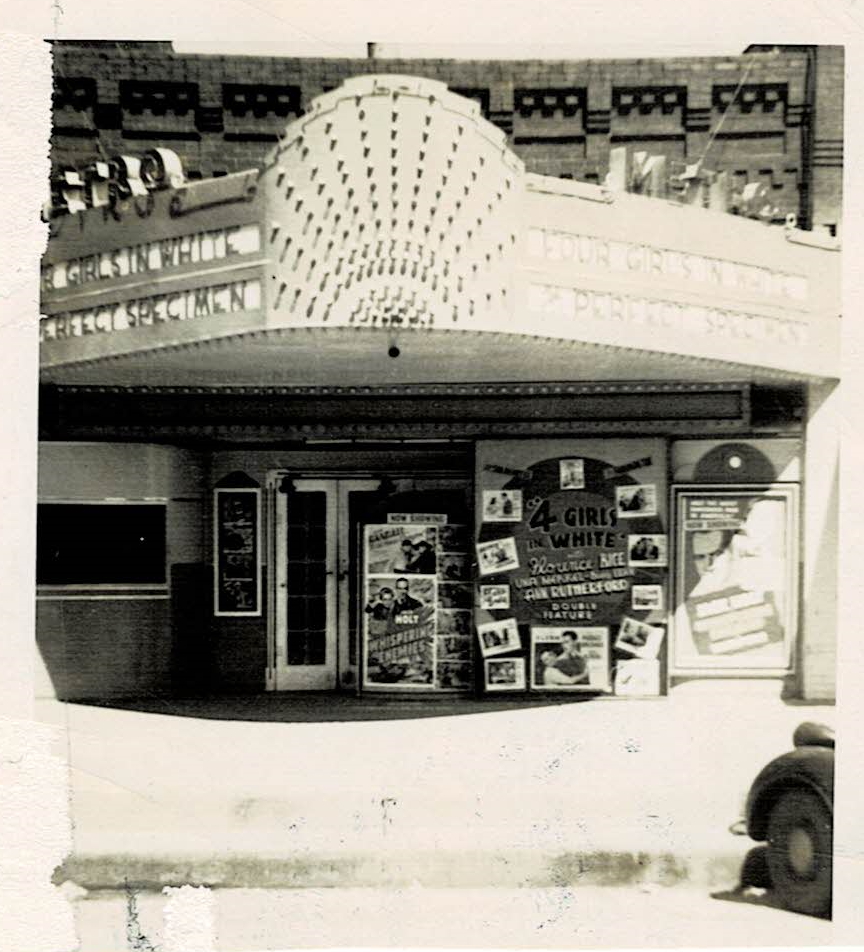
Way back in the silent years, before talkies became the rage, they owned movie theaters, in small rural towns, mostly in Oklahoma, but also in Nebraska and Arkansas.
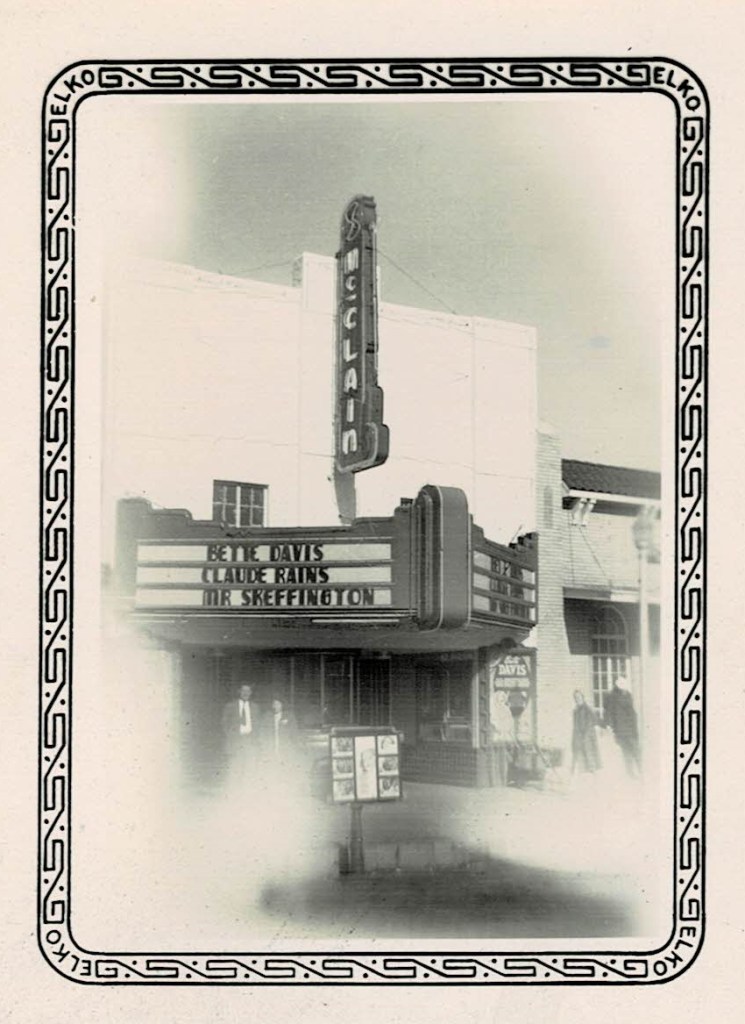
Mom grew up in Purcell, Oklahoma. The family theaters had names that evoke Hollywood’s Golden Age—the Ritz, the Metro, and the McClain, because it was McClain County.
The McClain (1944), The Metro (1939), The Ritz (1939), Purcell, Oklahoma
My uncles ran the projectors. Mom and her sisters sold tickets, candy, and popcorn. In fact, Mom was selling tickets one evening during World War II when she met Dad, a young sailor from a nearby Navy training center. Mom’s older sister Flo met her husband the same way, at another movie theater in nearby Norman.
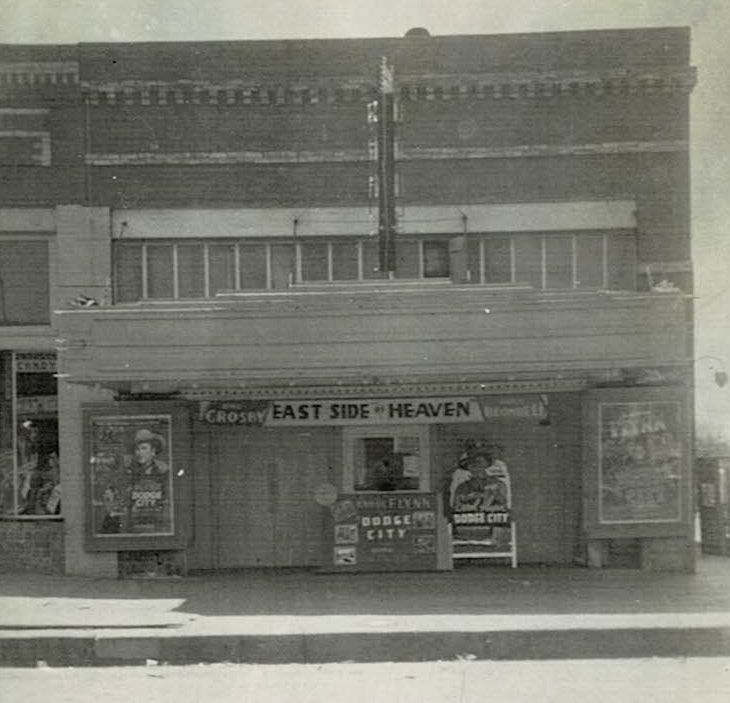
Years later, my Uncle Levi built a theater called the Canadian, because Purcell is located on the Canadian River. He also had a drive-in, the Sky Vue, south of town. The Canadian is the movie theater that’s imprinted on my childhood. When I was young, my family lived in Oklahoma City, some 45 miles north. On Sundays, after church, we’d drive to Grandma’s house in Purcell, for dinner with the family. Various aunts, uncles, and cousins would be there, but not Aunt Dorothy and Uncle Levi, because they were at the show.
The Canadian Theater in 1959, Purcell, Oklahoma
After dinner, the grownups would settle into Grandma’s living room and talk. The kids walked the the few blocks to downtown Purcell, where we were allowed to take tickets from movie patrons and work in what Aunt Dorothy always called the Sweet Shoppe. And we saw movies, lots of them.
Every now and then, I was allowed into the projection room at the Canadian or the Sky Vue. None of this digital stuff that they have now. This was back in the 1950s.
One of my clearest memories is of Uncle Levi, sweating in a sleeveless undershirt in that hot projection room, as he hoisted huge rolls of film onto the projector. Years later, when I saw Cinema Paradiso, I thought of my uncle.
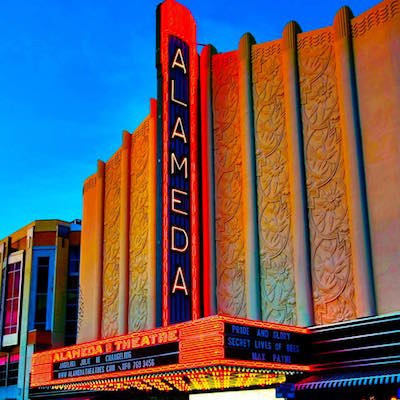
The Canadian closed a long time ago, turned into first an antique mall and later an event center. These days, I’m more likely to stream a movie. But I still like seeing movies in a theater. Especially in the 1930s Art Deco gem in downtown Alameda.
Alameda Theatre, Alameda, California, built 1932
As a mystery writer, I’ve mixed movies into my plots. My latest California Zephyr book, Death Above the Line, takes my sleuth Jill McLeod off the train and onto a set, playing a Zephyrette in a film noir. In Bit Player, private eye Jeri Howard investigates what happened long ago when her grandmother worked in 1940s Hollywood.
Write What You Know (And always listen to your best friend)
By Tara Lush
When I first started writing fiction six years ago, I turned to romance. It was a genre that I’d read and loved — along with mystery and true crime, of course. When I told my oldest friend about my plan to write a steamy novel, she scrunched up her face.
“Why aren’t you writing crime fiction?”
It was an excellent question. I’ve been a newspaper and wire service journalist in Florida for two decades, with many of those years devoted to the weird, the horrific, and the criminal. I’ve covered many of the state’s biggest crime stories. High-profile ones such as Casey Anthony and Trayvon Martin. Lesser-known murderers who had abducted children and those who attacked fellow citizens in a drug-induced haze. I’ve also covered eleven mass shootings (including Parkland and Pulse) and witnessed thirteen executions in Florida’s death chamber.
“Pfft. Why would I write crime fiction?” I asked my friend. “It’s too depressing. Too much like my day job. I want to do something different. My muse is telling me to write about sex.”
And yet, my muse told me to write a romantic suspense for my first novel. I moved on from there, writing contemporary romance and erotic romance. And while I had some measure of success — a RITA finalist book in 2018 — it never felt a hundred percent right, either.
In 2019, I was on a trip to Vermont and sitting around my best friend’s house. I was musing aloud about my next steps for my fiction career. Self-publishing contemporary romance was increasingly difficult and competitive, I told her, and writing the happy-ever-after between the couple wasn’t as satisfying as it had been in previous years. I wanted to tell a story about justice, but with humor and nuance.
I’d recently finished a series about couples in a quirky Florida town, and let’s just say the eccentricities of the characters weren’t resonating with romance readers. I was frustrated.
“What about a mystery novel?” my friend asked.
I mulled this over for the entire month of August while I was on a monthlong vacation. I’d been reading Kathy Reichs’ Deja Dead, and although I loved it, I couldn’t imagine myself writing something so dark. There was the matter of the day job trauma, after all. But what if I could write something softer, something with a little romance and a twisty murder… something gentle.
A cozy mystery, perhaps?
While sitting in a café in Quebec City and drinking the best espresso I’d ever had, I sketched an outline for my cozy. I used my experience as a crime reporter to plot the murder. First I chose a victim. Then I chose a murderer. I worked backwards with the details and clues, thinking about all the police reports I’d read over the years, all the news conferences I’d been to, and all the cops I’d chatted up. Suddenly everything made sense.
You know those wooden puzzle boxes, the ones that seem so hard to open? That’s what my brain felt like. Each clue, each detail, unlocked something inside my creative soul in a way that romance didn’t. I was able to blend my quirky characters and my love of a Florida setting with a murder and a romantic subplot. Justice as an HEA was more alluring than a fictional marriage proposal.
What was this sorcery?
That fall, I wrote my cozy mystery and in March of this year, sold it to Crooked Lane Books.
The lesson here is to always listen to your best friend. And perhaps, listen to what your muse is whispering.
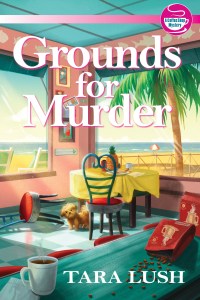
Barista Lana Lewis’s sleuthing may land her in a latte trouble as Tara Lush launches her debut mystery series.
When Lana Lewis’ best — and most difficult — employee abruptly quits and goes to work for the competition just days before the Sunshine State Barista Championship, her café’s chances of winning the contest are creamed. In front of a gossipy crowd in the small Florida town of Devil’s Beach, Lana’s normally calm demeanor heats to a boil when she runs into the arrogant java slinger. Of course, Fabrizio “Fab” Bellucci has a slick explanation for jumping ship. But when he’s found dead the next morning under a palm tree in the alley behind Lana’s café, she becomes the prime suspect.
Even the island’s handsome police chief isn’t quite certain of her innocence. But Lana isn’t the only one in town who was angry with Fabrizio. Jilted lovers, a shrimp boat captain, and a surfer with ties to the mob are all suspects as trouble brews on the beach.
With her stoned, hippie dad, a Shih Tzu named Stanley, and a new, curious barista sporting a punk rock aesthetic at her side, Lana’s prepared to turn up the heat to catch the real killer. After all, she is a former award-winning reporter. As scandal hangs over her beachside café, can Lana clear her name and win the championship — or will she come to a bitter end?
Tara Lush is a journalist with The Associated Press. Her debut cozy mystery, GROUNDS FOR MURDER, will be published Dec. 8. learn more about her and her books here:


 Ladies of Mystery
You must be logged in to post a comment.