P.G. Wodehouse and Me by Heather Haven

I was about nineteen years old when I read my first P.G. Wodehouse book. I will never forget it. It was called Right ho, Jeeves and it opened up a new world for me. Until that time, I hadn’t realized books could be funny, were meant to be funny, that their only job was to make you laugh instead of cry. And through it all, the books were well-written, worth reading for their entertainment value alone.
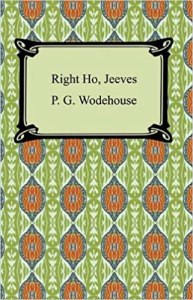
Right Ho, Jeeves started me down a long path of P.G. Wodehouse books that took me years and years to read. This is because he wrote over ninety of them. This is also because I would go back and reread certain ones, especially the Bertie Wooster and Jeeves collection, again and again.

Even though he was writing about the mores of the 1930’s upper English class, his style, his wit, his ability to evoke hilarious images, make outlandish situations seem almost real, heavily influenced my own writing. He was my hero, my idol, someone I aspired to becoming: a writer whose words alone could make you forget your troubles.

Then one day I found out he apparently had been a Nazi sympathizer. Or maybe his wife was and he went along with it. It was never made clear how it started with him, what drew him in. But I was crushed. Everything good and noble I thought he was came crashing down. My hero not only had feet of clay, he stood for everything I considered to be cruel and evil.

I stopped reading P.G. Wodehouse. And as I look back, on some level my world was the lesser for it. His writing had given me a sense of frivolity, a carefree and colorful look at the lighter aspects of life. But I was done with him. Sometimes you can’t get past things.

Recently, a friend of mine was moving and needed to clear out her book collection. She had a huge stash of Wodehouse books. She knew I write mostly funny novels and asked me if I wanted them. I found myself saying yes. In fact, yes, yes, yes.

It wasn’t just that we were in the middle of a pandemic and my life was closed off and scary. It was more that as I entered old age, I had to admit that while he was seriously flawed in his private life, he was still a mighty fine writer. A writer whose words I’d been missing. Somewhere through the years, maybe I even forgave him. Or maybe I’m working on it. Because as much as I laugh, it’s now tinged with a certain amount of sadness. Sadness that the world is not always what it seems. Sadness that sometimes those we admire are not always worthy of it.

Fun and Learning Something New

A lot has been going on in my life this past month. We have a gigantic fire in the mountains above our foothill home, called the Sequoia Complex Fire, and at this moment we are still on voluntary evacuation alert. The smoke is horrendous.

We had a huge family celebration for my husband’s 90th birthday despite the Covid virus. Nearly 50 relatives attended our four living children, many grands and great grands, and four great-greats, plus in-laws. It was a wonderful party. Some of the relatives came a day early and others stayed a day later. Enough time has gone by that we know no one got sick from attending.

I’ve been working on my next Rocky Bluff P.D. mystery and since it’s set in real time, I didn’t see how I could write this one without including the virus. In some ways it’s been fun because I can use all the different views people have about the Covid 19. I had the opportunity to spend some time talking to my police officer grandson, and he shared some of what he has to do now because of the virus. He was most helpful.

But I really want to share something else. I’m reading a novel, not a mystery, which has more backstory, mostly in narrative, than what is happening “now.” I’ve never read a book quite like this before. What it is doing though is really building each character and showing why each one is like she or she are now.

I don’t think I would ever write like this author has, but for this story it is certainly working. It did make me think though how I could give a little more background to some of my on-going characters for people who haven’t followed my series from the beginning.

Isn’t it amazing how we can find-out new ways of doing things from how other authors? Plus, no matter how old we are, we can always learn something new.

Marilyn

Tactile Pleasure of Mystery Writing

For the last several months I’ve been rewriting a mystery from first person to third. This was more fun and more rewarding than I at first expected and I’m pleased with the results. One of the best parts of the work was rearranging the plot and reworking and developing the subplot. I have a general rule that when this part of writing a mystery gets tedious, then it’s time to start over. That didn’t happen this time, and I enjoyed one of my favorite aspects of crime writing.

Setting up and working out a mystery is for me the same as working out a puzzle, or finding a new tool and learning how it works. I like moving pieces around, setting up clues, keeping track of lines of dialogue that can be used later, reworking a clue, slotting in hints in dialogue to guide or mislead the reader, or lifting and replacing scenes. Dorothy L. Sayers called this process of working out a plot a “tactile” pleasure, and indeed it is. I’m not talking about notecards; I’m talking about the mind’s perception that the hands, fingers, are moving physical items around on a surface.

Some years ago, I signed up for a design course to learn more about how designers work to help me think about book covers. It was a revelation. Never had I more truly understood the difference between a writer’s mind and that of a designer. The first lesson was to use our names in a design as a way to introduce ourselves. I fussed for days over fonts, letter placement (vertical or horizontal), and more unimaginative details.

The student work I remember best was a drawing of the letters of his name tumbling out of a cornucopia in random order. I never produced anything equal to the work of the other students but I learned to release objects as well as ideas from their given, or assumed, boundaries. Which, when you come to think about it, is kin to what’s happening in crime fiction—individuals breaking rules and crossing lines, violating boundaries and challenging others to contain them.

The term “boundaries” has come to mean an emotional guide we use to protect ourselves from others or establish areas where connection is possible. We establish rules of interacting, and talk at length about how to do this. But boundaries are also physical, lines on a map drawn between nations or neighbors. We think of them as fixed, but experience tells us they’re not. Mystery writers have no trouble rearranging the world to suit our purposes. It makes me think of Roosevelt, Stalin, and Churchill at the Yalta Conference in 1945, rearranging the map of Europe before the war was officially over.

Rearranging a plot is rarely so significant as Yalta but slipping the pieces out of logical, rational place can produce the startling results that jiggle the brain out of its comfortable path. Examples abound in the work of Anthony Berkeley, a writer of the Golden Age, in his repeated challenges to the idea of justice and the issue of justified homicide. By seeing an encounter between two people in terms of its individual steps, the writer can pull apart the entire progress and rearrange the steps into a challenge to the standard perceptions of crime and violence. Every time a writer makes a change in the story, no matter how minor, she is turning what is regarded as a straightforward crime into a plot, and leading the reader to break established boundaries and ways of thinking about a particular event. This is a useful skill that might well be applied to all areas of life.

Comfort in These Trying Times

I don’t know about you, but I’m edgy most of the time and worried the rest of it. The Creek Fire is burning a scant few miles away, and we’ve been living under an evacuation warning for weeks now. Of course, there is Covid-19, and now, RBG. Sigh!

At times like this, I find comfort in books. Not any books, but those books, the ones that mark your passages, the ones you’ve never forgotten because at that moment in your life they were perfect.

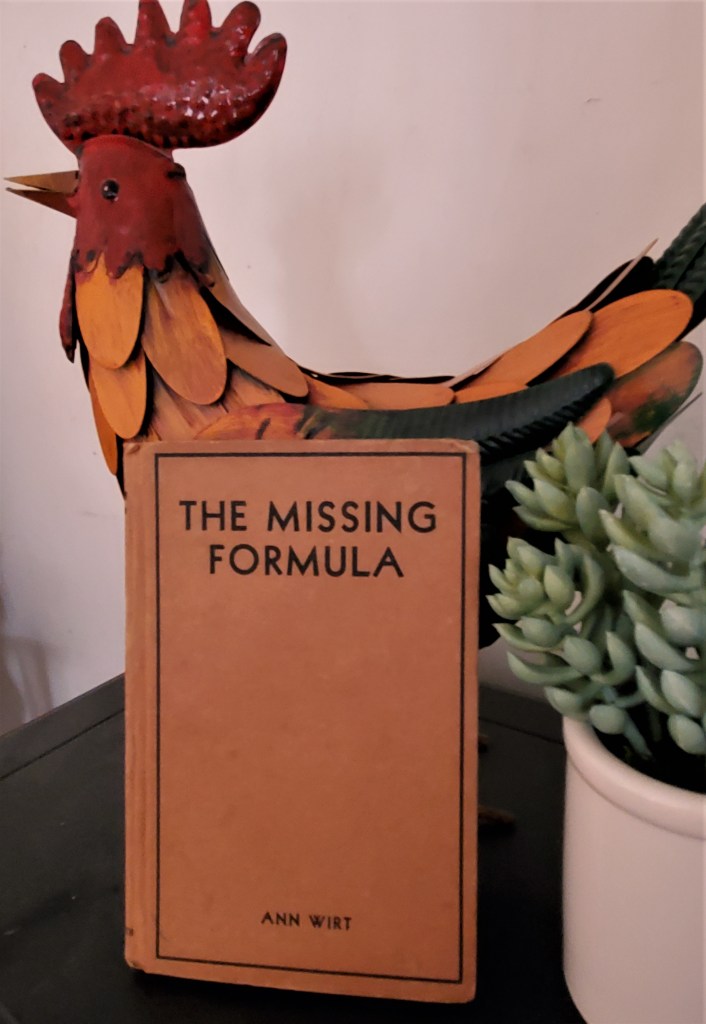
My mother’s copy, published in 1932

Lately, I’ve been thinking about three books that I liberated as a pre-teen from a dusty shelf above the stairs in our house in Michigan. The books were thin volumes, simply bound, in varying colors, with black titles embossed on the cloth bindings—Madge Sterling Mysteries, by Ann Wirt. I remember the feeling of anticipation as I lifted The Missing Formula from the shelf. Next thing I knew, I’d been swept away. I consumed all three of the slight books, one a day for three days, perched on a stair, reading in the stairwell light. They were mysteries—not Nancy Drew, or Hardy Boys—but mysteries with an engaging female alone in the world, armed only with her lively mind.

First Edition- not mine, alas!

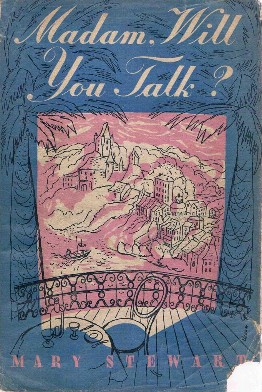
I never forgot Madge, even after I discovered Mary Stewart, who transported me first to the Isle of Skye, then to the South of France, to Crete, to Corfu to the world. And she brought romantic suspense gently into my reading. I have never fully recovered from Richard Byron in Madam, Will You Talk? or Simon Lester in My Brother Michael. Oh, there have been other men, but Richard is waiting for me in a courtyard in Avignon and Simon to drive me to Delphi. I know they are!

Reading Mary Stewart was the first time I experienced world-building, though I never would have used those exact words. Nothing is as soothing as crawling into a carefully constructed world that teaches you, woos you, and entices you to belong. A place you want to stay for a while or maybe forever.

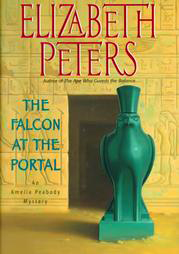
Which brings me to the Amelia Peabody books. Each book should come with a warning that to venture with Amelia into the Valley of the Kings is to slip into a parallel universe from which there is no return. My favorite Amelia Peabody books are the four that take place during World War I. I love them. I read them when I need to return to a time of wry humor, careful history, joyous family, and adventure. Elizabeth Peters, Barbara Mertz to the world, left us real treasures in these books.  Start with Crocodile on the Sandbank, but rush to The Falcon at the Portal.

The legacy of all of these ladies accompanies me when I write, though I know full well I’m not in their league. Sure, I have read the gents, lots and lots of mysteries, thrillers, and suspense by men. I adored Travis McGee and Lew Archer, trust me. But these ladies of mystery taught me everything.

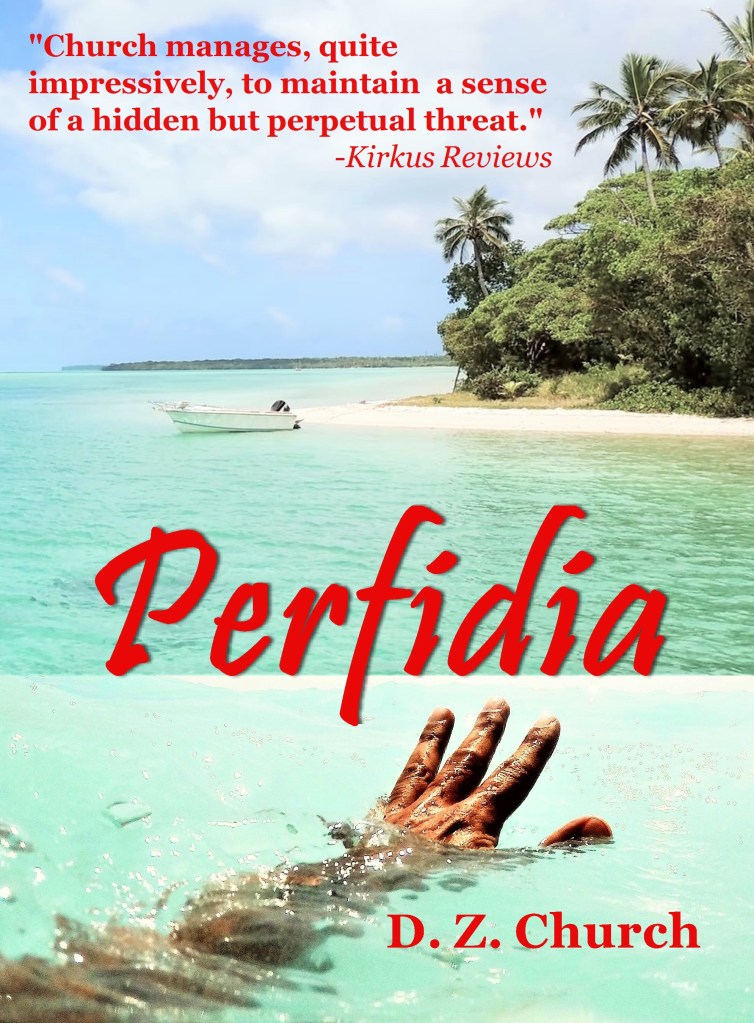
First, have fun! Second, build a world that your readers can wander into and not want to leave. Third, make your heroes “all damn and dark your eyes,” even if they are blonds, and your heroines lively and ready to learn more than they ever wanted to know about themselves. As one reader of my first book, Perfidia wrote, “I really enjoyed this book because you can escape from the real world for a time. I loved the characters and did not want the book to end. Can’t miss with Islands, Ocean, Pirates and History.”

Maybe someday her daughter will grab a book from the stairwell and read: “My father, Del Lassiter, is a handsome man in his early fifties. Dark hair shot through with gray, blue eyes coupled with a nice easy smile that makes him the darling of all his female acquaintances whom he dates prodigiously but never marries. My girlfriends all adore him, especially my best friend, Gail. When he pours his honeyed-peanut voice over them, they swoon.”

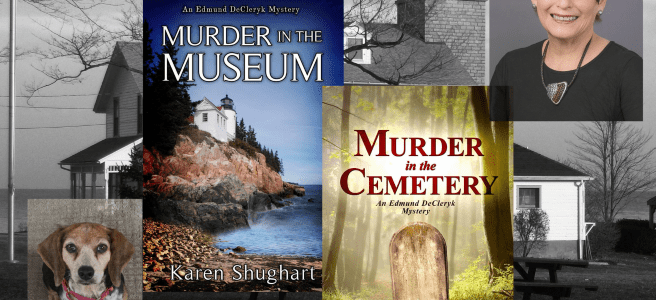
The Year of Uncertainty by Karen Shughart

For many of us this has been a year of uncertainty, a difficult year, and a year we could never have imagined, one that took us completely by surprise and rocked our universe. For my husband and me it has meant almost no in-person contact with our children. Our son and daughter-in-law live on the West Coast, my husband and I live north of the Finger Lakes on Lake Ontario,  and although we spent time over the summer with our daughter who lives in New Jersey, she’s started back teaching. We have no idea when we’ll be able to visit with any of them again.

Zoom meetings have become part of our lives. Truth be told, it’s not a great way to mourn the death of a beloved sibling, celebrate several new births, or the milestone of a cousin’s 70th birthday.  We do it; we have no choice, but it’s been much harder than giving up dining out at restaurants or attending live cultural performances.

On the professional end, book talks and signings, and a conference for readers of mysteries where I was to be a panelist, were all canceled because of Covid-19, shortly after my second mystery was launched. Appointments for yearly check-ups and screenings have also been canceled and rescheduled, more than once.

But despite the uncertainty and sadness, there have been bright spots: The babies and birthday mentioned above, the support of friends when we were mourning the death of my sibling; the outdoor, safe distancing gatherings of a small group of us who are bonded not by blood but by heart; a cooking video on YouTube with me preparing a recipe from one of my books. And we do get to speak with and see our children on FaceTime and at family Zoom gatherings.

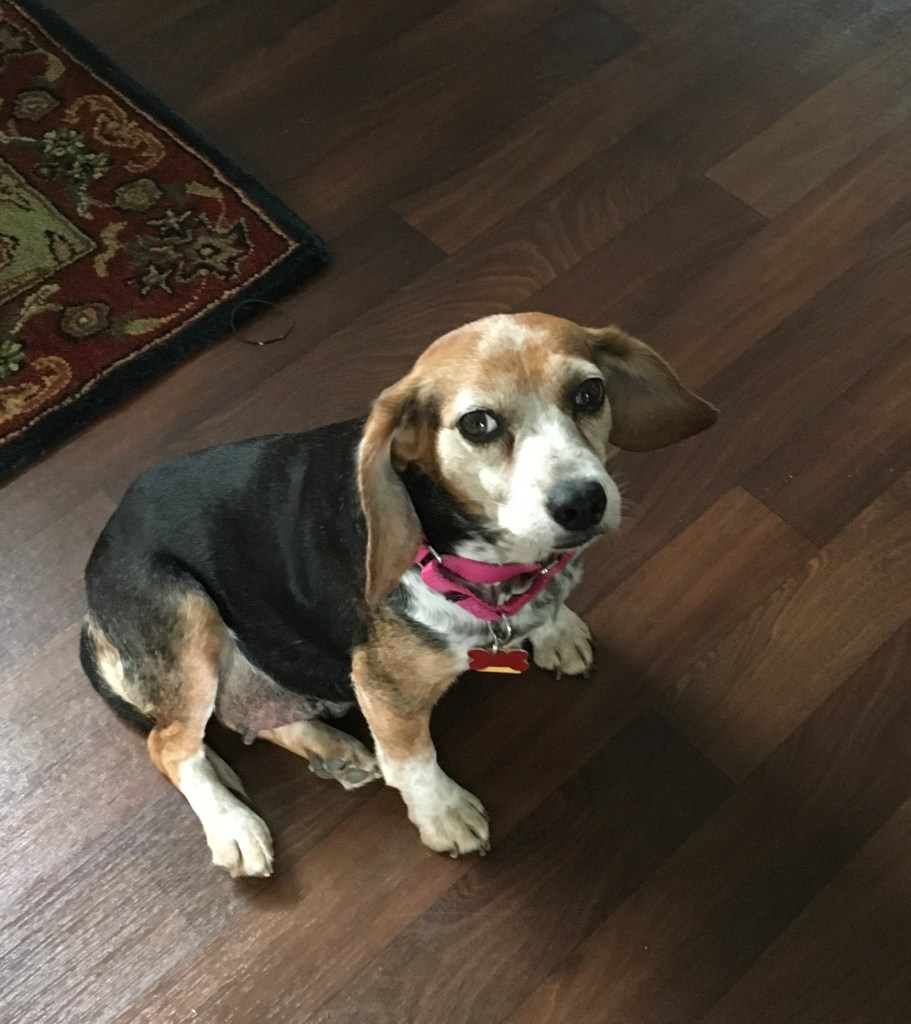
In early April we adopted Nova, a tiny Blue Tick Beagle, who captured our hearts from the moment we saw her photo at the shelter. A gentle, easy going and loving dog, she also is spunky and stubborn, qualities that have stood her in good stead, given the horrible neglect and abuse she suffered before becoming part of our family. Five months have passed, and Nova is a happy, healthy, increasingly confident and secure dog, just as we had hoped. It was the virus that brought us together.

To deal with the anxiety I feel because of these surreal times, I’ve been listening to guided meditation CDs, about 20 minutes daily; it’s helped. As has writing in a journal, giving voice to thoughts and feelings about all the chaos in our world. But I also write down ten things each day for which I’m grateful. Poetry and classical music, always part of my life, have assumed a greater role, calming and centering me.

Most of us have heard the old saw, “this too shall pass,” but sometimes it’s not all that easy to believe. I think it will happen, eventually, but our world, both big and small, will be changed forever.  Hopefully, when it does, we’ll find strength to pick up the pieces and move on.