Serendipity on a Train

I thought about using Strangers on a Train as the title for this blog post, but it’s already taken. Still, serendipity is a better term.

Last month, I took the Amtrak version of the California Zephyr from the Bay Area to Reno. My ultimate destination was Carson City, where I visited a friend. The trip takes about six hours, and I always enjoy looking at the scenery as the train winds its way through the Sierra Nevada.

When the time came for lunch, I made my way to the dining car. As I ate my salad, I talked with the man across from me and discovered we both had degrees in journalism. In fact, he had worked for the San Francisco Chronicle from the mid-1970s until retirement a couple of years ago.

Serendipity, indeed. Why? There’s a character among the many fictional people who live in my head and in my fiction. Her name is Maggie Constable. She first appeared in in my novella, But Not Forgotten, and again in the latest Jeri Howard novel, The Things We Keep. Maggie’s backstory is that she worked for the San Francisco Chronicle in the 1970s.

As she says in The Things We Keep, “I started working for the Chron just in time for the whole Patty Hearst circus.”

Maggie has been demanding her own book for quite some time. I have at least two, maybe three, plots in mind for her. So, to meet someone who did indeed work for the newspaper in the 1970s is great. You can be sure I acquired contact information for my lunch companion.

More evidence of serendipity on a train: in 2010 I was researching the first Jill McLeod California Zephyr mystery, Death Rides the Zephyr. The old CZ, which ran from 1949 to 1970, took a different route through the Sierra Nevada, going from Sacramento to Oroville and then up the Feather River Canyon. I found out about a special train going that route, pulling all sorts of classic rail cars. The train was going to Portola, site of the Western Pacific Railroad Museum, for a local festival called Railroad Days.

I signed up and opted to ride in a Pullman car that had seen service on the Union Pacific. In the roomette across from me was a man who told me he was a graphic artist as well as a rail fan. When I told him about the book I was researching, he said, “I want to design your cover.”

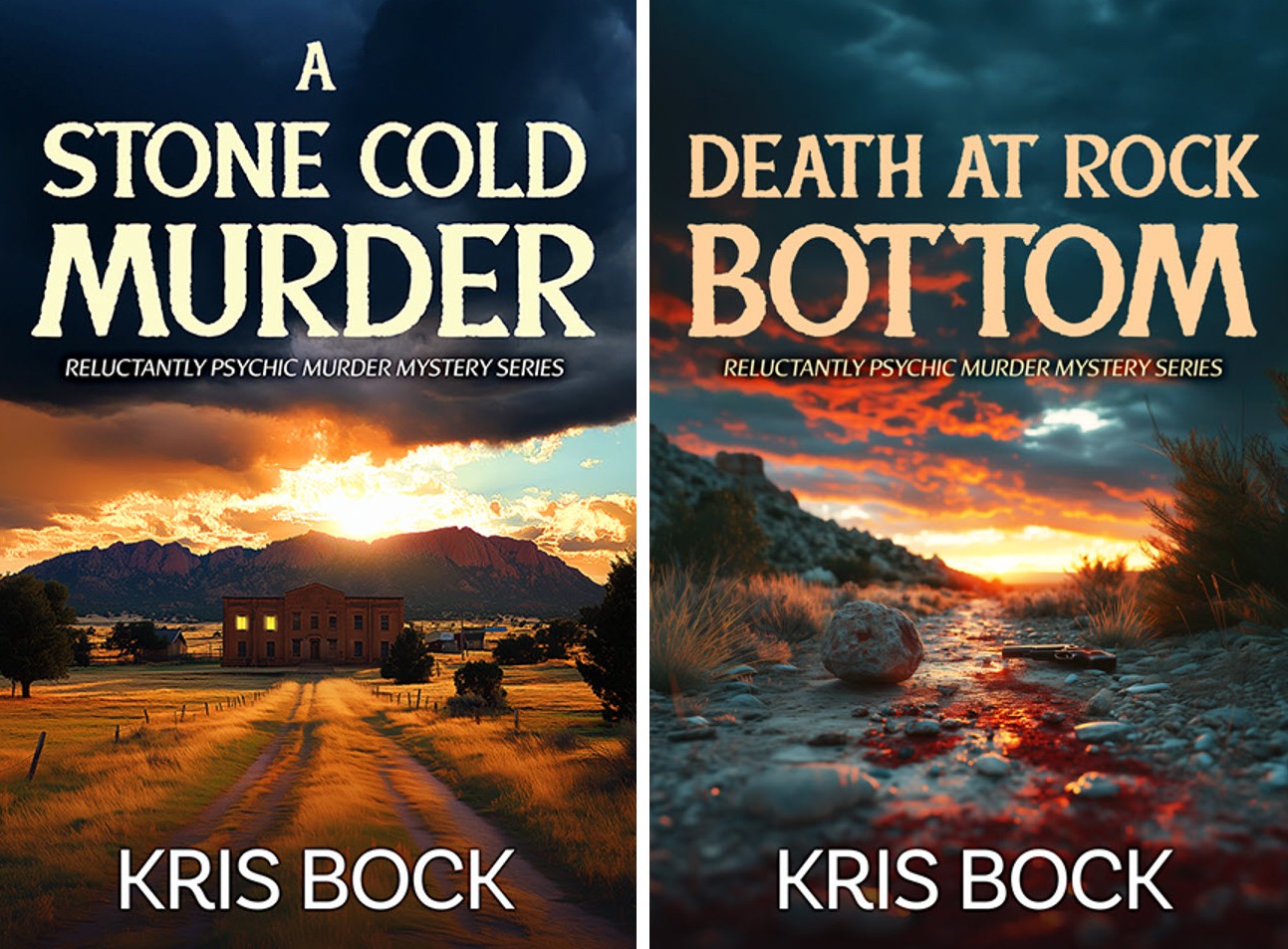
Indeed, he did. His name is Roger Morris and he designed the covers for all four books, covers featuring nighttime scenes of the train cars.

I also met three other people on that particular railroad car. We called ourselves the Pullman Pals and took another train trip together, from Los Angeles to San Diego in the same car, which involved the interesting experience of spending the night in the Pullman car in the middle of the vast Los Angeles rail yard. I’ve stayed in touch with one of those people over the past 15 years. In fact, that’s who I was visiting in Carson City. We rode the Virginia & Truckee Railroad Company’s historic train from Carson City to Virginia City, pulled by a steam locomotive, riding in a vintage passenger car.

More serendipity? Well, yes. In my historical novel, still in progress, my protagonist rides a train. Seeing those vintage rail cars definitely gives me ideas about her journey.

All aboard! You never know who you’ll meet on a train, and what sort of creative ideas that journey will inspire.

Guest Blogger ~ Susie Black

The Perils of Creating a Teen Amateur Sleuth

I am the author of seven published humorous cozy mysteries. While my adult female protagonist in The Holly Swimsuit Mystery Series is younger than I, the age difference between us did not present any verisimilitude issues when I created her personality, lifestyle, or career. One key element that made it easy was that she was based on me.

But writing a series with a teen amateur sleuth who was again based on me, this time as a high school newspaper investigative reporter, presented several challenges that had to be overcome to make the tale realistic. The Case of the Croaked Coach, the debut title of The Hannah White Mystery Series, was simultaneously the easiest and most difficult manuscript to write.

How much danger could I/should I put my young sleuth into?

Would she tell her parents what she was doing or lie to them?

Who would take a teenage amateur sleuth seriously? If she interrogated an adult suspect, would they even give her the time of day, much less answer her questions? How would she know what questions to ask?

If she had suspects in mind, how would she go about investigating them? How would she know what to do? How would she gain access to conduct her investigations?

If she did somehow discover proof that a suspect was the killer, would the homicide detective take her information and look into it, or blow her off?

The scene where the protagonist discovered her classmate holding the bloody murder weapon over the victim was harder to write than any other. While the series is based on my experience as a high school newspaper investigative reporter, I thankfully had never made such a gruesome discovery as Hannah White did. How should she react? Terrified? Shocked? Faint?

So, how did I overcome seemingly insurmountable challenges?

  1. I created two adult characters who interacted with the teenage sleuth:

Bart White: Hannah White’s uncle and the defense attorney for the teenage murder suspect.

H.S. Whiperski: A Private Investigator, Bart hired. H.S. tailored Hannah’s questions & the steps the teenage sleuth could realistically and safely take.

  1. I incorporated Hannah’s investigative reporter skills into how she approached suspects and the methods she employed to question them. Hannah questioned several teacher/ suspects under the guise of interviewing them for a story she was writing for the school newspaper.
  2. I created a group of Hannah’s friends called the Young Yentas. This group served as a sounding board for Hannah to bounce ideas off of. They were also enlisted as assistant sleuths at the victim’s funeral.
  3. I created a teenage sidekick for Hannah who gave her access to a key site at the high school to search for proof that a teacher had committed the murder.
  4. I created a janitor who served as a trusted source of information—a see-all, know-all adult at the school to bounce ideas off of.
  5. Lastly, I relied on Hannah’s self-reliant personality and moral compass to dictate how she conducted her investigation. As such, I created a “rope-a-dope mechanism Hannah employed to interview suspects without them realizing what she was doing until it was too late and they had answered her questions already.

The Case of the Croaked Coach

There wasn’t an honest bone in Buzz Bixby’s body. The Encino High School’s head football coach was an equal-opportunity scoundrel. Bixby cheated and lied his way to the top and screwed anyone and everyone in his wake. So, the question wasn’t who wanted the bastard dead. The question was, who didn’t? Student reporter Hannah White’s interview with the coach is a nonstarter when she discovers varsity football hero Dean Snyder standing over Bixby’s battered corpse holding a bloody trophy.

Despite how guilty Dean looks, Hannah is convinced he’s innocent. When Snyder is arrested for Bixby’s murder, the wisecracking, irreverent amateur sleuth jumps into action to flesh out the real killer. But the trail has more twists and turns than a slinky, and nothing turns out how Hannah thinks it will as she tangles with a clever killer hellbent on revenge.

UNIVERSAL BOOK LINK: https://books2read.com/u/m20yWk

Named Best US Author of the Year by N. N. Lights Book Heaven, multi-award-winning cozy mystery author Susie Black was born in the Big Apple but now calls sunny Southern California home. She has published eight books as of May 2025.

She reads, writes, and speaks Spanish, albeit with an accent that sounds like Mildred from Michigan went on a Mexican vacation and is trying to fit in with the locals. Since life without pizza and ice cream as her core food groups wouldn’t be worth living, she’s a dedicated walker to keep her girlish figure. A voracious reader, she’s also an avid stamp collector. Susie lives with a highly intelligent man and is the mother of one incredibly brainy but smart-aleck adult son who inexplicably blames his sarcasm on an inherited genetic defect.

Looking for more? Contact Susie at:

Website: www.authorsusieblack.com

E-mail: mysteries_@authorsusieblack.com

Blue Sky: @hollysusiewrites.bsky.social

Facebook: Susie Black, author of The Holly Swimsuit Mystery Series | Facebook

Facebook: https://facebook.com/TheHollySwimsuitMysterySeries

Instagram: Susie Black (@hollyswimsuit) • Instagram photos and videos

LinkedIn: https://www.linkedin.com/in/authorsusieblack-61941011

Pinterest: https://www.pinterest.com/hollysusie1/

X: Susie Black (@hollyswimsuit) / X

Guest Blogger ~ Carmen Amato

Writing the Only Woman in the Room

“Beat it,” Silvio said.

He shoved both Castro and Gomez aside and came into the office. He slammed the door and pressed his back against it.

“I never wanted a woman detective in here.” Silvio was a big man and if he wanted to make Emilia feel trapped, he was succeeding. “I’ll do everything I can to f**k you over until you quit.”

Emilia couldn’t help but laugh. “Tell me something I don’t know.”

Silvio gave a start, obviously not expecting her to say that.

When I wrote this dramatic moment in Cliff Diver, the first Detective Emilia Cruz thriller set in Acapulco, Silvio’s dialogue was already scripted.

I’d already been there and done that.

An identical conversation occurred when I worked for the Central Intelligence Agency. About five years into my career, I moved to a new office, recruited by a manager trying to breathe new life into a stodgy team of PhD analysts. All male, as was our manager.

“Pete” was assigned as my mentor. This gave him ample opportunities to sabotage my work. When I finally confronted him, he confessed that he’d never worked with a woman before, didn’t want to work with one now and would do everything he could to get me to leave.

He delivered his threat as if he expected to shock me. I couldn’t help but laugh and deliver  the same line that Detective Emilia Cruz would say years later in fiction.

Long since retired, I recently recalled the encounter when recording an episode of the Amato2Berrick Crime Conversations on YouTube with UK crime writer Jane Harvey-Berrick (Dead Water, Dead Reckoning) for our buddy read of The Trespasser by Tana French.

In The Trespasser, Antoinette Conway is the only female police detective on the Dublin Murder Squad. She’s convinced that all her male colleagues are out to get her.

Her point of view is a soul-eating combination of rage, paranoia and scorn. In every situation, Antoinette is looking for a fight, whether physical, verbal or emotional.

In contrast, Detective Emilia Cruz follows the pragmatic approach I took during my CIA career when I was the only woman in the room. A tiny minority of male co-workers acted like jerks and had to be dealt with, the faster the better. Like me, Emilia stands up for herself.

Although she grew up on Acapulco’s streets and knows how to use her fists, Emilia isn’t propelled by rage like Antoinette.

  In Barracuda Bay, the ninth and latest release in the series, the chief of police is the jerk who doesn’t want Emilia in the room.

In the series’ prequel, Made in Acapulco, he was loath to shake her hand at a badge ceremony. Fast forward a few fictional years and Emilia wants to get married. It’s the chief’s chance to boot her off the force.

Even worse, the chief recruits her former partner and current boss to help.

And who is the former partner and current boss? You guessed it. The very same Lieutenant Silvio who gave her such a rough time in the first book in the series, Cliff Diver.

In Barracuda Bay, the plot against Emilia unfolds after she finds a woman’s body in a derelict building. The murder case is explosive—the victim is the mayor’s sister, and election season is heating up.

Meanwhile, the crime scene holds secrets. The building once housed a covert government operation targeting a brutal drug lord that went sideways.

Before Emilia can zero in on her prime murder suspect, she’s dispatched to Washington, DC where she becomes a target of killers disguised as cops. Alone and desperate, Emilia is caught in a lethal web of corruption, betrayal, and political intrigue.

Barracuda Bay adds a heady dose of tension to Emilia’s situation as the only woman in the room. As one reviewer wrote: “The hits keep on coming as Detective Cruz is spun through a whirlwind that links cartels, crooks, and various government agencies.”

Before I sign off, you might be wondering what happened to “Pete.”

Six months after our confrontation, he left the CIA because his wife got a job in another state. He’d be a house husband until he found a job there.

Ironic, right? I couldn’t have written a better ending.

Barracuda Bay

Political corruption turns Acapulco’s first female police detective into a fugitive on the run in Washington DC.

“A thrilling series” — National Public Radio

In a derelict building for sale, Acapulco police detective Emilia Cruz stumbles on the body of a woman brutally shot to death. Incredibly, the victim was the sister of Acapulco’s ambitious mayor, who is running for re-election against an opponent with deep pockets.

The victim’s ex-boyfriend has a suspiciously weak alibi but is the crime scene the key to finding the murderer? The building was once used for a secret Mexican government operation targeting a ruthless drug lord.

Meanwhile, there’s a conspiracy within the police department to force Emilia out.

Before Emilia can save her job or arrest her prime suspect, she’s sent on an errand of mercy to Washington, DC. There she becomes a fugitive hunted by killers masquerading as cops. Alone, desperate and on the run, Emilia turns for help to a human trafficker she once vowed to murder. Her brother.

From Acapulco’s beaches to the streets of Washington, DC, the stakes couldn’t be higher in this electrifying, page-turning thriller.

2019 and 2020 Poison Cup award, Outstanding Series – CrimeMasters of America

BUY:

Amazon: https://geni.us/barracuda2025

Barnes & Noble: https://www.barnesandnoble.com/w/barracuda-bay-carmen-amato/1146877496

Books-a-Million: https://www.booksamillion.com/p/Barracuda-Bay/Carmen-Amato/9798989140374

Carmen Amato is the award-winning author of 18 mysteries and thrillers, including the Detective Emilia Cruz mystery series pitting the first female police detective in Acapulco against Mexico’s cartels, corruption, and social inequality. Starting with Cliff Diver, the series is a back-to-back winner of the Poison Cup Award for Outstanding Series from CrimeMasters of America. Optioned for television, National Public Radio hailed it as “A thrilling series.”

Her Galliano Club historical fiction thrillers include Murder at the Galliano Club, which won the 2023 Silver Falchion Award for Best Historical.

Her standalone thrillers include The Hidden Light of Mexico City, which was longlisted for the 2020 Millennium Book Award.

A 30-year veteran of the CIA where she focused on technical collection and counterdrug issues, Carmen is a recipient of both the National Intelligence Award and the Career Intelligence Medal. A judge for the BookLife Prize and Killer Nashville’s Claymore Award, her essays have appeared in Criminal Element, Publishers Weekly, and other national publications. She writes the popular Mystery Ahead newsletter on Substack.

Originally from upstate New York, after years of globe-trotting she and her husband enjoy life in Tennessee.

Website: https://carmenamato.net/links

Substack: https://mysteryahead.substack.com

Facebook: https://facebook.com/authorcarmenamato

Instagram: https://instagram.com/authorcarmenamato

Amazon: https://www.amazon.com/stores/Carmen-Amato/author/B007UA1J8U

Goodreads: https://www.goodreads.com/author/show/6154479.Carmen_Amato

Email: carmen@carmenamato.net

HIDDEN GEMS

Hello, Ladies ~

When I was a kid, I loved playing the game of “Clue.” Piecing together the clues to decide if Miss Scarlett killed the victim with a candlestick in the conservatory was exhilarating.

And was there anything better than watching “Perry Mason,” “Matlock,” or “CSI?” I would settle in to watch these shows armed with a pen and pad, making notes of possible clues to help me solve the crime before the episode ended.

A few weeks ago, a writer friend and I were talking about writer’s block, something she’d been struggling with. When I said I never suffer from writer’s block, she raised an eyebrow.

I continued, sharing that my brain sort of takes over and directs my fingers across the keyboard, or guides the pen in my hand across a blank page.

“Can you give me an example?” she asked.

My response, then became my blog for this month …

While I don’t write mysteries per se, I do like to add a touch of mystery to my books. In my first novel, “Peril in Paradise,” I discovered that my writer’s brain had automatically planted clues about my crime and villain. In my series México Mayhem, the reader knows who the villain is from the beginning, but I still create a sense of mystery by adding perfect hidden gems to keep the reader guessing.

Two of my favorite additions were characters who weren’t meant to be in more than a couple of scenes. In “Peril in Paradise,” I created Billy Boyd, who becomes my villain Damian’s cellmate. I didn’t know when I created Billy, initially intending for him to add color to a few scenes with Damian, that he would become his own interesting character.

In “Malice in Mazatlan,” Alba’s only purpose was to paint a picture for the reader of how difficult my villain, Sarita Garcia, could be. But Alba ends up stealing a scene and becoming a perfect hidden gem.

As I reread the current WIP for my México Mayhem Series, “Vanished in Vallarta,” I realized I had added some hidden gems during the first draft that I could now use as clues for the Hero and Heroine as they try to tie a suspect to a murder. When I edited the Villain’s chapters, I discovered I’d done the same thing with her storyline.

Every time I find these intriguing nuggets, I’m in awe of how my brain has placed a little of this and a little of that in the right places of the storyline, which I can now turn into tantalizing tidbits for my readers. Another fabulous thing occurred, too. Without knowingly inserting this information, I created a storyline for my next book, “Lost in Loreto.”

In the first novel, “Redneck Ranch,” of my Stoneybrook Mysteries, I added stab wounds to my victim and placed her on the dirt floor of an old barn. But I didn’t know at the time the stab wounds would reveal Morse Code for a number or that the barn floor being void of blood would suggest a different crime scene for this victim.

I just finished a short story, “Jamboree Jealousy,” for an anthology, and when I did my read-through, I smiled at the hidden gems I’d already added to the story: A missing cowboy hat. A gold hoop earring. A few pages with lyrics for a song.

I hope there are many Hidden Gems in your writing endeavors, too! Happy Writing, Sisters!

Slow-growing Ideas

Several of my stories and mystery novels were worked out on paper before I began writing. I had blocks of story parts, notes on a particular character, and no sense of how the whole thing went together. As a pantser, I was willing to wait and then let it all come together when I started writing. This is an act of faith, and for some definitely reckless. But for me it feels like pulling a multicolored shawl around my shoulders, sinking into the warmth and richness of it, and letting the idea germinate. But these days the thinking part is taking longer and longer.

Some of my more recent stories are based on ideas or scenes that came to me years and years ago. Most often if an idea doesn’t take form within a month or so, I abandon it, or just as likely it abandons me. But some of these old snatches of a story I overheard, a piece of a scene that still flickers in my imagination, linger and don’t seem to change. When this happens I know there’s a story there, but I don’t seem to know how to get to it. 

This is where I can hear some of my fellow writers telling me to just sit down and write it out. There’s no mystery to it, as you know, Susan. It’s just a matter of doing the work. Most of the time I would agree. But there are some ideas that need more than an artificial structure composed for working them out on paper to be realized. These are the ones that hover in the back of my mind, like a dream that might be bad, might be good, but won’t fade. 

I’m not the only one who feels this way. A few years ago I was at a book event with other writers and found myself chatting with a writer I had met a number of times but didn’t really know. We talked about our work, what we were reading, and the days ahead. And then she said something that I recognized instantly.

“I think I’m ready for the next story. I can feel it growing. I’m ready to start writing.”

I knew exactly what she meant and how she felt. The story idea is there, gestating, growing, pushing through the reticence, the hesitation, the doubt, ready to emerge from the nib of my pen or the keys on the computer keyboard. At that moment I know I need one last step. Who is going to tell the story—that, for me, is the key to unlocking the whole thing. And once I know who the narrator is, the story unfolds before me, and it’s just a matter of me keeping up with the flow. The preparation time, if I can call it that, takes years. The writing takes a couple of days or fewer for a short story, a couple of months, writing full time, for a novel. The closer the story is to real life, a real event, the less rewriting, or fixing, is required. The characters act out according to their natures, their proclivities already established by where I found them in the basic idea. 

The hardest lesson in working on a story that arrives in this manner is to not tamper with it, to trust my own unconscious to deliver the narrative I can feel inside me. Sometimes I don’t know what the ending will be, but when I sense it coming, and understand what it probably has to be, I have to trust where I am and where I’m going and not tamper with it.

Not every story arrives in this way. I’ve constructed plenty from a simple What If beginning. But those that haunt my memory are different, and require a different writer response from me. From the few of these I’ve composed and published, I’ve learned discipline, trust that my writing brain knows what it’s doing, and faith that whatever is happening is something worthwhile. These stories tend not to have a happy ending, but they are realistic and honest. And for me that’s enough.