To ISBN or Not To ISBN – That Is the Question

by Janis Patterson

There is an evergreen discussion that flowers repeatedly on most writers’ loops, especially on those that have more non-professional writers. Do you need an ISBN? Should you buy your own ISBN? Why should you want an ISBN?

The answer to all the questions above is … it depends.

ISBN stands for International Standard Book Number, a number of either 10 or 13 digits that is unique to a certain book/edition/format. Almost every book has one.

I say almost, because there are mitigating factors. You can release a book without an ISBN, but then especially with paper it would be difficult to downright impossible for anyone to order or stock it. Neither would you be able to track any sales you might have.

If you are publishing an ebook with Amazon, or some other online retailers only, you do not have to have an ISBN because almost every retailer has their own internal identifying numbers. Amazon’s (the biggest ebook retailer) numbers are called ASIN.

Let’s be honest – ISBNs are expensive. Prices for one – just one! – start at $125. While much more economical, a hundred still go for close to $600. That’s big money in almost anyone’s wallet, but especially for self-publishing writers, many of whom are just starting out.

There are several ways to get ISBNs. First, and the one I like best, is to buy your own directly from Bowker/MyIdentifiers. Bowker is the only company licensed to sell ISBNs in the United States. (If you are from another country, you will have to check on where and what ISBN prices and availabilities are. I don’t know. I do know that the citizens of Canada get theirs free – if they meet certain criteria – lucky stiffs!) If you buy your own ISBNs you are shown as the publisher.

Second, there are those who will be happy to sell you a couple of single ISBNs for a lot less than Bowker. I advise you not to do that, even though it saves you a couple of bucks. These people are called re-sellers, because they buy large amounts of ISBNs from Bowker, where they are much cheaper per number, and then sell one or two or three to you for a profit.

Now I am a big believer in profit, but this particular ploy comes at a price – namely that you are not listed as the official publisher. When someone buys an ISBN from Bowker, they automatically become the publisher of record. If you buy (or get a free) an ISBN from JoeBlow, Inc., since JoeBlow, Inc. bought the ISBN from Bowker, he/it is now the publisher of record.

At the moment this particular little quirk doesn’t mean much, just a bit of legalese – but my concern is that we don’t know what the publishing laws will be down the road. I wrote the book, so I want to be on record as the publisher of record and be able to control my book throughout its life. More simply, my book is my book.

This same principle applies when some company and/or retailer offers to give you a ‘free’ ISBN if you publish with them. No adult today should believe that anything is ever truly ‘free’ – someone somewhere somehow sometime has to pay for it, and in this circumstance it might be you by losing control of your book. The entity giving you the ‘free’ ISBN is on record as the publisher of record – not you.

So should you pay for ISBNs? If you are writing short little books that you intend to sell as ebooks on Amazon (for example) and on Amazon only – you certainly don’t have to. If, though, you decide to take those ebooks to print or start your publishing career in print, yes, most definitely you need an ISBN.

You should have an ISBN for every version of your book – one for ebook (which should cover all ebook retailers, no matter what Bowker says – remember, they sell ISBNs!), one for print, one for large print, one for audio. Remember, one of the main purposes of ISBNs is to track sales and you don’t want the data on your sales tracks muddied. (And a little hint – if you are doing a paper copy Bowker will try to sell you bar codes for a fair chunk of change. You don’t need to. The publisher – Amazon, Draft2Digital, Ingram, whoever – will put one on for you without charge – just be sure to leave a space for it in your cover design.)

As there are brick-and-mortar stores who refuse to do business with Amazon (a complicated set of affairs I’m not going to go deeper into now) many authors give their print editions two ISBNs. These authors do one print edition through Amazon print and give it a discrete ISBN with limited distribution, which means that book is sold only on Amazon only. Then they go through another publishing venue such as Ingram’s or Draft2Digital for another print version and give it another separate ISBN. Whatever you think of the practice, remember more brick-and-mortar stores will order from Ingram’s (which has the all-encompassing industry standard catalogue) and Draft2Digital and all the others where they will not from Amazon.

Now I am going to talk about pure personal opinion. When you self-publish in any format, you are a publisher. Everyone admits – or they should! – that editing, covers and publicity are legitimate business expenses; you should regard ISBNs as the same thing. If you are going to compete against the biggest traditional publishers you need to play by the same rules. You are a publisher; act like one.

Gathering my Thoughts

When a new year comes around and I’m starting a new book, it just feels right. My desk is clean. Something I do the end of every year is make sure my desk is tidy and ready for the coming year. (I also do it between each book/project) It wipes away what I had been working on and makes a clean slate for the next project.

This first project of the year is book 9 in the Gabriel Hawke series. I enjoy writing these books. They are set, mostly, where I grew up and have a unique character who I feel I can tap into better than my female protagonists. I don’t know why, but Hawke flows from me without doubts or self recriminations that the character isn’t this or that.

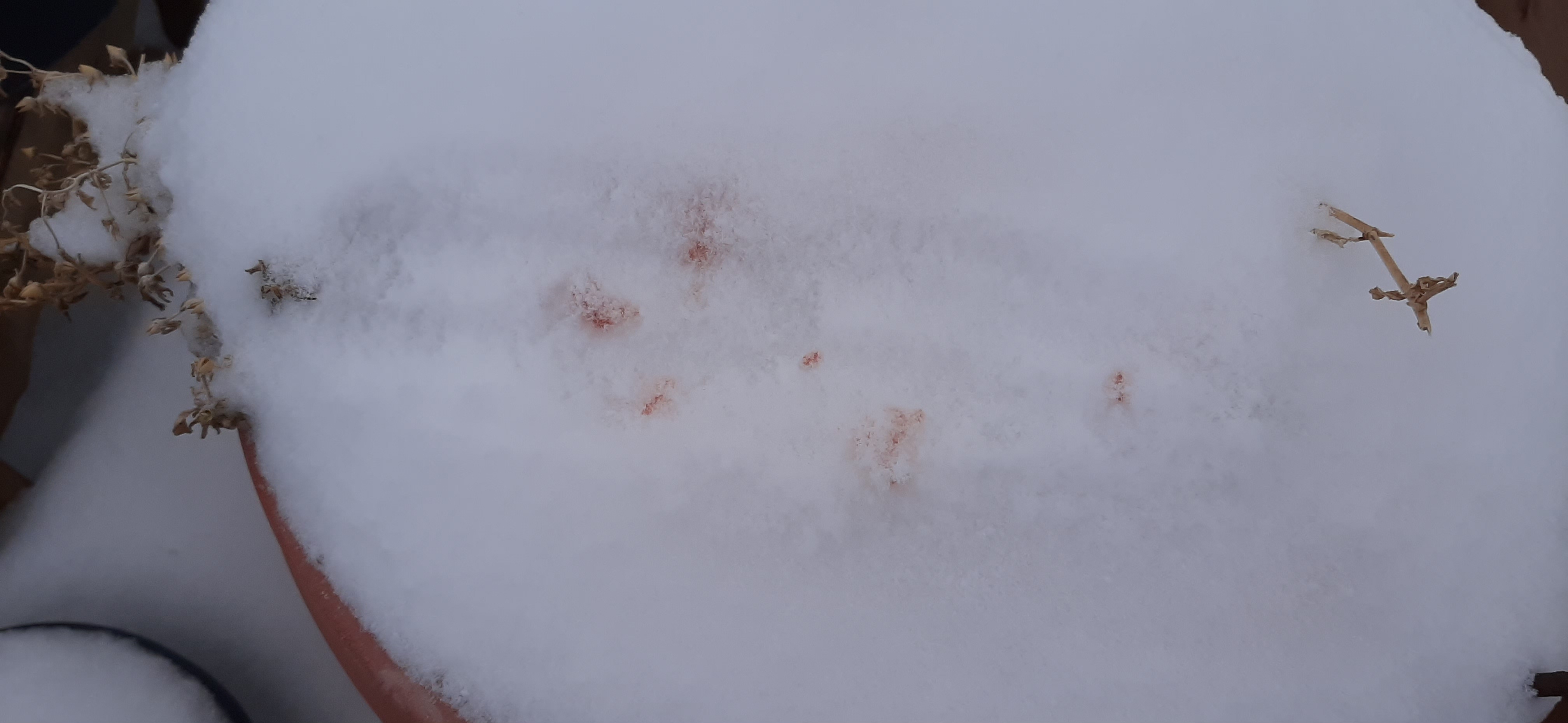
This book will push me and my character. He and his significant other are going to be pushed to their limits trying to help a wounded person and survive a blizzard in the Wallowa Mountains. I have my research books stacked up and have started reading them. I have even ran some tests in our snow to see what blood looks like when it first drips onto the snow. I took photos and studied the spot for about four days, until our snow melted. I know what my character will see or be on the look out for when they follow the sparse drops of blood from the bleeding person who left a dead body behind.

Blood experiment

Several of the scenes have played over in my mind since I came up with the premise of this book. I have sat down and discovered who the person they are following is and who the dead person was. I wrote out the chain of ideas for scenes. Once I do some more research on snow conditions and animals that would be accessible for food or to follow to stay warm, I’ll start writing the book this week.

While some people don’t like to have a “road map” or outline to follow when they write, I’ve found, after the last Spotted Pony Casino Mystery that I “mapped out” that it helped me to know my story better when I started and while I didn’t stick to the road or route I’d mapped, I felt I had a stronger book throughout because I knew a bit more about my characters and who I wanted to highlight as possible suspects.

As yet, I don’t have a title for book #9 in the Hawke books. I’m waiting to see what animal makes sense that is out in the winter and would work for the premise of the book. I’m a writer that either has the titles before I start the book or I come across it as I’m writing. It looks like it will be the latter this time.

If you have any thoughts on a winter animal put it in the comments and I’ll look up its habits to see if it might work.

At the moment I have Churlish Badger being made into an audiobook as well as the Shandra Higheagle Mystery book, Homicide Hideaway. But what you really need to know is through the month of January, if you like audiobooks, Book 1 in the Shandra Higheagle Mystery series, Double Duplicity is $1.99 at Authors Direct.

If you don’t have the app it’s easy to download and free. This audiobook resource gives me and the other authors using it more royalties than the other audiobook vendors. (and my books are priced lower here.)

To Seek an Award or Not by Heather Haven

Most writers are pretty opinionated on the subject of soliciting awards. Some believe that entering a contest, often paying a fee, is buying the award. I personally, don’t believe that is true. Hundreds of books are often entered into a contest. Sometimes larger contests have thousands of entrants. Many from all over the world. If your book can win out over those odds, I say good for you.

For some authors, being nominated by their peers is the only way to go. Sometimes that happens, sometimes it doesn’t. The nomination of a book by members of an organization or those attending a conference is lovely. It doesn’t happen often, but when it does it is, as I say, lovely. Sometimes the public nominates a particular book. In a way, it’s a popularity contest, but so what? If you have fans, if you have a following, and they want to acknowledge your book, that’s wonderful.

I have garnered a few awards over the years and I think they all add to the mix. For me, it’s a form of publicity and advertising.. Between good reviews and awards, I believe it helps a reader who may not be familiar with my work, to be willing to take a chance on buying one of my books. That’s all in all. Buy my book and read it.

If i am going to enter a contest, I try to be very circumspect. I like to know, first off, that it has merit. I take a little time, look through the credentials and past winners. Often awards are not a money making proposition for those running the contest. They have to hire readers and/or judges to read all the entries. They have to have some kind of technical or data driven system in place to handle the entries. It all takes time and money.

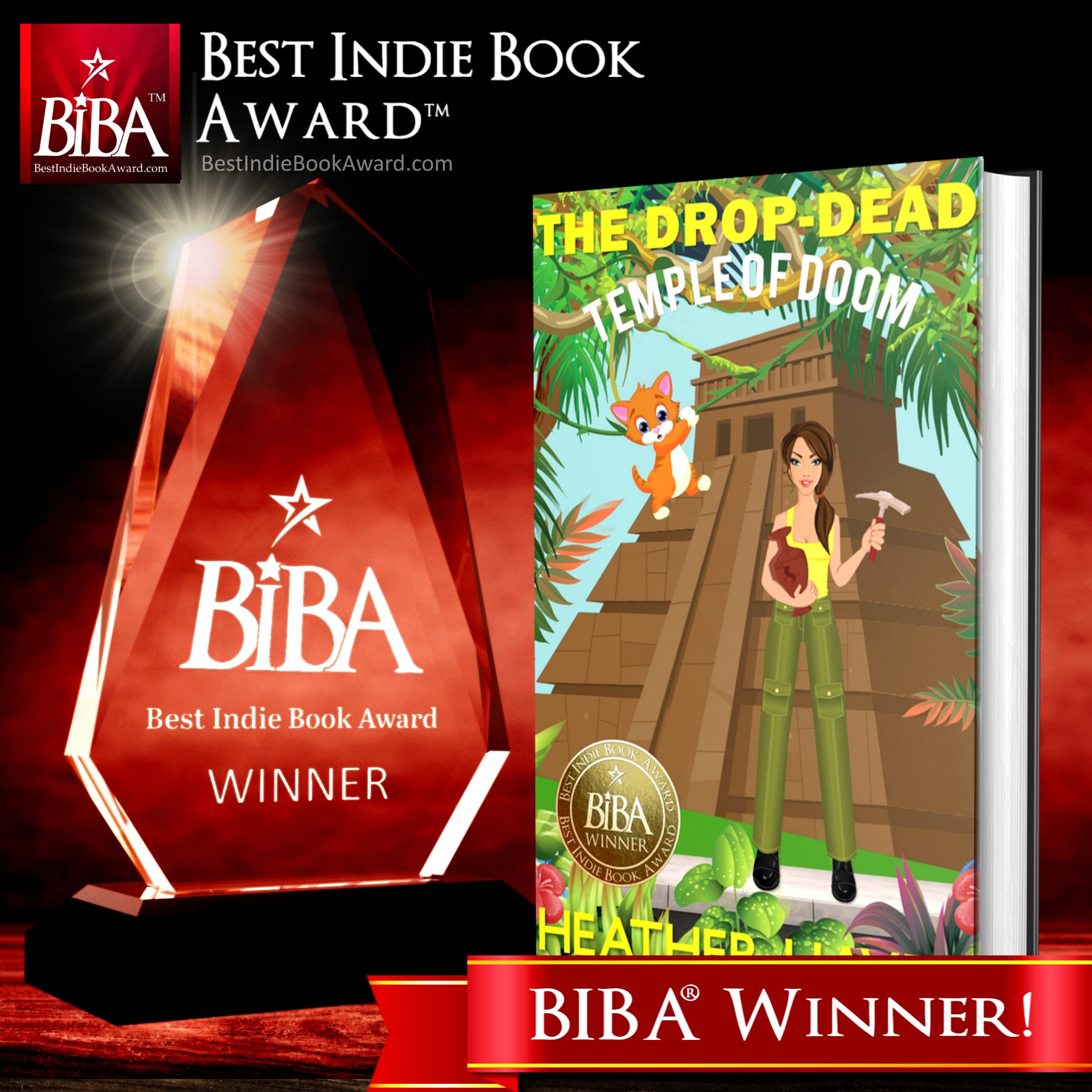
I recently won another award. I am deeply honored. The Drop-Dead Temple of Doom was the 2021 BIBA® Mystery/Cozy Mystery Winner! I get lots of publicity, stickers to put on my books, and received a beautiful crystal award. They even spelled my name right. I just love it.

Accuracy – Getting it Right

The historical mystery looked promising on the library shelves. I checked it out and started reading. A few chapters in, a glaring historical inaccuracy pulled me right out of the narrative.

The book takes place in 1855, in a New England town. In one scene, the protagonist goes to the post office—which has a sign reading “United States Postal Service.”

No. No. No. Definitely no.

The United States Postal Service didn’t exist until 1971, after former President Richard Nixon signed the Postal Reorganization Act of 1970. Before that, it was known as the Post Office Department, or simply the Post Office.

I had a similar experience when reading another historical mystery set in 1950. The protagonist mentioned having read a world-famous novel in the early 1940s. That would have been nearly 20 years before the novel was published.

I found myself thinking that a good editor—or copyeditor—should have caught that. Of course, editors these days were probably born after the Postal Reorganization Act went into effect.

I realize I’m writing fiction, a delicate balancing act between plot, characters and setting. It’s that framework we call willing suspension of disbelief. I write a good story and readers accept that reality and those characters who move around my plot and setting. I want readers to believe that a private eye named Jeri Howard and a Zephyrette named Jill McLeod can solve crimes and catch killers.

When writing my novels, whether set in the present (with historical references) or set in the past, I strive for accuracy. To be fair, I may get it wrong. But I’m careful.

I knew that was important for the Jill McLeod California Zephyr series, set in the early 1950s. There are train buffs call railfans, a natural audience for the books, since my protagonist is a Zephyrette, a train hostess and a member of the onboard crew. I knew that if I made any mistakes, I would hear about it from the railfans.

I was quite chuffed, as the British say, when I did a book event for the first in the series, Death Rides the Zephyr, at the Western Pacific Railroad Museum in Portola, California. One of the volunteers, an older man, approached me. He said he’d read the book and he wanted me to know that I got it right, both the train stuff and the history.

Music to my ears. I want readers to get caught up in my stories. I don’t want to make errors, however small, that that pull readers out of the story. They might not return.

Let’s Begin

January. The beginning of the new year seems an appropriate time to talk about beginnings. Such as, how to begin a novel, or story.

Where is the beginning? Is it where the protagonist enters the action? Or at a point deep in the back story, a place that can be glimpsed in a prologue?

The decision of how best to start a writing project is a personal one that varies from writer to writer.

Kindred Crimes, the first Jeri Howard novel, introduces my Oakland-based private investigator. I toyed with several different beginnings and wound up with the traditional private eye opening scene: Jeri meets with her new client in her Oakland office. The man is looking for his missing wife. Seems like a straightforward case. Or is it? All is not as it seems. That much is revealed in the first two paragraphs. And as Jeri delves deeper into the case, she discovers much more.

Man, woman, and child posed in front of a thick green Christmas tree, its branches laden with silver tinsel and gold balls. He stood behind her chair, hands resting lightly on her shoulders. Her blond hair fell in waves past the collar of her red dress. In her lap she held a cherubic toddler. They smiled at the camera, the image of a perfect middle-class nuclear family, caught forever in a five-by-seven glossy.

“When did she leave?” I asked.

The second Jeri Howard book, Till the Old Men Die, took me in a different direction. An earlier version began with a scene in which a woman with a shady past shows up at the history department office at the California State University branch in Hayward, California. The shady woman wants the papers belonging to a professor who was murdered some months ago in what appears to be a random mugging. Upon reading that version, a fellow writer commented that it was a shame reader didn’t get a glimpse of the murdered man while he’s still alive. I obliged, in a brief prologue that gave readers a look at how the man was killed.

I also included a prologue in Take a Number. It wasn’t back story. Instead, it was the only time Jeri meets the man she’s investigating, Sam Raynor. Jeri’s client is in the process of divorcing this abusive man. As he talks with Jeri, he tries to charm her. When she calls him on his bullshit, he reveals his nasty, manipulative personality. The next chapter backtracks, describing how Jeri got involved in the investigation. We meet her client and get some background on the case. The husband has money but known that California is a community property state, but he’s hiding it from his wife.

Then, of course, he winds up dead. His wife is the most immediate suspect, but Jeri discovers a long list of people with motives to kill him. As Jeri says:

Sam Raynor was the biggest slug who ever oozed across my path. Anyone who wanted to kill him would have to take a number and get in line.

With the Jill McLeod series, featuring my traveling Zephyrette in the early 1950s, the first two books, Death Rides the Zephyr and Death Deals a Hand, start out in a chronological fashion, with Jill on one of her train runs aboard the train. The third book, The Ghost in Roomette Four, starts with the ghost. How could I have a ghost and start any other way? It’s late at night and Jill sees something she can’t explain. A spectral presence, or maybe she’s just tired.

I am not seeing this, Jill McLeod told herself. But she was.

Light shimmered at eye level, about ten feet in front of her. The apparition seems to have no source. None, anyway, that Jill could discern. What’s more, she could see through it.

Jill took a step toward the light. It brightened, then dimmed. She took another step. The light flickered and moved into roomette four.

For my recent Kay Dexter mystery, The Sacrificial Daughter, I went back to the client-in-the-office beginning. Kay is a geriatric care manager who helps people care for elderly family members. As the book starts, she’s meeting with a prospective client who is having a difficult time with her mother. This first chapter introduces Kay and her profession and gives the reader an idea of why someone would hire a care manager.

“I’m at my wit’s end,” Sheryl Garvin said.

I could see that.

She had the stretched-too-thin aura of someone who wasn’t getting enough sleep. Her voice sounded tired.

Beginnings. One hopes that they lead to endings. I’ve got a good start on the book I’m working on. Now that January is here, it’s time to get to work and finish it.