Another Month Gone

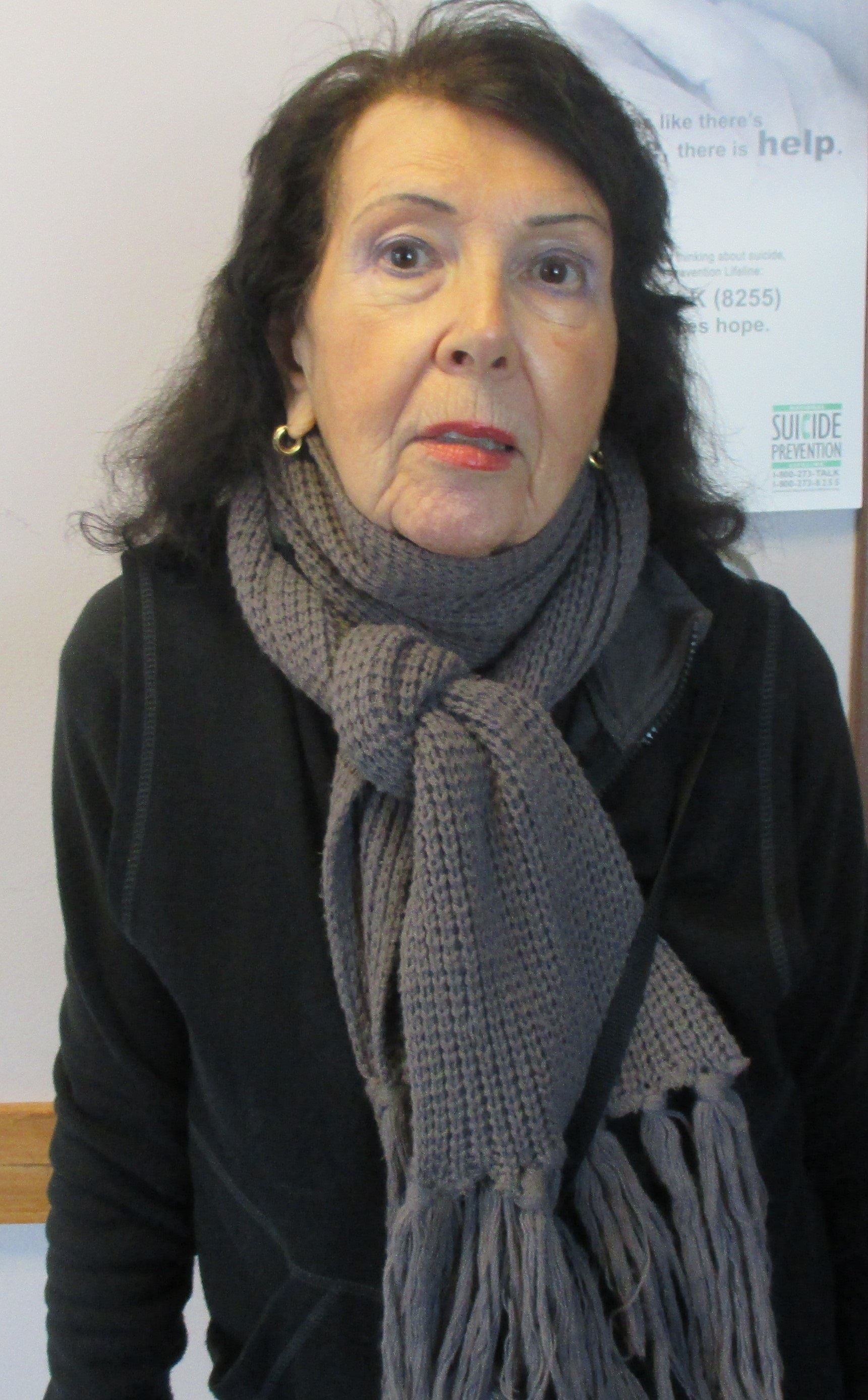
Can you believe it? January of 2022 is almost over. And unfortunately, a whole lot hasn’t changed from 2021.

I miss our monthly chapter’s Sisters in Crime meetings, and I fear this long hiatus has probably meant the end of this group. Our newsletter stopped and we’ve had no other contact. Another chapter I belong to has continued with Zoom meetings.

A local writers’ group I met with on a monthly basis is no longer meeting either, though members are in contact with one another.

The critique group I belong to is still meeting, but they meet at night, and at this time I need to be home to assist my husband in the evenings. However, a handful of us are meeting once a month at a local restaurant to enjoy each other’ company, have conversation, and have a nice lunch together.

I have been asked to be a speaker at a writers’ group on the coast, and it may be in person.

A women’s group here where I live has invited me to come to their regular meeting in May and tell them which of my Deputy Tempe Crabtree mysteries were inspired by real events. They are interested in the subject because that series is set in a town much like the one the members and I live in. I’m delighted and will bring copies of the books I’m going to tell about. Plus I’m invited for lunch—always a plus.

This tells me not to give up hope, things are changing, though at a much slower pace than I’d like. However, I’m grateful for what little is happening.

What about the rest of you? Are you seeing any signs of life getting back to normal where you live?

Marilyn

Photography and Plotting

I don’t ever think of myself as having writer’s block but I know that when I’m not sure about what comes next in the novel I’m working on, I tend to turn to photography and play with the camera and old photographs. Aside from my love of photography in general, I find this other art form stimulating in a way different from writing.

lately I’ve been going through old photographs, some dating to the 1930s taken by various relatives and a few dating to just the early 1900s when my grandparents were courting. My grandfather photographed as a sideline and occasionally sold photographs to Look and Life when they were new.  Granddad preferred the modern world—photographing machinery, industrial sites, and 1950s gas stations and fast-food joints lining a highway. My mother preferred landscapes. I like people and color. Granddad was a milk inspector for much of is career.

My family traveled around the United States in the 1940s, 1950s, 1960s, so I have photographs of us visiting various national parks, camping, riding, hiking, and, rarely, looking into shop windows. One summer we rented an RV and traveled up and down the Pacific coast, pulling up next to an RV from California or another western state. My dad often commented, “Too bad we don’t have a license plate from home.” He meant Massachusetts. Any time a park service officer found out where we were from, we were treated like celebrities. This was in 1959, when you could arrive at the Grand Canyon at five o’clock in the afternoon and find a good camping spot still available. 

Most of the photos from this trip are of magnificent canyons, mountains, lakes, and other scenery. We never had trouble getting a good view; there were few crowds and no cell phones—no one taking selfies but lots of people taking pictures of each other on the top of a mountain or paddling a canoe.

It’s an odd habit but photographers often take several pictures of the same person in different positions and poses at the same event, and save all of them, not just the best one. Sometimes the photographer takes three or four of almost identical images. In one instance I came across so many of the same person that it looked like individual cells from an old movie. 

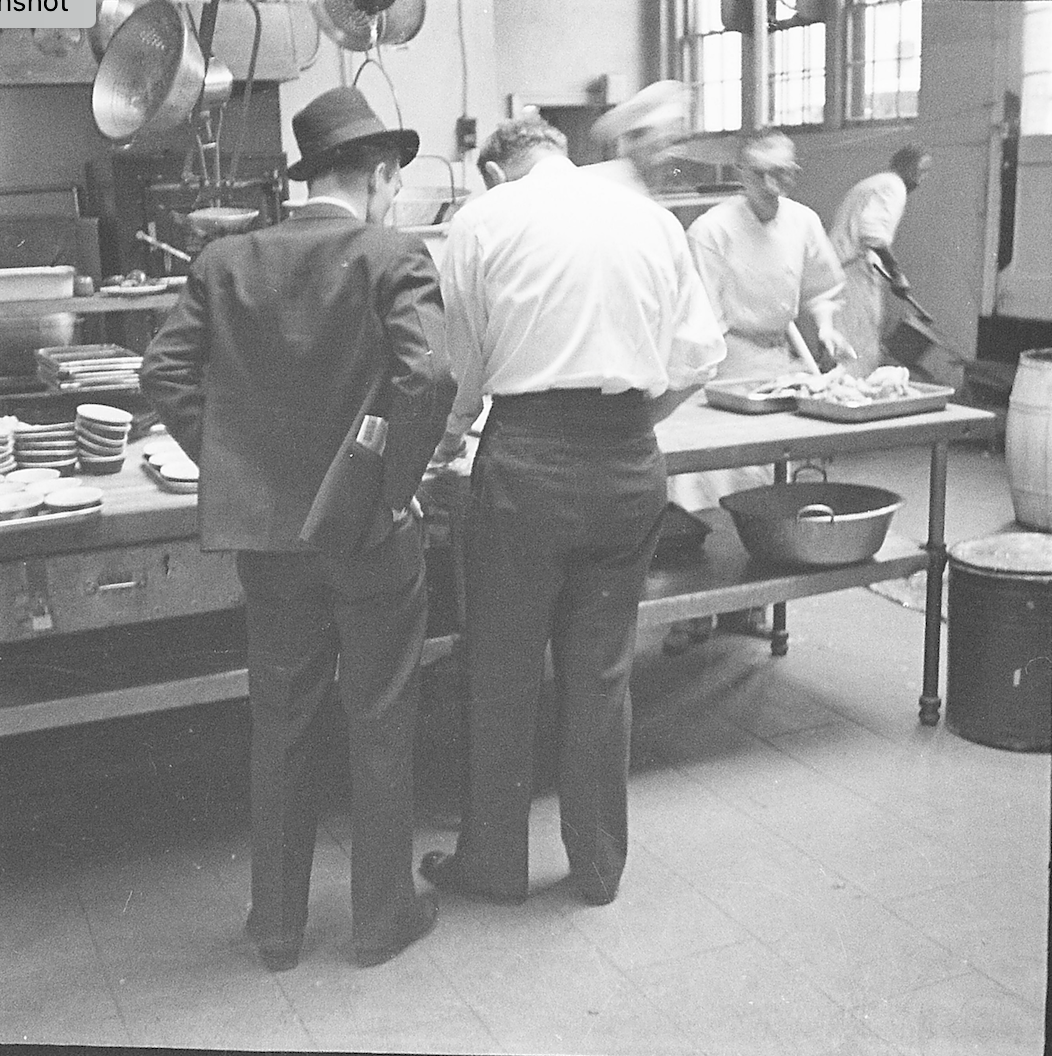
The images from the 1930s and 1940s are of people I didn’t know or know only through family lore, so I’m free to imagine their stories. I rearrange the images in different sequences, much like rearranging scenes in a mystery novel, and a variety of scenarios come up. I especially like the ones of my father chatting with new friends in Sicily in 1936, when my parents took an extended honeymoon to Italy and Greece. That’s Dad on the left.

After a few hours of this ideas for my current project start to bubble up and I quickly turn to taking notes. This afternoon, after feeling stalled about the ending though I was writing scenes that had to be written, I had a slew of ideas coming. I made lists of actions my characters had to take to get to the climax, each a scene by itself leading to the final confrontation. My attention is back on the novel, and I’m putting away the photography for another day. But it will be back.

Real Settings vs Fictional Settings

One of the important choices a novelist needs to make is whether to use a real or invented setting in a book. When this comes up, I envy science fiction or fantasy writers. Heck, just set the story on a made-up planet! Sure, you have to keep track of the rules you created to be sure your world stays consistent, but nobody is going to write to tell you that you didn’t describe the place accurately.

That can (and does) happen when you choose a real place as a setting. You may get readers commenting that there’s no way your character can drive from Main Street to Oak Boulevard in ten minutes, or that the turnoff to the waterfall is not at milepost 85. And if you mention a real business in your setting, you should check to make sure the owners don’t object to the corpse you’ve placed in their building, or they may complain that you damaged their reputation.

On the other hand, fictional locations can get you into trouble, too. My setting for Endangered was an invented park in Utah. One reviewer wrote “Fantastic descriptions! I can’t wait to visit Heritage National Monument.” Kind of embarrassing, when the setting doesn’t really exist.

So, I tend to compromise, using a real place for inspiration, then giving it a fictional name. (“No, I did not say the killer worked at Burger King, I said he worked at Burger Kingdom.” “Sure, in The Only Witness, the location of the gorilla compound may seem a lot like Ellensburg, Washington, but look again, those gorillas are in Evansburg.”)

Then, to make the issue more complex, setting includes not only place, but also time. And over time, things change. Now that I’ve been published for more than a decade, I’ve run into this time problem a lot. I recently read a good article (http://www.exactlywhatistime.com/other-aspects-of-time/time-in-literature/) that described four distinct time frames that will affect a book: author time (when the work was originally written or published), narrator time (when the narrator in a work of fiction supposedly narrates the story), plot time (when the action depicted takes place); and reader time (when a reader reads the work)

Ack! None of my books is historical, so each story is set in the “present,” and I’ve run into this time-tangle on multiple occasions. When I wrote Endangered , I did my best to incorporate state-of-the-art technology so my character could blog from the backcountry. Now all those gadgets are out of date. When I wrote my novel Backcountry, I was attending weekly country line dance lessons, and I set a pivotal scene in the dance club, convinced that this would help advertise the place. Around two weeks after that book was published, the club was sold and the name changed. Thanks to Covid, that club is now out of business. So much for using a real place for authenticity.

I also smack into this issue of author time vs reader time as a reader. I’ll be reading along and think, wow, this author is ignorant about recent events, then look at the copyright page to find that the book was published a decade ago. I hope my readers do that instead of choosing to believe that I don’t know what I’m talking about.

As a writer of suspense, I often run into problems with plot time in real settings. In my novel Undercurrents, those who are familiar with the Galapagos Islands may realize that there’s no way my character can get from this island to that one in only a few hours, but hey, I needed her to do that. It’s hard to maintain tension with a lot of travel time between islands, unless there’s a murderer on the boat.

My most recent Sam Westin mystery, Borderland, takes place along the Arizona-Mexico border wall. Sure, there’s a wall there now, but will there be a decade from now? This setting stuff is tricky.


My Desk is a Mess by Karen Shughart

This is the stage when I’m writing a mystery that if you visited my office, you’d gasp in horror. I’m usually very organized, but at this stage, my desk is a mess.

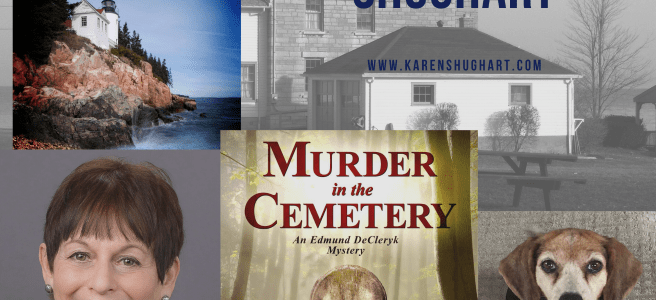
On the right are the first two books in my Edmund DeCleryk Cozy series, Murder in the Museum and Murder in the Cemetery. I use them as a reference for book three, Murder at Freedom Hill, because there are recurring characters: a newborn baby in the last book can’t be in elementary school two years later.

A thesaurus, usually on a shelf, claims space on my left. I’m forever scrambling to find synonyms for words I tend to overuse. It’s a weighty tome but a necessary tool, although the good news is that I recently had an aha! moment when I realized that with a couple of keystrokes and the click of the mouse, hello Google, goodbye Roget’s.  How easy is that?

That thesaurus, by the way, was published in 1962. My Webster’s dictionary in 1982. If you think that dates me, it does, think about how many words there are now that none of us who were alive 50 years ago could have imagined: truthiness; snowflake (not the one that falls from the sky); bestie; twerk. Not that I’d ever include those words in my books, none of my main characters is young enough to use them. Wait a minute, did I say 50 years? Has it really taken me that long to follow my bliss?

Photo by Pixabay on Pexels.com

But I digress.  Piles of paper surround me: bills I’ve received from vendors who still, after all these years, won’t send them electronically but that I, a modern woman, have  paid online; recipes I printed from The New York Times when I could have simply opened my phone or computer when preparing them; print-outs of outdated passwords; a receipt for our dog’s latest checkup; a flyer from the local carwash announcing its wash and wax specials.

I don’t like wasting paper. “Waste not, want not” –phrase origin 1576 or 1772 — depending on your source, is my motto. I write notes to myself on the blank sides to advance the story line, a timeline I never follow, names of new characters to remember, thoughts and ideas that come to me at 3 a.m., questions I have about historical details that are always part of the backstory and the reason for the murder.

There’s a system here, a method to my madness, and it works for me. Once I make sure my historical facts are mostly correct, change the timeline yet again, check for inconsistencies, discard ideas I had at 3 a.m. — what was I thinking — I cross the items off the list, rip the paper into shreds, and toss it into the recycling bin. Then the cycle begins again. Until I reach the point when the manuscript is sent off to my publisher, my desk will remain a mess.

Guest Blogger ~ C L Bee

THE GHOSTLY AND PARADISE TAXI – Book 1 in the 3 book series The Ghostly And Paradise Taxi is a mystery with no predictability, essentially a book for our time when no one knows whether they will survive another day.

From the first chapter with the heading “Remembrances of time past and present” the mystery of this cross genre Kindle eBook begins.  The unnamed  “he and she” are having a conversation, but I drop a few clues the reader can pick up when “she” indicates that finally, she’s written the first paragraph of the book she has always wanted to write.  And “he” asks whether she will use her pseudonym. Another clue for the reader to pick up comes when she asks him to read the first paragraph.  And the title of “her” book is the same as the title of this book.

The process of writing an intriguing mystery involves knowing how to plot a step by step  to parts of the puzzle.  For my book to have its twists and turns, early on in the writing, I keep a time line file in my head until I get the sense of how to move the plot and characters toward the denouement.  Sometimes I use a time line that is part of the chapter heading.  I want flawed characters to write about, because I am offering the reader a view of humanity, and as we know, no one is perfect.  In writing the book I’d like to read, I have to plot a way to move my characters toward a life changing experience, in other words, their epiphany, but some of us never learn, and those are the characters I want to receive a punishment apropos to their malicious intent. 

I know readers will enjoy solving my mystery along with me when I also wonder what happens next.  For me, writing is like tending the grapes in a vineyard.  To make certain my words are conveying the story, it’s like making fine wine, I know my story ends when all the pieces complete the puzzle, then I’m ready to send my manuscript to my publisher.   For years I wrote for editors who edited writers to “put a coat of polish” on the contents of their magazine or newspaper.  I wrote a popular monthly column entitled “Travel Agent Spotlight” for a travel industry magazine, but for the two years I had written the column, I couldn’t find one word that I wrote.  I finally told the Editor that I would send her a summary.  She told me to keep handing in my copy as usual, but I had an idea for a book, and I quit. 

Now, I’d like you to read my book, here is the Amazon Kindle url: https://www.amazon.com/dp/B09PYL8NDT?asin=B09PYL8NDT&revisionId=d39fd049&format=1&depth=1

As a bonus for the readers of Ladies of Mystery’s blog, you can read this book for free. 

My publisher is Kindle exclusive, and  Daccord Press plans to offer a free Kindle ebook promotion, the website is: 

https://www.daccordpress.com/

Use the link on the right of the Daccord Press website for the email contact, but if you are reading this blog, here it is:  mailto:daccordpress@yahoo.com  Ask to be on the email list and leave your email contact.  Daccord Press will send out an email to you with the “day” or “days” you can take advantage of this offer, all you have to do is put the url of the book:  

Claim your free Kindle ebook, if you don’t have a Kindle, download to your computer.

CL Bee is a former freelance writer who worked overseas and was based in Paris, France. Now she’s back in the USA and writing the fiction she didn’t publish during those years when she was freelancing.  CL Bee is currently at work on her first eBook, The Ghostly and Paradise Taxi Book 1, in the series The Ghostly and Paradise Taxi, published by Daccord Press, an indie small press.