Tools of the Trade

Back in the ancient times when I was first published, a question I frequently got at author events was whether I did my writing on a computer. Something about that query hinted that the person asking the question hoped that, if one somehow picked the right gizmo, it would function as the magic wand and one would be a successful writer.

I was always quick to disabuse aspiring writers of that notion. My answer was usually along these lines:

Hey, it doesn’t matter what tools you use. What matters is that you write. Get those ideas out of your head and onto paper, computer screen, whatever.

An aside – best advice I ever heard came from Edgar-award-winning author Julie Smith: Don’t get it right, get it written.

Still, it’s great to have the tools of the trade. Updated tools, if that’s what you want.

I’ve always used pen, pencil, and paper. Still do. Though more about that later. I am old enough that for me, graduating from a manual typewriter to a correcting electric typewriter was a big honking deal. And when I finally got a computer, well! Dual disk drive and those big five-inch floppy disks. That was an even bigger deal. No more retyping pages over and over and over again when I made changes to the manuscript.

Then there was that dot matrix printer, the one that had strips and sprockets on both sides of the page. The pages had to be separated and the strips torn off. Those were the days!

At the time, I had a rotund gray cat named Gus. He thought it was great fun to raid the wastebasket and festoon the apartment with all those strips. I mean, the whole apartment. Out of the office, down the hall, and all over the living room.

Getting the laser printer was a step up, even if it did take up a lot of space and I could barely lift the damn thing.

How things changed over the years. The huge desktop and monitor gave way to the smaller desktop and the flatscreen monitor. Eventually came the leap to the laptop. Which certainly freed up more space on my desk.

When the laser printer died of old age, I replaced it with an inkjet. Much smaller, and I could lift it without straining my back. Even the inkjet that I replaced a couple of years back was much heavier than the one I have now.

Those big floppies became smaller disks. Then came the hard drive, with lots of space. Flash drives! Nowadays, there’s the cloud – iCloud, Dropbox, Microsoft OneDrive.

Back in July 2019, I was walking down a sidewalk in front of the Oakland Main Library. Uneven sidewalk, and next thing I knew, I was face down on the pavement. I drove myself to Kaiser, more concerned about the skin scraped off the palms of both hands than I was about the increasing pain in my left arm. Sure enough, I’d fractured my wrist. Six weeks in a cast and two of those in a sling. I had a book due in September.

I’d never learned the Dragon software, where one speaks into a mike and the voice translates into words on the computer. Microsoft Word has a similar function but it needs training and I don’t have the patience for that, particularly when I’m on deadline. I wound up dictating lots of notes into my iPhone, finding the voice recognition to be much better. Hello, Siri! But I found out that dictating a work of fiction doesn’t work very well for me. I am definitely a fingers-on-keyboard writer.

These days, I’m writing away from home, more than I used to. Even at home, I frequently get away from my desk in the office to camp out on the sofa, with my laptop, lap desk, and my black cat Clio, who doesn’t understand why she can’t get on my lap.

I also have two terrific tools that work at home or away. The Microsoft Surface Go is my baby computer. It’s a small tablet with a cover that’s also a keyboard. The only problem is that I use a separate ergonomic keyboard at home and on my Go, I’m forever hitting that Caps Lock key.

My other favorite tool is a ReMarkable 2. It’s a tablet with a stylus. I can write in longhand on the screen and can even erase what I’ve written. I can send something from the big computer to the ReM2 and edit in longhand. I can sketch out the street map of my fictional town and draw a chart or diagram to show how characters, plot points, and settings are linked.
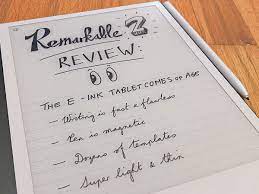
It’s a 21st-century update of my trusty lined notebook and pen. I love it and find it quite useful, using it at home and when traveling.

It’s always about the writing, of course. But the tools of the trade can really make it so much better.


The rights to the four most recent Jeri Howard books (Bit Player, Cold Trail, Water Signs and The Devil Close Behind) reverted to me when Perseverance Press closed its doors in the summer of 2021. As a tool of the trade to increase sales, I’ve have just republished those four ebooks with new covers that mesh with the nine previous books. Plus a box set, The Jeri Howard Anthology, Books 10-13.

Now if I can just get cracking and finish Jeri Howard #14, The Things We Keep!

Guest Blogger ~ J.R. Camelback

Although I’m a lady who loves writing international mystery thrillers, I write my international mystery thrillers using a male pseudonym, and I’ve built an “identity” for my writer, J. R. Camelback.  His photo is in shadow and I’ve made him a “Marlboro” kind of man, which is apparent when you read his bio.  Perhaps because I am a “lady” who writes international mystery thrillers, an unusual romance unfolds when the plot reveals love for the same person can take many forms, but this Kindle eBook Taking the Queen – a Caper Book 1 in the Prometheus Foster series has a plot leaving no doubt this is an international mystery thriller.

As readers discover in Book 1 of the Prometheus Foster series,  Taking The Queen – a Caper,Prometheus Foster is a flawed truth seeker who often creates confusion when he asks too many questions.  He and his partner Smarty Jason use their own special methods to solve puzzles involving a plethora of possibilities.  At times there is a certain rivalry between these two, former Washington Post reporters,  however, they join forces to unravel the curiously worded tip by a whistle blower who comes forward some fifteen years after the whistle blowing event takes place.  They need to seek the secrets hidden within the Freedom of Information Act (FOIA) documents, in files the FBI has only partially declassified.   The FBI’s awry sting scheme takes place right in the nation’s political cauldron Washington D. C. and in the nation of Singapore where political intrigues are a “winner take all game.” 

My multifaceted international mystery thriller has glowing Editorial reviews from the industry leading publications: “Kirkus Review”  “Publisher’s Weekly Booklife” and “Writers Digest,” citing a “…intriguing plot with many twists and turns…”  A reader who bought my Kindle book and left a 5-star review said: “This book convincingly melds international crime with a tale of determination to uncover an ugly truth. The plot moves fairly quickly thanks to the tight and focused writing. While many characters get mentioned, a journalistic duo propel the narrative. Prometheus Foster and Smarty Jason prove to be as interesting and memorable as their names, and their backstories would no doubt be a great subject for additional books. The author also adeptly connects this fictional story to real-life FBI headlines, further adding to the book’s realism. Taking the Queen is an unusually intriguing and satisfying read.” 

Taking The Queen – a Caper” Book 1 Prometheus Foster series has been produced as an Audible book, the Amazon Kindle website lists both the Kindle eBook and the Audible book is located at the link: https://www.amazon.com/dp/B08C79RJLP .

Taking the Queen: A Caper Book 1 in the Prometheus Foster series, features investigative reporter Prometheus Foster and Smarty Jason, former collogues at The Washington Post in this international crime thriller tale within opposing lenses of time, Foster and Jason join forces to pursue a whistle blower’s tip about a botched FBI counterintelligence operation hidden within the maze of investigative government agency files under the Freedom of Information Act.

J. R. Camelback

I do my outlines In-between IT security assignments, I conceive the plot with all the twists and turns as I ride the Arizona sacred hills trails. And I am a familiar figure known to all who live in a place sacred to Apache and Comanche Indians for their hunt on ground sacred to ancestors. I do seek to blend into the landscape of wherever I need to be to research the details that I am meticulous about.  In my photo, you will see me in my study where I have a bookshelf of books, and of course, my computer for the online sources I need to offer my readers an insight into the environment where the action takes place.  I am now at work on the draft manuscript of Book 2 in the Prometheus Foster series, THE WUHAN PUZZLE , this book straddles 2 mystery genres:  International Mystery & Crime:  Thrillers: Espionage, and I am placing Prometheus Foster in a plot that is swimming the boundaries of integrity to make him question his life’s purpose, and then I test his moral purpose amidst the rivers of circumstances when the life of his beloved wife, Marcy is at stake, she defines his humanity, THE WUHAN PUZZLE tests him in ways that brings him to his knees and in ways he’s never thought emotions sway.

PLEASE NOTE:  I am testing Book Covers for THE WUHAN PUZZLE and hope the Ladies of Mystery blog readers can tell me what they think of this one:

OR

The word “puzzle” in another font similar cover

Learning from Streaming by Heather Haven

With Covid looming everywhere, many are staying closer to home than usual. But maybe, as this is year 3 of Covid, that’s the norm. For most of us streaming is the new pastime, whether it be music, movies, documentaries, television specials or series. These days nearly everything can be streamed.

With streaming, as with anything else, you have the good, the bad, and the noteworthy. One of the things I discovered early on with the good and noteworthy is the ability to move things along. The writers or editors know how to insert necessary information without weighing the final product down. Seasoned screenwriters, in particular, have this knack. As a writer, I have found streaming to be a learning situation.

Regarding fiction, I love pilots. The promise of what’s to come unfolds before us in 30, 60, or 90 minutes. Characterizations, backstories, wants, goals, and conflicts are thrown out to the viewer in an orderly manner. Successful screenwriters usually know what to spill right up front and when to hold it back. I try to learn from that. But as I pound at my keyboard, there’s no producer reminding me of the production costs for each scene. I often have the luxury of forgetting. I don’t think the reader does, though. I think they approach each book wanting the same economy of delivery. And I have to say, when I do write in a similar way, the novel does turn out a little better. So hats of to screenwriters.

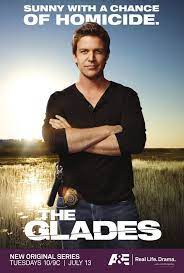
Except I have a bone to pick with some of these guys, especially the ones writing a continuing series. Take the The Glades, my latest binge-watched series. The Glades aired from 2010 to 2013, but only recently came to my attention (I am often a day late and a dollar short). Putting aside it is a tongue-in-cheek crime drama, it takes place in southern Florida, my home turf. Frankly, I miss the sunshine state, the humidity, palm trees, even the alligators. I can live without Palmetto bugs, but then, nobody’s perfect. The locale (Ft. Lauderdale) and the mystery sucked me in hour after hour. And it didn’t hurt to have a cute Australian actor playing a smartass American cop with no social skills, whatever, who recently moves from a northern big city to a small Florida town. This cutie instantly antagonizes every person he runs into but gets the job done like nobody else can. The lone wolf. Of course, he becomes less of a loner as time goes by. I became very fond of him, the surrounding characters, and even the fake town of Palm Glade, itself. There were 4 seasons, each season ending with a cliffhanger. From the writers’ point of view, it’s a guarantee the viewer will be back to see what happens at the start of the new season.

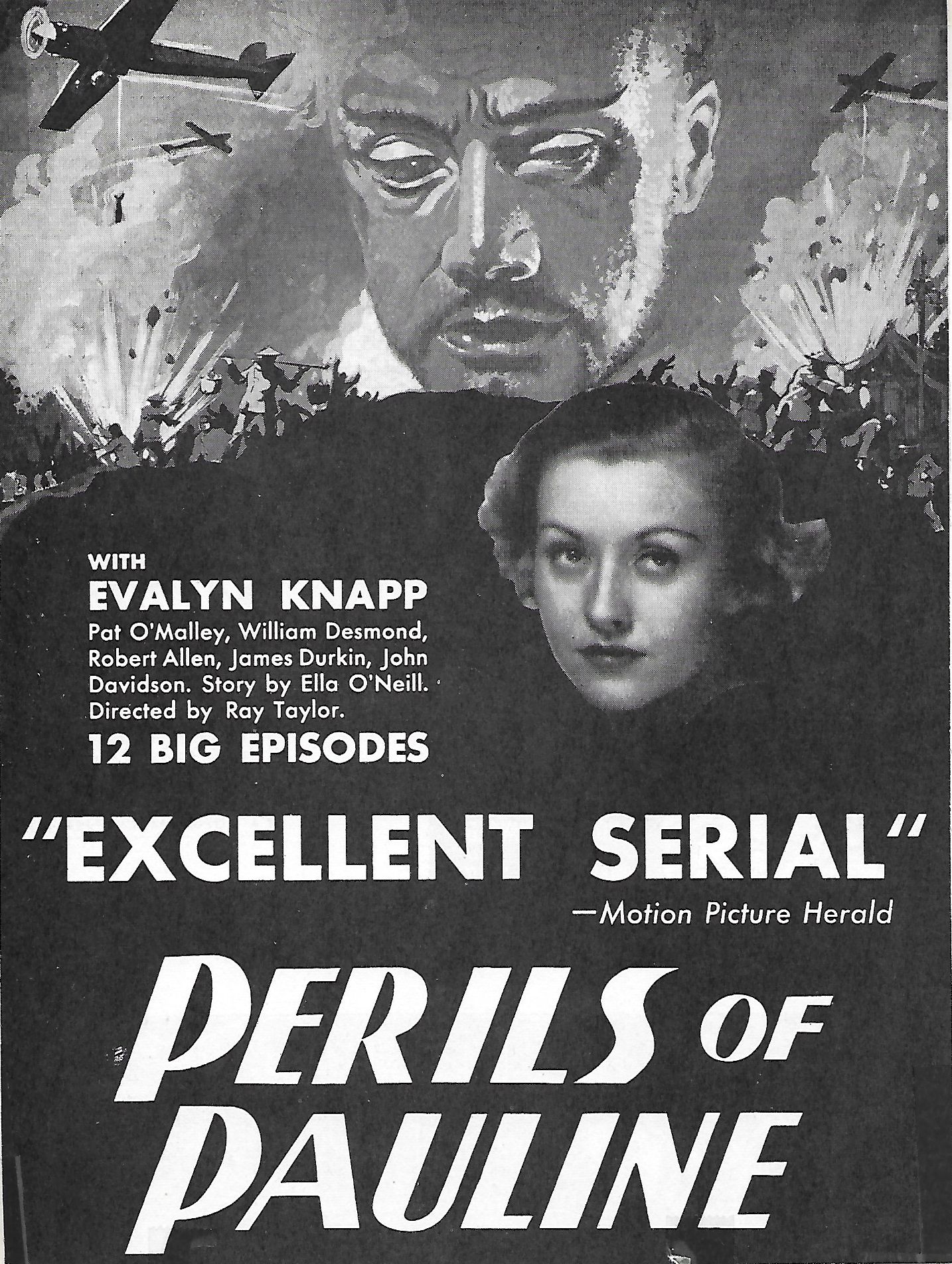
This is nothing new. It’s done all the time. It was done in 1933 with a 12-part serial called The Perils of Pauline. However, the screenwriters knew when it was going to be over, and tied the final episode up with a happy, pert little bow. Not so with The Glades. And here, if someone plans on watching the series, is where you should STOP READING.

Imagine my surprise when the last episode of the last season ended with my cute Australian actor getting shot and killed on his way to his own wedding. He makes a pitstop to throw rose petals around the new home he’s bought as a surprise for his new bride. And there he is shot dead, mid-throw. And here I am, devoted to my finally-got-his-act-together-starting-a-new-life hero and he’s shot in the back and chest with a bride and his family waiting for him at the church. I was shocked, devastated, almost dropped my bowl of popcorn. This is not how I wanted the series to end. It wasn’t very tongue-in-cheek, it came out of nowhere, and just hung there, seriously wanting.

Now maybe the writers had thought season 5 was coming up. Cliffhanger, donchaknow. Or maybe the actor wanted out of his contract and this was his punishment. You can never come back no matter what, dude, because you be dead. But I felt like I was the one being punished. Then I remembered a home truth for most of us writing lighter-weight mysteries and suspense, no matter what the media. You want to surprise your reader/viewer, not shock them. You want to have them say, ‘aha!’ not ‘what the hey?’ At the end of it all, the reader/view should feel satisfied. So here was another good reminder for me of what not to do.

But I will move on to another story, other characters, and other conflicts because I love streaming.

Guest Blogger ~ Millicent Eidson

Microscopic microbes that kill—those have been my life’s blood for forty years as a veterinary epidemiologist with state health departments and the Centers for Disease Control and Prevention. Now focused on communicating public health through creative writing, I’ve published ten shorter works and the first novel of my alphabetical series, “Anthracis: A Microbial Mystery.”

Epidemiologists used to joke that everyone thought we were skin doctors. Now in the age of COVID, much of the public is sick to death of public health pronouncements. But there are enough people who are fascinated by the science and inside story of how diseases are routed out and conquered. The West Wing immersed us in the personal and professional challenges for public servants in the White House. The MayaVerse provides a backstage pass to veterinarians in public rather than private practice.

Medical thrillers usually have physician pathologists as the heroes, but medical detectives can include veterinarians specializing in zoonoses, diseases transmitted from animals. “One Health” is the concept that humans, other species, and the environment are intricately intertwined. Ignoring one part places the others at peril.

The MayaVerse is the world of Dr. Maya Maguire, a young veterinary epidemiologist starting her first assignment as part of the CDC shock troops called Epidemic Intelligence Service Officers. I had the honor of beginning my own public health career as an EIS Officer, and my creative writing is inspired by my mentors, peers, and successors. Maya is partially modeled on my daughter, adopted as an infant from China. She’s been a close collaborator at creating the story of a ‘fish out of water’ growing up Asian in the American Southwest.

The author Edward Abbey said that our definition of beauty is formed by the land imprinting our brains during childhood. I bless my good fortune for growing up in Arizona. No place on earth is more spectacular to me than the Sonoran desert.

With climate change scorching the earth and increasing asthma-inducing wildfires, my retirement home is along the gorgeous shores of Lake Champlain in Vermont. However, the Southwest still has my soul and is the initial setting for the MayaVerse. In the second novel “Borrelia” to be published June, 2022, Maya’s investigations into this squiggly spirochete will take her to Europe, and the fifteen years of her life until “Zika” will take us all on a worldwide adventure.

Shorter works, many available for free at HOME (drmayamaguire.com), provide some prequels and side stories for lively secondary characters. Those who sign up for my Reader list will be emailed the e-book and pdf versions of my award-winning short play “Monuments,” which dramatizes a fictional encounter in Santa Fe’s Plaza inspired by real-life controversy over its phallic monument.

 “Anthracis” is published wide so available through bookstores, libraries, and multiple online sources including Amazon. Links for the e-book, paperback, hardcover, and large print versions are available at ANTHRACIS (drmayamaguire.com). Please join me on this grand adventure through the microbial world!

Anthracis: A Microbial Mystery

In the hottest summer on record, the spectacular southwestern desert is alive with Bacillus anthracis spores. Maya Maguire, new veterinarian with the Centers for Disease Control and Prevention, battles the largest anthrax outbreak in U.S. history.

Despite lingering trauma from a childhood accident, Maya’s confidence builds with a supportive team of passionate physician Manolo Miranda and enigmatic veterinarian Dave Schwartz.

But Homeland Security and the FBI are suspicious when spores match Dave’s home Texas Triangle of Death. If Maya can’t find the source, thousands may perish. Anthracis takes us to the front lines with scientists betting their lives on the investigation outcome.

Buy Links: https://drmayamaguire.com/anthracis

MILLICENT EIDSON is the author of the alphabetical Maya Maguire microbial mystery series. The MayaVerse at https://drmayamaguire.com includes prequels, “El Chinche” in Danse Macabre and “What’s Within” in Fiction on the Web, and a side story, “Pérdida” in El Portal Literary Journal. Author awards include Best Play in Synkroniciti and Honorable Mention from the Arizona Mystery Writers.

Dr. Eidson’s work as a public health veterinarian and epidemiologist began with the Centers for Disease Control and Prevention and continued at the New Mexico and New York state health departments. She is a public health faculty member at the University at Albany and the University of Vermont.

Millicent discusses her first novel “Anthracis: A Microbial Mystery” at Microbial Mystery Author Dr Millicent Eidson on Big Blend Radio – YouTube.

She can be found on Twitter, @EidsonMillicent, and Instagram, @drmayamaguire.

Curious and Curiouser

Don’t you love starting a new book? A new series? I do. It is the blank page of it all that is both delightful and daunting. As I considered my next series, I asked myself what stories I wanted to tell, why, what I could bring to it, would it be in the present or be about the past. Where and when would it all take place? Its questions like this that drive me down the rabbit hole of research, disappearing for about two weeks then reappearing with either a plan or holding a handful of rabbit fur and spitting dirt. If spitting dirt, I realize I took the wrong tunnel and head back down again.

This time, I emerged from the hole with an idea for a series about a spunky boarding house owner and a newspaperman in a small village in northwestern Illinois. The series begins in 1876 the year a big city company built a boilermaker plant on the wrong side of the tracks.

I was born in such a town, one that happens to have a wonderful Historical Society with a fine website that includes the police logs from the 1870s, select daily newspapers and the 1876 city directory with business advertisements. Wonderful reference materials filled with future plots. The newspaper was a bi-fold sheet that included local news, crimes, socials, births, deaths, and church services. The real story in between the lines is the friction of growth, of newcomers, of illness, of drought, and the pain of unpredictable accidents. To gain an understanding of the times, I researched mining coal walls, building boilermakers, the effects of the railroad on growth, raising and shipping livestock (specifically hogs), the effects of the Civil War and Reconstruction on the country, and how all these effected the tiny, Christian communes clinging to their beliefs and way of life that littered northwestern Illinois.

As the town migrated from farming to building boilers that changed the world, mining coal, and making wagons, men set adrift by the War and families seeking work arrived looking for a place to call home. Mind you, in the 1870s there was no village water, sewer, or other infrastructure to support the growth, not to mention building codes. The law was a Constable riding a circuit that included the burgeoning town. Expecting the growth to continue forever, the village Trustees had big plans for it.

The town in my books has a lot in common with my hometown but isn’t, which in no way negates the responsibility to accurately portray the times. It is bucolic with big park, a growing restlessness, surging growth, and lots of potential for mayhem. I get to pick my plots, research endlessly, check 1876 appropriate word usage (it seems every other sentence), discover (serendipitously) that the Pinkertons had a famous female detective working out of Chicago, that both the Winchester ’73 rifle and the Frontier Colt revolver used .44-40 cartridges, and that every day of the week had a purpose and if skillful a woman might have all day Thursday off from her chores.  (Yes, that was one sentence.)

Don’t forget the proper clothing, culture, and morays — if I weren’t a writer, I’d be a research librarian — oops, did that in college, though far too briefly. I conclude that mystery writers need a passion to learn, access to the internet, to donate to Wikipedia from time to time out of guilt, and permission from themselves to order weird books such as Miss Beecher’s Domestic Receipt Book and The Doctrines and Discipline of the Methodist Episcopal Church, 1876. Add to the above requirements a brain that plots, conspires, considers motive, and psychology and off you go into the land of the curious and curiouser hopefully to emerge 70,000 or so well plotted, entertaining words later.