Conformity – Celebration or Curse?

by Janis Patterson

There is a plague spreading through my neighborhood and no, I don’t mean the recent Covid Crazies. This new assault is visible, concrete and sublimely ugly. I live in a nice, mid-century development of nice, middle-class custom homes, mostly single story and at one time all of natural brick. The different hues and shadings of the different bricks were beautiful, and one of the most appealing facets of the area. A former cotton field, this was starkly bare land when my parents first built this home, but as people moved in they planted trees and now we live in a forest of towering trees, mainly oaks and crepe myrtles, some twice as tall as the houses they shelter.

But that is changing, and not for the better. The soaring price of real estate and congruent punishing taxes has priced a lot of the old residents out of their homes, many of which have been snapped up by developers and flippers. (My thoughts on these two categories of humanoids are not suitable for public pixilation!) Sadly, the result is that our neighborhood is subject to both the denigration and degradation of conformity, and the lovely old brick is being covered by thick layers of paint with no shading, no personality and definitely no taste.

Painted almost exclusively a dead flat white or a dark, depressing grey, these once beautiful and individual homes now resemble nothing so much as the love child of Soviet brutalist architecture and a rogue box of Legos. In the setting of gracious old trees and carefully tended gardens the result is not only ugly but jarringly distressing.

One of the flippers proudly said the painted brick trend was new, modern and made a more cohesive neighborhood. He then asked me what I thought of his newly decorated grey lump, whereupon I asked him did he mean other than the fact it was hideous? Hmmm… even in this riotous real estate market the painted brick houses seem to be moving more slowly than the traditional brick. Perhaps the concept of good taste may be taking a beating, but is not yet truly dead.

So, you are doubtless thinking, has this woman lost her mind? What does this have to do with writing?

I fully believe there is such a thing as synchronicity amongst human beings. Bringing individual architecture (and remember, this is a neighborhood of custom-custom houses, each individually designed and built) into a fast (and relatively cheap) homogeneity in order to appeal to the (theoretically) vastest amount of people is a form of seeking the lowest common denominator with no thought or regard for individual tastes. The same thing happened in publishing.

Remember before the tsunami of self-publishing became practicable? Remember the pigeonholes of genre fiction? The ever-tightening pigeonholes as dictated by traditional publishing? If you didn’t write to their exact specifications you didn’t get contracted. They always wanted (and I quote) “… the same as (insert name of currently popular author here) but different…” Forget creativity. Forget individuality. Conformity at all costs. I can remember when some publishers even put out tip sheets, dictating what should happen in a manuscript almost to the exact page.

Now I understand that traditional publishers have to make a profit – that is right and natural – but don’t the readers have rights as well, mainly the right to read whatever permutation of fiction they want? If the trads dictated that Regency romance is to be super-sexy with only the barest nod of the head to history, what happens to the reader who finds written sex boring and is fanatic about historical accuracy? Or vice-versa? What about in mysteries the dictum that a dead body should appear in the first chapter, the closer to the first page the better?

Thus self-publishing was born, and thank God for it! It has freed writers to write what they want and get it before the public, and given readers to find the exact kind of book/genre they want. Sexy psychic vampire nuns on the planet Zeon, anyone?

Yet a certain conformity has crept in there, too, as more and more writers write to market. If talking cats who live in a needlework shop and solve crimes with their telekinetic powers are suddenly big, there are star-chasing writers who will writer them, often with widely varying degrees of both success and ability. At least there will always be variety, no matter if some constantly try to write to market without regard as to if the market is right for them or not.

Also the indie author is getting shafted by more and more pirates/thieves and are even getting short shrift from the sales outlets which make money from their sales. Amazon has a monthly subscription program for readers called Kindle Unlimited, which it pushes far more than books that are ‘wide’ – i.e., available from other retailers. A self-published book written by an unknown can be so far down in the algorithms that even with a search for the exact title and author you might have to go 10 or 15 pages in to find it.

For a self-published author to be in KU they must be totally exclusive to KU, and woe betide any lone outlet which has been neglected to be removed by any retailer, no matter how small, distant or obscure. The writer will have that book pulled instantly from KU and even runs the risk of having his entire account and all his books cancelled.

Nor does it stop there. Unfairly, traditional publishers can put a book into KU even while keeping the title wide. Here conformity only seems to affect the independents. There are also pricing/payment options available to the trads that are denied to self-publishers. I cannot help but wonder if the trad books on Amazon are as plagued by the buy, read, return, refund plague which afflicts self-published books – and their authors’ incomes,  but that is a rant for another day.

We have come a long way from the tastelessness of painted brick to the pitfalls and traps of self-publishing, but it is all part and parcel of the curse of conformity which seems to be infecting our land. America was founded on the right to individuality and self-responsibility, be it business, bricks or reading material. Celebrate this by supporting your courageous and dedicated self-publishers. Go buy one of their books today. You’ll enjoy it.

The Art of Getting it Right

Last month I participated in a month-long online workshop/class about law enforcement. It was taught by a veteran policeman who had worked in several places and organizations and enjoys helping writers get it right.

He started the class with an actual case report of a murdered woman. We read it and then asked questions, which he answered very thoroughly. He told us what the police had to do by law at the scene and what they could and coudn’t do while talking to people trying to gather information to help them catch the perpetrator.

We went through processing a crime scene and saw actual photos of the scene. I had a barebones idea of what took place but had left out a few steps when my characters have come across a body. However, I was happy to hear that when a homicide happens the detectives or whoever is working on the case can and do work non-stop the first 48-72 hours. They take short naps and go home to change clothes, but they stay on the evidence because there is that small door of opportunity to gather all the information that could help them apprehend someone. I have had Gabriel Hawke work nonstop on murder cases. I had made it his need to find the truth, but it appears is what a good detective does.

The evidence in the case of the homicide we were “working” pointed to one of the victim’s sons. But several of us, me included, felt it was too easy. Yes, our red herring minds were trying to find ways to make it stick to someone else. Even when all the evidence clearly pointed to the person that was eventually arrested. He even confessed in his own way.

The instructor said that few murder investigations and homicides are as convoluted as writers of TV shows, movies, and books make them out to be. The need to make motives and means hard to figure out are the writer’s way of entertaining the reader. In real life, if the evidence is pointing to one person, it is usually that person. It’s just a matter of the detectives gathering enough to make a solid case and the icing on the case is getting that person to confess.

Something I have had happen to me several times while on jury duty. Once the evidence is all lined out against the accused, they will plea out, sometimes at the last minute, (as when we were waiting for a trial to start and were dismissed because the person plea bargained). The instructor said, that happens the most when the accused has confessed during an interview. The interviews are taped and once a jury sees the person confessing, they are going to be found guilty.

I enjoyed that the instructor was so willing to answer questions for our books and help us with law enforcement questions. I have asked this person questions before on the crime scene email loop I’m on. If you would like to join to ask questions of retired and practicing LEOs, lawyers, forensic pathologists, FBI, DEA there is a person on the loop from just about any entity you might want to ask questions to get your scene or scenario accurate. Crimescenewriter2@groups.io

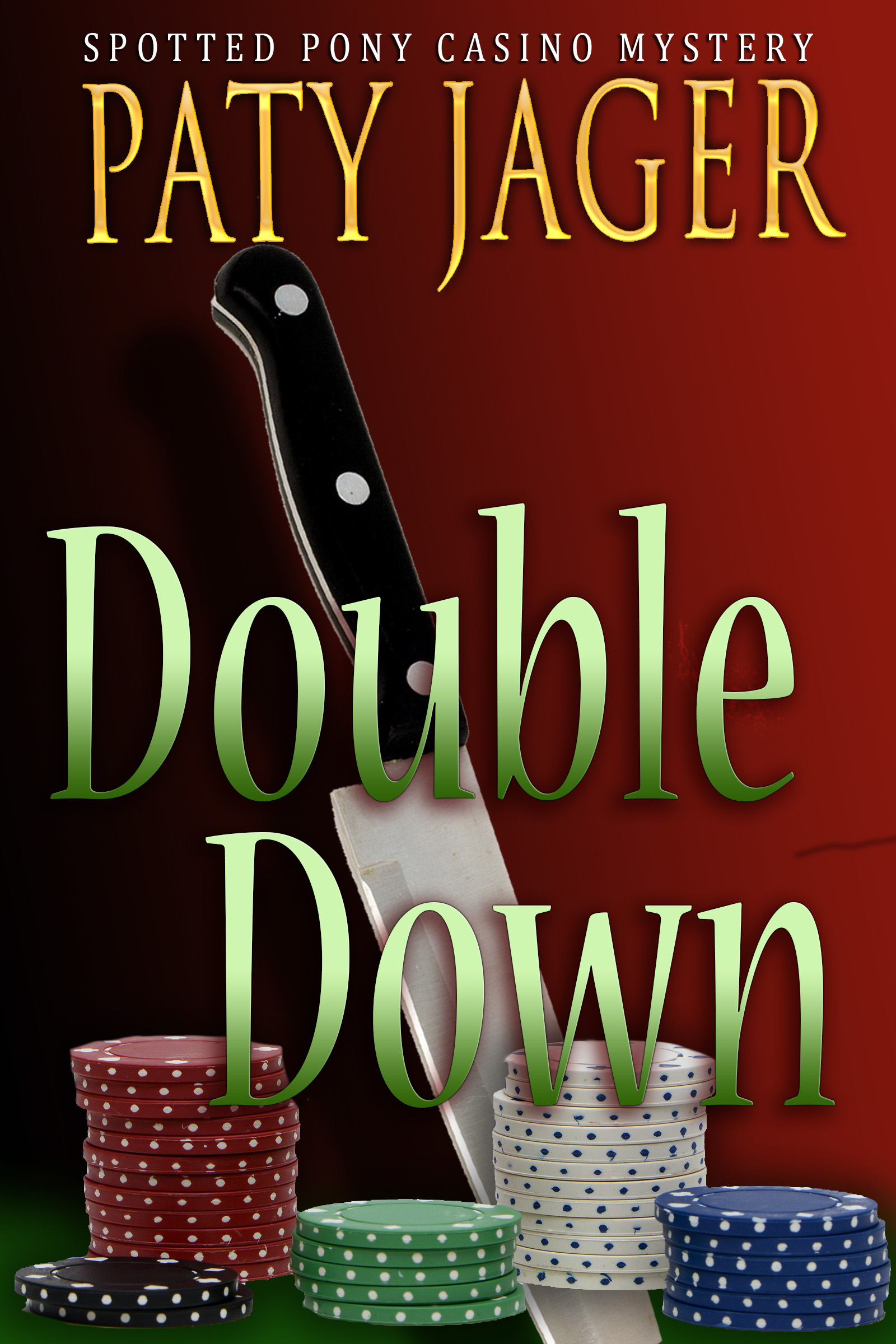
Besides knowing what I need to about the legal side of things for my mysteries, I also like to go to the area where the story I’m working on is set. I recently watched security guards at an Indian run casino and did a walk around the tribal police station in my Spotted Pony Casino Mystery series. In June I’ll be traveling to Montana to walk through a resort that will be the jumping off spot for the next Gabriel Hawke book and I will be taking a couple trips into a wilderness area near the resort to discover what it is like to better write that story.

What can I say, I like to make sure I not only entertain but I enlighten as well.

Guest Blogger ~ Darlene Dziomba

I have always had a love of animals. My parents would good-naturedly complain that wherever we went, I had to pet every dog I saw. Half a century later, things have not altered. My volunteer work at the Animal Welfare Association has me close to numerous dogs and cats. As I scrub one kennel, I chat with the animals in neighboring kennels.

The idea for Clues From The Canines came from the experiences I had and the staff I met during my volunteer shifts. I thought that by creating characters whose days centered around working to find homes for animals in shelters, I could raise awareness of the efforts made on animals’ behalf.

When I crafted the protagonist, Lily Dreyfus, the piece of me embedded in her personality is an introvert who loves animals. There are numerous scenes in the book where one finds Lily talking to either the animals at work or her two dogs at home. Her friends criticize her for spending more time with animals than she spends with humans.

The time Lily spends with animals leads her to a new love interest. She even considers that she has found her soul mate. Lily met Pete when he came to the Forever Friends Animal Shelter to adopt a dog to aid him in coping with the PTSD he suffered from post-military deployment and the despondency he feels after losing both parents in a tragic auto accident.

Pete uses outings with his dog to get to know Lily. They have an accidental meeting in a park, and Pete asks Lily to join him on a walk with his dog. He suggests a stop for ice cream after the walk. Eventually, he summons the courage to ask her to dinner.

Their different family experiences draw them even closer together. Pete is an only child with a small extended family; and Lily is the oldest of four children. Her parents were active volunteers in the children’s school, and they made friends with other parents. She relays stories of multi-family trips to parks and beaches. Pete realizes that a lasting relationship with Lily will provide the sibling experience he did not have as a child.

The hope and promise of the relationship are brought to a screeching halt. Pete is found dead. Lily’s world is shattered. Her friends and her dogs help her pick up the pieces and sniff out a killer.

Clues From The Canines

Set in a small town in New Jersey, Clues From the Canines combines witty dialogue with tension and intrigue.  Lily, the Adoption Coordinator at the Forever Friends Animal Shelter, is stunned by the news that her physically fit, former Marine boyfriend is dead. When the police rule the death a homicide, Lily, spurred on by grief, resolves to sniff out the killer. She gathers her pack, both human and canine, to point police to the perpetrator.

The canine pack competes for the alpha position, their owner’s attention, and extra treats, while the human pack doggedly seeks out justice.

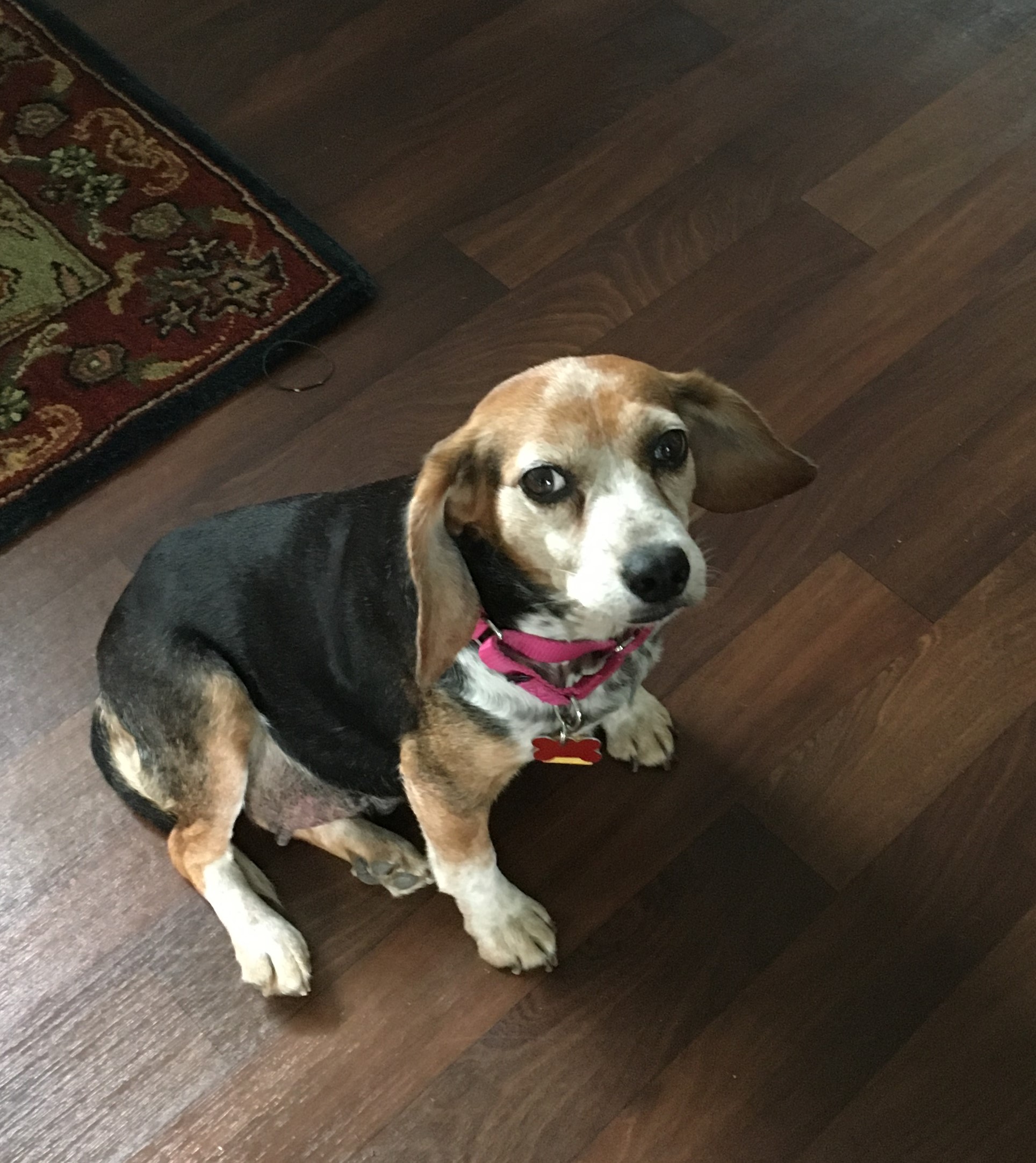
Darlene Dziomba debuted the Lily Dreyfus Mystery Series with the release of Clues From the Canines in March 2022. The book is currently being read on four continents.  Darlene volunteers at the Animal Welfare Association, a New Jersey animal shelter, where she chats with the dogs while completing her assignments. She has a 30-year career in Finance at the University of Pennsylvania and is an avid reader, gardener, and traveler.  Darlene is a member of Sisters in Crime and lives in New Jersey with her four-legged best friend, Billie.

www.ReadDarlene.com

@ReadDarlene1

facebook.com/read.darlene.7

ReadDarlene@hotmail.com

The Immortality of a Cat by Heather Haven

Tugger, the real cat

Years ago, when I began writing the Alvarez Family Murder Mysteries, I knew I wanted to include my cat, Rum Tum Tugger, because I adored him so. At the time, I didn’t know about the plethora of cat mysteries out there. But, of course, when I started writing back in the early 90s, there may not have been so many. Nonetheless, I can’t believe how stupid or unread I was. But at the time, I was only familiar with Lillian Jackson Braun’s cat series, The Cat Who…. Lillian Jackson Braun wrote about two Siamese cats owned (if anyone can own a cat) by a middle-aged, burly ex-reporter of the male persuasion. I never for one minute thought a cat being in a mystery series was a common thing. As I say, stupid! In a way, I’m glad I didn’t know there were so many mystery books with cats. I might not have included Tugger (and now Baba, as well) in the stories and I think they add a lot.

Several screenwriters I know have mentioned that when they write an anti-hero kind of story, they have to make sure the anti-hero Saves The Cat. Danny Glover and Mel Gibson did just that in their first Lethal Weapon movie, where they pulled a cat out of building right before it was blown to smithereens. If you think about it, it’s done all the time. It’s even talked about in an article written by the Coen Brother’s character, Llewyn Davis, in the Guardian, if you care to read it. As he says, once you recognize the formula, you see it everywhere, from Sigourney Weaver in Alien to Marlon Brando in the opening scene of The Godfather.

Tugger on the book covers

But that’s not why I did it. I wanted to have fun with my own cat, Tugger. I wanted to have him be a part of my writing experience. Now that he’s gone, having him in the stories even means more to me. For a few brief moments he’s alive again, running, jumping and leaping, getting into all sort of mischief, and being just as loved. For a short time, I can almost hear him purr and smell his powder-puff fur (he was the most fastidious and cleanest cat I ever met). People ask me if I will ever stop writing the Alvarez Family Murder Mysteries. The answer is a resounding no, if for no other reason than Tugger is alive again, if only in my mind and heart.

Alter Egos and Alternate Lives

Oakland private eye Jeri Howard has now sleuthed her way through 14 (almost!) books. When I started writing the series, a friend often referred to Jeri as me. I would correct her, saying Jeri is a fictional character.

Jeri is taller, fitter, and more likely than me to put herself in harm’s way, all in service of solving the mystery and finding justice. She’s not aging at the same pace that I am. It’s been 32 years since the first book, Kindred Crimes, was published. Jeri is still in her thirties. As for my age—well, never mind.

Truth be told, there’s a lot of me in Jeri. I like her stick-to-it attitude when she’s digging into a case, determined to see it out. While that determination doesn’t seem to work when it comes to decluttering my condo, it did regarding my plan, hatched in junior high school, to become a published writer. And ongoing plans to keep publishing.

Jill McLeod, my crime-solving Zephyrette, was born in the late 1920s and is working on the train known as the California Zephyr in the early 1950s. As readers learn in Death Rides the Zephyr, Jill majored in history at the University of California in Berkeley. She was planning to get married and teach school, but those plans were derailed when her fiancé was killed in Korea. Instead, she rides the rails.

Jill remembers World War II and the Korean War is still in the headlines. My knowledge of WWII and Korea comes from books and research, but I was alive during the Vietnam Era. These days I travel by plane, but as I did research for the Jill books, I became a rail fan. I enjoy train travel, though Amtrak bears small resemblance to the California Zephyr of Jill’s era. Jill and I do share curiosity about the world around us and a desire to get to the bottom of things.

Kay Dexter is the protagonist of The Sacrificial Daughter. She’s a geriatric care manager in a fictional city in Northern California. Alter ego or alternate life? Maybe. I don’t live in that town or work as a professional care manager, but in the past twenty years, I’ve experienced some of the things that Kay sees. I’ve helped with aging parents and observed a lot with aging relatives and friends. I have plenty of stories.

In my novella, But Not Forgotten, semi-retired reporter Maggie Constable attends her 50th high school reunion, where she sees a poster listing the names of deceased classmates, as well as the dates and causes of their deaths. Her best friend Fern is on that list, but with a question mark next to her name. Fern disappeared after graduation and Maggie is determined to find out what happened to her friend.

I saw a similar sign at my own high school reunion and asked myself, “what if?” Maggie and I both went to journalism school at the University of Colorado and both worked at small town newspapers in Colorado after graduation. However, I joined the Navy as a journalist. Maggie moved to California and worked for the San Francisco Chronicle in the 1970s. In fact, she puts in an appearance in the Jeri Howard novel I’m working on, The Things We Keep, and tells Jeri, “I started working for the Chron in 1974, just in time for the whole Patty Hearst circus.”

Two roads diverged, as Robert Frost wrote in The Road Not Taken.

Perhaps Maggie is me in an alternate life. I took one road and she took another. Stay tuned! Maggie will appear in future projects.