Books and More

Like many others in my circle, I am in constant conflict with the standards of my culture. Collecting. But then disposing. 

This morning, after having coffee with a good friend, I stopped at the library to collect two nonfiction books I’d put on reserve and pick out one or two mysteries to read. This is a pretty normal visit for me—I usually leave with two fiction and two nonfiction, and keep them for the full three weeks, if not one or two more. I like to try different writers, so I’m usually in the New Fiction section, and the same is true for nonfiction. This doesn’t mean I have no books at home to read. Quite the opposite. Every room has books in it. But I’m one of those people who find going to the library a necessary activity, and borrowing books is about more than finding something to read. It’s partly the activity of discovery and partly the pleasure of just being around so many publications.

But I have a lot of books at home. And over the years thousands more have passed through my hands, rested on my shelves, been read and shared and reread, until one day I decided it was time for them to move on. It occurred to me today that I have no idea why a book suddenly comes to the end of its visit. Do I need the space? Of course not. There’s always room for more. Have I changed? Possibly.

One small shelf is dedicated to the books I had as a child and which have survived numerous cleanings-out. Another equally small shelf is dedicated to a few I kept from my teen years, including Conrad Richter’s trilogy and The Gloucester Branch by John Leggett. Another dozen or so are integrated into general fiction and nonfiction, but those that seemed to be seminal in my development as a writer are held discretely apart, and every few years I ponder the prospect of donating them to the library or a thrift shop with a book section. But it never seems to be the right time.

My mother, another reader, kept her Girl Scout’s uniform and another few dresses from her early years. I found them in the back of a closet after she died. My father never kept anything that could be recycled for those of greater need. A businessman since the age of 15 (this was before World War I when such was possible), his wardrobe was spare to say the least. My closet is more like his than my mother’s, and I avoid associating with anyone who might invite me to an event for which I would be expected to wear a fancy dress. You can’t take a book to something like that and read, so why would I go?

What else do I keep? Art. My walls are a record of the eclectic tastes of me, my husband, his family, and mine, not to mention our grandparents and other relatives. Furniture doesn’t interest me, though I concede its usefulness. I’ve disposed of plenty over the years.

I am convinced that any American dropped into any town or city on earth will in a matter of weeks have too many possessions to tolerate and have to set out weeding and recycling. And yet every day, on TV, the radio, in junk mail, we’re urged to buy more. As a good member of the larger community and culture, I comply and buy more books.

That’s 588 words on a topic I haven’t figured out yet. Sometimes as I sit at my desk, fingers poised over the keys, I wonder what I’ll write about. I look across the room, or to my left, at all the books piled up, sometimes neatly arranged, and I wonder about all those words. So many. Surely I have something to say about them. Then, again, maybe not. Except that they’re old friends and I can’t imagine living without them.

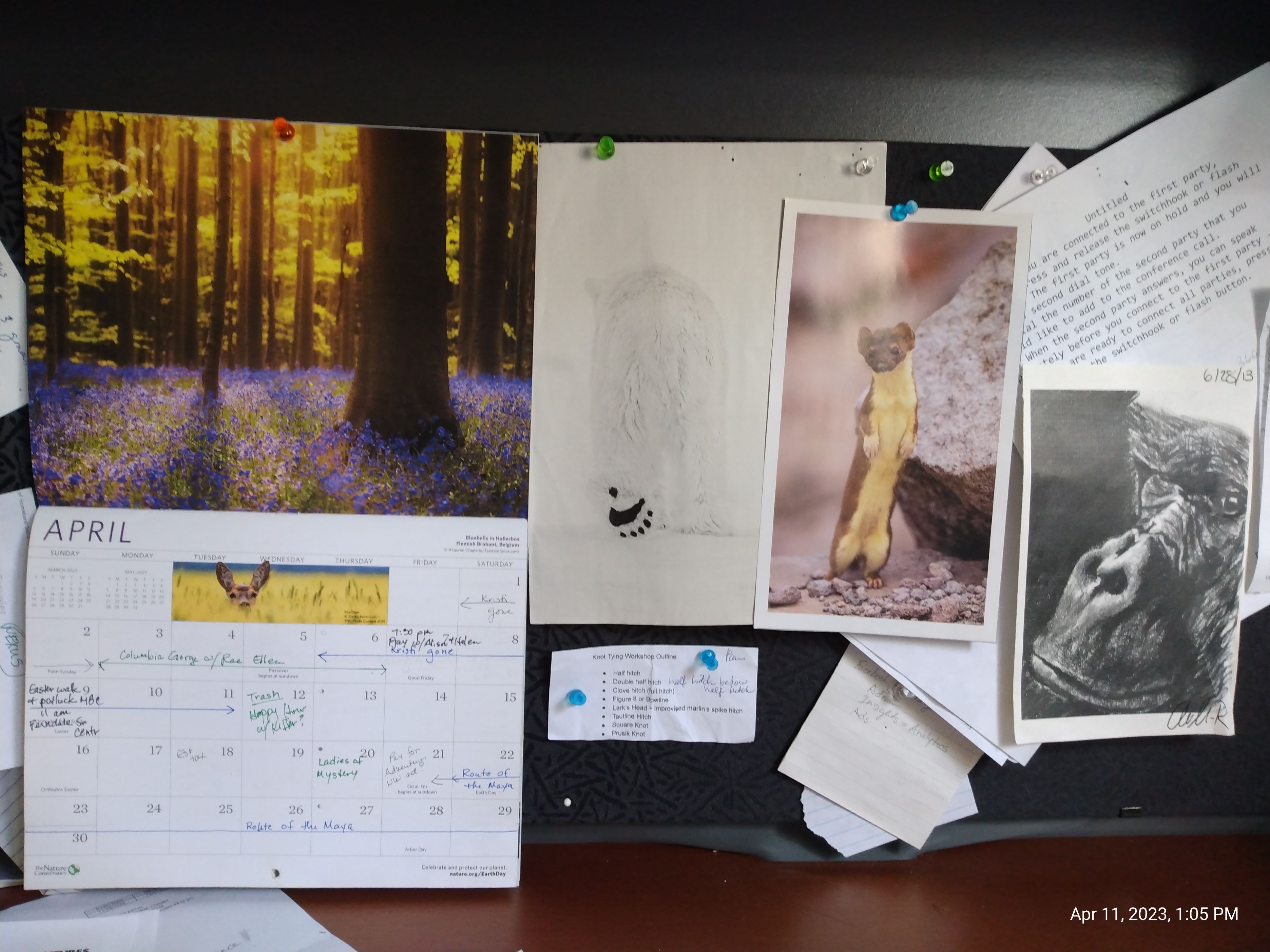
Cluttered Brain, Cluttered Office

I don’t understand how I became so disorganized. I take that back. If I’m honest, I know exactly what happened. During the COVID quarantine with all of its shutdowns, I craved a little more variety. No, I take that back, too. I became absolutely crazy to have a variety of activities and experiences again. Now my life is more chaotic than ever, and my office shows it.

Take my small bulletin board, for example. There’s a calendar with all sorts of reminders scribbled on it, from trips that I’m taking and happy hour dates with friends to mundane things like putting out the trash and paying estimated taxes. Yes, I’m old school like that. I find electronic reminders way too easy to ignore, especially since I have a tendency to leave my cell phone at home. (Hey, I’m hiking and kayaking and swimming and dancing; what the heck do I need a cell phone for?)

Then I have a couple of photos that make me smile. (Sorry, photographers, I long ago lost the identification for these magazine pages.) I love that image of the white polar bear against the white snow; seeing the black skin of its footpad and toes is such a startling contrast. The little weasel reminds me of wildlife surprises I experienced on hikes. This photo may be an ermine in its summer coat, or a long-tailed weasel. My weasel experiences were in Mount Rainier National Park and along the West Coast Trail (aka Lifesaving Trail) on Vancouver Island in British Columbia.

FYI: Never trust a weasel. They are cute devils, but sneaky and slippery thieves. Both times I was the victim of their treachery as I was eating lunch and enjoying the scenery while perched on a rock with a couple of food items spread out beside me. A slight rustling alerted me to see an adorable little red furry face appear from a rock crevice, snatch my most expensive food item, and vanish before I could even say “Hey!” I believe my thieves were martens, but all I know for sure is that they were fans of expensive cheese.

(Incidentally, if you don’t know weasels, you should watch the PBS documentary, “The Mighty Weasel,” and you’ll be fascinated, too.)

Also on my bulletin board, I have a list of knots I’m supposedly learning to tie. I did take a class, but now I’m so out of practice that I need to look up each knot on YouTube to even remember what those names refer to.

There’s a fantastic drawing of a gorilla, given to me by my artist friend Avery while I was working on my second Neema (signing gorilla) mystery. And then there’s the Blake Snyder Beat Sheet, which is an outline for screenplay structure but also serves as a great reminder for a suspense novel.

This all helps me to remember that I should be working on my latest novel, which is a crossover between my Sam Westin wilderness series and my Neema series. I look at this little bulletin board beside my desk and think about wildlife and gorillas and how I can get the two stories together. Somehow, this chaos will resolve itself into a readable book, in between trips and hiking and kayaking and dancing and such. At least I hope so.

Most people probably use bulletin boards to organize ideas or events. Somehow, mine just displays the chaos of my life. And that’s only my small bulletin board. You should see the rest of my office.

Is April the Cruelest Month? by Karen Shughart

In the poem, The Wasteland, T.S. Eliot writes, “April is the cruelest month….”

The month of April is a time of birth and renewal, and a time of hope. April may bring showers, but we have a reasonable expectation that it will also bring spring flowers. For Eliot, at least when he wrote the poem, nothing was crueler than hope because for him it often led to disappointment. It was safer to hold on tightly to cynicism and pessimism, because then he wouldn’t get hurt.

For most of us, though, April is not cruel at all.  If you live where I do, in the north, April is a time of anticipation, a time when we believe that, as Alexander Pope wrote in An Essay on Man, “hope springs eternal in the human breast.” Hopefulness, despite our challenges and disappointments, continues to renew itself.  Even the holidays observed by various cultures and religions this time of year celebrate the themes of birth, renewal, and hope.

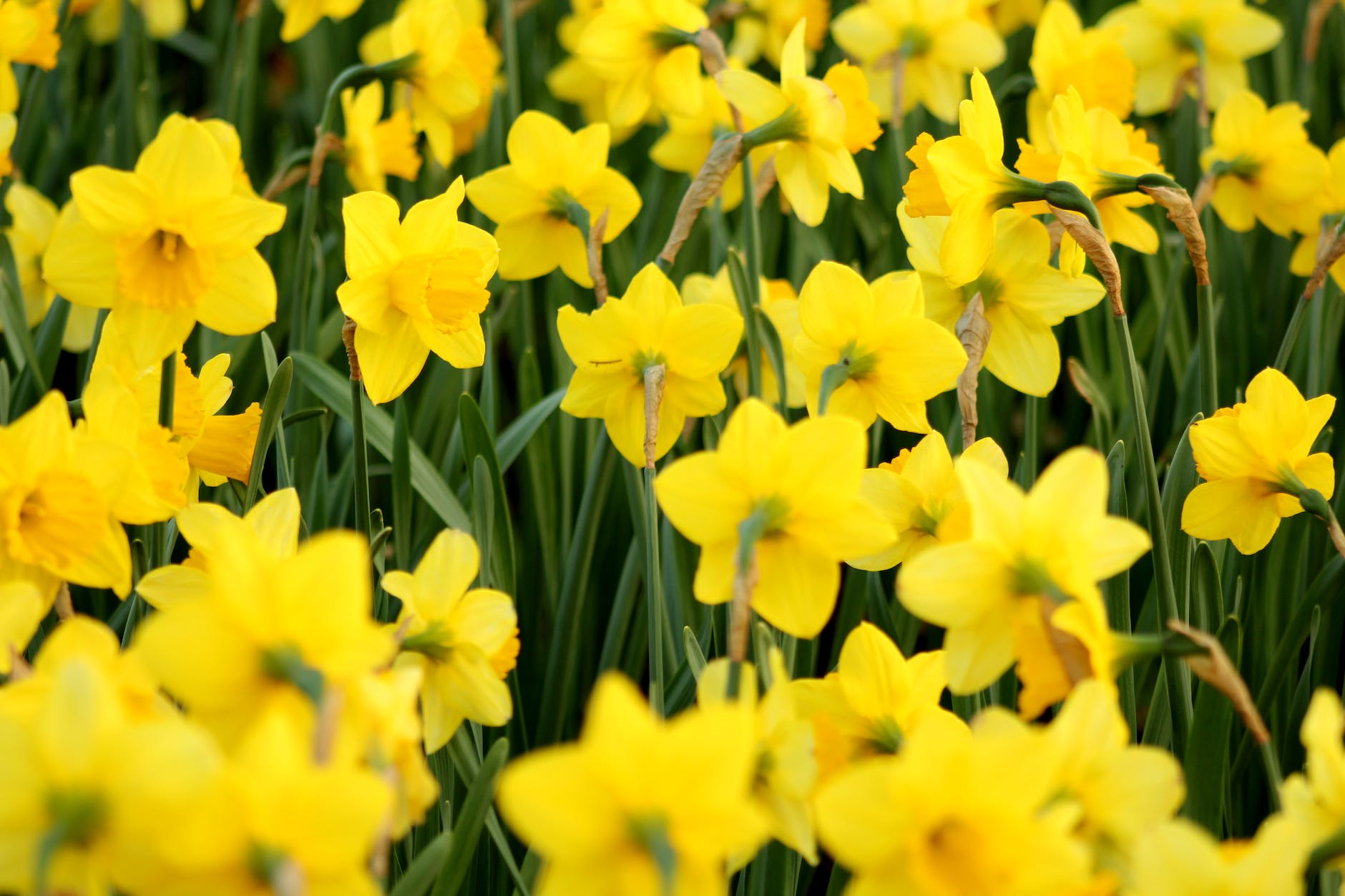
We rejoice when tiny buds start to swell on the trees, when we wake up to birdsong, and daylight lasts longer. We delight in the first sight of bright yellow daffodils and brilliant-colored tulips  as they stretch towards the sun.  And the sun, weak and pale in the winter, shines brightly now, warming our bodies and souls and expanding our hearts to ever so many possibilities.

Photo by Jacek Mleczek on Pexels.com

We know that when the daffodils and tulips finally end their run for the year, we have a reasonable expectation that they’ll be back next year, and other flowers will follow. When we plant our gardens, at some point we will harvest what we sow. Soon, we’ll be seeing baby birds peeping out of nests; ducklings, cygnets and goslings swimming with determination behind their attentive parents; and tiny, newborn animals scurrying about. April, the spring, symbolizes youth, but even those of us who are in the autumn and winter of our lives can feel happy, young, and energized.

In northern climates the weather in April is fickle. It rains, sometimes it snows, and at times it seems as though winter won’t quite lose its icy grip; then there are those intermittent grey, cloudy days. Regardless of what Mother Nature throws our way, I am compelled to put away the heaviest of winter clothes, clean out the closets, and plan menus around seasonal foods with lighter ingredients.  I start to make a list of things I want to do to get ready for summer. I always know the rain will stop, the snow will melt, and the grey, cloudy days will be followed by brilliant sun. If April isn’t quite what I expected, there’s always next year.

Cruel? I think not. After April comes May with more abundance,  even warmer days, and the anticipation of summer.

Karen Shughart is the author of the Edmund DeCleryk cozy mystery series, published by Cozy Cat Press

Guest Blogger~Terri Karsten

            People often ask where I get my ideas. The answer seems simple—ideas come fromthe people we meet, the things we read, the places we go, the songs we know. But the first kernel of an idea is not enough to create a novel.

So, how does a kernel develop into a book? For me, it starts when an idea won’t let go.  Characters start chattering in my head. Scenes start playing out in my day dreams. I sometimes spend years thinking about an idea before I actually start writing. Then I do a lot of research to learn more about the period. I want my historical fiction to immerse the reader in a world as real and accurate as possible. I want the reader to know what it was like to live ‘back then.’

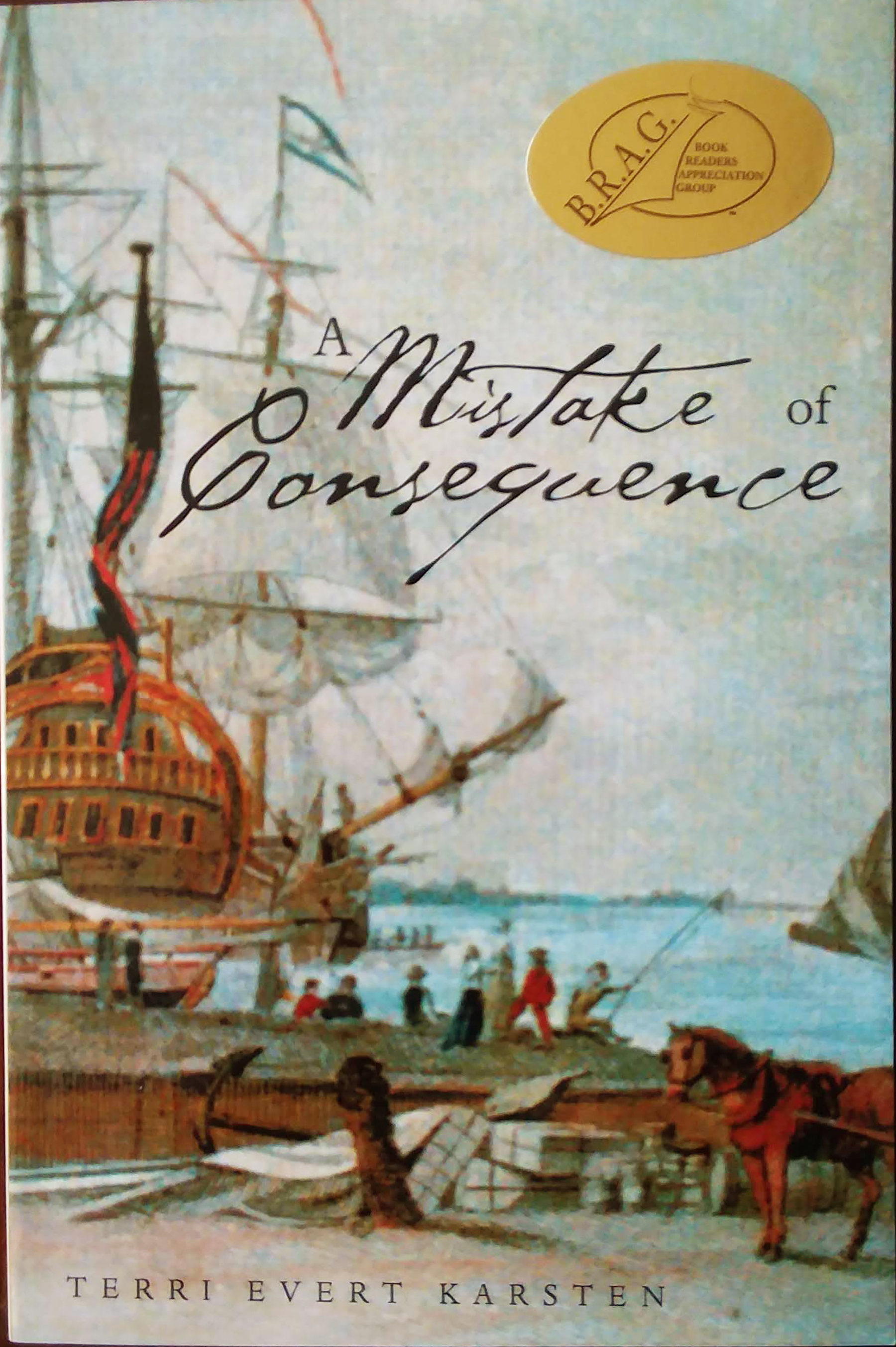
My historical novel, A Mistake of Consequence, developed in just that way. The first idea came from a college class in American Women’s Studies. We read many primary documents, including one about a young woman who had been indentured in Virginia. She wrote her father, complaining of the horrible conditions there and begging him to send ‘his poor undutiful daughter’ adequate clothing. Her heartfelt letter made me want to learn more.

My curiosity led to major research about indenture, a practice was quite common in the 17th and early 18th centuries. Indenture was a legal contract binding a person to work for a certain number of years in return for some compensation such as passage to America. The indentured person was not free to leave the contract and had limited rights as a servant.

Then I discovered that in addition to the people who indentured themselves or family members, many men, women, and children were snatched from England, Scotland, and Ireland and sold in the colonies. In spite of important differences (indenture theoretically had a termination date) the parallels to African slavery were intriguing,

            As I learned more, the characters emerged. The first I envisioned was Callie Beaton, an impetuous, young Scottish woman. Callie’s temper would lead her to the wrong place, straight into the hands of a ‘spiriter’ who kidnapped her, transported her across the ocean, and sold her. Penniless and bound in a strange place, her goal was to return home.

Callie’s story portrays one path indenture could take, but I wanted to show a broader picture. Two other characters gradually took shape, one indentured by choice, and one by circumstances beyond her control. Though both are secondary characters, their lives become entwined with Callie’s.

With these three women in mind, I still needed a plot. I always want to know how the story will end before I can start writing. For this novel, I needed a love interest, a murder victim, and at least one villain to drive the action and influence the outcome. That meant more characters taking up space in my day dreams.

My goal in writing historical fiction is to portray ordinary people living in circumstances very different from our own, but sharing the same joys, fears, and concerns about their families. I want to show that strong, resilient women had important roles in all eras. History, especially women’s history, can help people today learn from the challenges of the past.

            Gradually all these ideas coalesced in A Mistake of Consequence, a rollicking adventure in Colonial America, told from a unique perspective, that of a woman bound by custom and law, but with the courage to choose her own path.

Mistake of Consequence


It is 1754 in Edinburgh, Scotland. Callie Beaton is nearly twenty,
single, and determined not to marry anyone her grandfather deems worthy.
But after her impulsive flight from yet another unwanted suitor leads
her to the pier one rainy evening, Callie is mistaken for someone else
and dragged aboard a ship. Trapped in a dark hold and at the mercy of
strangers, Callie has no idea the ship is headed for a bustling port
city across the ocean in America.

Wracked with seasickness, unable to convince the ship’s captain she is
not who he thinks she is, and with only one scraggly dress to her name,
Callie somehow survives the horrid journey. She arrives in colonial
Philadelphia penniless, nameless, and alone in a strange place. Two men
offer her help: Ethan Asher, a handsome gentleman with a hidden past,
and Davy McRae, a charming ship captain with a dangerous secret. Neither
seems trustworthy, but when tragedy strikes, Callie is caught in the
middle and must choose one of the men to help her if she is to save
herself and her newfound friends from disaster.

In this historical romantic adventure, a Scottish lass who finds herself
in the wrong place at the wrong time unwittingly embarks on a journey
across the ocean to a new beginning where she searches for love,
belonging, and ultimately her true destiny.

Buy link:
https://wagonbridge-publishing.square.site/product/a-mistake-of-consequence/1?cp=true&sa=false&sbp=false&q=false&category_id=3

or

http://www.terrikarsten.com/a-mistake-of-consequence.html

An avid fan of all things historical, Terri Karsten lives in a hundred
year old house near the upper Mississippi River. After retiring from
teaching high school English, she divides her free time between writing
books, playing with grandkids, and chasing the outdoor life. Karsten
writes both fiction and non-fiction, and has publication credits in a
variety of magazines, newspapers and encyclopedias, including Highlights
for Children, The Winona Daily News and An Encyclopedia of Women’s
History. Her novels focus on historical fiction with strong women as
protagonists (A Mistake of Consequence, When Luck Runs Out). For more
information, visit her website: www.terrikarsten.com

Social Media links:
https://www.facebook.com/terri.karsten

https://www.linkedin.com/in/terri-karsten-7a272330/

Even More Adventures in Self-Publishing


by Janis Patterson

As promised (threatened?) last month, today I’m going to talk about the traditional Vanity Press and the less well-known and more ambiguous hybrid ‘Assisted Publishing Organizations’, both denizens of the swamp known as publishing and which writers – especially newbies – need to know.


We all know – or we should! – about the traditional vanity press – they have been advertising in writers’ magazines for what seems like forever with lead lines like ‘Manuscripts Wanted – Let Us Publish Your Book’ or some such nonsense. Remember, it seems everyone wants to have written a book and is determined to get it published, swamping legitimate publishers in their attempts. No legitimate or reputable publisher has to advertise for submissions! Most of them don’t even accept unsolicited/unagented books. Many of them are using literary agents as an unpaid first reader, which makes it harder to get a decent agent.


So does that make the traditional vanity press useless? Not if you want it for the right purpose. The traditional vanity press is usually very upfront about what they offer – for a certain amount of money (usually quite a bit) they will produce a decent (most of them, at least) product. They will edit, design the interior, create a cover and print a pre-approved agreed upon number of copies, which they will deliver to your house. The books are your responsibility from there on.


That is, if you are dealing with a decent vanity press – and there are some – but there are many more who are not. As you go down the dependability scale books aren’t given any quality edits – or any edits at all! The design and formatting are strictly word-processing basic. Covers are either totally plain or… well, I don’t use that kind of language.
So why would anyone use a vanity press? Actually there are some appropriate uses for vanity press – a GOOD vanity press. You want to print out your mother’s recipes as a gift for your family and friends. Or your Great-Uncle Fred’s family history that he has spent years writing. Or a collection of poems written by the congregation for a church fundraiser – that sort of thing – intimate, personal and with a limited and basically non-commercial distribution. In the vast majority of – if not all – cases, fiction and most of non-fiction do not belong with a vanity press.


The secret to selling a book (and not having a couple of hundred permanently stacked in your garage) is distribution. In these days distribution of ebooks can be easy – just upload for customers to download and publicize. Paperbacks done through distributors (and this is truly so very easy) like Amazon and Draft2Digital can be done electronically. If you’re willing to learn the basics and do a little work you really don’t need a vanity press at all. See last month’s post on WriterYou and PublisherYou.


One of the newer and more invidious wrinkles on this vanity scheme is the monthly contract. I heard of a poor woman who, so anxious to get her (probably unpublishable) book into the hands of readers, signed a contract with a ‘publishing company’ (and no, I don’t know its name or I would publish it as a public service) where they would deliver X number of books (either 25 or 50, I think) to her every month – at a somewhat discounted price. However, the cover price was horrendously high, which the poor writer was told was quite flattering, as people will happily pay for first quality. (Poor writer? Stupid writer!)


The first month or two she sold a few, but then she ran out of friends and relatives and the books kept coming… along with the bill. Every month. Her garage filled up with books. Her house filled up with books. Her bank accounts all emptied. The only advice she could be given was to consult a lawyer, as she had been told if she didn’t accept and pay for the books the company would sue her for a huge amount for being in breach of contract. I don’t see how any of them could sleep at night – the ‘publishing company’ for being so dishonest and dishonorable and the writer for being so stupidly gullible and not doing her due diligence. What is worst of all is that unfortunately this is not a singular example.


‘Assisted Publishing Organizations’ are at heart the same as a vanity press, though some do offer publicity services. Apparently for those writers who do not value control they provide a partnership arrangement where the writer pays them to do what a traditional publisher would, albeit apparently on an a-la-carte basis.
I am hesitant to talk much about Assisted Publishing Organizations because I am not interested in one and therefore have done no research in depth. I can only beg anyone who is considering using one of these services to do your due diligence and then some. Know exactly what you are getting yourself in to.


Some APOs are honest and deliver what they say they will; some are not. Some are little more than smoke and mirrors. And just because they bear the name or are an offshoot of a well-known big-name publishing house is no guarantee of their honesty or their ability. I heard of one APO which promised the writer a best-seller for a mere $50,000! My personal belief is that anyone stupid enough to spend $50,000 to basically self-publish a book deserves to be taken. First of all, no one, no organization, no company can guarantee a best-seller, unless they control the list and that would make the list meaningless.


So if there is a lesson to be learned from this somewhat bad-tempered little screed of mine, it is to be careful. Investigate everything, then do it again more deeply. Talk to other writers. Join a writing group, preferably one with a long-standing respectable and professional track record like RWA, MWA, Authors Guild, and ask there; the Upper Indian Creek Poetry and Prose Literary Society probably won’t be able to cut it. Every writer needs a little bit of PublisherYou in their make-up, even if they never self-publish a word.


Remember : Money should always flow to the writer, not away from the writer but if you are willing to pay to be sure your book is published you do deserve the best service you can get for your money, and your duty is to make sure the company you choose can deliver it to you.