A Tale of Time and Trials

by Janis Patterson

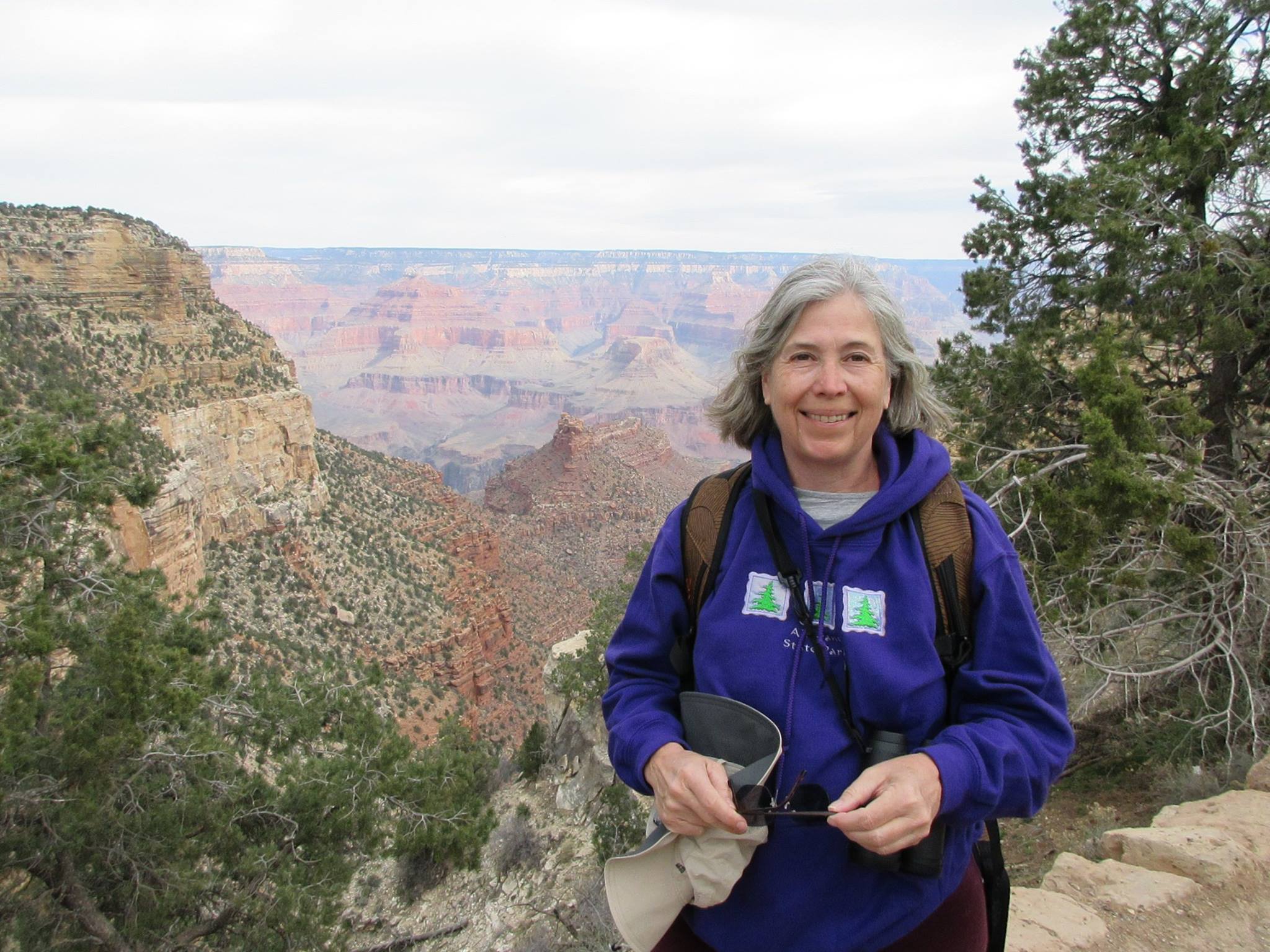
I’m sorry! Mea culpa! Last month… Well, I admit somewhat shamefacedly that I simply forgot. Life just got too complicated. If you’ve been following my newsletter or personal blog (on my website) you know the month of July was very busy – I had three releases instead of two in my republishing blitz and my husband and I were out of town for most of the month in four different trips. We were at a weeklong reunion at the historic Arlington Hotel in Hot Springs, Arkansas – and believe me, you can sometimes have too much ‘historic-ness,’ especially when you get stuck in an antique elevator… twice! After the reunion was over I taught two writers workshops (one in Murfreesboro, one in Fayetteville), we were kept from digging for diamonds (yes, diamonds in Arkansas) by a hurricane-like storm and I got to spend several days with my longtime friend – my sister-by-choice – whom I hadn’t seen in far too long. All of it wonderful, but so very tiring.
And I forgot the August blog entirely. Sorry.
Right now I’m working on my contribution to the Dreamstone Christmas anthology – and is it hard to concentrate on snow, and cold, and Christmas when outside it’s so high in the triple digits it feels as if the sky is on ‘broil.’
However, this too shall pass, and someday when there is snow on the ground and we are swaddled in multiple sweaters we’ll look back nostalgically on the warm days of summer.
One terrible thing, perhaps close to the worst thing that can happen to me, was I came home and immediately went to check the hot tub, planning to get in that night when the temperature dropped… Imagine my surprise when I opened the cover and instead of clear blue water I had a tub full of thick green… stuff. It was thick and gelatinous enough I could have scooped up handsful of it. In fact, I wouldn’t have been all too surprised to have it start pulsating and then slither out of the tub towards me.
Of course I immediately drained the water, which left a slimy mess in the tub that would have to be scrubbed… but not when it was triple-digit hot. It has stayed triple-digit hot and I refuse to go out and scrub in the dark in the wee hours of the morning – which is the only time the temperature outside is bearable – so … sigh. Just sigh.
So… all that is my rationale for missing the last blog. But – like most of life’s lessons – this can be applied to writing. Basically, it means that life happens. There are more things in life than writing. A member of one of my writer’s groups has a husband in the hospital. Her main concern? How taking care of him is cutting into her writing time. REALLY? And they have what most people would call a good marriage.
So I guess the lesson is – in both learning and in life – is don’t sweat the small stuff. Do the best you can, be honest, work hard and don’t cheat or lie. There aren’t any guarantees any way you go, but to me at least that seems the best way to go.
And I promise to be better!

For those of you following my republishing blitz, all is going just as planned. I think we’re all defeated by the heat, so both September’s releases are Christmastide Regency romances – yesterday’s was a called THE RESURRECTION OF REGINA and CHRISTMAS TANGLE comes out on September 27. Believe it or not, this blitz is almost over – next month is the end of it.


So Happy to Be Here

by Margaret Lucke

Hello, everyone! I’m thrilled and honored to be joining the ranks of the Ladies of Mystery. So let’s get acquainted. Allow me to introduce myself.

I fling words around as an author, editor, and teacher of writing classes in the San Francisco Bay Area. I’ve always been fascinated by the power of stories and the magic of creativity.

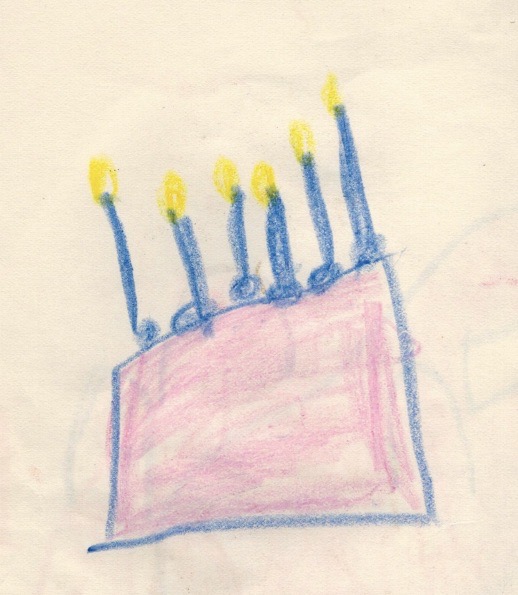
My beginning as a writer came when I was four years old. For my dad’s birthday I decided to give him a book of my own creation, entitled We Are Going to a Birthday Party. I wrote the story—well, dictated it to my mom—and drew the illustrations. I cut a cover out of oilcloth and Mom helped me bind my book with yarn. I could not have been more excited. My first book! Nothing beats the thrill of holding your first book in your hands.

Okay, it was a bit short on plot and the character development left something to be desired. But a story had emerged from my imagination and been captured in this set of pages. And the most important literary critic in the world, my dad, said it was wonderful. I was hooked. I decided I was going to spend my life writing stories.

As a child I imagined myself sitting at a desk by a window that looked out on flowers and trees. I would sip tea as wonderful tales flowed effortlessly onto the paper. I would send them off to a publisher who’d send me fat checks, and eager fans would grab my novels off the bookstore shelves. I‘d do research in glamorous places. Dad, a stockbroker, had a client who spent three months of the year in some exotic locale—the Caribbean, southern France, a castle in Scotland—and the other nine months writing a novel that used that place as a setting and figuring out where to go next. That sounded like exactly the life I wanted to have.

The reality hasn’t quite turned out that way. But I do have a desk in front of a window, and I drink gallons of tea. And while the stories don’t flow effortlessly and the fat checks remain elusive, I can’t imagine anything I could do that would reward me more.

Beginning a new story is an adventure, an exciting and slightly scary journey into unknown territory. Fortunately I’m accompanied by my sidekick, the Muse. That is, sometimes the Muse comes with me. All too often, she’s reluctant or rebellious, and despite my urging, she refuses to pack up her duffel bag and set forth on the path. Instead she gives me a raspberry (not the edible kind), rolls over, and goes back to sleep. And I’m left by myself, staring at the blank page. Some sidekick. More like a kick in the pants. But eventually, between us we get the work done.

I write tales of love, ghosts, and murder, sometimes all three in one book. I’ve published four novels and more than 60 short stories, feature articles, book reviews, and scripts for mystery weekends. I’m the editor of Fault Lines, an anthology of short crime fiction published by the Northern California chapter of Sisters in Crime. I teach fiction writing classes and write nonfiction books on the craft of writing. As a writing coach and developmental editor, I enjoy helping writers move forward toward their writing goals.

All in all, I think the four-year-old aspiring author is pleased with how things have turned out.

Following Through by Heather Haven

I have a pet peeve. Sometimes authors don’t complete parts of a storyline, no matter how small or inconsequential, and a character, situation, or animal is left hanging out to dry. I hate that.

There is a well-known mystery writer who wrote a well-known novel. In the novel, a woman the detective-protagonist becomes involved with has a cat. The cat is in several scenes and then becomes poisoned. The poison was meant for his new lady friend, who is upset about what happened to her cat. She doesn’t know what to do with the body and he takes over. He puts the body of the cat into a pillowcase and then in the trunk of his car. That’s the last we hear of the cat.

As the story progresses day after day and week after week, nothing more is said about the cat in the pillowcase. I became increasingly disturbed. This was a beloved pet. Doesn’t the woman want to know what happened? Isn’t our protagonist a humane man? We’re led to believe so. Did he bring it to a vet for proper disposal, helping to send it over the rainbow bridge? Did our hero toss it into a trash bin? Or heaven forfend, is the cat’s body still in the trunk of the car?

I have a writer pal who asked me to read her final draft. In the story, the heroine hears the beginnings of a storm. Her dog is barking his head off outside the house. How did he get out she wonders? She opens the front door and goes out to look for her dog. Whammo! She gets hit over the head by the villain. Neighbors save her. Police arrive. A report is written. Her best friend comes to stay with her. This best friend is not the dog, so I began to wonder what happened to Fido? Not one more word was written about the dog. As I was a beta reader, I asked the writer what happened to the dog. Answer? She simply forgot about it once it had achieved its purpose, that of being the catalyst for getting the heroine outside to be struck on the head. No, no, no, no, no.

And this doesn’t happen just to animals or in books. I watched a popular television series where a one-episode, secondary character, a teenager, saved the life of the protagonist. Now that’s a big deal, right? This character saved her life. However, when the police and paramedics show up, we see short scenes of the police marching the bad guy off, and the protagonist being hauled off in the ambulance, but the character who made everything right in the end is nowhere to be found. I kept looking for him. Where did this kid go?

Not only does this kind of stuff throw me out of a story, but it makes me crazy. We’re not talking about a lengthy explanation or mind-boggling follow-through. We’re talking about a phrase or a sentence. With the detective, he could have handed the pillowcase off to his secretary with some instructions, kind or not. With my writer pal, it could be one phrase about the heroine reaching down to pet her dog who lay at her side. Or being upset the dog is missing. Or maybe he’s in the kitchen eating kibble. Something. This kid in the television story decided to do the right thing. It changed his life. Why not give the reader/viewer a split-second of follow-through? A look of satisfaction on the character’s face or one of having grown up a little.

A good follow-through can enhance our work and deepen the facets of our characters. It can also make the reader/viewer feel more grounded. That things are not floating off into the ether, disappearing, never to be heard of again. Even if the outcome is not necessarily the one we want to read about or have happen.

Although, I was glad my writer pal added a line that the heroine was petting the dog by her side. Small mercies.

Guest Blogger ~ DL Morton

Hiding in plain sight.

I would imagine, like many of you, my intention of becoming a writer, author, or even working in a profession where writing took a front seat could not have been further from my imagination. Although, life sometimes has other ideas that don’t require personal input. Thus, my journey to becoming a writer began, and my clues were hiding in plain sight.

It started in college. Having trouble understanding the intricate workings of the English language, a creative writing professor took pity on me and folded me under her wing, because she loved my stories. She didn’t mind my misspellings, poor placements of commas, or whether I capitalized in the right places. Teaching me the art of creative writing helped me through all my necessary credits to finish my degree. That should have been my first clue.

 After that, over the next three decades, I did anything but write stories. Until my five-year-old grandson asked me to tell him a new story. So, I made one up on the spot. It turned into his favorite. Later, he asked me to write it down, so his mom could read it to him because, “she never gets it right.” That should have been my second clue.

Thirty-three children’s books later, I wrote a novel. It’s a woman’s literary fiction about love and secrets. After years of writing stories of roughly one thousand words, from start to finish, I thought I’d died and gone to heaven with the new-found freedom of expanded word count.

What I realized later, squeezing in surprises for children’s stories, developed a knack for hiding clues in plain sight. However, not satisfied with that manuscript, I stored it for five years, unpublished. Since then, I’ve changed genres and moved on.

Last year, I pulled that story from the mothballs, and did a rewrite. My editor has since gone through it, and dubbed me a master at hiding clues. Since I’ve changed my genre to paranormal cozy mysteries, this remark was just what I needed to hear, and timely, too.

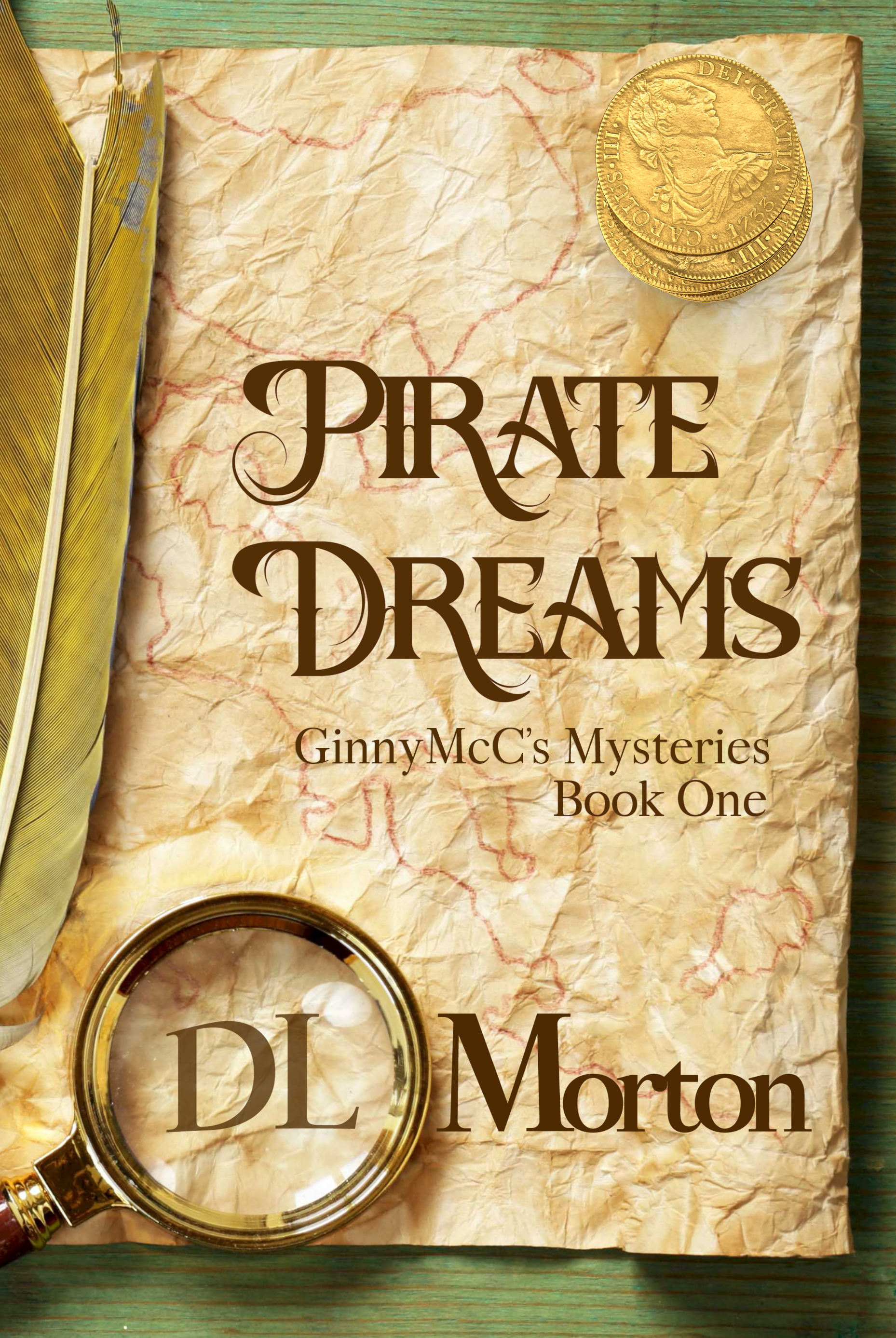
Not too long ago, I released my first book in a trilogy, called Pirate Dreams, under my pen name, DL Morton. I’ve also received several wonderful reviews and received a golden award. Not bad for someone who couldn’t, wouldn’t, and thought she shouldn’t be a writer, much less a published author.

I find my stories seem to write themselves. I only provide the physical task of typing. That was the clue that tapped me on my shoulder. Telling me to open my eyes and see the clues hidden in plain sight.

No matter what your genre, hiding clues is something most everyone will find they need to do, and when writing mysteries, they are essential. You can slip a discrete clue into the most obvious of places, and before you know it, a good mystery emerges.

The moral to this story is two-fold. One, be sure to spot your own clues. They may give you a hint as to where you should be looking.

Two, be sure to look for them in all your walks of life. You might find an opportunity or interest pop up that you never knew or realized would tickle your fancy.

Happy hiding everyone.

Pirate Dreams

A Pirate Days Festival sets off a set of circumstances that could change Ginny McCarthy’s life forever. As a reclusive insomniac, stitching together pieces of a fragmented dream about an ancient pirate legend proves more difficult than she imagined. Determined to find the truth, Ginny’s forced to seek help through unlikely and untrusted sources. Calling on her best friend for support, they navigate through unusual and dangerous situations. Together, they face suspicions and risks as they try to understand the meaning of her dreams.

https://www.amazon.com/Pirate-Dreams-Ginny-McCs-Mysteries-ebook/dp/B0C2JW6TN7

An established author of children’s books, DL Morton is branching out to adult fiction. She’s now working on a mystery series starring Ginny McC and a stand alone women’s literary fiction novel. She lives in an author’s paradise in the mountains of Northern California.

Website:
http://dlmortonbooks.com

Guest Blogger ~ Tammy D. Walker

The Poet and the Perils of Plotting

“Beautiful writing, but your story is missing a plot.”

I’d read those words again and again from editors rejecting my short stories, literary and science fiction.  As a poet, I’ll admit: plot isn’t one of my strengths.  Or wasn’t, anyway.  And every time I got a rejection that asked where the “story” is in the story, I cringed. 

As a writer, I’m supposed to know how to plot, right?

After all, I’d had poems published while I was in my mid-20s, not long after I started studying creative writing.  And, after taking a long break from writing to focus on a career change, I had many more poems accepted into literary journals and two poetry collections published by good presses. 

For a while, I thought I’d give up on writing fiction.  Those “almost” rejections were piling up, and the heartbreak of another “lovely, but….” message wasn’t motivating. 

Maybe, I thought, I should focus on poetry.  Writing poems gives me the chance to ask questions about the world.  I try to question the way pieces of the world fit together and, often, don’t.  And I question how I see things and why.  I want readers to walk away with not a definitive answer to anything but with a way to ask their own questions.

Which I tried to do in stories too.  But that approach didn’t work in fiction.  At least not for me.

And then, the pandemic happened.  I started reading more mysteries, in particular, cozy mysteries, as a way of traveling when we had to stay mostly at home.  I also watched a lot of travel videos.  In a moment of things coming together in a way I didn’t expect, I thought maybe I could try writing a mystery set on a luxury cruise ship.  Research meant more “online vacations,” and, because mysteries need that element of story to be tightly in place for the mystery to function as a mystery, I’d use the drafting process as a way of teaching myself that elusive skill: plotting.

Three good things happened.

First, I researched everything I could about plotting.  And then, I practiced.  I outlined, reoutlined, considered my characters’ motivations and reactions, and I outlined again. 

Second, I realized that I loved writing mysteries. 

And third, I figured out how to integrate what was working so well for me in poems into my fiction.  Mysteries are, essentially, about asking questions.  The sleuth has to ask questions about the crime, of course.  And we as readers have to ask about the crime as well as the sleuth and all the other characters.  Even if we do eventually get an answer to the whos, whys, and hows in the crime, much of that comes through that same process of questioning I do in poems.

Really, four things happened.  After a good bit of revision, my draft became Venus Rising, which was published in January 2023 by The Wild Rose Press.

Well, five things: that book got a review that said, simply, “good plot.” 

VENUS RISING

Almost as soon as recent divorcee Amy Morrison begins her dream job as librarian aboard the world’s most expensive luxury cruise liner, she nearly sinks it. She’s tasked with hosting the debut of a painting celebrated but hidden for nearly sixty years. But the artist claims the painting isn’t hers. And then, the artist goes missing. With the help of a retired academic couple lecturing aboard the ship, a dashing IT manager, and a housekeeping staff with a love of literature, Amy tries to solve the art fraud and kidnapping while rediscovering the adventurous side of herself.

Buy Links:

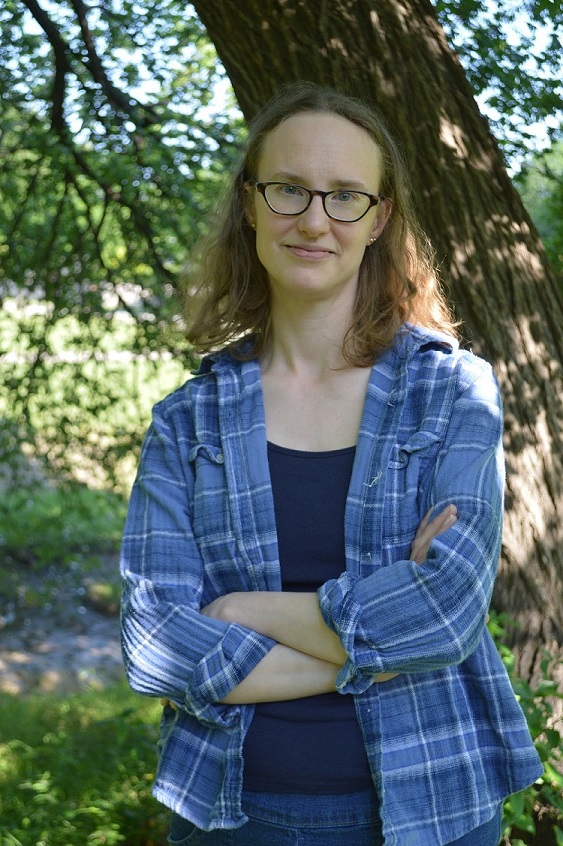
Tammy D. Walker writes cozy mysteries, poetry, and science fiction. Her debut cozy mystery, Venus Rising, was published by The Wild Rose Press in 2023.  As T.D. Walker, she’s the author of the poetry collections Small Waiting Objects (CW Books 2019), Maps of a Hollowed World (Another New Calligraphy 2020), and Doubt & Circuitry (Southern Arizona Press 2023).  When she’s not writing, she’s probably reading, trying to find far-away stations on her shortwave radios, making poetry programs, or enjoying tea and scones with her family.  Find out more at her website: https://www.tammydwalker.com

Social Media Links: