Farewell, Bulwer-Lytton

By Margaret Lucke

As April 15 rolls around, I’m saddened to report of the demise of one of that date’s most cherished annual events.

No, I’m not talking about the deadline for filing your federal income taxes. You still have to do that, and if you haven’t yet started dealing with all of those numbers and all of that paperwork, I recommend you stop reading this blog right now and get busy with that task.

What I’m referring to is the late, great Bulwer-Lytton Fiction Contest. It was announced not long ago that 2024 would be this beloved competition’s final year.

While entries were accepted any time, the official deadline was each year April 15 –which, as the contest’s organizer, Professor Scott Rice, noted, is “a date that Americans associate with painful submissions and making up bad stories.”

The English Department of San Jose State University began sponsoring this annual wordfest in 1982. Writers were urged to come up with the opening sentence to the worst of all possible novels.

It’s a challenge for any writer to come up with an opening line that will grab our readers and pull them into reading the rest of the book. With the Bulwer-Lytton winners, there was no rest of the book.  They were often complete single-sentence stories. Anything more would have been superfluous.
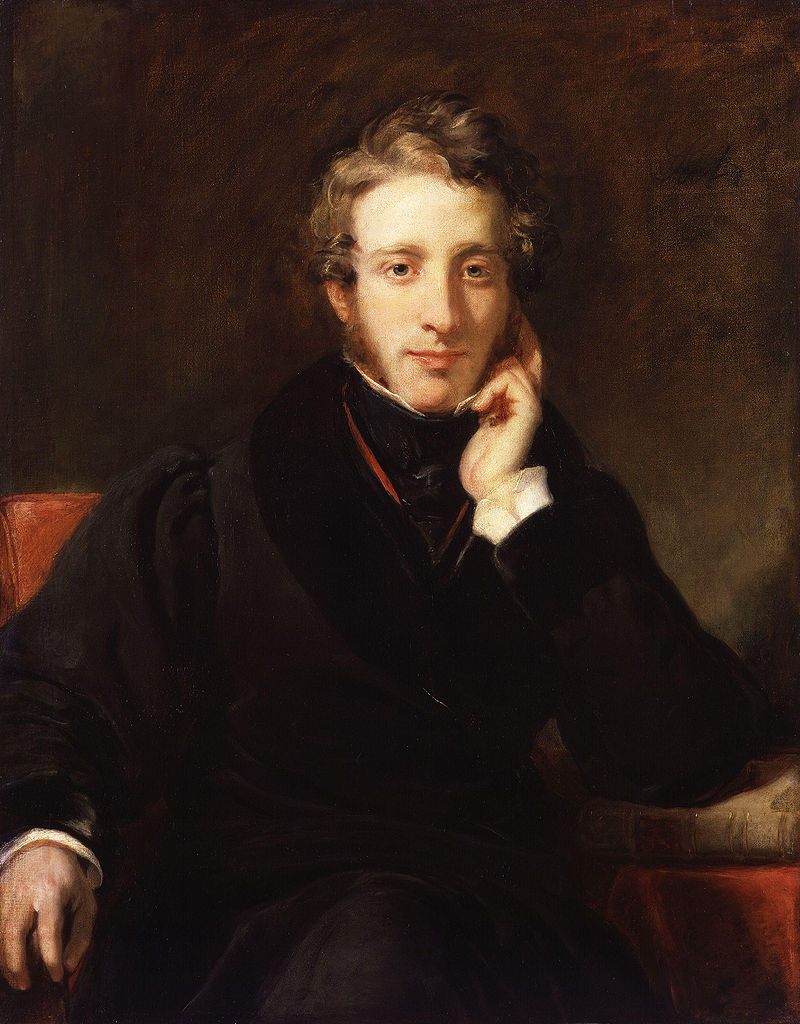
The contest was named for Edward George Earle Lytton Bulwer-Lytton, 1st Baron Lytton, a minor (perhaps deservedly so) but prolific British novelist of the Victorian era. His best-known title is probably The Last Days of Pompeii, and he originated the saying “The pen is mightier than the sword.” But he is most famous today for penning the immortal opening line: “It was a dark and stormy night … ” Thus begins the novel Paul Clifford, the story of an English gentleman man who moonlights as a criminal.

The complete sentence reads:

“It was a dark and stormy night; the rain fell in torrents–except at occasional intervals, when it was checked by a violent gust of wind which swept up the streets (for it is in London that our scene lies), rattling along the housetops, and fiercely agitating the scanty flame of the lamps that struggled against the darkness.”

Snoopy, famed beagle from the Peanuts comic strip, appropriated the first seven words for the title and first sentence of his own novel. Snoopy is not one to waste words. His entire novel is only 214 words, not all that much longer than Bulwer-Lytton’s single sentence. A born mystery writer, he jumps straight into a suspenseful plot with his second sentence: “Suddenly a shot rang out.” 

Back to the Bulwer-Lytton contest: In its first year it attracted three submissions. In its second year, thanks to a little publicity, the number grew to 10,000. Writers were invited to submit as many abysmal first sentences as they like. One year a hopeful author sent in more than 3,000. If he had strung them together he would have had an entire book, which surely would have qualified as a the worst of all possible novels.

I submitted my own masterpiece of a first line one year. Sadly it didn’t win, possibly because it exceeded the recommended length of not more than 50 of 60 words. I’m fond of it anyway, and I can’t resist including here:

“Until the night he set her house afire, burning down the only home she’d ever known, incinerating the manuscript of her nearly completed novel, turning her cherished photos of Daddy to ash, though thank goodness the cats escaped … until the hour when sparks soared across the heavens like shooting stars and the smoke from the conflagration carried away all her hopes and dreams … until the moment when a firefighter squelched her screams and drenched her nightgown with a well-aimed hose … until that very instant Isabelle believed her love affair with Rolf would last forever.”

Hmm, maybe I should think about writing the rest of that book.

If you’re interested in reading the sentences that the judges, in their wisdom, preferred to mine, you can find an archive of the winners and dishonorable mentions here: https://www.bulwer-lytton.com/winners


Souvenirs and Memories

by Janis Patterson

As most of you know, I just returned from several weeks in Egypt and Jordan. Fascinating… and exhausting, but I’m covering that in the Trip Diary that will be on my website. What I’m going to talk about now is souvenirs. Souvenirs are something to remind you of what you did/saw… or to take home to friends and family so they will know where you went and what you did.


The Husband and I quit the souvenir train a long time ago – mostly. He always buys a few postcards and I usually pick up something small, like a refrigerator magnet. (Though I did buy a spectacular gold-embroidered dress in Cairo – have no idea where I will wear it in the foreseeable future, but I do know I couldn’t have left without out it.)


Back to souvenirs. Whether for us or for others ‘small’ is the operative word. We always try to travel light, especially on a ‘rough’ trip like this one, so space is limited. Plus, one must consider the egregious baggage charges the airlines are extorting from us. No space, no extra charges = small. Very small.


But… as pleasant as little trinkets can be, they are not necessary to life. All they really do is stimulate our memories and feelings of pleasant or adventuresome times, and we can call forth those memories on our own, because what is really important is the memory – not the trinket purchased there, though the trinkets are nice to have.


To drag this post to the business of writing, in a not-too-unusual way a well-crafted story is a souvenir – a memory that you might have not had yet, but once the story is read it stays with you forever. How many of us have favorite scenes, favorite stories, that always evoke a reaction within us? Isn’t that like how a souvenir can in the blink of a memory bring back sights and sounds and actions previously experienced? Just because it is not brightly colored or even physical doesn’t mean that it isn’t a sort of souvenir… an encapsulated memory.


That means I can forget small. I live in a house with four libraries, each simply bulging with books, most of which I have read. I can pick up almost any one of them and suddenly there is a memory, a feeling inspired by something in that book. A souvenir of a life – an event – a something that I might or might not have experienced in the flesh, but which still arouses not only a memory but an emotion in me… just like when I pick up the embroidered shawl my husband bought for me in a small shop in Petra, or the tiny terra cotta Mayan figure I found in Mexico, or… I could go on and on. Like you and probably everyone else on the planet I have more souvenirs and more memories than I can handle.


So… when you are writing your books, remember that you are not only creating a story, you are creating a souvenir of a life the reader never lived.

Time Available, Plus

My cousin has a catchphrase about stuff. She opines that one’s stuff expands to fit the space available, plus two boxes.

My variation on that theme is this: The number of tasks demanding my attention expands to fit the time available, plus five or six more tasks, all with screaming deadlines, taking up line after line on my to-do list.

Yes, I keep a to-do list. It’s satisfying to check off those items. But I keep adding more, until the page is covered with scribbles, some of them in the margins, and hand-drawn stars indicating the urgency. Oh, the tasks that make their way onto that list—and get in the way of writing. There are so many.

I retired from my day job more than a decade ago. I figured I would have more time to write. Not unlimited, never that. But more. Hah! Like that worked.

“I don’t know how I got anything done before I retired.” When I was working full time, I used to hear people say that. After I retired, I was the one saying it. However, I do know how I got things done. I didn’t sleep—much. During those last few years, what with the day job and the commute, I got up at 4 AM so I could write before making that rush-hour drive to my office. Once I retired, sleeping in past 6 AM was pure joy. So is reading my morning newspaper in the morning, a mug of coffee beside me, instead of catching a few pages while eating lunch at my desk.

It’s amazing what crops up to fill the time. Tasks, some pleasant, some routine and necessary. I need to clean my home from time to time, because I like to walk through the rooms without tripping over the clutter. In the spring and summer, I look at the proliferation of weeds in my garden, thinking I’d better haul on the gloves and deal with them.

Exercise is a desirable routine. I have a weekly tai chi session that has been good for me. And walks. Because you never know, I might work my way through that thorny plot issue while walking along the beach near my home.

Errands, always errands. Grocery shopping for me. Stocking up on cat food for my four-pawed furballs. Library visits, to pick up or take back books. Visits to the doctor or dentist. And those trips that are good for the soul, such as meeting a good friend for lunch or coffee, always with plenty of conversation. Or an outing to a museum or the theatre.

I treasure those days when my dance card isn’t crowded, just my morning session with the newspaper, a walk (if the weather permits), and the rest of the day spent in front of the computer, writing and polishing my work in progress. That is so satisfying. But lately, things are getting in the way. I’m thinking of that daylight-savings-time mantra: “Spring forward, fall back.” The term “fall back” makes me think about falling behind. I have certainly felt that way over the past two years, when family and personal issues got in the way of writing.

The tasks are always expanding to fill up the to-do list. That’s always going to be the case, I suspect. One issue gets taken care of, and then another crops up to take its place. And always, things that get in the way of writing, if I let them.

So on to checking off one more thing on the to-do list: this month’s blog!

Report On The LCC Conference I Didn’t Attend by Heather Haven

I’d been waiting all year for the 2025 Left Coast Crime Conference to happen. I signed up for it sometime in the summer of 2024. My husband, Norm, and I made reservations on the Amtrak going from Emeryville, California, to Denver, Colorado. We were going to join friend and fellow writer, Janet Dawson, on the 36-hour train ride across the Rockies, play cards and scrabble, eat wonderful meals, and arrive in Denver in time to check in for the conference on Wednesday evening. I had registered and paid for the conference and bought tickets to the Awards Dinner for Norm and me. I was on a fun panel. We had airline tickets to fly home Sunday evening at the end of the conference. There was even an afternoon tea at the famous Brown’s Hotel on the agenda. All was right with the world, and the trip was planned to the last detail. But pass the cheese, please. The best-laid plans of mice and men.

6 days before we were to leave, I started coughing. I wasn’t too worried. I had nearly a week to shake this, right? Besides, I had all the vaccinations you can have. Nothing could happen, right? Wrong. Each day the coughing, sneezing, wheezing, and congestion got worse. On the 4th day of this scourge, I saw my doctor and got tested. No Covid, RSV, or flu. Just one of your common, every day, unnamed viruses that knocks your socks off for at least 10 to 14 days. Stay home, drink plenty of liquids, take whatever over-the-counter meds make you feel better, and ride it out. That’ll be $25, please. Thank you, Doctor. I could have told you that and saved myself 25 bucks and a trip to Kaiser. I have since named the unnamed virus. After all, they name hurricanes, and this was my very own personal hurricane. I call it Fred.

But I digress. So, home I went, feeling enormously sorry for myself. I crawled back into bed, Norm brought me chamomile tea, the cats cuddled, and I resigned myself. We were scheduled to leave for Denver in three days, and I could barely lift my head from the pillow. There was no way I could make this trip. Even Norm, Mister-You-Can-Do-It, shook his head in sympathy. Time to put on my Big Girl Panties, so to speak, and let friends, associates, and fellow writers know I wasn’t coming to LCC this year. My life was over. Well, not really. But when one feels like a bucket of horse manure and locked out of one of the most wonderful and fun times of the year, one is allowed to go there. So, there I went.

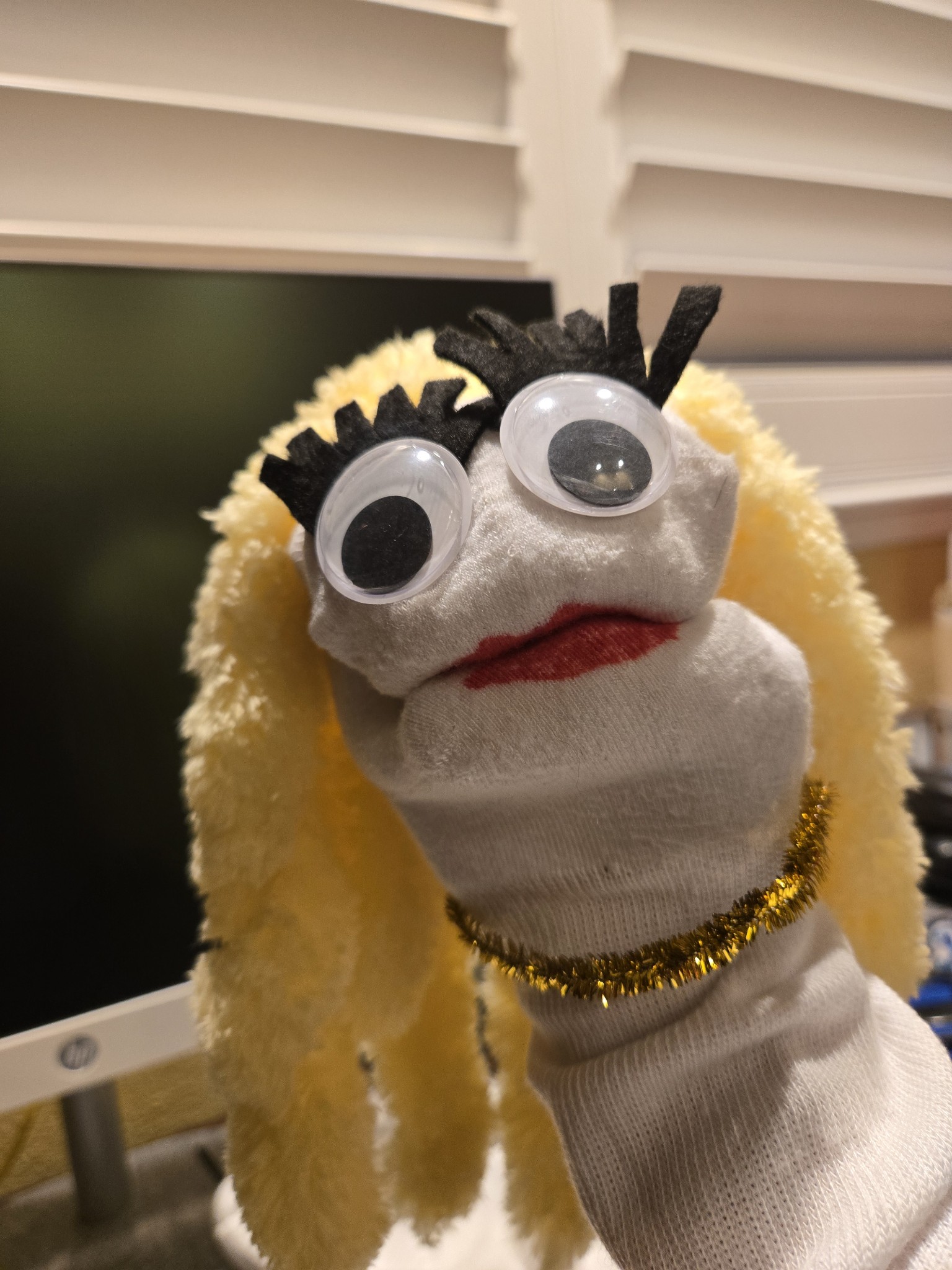
It was short-lived. Soon, I got texts and pictures from the train taken by our wonderful Janet, who was disappointed we couldn’t join her but was making the best of it. In those brief moments, I felt a part of the trip, enjoying the shared moments. Janet continued to send me highlights of the trip, conference, and even the high tea at Brown’s. Then a few other pals wrote emails or sent me texts, some with pictures. Even the panel moderator, Chris Dreith, decided not to replace me with another writer but wanted me to answer the same questions she would have asked had I been there. Chris made a sock puppet in my image. I gotta tell you, the resemblance is uncanny. See right. Using her ventriloquist skills, Chris used the sock to voice my answers. Then she gave the puppet sock and my latest book to a contest “winner,” Grace Koshida, who happens to be the Fan of Honor at the conference. Because Grace is a sweetheart, she alerted me on Facebook about this and included more wonderful pictures.

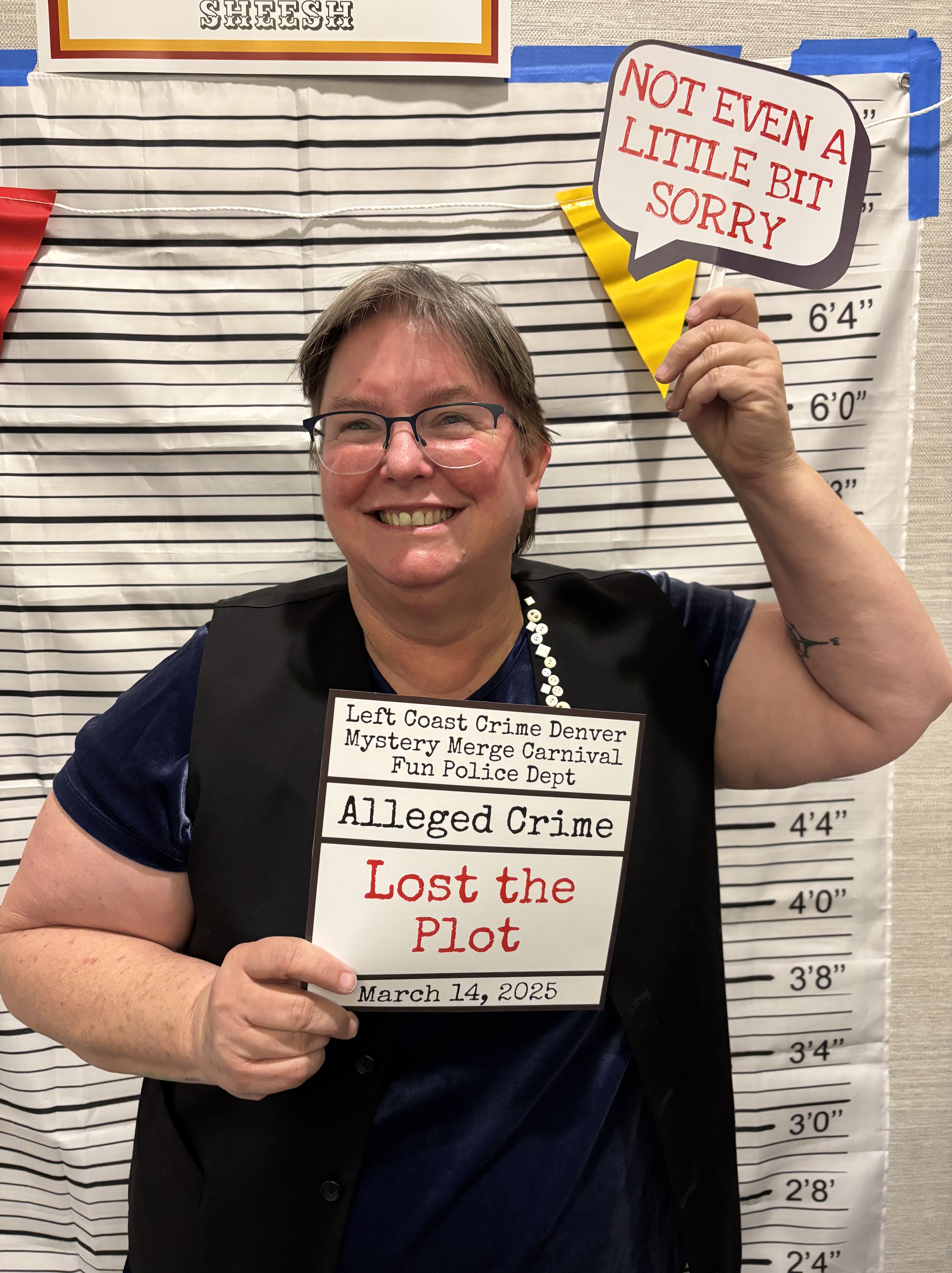
I may not have been at the conference, but so many people went out of their way to include me and make sure I knew I was missed, like Baird Nuckolls pictured left, that I feel warm all over when I think about it. I am well now, but I am keeping the emails, texts, and pictures sent by my friends and associates from LCC 2025 for the future. If I ever feel sorry for myself, that nobody cares, and I’d better eat some worms, before I get out the frying pan I’m going to remember this incident. I’m going to be thankful I live in a world with friends who are mystery writers and readers because, surely, they are the most thoughtful and kindest people on the planet.

Guest Blogger ~ Erica Miner

Overture to Murder: a violinist who won’t quit sleuthing

It’s strange how a standalone mystery can evolve into a series. I started off with just one book, Aria for Murder, inspired by my 21 years of experience playing violin at the Metropolitan Opera in New York. The protagonist, young violinist Julia, trades her violin for a detective’s hat as she finds herself investigating murders that take place on and offstage. I had fun weaving real operas into the mystery plot and was gratified at the number of readers who told me they enjoyed learning about opera for the first time. It never occurred to me to write a sequel until one of my fans asked me for one. As a savvy opera aficionado who knew the opera world inside out, he even specified that Book 2 should take place at the Santa Fe Opera.

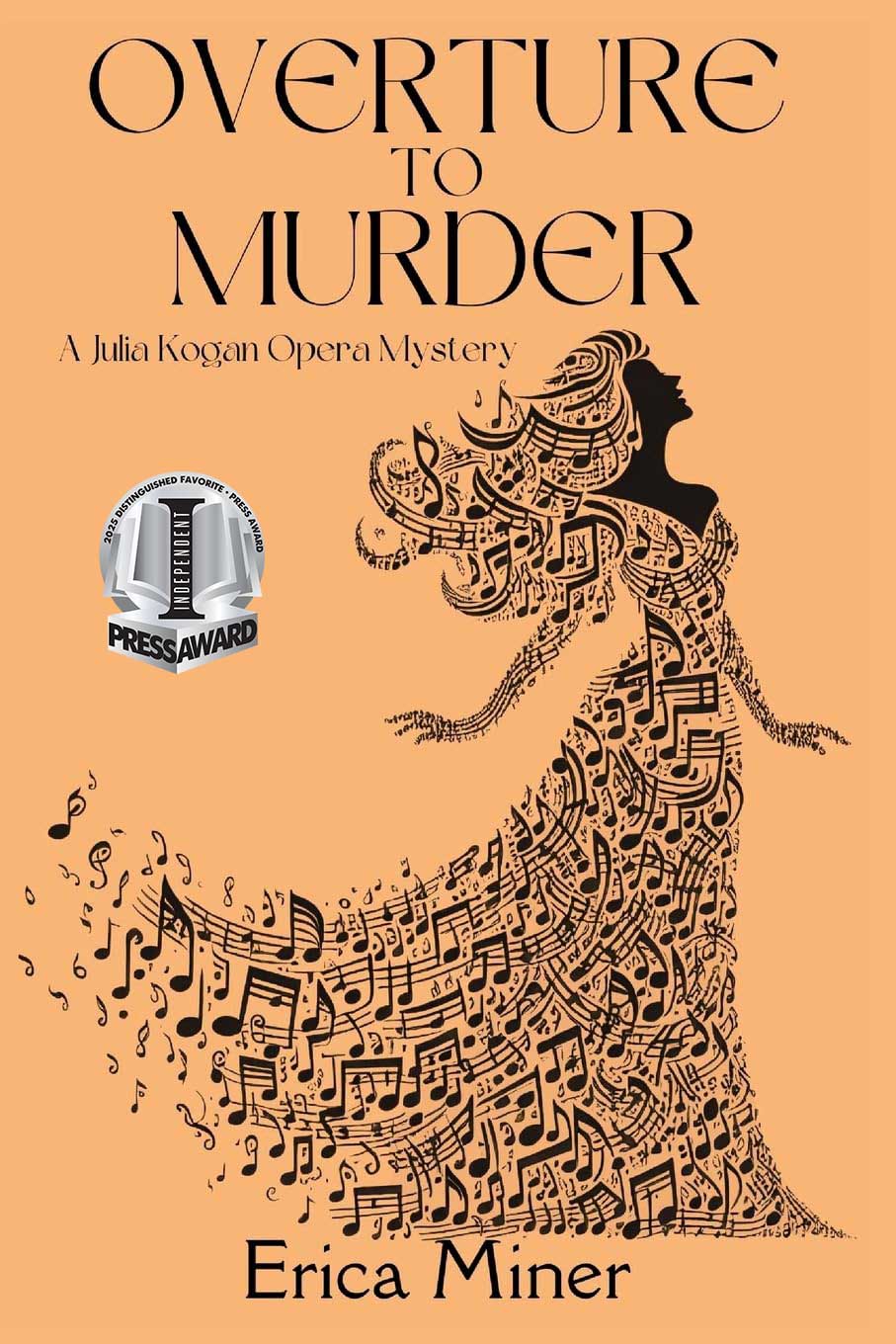
I jumped at the idea. Though I had never visited Santa Fe, I knew that its opera house, an outdoor theatre set between two mysterious mountain ranges, would be the ideal setting for an opera mystery. Prelude to Murder was the result. While I was in Santa Fe researching the book, I met with a friend, the dramaturg of the San Francisco Opera who, when I revealed my work in progress, asked if I would be interested in writing a third mystery to take place at his company. Book 3, Overture to Murder,was born a year later.

In the story, a suspicious hit-and-run and subsequent backstage murder drive Julia to continue her relentless sleuthing as she investigates deadly secrets behind the music. Can she uncover the truth before the curtain falls on her family’s safety? The answers lie in Overture to Murder. As always, Julia manages to find trouble lurking in every dark hallway and back stairway of the San Francisco Opera, proving once again that an opera house is the perfect environment for mischief and mayhem.

But there were other reasons why I decided to set my third mystery at San Francisco Opera. First of all, San Francisco is one of the world’s most captivating cities. And it considers its opera only slightly less sacred than the Holy Grail. It’s totally an opera town. It’s also a city of mystery and suspense. Witness “Haunted SF Ghosts, Murder and Mystery: a dark and ghastly tour through the mysterious past of downtown alleys and streets. Get haunted by after-dark tales of strange deaths, ruthless villains, famed ghosts, and shocking assassins.” Oh yes. There’s more to the scary aspects of this city than meets the eye.

My most compelling motivation, however, was my personal history with San Francisco’s War Memorial Opera House. Over the years I’ve spent a lot of time there, visiting close relatives and friends who have worked with this illustrious company. When I started researching Overture to Murder, I learned about the fascinating history connecting the opera company with the Gold Rush and other astonishing aspects of the city’s history. But this time, as my friend who had motivated my desire to write the mystery showed me the opera house from top to bottom, I developed a special new intimacy with the place. What I discovered was a theatre steeped in intrigue, with dark creepy basements, ancient creaky elevators, and terrifying catwalks; a place with its own ghosts, whose stories could curl your ears.

What better place to set a mystery?

Overture to Murder

High notes of suspense and danger as the curtain comes down on murder in the third novel of Erica Miner’s Julia Kogan Opera Mystery series. Young Metropolitan Opera violinist Julia heads to the San Francisco Opera to replace ailing concertmaster, Ben, who has suffered serious injuries in a hit-and-run accident. Julia suspects it was no accident, and when one prominent company member becomes the victim of a grisly murder, she cannot resist becoming involved in the investigation. As in her previous sleuthing at the Met and Santa Fe Opera in Books 1 &2, Julia finds danger lurking in the elegant but creepy San Francisco War Memorial Opera house and again finds herself face to face with a ruthless killer. But this time her courage is put to the test when the life of a precious family member is in even deeper peril.

Buy Links:

https://www.amazon.com/Overture-Murder-Julia-Kogan-Mystery/dp/1685127819/

https://www.barnesandnoble.com/w/overture-to-murder-erica-miner/1146432661?ean=9781685127817

https://www.thirdplacebooks.com/book/9781685127817

Award-winning Seattle-based author, lecturer, screenwriter, and arts journalist Erica Miner believes opera theatres and fiery artistic temperaments are a chilling backdrop for murder, and perfect for creating fictional mischief! Drawing on her 21 years as a violinist at the famed Metropolitan Opera, Erica’s fanciful plot fabrications reveal the dark side of the fascinating world of opera in her Julia Kogan Opera Mystery series (Level Best Books): Aria for Murder (2022), finalist in the 2023 CIBA and Eric Hoffer Book Awards; Prelude to Murder (2023), a Distinguished Favorite in the 2024 NYC Big Book Awards;and Book 3, Overture to Murder (2024), a Distinguished Favorite in the 2025 Independent Press Awards.

Erica’s debut novel, Travels with My Lovers, won the Fiction Prize in the Direct from the Author Book Awards. Her screenplays have won awards in the Writer’s Digest, Santa Fe, and WinFemme competitions. When she isn’t plumbing the depths of opera houses for murderous mayhem, Erica frequently contributes reviews and interviews for the well-known arts websites https://classicalvoiceamerica.org, www.bachtrack.com, and www.BroadwayWorld.com.

Erica has lectured on opera and writing throughout the US, as well as in Australia.

Social Media:

https://www.facebook.com/erica.miner1

https://www.instagram.com/emwriter3/

Author Website:

https://www.ericaminer.com