The Pains of Getting it Correct by Paty Jager

I have had book 7 in the Gabriel Hawke Novels written over a month ago. It went through my LEO (retired Law Enforcement Officer) and my CP (Critique Partner) But I have been waiting for my sensitivity reader to get to it.

This book is set on a reservation, deals with a missing Umatilla woman, and is set predominately in an Indian casino. For those reasons I have someone who lives on the reservation, is part of the MMIW organization, and she has worked in an Indian casino reading the book.

The problem: I had this book slated to publish May 1st in coordination with May being the month 15 years ago my first book published. This book will be my 50th. I have planned a HUGE Facebook 50 Book Bash event to last the full month of May. The plan was to start the month out announcing the 50th book was published.

That is not going to happen now. I will have to announce the pre-order on May 1st and set the publish date for the end of May. There are still too many people the book has to go through before it can be published. And I have to get it returned with my sensitivity readers comments first.
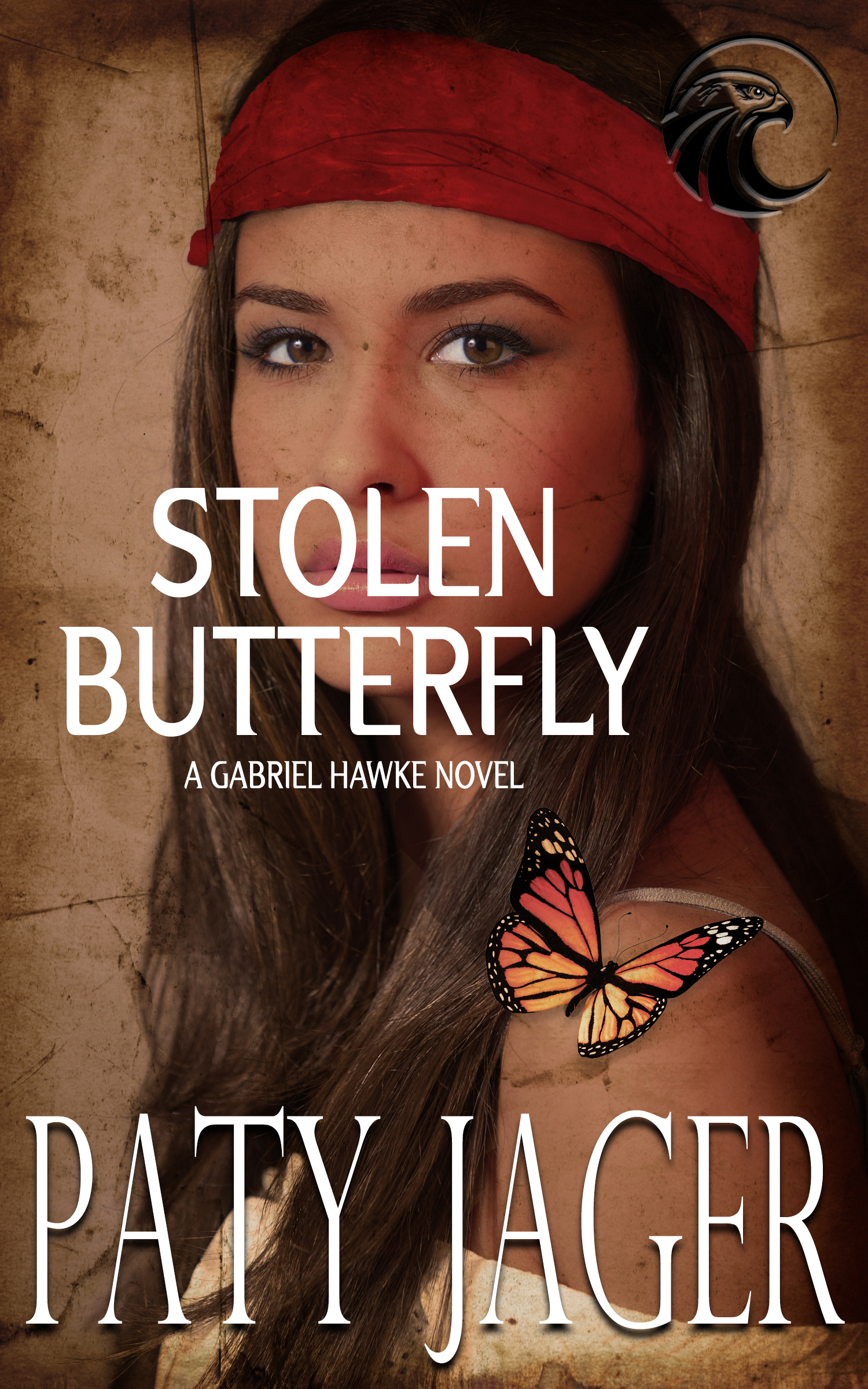
2nd cover/ deleted the 1st

I also sent her the cover… Her comment was the woman on the cover wasn’t brown enough. My cover designer made another cover with a different woman on it, with a browner skin tone. But then I thought, “None of the other Hawke covers have people on them. So now we are working on a cover without a person. Hard to do with the main location of the book being a casino and I don’t want to put a casino on the cover.

Covers with casino scenes will be for my Spotted Pony Casino Mysteries that will be my new series coming out in June. This fictional casino is the one featured in Stolen Butterfly, Gabriel Hawke Novel #7. And the main characters in that series are introduced in this Hawke book.

So I plunge on with book 1 of the new series, and hope my imaginary casino and how it is run and the employees will work for my sensitivity reader and I won’t have to rewrite too much of the new book.

While I enjoy using fictional settings, I like to get all the nuances of a culture and work place correct. And that is why, my 50th book may be released later than I’d planned.
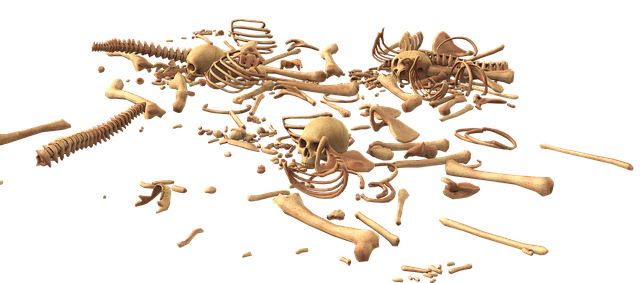

Putting Flesh on the Bones

My work-in-progress is a Jeri Howard novel, titled The Things We Keep. In this case, the things that have been kept are bones.

Jeri, my Oakland-based private investigator, is off-duty on a Saturday in October. She’s helping friends inventory the contents of an old house in Alameda. Up in the attic, she pries open an old footlocker to see what’s inside. She finds herself looking down at a skull and a jumble of bones.

Whose bones? How did they wind up in that attic? And why?

It’s my job as a writer to put flesh on those bones.

Each book gets off to a similar start. I have an idea and I go from there, butt in chair and fingers on keyboard. A structure emerges, with a timeline that gets revised over and over before I reach the end.

With each new project there are familiar characters—Jeri, of course, and her family, friends and associates. And there are new ones that give life to the story and setting. At the start, those characters are stick figures—bones, if you will.

Right now, I’m working on a section of the book where Jeri is looking for information on a musician from the 1960s who went missing decades ago. She’s talked to his ex-girlfriend, who seems to be an unreliable source, so much so that Jeri feels the need to get another perspective. She searches out his friend from the old days, when the two men were playing guitar in a rock band. He gives Jeri another version of the missing man’s past and disappearance. Then the old guitarist tells Jeri she really should talk with HIS former girlfriend.

That’s the scene I’m working on now.

What do I know about HIS former girlfriend? Well, not much, at first. I hadn’t even been planning on her as a character, until her ex the guitarist brought her up in conversation. Once she appeared on the scene, I couldn’t even decide on a name I liked, but finally chose one—Anita—that works for now.

I had the bones and gradually I’ve been adding flesh.

Let’s see. Anita is the former girlfriend of a guy who was a musician in San Francisco in 1969, when they all hung out together in the Haight. Probably a hippie, back in the day. Now she’s an old hippie. In years, anyway. I know she left San Francisco and lived in Mendocino for a while. Married? No, never did. But she has a daughter.

She doesn’t live in Mendocino now. She migrated back down the coast to . . . Bodega Bay? No. Point Reyes Station? Yes, that works. It’s one of my favorite places and I’ve been there plenty of times, walking the streets and exploring the shops and restaurants. I can see the storefronts on the main drag even now. And taste the morning buns from the Bovine Bakery.

Besides, it’s really easier—and more interesting—if Jeri Howard can go interview people face-to-face, and that small town in western Marin County is an easy drive.

Aha! She makes jewelry. In a gallery? No, a workspace created from the detached garage at her cottage. It’s a small but comfortable space where Anita brews herbal tea. And she has apples in a ceramic bowl. I can smell them.

Anita sells the jewelry at a local gallery. What kind of jewelry? What does it look like? I’m thinking lots of colorful ceramic and silver beads are involved.

What does she look like? I decided she a mane of curly gray hair. In the past, she may have worn hippie clothes that recall the Summer of Love. But not at her current age. As I just discovered, she’s a grandmother now.

Meet Anita, who now has flesh on her bones—and provides Jeri with vital information she needs if she’s ever going to solve this case.

Research Can Kill Ya by Heather Haven

Every writer knows one of the major components of writing a book is the research. Whether it’s fiction or non-fiction, you don’t throw the reader out of the story with misinformation or untruths. I love doing a little research as I go along. I don’t have to do much as a rule and when I do, it’s usually within sections. But in my latest book, The Drop Dead Temple of Doom, the 8th book of the Alvarez Family Murder Mysteries, I wound up not knowing one single thing about the subject. Make that subjects.

You know how it is. You get a bee in your bonnet about a story and you’re gung-ho to do it. I wanted to base one of the characters in my latest Alvarez adventure on my best friend’s daughter. This young woman is the closest thing to an Indiana Jones I’ve ever met. She traipses around the jungle fighting off jaguars, leeches, and malaria all in an effort to help preserve the history of ancient Mayan civilizations. And she’s quite a looker. If you were shooting the movie of her life, you’d cast her in the role of herself. In addition, the plight of what is happening in Guatemala with the loggers, poachers, and the disappearance of habitat for thousands of endangered species just cried out to be told, albeit as a cozy mystery with a controlled happy ending.

But here was my lack of control. I didn’t know anything about ancient Mayan Civilizations. Or the Guatemalan jungle. Or the world of archaeology. So my research took the tenor of my college days. You know, where you blow off a particular class all semester then suddenly learn on Friday there’s going to be a final midterm on Monday, and you have yet to crack a book. I only did that once, but the 48 hours of sleepless nights cramming facts and figures into my noggin that I knew I was going to forget once the test was over is still etched upon my soul. And here I was decades later, doing the same thing. Cram, cram, cram. Write, write, write. Forget, forget, forget. Yup, college days.

In the beginning I found I was barely doing any writing, I was merely researching. But I had to. If I didn’t, I would stop mid-sentence and ask myself basic things such as, “How does it rain in the jungle with a tree canopy overhead? (The water slides down trees, leaves, and branches to the floor of the jungle and becomes mud. Wear waterproof boots.) Do they really have foot-long caterpillars? (Yes, and they biteth like an adder and stingeth like a serpent.) What is the pre-classic period of the Maya? (1800-900 B.C. Please don’t ask me about the other periods, because I can barely retain this one.) At an archaeological site, what is a Project or Dig Director? (The head honcho in charge of everything from accounting to mixing limestone.) And so on and so forth.

And it isn’t over yet. I still don’t know a thing about the world of black market orchids, because I haven’t gotten to that part of the story yet. But I’m only in month seven. Give me a chance.

Hoping for the Best

Plans are being made starting in August for  book fairs and mystery and writers conferences. Do you think it will happen?

Not being able to see into the future, I have no idea, but I can assure you that I am really hoping it will.

I’ve really missed all the in-person events.

Book fairs are a great place to sell books because the attendees who come are folks who are readers and seeking new books. I’ve gone to many over the years. One in particular I’ve really enjoyed is held in Manteca CA, and they are planning one for this fall. Another group is planning one the same day in Elk Grove CA.

In the past, the Visalia Library (much closer to home) has hosted a book fair on their large front lawn. But the library has been closed all these many months because of Covid—and I’ve heard nothing about future plans for a book fair.

I know one of the bigger mystery conventions has plans to convene in August. I haven’t heard about many other mystery or writer conferences future plans.

I’ve missed them all. Writers conferences are great, a place to learn new things about writing and what’s going on in the profession and industry. Believe me, there are always changes.

Mystery cons are more of a showcase for writers and a place for them to meet other writers and mystery fans. For years I went to so many, that each occasion was a bit like a family reunion. I met so many writers and readers and it was a delight to see them again and catch up on their news.

Public Safety Writers Association’s writers’ conference is my favorite and they are shooting for the end of September. I like this conference because so many people in law enforcement and other fields of public safety are involved.

Whether or not this is the year we’ll  see the writers’ world return to normal, I have no idea. We can always hope, though can’t we.

Marilyn who also writes as F.M. Meredith

Latest Deputy Tempe Crabtree mystery, End of the Trail

Latest Rocky Bluff P.D. mystery, Not As We Knew It

Managing the Timeline

One of the features of a mystery that can be hard to pin down is the timeline. Right now I’m reading stories submitted for the first title of the new Best New England Crime Stories series to be published by Crime Spell Books, and one of the stories has a major problem in the timeline. I read through the story enjoying the characters, caught up in the setting, and satisfied with the end—until it dawned on me that the main clue happened after the important incident. The writer had muddled the sequence of events.

Most of us have heard the saying “Time is fluid,” and many of us have experienced the truth of that statement. Add to that the unreliability of memory, and you can see the problem. (This morning I thought it was Sunday and was shocked at how thin the Sunday paper was—a truly tragic shrinking of the Boston Globe.) A good story idea—strong characters, quick pace, good twists—can fall apart if the time line is not carefully worked out. It’s important to track the time.

The best advice may also be the most basic, so basic in fact that we sometimes forget to mention it. Let the reader know at the opening of every chapter and every scene exactly where she is. Does the opening signal a new day? Make it simple but precise: “The following morning, even though it was Saturday, Emily went to work as usual.” Is it a change in time of day? “After four hours at her desk staring at a screen, her eyes tearing up, Emily felt she was entitled to a lunch break—a long one.” Has a week passed? “The following Saturday things were no better, and Emily was still dragging herself into the office to keep up with the piles of busy-work her boss kept dropping on her desk—on his way out for a shortened work day. Emily was beginning to hate even the word golf.” 

Some writers can finesse this level of detail but when I reread their fiction I find they are clear in their own minds where they are and thus it is clear in the reader’s mind how things are progressing. It shows in the story development. You as writer have to know where the characters are or the reader won’t know.

When I’m working on a story long or short I keep track of important details on lined paper (you can use note cards or a spreadsheet or Scrivener—it doesn’t matter) of each chapter and scene. In the left-hand margin I note the time for each chapter or scene; then I note the activity of that scene. I need to know who said what to whom but just as importantly when. Introducing the back story has come to mean for me a new scene or chapter, but the change in time or setting has to be just as clear. “Emily hadn’t expected this level of drudgery when Hank hired her. She remembered that smile, and from the interview she expected a higher-level position. Had it only been three months?”

I may muddle these all together in a draft but as I revise I tease out each time change and make it explicit. When I can see the progression in time and place in my notes I have a better sense of how the story is developing. Do I need to add a twist? “Emily was warned by a co-worker not to complain—the last woman who did so had a terrible car accident and hasn’t worked since.” Have I spent too long on building up the conflict? “Emily remembered the first time Hank asked her to pick up his dry cleaning and the snide glances of the women who worked in the shop.” If the time moves forward in the backstory that needs to be marked also. “But the kicker, the proverbial straw, for Emily was when Hank asked her three weeks ago to pick up a gift at a women’s shop and rewrap it for him. She assumed it was for his wife. But in the box she was startled to find a negligee not in his wife’s size. That did it for Emily. It was time to take action.”

When I’m finished with the first draft I have a clear sense of pacing and direction. I can see easily if I’ve spent too long on moving forward instead of arriving at my destination. Crafting a clear timeline helps with character development (have I spent too much time or not enough on introducing someone?) and pacing (did I put Emily in enough danger, threatening her job security and her own safety before she chooses to act?), as well as keeping me clear on where I’ve been and when. 

A good, clear timeline will ensure I will end up where I want to be. And now, it’s all up to Emily.