City Mouse or Country Mouse by Karen Shughart

Are you a city mouse or a country mouse? Does the thought of rural life make you yawn? Or does the idea of living in a city send electric shocks of anxiety through you?

I grew up in Pittsburgh. I enjoyed concerts performed by the symphony orchestra and boarded a streetcar with my mother for shopping excursions and lunch at downtown department stores. Our family went to the zoo, visited museums, and in the summer enjoyed the rides and games at big, regional amusement park. A branch of the Carnegie Library was within walking distance to our home.  I remember attending a live performance of what was the forerunner to the Mr. Rogers TV show. I loved the energy of the city, the hustle and bustle, the diversity of people and activities.

One set of grandparents lived in a small, rural town in Ohio. From their front porch you could see the Ohio River, and there were meadows and fields at the end of their road. We weren’t allowed to swim in that river, but I do remember hikes and picnics in sun-kissed fields, crowded with delicate Queen’s Anne Lace, purple thistles, and sunflowers. You could hear the train whistle and wave to the conductor from their backyard. I loved those visits, too.

 My children grew up in a mid-sized town in central Pennsylvania: safe, secure and with plenty of space to roam around, but we lived within proximity to major metropolitan areas. We exposed them to museums, concerts, historic sites, and a variety of restaurants that served food unlike the types available in our town. Those experiences impressed them, and as adults they have chosen to live where gridlock traffic is juxtaposed with economic and cultural opportunities.

There’s energy in a city that you don’t find in a rural setting. Where you can walk or hail a cab or call Uber to get just about anywhere in minutes. Where GrubHub is takeout. When visiting our children, I sometimes long for that lifestyle. But then, after a few days, I yearn for the solitude of the place we call home.
This image has an empty alt attribute; its file name is 3439-1.jpg

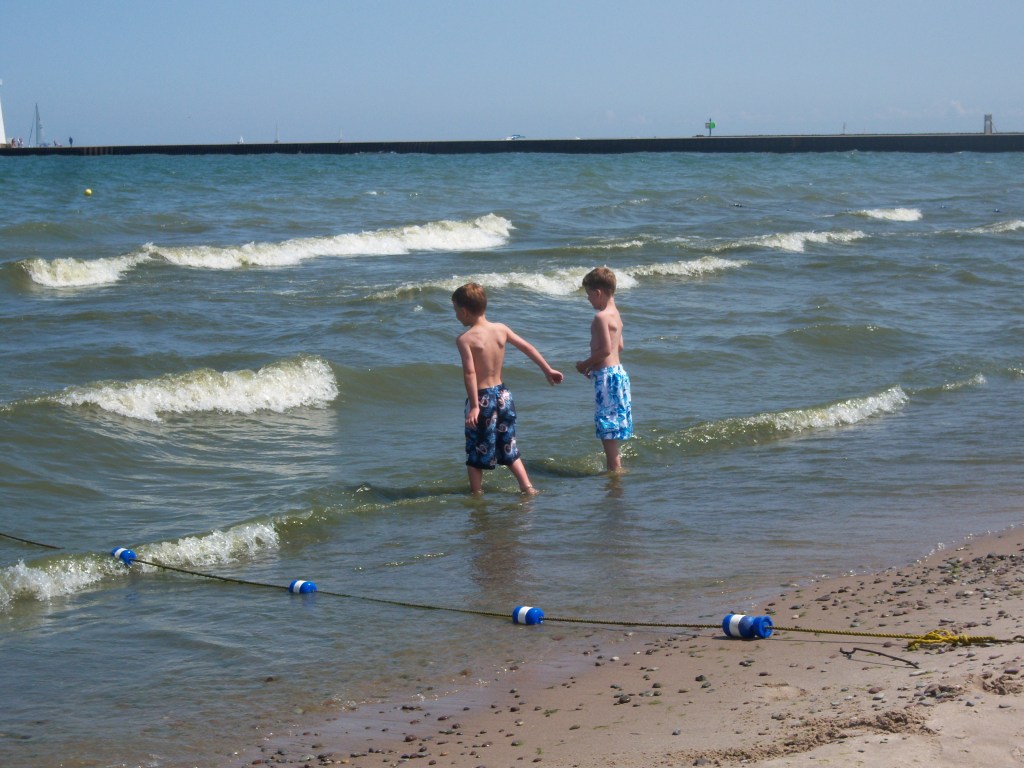
We retired and moved from central Pennsylvania to a bucolic village in the Finger Lakes region of New York on the south shore of Lake Ontario, not too far from several large cities and on the other side, Canada. It’s a big lake, with beautiful beaches and waves that look and sound like the ocean.

Quiet three seasons, in summer restaurants, shops, and museums fill with visitors, and outdoor activities abound. Cars line our street for Sunday concerts in the park, and our July 4th celebration attracts crowds from miles away. You wait in line at farm stands and for tastings at wineries. It’s exhilarating and enervating at the same time. I hold my breath, not fully exhaling until September.

So, what am I? I’d say I’m a country mouse who likes best to feast on the grains of quiet and solitude but occasionally ventures into a city to forage for more exotic fare. What about you?
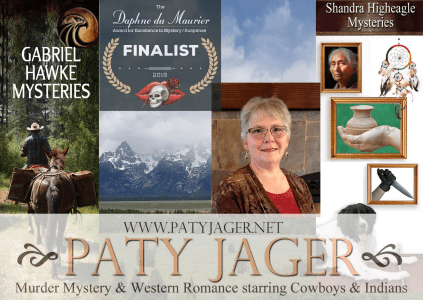
My Voice by Paty Jager

From the first writer’s meeting I attended decades ago I heard people talking about voice. My first thought, being a newbie writer, was, “What is voice?”

No matter how many people explained it in various ways, I couldn’t grasp what they were talking about. But writer’s voice is the writer’s influences into the story. The writer’s feelings and emotions that are shown through the characters in the book. How the syntax and phrases flow in the story.

It has taken me over a decade to see my voice in stories. Where readers think I did a good job describing setting, I think it might have been sparse but it was as I saw it in my mind. My writing has always been, what I’d call sparse. When I first started writing, historical romance books had to be 90-100,000 words. I struggled to get to 90,000. I’ve always been a minimalist with it comes to words, in writing and when talking. 😉 However, I do try to make the few words I use have an impact. Whether it is setting, a character, or dialog.

When I come up with new main characters, I don’t just sit down and start filling out a chart or character sheet on them. They live in my head for several months or a year, living a life outside of their books. When I sit down and write their books, I’ve been thinking about the book, the title, what they will encounter and how they will react before the book starts.

With my mystery main characters, who are Native American, I read all I can by and about their tribes. I want to try to see and feel things as they would, not as a not quite senior citizen white woman would see it. I’ve always been interested in other cultures and felt anger over how so many races have been mistreated. I use this as my catalyst to feel and hopefully show the correct emotions when I write.

My latest project has been something I knew I would write the second I’d decided to write the Gabriel Hawke novels. I have heard and seen so much about the Missing and Murdered Indigenous Women cause that I had a desire to tell the story and hope that it would open more eyes to the problem.

Where does this come in with my voice? My voice in my books, is not only concise working and phrases, it is the need to show justice can be found and a need to show where there is an injustice. My beta readers, line editor, and final proof reader all say this is my best Gabriel Hawke book.

The woman, Kola Shippentower-Thompson who worked with me to make me see how things worked on the reservation when a tribal member is missing gave me this review: “The story was captivating, I couldn’t put it down. So many memories were brought to surface, so many emotions, like this has been lived before, because it has, this is a glimpse into our reality in the Reservation. Thank you for seeing us & helping tell part of the story.” She is the Co-founder & Director of Enough Iz Enough, a non-profit organization that works to teach women and children how to be vigilant and safe and who support the MMIW cause. Proceeds from the sale of this book will be donated to the Enough Iz Enough organization to benefit the MMIW movement.

When Kola was reading the book, she told me she had to stop at one point because it brought back so many sad memories. She has lost multiple family members and has never received any answers about what happened to them.

My hope is that this book will enlighten more people to the plague of violence they Indigenous women, children, and even men have been enduring. The ebook is available for pre-order publishing on May 18th. The print books should be available by the end of the month.

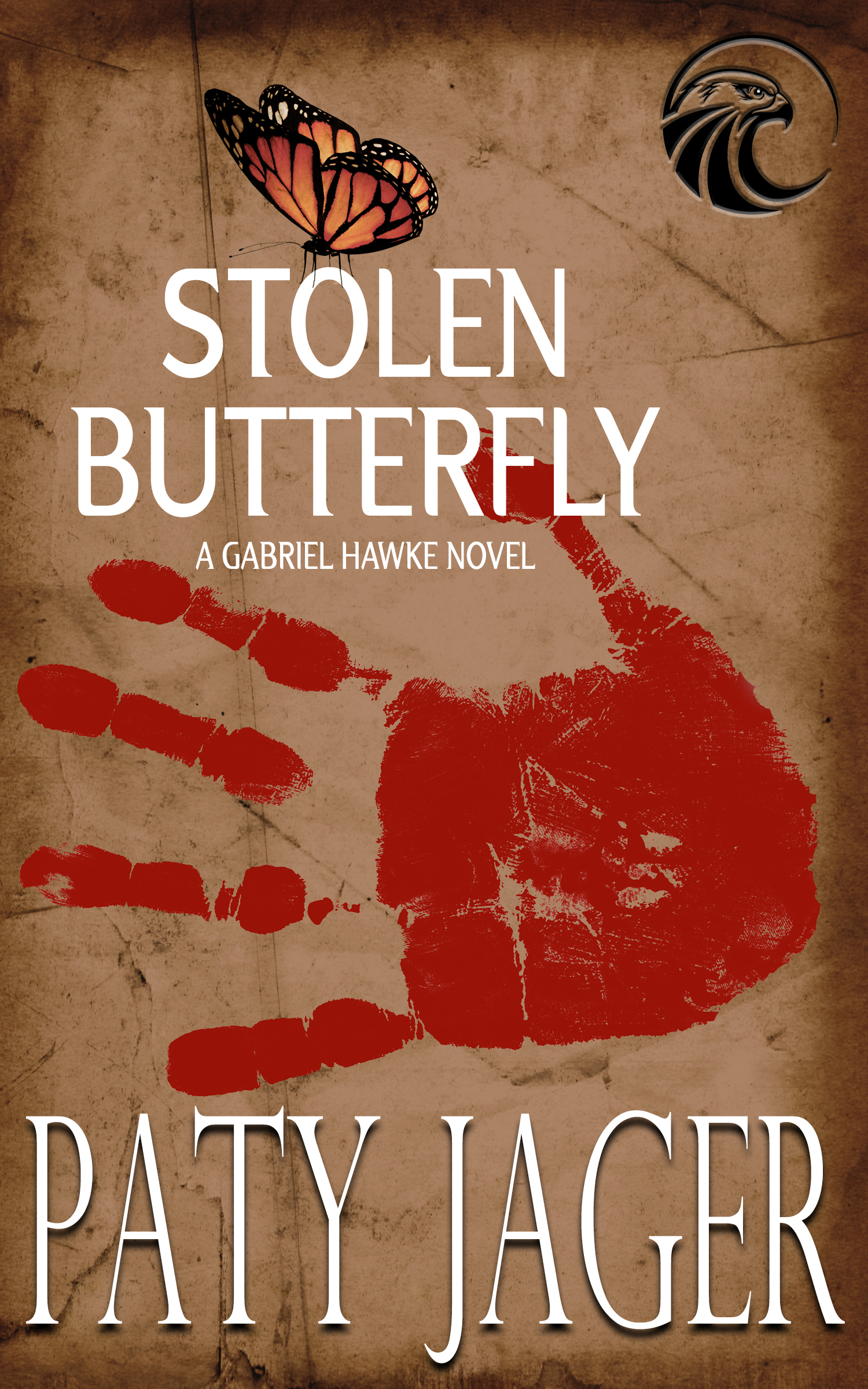
Stolen Butterfly

Gabriel Hawke Novel #7

Missing or Murdered

When the local authorities tell State Trooper Gabriel Hawke’s mother to wait 72 hours before reporting a missing Umatilla woman, she calls her son and rallies members of the community to search.

Hawke arrives at the Confederated Tribes of the Umatilla Reservation and learns the single mother of a boy his mom watches would never leave her son. Angered over how the local officials respond to his investigating, Hawke teams up with a security guard at the Indian casino and an FBI agent. Following the leads, they discover the woman was targeted by a human trafficking ring at the Spotted Pony Casino.

Hawke, Dela Alvaro, and FBI Special Agent Quinn Pierce join forces to bring the woman home and close down the trafficking operation before someone else goes missing.

Pre-order purchase link: https://books2read.com/u/baZEPq

This also happens to be my 50th published book! I’m having a 50 Book Bash event at Facebook and this week I am featuring my Mystery Books. So come on by, learn about my mystery books, leave comments and get in the running fore the daily prizes. Here is the URL: https://www.facebook.com/events/299774331600785

Adding my voice to my books wasn’t a matter of me finding my voice. It was a matter of me realizing what my voice was. Can you tell an author’s voice when you read a book? Or do you just enjoy the characters, the narrative, and the dialog and afterword, just smile, knowing it was a good read?

Expositions Are Like Prunes by Heather Haven

A writing teacher once told the class, “Get off the front porch.” What she meant by that was to stop explaining the who, what, why, and get to the story. As every writer knows, this can be tricky. You have to ground your reader. You have to let them know where they are. But you don’t want them to get lost in nothing but details. Or bore them to death, either. You have a story to tell. So get off the front porch and tell it.

Naturally, I forgot the teacher’s advice. Again. In rereading the first draft of The Drop Dead Temple of Doom, Book 8 of the Alvarez Family Murder Mysteries, I couldn’t believe how much backstory and explanation I’d put in. I even had the effrontery to open the book with three pages of a case Lee, the protagonist, just finished solving.

Really, Heather? The reader is interested in three pages of gobbledygook about a case that has nothing to do with the ongoing story? I don’t think so. What I was trying to get across was the protagonist had had a bad three weeks and was exhausted. All she needed in her life was to go traipsing off to the Guatemalan jungle.

Okay, why didn’t I just cut out all the junk and say that? Because sometimes we writers get caught up in how much exposition is enough and what is too much. That’s why I say they’re like prunes. Are five enough? Are six too many? It’s what writers grapple with continually. Expositions, not necessarily prunes.

Opening paragraphs set up the story, too. Or should. That’s where we make our contract with the reader. They are going to know right then and there what kind of a read they will have. Naturally, the writer has to live up to that contract. We can’t promise them an easy, breezy cozy with a happy ending and then hand a child or the family dog off to an axe murderer never to be seen again. A writer like Ruth Rendell has a different kind of contract. When she writes, “It reminded Burden of a drowned face he had once seen on a mortuary slab. They put the glasses back on the spongy nose to help the girl who had come to identify him” we know right where we’re going.

Within the first couple of paragraphs of my latest wannabe book I wrote, “The most vengeful I get is wanting CEO and mother, Lila Hamilton-Alvarez, to have the frizzies for just one minute of her life. Then I’d hand her some anti-frizz conditioner saying, welcome to my world.” These lines may stay or they may not. This is after all, only a draft. But it certainly does set up what kind of read follows. Within the first few opening paragraphs, the reader’s appetite is whetted for what’s going to come, how it’s going to come, and how much they are going to love it. Heady stuff.

This is not only about justifying the $ they spent to buy the book (I could have used more dollar signs, but my books are on the cheap side). Mainly, it’s because we want them to keep on reading. Not just this book, but all our books. And in order to do that, we have to make things clear, bring the reader to the starting point, but get on with the story.

After I reread the beginning of Drop Dead Temple, I wound up taking over half out of the first three chapters, in particular, the opening pages. I realized — again — it needs to start with the current problem and just a hint of why we are where we are. I am also in the process of taking out much of the backstories of my continuing characters. I will, of course, be sneaking some back in further on down the line. This is not only for newbies or because I try to make each book of a series a standalone, but as reminders to my ongoing readership. But this is after the story is moving, the reader is invested, and when they want to know more. Hopefully, after fourteen books I will know what I need to share and when I need to do it. But there are no guarantees. It changes with every book.

It’s a tricky bit of business, this exposition stuff. Please pass the prunes.

Confessions of a Paper Magnet

I have been doing a major decluttering job on my office. In fact, I wonder if it will ever be over. It’s the very definition of ongoing.

Decades, anyway. I’ve lived in this condo for nearly 30 years. And I’ve been accumulating stuff for longer than that. And no, we won’t talk about the walk-in closet that I’m afraid to open for fear of what might fall out.

I confess. I am a paper magnet. Show me a writer who isn’t. We collect ideas for stories and nuggets of research and stash them away like squirrels gathering nuts for winter.

Because I might use that piece of paper one of these days. It’s a plot point, a character study, an interesting setting. Or it’s just the intriguing bit of research I need to bring that scene to life.

Case in point. About fifteen years ago, I clipped a short, intriguing article out of the San Francisco Chronicle. It told the story of wallets found discarded in the heating ducts of an old military barracks at Camp Roberts, wallets with cash missing, but in many cases, personal items such as IDs and letters left inside.

Camp Roberts, World War II

Camp Roberts, which straddles the Monterey and San Luis Obispo county lines in central California, was a military base back in World War II. At the time, it was the largest military training facility around, with thousands of soldiers passing through. The base was deactivated after WWII, then reactivated during the Korean War. Nowadays, Camp Roberts serves as a base for the California National Guard.

As for those wallets, the theory was that they had been stolen from soldiers in the barracks, the valuables taken. Then the thieves tossed the wallets into the heating ducts, where they were found decades later, when the building was torn down.

A National Guard officer at Camp Roberts was taking steps to see if he could locate the wallet owners, using what papers remained. Later articles outlined some success in doing that.

I clipped that article out of the newspaper and kept it on my desk for several years. I was sure I would use it, someday. I was right. Those stolen wallets at Camp Roberts turned out to be an important plot point in Bit Player, a Jeri Howard novel.

One newspaper article leads to another. In fact, it led me to the Bancroft Library at Cal, where I looked at the Camp Roberts newspaper during the war years. I found out what movies were playing at the base theater and what a fried chicken dinner cost at a local restaurant. And the cherry on top? Bing Crosby and his band played a gig at Camp Roberts at the time I was writing about. That’s just the sort of detail I love, one that adds flavor and spice to my writing. Of course, that mention of Bing wound up in the book.

I used to clip articles out and leave them in folders, part of a work in progress. I still get vital information for my plot from various newspaper. Though these days, I don’t save the print copy of the article, Instead, I save the URL, or cut and paste a copy into a Word document. Or the pertinent piece of paper can be scanned and saved electronically.

Much less clutter. Paper clutter, anyway. Then there’s digital clutter, which is a topic for another day.

Waiting, Hoping for Things to Get Back to Normal

During this stay at home time, I’ve written and published two books, have another written waiting on critiques, and started another.

What I haven’t done is gone to writing and mystery conferences, book and craft fairs, held in-person book launches for my newly published books–and I know my fellow authors haven’t either as all these things have been put on hold.

One of my favorite writing conferences put on by the Public Safety Writers Association is planning on having their conference in July of this year in Las Vegas. https://policewriter.com/. And yes, I’ve signed up for it and will be helping with the pre-conference writing workshop.

I’ve also been thinking about planning a book talk,/signing, in my little home town. I do have a place to hold it, just need to decide the best time to have it.

Whether or not his will all happen, I have no idea–but I’m hopeful.

My two newest books are NOT AS WE KNEW IT (The Rocky Bluff P.D. series wirtten as F. M. Meredith ) and END OF THE TRAIL (The Deputy Tempe Crabtree mystery series.)

What about you? Is anything happening to give you hope that thing are getting back to normal?

Marilyn