Writing the Season

Suddenly it’s December. Holidays. I celebrate, and so do my characters.

Death Rides the Zephyr, the first in the series featuring Zephyrette Jill McLeod, takes place in late December 1952. Jill is leaving Oakland on December 22. The eastbound run of the sleek train known as the California Zephyr is heading for Chicago, due to arrive Christmas Eve. Jill will have a layover in the Windy City, spending Christmas in a hotel rather than with her family. Before Jill leaves, her parents and siblings give her presents, including the latest Agatha Christie book (a Christie for Christmas!).

Her father tucks money in her new wallet. “So you can have a nice Christmas dinner while you’re in Chicago,” he said. “Go to the Pump Room. Your mother and I ate there once, before the war, and it was a real treat.”

When I researched the book, I learned that the Zephyrettes—train hostesses—would have parties for children traveling on the trains, especially during holidays. In keeping with that real life tradition, my fictional Zephyrette Jill hosts a mid-afternoon Christmas party in the train’s dining car. She’s picked up Christmas stockings and candy at Woolworth’s. Now she enlists the help of passenger Mike Scolari, a WWII veteran, to stuff the stockings.

Mike roots around in the bag of goodies and finds:

“Hey, Hershey’s Kisses. My favorite. Did you know there was a shortage of Hershey’s Kisses during the war?”

“Yes, and I really missed them.” Jill loved Hershey’s Kisses, and the little chocolate candies had been in short supply during and just after the war. Rationing of raw materials during that time meant no aluminum foil for the wrappers.

I discovered that tidbit during my research into what brands of candy were popular in the early 1950s. I had to use it!

It’s a great party, by the way. Even the conductor shows up to lead the kids in a chorus of “Jingle Bells.”

But it’s a mystery. It’s winter, the train is traveling through canyons next to a frozen river and rugged mountains covered with snow. A passenger disappears and then Jill finds a body in a sleeper car. We’re into murder-on-the-train territory. Even though Jill’s favorite Christie sleuth is Miss Marple, she will have to use her little gray cells to catch the killer.

One of my Jeri Howard novels features a different take on the holidays. Jeri is an Oakland private investigator. In Nobody’s Child, she looks into a young woman’s death and a child’s disappearance. Jeri feels grumpy, her holiday spirit missing, though she and family members have tickets to a theatrical version of A Christmas Carol. And she winds up seeing the Oakland Ballet version of The Nutcracker twice, which is one time too many. As she puts it, “I’m Nutcrackered out.”

I particularly like a scene where Jeri is in the lower-level lounge of the Paramount Theater in Oakland, where The Nutcracker performances take place: “There seemed to be a large contingent of little girls in frilly dresses and patent leather shoes, pirouetting over the black carpet. One of them grande jettéed right into my shin.”

Jeri searches for information on the dead woman’s past among the East Bay’s homeless community. When she sees A Christmas Carol, the juxtaposition of the homeless people on the streets outside the theater and Dickens’ words ring true—and close to home.

Then there’s this scene, where Jeri visits a house decorated for Christmas:

In the corner at the other end of the sofa, a small pine tree had been festooned with a couple of strands of lights, a meager collection of glass balls, and some homemade decorations, colorful construction paper loops, and popcorn chains made of popped kernels strung on thread. I saw a gray-and-brown striped tomcat sitting on the sofa arm, a blissed-out expression on his face as he gnawed at the popcorn. He’d already managed to pick clean several strands of the chain.

Toward the end of the book, Jeri tracks down Terry Lampert, looking for information on a homeless man who calls himself Rio. Lampert, who knows Rio from their shared past, says he gave Rio a ride. Why? Jeri asks.

“You ever see White Christmas?” he asked. Then he smiled. “Of course you have. Everybody’s seen White Christmas. You remember that scene early on when Danny Kaye asks Bing Crosby why they’re gonna see the sister act? Ol’ Bing says, ‘Let’s just say we’re doing it for a pal in the Army.’”

“And Danny Kaye says, ‘It’s a reason. It’s not a good one, but it’s a reason.’” I smiled back at Lampert. “Is that the only reason?”

The man opposite me shrugged. “It’s a little bit of, there for the grace of God. If I hadn’t met my wife, that could be me, living on the streets.”

It’s a mystery, right? And Jeri’s going to get to the bottom of things. She finds the people she’s looking for, solves a murder, celebrates Christmas with her father, and spends New Year’s Eve with a new fella.

Whatever holidays you celebrate during this time of year, whether it’s winter solstice, Hannukah or Christmas, may you have companionship, wonderful things to eat, and hopes for the future.

Guest Blogger ~ Thonie Hevron

Be Careful What You Wish For
I’ve been writing stories since I could hold a pencil. I remember getting a 5th grade class assignment during a mythology segment. We were to write a myth. I wrote a story, “How the Leopard Got His Spots.” All I remember now is the main character was up a tree in a jungle, hiding from a leopard prowling around beneath him. The character had a bucket of black paint and was shaking with fear, so much that he dribbled paint on the animal. I got an A+.

Years later, I still wrote but rarely completed a work of fiction. I’d written procedural manuals for work. I’d spent two decades in law enforcement in Northern California, mostly Sonoma County. By 1994, my husband and I were planning our retirement—still years away, in the Eastern Sierras. We were tired of the traffic and congestion of the Bay Area and wanted a more peaceful setting. When my firefighter husband suffered a career-ending injury, we stepped up plans to retire. Until I qualified to retire, I accepted a job as a dispatcher at a small police department. In less than a year in the Sierras I found myself so homesick that even the catastrophic floods of 1996-97 in my old neighborhood made me want to be back in Sonoma County. I’d worked three previous floods and missed helping during the disasters.

One night on a quiet graveyard shift, seeking a bit of consolation, I scratched out a description of a Russian River (Sonoma County) home I saw in a magazine. The seed of a story germinated, and I wrote the story. That tale became By Force or Fear, the Nick and Meredith Mysteries, about a Sheriff’s detective Meredith Ryan (and her partner Nick Reyes) stalked by an influential judge.

Since my husband and I moved back in 2004, I’ve written and published a total of four books—all set mainly in Sonoma County. If I dare simplify my goal for writing these stories, it’s to humanize the people behind the badge. By the time I retired, I had thirty-five years of service as a civilian law enforcement employee. I worked as a Parking Enforcement Officer (yes, meter maid), Dispatcher, Records Supervisor and Community Service Officer. I’d known scores of police officers, male and female, sheriff’s deputies, FBI, ATF and other alphabet soup agencies. My observations over the years varied with the faces that I saw—some decent, dedicated officials who wanted to make a positive difference in people’s lives. Others not so much, but the vast majority came to work every day with commitment. I wanted to write about them and do my part to discourage the “Die Hard” stereotype. Thus, Nick and Meredith were born.

I know I’d have picked up a pencil sooner or later in my life. But I’m darn certain that homesickness played a huge part in jump-starting my writing. Be careful what you wish for—you might get something entirely different and better!

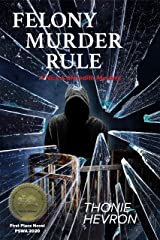
In this fast-paced story, sheriff’s detective Meredith Ryan surprises an intruder leaning over her baby’s crib in the middle of the night. Unable to catch him, she launches a dangerous journey to protect her family. The death of her father the next day leads her to look into his past where she discovers her father was involved in a robbery and homicide many years ago. Working through a web of deceit and mystery, she discovers the robbery and homicide are connected to the mysterious man in her nursery. With Nick, her husband, they unravel her father’s involvement in the robbery/homicide. The loot from the robbery has been long sought by competing crime rivals who are trying to use her family as bargaining chips. Meredith and Nick must find the truth in the next 24 hours before the criminals close in on her family.

Buy links: https://www.amazon.com/gp/product/B08ZJW2YRR

Thonie Hevron’s law enforcement experience is the inspiration for suspense novels based on the lives behind the badge. A Sonoma County resident for over thirty years, she lives in the historic Northern California Town of Petaluma with her husband and two dogs and a cat. Dressage and travel are her real-life passions outside of family and writing.

Her four thrillers, By Force or Fear, Intent to Hold, With Malice Aforethought and newly released Felony Murder Rule are award winners at the Public Safety Writers Association Writers (PSWA) Writers Contest in 2012, 2014, 2016, 2018, 2020 and 2021. All books are available in bookstores and on Amazon.com.

Website: www.thoniehevron.com

Facebook: ThonieHevronAuthor page

”What’s in a name?” by Heather Haven

To complete the quote from the Bard’s Romeo and Juliet, “That which we call a rose by any other name would smell as sweet.” For many of us writers it could be paraphrased, “What’s in a title? That which we call a book by any other other name would be as read.”

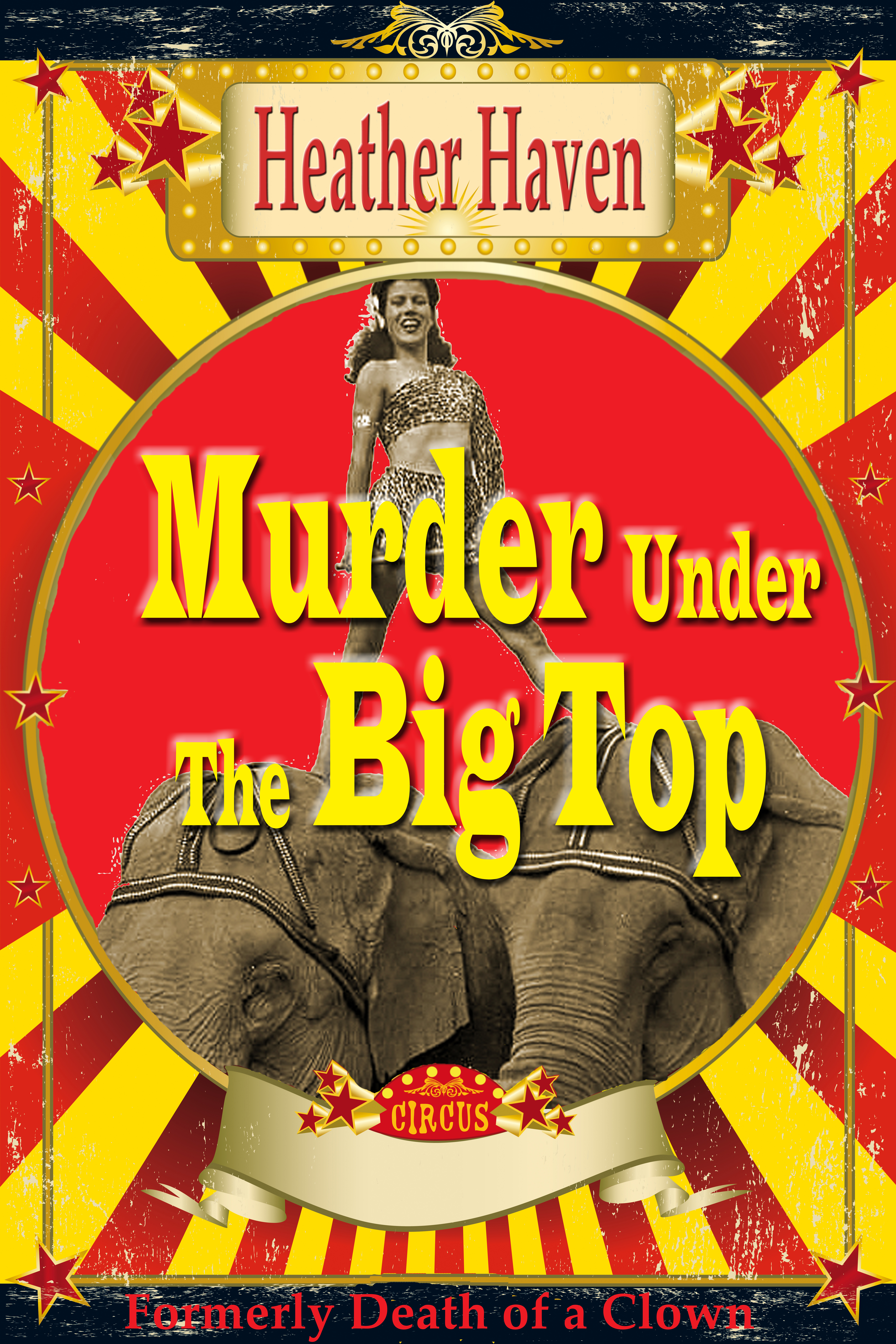
Of course, the answer to that is probably no. The title of a book, as with the cover, tends to draw in many a reader, especially if you’re not well-known. It took me a while to get that. Sometimes the obvious has to come over and kick me in the knee before I realize what’s going on. Death of a Clown, my docu-fiction noir about Ringling Brother Circus circa 1942, was on the market before I got feedback on just how many people fear and dislike clowns.

There are actually people who will not under any circumstances even touch a book with the word clown in the title. Even though it won a fairly prestigious award, some readers still hesitated to buy and read it. So after a few years, I bit the bullet and changed the title (and the cover) making it Murder un the Big Top. Not one word of the story was changed, just the title and cover. It took some doing, a lot of official documents, and buying yet another ISBN number. Murder under the Big Top still isn’t my biggest seller by a long shot, but at least people don’t send me the I-would-never-read-that-book hate mail. Well, not hate mail, exactly. Dislike mail.

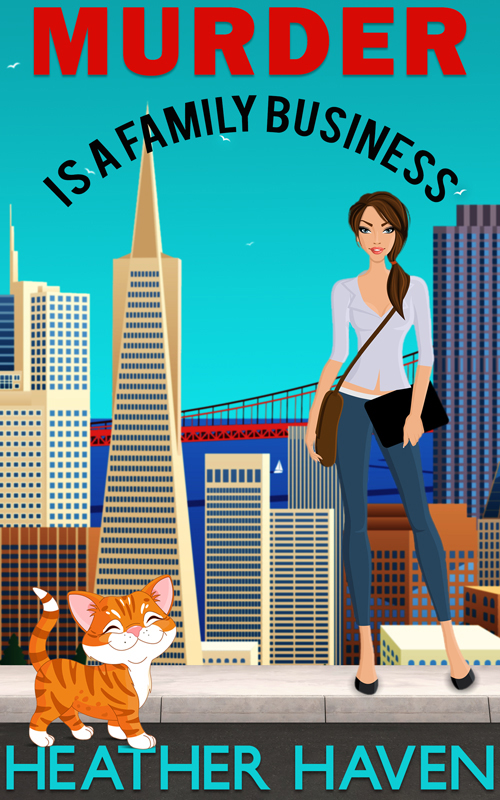
The first book of the Alvarez Family Murder Mysteries is called Murder is a Family Business. If I had to do it again, I wouldn’t call the book that. The title seems to indicate a more serious work to some, especially males, and has fooled many of them. They were expecting something more along the lines of “The Sopranos.” When they got a load of the family-oriented detective agency complete with a kitten and designer shoes, they were not happy. I didn’t change the title, but did create a cover that leaves no doubt this is a cozy. Between the title and cover, I think you can let a reader know that. But once again, if I had it to do over again, I would choose another title for the book.

I got better at it as I went along, but still had much to learn. Take the second book of the series, A Wedding to Die For. If I knew then what I know now, I wouldn’t have chosen that title, either. Now I would put the proposed title into Amazon and see what other books come up. If I had done that with Wedding, I would have seen three other books had the same title. But as that’s the book under development by a major streaming service and production company, I’m leaving it alone. But another lesson learned.

There are some very clever titles out there, especially in the cozy mystery field. Just this year we are offered: Penne Dreadful By Catherine Bruns, Wonton Terror By Vivien Chien, and Death Bee Comes Her By Nancy Coco. For my part, one of my favorite titles for my books is The CEO Came DOA. Although the latest book of the Alvarez Family Mysteries, The Drop-Dead Temple of Doom, is a very fun title. I don’t think any guy is going to buy it thinking it’s mob related. Although, gentlemen, never trust a protagonist who knows Karate and carries a Glock 19. Even if she does wear designer shoes.

The Season of Gratitude

This time of year publications on and off line are full of essays on gratitude, each writer searching for a unique expression that would set the writer apart. Having said this, I too am offering one of those essays. 

Some years ago I listened to a speaker on meditation talk about online meditations on various topics including gratitude, and how it changed his thinking. That sounded promising for someone who is often grateful for finding a parking space in Boston or catching the last train out or something else equally pedestrian. I decided to give the meditation on gratitude a try.

The instructions began with a sitting meditation of about ten minutes. After that we were instructed to begin listing the things for which we were grateful, and to keep going for another ten minutes. You might think ten minutes isn’t very long, but it is in fact a very long time, especially when you think you should be able to answer the question and then get on with it. (Obviously I hadn’t yet benefited from the practice of meditation.)

I began the list of gratitudes with the usual–my family, my health, my friends, the colleagues who read the first draft of my first mystery and didn’t tell me to get a day job. Then I scrounged around for things like our garden, the gifts from my family, the quiet streets of my neighborhood, and the like. I kept on going, even though I was feeling a little desperate and telling myself no one would know or care if I quit right then–at the three-minute mark. I passed through gratitudes for having a nice home, enough money to pay the bills, a husband who loved me (he got listed several times in different categories). 

The pressure was mounting. I still had several minutes to go. Without thinking (which is actually the same as thoughtlessly minus the emotional baggage), I began free associating. We had a dog, so I thanked him for bringing me close to broken bones every time he leapt to play with another dog. I thanked the person I offered to help when I saw him struggling with a bureau trying to get it into a truck, and he told me what a handsome dog I had. I was thankful for the mailman who came every day without complaint about our old porch stairs. 

By the end of the ten minutes I was ready to go for another as I thought about all the people I met and spoke with or somehow interacted with, and the feelings they’d left me with. I was grateful for the human qualities that are so often the source of pain and shame and disappointment. And even those qualities and others like them I was grateful for because they reminded me that I was human, and that was glorious.

Recently I read an explanation of why we have fantasies, daydreams, and the rest of it. The reason is, in that particular person’s view, a way to escape ourselves, that we humans will do almost anything to avoid spending time in true communion with our true selves. I don’t know if that’s true or not. But I do know that if you want to really know who you are, try a ten-minute meditation on gratitude. The discoveries are definitely worth the initial discomfort and awkwardness. Skepticism dissolves and something close to identity emerges.

Saying Goodbye to a Series

First off, Happy Thanksgiving to all! It is a bit bittersweet for me, as I find myself oddly at a loss with the publication of Don’t Tell, the final book in The Cooper Quartet. I suspect all authors suffer the same symptoms when a series ends.

  • I miss the Coopers, Laury, Byron, and their cousin Robin.
  • I keep wondering if I should write the one book I didn’t and fill in a big relationship blank. The book would take place in 1970 between the first and second books. If I did, The Quartet would become a Quintet. Then what?
  • Am I the only one who cares that these fighters are now on their own without me guiding them through further adventures?
  • Did I do what I set out to do: get one military family through the tumult of the Vietnam War while exorcising my own ghosts of the same period?
  • Did I manage to show the dichotomy of military women’s lives at that specific time in history when women’s roles were changing so rapidly?
  • Now what?

I suspect that some series go on and on because the author just can’t say goodbye to the main character, and as long as fans can’t either, that’s a good thing. I admit to an adoration for the MacDonald’s, Ross and John, whose detectives mirrored the society in which they existed and who grew and changed over the books. Travis McGee, in particular, begins like Mike Hammer with all women objects and ends understanding a world where women are not only not objects but are equals. Still, too often, series drag on, the protagonists don’t grow, readers learn nothing new … blah, blah, blah. I stop reading those after about the third book.

I didn’t want to be one of those authors who just yamity, yamity, yams unable to say goodbye to their own creation. So, I planned The Cooper Quartet as a trilogy. It became a quartet when Don’t Tell demanded I write it as the finale to the series. The procedural plot of Don’t Tell happened to me, as I note in my acknowledgment, except no one died. However, it was the reason I left the Navy. So, Robin became my vehicle to tell the world what happens to good people caught in a rigid system, even as the world rotates in their favor.

I’m happy to leave the Coopers, truly. Mostly. Am I in mourning? Yes, a bit. Okay, more than a bit. I have strong feelings for Laury Cooper, Chloe Minotier, her brother Pierre, and Dan Cisco. And, of course, my alter ego, LT Robin Haas. But I set out to write a family saga told via four military thrillers with the climax of the arc the third book and the denouement the fourth.

The first book in The Cooper Quartet, Dead Legend, takes place in 1967-68 during the hardest fought period of the Vietnam War and looks at what grifts war can hide. The second, Head First, occurs during the Christmas carpet bombing of 1972 and touches on the plight of Amerasian children. Pay Back deals with the Fall of Saigon and the corruption of the war, and Don’t Tell covers the fallout of all three prior books and the societal changes that occurred while our protagonists battled through the era. And, yes, I suppose, if there was a clambering to know why Chloe Minotier has such a soft spot for Laury Cooper, I’d write number five.

The books in The Cooper Quartet (Dead Legend, Head First, Pay Back and Don’t Tell) are available on Amazon in all formats.

Postscript:  For those who have asked me about my use of the red and yellow stripes that tie the four covers together. Here is the answer. The flag of South Vietnam has three horizontal red stripes on yellow like the horizontal stripes on the books in The Quartet, and the Vietnam Service ribbon has three vertical red stripes on yellow (green at each end). But do you know what I’ve learned? Other than Vietnam Era veterans, absolutely no one remembers the ribbon or the South Vietnam flag. And though I am aware that the U.S. wanted nothing so much as to leave the distaste of Vietnam behind, it is still stunning how completely it was accomplished. (Thus ends my rant)