

Why I Write Cozy Mysteries — A Beach Walk Answer
On foggy mornings along the California coast, the world feels suspended.
The horizon disappears. The ocean and sky blur into one soft gray. Even the familiar curve of the shoreline looks different, as if something has shifted overnight.
Those are my favorite mornings to walk the beach.
After a strong swell, the tide leaves behind driftwood, kelp, and the occasional glint of something unexpected. I look for sea glass. At first, it’s easy to miss — a cloudy fragment half-buried in sand. But once you learn to spot that soft glow, you can’t unsee it.
Mystery writing feels like that.
I write cozy mysteries because I’m drawn to what hides beneath ordinary life. A marina on a bright afternoon. A small-town festival. Neighbors chatting on a front porch. On the surface, everything looks steady. But if you stand still long enough — you’ll notice tension, history, secrets.
Mystery readers understand that instinct. We read to uncover. To test our suspicions. To follow currents that weave through waves.
For me, the cozy branch of the genre offers something I love: community. In a small coastal town like my fictional Ocean Wood, relationships overlap. Loyalties complicate things. A crime doesn’t just affect one person; it ripples outward. That emotional web gives a mystery weight without turning it bleak.
My protagonist, Amanda Warren, arrives in town trying to rebuild her life. She carries loss. She’s not looking for trouble, but it keeps finding her. Each case she investigates is about justice, yes — but it’s also about steadiness. About putting the pieces back together.
And then there’s Grok.
Grok is a very large, very opinionated Maine Coon cat who may — or may not — have abilities that defy easy explanation. Some readers meet him expecting whimsy and stay for the sharp observations. Cats notice everything. They watch quietly. They sense shifts before humans do. Grok often catches emotional truths before Amanda does.
Writing him is a way of honoring intuition — that small internal nudge that says, something isn’t right here.
Whether you prefer hardboiled detectives or classic puzzles, that feeling is universal in mystery fiction. The tightening awareness. The moment when a clue lands differently. The fog beginning to thin.
On the beach, when I find a piece of sea glass, I always pause. It began as something whole — a bottle, perhaps — broken and tossed aside. The ocean didn’t erase its past. It reshaped it. Edges softened. Surfaces turned luminous.
That’s what draws me to this genre. Mystery is about disruption, but it’s also about restoration. Order doesn’t return untouched; it returns altered, wiser. In my most recent release, Monterey Bay Malice, chaos erupts at a seaside festival, and the crime cuts through friendships and reputations. Yet by the end, what matters most is not just who did it, but how the community stands afterward.
I don’t write cozies because I want to avoid darkness. I write them because I’m interested in what survives it.
Readers don’t turn to mysteries because they love crime. They turn to them because they love discovery. They love that moment when the scattered details align. They love the sense that someone — whether a detective, an amateur sleuth, or a watchful cat — was paying attention.
Fog eventually lifts. The tide recedes. That’s how finishing a mystery feels to me. Something once scattered has taken shape. The surface is clear again.
That’s why I write the genre I do.
Because beneath even the calmest shoreline, there are stories waiting to be uncovered.
And sometimes, if you’re lucky, they shine.
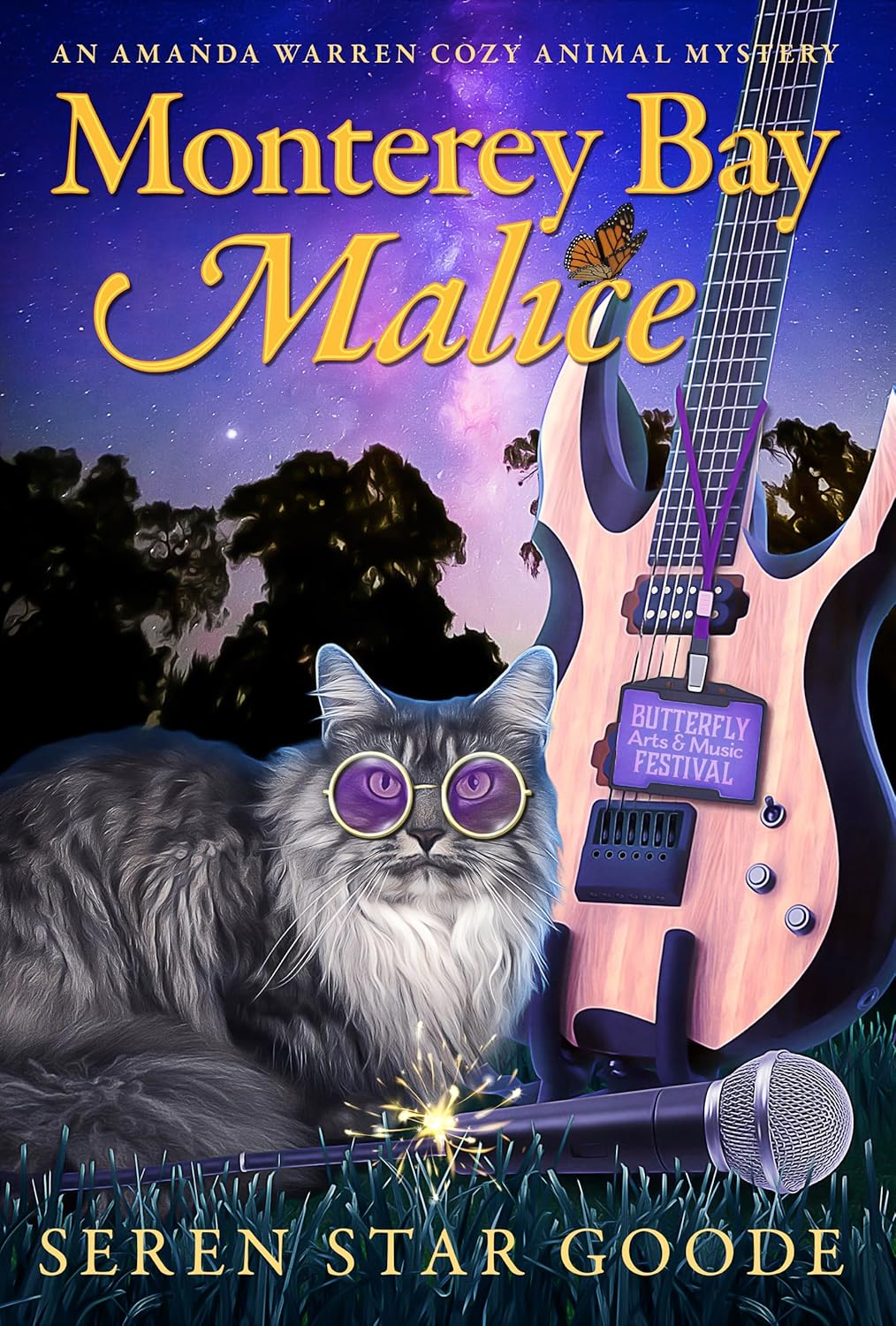
Monterey Bay Malice, the latest installment in the Amanda Warren Cozy Animal Mystery Series, strikes a deadly note when a music festival organizer is electrocuted onstage. As sabotage ripples through the seaside town of Ocean Wood, Amanda and Grok—her 35-pound psychic Maine Coon cat—must uncover the truth before celebration turns to catastrophe
Buy Link: https://www.amazon.com/gp/product/B0FVWFN352
Free story in the series: Kerfuffle at the Border https://dl.bookfunnel.com/bjbbxrovgs

Seren Star Goode writes coastal cozy mysteries set along California’s Monterey Bay. Her Amanda Warren series follows a reluctant sleuth, a close-knit community, and a very large Maine Coon cat named Grok who may be the smartest one in town. When she’s not plotting fictional murders, Seren can often be found walking the beach in search of sea glass, where many of her story ideas begin.



 Ladies of Mystery
You must be logged in to post a comment.