The Romance of Reading
When I entered first grade I didn’t know the alphabet and was put in the group of children who were having the most difficulty learning to read. At some point I began to read without any trouble. Then came third grade when all of us children were told if we finished ten books we could claim a prize.
To claim the prize meant telling the teacher, which meant she would lead us to the box to select from among the many-colored jumble of prizes: tiny plastic dolls and pretty paper fans and box cars and gold-spined books. I coveted those treasures with all my heart.
And yet I would not claim the prize.
Instead, I re-read the tenth book for weeks, staring at the pages. The book was about a child who lived in a city, walked to school, and learned how to obey the stoplights to cross the street safely. I was a child who rode the bus to a rural Catholic school where someone got punished for putting a cigarette in the outstretched hand of the statue of Mary at the top of the stairs. As I reread and reread the tenth book the other children claimed their prizes.
My desire for a prize was desperate, but not so much that I would claim one. I was too shy. I had seen our teacher put one of the children on her lap. She must have been kind, must have delighted in giving prizes. But I couldn’t bear it, couldn’t bear the attention.
The book was my shield. More books would shield me later. In a few years it would be determined that I was myopic and couldn’t make out what was written on the blackboard. Before problems with my eyesight were detected, books continued to be my shield and my comfort—not because of shyness but because I could see most clearly what was written on a page only inches from my face.
In elementary school it wouldn’t be long before I discovered what I call the romance of reading. That is, I read a book that captured my whole attention in a way I had never yet experienced. The book told a story about Robin Hood. At the end, Robin Hood dies. I had no idea. I was so immersed in the book during a silent reading period at school that when an arrow pierced Robin Hood’s heart I cried out with shock. I was too astonished to be embarrassed by my outburst. What I felt for that book: it was like a first romance, and I refused to be embarrassed or ashamed by my response. Ever since, I’ve refused to be embarrassed by anyone’s judgment about what I’m reading. Reading is a romance—and no one else’s judgment should apply.
The word “romance” is hard to explain, at least in the way I want to consider the word.
Years ago a Frenchman, a stranger, asked me what the word “romance” meant. That seemed odd—wouldn’t a Frenchman know the answer, if anyone does? For some reason we were looking at a barrel inside of which a big silver fish was swimming. I tried to answer, but I don’t think he understood what I meant and, anyway, I was distracted by the fish.
If I had to answer now I might say that romance is a willing agreement to engage in a fever dream that can happen in various circumstances, even between one person and one book. That is, reading can be a romance—heady, passionate, and consuming, full of uncertainty and, sometimes, comedy. Even if a story is read aloud to us, each of us in our own minds gives the story life—and what we read may change our sense of time and readjust our sense of the space we occupy. Such reading may even allow a secret undomesticated part of ourselves to flourish. When we are engaged in the romance of reading we are not escaping the confines of our life, not exactly. It’s more like entering a country that never before existed, a country we are helping to bring into being through a quality of attention that creates an intimate experience. It doesn’t feel lonely, although most often conducted in solitude.
My new novel, Wrongful, is a literary mystery in which a popular novelist apparently disappears at a festival where various writers are behaving badly. My primary character, Geneva Finch, is what I think of as an ideal reader, a tenacious reader who has felt deeply what it means to carry on a romance with a series of books. She is an avid admirer of the novels of the popular novelist Mira Wallacz, and she is haunted by the mystifying circumstances surrounding Wallacz’s last moments. She can be critical of what she reads, and she recognizes that her attitudes and behaviors have been shaped by books—and that she may need to adjust her expectations accordingly. Yet reading, for her, sometimes comes close to voluntary enchantment.
I’ve written before about the romance of reading. In “The Ideal Reader,” the opening story of my collection The Tao of Humiliation, a biographer attempts to solve a mystery about a famous writer’s abandonment of his writing—and of his own daughter, who is explicitly identified in the story as an ideal reader. Another story, “Night Walkers,” in my collection Visitations, is about the world’s laziest book club, whose members tend to avoid reading any books and whose main character must regain and newly strengthen her ability to read fiction after enduring her husband’s betrayal. In “Gods and Goddesses in Art and Legend” (Visitations) a woman comes to a realization about how her reading has contoured her expectations far too much: “What new pattern was she going to make for her life? Whatever it was, her life couldn’t be made only of books. Not only of books. Although partly of books, that was true.”
Although an ideally generous reader, Geneva Finch in Wrongful is not a faultless reader—she can jump to conclusions too readily, and she can be willfully naive about authors, at least initially—yet she enters into what she reads with generosity. She doesn’t suspend her judgment, but neither does she suspend her capacity to be changed by her reading, to dwell in the country of the imagination and meet its requirements. She is, in a sense, the perfect reader for Mira Wallacz’s novels, for at their deepest levels both Geneva and the novels’ author endure the lingering effects of loss and self-blame. Their encounter in the novel may be brief. Nevertheless, an unconscious recognition pervades their meeting.
The traces of an underground or inexplicable mystery animates the romance of reading and propels us through certain books. We feel the pull of sensations we may not quite understand. Reading may be an encounter, sometimes with something that we are hazily trying to remember and pursue. I think this is true for us as authors as well: an author writes another book in search of the answer to an inexplicable mystery.
The dedication page of Wrongful is inscribed “to the rightful reader”—those readers for whom the book is right at this time in their lives, who will be sure of their right to imagine, to read close to the page or in the mirror ball of what we know of culture and history, to read to the end of the book, or to stop short and put the book down, or even to read to the end and start all over again.
I don’t think there can be one sort of ideal reader. Each book we read is its author’s attempt to find the right reader. And as readers we make the ultimate choice—will this be a book we can drop, without hurting anyone’s feelings (the author will never know) or a whirlwind romance, or a cherished encounter that we hate to see end? Will we return to reread the book, faithful year after year? Meanwhile, for readers and writers alike, when a book clicks for us, the romance of reading is ardent and head-turning—a new springtime.
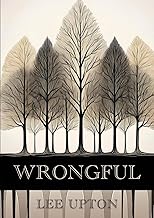
WRONGFUL
When the famous novelist Mira Wallacz goes missing at the festival devoted to celebrating her work, the attendees assume the worst—and some hope for the worst. Ten years after the festival, Geneva Finch, an ideal reader, sets out to discover the truth about what happened to Mira Wallacz. A twisty literary mystery dealing with duplicity, envy, betrayal, and love between an entertainment agent and a self-deprecating former priest, Wrongful explores the many ways we can get everything wrong, time and again, even after we’re certain we discovered the truth.
byuy link: https://www.amazon.com/dp/1963846214
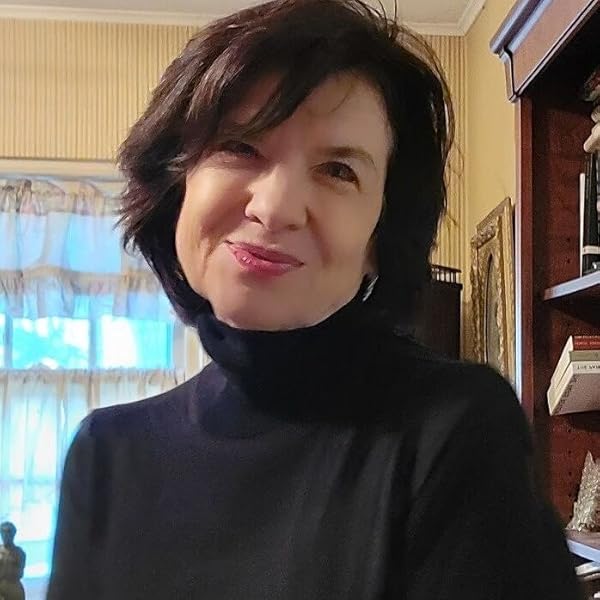
Lee Upton is the author of books of poetry, fiction, essays, and literary criticism. Her forthcoming literary mystery, WRONGFUL, in which writers behave badly at two literary festivals, is forthcoming in May 2025. Her comic novel, TABITHA, GET UP, appeared in May 2024. Her seventh collection of poetry, THE DAY EVERY DAY IS, received the 2021 Saturnalia Prize and appeared in spring 2023. Her second short story collection, Visitations, was a recipient of the Kirkus star and was listed in “Best of the Indies 2017” and “Best Indie Books for December” by Kirkus. The collection was also a finalist in the short story collections category of the American Book Fest Best Book Awards
Facebook: facebook.com/uptonlee
Instagram: leeupton45
Lee Upton’s website: https://www.leeupton.com/
Publisher’s site with reviews and purchasing sites: https://www.saggingmeniscus.com/catalog/wrongful/
Bluesky: @leeupton.bsky.social
On X: @LeeUpto10998691



 Ladies of Mystery
You must be logged in to post a comment.