Giving your story a name that resonates


I’d like to start by telling you a bit about myself – and my experience with titles. I am a freelance journalist and have written hundreds, actually thousands, of articles for print and online publications across North America and beyond.

One of the things you soon learn as a freelance reporter is that editors write the titles of articles. This is not always the case, but it is usually the case.  There are a number of reasons for this, and we’ll discuss those. In a minute.

First, I’d like to share with you the options article writers have when it comes to titles. One, you can come up with a title that you think reflects the article, is clever or straightforward or funny – whatever attribute you think will appeal to readers. If the editor likes it, they may use it. If they don’t, they will write their own. More often than not, they will write their own.

Years ago I did an article on a trademark dispute involving use of the Bluenose, Nova Scotia’s famous schooner. My title went something like this: Ship disturbing trademark battle erupts in Nova Scotia. I thought that was very clever. My editor did not. Well, she may have, but the title she used ultimately went something like this: Nova Scotia businesses barred from using Bluenose name.

On the other hand, I wrote an article on champagne and called it “Liquid Bling.” My editor wrote to say she loved the title, and she used it.

My feeling was it never hurt to include a suggested title, and no one usually knows the story as well as the writer. But good titles take time to craft, and on many occasions the articles I submitted did not have a title. They had a descriptor: Profile of Donald Duck, Article on the pros and cons of ducks vaping, Conference report from Ducks Unlimited. I was leaving the work to the editor.

And here’s what editors are looking for in an article title. (1) Something that grabs the reader’s attention (2) Something that describes what the article is about (3) Something that is not longer that the first paragraph of the article itself (4) Something that makes them want to read the article or shows them why they should.

Are you likely to get all that in one title. Probably not. But that is what is behind the words that introduce an article. Often those words are more dramatic or more urgent or more intense or more gripping than the article itself. Indeed, most of the time someone objected to an article I wrote it was the title that set them off.

And I didn’t write it.


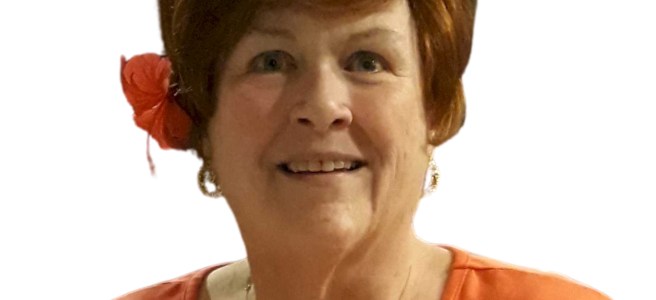
Guest Blogger ~ Millicent Eidson

Three years since my initial guest blog in 2022 (https://ladiesofmystery.com/?s=eidson), my microbial mystery world has expanded to multiple disease threats worldwide. It’s a good time to catch everyone up.

For decades, I was immersed in zoonotic diseases transmitted from animals. Scientists estimate that three-quarters of new or emerging infections are zoonoses.

As a veterinarian working in public health, I dropped smelly baits from a helicopter over the Adirondacks to vaccinate raccoons against rabies. I tracked down people with explosive diarrhea from a scenic New Mexico train ride. I coordinated reporting and collection of dead birds when West Nile virus showed up in the western hemisphere.

Serious illnesses and deaths are tragic but stamping out disease outbreaks is exciting. Each cluster of ill people is a mystery for a disease detective. Everyone knows about Rizzoli and Isles from the wonderful Tess Gerritsen thrillers. But veterinarians exposed to deadly hantavirus when collecting infected mice are less familiar medical heroes.

When I retired from fulltime work as a veterinary epidemiologist at the Centers for Disease Control and Prevention and two state health departments, I continued part-time teaching about zoonoses to graduate students. It’s rewarding to open up the eyes of new public health practitioners to the fascinating world of zoonoses. But I wondered if I could do the same for the general public.

Our daughter is adopted from China like thousands of orphans with the one-child policy. In my fiction, I wanted to explore how it might feel for someone whose Asian role models are replaced by Anglo, Hispanic, and Native American cultures embedded in a rich landscape.

And many of us struggle with mental and physical health challenges from birth, injury, or illness. Can someone wrestling with that history contribute fully to our demanding, fast-paced world?

So Maya Maguire was born, inspired by my daughter’s heritage and my own with mostly Irish ancestors. Like me, Maya Maguire starts her public health career after completing years of work toward veterinary and master’s degrees. Unlike me, she’s a bit of a genius and completes all her training young, adding further stress when expected to perform at the level of other more mature CDC trainees.

The initial three novels primarily immerse us in Maya’s world, other than diary excerpts from a mysterious young boy facing his own roadblocks near the Arizona/Utah border. In “Anthracis,” Maya is in her first year of training as a CDC Epidemic Intelligence Service officer stationed in New Mexico. Along with veterinary and physician colleagues, she battles perplexing new means of anthrax infection in the Southwest.

Her second year of EIS training still finds Maya in the Southwest, tackling tick-borne Borrelia infections across Arizona and New Mexico. Then she joins a colleague based in Norway on outbreaks in multiple European countries and north Africa. Personal relationships are impossible to balance with her work obligations.

In “Corona,” Maya experiences the COVID-19 outbreak along with all of us, first in Arizona, then in Denmark with infected mink, and finally in her home country of China to find its origin in bats. Like many, she won’t escape the pandemic fully unscathed.

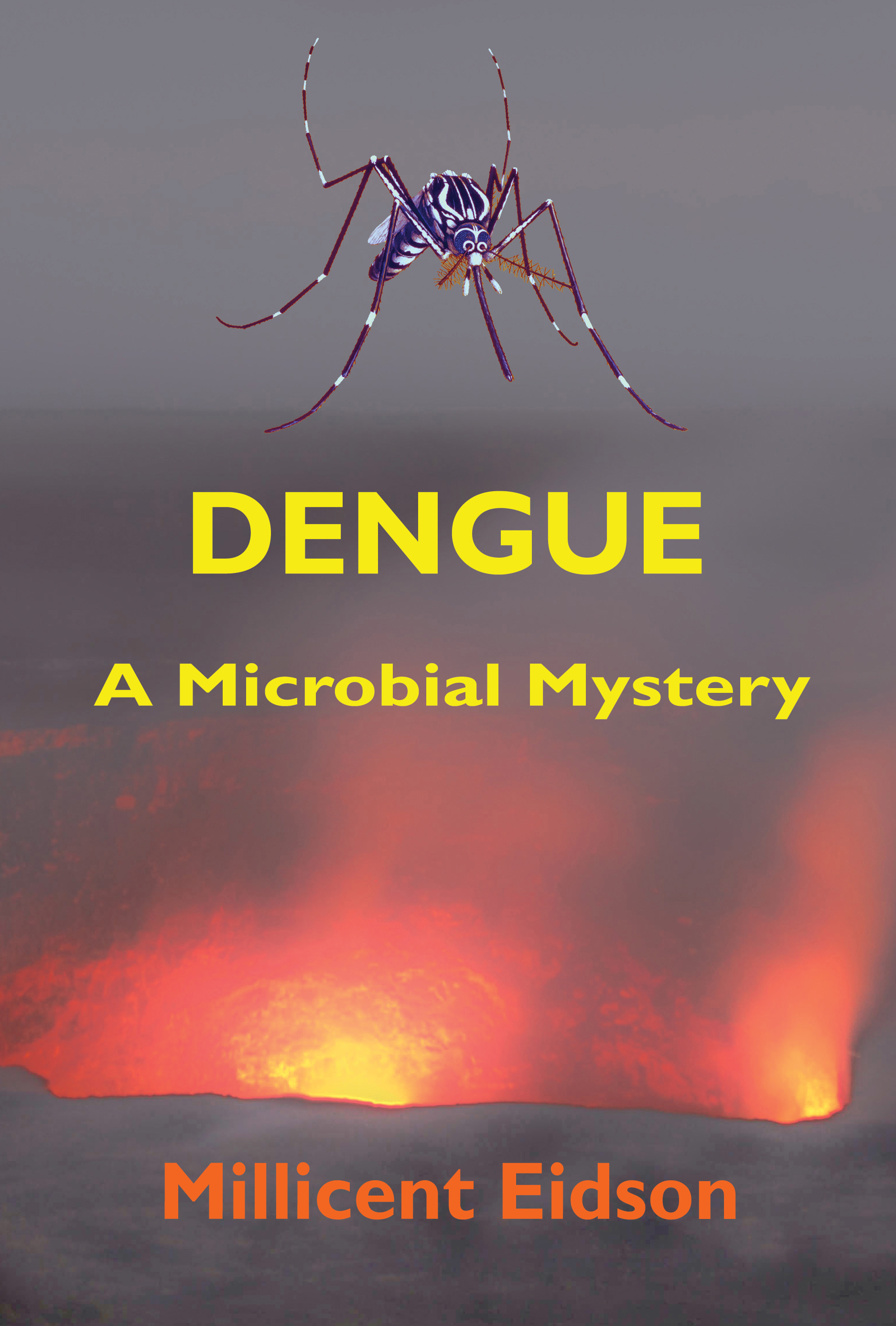
Mosquitoes bring “Dengue” from Puerto Rico to New York City, then New Mexico and Hawai‘i. This novel expands the MayaVerse by alternating point-of-view chapters between Maya and her public health veterinarian mentor, Faye Simpson. Faye’s a kick-ass character in her late sixties, transplanted from a childhood on a Colorado ranch to a career with the New York City health department.

“Ebola,” available this summer, broadens even more with the perspectives of multiple male characters confronting the virus in West Africa, New York City, and New Mexico. Maya’s finishing a final training year with the CDC and Faye is retired from fulltime public health work but still enmeshed in Ebola crises.

These brief summaries only touch on the lively characters in the stories. Fred Grinwold and Nancy Bingham are Maya’s physician supervisors in New Mexico and Arizona. Their early romance and outbreak puzzles are available along with other Faye Simpson stories in “Microbial Mysteries,” my short story collection.

Sci fi thrillers are entertaining but sometimes based on pure imagination. For a peek into the exciting real world of zoonotic disease control through the perspective of colorful and compelling characters, join me in the MayaVerse!

Dengue: A Microbial Mystery

Is dengue the next pandemic? Two veterinary medical detectives, decades apart in age and experience, battle the tropical disease on the mainland, then in Hawai‘i. Even in paradise, people can’t escape blood-thirsty mosquitoes spurred on by a warming climate. Join these resilient women as they push through personal challenges to discover the scientific truth and stop the relentless death toll.

From reviews:

Maya Maguire is a deeply complex character, with a backstory that contains both heartache and joy. I have thoroughly enjoyed getting to know her … As for the medical terminology in the book … You’re in capable hands. Dr. Eidson uses real-life medical words and situations in the book, but they’re always put into a context that allows the reader to understand exactly what’s going on. (As an aside, the research that must have gone into this book is mind-blowing.)

Buy Links: https://books2read.com/millicenteidson/  or  Dengue: A Microbial Mystery (MayaVerse): Eidson, Millicent: 9781955481168: Amazon.com: Books

Millicent Eidson, a master of intrigue and suspense, weaves her literary magic through the pages of the Maya Maguire microbial mystery series. With a keen eye for detail and a passion for scientific puzzles, she invites readers into a world where microbes hold secrets more treacherous than any criminal. Millicent’s career as a public health veterinarian and epidemiologist began at the Centers for Disease Control and Prevention. After days filled with pathogens and outbreaks, the nights belonged to whispered tales of microbes dancing in her imagination. Upon retirement, her passion for storytelling blossomed into the MayaVerse, https://drmayamaguire.com/.

She can be found at Facebook, Millicent Eidson, | LinkedIn, Millicent Eidson (@EidsonMillicent) / Twitter, and Millie Eidson (@drmayamaguire) • Instagram photos and videos

Following Through

by Janis Patterson

There is not much about writing in this post. Actually, not much about anything. Remember last month when I posted about the necessity and occasional dangers of researching? Well, I put my money (and lots of it this time!) where my mouth is.

As you read this I am – if our somewhat fluid itinerary is accurate – bouncing along in a jeep somewhere in the desert between St. Catherine’s Monastery in Sinai and Petra in Jordan. Am I researching a new book? Probably, though that was not the intent of the trip. However, I can do research on a book with a trip to the grocery store, so that’s not surprising.

No, my husband and I have decided to spend as much time as we can traveling – while we can afford it and are still physically able. I know it’s a luxury, but we’ve both worked hard all our lives and it’s something we want. And we don’t want to miss a chance to fulfill our dreams just because we got lazy.

We started a few days early in Cairo, to visit both a few of our favorite spots and to see old friends, then joined the small group of pilgrims to go on to the Dead Sea. I’ve been there before, and it is still as much of a moonscape as I remember. Then to the fabled St. Catherine’s… ah, but I’m telling too much. Next month I’ll talk a little about my trip and show a few pix. There will be more of both on my website, though, if you want to see more!

And – just a bit of writing news. I’m part of a new anthology called July 4th Murders – where every story takes place on July 4th, but each in a different time period. It’s a fascinating concept and one of which I am proud to be a part. I’ll let you know the exact date it goes up for pre-order.

After we get back from Petra, though. That’s been on my bucket list for years, and I intend to enjoy every second of it!

Left Coast Crime Conference

This month is sneaking up on me! I thought I had all my blog posts and events for the month taken care of and “poof!” I realized I still had this post to write.

I ended last month with a book-selling event that rolled into a week at the beach with two of my best friends. It was supposed to be a working week to get the next Spotted Pony Casino book moving along. However, we ended up doing more playing than me working. But I needed it.

Agate Beach on the Oregon Coast

Then I started out the beginning of March with family things to deal with and now, in two days, I’m headed to Denver for the Left Coast Crime conference. It is one of my favorites because there are readers there and authors get to be on panels and talk about how our books fit into whatever the panel is about. Authors also get to host special events with readers. I signed up to do this, however, I noticed I’m not on the list, so they must have lost my email in the myriad of emails they get. I will host a table at the banquet with author friend Sheri Lewis Wohl. We are excited about our table decorations and giveaways!

this will be on the table I’m hosting

I was lucky to get on two panels this year. One is about Animal Sidekicks, which we all know plays into all of my mystery series. Every one of my main characters has a dog sidekick. I’m excited to talk about Sheba, Dog, and Mugshot during the panel and how they help their people. This panel is at 3:45 on Thursday. Friday at 2:45, I’m on a panel about crime in small towns. Again- spot on for my books since they are all set in small towns/rural areas. This will be another fun panel.

The conference always needs volunteers I’m helping by being a runner for a few of the panels. I did this at last year’s conference and found it an easy way to help out without having to do too much peopling.

As an introvert, these conferences take a lot out of me. I usually spend at least one session a day in my room, regrouping. Even though it makes the conference more expensive, I don’t have roommates. I need complete quiet when I go to my room at night. I feel like my ears ring for hours afterward. It takes a lot for me to put myself out there but I know that the more exposure I get, the more likely readers will pick up my books and try them.

I also enjoy talking to readers. When I can engage with them and talk about my books and what they like to read, I feel I’m gaining more perspective for what I write and how the reader perceives it. That is invaluable.

My bag is packed. I have 16 books to give away after my panels. They have either damaged covers or were printed wrong. And I have the mugs I’m giving to the people at my table, bundled in with the books and my clothes. My suitcase should be much lighter on the way home. I’m just counting down the days until my hubby takes me to the airport and I head for Denver.

If you’re at the Left Coast Crime conference, attend one of my panels and come say “hi!”

What to Pack for a Mystery Convention

By Margaret Lucke

As I write this, I’m getting ready to travel to Denver for Left Coast Crime, affectionately known as LCC—a wonderful annual convention for readers and writers of mysteries and thrillers and a highlight of my calendar each year.

I enjoy conventions and conferences and I’ve been to quite a few, starting with a Bouchercon, the World Mystery Convention, in San Francisco long ago. I was one a few dozen mystery writers and fans who gathered to celebrate our favorite genre at the very first Left Coast Crime in 1991. I’ve attended Malice Domestic several times, as well as conventions that focus on other genres–romance, horror, science fiction and fantasy. I celebrated a significant birthday at a conference in Los Angeles organized around the 100th anniversary of the publication of Bram Stoker’s Dracula.

If you’ve just signed up for your first LCC or another conference and are wondering what to bring with you, let my experience be your guide. Here are a few tips and pointers about what put in your suitcase.

Clothes (of course). I go for business casual but lots of people opt for casual-casual, which is fine too. Just remember to think layers, and bring a sweater or indoor-type jacket along. Conference events take place in hotel meeting rooms, and according to law meeting-room thermostats must be set for the wrong temperature. If you’re dressed for warm weather, the room will be freezing, with a drafty wind aimed at your chair. If you dress in expectation of a chill, the room will be hot and stuffy. Whatever the temperature in the room you go to for a 10 am panel, you can count on the room with the 11 am panel being twenty degrees hotter or colder.

Highlighter. The bigger the convention, the more activities there are to keep track of. That means you’re almost certain to be in the wrong place at the wrong time. You’ll receive a handy pocket program to carry around, but the type will be too small to read without squinting. Marking your must-see panels and events in bright yellow (or a color of your choice) can help you tell at a glance where you want to be at 2 pm.

Cell phone. You and your friend from the other side of the country will both be at the same conference. You email her to say, “Let’s get together for lunch on one of those days,” and she agrees. When you get to the conference hotel, can you find each other amongst the hundreds of people? Maybe, but maybe not, which is why you’re glad to be carrying your phone, programmed with the numbers of everyone you might want to contact while your at the conference. And be sure to bring a charger! Don’t forget, though, to turn off your phone while you’re in the audience for a panel or program.

Business cards, bookmarks, postcards, swag. Whether you’re a reader, writer, or other, you’ll meet people you’ll want to keep in touch with, so business cards are great to have. If you’re an author, you’ll want items to hand a fan to alert her to your latest book. In the past I’ve brought home recipes, pens, coasters, notepads, those things you use to twist of jar lids, and more. In Denver, look for the word search puzzles I’ll be leaving on the giveaway tables, along with my pamphlet called “10 Clues to Writing Great Fiction.”

Extra space in your luggage. You’ll need room in your suitcase to tuck in all of those pens and coasters, not to mention the books you’re going to acquire. You will need to accommodate the books in the bag you receive at registration, the books you buy in the dealers room, the books you grab off the swap table …

Energy and stamina.  Conferences are fun. They’re busy. They’re demanding. They’re exhausting. Be sure to bring along an abundance of energy and stamina, or whatever will help you achieve those thing—extra vitamins, your walking shoes so you can leave the hotel and get some fresh air and exercise, earplugs so you can enjoy a good night’s sleep despite your roommate’s snores.

Smiles. You’ll want to have plenty of these on hand so you can hand them out freely. Fortunately, you’ll be able to replenish your supply with all of the smiles that people will give to you.

I hope to see you next week in Denver! If you’ll be at LCC, be sure to seek me out and say hello. A couple of opportunities to find me easily are the panels I’ll appear on: “Art & Crime” on Friday at 9 am, and “The Craft of Writing,” which I’ll be moderating, on Saturday at 2:45 pm.