I found my bliss – in the bathtub

This article of mine appeared in The Globe and Mail. I wanted to share it with you at this time of year when life is bustling and busy. May you find joy.


I understand the appeal of showers. There is a functionality and practicality to stepping in, under and out. How efficient. How equally unimaginative and boring. In the shower, there is nothing to savour except getting the hell out from beneath 50 pounds per square inch of pulsating water. The fact that showers are measured in psi (as opposed to bubbles) speaks volumes.

But I am a splish-splash person. I relish the warm web of water that embraces you in the bathtub. I enjoy being able to put my head back, relax and wash away the day. I like taking my time, meandering in my mind and humidifying at my own pace.

 Baths were a way of life in our house. Growing up, showers were simply something other people took, mostly people we did not know. I kept this tradition up even after I moved out of my parents’ house, into a marriage and through the divorce that followed. But it wasn’t until years later that I discovered my understanding of the bath and its possibilities had been severely limited.

 It started with a gift of life-altering implications. Inside the present I discovered bubble bath, a bath bomb, exfoliating lotion and glove, and moisturizer. Two of these I’d heard of. The scent was lavender, which I associated with wrinkled aunts and my grandmother’s underwear drawer.

Turns out, I couldn’t have been more wrong.

I filled the tub with steaming water, poured in the bubble bath and the most wonderful scent filled the room. I smiled, bent down and breathed deeply. Not my smartest move. Inhaling bubbles is not recommended. But it didn’t matter. I was happy. And about to get happier.

I stepped into the tub and unwrapped the bath bomb. This is never as easy as it sounds. They often come in a plastic sheath that has no identifiable opening and the tensile strength of tungsten. I persisted. The result was a round, heavenly little orb that exploded when it hit the water. Gently, of course, and with a colour infusion that filled the tub with a lovely glow. The exfoliating lotion and glove were next. I felt the resistance of the glove on my skin. Perhaps even a snag or two. Then, softness.

This time I spend with bubbles, bombs and bath salts is as much about ritual and reverence as it is about self-care and luxuriating. I realized this one blissful Saturday night as I was about to lower myself into a meringue of eucalyptus suds and my husband strolled into the bathroom, lifted the toilet lid, and got ready to whizz.

He won’t do that again.

There is a rhythm to my bathing ritual. There is a pattern and a process. Nothing is rushed, there is room to inhale and time to exhale. The rhythm has become more sophisticated over time. I once received a candle but admitted to my husband that I was unlikely to use it. He suggested I light it in my bathing shrine (and all was forgiven).

Today, my bathing shrine includes 10 burning candles: five small, three medium, two large. There is also a tealight candle that burns inside a Himalayan salt holder, another gift from a good friend. (I am blessed with friends who indulge my bathroom bliss.) In addition, I discovered aromatherapy. And there is music, most recently with the chirps and tweets of birds in the background.

I doubled down on my commitment to ritual and reverence when my husband and I decided to do some redecorating. My bathroom tub is now no ordinary tub. Who knew paradise came in porcelain? This tub has jets that shoot heated streams of water at select body parts, LED lights infuse a delicate glow in the water and there is a heated backrest. An aromatherapy unit sends little fragrant clouds aloft every 20 seconds. Poof!

The bathroom, and the tub in particular, is an expense I no longer attempt to justify. But I have spent some time trying to understand it. Logically I know that self-care is important. Taking time for oneself is time well spent. I’ve read the books (okay, an article or two) about the benefits of finding space from the pressures of daily life. But that sounds clinical and what happens in my shrine is anything but. It’s about connection – and distance. It’s about finding oneself – and forgetting about the self for a few hours. It’s about feeling pampered – and humbled.

One night, I turned on the tap, poured the juniper bubble bath and Epsom salts into the tub and waited to be enveloped in a fragrant mist.

And waited.

I did not have hot water.

Ultramar’s message centre assured me help was on the way. I felt a nudge of joy.

That did not last. The repair guy wasn’t ruining his Saturday night because some woman’s bath water wasn’t hot. He eventually showed up but he needed a new part. Bottom line: I had to wait several days.

I did not hide my disappointment. The repairman did not hide his indifference. I was not happy about the emergency call service fee that still left me without hot water. I think he flipped me the bird on his way out.

But Monday came, the water heater was fixed and the bath was full of hot, inviting H²0. But this time I breathed in more than the latest release from Bath and Body Works. I realized at that moment that my shrine, wrapped in relaxation and reverence, is really about gratitude. It’s about being thankful to be here and thankful to be. Gratitude isn’t just about being personally thankful and appreciative, though, it is about extending that thanks to the world around you. It’s about grace.

I have taken that insight to heart. I remind myself now to smell the rose water before I speak out; to soak up the moment before rushing to the next task.

And I have apologized to the man from Ultramar.

Next Week I’ve Got to Get Organized

by Margaret Lucke

In 1955 cartoonist Herb Gardner (who later wrote the play A Thousand Clowns) published a cartoon that became a classic. You’ve probably seen it. The drawing shows two of his famous Nebbish characters slouching in chairs, their stretched-out legs resting on a table. The caption reads: “Next week we’ve got to get organized.”

I subscribed to that philosophy for a long time, but recently I decided that for me, next week needs to be now. A brand-new year is arriving in a couple of weeks, and I’d like to greet 2025 in an office that is clean and free of the clutter created by old projects, bad habits, and all that stuff I’m definitely gonna get around to reading and doing someday. In other words, I want it to look less like the one in the picture. So I’ve embarked on a project to make my workspace SOFT for the coming year. That’s my acronym for Sort, Organize, File and Toss.

Unfortunately, I’ve discovered that Get Organized is not a task one can zip through in an hour and cross off the to-do list. Oh no, it’s much more complicated than that. In case your next week has become now, here’s a quick guide to the nine stages of getting O.R.G.A.N.I.Z.E.D.

Obliviousness – “What do you mean, get organized? My work, my finances, my home, my office, and my life are chugging along fine just the way they are. Well, sort of. Well, sometimes. Besides, all of this clutter and mess is an expression of my creative, carefree spirit.”

Realization – “Oops. Missed another appointment. And another deadline. And I forgot to pay that bill, though it doesn’t matter cuz my bank account is overdrawn anyway. But what’s driving me crazy is that I can’t find my silk shirt or that vitally important piece of paper.”

Goal-setting – “By gosh, I’m gonna do it. I’m getting my desk, my closet, my calendar, my files, my finances, and my life in order – by next Thursday.”

Acquisition – “Let’s see, I’ll need some how-to books with tips on getting organized, time management, and personal finance. And some file folders and office supplies. Oh, and a few of those cute baskets and boxes for stashing stuff. Uh-oh, where did I put my credit card.”

Naps – “I’m feeling overwhelmed just thinking about this project. And exhausted from all of that shopping. Right now I really need get some rest. After that I’ll be raring to go, I promise.”

Industry – “Okay, okay, I’m buckling down and getting started. This worn-out mateless sock? Trash. This three-year-old magazine? Recycle. This book I’ve finished reading. Donate.”

Zeal – “Look at me! Isn’t this exciting? I’m getting so much accomplished. Here are some tips I’m finding helpful. Tip 1: Break this huge project into small steps. Tip 2: Get rid of stuff you don’t find useful, beautiful, or valuable. When in doubt, throw it out. Tip 3: Have a place for everything and put everything in its place. Tip 4: Write things down; don’t rely on your memory. Tip 5: Reward yourself when you accomplish something. (Mmm, ice cream!)”

Evangelizing – “You know, my friend, your life would go so much better if only you’d get organized.”

Dreaming – “Yay! I’ve finished my organizing project. I have my life under control, and I’ll never have to spend time on organizing again.”

I hope this insight into the process will help you get organized – if not now, then maybe next week.

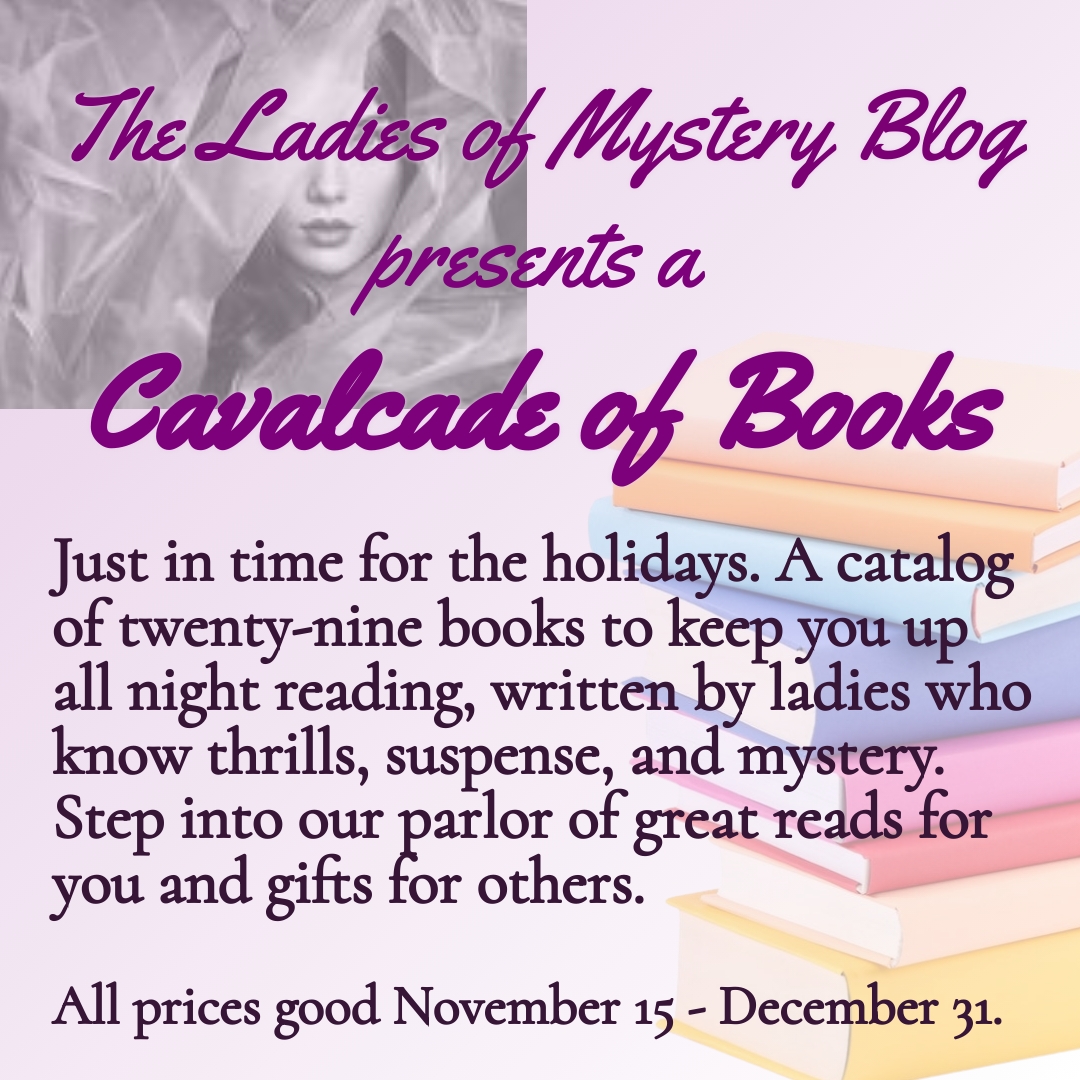
Don’t forget the Ladies of Mystery Cavalcade of Books! Each of us has books on special offer until the end of this month. The list includes my novels, Snow Angel and House of Desire, with Kindle editions available for just 99 cents! Buy a few as gifts for your mystery-loving friends—and for yourself! You can find the Cavalcade by clicking here.

Wishing you and yours the happiest of holidays and a wonderful, well-organized 2025!

Jobs, Responsibilities and Big Girl Panties


by Janis Patterson

Hope all of you had a wonderful and calorie-filled Thanksgiving! Ours was quiet and simply splendid. I even took a week off from writing… from the computer itself. No email, no games… and my kitchen has never been so clean! We had a lovely and incredibly delicious dinner at my sister-in-law’s with my mother-in-law and aunt-in-law and a lazy afternoon of conversation and multiple desserts. God did indeed bless me with my in-law family, and I am intensely grateful because mine is pretty much all gone. (Now if He could just make holiday calories not stick to my ribs and other portions of my anatomy…)

Anyway, back to the business of writing! During my computer hiatus I did a lot of thinking and enjoying old memories and a long holiday phone conversation (normally I loathe telephones, much prefer email) with a friend of many years. She is a gifted and somewhat well-known actress in regional theatre, now semi-retired, and as we talked for some reason my memory dredged up another conversation from a number of years ago. I had just submitted a book right on deadline (I always prefer to be early) which had probably been the hardest, most miserable writing experience I had ever had. The book just didn’t gel, I could not deal with the characters, the plot that had seemed so perfect (and which worked well on paper but not in execution) just didn’t work… and I had a deadline. Deadlines are great motivators, and I got the book done.

How, my friend asked in wonder, had I managed to do that? How could I create without an overwhelming inspiration?

It was my turn to wonder. After all the performances she had done, the plays she had appeared in, the various roles she had created, I asked, had she never done one on technique alone?

She said no… not, at least, the entire part. Some performances she had started on technique alone, but she swore that once it had gotten running it the inspiration had clicked in. Some times, she confessed, she had let her understudy play the part because she simply could not summon the involvement she had to have.

I don’t understand that kind of thinking. If one is a professional one gets the job done. One doesn’t have to wait for a mental green light or an overwhelming ‘feeling’.

She did not appreciate that sentiment when I expressed it to her by simply saying I was a professional. Writing is a job. While it is wonderful when it happens, one does not need inspiration to do a job. You just sit down, put on your big girl panties and start writing. Put one word after another. It doesn’t make any difference if you have to change them later, you are writing. You are doing your job.

The best piece of writing advice I ever heard was said by the wildly successful Nora Roberts. “Write the book, even if it’s garbage. You can fix garbage. You can’t fix a blank page.”

In other words, be a professional. If you’re a writer, you write. You don’t wait for inspiration or magical insight or anything else. You do your job and you write.

Please, no, not another book idea!

I get asked all the time, “Where do you get your ideas or how do you come up with so many ideas for stories?”

Nia

I like to call it my superpower, but then something like this happens: My friend and I who sell books twice a year at an outdoor flea market enjoy watching all the dogs go by and try to figure out their breeds or crossbreeds. It’s just a fun game. Then, this past summer, I had my little dog Nia with me at one of the events. A woman came in to look at our books and, of course, asked to pet Nia. My little Chiweenie is a people dog. She loves kids, she loves anyone that isn’t wearing a hat and built large. The woman pet her and talked to her for several minutes then looked up at me and said, “You should use her as a therapy dog. She has the right temperament and look at that loving caring face.” The woman went on to tell me all the places I could take Nia to comfort people.

After she left, my friend and I were talking about it and instead of doing the humanitarian thing with this information, I flipped it and said that would make a great way to have an amateur sleuth get involved in all kinds of murders. (Yes, an idea for another series popped into my head and hasn’t left.)

Then someone was playing old time records on a record player as a means to bring in customers and sell the record player. The song Merry, Merry, Merry Christmas came on and as the song progressed, my mind went to what a great title for a book. Merry, Merry, Merry Murder. And make it set at Christmas. Now this stuck and has been brewing in my mind as the holidays are fast approaching. Too late for this year, but I will have a book with that title coming out next year.

But wait, how can I get this title to work with the two series I have right now? All the Gabriel Hawke series titles have animals in the titles. It would be out of sync with the rest of the series. Same goes with the Spotted Pony Casino Mystery series. Those titles all have to do with gambling terms. How can I use this title to write a Christmas murder mystery if I can’t make it fit the two series I already have going?

Pop back to the new shiny idea of the woman with therapy animals who travels to schools, hospitals, nursing homes, outreach centers, and so on. She could start her series with Merry, Merry, Merry Murder. Or I can make it a standalone Christmas Mystery.

But wait. This has all been spinning in my head for several months now and two days ago when I was finishing up sewing Christmas presents, I had Christmas music playing. Christmas Classics to be exact. The Jackson 5 were singing, I Saw Mommy Kissing Santa Claus. There is a spot in the song where Michael stops singing and says he’s going to tell Daddy. He says it like he’s mad at his mom. And BAM! The whole idea for the murder and who is blamed and who really did it came flashing into my head. I had to leave the sewing machine to find a piece of paper and a pen to write down all the things that had come together to make the story work.

And now, I just have to decide if it will be a standalone book or the beginning of a new series… I really don’t want to juggle three series, but I also like the idea of the shorter cozy style mystery. Maybe one of those a year…. So I can keep putting out two books a year in the other two series. We’ll see!

If you’re looking for some great gifts for the readers on your Christmas list, check out the Ladies of Mystery Cavalcade of Books. An online place to find some of our books on sale and just some of our books. https://bodiebluebooks.com/ladiesofmystery/

Guest Blogger ~ Libby Fischer Hellmann

The “What-if” Thriller Game

Most thriller writers are suckers for a good story. I’m one of them. And if the story is true, many of us start playing the “what-if” game. What if I took a character and imagined it happened to her? What if I set the story in Chicago? What if I created a backstory that explained the current situation?

“What-if’ing” is often the first step I take to suss out a new story or novel. In fact, I’m pretty sure I started writing historical thrillers because I “what-if”ed an ordinary person living through a period of extraordinary turmoil. What if a group of hippies lived together during the 1968 Chicago Democratic Convention? That became Set The Night on Fire. What if a young American woman got caught in the 1979 Iranian Revolution? A Bitter Veil. What if two Vietnamese sisters had to cope with the Vietnam War? A Bend in the River.

However, I didn’t have to “what-if” the circumstances of my recent thriller, Max’s War, published in April, 2024. My late father-in-law, Fred Hellmann, was an immigrant from Germany. He was “off the boat” in 1939. He’d grown up in affluence in Regensburg, a city that, as far back as the Middle Ages, was a center for trade and commerce. Growing up, Fred had his own horse and carriage. His father bred racehorses and owned a bicycle and wheel shop. They lived in the best part of town with plenty of household help.

All of that changed when Hitler came to power—the Hellmanns were Jewish. From 1933 on, the Nazi government tightened the noose on all German Jews by issuing laws that slowly, inexorably restricted their education, their ability to make a living, their social lives, and their freedom. Goebbels piled on with misinformation that depicted Jews as odious creatures who couldn’t be trusted. In the early 1930s Jews were encouraged to leave Germany. Or else.

Fred’s family heeded the warning and moved to Holland, which at the time, was a neutral country. The Netherlands had a history of tolerance. Jews assimilated and inter-married. For a couple of years things after they moved, life was peaceful. The Hellmanns even imagined returning to Germany after Hitler was thrown out of power.

Except they never did.

With the looming invasion of Holland a certainty, a relative in Philadelphia offered to sponsor Fred if he emigrated to the US. She couldn’t sponsor his parents, though. Only him. Fred’s family made a heartbreaking decision. Fred would go to America. His parents would remain in Holland. Leaving was problematic, however. It was no longer permitted. So, in 1939 Fred hid in a truck filled with coffins. He made it to the ship that brought him from Rotterdam to New York. From there he took a train to Philadelphia.

For two years he took odd jobs as a delivery boy and studied English. He learned he was the sole survivor of his family. Sometime after Pearl Harbor he was drafted into the US Army.

Because he was German and an immigrant, he was sent to Ontario, Canada, after Basic Training, where he was trained by the OSS to interrogate German POWs and to ferret out intel about German troop movements: where they were, where they were planning to go, and how well equipped they were.

Fred was sent back behind enemy lines at the end of 1943. He spent almost two years as an interrogator and a spy. In 1945 he was asked to remain with the OSS for another year. But he’d become engaged to a  lady in Philadelphia who said enough was enough. She couldn’t wait another year. So Fred came back to the States. He married Lucy, and their first son Mark was born in 1946. I married Mark in 1979.

While not as dramatic as the first part of his life, Fred’s post-war life was marked by what we now know as PTSD.  As far as we knew, he never talked about the war… not to his two sons or his friends. Once in a while, an anecdote leaked out. The coffin story… how he came to have a German knife and Lugar… how he impersonated a Wehrmacht officer to elicit information from German POWs. How his best OSS buddy substituted for him during a mission and was killed. I’ve included a fictionalization of those events in Max’s War. And added to them.

Still, those are just scattered remembrances. We tried to get his Army records so we’d know exactly where he was trained and deployed, but they were destroyed in a fire at the St. Louis Army record center shortly after it opened.

As a thriller writer who’s fascinated with spy-craft, I’ve wanted to write about his exploits for years. When I heard about the Ritchie Boys and how they did exactly what Fred did during the war, I wondered whether he trained with them. Long story short: We have no proof one way or the other. But I have since learned that the OSS and Ritchie Boys were kissing cousins during the war. They often shared training and missions. More than a few soldiers floated between the two organizations. In fact, an OSS camp lay just a few miles from Camp Ritchie in rural Maryland. So it’s entirely possible.

The great thing about fiction is that we can create stories that raise issues of extraordinary conflict, morality, and good vs. evil. While Fred’s story will always have a few loose ends, Max’s doesn’t. The plot of Max’s War emerged organically from Fred’s story. Where I didn’t know the facts, the “what-if” exercise helped me fashion what I hope are plausible events. In that respect, it is both the easiest and most difficult novel I’ve ever written. I hope you will agree.

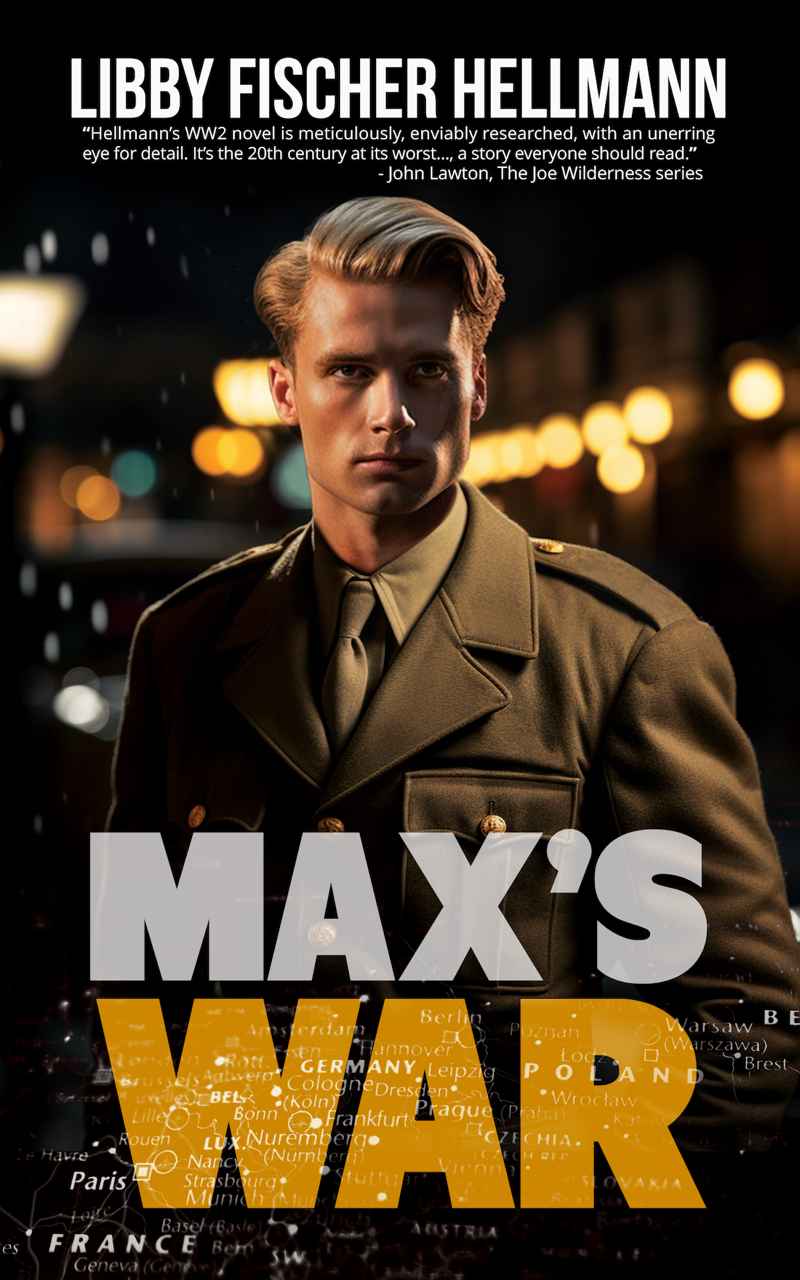
 A sweeping World War 2 saga in which a young German Jew flees Europe, emigrates to America, and joins the Army to fight Nazis

Additional description (If you want it): As the Nazis conquer Europe, Jewish teen Max and his parents flee persecution in Germany for Holland, where Max finds true friends and a life-altering romance. But when Hitler invades in 1940, Max must escape to Chicago, leaving his parents and friends behind. When he learns of his parents’ deportation and murder, Max immediately enlists in the US Army. After basic training he is sent to Camp Ritchie, Maryland, where he is trained in interrogation and counterintelligence.


Deployed to the OSS as well, Max carries out dangerous missions in occupied countries. He also interrogates scores of German POWs, especially after D-Day and the Battle of the Bulge, where, despite life-threatening conditions, he elicits critical information about German troop movements.

Post-war, he works for the Americans in the German denazification program, bringing him back to his Bavarian childhood home of Regensburg. Though the city avoided large-scale destruction, the Jewish community has been decimated. Max roams familiar yet strange streets, replaying memories of lives lost to unspeakable tragedy. While there, however, he reunites with someone from his past, who, like him, sought refuge abroad. Can they rebuild their lives… together?

Buy link:https://www.amazon.com/gp/product/B0CMBK15LM

Libby Fischer Hellmann left a career in broadcast news in Washington, DC and moved to Chicago a long time ago, where she, naturally, began to write gritty crime fiction. She soon began writing historical fiction as well. Eighteen novels and twenty-five short stories later, she claims they’ll take her out of the Windy City feet first. She has been nominated for many awards in the mystery and crime writing community and has even won a few.

She has been a finalist twice for the Anthony and the Shamus; and four times for Foreword Magazine’s Book of the Year. She has also been nominated for the Agatha, the Daphne, and she won the Chicago Writers Association Book of the Year in 2021. She has won the IPPY, Foreword Magazine’s Indie Awards, and the Readers Choice Award multiple times.

Her latest novel is Max’s War: The Story of a Ritchie Boy, the little known group of German Jewish immigrants to the US who escaped Hitler and joined the Army to fight Nazis.

https://libbyhellmann.com/

https://www.amazon.com/stores/Libby-Fischer-Hellmann/author/B001HMMDZU

https://www.facebook.com/authorLibbyFischerHellmann