The World Through My Eyes

thumb_IMG_1225_1024

The fifth book in the Adam Kaminski mystery series will come out this summer. I am so excited to share it with you! I’ve spent the past two years working on this book that looks at the world through the eyes of a photographer, while also telling the story of a cruise in which everyone is pretending to be someone they’re not.

One of the things I enjoy most about writing is the opportunity to look at the world through other peoples eyes. Because my series has one main character– Adam Kaminski – who always finds someone to help him out, I have the pleasure of creating a new point-of-view character for each book (that is, a character whose thoughts you, the reader, get to hear.)

In this book my second leading character is Julia Kaminski, sister to Adam. Julia has appeared in most of the other books in the series, so I’m not creating her from scratch. But this is the first time I’m writing from her perspective, describing the world through her eyes. In this case, the eyes of a photographer. There can be no doubt, we all see the world a little bit differently.

 

A-Pale-Reflection-Web-Small
A very blurry suggestion of the cover for A Pale Reflection  – the world as I might see it!

Personally, I’ve been wearing glasses since I was five (and probably needed them before that). The world through my eyes looks very different. Terribly near-sighted, without my glasses I see blurs of color without distinct shapes. Every pin prick of light becomes a giant, glowing snowflake. It’s actually quite beautiful! As long as I don’t need to see clearly. These days, I wear bifocals, so I get two different views of the world depending how I hold my head! (And does anyone hate progressive bifocals as much as I do? I couldn’t stand them.)

As an aside, I recently saw a video about very young children – one year or younger – getting glasses and being able to see their mothers’ faces clearly for the first time. The expression of joy on their faces was indescribable. How the doctors were able to figure out a) that they needed glasses and b) what their prescription was I have no idea. But it is remarkable.
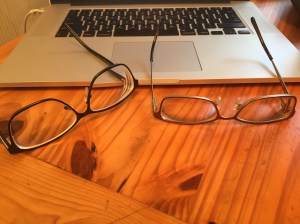
 

IMG_3813
Bifocal and near vision only – just two of the many pairs of glasses in my life!

My husband, on the other hand, is farsighted. How strange! After a lifetime of holding things next to my face to read them, I can’t imagine only being able to see clearly when things are far away. The world he sees is very different from the world I see.

I’m pretty sure the same holds true for reading. I write a book and let it out into the world. Now it’s up to the reader to see whatever he or she sees in it. I love hearing other peoples perspectives of my books — don’t get me wrong — but I admit there are times when I hear someone describing one of my characters and I think: can’t I just give you a prescription that lets you see it the way I see it?

A Pale Reflection, my book about seeing the world – and other people – clearly, comes out this summer. Check out my Facebook page or sign up for my newsletter at my website to see the full cover soon. And follow me on Instagram to see photos of my world. I hope my perspective of other people’s perspective will keep you entranced – and wondering who the killer is!
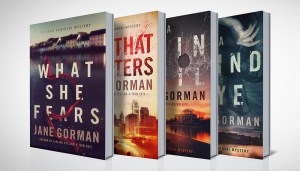
Adam-Kaminski-Mystery-Series

Digging into a Character by Paty Jager

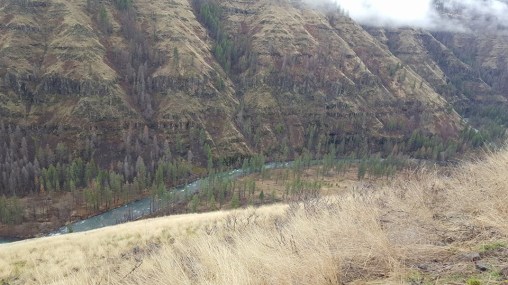
Wenaha
View from my ride-along

I’m currently working on a the first book of a new mystery series. This new series is making me grow as a writer which is what I hope each book does, but this series and character in particular is really making me stretch my brain which isn’t getting any younger.

I picked not only a male protagonist but I made him Native American ( one of my signatures of what I write) and I put him in a profession I know nothing about. Whew! Talk about working in a totally new environment!

Through the years writing romance before I got the nerve to try my hand at mystery, I wrote from both the male an female points of view and in my Shandra Higheagle series I write from a male point of view with Detective Ryan Greer. But this book is told completely from the male point of view- from Fish and Wildlife State Trooper Gabriel Hawke’s point of view.

Not only do I have to think like a male, I have to think a bit Native American and as a lawman would. Having been around my son-in-law who is a detective with the State Police, I’ve learned that even when they appear to be off duty and hanging around, they are still seeing things and picking up on things that the rest of us shrug off.

Trying to keep my character “on the alert” yet laid back and letting things happen as they should has been a tricky balance. Using his upbringing and his drive as counterpoints has also been tricky.  He has worked hard to get out of the reservation and to have the job he does-protecting his ancestors land. But at the same time because he is protecting his ancestors land he has a deep connection to his Native American roots. While he is full blood Native American he still feels as if his feet are in two worlds. He is upholding the Whiteman’s law as a lawman, but at the same time keeping vigilance over his Native roots.

This first book is taking me longer to write than I thought it would but I had to put it on hold while I did a ride-along with a Fish and Wildlife State Trooper in the Eagle Cap Wilderness where my character works.  The day I spent with the game warden was eye opening in the scope of duties they must preform. Because it is a large remote area, not only do they have to do their game duties but they also serve as a state trooper and while they are on the trail of a poacher or trespasser and there is a call that comes in about a shooting or domestic dispute they have to respond even if it is across the county from where they are at the moment.

20180326_111247
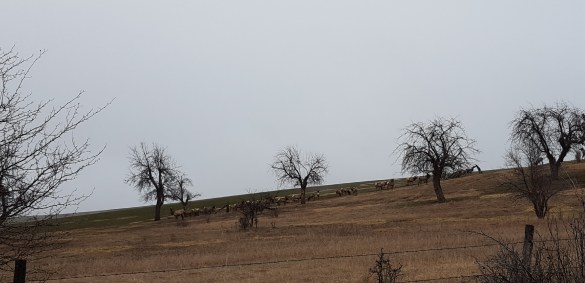
Elk refuge where we were looking for trespassers

The best part about the ride-along was getting the troopers perspective on his job and learning some of the little nuances that I can add to books to give the character the flavor of a real life person.

When the first Gabriel Hawke book is ready to go to my critique partners and beta readers it will be interesting to see if I managed to get the male character correct.

The first thing that pulls me into a book is the characters. What about you?

SH Mug Art

Books… And More Books… And Still More Books…

by Janis Patterson

Books are most definitely a leitmotif in my life. I have always loved to read. Even in my toddler days I would on an almost daily basis pull every book I could reach off the shelves and sit happily among them, turning the magical pages. Mother said I never got one upside down and nor ever tore a page, which I find remarkable as it took me much longer to master the skill of walking.

My parents discovered that I was reading when I was three, when I sat them down and read a short story from the newly-arrived Saturday Evening Post (the original version, remember that?). No one ever knew how or when I learned to read.  I had free rein in the family library, reading Boswell, all of Ellery Queen and most of Pearl Buck before starting school, but it was Shakespeare which fascinated me the most. The language! The imagery! The flow of those incredible words that drew you into a different time and place, a world of magic…

I had so looked forward to school, where I hoped to talk books and characters and reading, hopes that were dashed the first day. Not only did my classmates not even know the alphabet, the teacher took my copy of Shakespeare away, telling me I was naughty for stealing it. I had to prove to the principal that it was my book – it had my name in the front, too – by reading aloud and explaining a full page of the play I was currently reading. It was Troilus and Cressida, and it was such an infuriating and humiliating experience (resulting in an irrational dislike of that play which lasts to this day) that I loathed school from then on. Even before starting school I was not too fond of libraries, either, after a supercilious librarian insisted I could not look through the adult section, but would have to stay in the young children’s department where there were only pamphlet-thin and distressingly simplistic (if not downright idiotic) stories that had no real action or character development and a stunted vocabulary that should have shamed a retarded parrot.

I know now I was blessed to grow up in a house with books and respect for books. It took me a long time to realize that not everyone grew up immersed not only in books but love and respect towards books. Then it was just the way things were. I did not realize, however that some blessings can be an overabundance. After my mother passed away, I was clearing out her house preparatory to our doing some remodeling and long-deferred maintenance before moving in. There were books everywhere. Not only did the house have a dedicated library, there were bookshelves in every room. I called The Husband in tears when, after thinking the books were all taken care of, I discovered six big boxes of books under the guest room bed!

I quit counting my parents’ books at 12,000, but there were more. Trust me, there were more. Lots more.

Nor was that our only problem. Mother passed away just 3 weeks after our wedding, and The Husband and I were still trying to blend our possessions. In his house he had most of a bedroom devoted to bookshelves. In my 1,000 sq ft condo I had 19 floor-to-ceiling bookcases, most of them double-stacked.

We gave away LOTS of books. The Husband had a big pickup, and we took the bed brimming full twice to a charity shop. We gave books away to friends by the boxload. We even recycled some which were in too poor a condition to be read. Now, admittedly, most of these were paperbacks, but a paperback still qualifies as a book. We packed away about 10-12 banker’s boxes of books for storage in the garage for which there was no room in the house. Don’t know why, but for whatever reasons we simply could not get rid of them at the moment. A lot of them are wonderful fiction that is currently unavailable. Some I’m hoping to scan some of them. Someday. Of course we kept our lovely collection of reference works on the various subjects in which we’re interested, and the choice assortment of autographed and first editions that were my grandfather’s and then my parents’.

While remodeling we converted one of the bedrooms into another library, one with shelves on all four walls as well as over the windows and doors. The parlor, very Victorian in tone, has a tasty selection of glass-fronted antique bookcases, making it a sort-of third library. Not that any of this did any good. It’s a little known fact that, like brown cardboard boxes with mysterious contents, books tend to breed. We have stringently limited our trips to our local bookstores to one every couple of months, but still books appear, rising in drifts in the corners and lurking in clumps under the furniture. I do try, though, and do probably 99% of my reading of what I call ‘disposable fiction’ (the kind you read once and then get rid of) on my phone. If we had hard copies of every one of those books the house would be so full that we would have to live in a tent in the back yard. We are, however, talking about possibly creating a fourth library in what used to be the garage. We need it.

On Facebook there is a recurrent meme that says “It’s not hoarding if it’s books.” Yes it is. It most definitely is. But it’s wonderful, too.

The Devil in the Details

thumb_IMG_1225_1024

What are the differences in symptoms between cyanide poisoning by inhalation or by ingestion? What is the best way to store evidence? What work happens on a lavender farm in early October? How are French wine labels governed by the state?

lavender
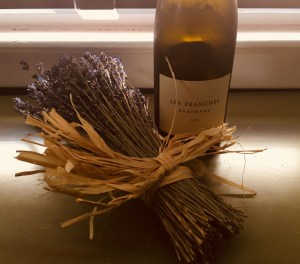
I like research that requires learning about wine and visiting lavender farms

The topics a mystery writer may find herself researching are never boring! We rely on resources including — but by no means limited to—manuals, interviews with experts, visits to unusual places, even Google searches. 

When a murder is committed in our books, even if it takes place off the page, we need to know exactly how it was done and what clues might be left behind. When a victim is found in a particular location, we need to know why he or she was there to begin with. When a suspect produces an alibi that doesn’t hold water, we need to know the detailed explanation of why not — even when we don’t share all those details with the reader.

The question of how many details to share is a big one. For a book to pass muster as a realistic story, a certain level of explanation and accuracy is necessary. But include too many details, and suddenly your reader finds herself reading a how-to manual instead of an engrossing story. 

IMG_3781
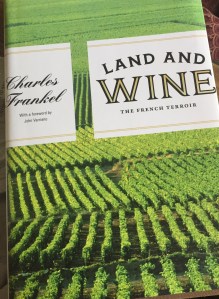
My kind of how-to manual!

Of course, different readers look for different types of details. How we as writers present our stories is a big part of what makes up a writer’s “voice.” Some writers are known for their intricate explanations, whether of crimes or locations or corpses. Readers who loves those writers thrive on those details — to them, it brings the story to life. Other readers look for a book that skims over the detail. They’re less worried about how accurate the description of police activity is and more interested in the emotional arc of the characters involved. And some readers want it all!

Some of these differences are determined by the subgenres within the mystery genre — some books are thrillers, others suspense or cozies. Each type has its own expectations. No one who picks up a cozy is looking for a graphic description of the corpse, but leave out the details of the chocolate cake recipe and you’re asking for trouble!

The writer must know her readers’ expectations and not disappoint. My books are traditional mysteries, which means they follow the line of providing succinct and accurate descriptions of crimes and how they are committed, but keep the focus on the plot and characters. When I’m looking for a fun read at bedtime, however, I usually grab a cozy mystery, something I can cuddle up with along with a cup of hot chocolate and enjoy. Hey, who said we could only read one subgenre?

So how much detail should a writer include? Not too much, but just enough. 

How much detail do you look for in the books you read?

And if you’re wondering, the first two questions above I had to answer for my book A Pale Reflection, coming out later this year. The second two are for the book in the series after that (yes, while one book is with the editor, I get to work on the next one).

Learn more about Jane Gorman and the Adam Kaminski Mystery Series at janegorman.com or follow her on Facebook or Instagram.

Adam-Kaminski-Mystery-Series

A Mystery Writer’s Responsibility

by Janis Patterson

We write mysteries. It is our duty to provide our readers with a good story that has an interesting plot, accurate research, believable characters, and a satisfying ending.

It is also our responsibility to be sure that in our quest for interesting and different content we don’t turn our fictional books into training manuals. Yes, we want ways of death that rise above the common and usually sordid killings that regularly adorn our daily news, but we must walk a fine line between creating an interesting fictional killing and providing an instructional blueprint for a real one.

I think this duty of responsibility is why in so many early mysteries and in a few current ones the murder weapon is a common blunt instrument or some exotic, untraceable poison, though exotic, unknown and untraceable poisons are currently somewhat out of vogue. Current mysteries seem to be grounded much more in reality than the ones from the so-called Golden Age.

To illustrate my point, years ago I attended my first NRA convention. (By the way, if your mysteries involve firearms, I cannot recommend highly enough that you attend one – the knowledge and help there are phenomenal! It will be in Dallas next month and I definitely intend on going! I’ll probably be blogging about it.) I talked to a lot of people, getting all kinds of information and contacts for my reference file (you do have a reference file, don’t you?) when I talked to this one man who was simply entranced that I was a mystery writer. Normally I’ve found that people just love to help writers, but this guy was totally over the top. He had worked both as a firearms salesman and in a ballistics lab, and among a lot of other things gleefully told me the way to have a ballistically clean bullet. No striations. No rifling. No marks on the projectile to tell which or even what kind of gun it came from. No information except the caliber. Nothing that law enforcement could trace.

I listened intently, partially fascinated and partially revolted. It was a simple process and could be done by anyone with the IQ of a goldfish. Then he asked if I’d use it in one of my books – obviously hoping that I’d put him in there too. Horrified, I said most certainly not, begged him not to tell this process to anyone else and then explained why. He was suddenly as horrified as I – apparently he had never thought that what he regarded as an interesting curiosity could actually be used to commit a real-life untraceable killing.

And no, don’t ask me what the secret is. I destroyed that part of my notes and have deliberately forgotten how. There is some knowledge that should never be shared.

So while killing people made of pixels can be both fun and profitable, we as writers owe our readers and the world in general a sense of restraint and responsibility. I truly believe that none of us would actually use some of the stuff we know to do harm to others, but we must never forget that our stories are read by all kinds of people, some of whom might wish to do harm or even read us in search of ways to do harm. Never forget that we want to entertain, not instruct. I don’t think any of us want to be an accomplice.