Words, Words, Words

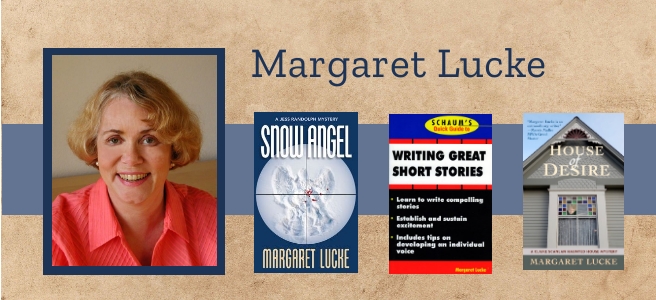
By Margaret Lucke

The other day I fell down another internet rabbit hole. While working on a scene in my latest novel-in-progress, I was looking up some words to make sure I was using them correctly. I always like to catch these things, if I can, before the book is published and readers start pointing them out to me.

A couple of hours later, I resurfaced, the sought-after definitions in hand along with quite a few more that were totally irrelevant to the scene in question.

Doing the research can be more fun than doing the writing. It’s a great way to procrastinate while persuading myself that I’m actually working, just as much as if I were putting words on the page. Once I get started doing research like that, one interesting fact leads me to another, and to another. I’m especially fond of fun facts about words, writers, and literature. Here, for your amusement, are some of my discoveries:

*    The longest word in the English-language dictionary is pneumonoultramicroscopicsilicovolcanokoniosis, which is a lung disease contracted from inhaling volcanic particles. It contains 45 letters (I counted so you wouldn’t have to). But its primacy is challenged by the chemical name of a giant protein known as titin, which has 189,819 letters and, it is estimated, would fill around 57 pages if printed in a typical book. A YouTube video of a man pronouncing the word runs almost as long as the film Gone with the Wind. No wonder the dictionary leaves it out.

*    That long p-word disease isn’t much of a problem for writers, who are more likely to be afflicted with colygraphia, which sounds serious enough to earn us plenty of tea and sympathy. Most of us call this problem by its more common name — writer’s block.

*    After you recover from your colygraphia, it’s time to get back to work. Before you know it, you may find yourself complaining about mogigraphia, or writer’s cramp

*    Someone who probably suffered from mogigraphia was Peter Bales, who earned fame in Elizabethan England for his skill as a scribe and calligrapher. In 1590 Bales transcribed a complete copy of the Bible so tiny it could fit inside a walnut shell.

*    Though Bales was known to engage in contests and rivalries, I don’t know if he produced his Bible to win a wager. But some have taken pen in hand in order to win a bet. For instance:

>>   Editor and publisher Bennett Cerf bet Dr. Seuss $50 that he couldn’t write a book using only 50 words. Seuss responded by writing Green Eggs and Ham.

>>   Ernest Hemingway famously won a bar bet when his drinking buddies each put $10 in the pot and challenged him to write a story using only six words. Hemingway scribbled these words on a napkin — “For sale: baby shoes, never worn” — and collected the cash. This has led to an entire genre of six-word stories, some of which can be found at http://www.sixwordstories.net/

>>   Agatha Christie wrote her first book, The Mysterious Affair at Styles, after her older sister bet her that she couldn’t write a mystery novel in which the reader couldn’t guess the murder even though given the same clues as the detective – who in this case is Hercule Poirot.

*    Christie’s other famous sleuth is Miss Jane Marple. But Miss M. was far from the first female detective. That honor may belong to the heroine of a novella by E.T.A Hoffman that was published in 1819, more than a century before Miss Marple made her appearance. Both the sleuth and the novella are named Mademoiselle de Scudéri. That’s the same E.T.A. Hoffman, by the way, who wrote The Nutcracker and the Mouse King, which formed the basis of Tchaikovsky’s Christmastime ballet.

Who knew all these cool bits of trivia? Well, I know them, thanks to my research journey and the stops I made along the way. And now so do you. I’ll conclude this list with one final entry:

* A literarian is someone who loves literature and is dedicated to sharing that love with others. In other words, me.

What are some of the odder entries in your literary lexicon?

Words are Power by Paty Jager

When I looked up the word “limbo” to make sure I was using it correctly, I found more than one meaning! That is what I love about words and using them to make stories. If you use a word one way it means one thing and the same word can mean something else when used in a different sentence.

The mystery of words has always fascinated me. When my, by one year, older than me brother started reading, I peered over his shoulder, capturing the words and discovering the sounds letters made if they were placed with this letter or a different letter.

Who came up with that? I mean over the centuries the various cultures and people came up with their own set of marks that made sense to them. But how did they distinguish the sounds each mark or letter made? How did they decide which letters together made which sounds?

For my Spotted Pony Casino mystery books, I’ve been incorporating Umatilla language words into the story. It helps to show the culture and bring a little more Indigenous feel to my characters who are Umatilla. I’ve listened to Youtube videos where they speak the language. It sounds so different from the words that are spelled out with unique characters.

The Indigenous languages were spoken long before the Anglo people arrived with their alphabet. How did they, the Indigenous people decide which of the Anglo alphabet worked for their words? I’ll have to ask a Umatilla linguist I know and see if he can help me with this, one of many question that stir around in my head at 2 AM the nights my brain won’t shut down.

Words are so useful and yet can also destroy a relationship, a person, even a country. Knowing the right words to string together is powerful. Or it can be destructive. Words are power!

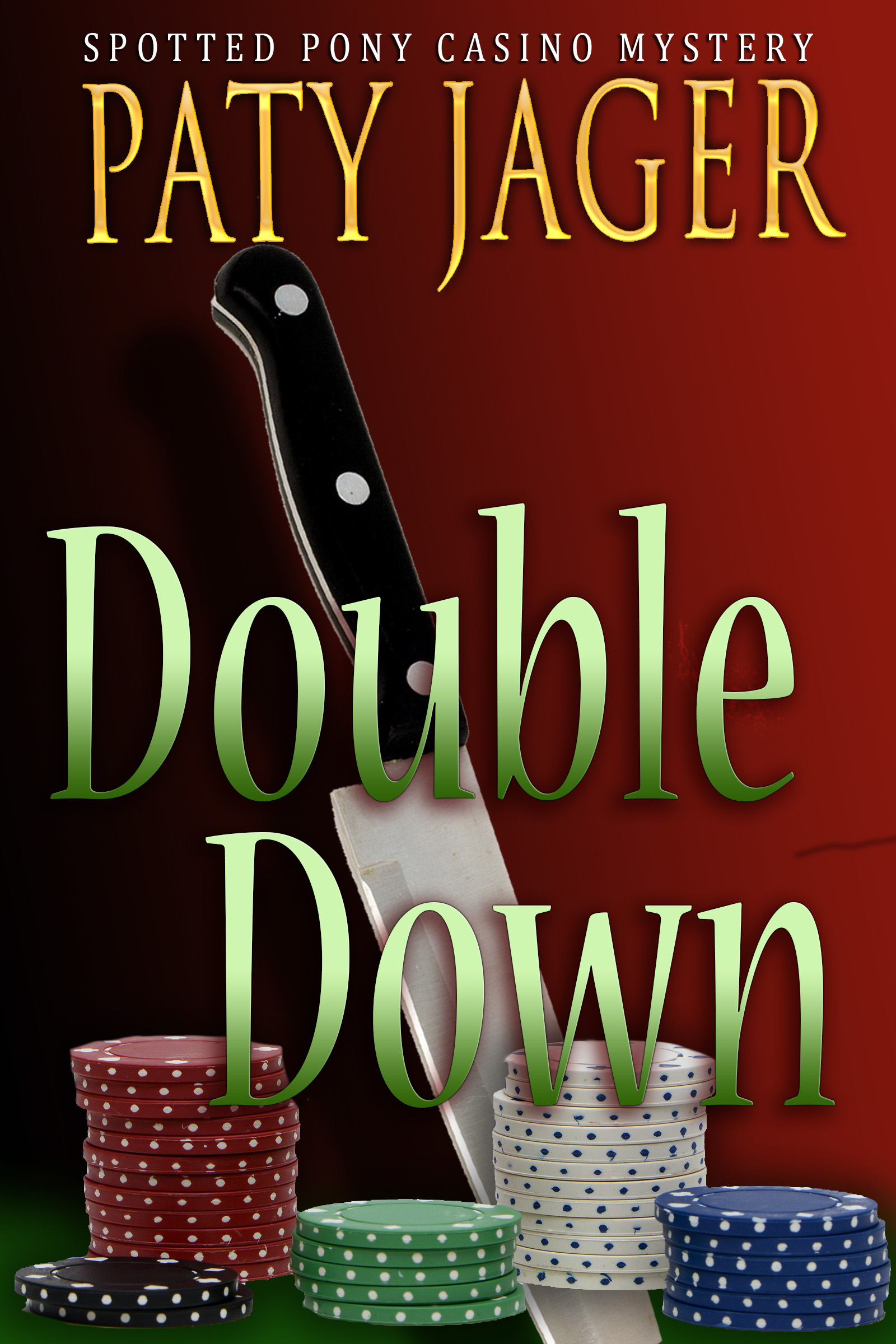
Book three in the Spotted Pony Casino mysteries will be released in ebook and the following week in print.

Double Down

A donkey, a three-legged dog, and a war-scarred veteran outwit the killer.

Dela Alvaro is the main suspect in the stabbing death of a man she stopped from beating his wife to death.  The detective she abhors is ready to toss her in jail and not look for any other suspects. When FBI Special Agent Quinn Pierce is called in and Tribal Officer Heath Seaver is forbidden to work the case, Dela decides to find the killer.

Was it the wife, the drug dealer, or the man wanting to take over the victim’s business? Dela and Heath ask questions and work to prove her innocence. If she is found guilty not only will she lose her life but she’ll never be able to solve the secret of her father.  

Universal Buy Link:

https://books2read.com/u/4D6Wa7

The Illusive Word

Early on in my writing, I would have times when I’d be writing along and…nothing. I knew what I wanted to say but I couldn’t find the word I wanted. That was before I was writing on a computer. I would pull out my dictionary and look up a word similar to what I wanted. And hopefully by process of elimination, the right word would reveal itself.

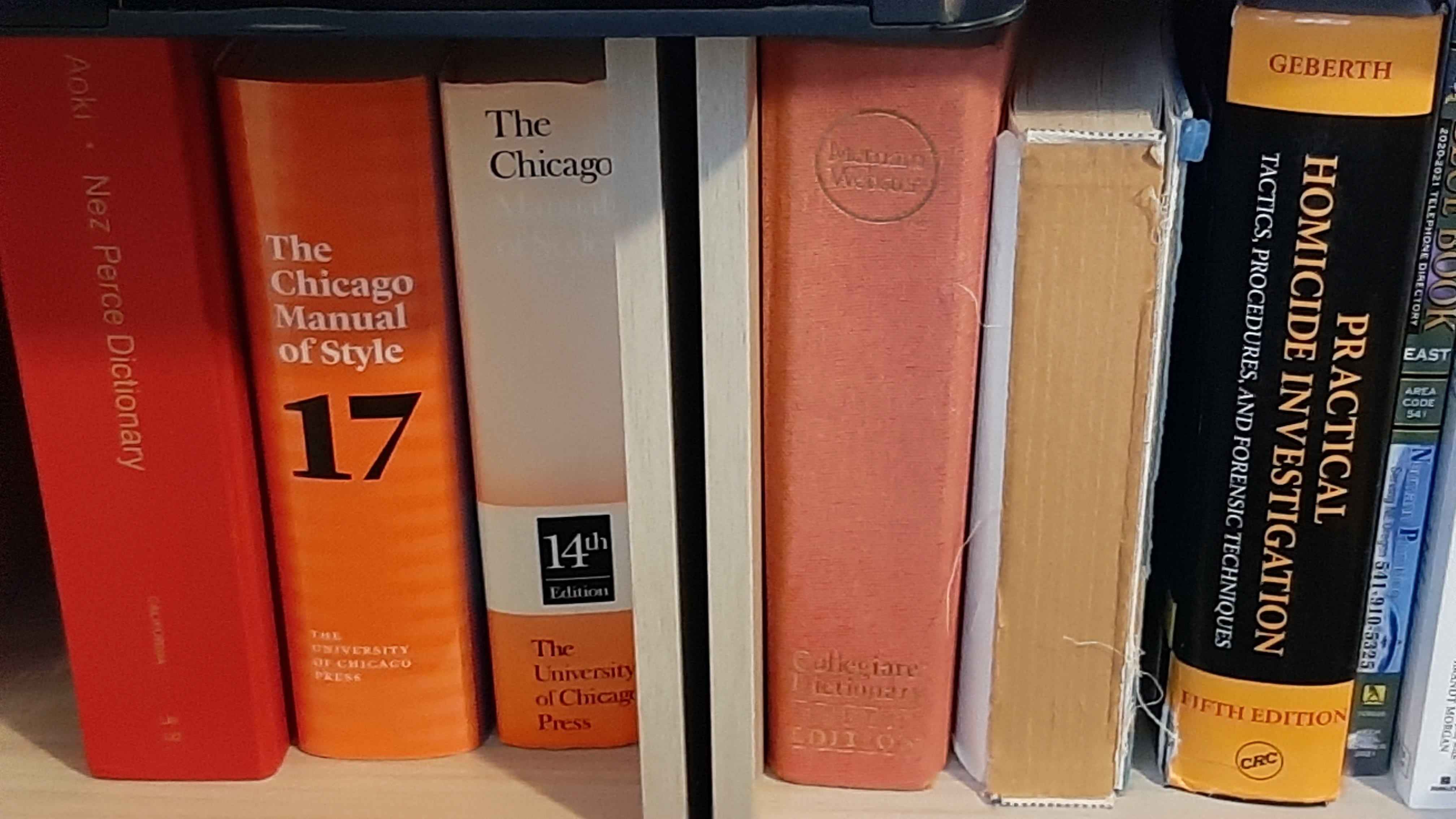
After attending my first RWA (Romance Writers of America) conference, I learned that every writer needs a dictionary( which I had), a thesaurus, The Chicago Manual of Style, and the book Goals, Motivation, and Conflict by Debra Dixon. I went home and found those books at my local bookstore and they have been on my shelf. I even purchased a newer version of The Chicago Manual of Style this year.

my shelf of reference books

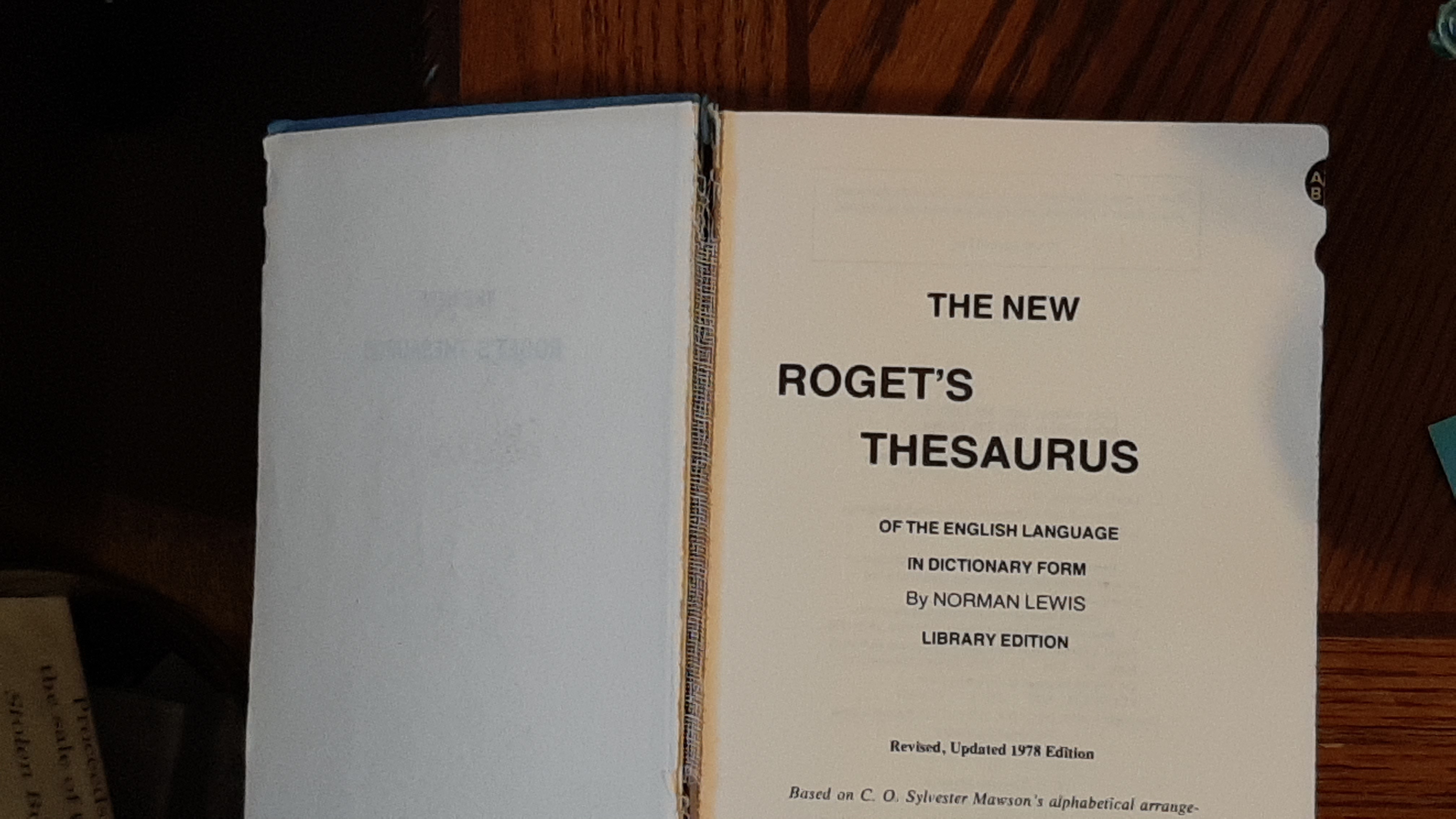
As you can tell by the ratty cover on the thesaurus, I have used it a lot. Even when I look up a word through Word Docs, I will end up going to the book. I sort through word after word, until I come up with the one that makes the sentence show what I want.

My falling apart thesaurus

There are days it feels like I stop my momentum more than I write. On those days my brain doesn’t spit out the words I want and I hunt and hunt. Then there are days I don’t touch any of the books as my fingers fly over the keys moving my story along with the precise words I need to convey the scene.

I know I will be going back and editing the story and could just put in what I want to say in parenthesis and move on. But my brain won’t let me. I have to have the exact word or I can’t move on with the story. Although there have been a couple of times when the right word couldn’t be conjured up with all my reference books. Then I do put down what I want to say in parenthesis and come back to it when I do the edits, hoping the brain is more engaged that day.

I think the need to have the “perfect” word is a curse to writers. I’m sure I’m not the only one who can use up writing time hunting down the illusive word that is on the tip of my fingers but can’t quite manifest in my mind.

For me, this is a second behind editing as the hardest and most dreaded part of writing for me. How about other writers? Do you also struggle at times to find the right word? Readers, have you ever read something and thought, “this word would have been a better choice?”