Les vacances et l’ecriture*

* Vacations and Writing
by Margaret Lucke

“A writer never has a vacation. For a writer,
life consists of either writing or thinking about writing.”
–Eugene Ionescu

Ionesco may be right. Even when writers take time off, our brains keep chugging away on the story. Plot details pop into mind at odd moments. Characters whisper secrets in our ear. No matter what we’re doing, the story is humming in the background.

So, yes, we’re always writing. But that doesn’t mean we have to stay chained to our desks. Sometimes a change of pace in a fresh environment—in other words, a vacation—is exactly what our creativity needs.
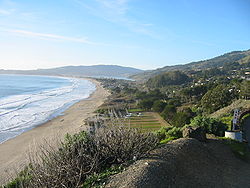
A writers group I belonged to for many years used to have a wonderful tradition. Each autumn, we held our own writers retreat. We rented a pair of cottages in the nearby seaside town of Stinson Beach and spent a week there writing. No phones. No TV. No families. No errands to run. Just our stories and the companionship of other writers. We each had our own room to work in and a long beach to walk on. Fresh air. The sounds of the wind and the gulls. Everyone brought her own food for breakfast and lunch. In the evenings we took turns making dinner and gathered by the fireplace for wine and conversation. We went home with our spirits rejuvenated and lots of work accomplished.

Then our horizons expanded. One of our members, Joan, was offered the opportunity to spend September and October of that year in a grand maison in a medieval hilltop village in Provence. The cost was extremely reasonable, and the house would accommodate a large number of guests. Why not, she suggested, hold our annual retreat there?
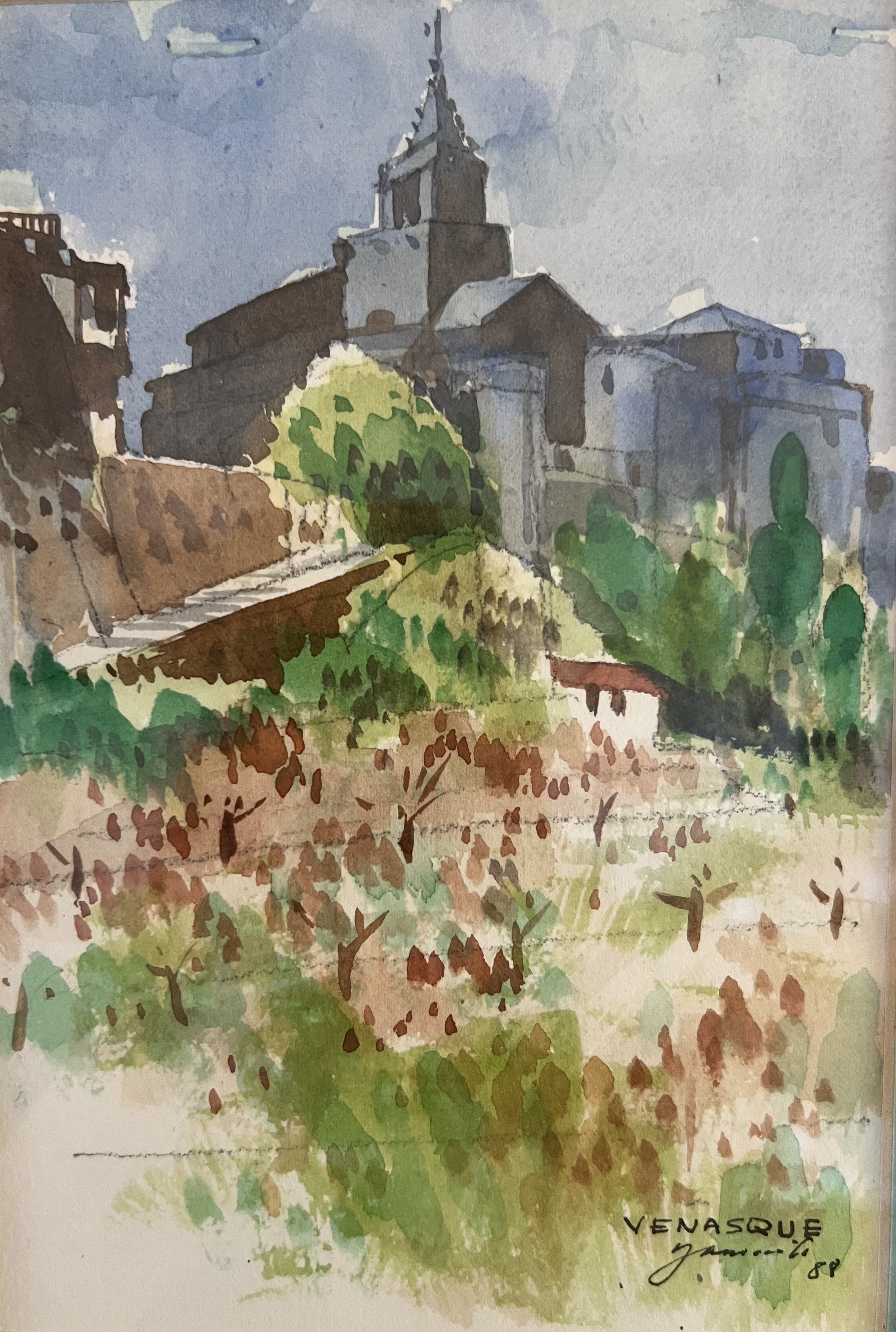
So off we went to Venasque, which is to be considered one of the most beautiful of Provençal villages. It sits east of Avignon in the midst of vineyards and lavender fields, near the slopes of Mont Ventoux, the southernmost peak of the Alps. Its church was built in 1100s, next to a baptistery that dates all the way back to the 6th century. It is said that the baptistery was built on the site of a temple to Venus, the goddess of love who is still honored in the village’s name.

Not all of our writing group members could stay for the full two months but each of us got there for at least a few days, as did some of Joan’s other friends. I spent all of October in France, one of the most memorable months of my life.

The days quickly settled into an agreeable rhythm. Churchbells woke me at seven. I’d read in bed or write at the table in my pretty blue bedroom until nine. That gave me time for breakfast before the daily tour began at ten. Several of us would take off in our leased car to visit a museum or a monastery, or explore a Roman ruin or another medieval town, or stroll through a picturesque outdoor market. We’d stop at a patisserie with an outdoor terrace for a café crème and a pain au chocolat, then head home for dinner and a glass or two of the local wine. Around nine we’d start drifting to our rooms, some to sleep, others like me to write for a couple of hours.
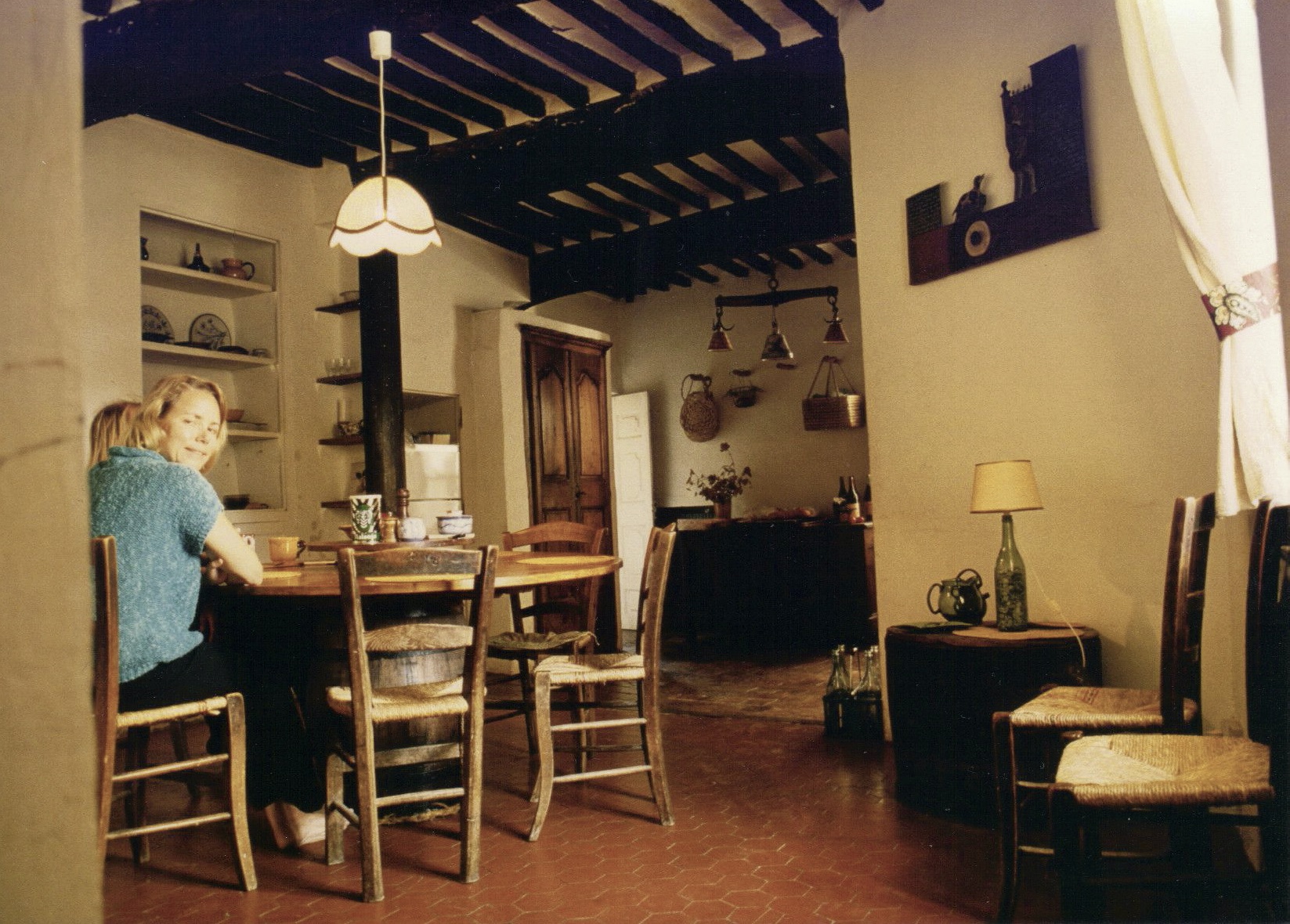
We were enthusiastic tourists, yet we got a lot of work done. There was no computer, no phone, no TV, no billboards along the roads, no job to go to—just as at Stinson Beach, we had none of the constant distractions and demands for attention that we experienced in our normal lives. And there were plenty of new sights, sounds, and scents to stimulate both our senses and our mental story engines. Going home was hard, yet the positive effects of the trip lasted for a long time. I still get a boost just from the memories.

France was a hard act to follow, and that trip proved to be the writing group’s last retreat. The next year, and again the one after, we couldn’t find a week when we were all free to go to Stinson Beach, and sadly the tradition died.

Right now, as the summer vacation season wraps up, I’m feeling the stirrings of writer’s wanderlust. Surely a sojourn like my adventures in Stinson Beach and the south of France would help me move forward with my current novel-in-progress. If the power of positive thinking really works, I’ll soon find a good way to combine les vacances et l’ecriture—vacation and writing—no matter what Ionescu says.

The painting of Venasque is by artist Lawrence Yamamoto, a member of our group. 

* * *

This fall I will be teaching a course called The Craft of Writing for UC Berkeley’s Extension program. Ten Thursday evenings, September 10 through November 12, 6–9 pm Pacific time. If you are interested in learning more, you can find out by clicking here.
Travel for Fun and Location

by Janis Patterson

Ah, the beginning of summer! The white hot skies, the unexpected rains, the siren call of pools and lakes… for some. For me summer means travel. (If I were to be honest I’d have to say that’s true of all seasons, but this is summer, so let’s leave it at that.) Travel is one of my greatest pleasures, and it influences me greatly.


And, being a writer, that means my writing is influenced as well. Back in my days of trad-publishing-only whenever I wanted to take a trip (I was much younger, single and fancy-free) and could afford it, off I went. Of course I kept every receipt and expense so the trip could be claimed as a business tax deduction. (One of the nicest things about being a writer is that with just a little creativity just about everything except your morning cereal can be claimed as a business tax deduction.) Then when I returned home just to legitimize my expenses I would write about 50 pages and a synopsis (which in those antique days we called a proposal) and send it to my editor. Silly practice, which accounted for me having to write a couple of books I really didn’t want to!


A location can be as compelling a character in your book as any human… sometimes more so, so you have to be accurate in describing it. And if you aren’t, believe me, there are lots of people out there who will take great delight in correcting you.


One of the mantras writers learn early is Research Research Research. This is doubly true when describing a setting. You have to be accurate, but also relatable, and you don’t dare let your descriptions grow so detailed that they clog the action. People don’t like great indigestible lumps of info dump. When I travel I take copious notes and photographs as well as picking up brochures and other information. When I can’t resist it I also buy books, which accounts for a large portion of my overweight baggage fees.


On the other hand, you have to be delicate about how much information you put in your story. While I recommend knowing as much as you can, that does not mean you have to put in everything you know. For example, suppose you are writing about a famed craft/art show. You don’t need to put down the square footage, or the miles of paths, or the opening hours… UNLESS any or all of these are clues or some other kind of vital information. Even if they are, be a little bit subtle about it. There’s nothing more annoying than a fact surrounded in neon that blinks “Here’s a clue – here’s a clue.” Let the reader take the sleuthing journey with you. Make them work just a little – don’t spoon feed them the clues in an obvious way.


But facts aren’t the only metrics or even usefulness of locations. There’s so much more than can evoke reactions in your readers. Sight is often the primary reference point, but smell and sound can convey so many levels of feeling. Use them to create exactly the reaction you want. What does the character hear? Traffic? Cowbells and mountain breezes? Rock music? What does the air feel like? Dry? Humid? Soft? What smells are there? Green growing things? Car exhaust? The smell of broiling meat from the food court? The only thing is, whatever you’re putting in your story has to be (reasonably) available in the actual location.


But this is so simple, I can hear you saying. How can you write about a place and not mention all that? Hate to tell you, but far too many writers do exactly that. Don’t be one of them. Take your reader with you and show the location as it is. Show it as you saw it. It’s almost as good as going again.

Experience vs Research


by Janis Patterson

I’ll admit it – I’m a travel junkie. So is The Husband. We love to fill our bags, I grab my travel computer (an aged MacBookAir) and then we head off. I’ve gotten several books from my various trips and many more ideas than I can ever use. (Plus, to be honest, a lot of fun and a few downright scary moments…) Being older, we’re trying to squeeze in as much travel as we can afford before it becomes physically unfeasible. Travel is one of the greatest gifts life can offer. It is not a guaranteed gateway to a career.


I really did think everyone sort of thought the same way, but not long ago someone whom up until then I had thought intelligent gave me a rather unpleasant shock. Now you know because I have written again and again I believe there are ideas everywhere – you can get more workable ideas in a couple of days than a dozen writers could work up in a dozen lifetimes. I still believe that, which is why I was absolutely gobsmacked when this person said they really planned on becoming a novelist but they couldn’t start until they had more money to travel with.


This happened at a speaking venue where – among other things – I talked about the research value of travel. After my presentation was over there was a reception, and this person came to talk to me and dropped his bomb about not being able to write until he could afford to travel. Of course I questioned the idea that one had to travel to write novels. He became very defensive and said he didn’t want to be limited to writing only about what he knew, because all he knew was domestic and boring and in his opinion not worthy of his time, talent or effort. He didn’t think it was fair that established writers should have such a prejudicial leg up.


Sorry to burst anyone’s bubble, but I am not always sweet and well-mannered, especially when I am irritated and this person’s somewhat belligerently skewed vision definitely irritated me.


So, I asked, if you haven’t been to a place you can’t write about it? (Now I am not stupid; there are innumerable advantages to actually having been to a place – I just don’t believe it is an absolute requirement.)


He said yes.


I then asked how he thought people wrote historical novels, as time travel machines are pretty rare on the ground. Or sci-fi. Or high fantasy, since I hadn’t seen any dragons zipping around lately either.


Now he was getting angry, saying I was just clouding the issue and trying to discourage him and, he accused, like other multi-published professional writers keep the market for myself. He was an adventure writer, he declared, one who wrote about exotic places and cultures – not a ‘kitchen sink’ drone. He was special and he’d prove it once he could get started.


The rest of the conversation, I am somewhat sad to say, was too intense and impolite for recording here. However, it did make me think… and grieve for those who agree with him. I have always and will always say that research is essential; you have to write about what you know, and if you don’t know about it when you start you should know a great deal about it before you finish – whatever ‘it’ is. However, that does not mean you have to personally experience it! Sometimes that is indeed preferable, sometimes it is just pleasurable, sometimes it is impossible. (At least until they start tourist runs to 1860 or Alpha Centauri.)


If personal, on-the-spot research is impossible and there are no research facts are available, what’s a writer to do? My answer is logical extrapolation. If you’re writing about a space colony with a mixed alien population, you should think about physical makeup, reactions to varying gravitational pulls, breathing (oxygen or methane, for example), eating (fat/carbohydrate vs silicon/mineral sustenance) and the like. Now I know this is far from the world of terrestrial, ‘normal’ mysteries, about which there is thankfully an abundance of research available, but the principle is the same.


You have to know what you’re writing about whether you already know it, research it, create it, experience it or learn it. You are creating a world and in some worlds what you say goes – but once you have said it, it must stay the same for the length of time you are in that world. Even ‘playing God’ as writers do albeit on a limited basis, there are still rules.
In a nutshell, research is necessary; personal experience is not.


I don’t know what happened to that deluded young would-be writer; I do hope he absorbed and accepted what I told him – though I fear not, at least not now. Perhaps the writing-fairy lightning will strike him and he will have his beliefs validated – doubtful, but it does happen very very very rarely.


All I know is that we made a deposit on a great trip the other day and I’m already thinking about what to take and make sure my traveling computer is up to date and ready to go. Even though it’s early, I’ll start as soon as I finish the current project, which is set in ‘today’ and just down the street. No travel needed.

And… just in case you’re interested, all four volumes of my newest release – 50 BLOGS ON WRITING AND THE WRITING LIFE – are available at Amazon for just $.99 each!

The Good and Bad by Marilyn Meredith

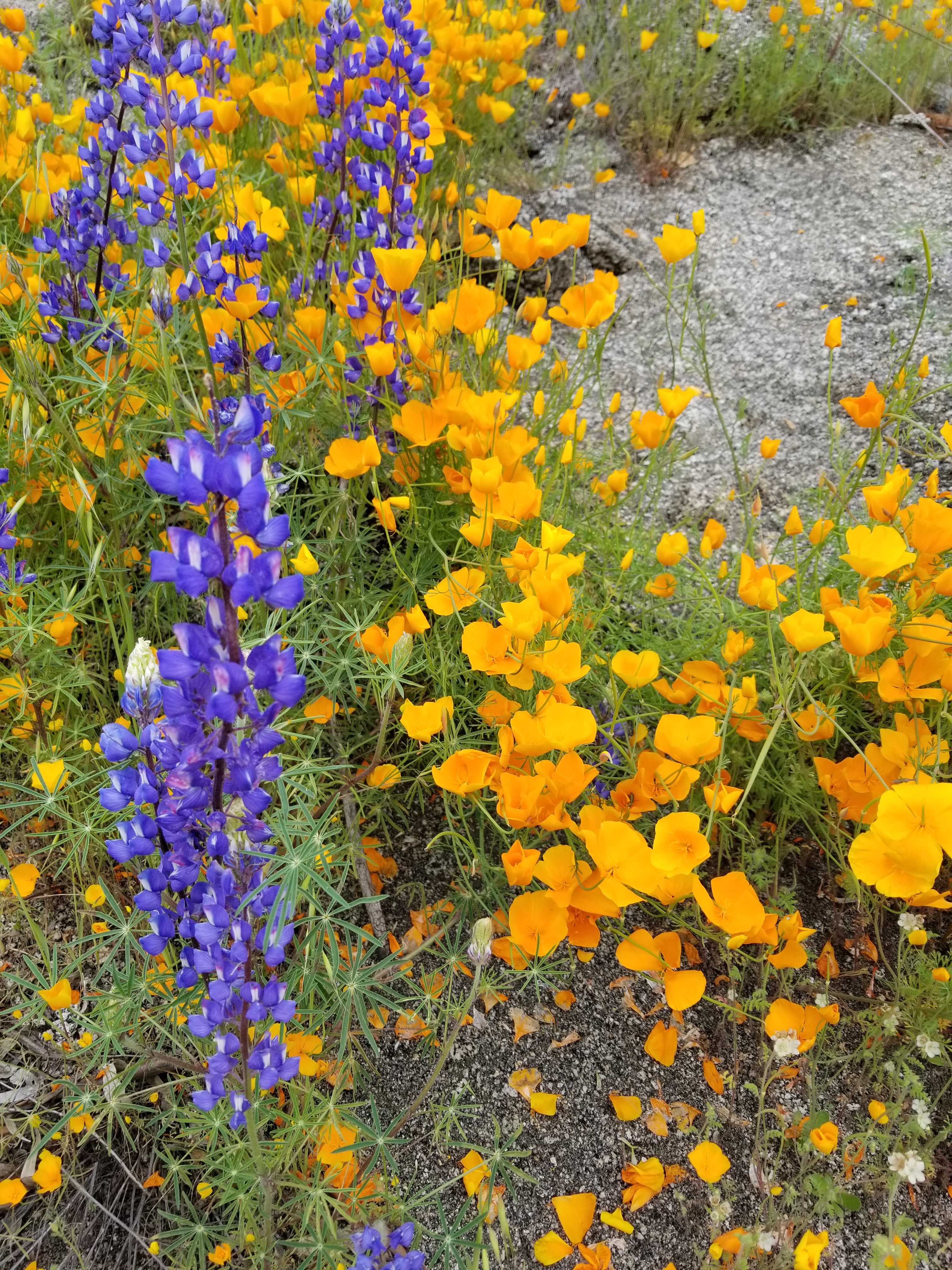
Poppies by the dumpTraveling the road of life is never smooth. It seems just when everything is going well, a huge boulder crops up to make the way difficult.

First off, my post is late because when I was writing it on Sunday, the power went out and when it came back on I had to be somewhere else.

Health wise, I’d done really well, until I took too bad tumbles—one that required a trip to the ER, and another when I decided to stay home. After a couple of weeks I still have very sore knees and following the doc’s advice to use a cane. (Would be okay except I keep misplacing it.)

My writing career has also taken a tumble in that one of my publishers seems to have problems. Lack of communication and royalty payments has made me come to the sad decision to ask for my rights back. Which means I’ll be self-publishing one of my series, hopefully.

One of my great-granddaughters (17) had back surgery—scary, but she’s already walking and climbing stairs. (She’s a super active young woman, a mountain bike racer—that’s how she got injured, works part-time while going to school, heads up a couple of clubs, planning on college.)

One of the great-greats who lives with us (4 year-old Priscilla) has a new pet—a worm named Sylvia. How can you be upset with life, when such fun stuff is happening?

Plus after years of drought here in California we’ve had lots of rain, and now the hills are covered with wild flowers—yellow, white, and most wonderful of all, poppies and lupine are sprouting all over the hillsides.

Back to writing—I’m moving ahead with the latest book in my other series and in April I’ll be presenting at a wonderful writer’s conference in San Luis Obispo about settings and characters, and sitting on a panel about research. I’m also going to have my books for sale at a big book fair in Visalia.

Being around other writers and talking to readers about books is a great way to lift my spirits.

Happy spring everyone!

Marilyn


The World Through My Eyes

thumb_IMG_1225_1024

The fifth book in the Adam Kaminski mystery series will come out this summer. I am so excited to share it with you! I’ve spent the past two years working on this book that looks at the world through the eyes of a photographer, while also telling the story of a cruise in which everyone is pretending to be someone they’re not.

One of the things I enjoy most about writing is the opportunity to look at the world through other peoples eyes. Because my series has one main character– Adam Kaminski – who always finds someone to help him out, I have the pleasure of creating a new point-of-view character for each book (that is, a character whose thoughts you, the reader, get to hear.)

In this book my second leading character is Julia Kaminski, sister to Adam. Julia has appeared in most of the other books in the series, so I’m not creating her from scratch. But this is the first time I’m writing from her perspective, describing the world through her eyes. In this case, the eyes of a photographer. There can be no doubt, we all see the world a little bit differently.


A-Pale-Reflection-Web-Small
A very blurry suggestion of the cover for A Pale Reflection  – the world as I might see it!

Personally, I’ve been wearing glasses since I was five (and probably needed them before that). The world through my eyes looks very different. Terribly near-sighted, without my glasses I see blurs of color without distinct shapes. Every pin prick of light becomes a giant, glowing snowflake. It’s actually quite beautiful! As long as I don’t need to see clearly. These days, I wear bifocals, so I get two different views of the world depending how I hold my head! (And does anyone hate progressive bifocals as much as I do? I couldn’t stand them.)

As an aside, I recently saw a video about very young children – one year or younger – getting glasses and being able to see their mothers’ faces clearly for the first time. The expression of joy on their faces was indescribable. How the doctors were able to figure out a) that they needed glasses and b) what their prescription was I have no idea. But it is remarkable.


IMG_3813
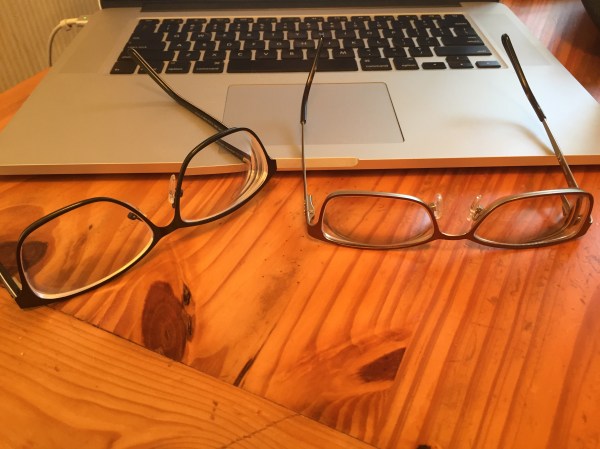
Bifocal and near vision only – just two of the many pairs of glasses in my life!

My husband, on the other hand, is farsighted. How strange! After a lifetime of holding things next to my face to read them, I can’t imagine only being able to see clearly when things are far away. The world he sees is very different from the world I see.

I’m pretty sure the same holds true for reading. I write a book and let it out into the world. Now it’s up to the reader to see whatever he or she sees in it. I love hearing other peoples perspectives of my books — don’t get me wrong — but I admit there are times when I hear someone describing one of my characters and I think: can’t I just give you a prescription that lets you see it the way I see it?

A Pale Reflection, my book about seeing the world – and other people – clearly, comes out this summer. Check out my Facebook page or sign up for my newsletter at my website to see the full cover soon. And follow me on Instagram to see photos of my world. I hope my perspective of other people’s perspective will keep you entranced – and wondering who the killer is!

Adam-Kaminski-Mystery-Series