Experience vs Research


by Janis Patterson

I’ll admit it – I’m a travel junkie. So is The Husband. We love to fill our bags, I grab my travel computer (an aged MacBookAir) and then we head off. I’ve gotten several books from my various trips and many more ideas than I can ever use. (Plus, to be honest, a lot of fun and a few downright scary moments…) Being older, we’re trying to squeeze in as much travel as we can afford before it becomes physically unfeasible. Travel is one of the greatest gifts life can offer. It is not a guaranteed gateway to a career.


I really did think everyone sort of thought the same way, but not long ago someone whom up until then I had thought intelligent gave me a rather unpleasant shock. Now you know because I have written again and again I believe there are ideas everywhere – you can get more workable ideas in a couple of days than a dozen writers could work up in a dozen lifetimes. I still believe that, which is why I was absolutely gobsmacked when this person said they really planned on becoming a novelist but they couldn’t start until they had more money to travel with.


This happened at a speaking venue where – among other things – I talked about the research value of travel. After my presentation was over there was a reception, and this person came to talk to me and dropped his bomb about not being able to write until he could afford to travel. Of course I questioned the idea that one had to travel to write novels. He became very defensive and said he didn’t want to be limited to writing only about what he knew, because all he knew was domestic and boring and in his opinion not worthy of his time, talent or effort. He didn’t think it was fair that established writers should have such a prejudicial leg up.


Sorry to burst anyone’s bubble, but I am not always sweet and well-mannered, especially when I am irritated and this person’s somewhat belligerently skewed vision definitely irritated me.


So, I asked, if you haven’t been to a place you can’t write about it? (Now I am not stupid; there are innumerable advantages to actually having been to a place – I just don’t believe it is an absolute requirement.)


He said yes.


I then asked how he thought people wrote historical novels, as time travel machines are pretty rare on the ground. Or sci-fi. Or high fantasy, since I hadn’t seen any dragons zipping around lately either.


Now he was getting angry, saying I was just clouding the issue and trying to discourage him and, he accused, like other multi-published professional writers keep the market for myself. He was an adventure writer, he declared, one who wrote about exotic places and cultures – not a ‘kitchen sink’ drone. He was special and he’d prove it once he could get started.


The rest of the conversation, I am somewhat sad to say, was too intense and impolite for recording here. However, it did make me think… and grieve for those who agree with him. I have always and will always say that research is essential; you have to write about what you know, and if you don’t know about it when you start you should know a great deal about it before you finish – whatever ‘it’ is. However, that does not mean you have to personally experience it! Sometimes that is indeed preferable, sometimes it is just pleasurable, sometimes it is impossible. (At least until they start tourist runs to 1860 or Alpha Centauri.)


If personal, on-the-spot research is impossible and there are no research facts are available, what’s a writer to do? My answer is logical extrapolation. If you’re writing about a space colony with a mixed alien population, you should think about physical makeup, reactions to varying gravitational pulls, breathing (oxygen or methane, for example), eating (fat/carbohydrate vs silicon/mineral sustenance) and the like. Now I know this is far from the world of terrestrial, ‘normal’ mysteries, about which there is thankfully an abundance of research available, but the principle is the same.


You have to know what you’re writing about whether you already know it, research it, create it, experience it or learn it. You are creating a world and in some worlds what you say goes – but once you have said it, it must stay the same for the length of time you are in that world. Even ‘playing God’ as writers do albeit on a limited basis, there are still rules.
In a nutshell, research is necessary; personal experience is not.


I don’t know what happened to that deluded young would-be writer; I do hope he absorbed and accepted what I told him – though I fear not, at least not now. Perhaps the writing-fairy lightning will strike him and he will have his beliefs validated – doubtful, but it does happen very very very rarely.


All I know is that we made a deposit on a great trip the other day and I’m already thinking about what to take and make sure my traveling computer is up to date and ready to go. Even though it’s early, I’ll start as soon as I finish the current project, which is set in ‘today’ and just down the street. No travel needed.

And… just in case you’re interested, all four volumes of my newest release – 50 BLOGS ON WRITING AND THE WRITING LIFE – are available at Amazon for just $.99 each!

The Good and Bad by Marilyn Meredith

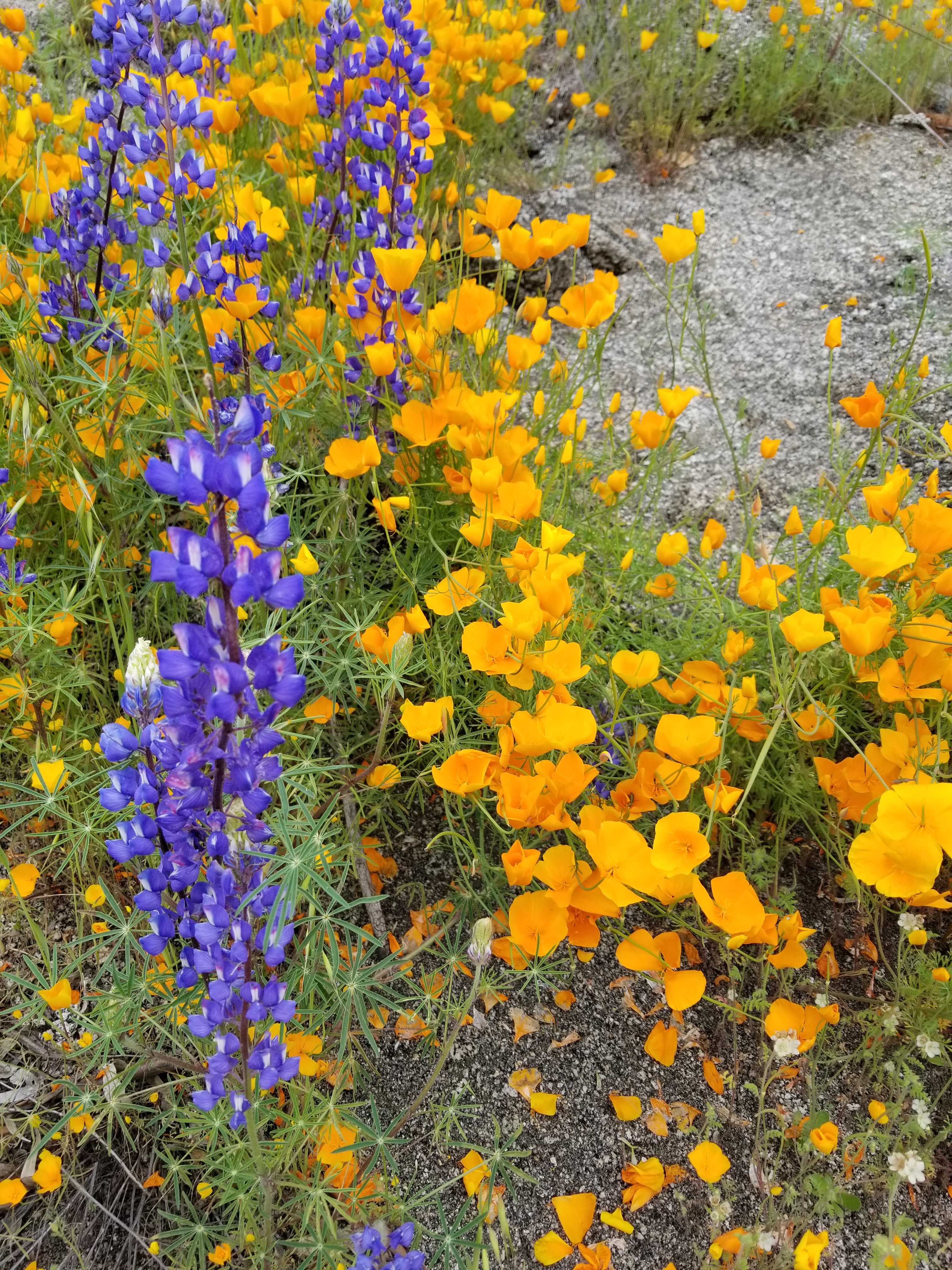
Poppies by the dumpTraveling the road of life is never smooth. It seems just when everything is going well, a huge boulder crops up to make the way difficult.

First off, my post is late because when I was writing it on Sunday, the power went out and when it came back on I had to be somewhere else.

Health wise, I’d done really well, until I took too bad tumbles—one that required a trip to the ER, and another when I decided to stay home. After a couple of weeks I still have very sore knees and following the doc’s advice to use a cane. (Would be okay except I keep misplacing it.)

My writing career has also taken a tumble in that one of my publishers seems to have problems. Lack of communication and royalty payments has made me come to the sad decision to ask for my rights back. Which means I’ll be self-publishing one of my series, hopefully.

One of my great-granddaughters (17) had back surgery—scary, but she’s already walking and climbing stairs. (She’s a super active young woman, a mountain bike racer—that’s how she got injured, works part-time while going to school, heads up a couple of clubs, planning on college.)

One of the great-greats who lives with us (4 year-old Priscilla) has a new pet—a worm named Sylvia. How can you be upset with life, when such fun stuff is happening?

Plus after years of drought here in California we’ve had lots of rain, and now the hills are covered with wild flowers—yellow, white, and most wonderful of all, poppies and lupine are sprouting all over the hillsides.

Back to writing—I’m moving ahead with the latest book in my other series and in April I’ll be presenting at a wonderful writer’s conference in San Luis Obispo about settings and characters, and sitting on a panel about research. I’m also going to have my books for sale at a big book fair in Visalia.

Being around other writers and talking to readers about books is a great way to lift my spirits.

Happy spring everyone!

Marilyn


The World Through My Eyes

thumb_IMG_1225_1024

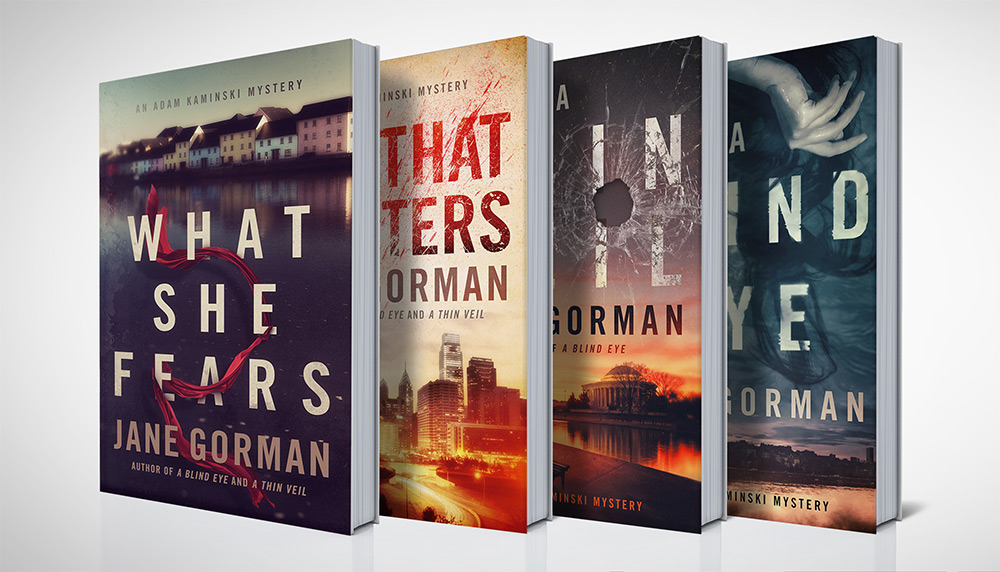
The fifth book in the Adam Kaminski mystery series will come out this summer. I am so excited to share it with you! I’ve spent the past two years working on this book that looks at the world through the eyes of a photographer, while also telling the story of a cruise in which everyone is pretending to be someone they’re not.

One of the things I enjoy most about writing is the opportunity to look at the world through other peoples eyes. Because my series has one main character– Adam Kaminski – who always finds someone to help him out, I have the pleasure of creating a new point-of-view character for each book (that is, a character whose thoughts you, the reader, get to hear.)

In this book my second leading character is Julia Kaminski, sister to Adam. Julia has appeared in most of the other books in the series, so I’m not creating her from scratch. But this is the first time I’m writing from her perspective, describing the world through her eyes. In this case, the eyes of a photographer. There can be no doubt, we all see the world a little bit differently.


A-Pale-Reflection-Web-Small
A very blurry suggestion of the cover for A Pale Reflection  – the world as I might see it!

Personally, I’ve been wearing glasses since I was five (and probably needed them before that). The world through my eyes looks very different. Terribly near-sighted, without my glasses I see blurs of color without distinct shapes. Every pin prick of light becomes a giant, glowing snowflake. It’s actually quite beautiful! As long as I don’t need to see clearly. These days, I wear bifocals, so I get two different views of the world depending how I hold my head! (And does anyone hate progressive bifocals as much as I do? I couldn’t stand them.)

As an aside, I recently saw a video about very young children – one year or younger – getting glasses and being able to see their mothers’ faces clearly for the first time. The expression of joy on their faces was indescribable. How the doctors were able to figure out a) that they needed glasses and b) what their prescription was I have no idea. But it is remarkable.


IMG_3813
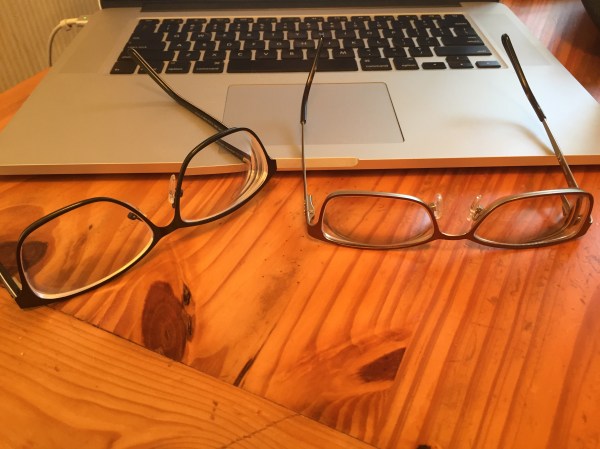
Bifocal and near vision only – just two of the many pairs of glasses in my life!

My husband, on the other hand, is farsighted. How strange! After a lifetime of holding things next to my face to read them, I can’t imagine only being able to see clearly when things are far away. The world he sees is very different from the world I see.

I’m pretty sure the same holds true for reading. I write a book and let it out into the world. Now it’s up to the reader to see whatever he or she sees in it. I love hearing other peoples perspectives of my books — don’t get me wrong — but I admit there are times when I hear someone describing one of my characters and I think: can’t I just give you a prescription that lets you see it the way I see it?

A Pale Reflection, my book about seeing the world – and other people – clearly, comes out this summer. Check out my Facebook page or sign up for my newsletter at my website to see the full cover soon. And follow me on Instagram to see photos of my world. I hope my perspective of other people’s perspective will keep you entranced – and wondering who the killer is!

Adam-Kaminski-Mystery-Series

Who Saw That?

thumb_IMG_1225_1024

Julia Kaminski, sister to the hero of the Adam Kaminski mystery series, is a photographer. A good one. She’s still figuring out how to make a living in her chosen profession. In an ideal world, she’d earn her money by showing and selling her photographs at galleries. But until that happens, she’s getting by by taking on gigs as a photographer at wedding or parties. And still holding out for her big break.

Julia’s photographs take on new meaning in book 5 in the series, A Pale Reflection. Julia finally gets a leading role, after appearing as a side character in the first four books, and jumps into the chance to use her photographic skills to help her brother Adam figure out whodunnit.

27591728_Unknown

The thing about photographs is they capture more than you might realize. You, the tourist, for example, sees a beautiful scene and snap a shot. It may only be later, as you go back to look through the photographs, that you notice someone or something in the picture you hadn’t previously realized was there. Or someone watching when you thought you were alone.

27599568_Unknown

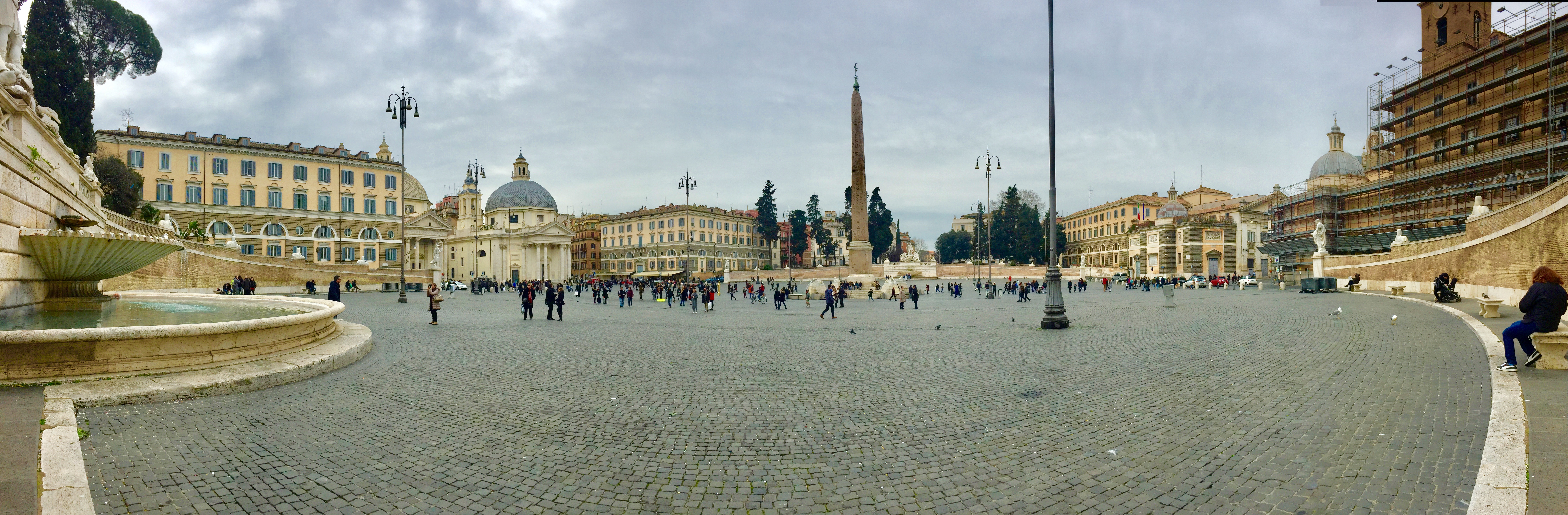
In my family, my husband is the photographer. We just had the amazing opportunity to spend a glorious week in Rome. (Will Adam Kaminski be solving a murder in Rome in the near future? Stay tuned!).

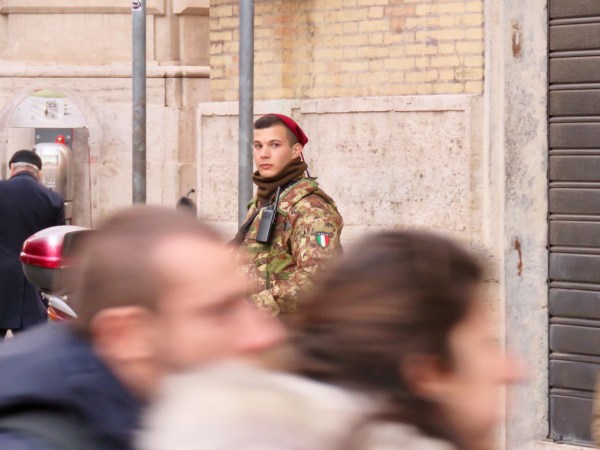
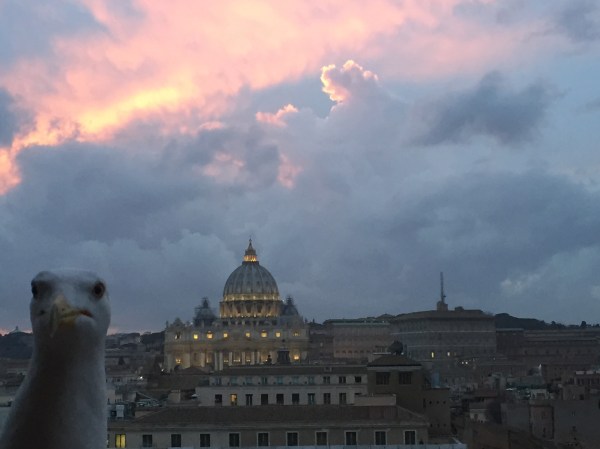
Chuck, my husband, takes spectacular photographs of traditional scenes — statues, artwork, natural beauty and urban beauty. But he also finds joy in surprising details. For example, catching an unexpected eye.

IMG_3708

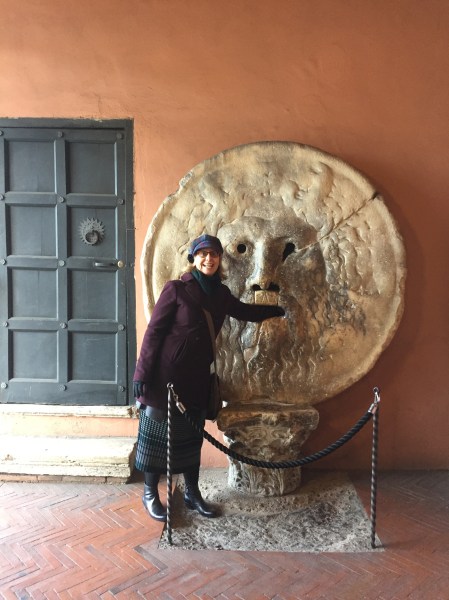
For us, it’s fun. We use these photographs to share our experiences with friends and family and to refresh our own memories of the time we spent there. And if we were trying to catch a killer, the “mouth of truth” pictured here would be a huge help!

IMG_6641

Of course, we’re not trying to solve a murder. For Julia and Adam, a photograph can mean so much more. Even the difference between life and death.

IMG_6700

Learn more about Jane Gorman and the Adam Kaminski mystery series at janegorman.com or follow her on Facebook. For some great photographs of Rome and her other travels, check out her Instagram page!

Adam-Kaminski-Mystery-Series

Understanding Your Characters

Part of what makes a great story is great characters. Any reader can tell you that. Writers talk about developing characters, fleshing them out, giving them back story, making them flawed and relatable. These are all vital steps in creating great a character.

But once the character is created, I find I have yet one more hurdle that I have to jump: I have to understand my characters.

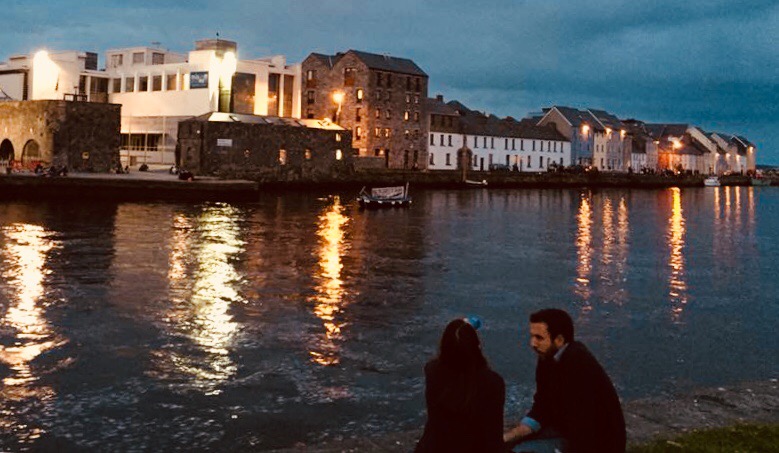
A young couple in Galway contemplate the evening

But you created them, you might say with surprise. You wrote their background, you devised their likes and dislikes, fears and dreams. What’s left to understand?

Lots.

Characters run the show. They get away from you, the writer, taking their own story in directions you hadn’t anticipated. Yes, I know that sounds ridiculous. Yet it happens to all writers.

In my current work in progress, I realized after finishing the second draft that I had the wrong killer. A different character was standing in the wings looking guiltily around, trying not to make eye contact with me. Ah-hah, I thought. That’s the real killer!

Trying to pull a fast one on me, I might add.

In several of my books I have another problem of understanding with some of my characters: I write characters who are not native English speakers.

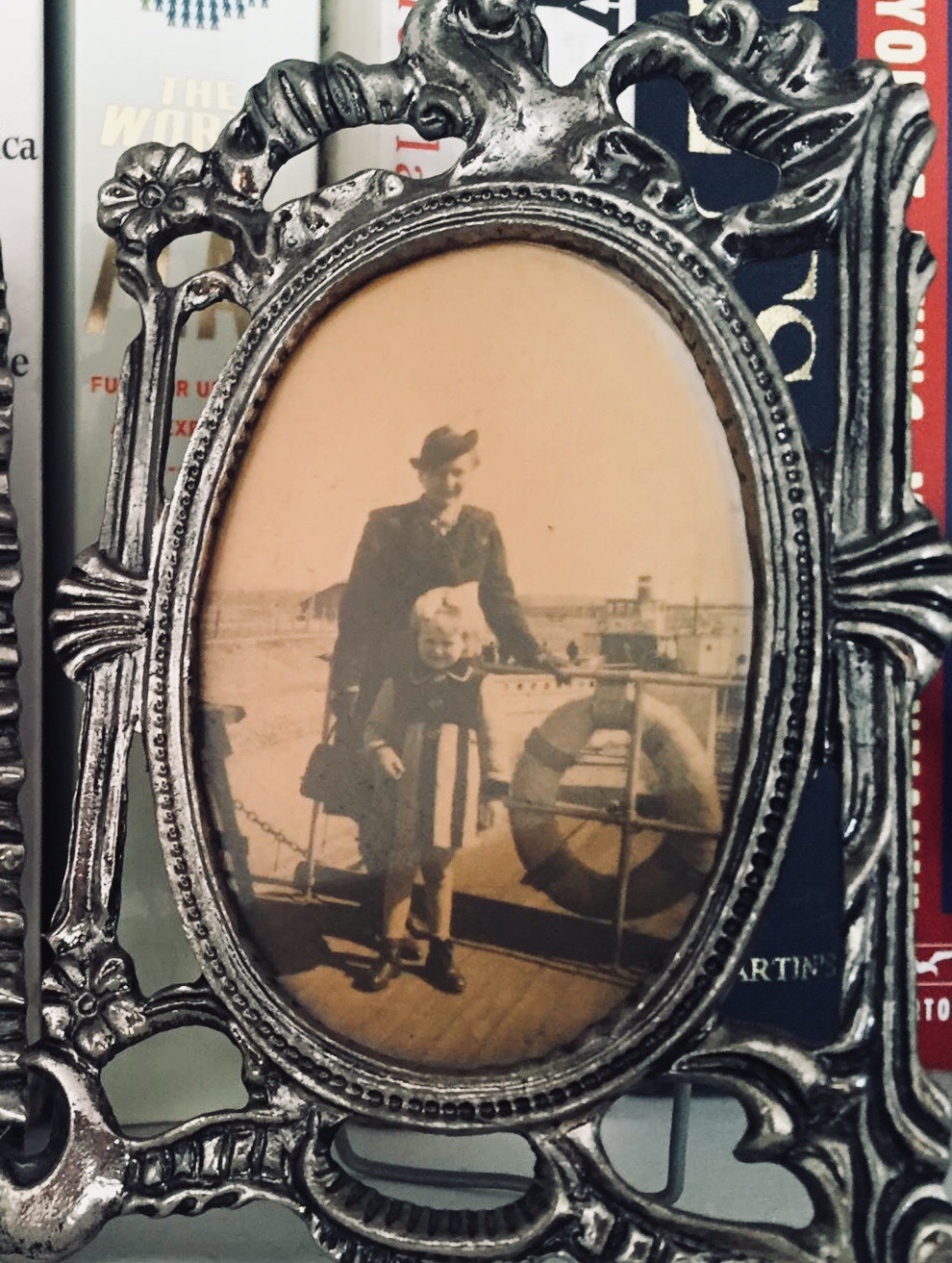
My mother and grandmother in Warsaw

As we all know, language affects not just the way we talk but even the way we think. Writing a foreign character (foreign to me, that is) means not only understanding their native tongue enough to be able to replicate their thoughts, but also understanding the way they frame their thoughts in the first place.

A Pole, an American and an Irishman walk into a bar…. They’re all thinking a little differently and it’s my job to understand those differences.

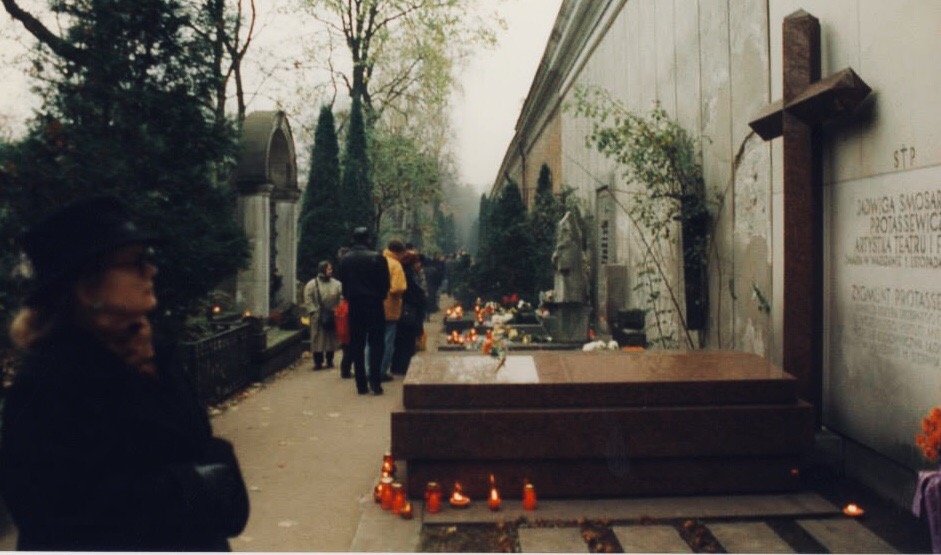
A woman examines a grave in Warsaw. What might she be thinking?

I’m not complaining. I love that job! I spend time improving my language skills. (By the way, for anyone interested in learning French, I recommend the lessons by Paul Noble. They’re very good!). Extra bonus, it helps when I travel the world and meet new people. So it’s a good problem to have. And one that I hope I have succeeded in overcoming.

But you tell me. If you’ve read any of my books, I’d love to hear your thoughts on my foreign characters and how well I’ve captured their differences.

Learn more about Jane Gorman and the Adam Kaminski mystery series at janegorman.com.