The Freedom to Read

by Margaret Lucke

When I was twelve and in the seventh grade, I read On the Beach, by Nevil Shute, a grim novel about people facing death from radiation in the aftermath of a nuclear war. I chose it for the best of reasons—a cute guy in my class was reading it and I wanted to impress him.

A friend of my mother’s who was visiting saw me with the book and said to Mom, “Are you really letting her read that?”

Mom’s reply: “I don’t worry about what she reads. If a book is too adult for her, she won’t really understand what it’s talking about. And if she does understand, it’s already too late.”

When it came to my sisters and me, my parents set firm standards for behavior but not for ideas. While they urged us in the direction of certain attitudes, opinions and beliefs, they let us read whatever we liked. They understood that books can fire a child’s imagination and give her an experience of ideas, cultures, and aspects of the human experience far beyond the boundaries of her own family and community. They knew that books are a good investment yielding lifelong benefits.

Not everyone understands this. I’m all for parents being aware of what their children read, of discussing with them the books and the ideas they contain, even sometimes making them set aside a particular book until they are older. But too many people, afraid of the power books have to change lives, feel they have right to dictate what others can read—not just their own children, but other people’s kids. Other adults too.
This week, October 5-11, is Banned Books Week 2025, sponsored by the American Library Association, and today is Let Freedom Read Day, when the ALA asks everyone to take at least one action to help defend books from censorship and to stand up for the library staff, educators, writers, publishers, and booksellers who make them available. Every year the ALA compiles lists of hundreds of books for which people have filed written complaints requesting that the book in question be removed from schools and libraries. The reasons cited: the books have too much sex or violence or bad language, or they depict lifestyles or beliefs with which the complainant disagrees. Too often, the jurisdiction in question agrees and pulls the books off the shelves.

According to the free-of-expression advocacy group PEN America, this sort of book ban happened almost 7,000 times between July 1, 2024, and June 30, 2025. The Washington Post reported that during this period, the author who was subject to the greatest number of bans was Stephen King.
This is in the U.S., where free speech and freedom of expression have traditionally been dearly held principles. In many countries it’s the government that steps in to ban books, afraid of what its citizens might do if they had unfettered access to ideas.

I don’t know if On the Beach was ever banned or challenged anywhere, but a book I read and loved soon afterward made the list: Margaret Mitchell’s Gone with the Wind. Here’s a random selection of a dozen other favorites (among many) that have been so “honored”:

Where the Wild Things Are, by Maurice Sendak
Charlotte’s Web, by E.B. White
Green Eggs and Ham, by Dr. Seuss
Winnie-the-Pooh, by A.A. Milne
The Merriam-Webster Dictionary, 10th edition
The Great Gatsby, by F. Scott Fitzgerald
To Kill a Mockingbird, by Harper Lee
The Grapes of Wrath, by John Steinbeck
The Kite Runner, by Khaled Hosseini
Huckleberry Finn, by Mark Twain
The Glass Castle, by Jeanette Walls
Born a Crime, by Trevor Noah

Banned Books Week is an opportunity for librarians, booksellers, publishers, journalists, teachers, writers, and readers come together to celebrate the freedom to read and draw attention to attempts to restrict that freedom. You can learn more about it here.

A good way to celebrate? Find a book that has somewhere, at some time, been challenged or banned. Read it. And pass it on.
Prime the Pump and Take a Long Voyage

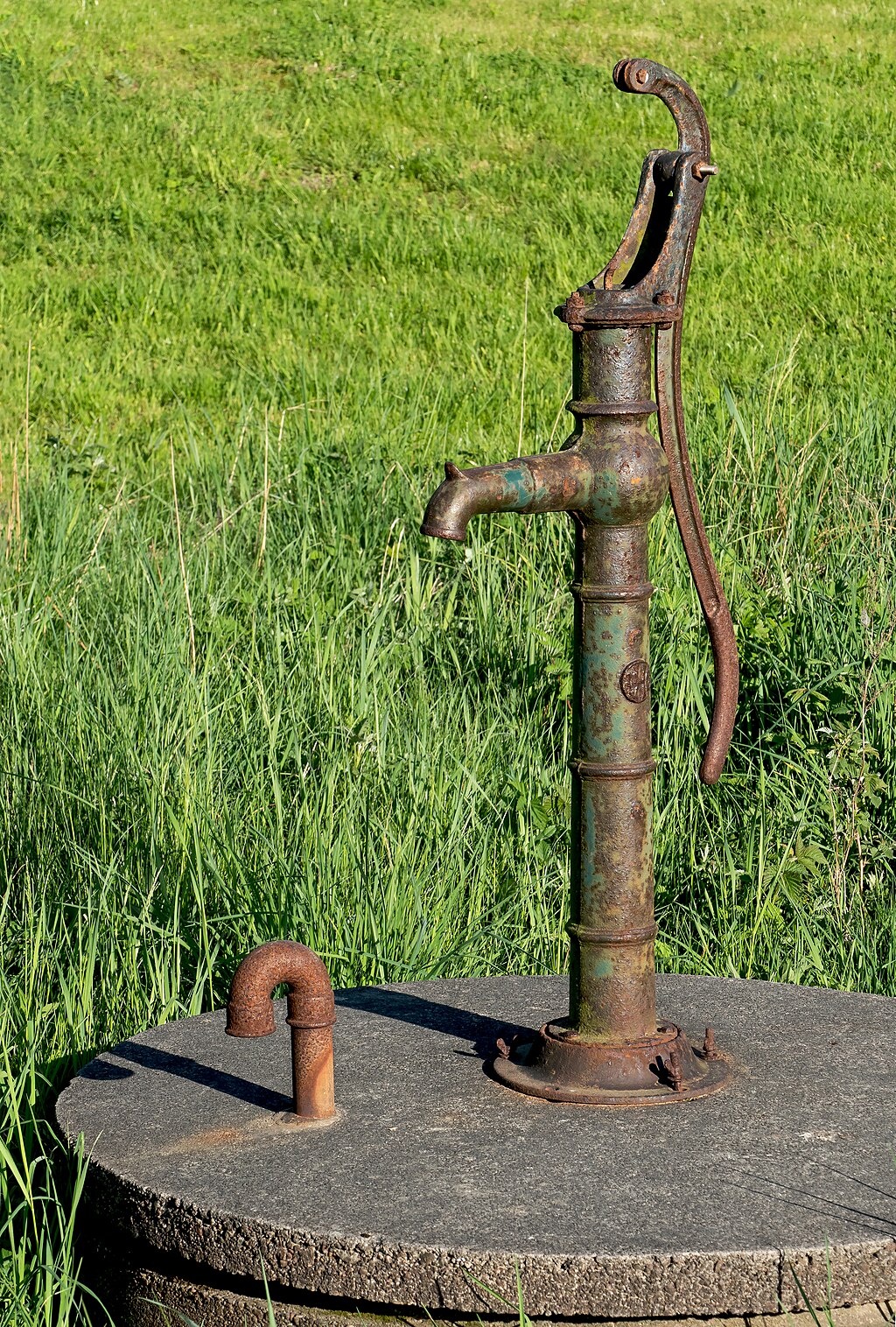
It’s an old phrase: priming the pump. Back in the 19th century, it meant pouring liquid into a pump to expel the air and make it work. Even now, an internet search will tell us that before any centrifugal pump can be operated, it must be primed. Priming is the process of replacing air in the intake lines and portions of the pump with water.

But our subject is books and writing. Priming the pump also means encouraging the growth or action of something. In this case, my work-in-progress.

It’s a historical novel. I have a large pile of words that will eventually become a coherent first draft. Where the hell I’m going? How am I going to get there? Will it make any sense? It probably will, to me. Will anyone else want to read it?

Thus I prime the pump. I’ve been seeking inspiration in one of my research books, taking lots of notes. I’m paying attention to the timeline of actual events, in order to integrate my fictional characters into the crowded parade of real people who were doing things in my setting in 1878 and 1879. As I do this, I write notes to myself, usually set apart in brackets, outlining things I want my protagonist to do. Or learn.

There’s a lot going on, but it’s impossible—and improbable—for me to place her physically at all the significant events, much as I would like her to be an eyewitness. I must pick and choose the most dramatic scenes and figure out a logical reason for her to be there. The rest, she’ll have to learn from others. Besides, the book already looks like it will be long. Some events need to be mentioned in passing rather than detail.

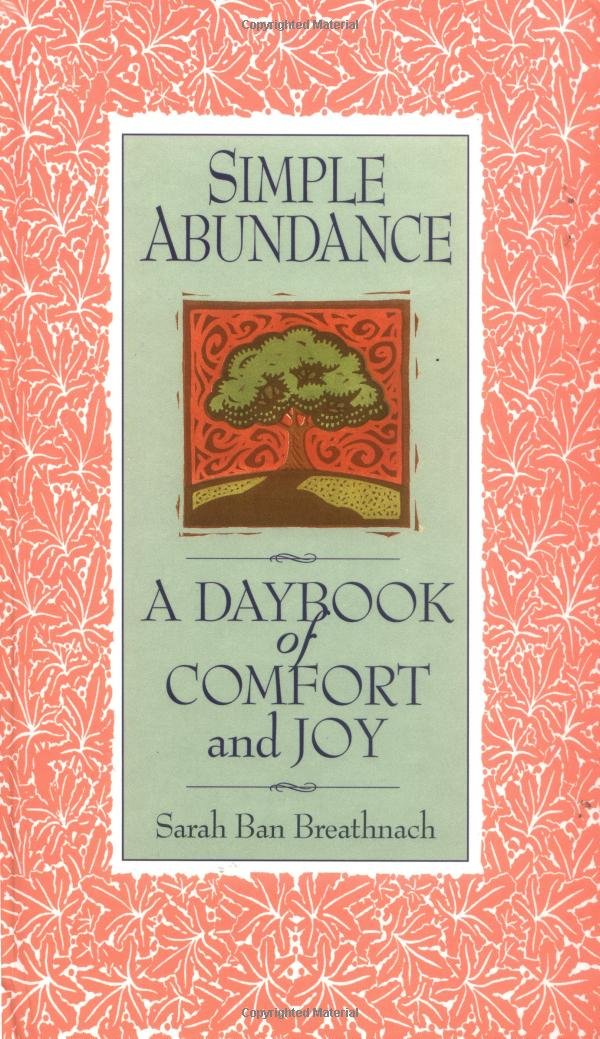
So, reading a book, in this case, a research book. Or another book. Like this one. Years ago, I was going through a bad patch that soured me on life and left me feeling perpetually grim, grumpy, and depressed. A friend tossed me a lifeline, a book. It’s Simple Abundance: A Daybook of Comfort and Joy, by Sarah Ban Breathnach.

I’m not one for touchy-feely, self-help books. Over the years, I’ve bought a few, gotten little from them, and quickly donated them, passing them on to other readers. But Simple Abundance spoke to me at a time when I needed it. It’s a collection of essays, one for each day of the year, looking at things like joy, gratitude, beauty, and so forth. I read one essay every morning. I’m always surprised and gratified when the essay for a particular day speaks to something that’s going on in my life. Such as the day my father died. That essay was exactly what I needed at the time.

One of the best takeaways is the gratitude journal. Each evening, I jot down three or more things that I’m grateful for—even if it just clean sheets on my bed, a quiet day at home, and especially a productive day of writing. I find that keeping the gratitude journal has changed the way I look at life. That helps immeasurably with my writing.

Simple Abundance also introduced me to the Greek poet Constantine Cavafy. On a date at the end of the year, the author quotes Cavafy’s poem Ithaka. During my trip to Greece in October 2023, my group visited the ancient theatre of Epidaurus, constructed in the late fourth century BCE. It’s considered the most perfect ancient Greet theatre with regard to acoustics and aesthetics. It is still used for the performances of ancient plays.

Our tour guide demonstrated the acoustics at Epidaurus by standing in the middle and reading a poem—Cavafy’s Ithaka. As we enter the new year, I leave you a few lines from the poem [translation by Edmund Keeley and Philip Sherrard, C. P. Cavafy/Collected Poems, Princeton University Press, 1992.]

As you set out for Ithaka

hope the voyage is a long one,

full of adventure, full of discovery.

. . . .

Keep Ithaka always in your mind.

Arriving there is what you are destined for.

But do not hurry the journey at all.

Better if it lasts for years . . .

May your voyage this year be long, full of adventure and discovery. And productive!

A Few Of My Favorite Things

I’m one of those people who loves Christmas music. All of it! From the good old songs by Nat King Cole, Bing Crosby, and Brenda Lee to the new ones by Mariah Carey, Kelly Clarkston, and Cher’s new one. If there are bells jingling, joyful lyrics, or reverent lyrics, I like it all.

Listening to Christmas music while I cook, clean house, and put things away from my recent book selling events, makes the task lighter and more fun. My hubby rolls his eyes as I dance around the kitchen putting dishes away, totally absorbed in the song that is playing. (If I’m absorbed how do I know he rolls his eyes?) Because he makes a noise or says something that draws my attention to him. He isn’t a Grinch, but he isn’t into the holiday as much as I am.

Where I’m going with this is I have learned I may be more auditory than I thought. I started listening to one audiobook so I could see what I would need to produce if I ventured into making my books into audiobooks. I enjoyed listening to a book because my hands were free. Now when I sew, cook, clean house, or drive long distances, I prefer to listen to audiobooks. Except this time of year because I’m listening to Christmas music. Audiobooks have kind of become my addiction because I can listen to them while doing other tasks. My mind can wander into the story while my hands and eyes are doing something else.

Lately, I’ve felt like I don’t have enough hours in a day to read for pleasure. But I can listen and continue doing certain tasks. Even my walks, I can listen to a book and get my exercise and fresh air. Our last trip to see our daughter, while my hubby drove, I listened to a book with my earbuds because his pickup doesn’t have the capability to put it through the radio, but our trip before that with my car, he even listened to the book.

I’m finding at the book selling events I attend that more people are saying they listen to audiobooks. Which is good for me since my three mystery series are all on audio. As a means to get more of the books purchased, I joined a Facebook website group for authors with audiobooks wide, meaning not just published through Audible. This group has proven to be more helpful in teaching me how to promote my audiobooks than any other workshop or event I’ve attended.

Right now, the authors at Indie Audiobook Deals are having a MASSIVE year-end giveaway. If you like audiobooks as much as I do, you might want to enter the giveaway. You can sign up to follow the authors with audiobooks in the genre you like to listen to as more ways to get your name in the drawing.

Five entrants will win a $50 Kobo gift card! Kobo is the premier site to listen to fantastic audiobooks.🎧

We’re picking FIVE winners so make sure to complete all of the extra entries to enhance your chances of winning. Good luck and wishing you a happy holiday season!

Enter here: https://kingsumo.com/g/pt4ez1/win-1-of-5-kobo-50-gift-cards

And if you are a mystery fan who likes books with diverse characters, right now I’m listening to book 2 Peril at the Exposition by Nev March and enjoying it. I discovered Ms. March earlier in the year with her first book that I purchased through Chirp, an audiobook distributor that has sales constantly. After listening to that book, Ms. March had asked a question on a crime scene email group I’m on. I emailed her to let her know how much I enjoyed her book and she agreed to be a guest blogger here in February.

Anyway, I got away from reading about diverse characters. Her first book is set in India in the 1800s. The one I’m listening to now is set in Chicago. The two main East Indian characters left India so they could be married. For some reason I enjoy reading books set there. I also like Sujata Massey’s Mysteries set in 1920 India. When I finish reading the book Blood Sisters by Vanessa Lillie, I will dive into The Mistress of Bhatia House by Ms. Massey.

I believe my interest in other cultures is why I write mysteries with Native American characters. I like to learn about their culture and reveal it to others. Though I reveal it slower than an Indigenous writer would because I didn’t grow up in the culture and have to learn about it and understand it before I’ll put it on a page.

Also this month, I have my audiobook, Murder of Ravens, book 1 in the Gabriel Hawke series for $0.99 at Chirp. Double Duplicity book one of the Shandra Higheagle Mysteries, Double Duplicity is $0.99 at Spotify. Or you can get the first three audiobooks of the Shandra Higheagle Mysteries at Barnes and Noble Nook for $2.99.

If you haven’t already finished your holiday shopping, a book or audiobook is a great gift. The recipient will step into another world and be the better for it.

Happy Holidays!

Paty

Books and More

Like many others in my circle, I am in constant conflict with the standards of my culture. Collecting. But then disposing. 

This morning, after having coffee with a good friend, I stopped at the library to collect two nonfiction books I’d put on reserve and pick out one or two mysteries to read. This is a pretty normal visit for me—I usually leave with two fiction and two nonfiction, and keep them for the full three weeks, if not one or two more. I like to try different writers, so I’m usually in the New Fiction section, and the same is true for nonfiction. This doesn’t mean I have no books at home to read. Quite the opposite. Every room has books in it. But I’m one of those people who find going to the library a necessary activity, and borrowing books is about more than finding something to read. It’s partly the activity of discovery and partly the pleasure of just being around so many publications.

But I have a lot of books at home. And over the years thousands more have passed through my hands, rested on my shelves, been read and shared and reread, until one day I decided it was time for them to move on. It occurred to me today that I have no idea why a book suddenly comes to the end of its visit. Do I need the space? Of course not. There’s always room for more. Have I changed? Possibly.

One small shelf is dedicated to the books I had as a child and which have survived numerous cleanings-out. Another equally small shelf is dedicated to a few I kept from my teen years, including Conrad Richter’s trilogy and The Gloucester Branch by John Leggett. Another dozen or so are integrated into general fiction and nonfiction, but those that seemed to be seminal in my development as a writer are held discretely apart, and every few years I ponder the prospect of donating them to the library or a thrift shop with a book section. But it never seems to be the right time.

My mother, another reader, kept her Girl Scout’s uniform and another few dresses from her early years. I found them in the back of a closet after she died. My father never kept anything that could be recycled for those of greater need. A businessman since the age of 15 (this was before World War I when such was possible), his wardrobe was spare to say the least. My closet is more like his than my mother’s, and I avoid associating with anyone who might invite me to an event for which I would be expected to wear a fancy dress. You can’t take a book to something like that and read, so why would I go?

What else do I keep? Art. My walls are a record of the eclectic tastes of me, my husband, his family, and mine, not to mention our grandparents and other relatives. Furniture doesn’t interest me, though I concede its usefulness. I’ve disposed of plenty over the years.

I am convinced that any American dropped into any town or city on earth will in a matter of weeks have too many possessions to tolerate and have to set out weeding and recycling. And yet every day, on TV, the radio, in junk mail, we’re urged to buy more. As a good member of the larger community and culture, I comply and buy more books.

That’s 588 words on a topic I haven’t figured out yet. Sometimes as I sit at my desk, fingers poised over the keys, I wonder what I’ll write about. I look across the room, or to my left, at all the books piled up, sometimes neatly arranged, and I wonder about all those words. So many. Surely I have something to say about them. Then, again, maybe not. Except that they’re old friends and I can’t imagine living without them.

Silver Linings and Simple Pleasures


by Janis Patterson


Update – we still don’t have our new refrigerator despite two unkept promises of delivery dates (thank you, Lowe’s!) and someone finally had the decency to tell us that it wasn’t even in the country yet (thank you, GE!). And yes, I’m being very sarcastic, but my true thoughts on both these entities are not fit for public pixilation. I’ve quit calling Lowe’s for updates and go over to the store to trap the salesman and occasionally his manager for an eye-to-eye confrontation. This last time I was promised (which means nothing, as every failed delivery date was a promise) that I would have my white, basic French door refrigerator by Christmas. (This was after he was telling me the not heartening news that another special order refrigerator had taken 18 months to be delivered.) I looked him square in the eye and asked if he meant Christmas, 2022. It was not encouraging that he said nothing.


Sad thing is, I could have had a bright pink refrigerator within a week of ordering. (Wrong color, wrong size, wrong configuration, waaaay wrong price, though.) I still don’t understand why a basic white refrigerator has to be a special order!


On to other news. Everything seems to have gone wonky this fall – except for our glorious trip to Egypt (and my trip diary is available to read for free on my website). Some backstory on the most painful problem – during his last Iraqi deployment several years ago The Husband injured his left shoulder. It healed pretty much, though it has given him some trouble from time to time, but while in Egypt he had the bird-brained idea to go down in the Bent Pyramid – perhaps the hairiest and most dangerous pyramid available to tourists. Why he went, I don’t know, as he has done it before.

Well, sometime in the tour he reinjured that same shoulder and it has been giving him terrible pain ever since. We’ve been to a doc-in-the-box, our personal physician, an orthopedic specialist, several multi-week rounds of physical therapy, an X-Ray and an MRI… and his shoulder is getting better, but very little and very slowly. (I think I told you that I told him if he ever even mentioned going down in that pyramid again I would sit on him until he gave up the idea or passed out from suffocation!)


However, I have always believed that dark clouds have silver linings. With his shoulder The Husband cannot drive, so guess who gets to be his chauffeur – driving him to his various appointments, waiting while he takes care of things and then taking him home? Right… However, this has been an unexpected blessing in two big ways. If there is grocery shopping needed, we stop at a conveniently located Aldi’s on the way back – and he has to give some input into what we eat for the next few days. (And often he just looks around and suggests we go out, which I like…)

Perhaps the best benefit, though, is that while I’m waiting I read. There’s not enough time involved for me to be expected to take my computer and write, so I just sit and read, both of which for me are rare luxuries. I’ve always loved to read – hey, I live in a house with three dedicated libraries, so that’s a given – but between writing and all its attendant duties of rewriting, publishing, publicity, et al, care of extended family and now The Husband, housework, etc., etc., etc., there has been precious little time for just pleasure reading. Thank goodness for reading apps on my phone!


Which brings me to the important part of this little screed – never underestimate how important it is for writers to read. We become so bogged down in our own work, making sure that our characters and situations are real, that action is always logical for the world we have created, even keeping track of hair and eye color and the time of day, that our word choices and grammar are acceptable, sometimes we forget the simple, overwhelming magic of the printed word. By reading the work of others we learn. Sometimes their work is incredible, opening doors and windows into realms we have never known, or may have once known but time and other things have obscured. Sometimes their work is so bad that it is a salutary lesson in what not to do. And sometimes it is so incredibly bad that it isn’t worth my time to read more than a few pages – but there are still lessons in those few awful pages.


I do sincerely hope that The Husband will soon recover fully and go back to having at least a portion of his own life. On the other hand, it would be a lie for me to say that there has not been at least a sliver of silver lining in my time spent in various waiting rooms. I got to read for pleasure without feeling guilty that I’m taking time away from working and other responsibilities, and that’s always good.