The Things We Keep

It began with a house.

On a sunny Saturday morning, I headed to the Farmers Market in Alameda’s West End. I found a parking spot about a block away, in a residential neighborhood.

The house on the corner was an old Victorian. That’s a term describing those houses built in the era from 1880 to the early 20th century. These houses are common in Alameda. This one was a Queen Anne, a style that often features bay windows and turrets.

This particular house hadn’t been painted in a long time and a number of the window panes were cracked and dirty. Abandoned, I thought. But no, there was a car in the driveway, on that day and on several other Saturdays. Someone was living in the house, despite the state of disrepair.
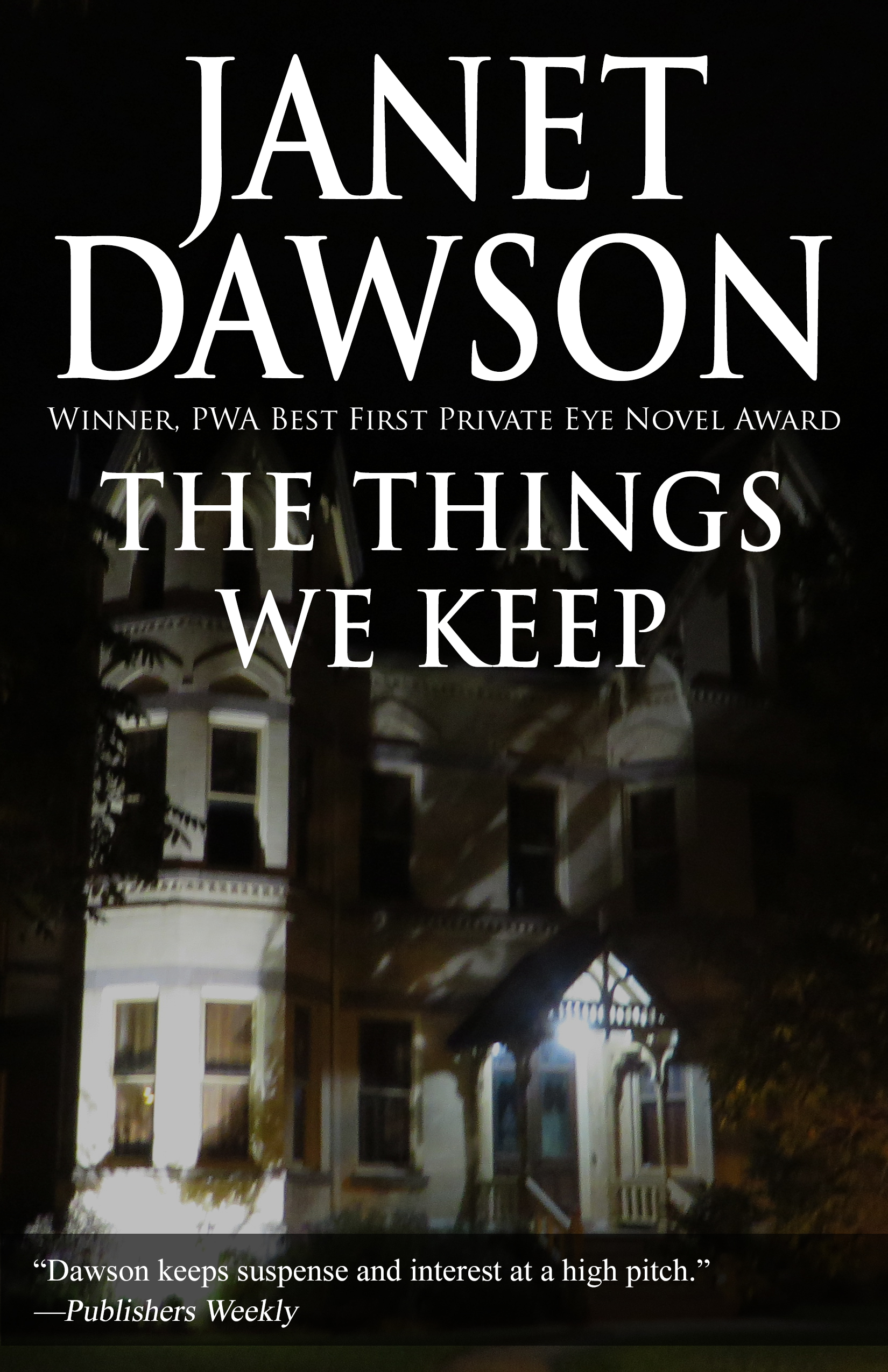
It made me wonder about the stories hidden within those walls. As writers do, I made up my own story, asking myself, “What if?”

What if my Oakland PI Jeri Howard found a footlocker full of old bones in that house?

As Jeri says in Chapter 1, “I had a feeling this old house had secrets, lots of them.”

The title was always The Things We Keep. Because in life, as in fiction, the things people keep often reveal a lot about them, and the past.

As Jeri investigates any of the cases put to her, she sifts through the tangibles and intangibles that accompany people through life. In Bit Player, an earlier book in the series, Jeri found clues by reading letters that her grandmother wrote.

Now, in The Things We Keep, the bones that Jeri finds are tangibles, along with other items inside the footlocker. DNA and dental records may provide answers, but those are the purview of the police and Jeri has no control over if and when. But discovers clues in other ways. Old newspaper articles accessed online add flesh to the bones. Jeri also finds resources in property records, as well as internet archives and databases.

At one point she searches the California Department of Justice Missing Persons database:

The faces of the missing stared back at me. So many people, their lives and those of their families interrupted. Birthdays and anniversaries uncelebrated, questions unanswered.

The photographs were displayed on the web page – children, teenagers, young adults, older people, male and female, of all ethnic groups. In some cases there were multiple photos, some of those computer-generated to show what the person would look like now.

Photographs are indeed an important element of Jeri’s investigation. She talks with a woman who has a box of photos, hoping that the images will provide clues:
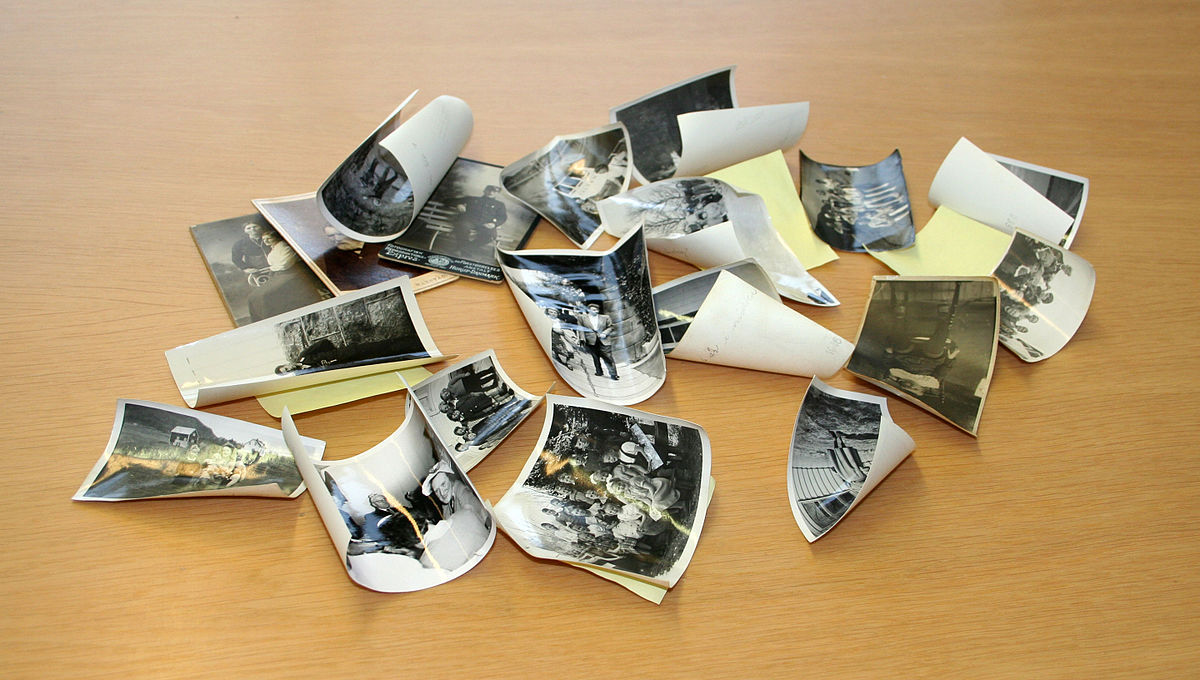
“I keep telling myself I should have this stuff digitized, but I haven’t yet. It was a long time ago. A lot of these snapshots are so faded you can barely see who’s in them.”

She removed the lid and took out several smaller envelopes that held photos and negatives, the kind you’d receive when you had a roll of film developed, back before the digital age.

Those are the tangibles. The intangibles are peoples’ memories, which are often selective and incomplete, colored by their own experiences.

There are many versions of the truth and Jeri must determine which story has the most veracity. The things that people have kept over the years will ultimately lead her to the resolution of this case that stretches back decades.

Guest Blogger ~ M. R. Dimond

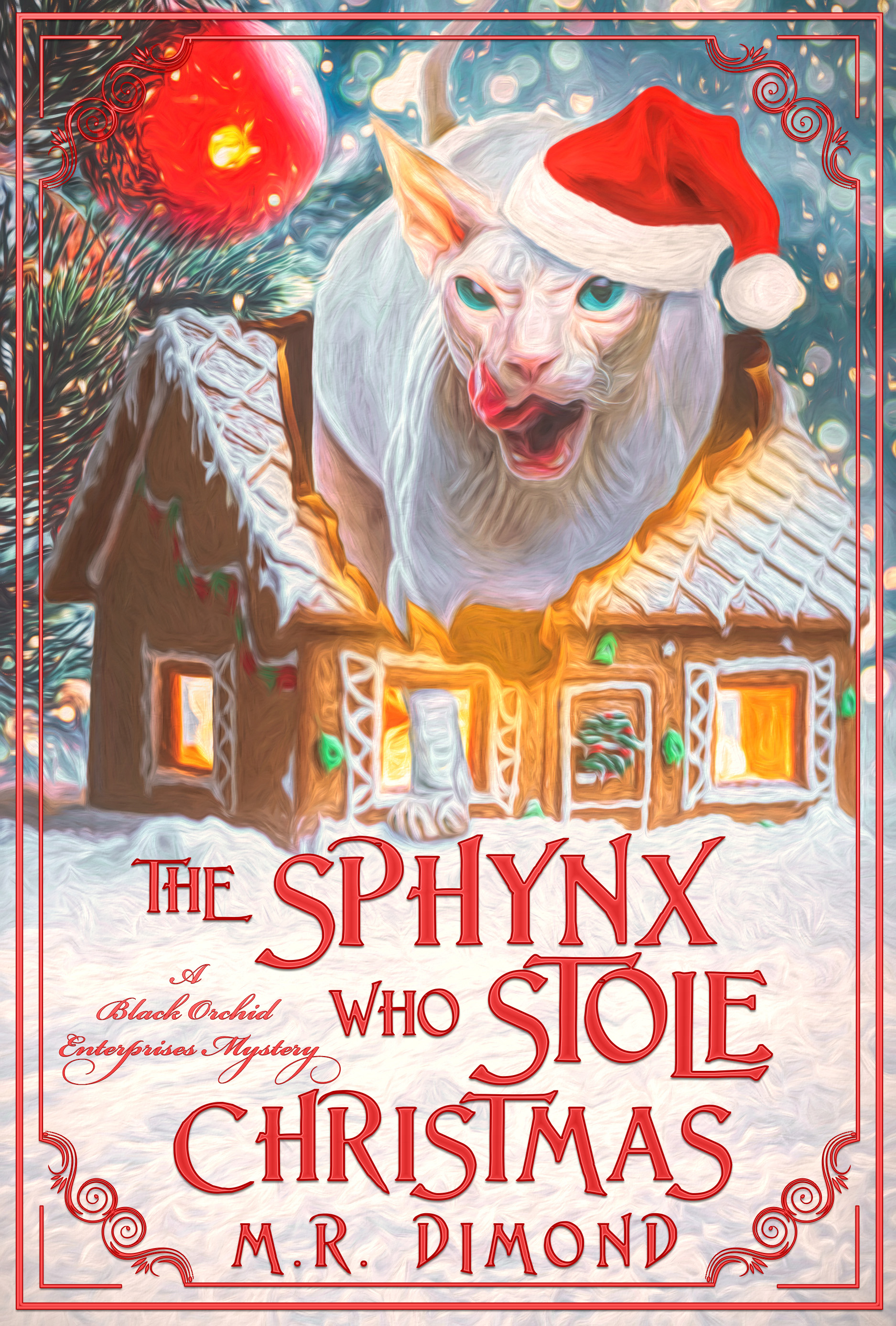
 I had the first three books of the Black Orchid Enterprises mysteries planned when I spied this cover at a premade cover event. I hadn’t ever considered buying a premade cover. How could the artist possibly know the story I would write or had written? I knew of one author who had her covers made and posted them where she could see them as she wrote. How could I take such a risk? 

Reader, I could and I did. It was meant to be. One of my main characters is a cat veterinarian who runs the town’s overflow animal shelter, meaning he provides a home for any homeless cat he comes across.

Book 1 of the series starts with Black Orchid Enterprises throwing a holiday open house to celebrate their new business in Beauchamp, TX. Some townspeople bring food; others bring unwanted kittens. Of course this glorious Sphynx cat could find his way there! And the gingerbread house? For their second year’s open house, our heroes host a gingerbread house display and contest. You can see how the invading cat earns the name Godzilla. I swept aside my plans to tell his story.

I’ve loved cats all my life, but I confess I warmed up to the Sphynx breed slowly. A hairless cat? Doesn’t everybody love soft, silky cat fur (except for those allergic to it)? But when two sets of naturally mutated hairless cats showed up in the 1970s, people did their best to produce more. Cat lovers with allergies appreciated them, but I wasn’t sold. The naked, wrinkly skin, big ears, and demonic expressions were the stuff of nightmares. I thought they looked closer to horror movie vampire bats than cats.

But years in cat rescue taught me that not every cat is pretty, healthy, or even friendly. But they’re all worth rescuing, even the ones that send you to the emergency room, and I’ve made friends with just about every cat I’ve met. Some want to cuddle; some keep their distance. It’s just a matter of getting to know them and honoring how they want to live.

The more Sphynx I met, the more I appreciated them. Despite their expressions, they tend to be affectionate and happy. For instance, the Sphynx on National Geographic’s October 2022 cover is said to be alert and relaxed. I’ll take their word for it.

https://twitter.com/NatGeo/status/1570778282714402818?s=20

To write this book, I drew heavily on my cat rescue experience, both funny and sad. I had friends with Sphynx cats who were always ready to tell me more stories about their pets. The internet, as usual, had a wealth of information about Sphynx and their special needs. They need to be bathed and oiled regularly. Their lack of fur means they feel the weather more. You often see them in sweaters and onesies in the winter. Some enjoy their styling little outfits. Others rip their clothes to shreds and prefer heating pads and blankets. 

The only problem with writing a cat mystery was knowing when to stop. I comforted myself with the reminder that there’s always the next book. Spoiler: Godzilla just might be back.

Cover by Mariah Sinclair

Book 2 of the Black Orchid Enterprises Mystery series finds Johnny Ly, Dianne Cortez, and JD Thompson trying to celebrate their first year in business in a small Central Texas town. The weather outside is frightful, and indoors isn’t looking too good either, not when a crazed hairless cat invades their Christmas party and leaves a trail of destruction in his wake.

The murder in the backyard doesn’t help, but Johnny and Dianne are more worried about the cat. After the police reduce the suspect list from the entire town of Beauchamp, Texas, to just the Black Orchids’ friends and family, Attorney JD Thompson springs into action to clear them all, preferably before Monday night’s concert. Life’s hard for a veterinarian, accountant, lawyer, and ABBA tribute band.

https://books2read.com/b/BlackOrchids2

Author photo courtesy of Marjorie Farrell

After stints in professional orchestras, law firms, cat rescue, bookkeeping, and technical communication, M. R. Dimond returned to a childhood dream of writing fiction, which has turned out to be about musicians, lawyers, veterinarians, accountants, and cats. Watch for the next Black Orchid Enterprises mystery, Family Matters.

Facebook: https://www.facebook.com/madeleine.dimond

Instagram: https://www.instagram.com/mrdimondauthor/

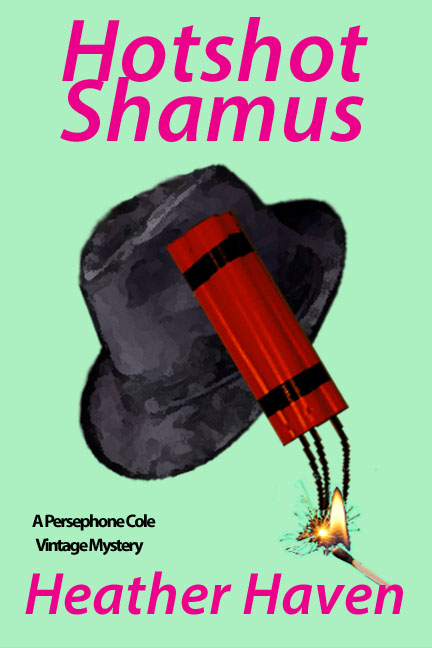
The Waxing Moon and Me by Heather Haven

Occasionally, we writers write ourselves into a corner. In some ways, it can be fun. It can be a challenge. And being the inventive sort that writers are, we often come up with a pretty nifty bit of business to get out of these scrapes. The bonus is the story often improves, becoming more colorful and interesting.

However, you can’t do that sort of thing with Mother Nature. You have to stick with what is scientifically possible. Unless you’re writing fantasy or sci-fi, of course. Then you can have a green sky and 6 moons. But here on earth, we are stuck with one orbiting satellite, which tends to do its thing consistently. In fact, we have come to expect the moon to behave in a certain way. I happen to write cozy mysteries such as the one I’m doing now, Book 4 of The Persephone Cole Vintage Mysteries. They take place on earth, so I can only diddle around with the truth of it so much.

As I neared what I hoped was the final round of rewrites for Hotshot Shamus before sending it off to my editor, I realized I had several scenes and chapters taking place during two full moons. Unfortunately, these full moons occurred only 10 days apart within the story.

I am not a scientist but even I know there have never been two full moons in that short a space of time. Something catastrophic would have to take place for that to happen. Given the state of the world right now, I didn’t want to go there.

I tried not to panic. Maybe I could turn one of the full moons into a new moon? No, no, no. A new moon is just a full moon coming back within the same calendar month. And it usually happens 25 to 28 days apart.

Time to panic? I couldn’t leave it as it was and I couldn’t abandon the moon being a part of the prose, either. Like many writers, I often make the atmosphere a character in the story. So, it was with this stupid moon. A driving character, too. Did that mean I would be rewriting 4 to 6 chapters worth of story to correct this error?

If I had to, I had to. But I wouldn’t be happy.

After several pieces of chocolate washed down by a martini, I decided to research the moon in all its glory. Maybe the moon did something I didn’t know about that would bail me out. After all, it’s a good moon, a lovely moon, a romantic moon. I even look ten years younger in the moonlight. Moon, don’t fail me now.

Then I stumbled upon what is called a waxing­­­­ gibbous moon. Somehow that particular phase of the moon got by me. I’d never heard of it before. Waning, yes. That rang a bell. But waxing? No. Gibbous, excuse me?? Come to find out gibbous means marked by convexity or swelling of the moon or a planet. Well, I never. Maybe I was in Study Hall when that lesson took place.

Panic avoided. The beauty of a waxing gibbous moon is it turns into a full moon after about 8 days. That’s close enough for my needs. And bless its little heart, it can shine enough light the entire time to save my scenes and chapters. Just a tweak here and there and all became perfectly reasonable.

Ain’t Mother Nature wonderful?

NEARING THE END OF A SERIES

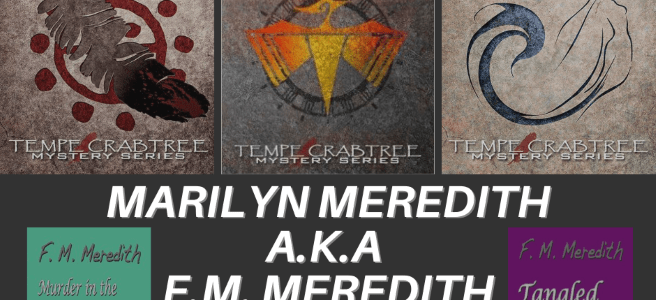
The book I’m working on in the Deputy Tempe Crabtree series, will be #20 and the last one. Tempe and her tribe have been a part of my life for many years. Tempe was retired from being a deputy in the last one, The Trash Harem.

The one I’m working on now is so far unnamed. Unusual for me, I often have the title before I even begin.

However this book has major changes for Tempe and her husband, as well as other ongoing characters in the series.

I’m finding it hard to say goodbye to Bear Creek and all those who live there, but my life is changing too. My husband needs a lot more of my help and I don’t have the energy I once had—but I’m almost 90 and I’m thankful I can still do what I’m able.

I also ended the Rocky Bluff mystery series with Reversal of Fortune.

Writing and getting published has given me so much pleasure in many ways. When I was writing I lived the adventures of my characters who became very real to me. In fact, in some ways I knew them far better than my friends and relatives—because I knew how the people who inhabited the books I wrote think.

Does this mean I won’t be writing anything anymore? Nope, I can’t imagine not sitting at the computer and writing. I’m considering writing a young adult mystery set during World War II since I grew up during that time. I have my own blog, where lately I’ve leaned toward reminiscing.

When the new book comes out I hope to have some local celebrations. Since one of my friends, lightly disguised with a different name is playing a major part I suspect she’ll want to join me. She’s starred in three other books in this series.

And I’m promoting The Trash Haven by offering the Kindle version for .99 cents from March 20 through the 27th.

It’s been fun hanging out with my Indian friend Tempe, her preacher husband Hutch, and her friend Nick Two John. I’m going to miss them.

Marilyn

Those Pesky Revisions

Once in a while I come across a new writer asking what to do now that he’s finished his novel and is ready to get an agent. As the conversation flows I hear the optimistic assumption that even though this process will take time, it will end well. Left unsaid is the ending—the book will be published to blushingly great acclaim. I seem to come across these discussions when I’m in the deepest slough of revision. Right now I’m on the third rewrite for my current WIP (not to mention all the many drafts I did before I naively thought it was finished). It came back from my agent with lots of compliments on certain parts of it but not the first hundred pages.

“Get rid of the BOGSATs,” she wrote.

BOGSAT? This was new to me, so I had to ask. What is a BOGSAT? It’s embarrassing that I didn’t know what it refers to because I’m certainly guilty of having a lot of BOGSATs in the first third of the book. For those of you who know what I’m talking about, you can stop reading here. You know what follows.

BOGSAT refers to Bunch Of Guys Sitting Around Talking. In other words, too much talk, not enough action. In my case, the people sitting around talking were mostly women, the main character’s mother and sisters, and occasionally the MC and her best friend. One of the themes of the book is female relationships, and families. Nevertheless, respecting my agent’s judgment as I do, I set about removing the BOGSATs, and this is where it gets interesting.

What happens in place of talking? Action, of course. As I stripped out a stretch of dialogue I held onto the specific information that needed to be delivered. In one scene, it’s important for Ginny to learn that the parents of two children under the care of the social services agency where she works have been arguing about money. If her co-worker can’t tell her this and ask for her advice, how does Ginny find out there is a money issue in the family? She catches a glimpse of the husband wearing a coat that he can’t possibly afford. How does she know this? Her sister sees it, drools over it, and tells her sister how much it probably cost. Her sister wants one. That took care of one scene, about five pages in the first hundred. On to the next.

Ginny is worried about something from her teen years becoming public. It’s linked to an event long forgotten, or so she thinks. At a celebration of life for an acquaintance, the man leading the program blurts out the deceased’s role in the event. Ginny wonders how long her secret can last.

In a grocery store she can’t simply stop and chat with someone to elicit information. Hmm. She spots an out of town reporter who has been investigating the event of concern to Ginny stopping people as they come out of the store. She notices who rebuffs him, who ignores him, and whom he ignores. The chief has told her about him, and she wonders just how much he’s uncovered. She soon finds out. The reporter wasn’t in the earlier version. He appeared only as the author of an article. Now he’s on the ground, poking around, making Ginny nervous. She’s keeping track of him.

Removing dialogue does more than eliminate the “talkiness” in the ms. It means I have to use the other characters differently, use Ginny differently, uncover little bits I hadn’t thought about before. Getting rid of the BOGSATs is changing the story little by little. Ginny Means will still be who she is doing what she does, but how she interacts with other characters is becoming different. There is a place for the BOGSAT, but it’s not in the first third of my book.