The End Is Nigh

by Janis Patterson

For every beginning there is an ending… and conversely, for every ending there is a beginning… and sometimes it’s hard to tell the difference.


This year has been a landmark year for me – it’s been one of the lowest output years for me in well over a decade (only two books as opposed to the four or five I usually do) and yet I’ve been busier than I ever have.
In case you have been living under a rock and not heard about my republishing blitz I’m going to give you a quick précis…


During the covid crazies I got very lazy. The Husband was home – and even retired during this time – s0 we had things to do and my writing business came in a distant second to being with him. I knew that rights on previously published books were coming back to me, but being distracted by other things I just let the reversion letters pile up on my computer.


Until January of this year. Life was returning to a semblance of normal and I realized I wasn’t getting any younger (are any of us?) and if I wanted to get back into this writing thing I had to get busy, so a good start would be republishing those reverted books through my own company. A quick wander through my hard drive shocked me, because there were 26 (yes, TWENTY SIX) of the little beasties. Gulp.


A quick perusal decided me that for various reasons four of them were going permanently ‘under the bed,’ hopefully never to be seen again. That left 22 to be republished. As I am lazy, doing that could possibly take a couple of years, years which I might not have. As I was raised in advertising and journalism, the fact that deadlines are sacred is bred into my blood and bones. My father taught me that (to use his words) “There is only one excuse for you to miss a deadline, and that is death. Yours.”


So I set myself a deadline – I would release a book freshly edited, freshly formatted and most with new covers every other Wednesday until all were out, starting on January 15. MISTLETOE MAGIC, the last book, comes out October 25.
22 books released every other Wednesday, each on schedule, each reworked as promised and all without missing a single release day. (Actually, there were 24 released – one through one of my publishers and the other as an outlier which appeared suddenly through a set of circumstances too complex to go in to… neither of which I counted as part of the blitz.)


I’m exhausted. I would love to take a few weeks off away from the computer, but I have deadlines… one for a July 4th mystery anthology, one for my new Flora Melkiot book and one for a summer Regency romance anthology. Sigh. Even though we spend our days pretty much in the same room (the den) The Husband says I spend more time with the computer and my invisible friends than with him and lately he’s been right. I’ve taken my computer along on every trip we’ve made this year – and it saved my sometimes tenuous sanity the days we were holed up in a motel in Mississippi when he fell ill on our way home from NINC!


Anyway, the blitz is now over and the encroaching deadlines await. It doesn’t get any easier, people. It really doesn’t.

And now for some good news! EXERCISE IS MURDER is now available in audio from Audible! (The ebook is available from Amazon and will hopefully be available in paperback before too long… it is the first appearance of the redoubtable Flora Melkiot!)
Why we write what we do

I started writing a post on here about Indigenous People Day. Which is today. It was made a federal holiday alongside Columbus Day in 2021. But by the time I was at the end of writing the post, I decided someone might take my post as political and moved it to my personal blog. If you’re interested, you can read it here: https://writingintothesunset.net/

But today is why I write the mysteries I write. I have been fascinated and in awe of the Indigenous people since I was old enough to understand all that they have gone through. And to see how some of the tribes have grown along with technology and have raised their people up in knowledge, living conditions, and being heard. I know there are some that are still struggling with being heard and seen as productive part of society, but there are others who are thriving. Getting back their culture and language and being economically sound and successful for their tribe.

Their resiliency, belief in their culture, and their desire to give each generation the best life inspires me to write about them. To bring their horrors and their determination to readers. That’s why I have Native American characters in my three mystery stories, to show readers that while they live a different culture, they are just like everyone else with the same dreams, goals, and desires.

I hope that my stories, while they aren’t as full of the culture as some other writers, still portray the culture and the real people who live each day not only with similar struggles but also with more. They are still labeled and seen as different by many.

The theme of my books all deal with injustice. Whether it is someone who is killed, someone who is believed to be the suspect, or it is the characters dealing with prejudice.

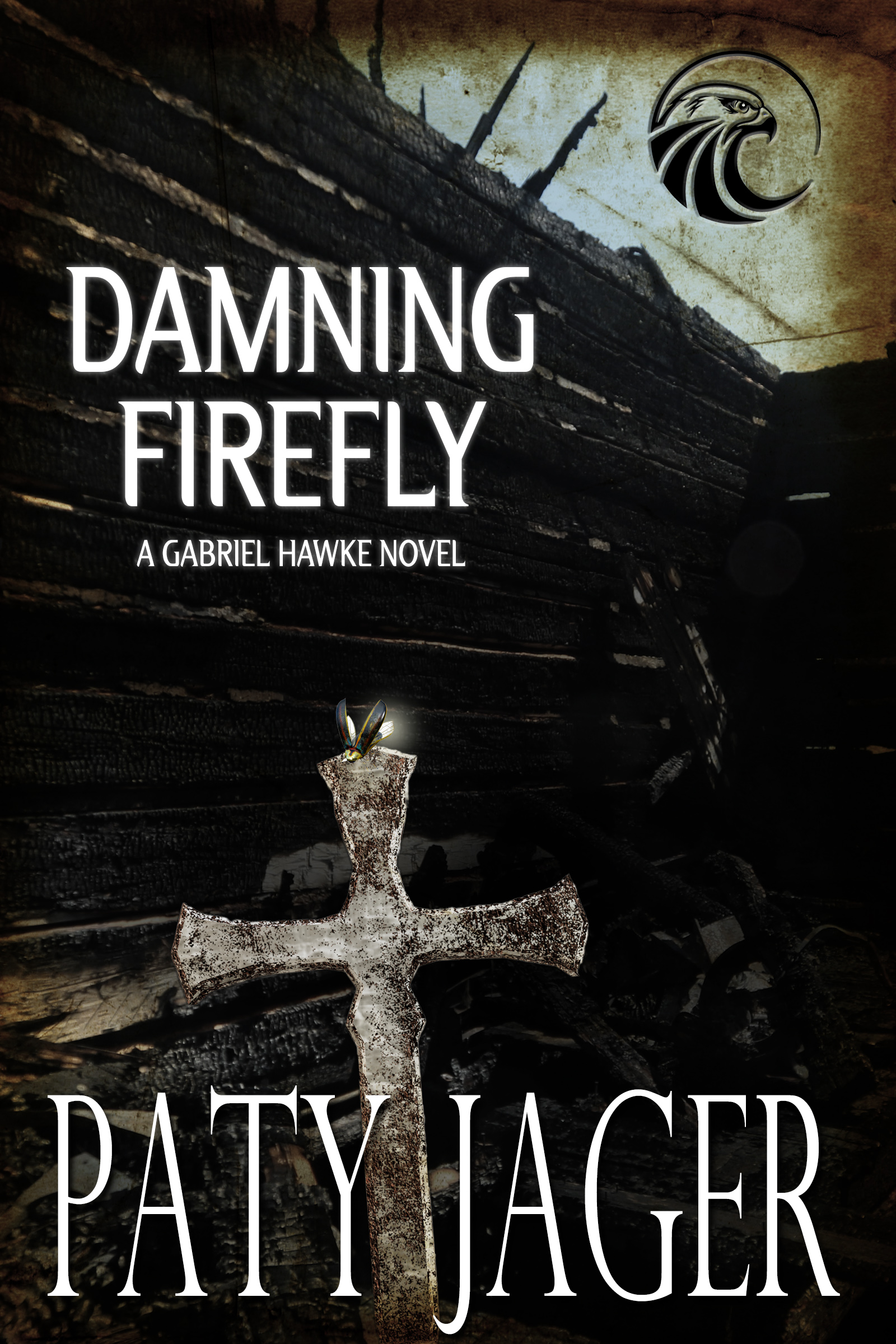
My newest release, Damning Firefly, deals with a completely different injustice. One that I tried hard to portray with empathy and from the first reviews, I did my job.

Damning Firefly

Book 11 in the Gabriel Hawke Series

A church fire.

An unconscious woman on Starvation Ridge.

Gabriel Hawke, fish and wildlife officer with the Oregon State Police, helps with a fire at the Lighted Path church before heading out to check turkey hunters. He discovers a car wedged between two trees and a woman with a head injury reeking of smoke. Is she the arsonist?

Hawke encounters the county midwife gloating over the burnt church and learns she and the victim in the car know one another.

Two seemingly separate events lead Hawke to a serial rapist and a county full of secrets. https://books2read.com/u/bQeBDZ

Guest Blogger ~ J. Woollcott

WHERE DO PLOTS AND CHARACTERS COME FROM?

It was summer and I had finally finished my working career. I wanted to write and travel, but Covid happened, and travel was out of the question, so writing became my focus. I wasn’t sure exactly what kind of book I wanted to work on, except that it should be a mystery and probably have a detective in it. As I hail from Northern Ireland, I figured that was the perfect place. I had a relative who had been in the police over there and I thought, well, if that’s not serendipity, I don’t know what is.

The next part—actually writing the darn thing—was a little more difficult.

The plot? A good question. I don’t really know where that came from. Ask any writer and most of the time they will say the story came from an overheard remark or something they read in the paper or on line. Not copied, just a stray word or sentence that sparked another idea. Stephen King, in his wonderful book, ‘On Writing,’ tells how a casual remark someone made about a basement with ‘rats as big as dogs,’ led him to write Graveyard Shift. I suspect Mr. King doesn’t really suffer from a lack of plot ideas though. I rather think he has more than he knows what to do with.

And where do the characters who populate our books come from? Now this is murky. They often rise fully formed out of the writer’s imagination—or so it seems. I suspect my hero, DS Ryan McBride, and the other members of the squad are an amalgam of too many hours spent reading detective crime fiction and watching British tv mysteries and movies.

So, a plot can spring unbidden from anywhere and characters can tap you on the shoulder and say; ‘Hey, let me out, I want to be in your next story.’

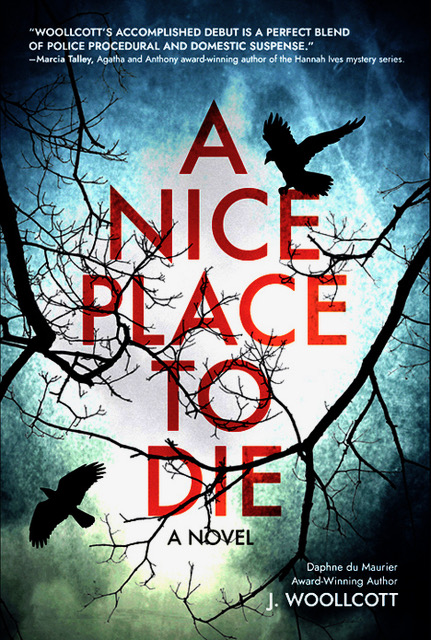
I was a designer and artist, and tend to be visual, so when I started to write A Nice Place to Die, I had an opening scene in my head. A woman’s body lying by a river outside Belfast. Crows cawing above in high, dark trees. A day of sun and cloud. Around that time there had been a lot of talk about date rape drugs and the like, and also articles about mistaken identity. Somehow, by a mysterious alchemy, both subjects came together and ended up in my book.

The Belfast Murder Series; Book One, A Nice Place to Die.

The body of a young woman is found by a river outside Belfast and Detective Sergeant Ryan McBride makes a heart-wrenching discovery at the scene, a discovery he chooses to hide even though it could cost him the investigation – and his career. As Ryan untangles a web of lies, his suspects die one by one, leading him to a dangerous family deception and a murderer who will stop at nothing to keep it. And still, he harbors his secret …

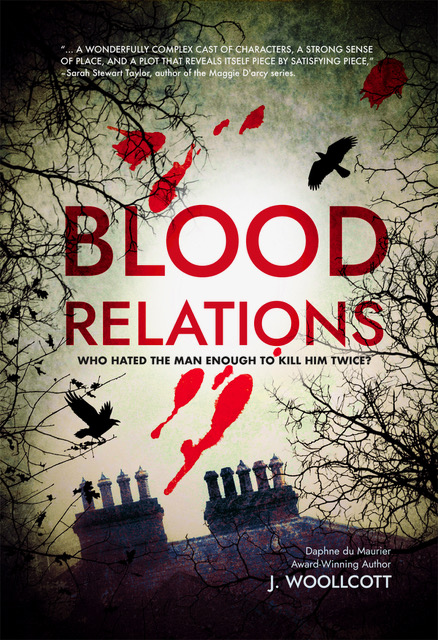
For DS McBride’s second outing, Blood Relations, I’d like to say that came to me in an ordered way, but no. I have even less idea where that plot came from, other than an opening scene of a bleak country house, dark clouds rolling in and a retired Detective Inspector lying dead upstairs on bloody sheets. Once again the story sprang from bits and pieces of chat, random conversations and well, just everyday life – not the murder part of course, I made that up … of course I did.

The Belfast Murder Series; Book Two, Blood Relations.

Belfast, Northern Ireland: early spring 2017. Retired Chief Inspector Patrick Mullan is found brutally murdered in his bed. Detective Sergeant Ryan McBride and his partner Detective Sergeant Billy Lamont are called to his desolate country home to investigate. In their inquiry, they discover a man whose career with the Police Service of Northern Ireland was overshadowed by violence and corruption. Is the killer someone from Mullan’s past, or his present? And who hated the man enough to kill him twice? Is it one of Patrick Mullan’s own family, all of them hiding a history of abuse and lies? Or a vengeful crime boss and his psychopathic new employee? Or could it be a recently released prisoner desperate to protect his family and flee the country? Ryan and Billy once again face a complex investigation with wit and intelligence, all set in Belfast and the richly atmospheric countryside around it.           

Amazon link: https://www.amazon.com/Blood-Relations-Ryan-McBride-Novel-ebook/dp/B0CFJWF69D/

J. Woollcott is a Canadian author born in Belfast, N. Ireland. She is a graduate of the Humber School for Writers and BCAD, University of Ulster. Her first book, A Nice Place to Die won the RWA Daphne du Maurier Award, was short-listed in the Crime Writers of Canada Awards of Excellence in 2021 and a Silver Falchion Award finalist at Killer Nashville 2023.

Website: https://www.jwoollcott.com

Twitter: @JoyceWoollcott

The 8 Parts of Speech and Me by Heather Haven

I am married to a retired English teacher. Which is a good thing on a lot of levels. Not only is he a sweetheart but he takes out the trash and loads the dishwasher. Okay, not the way I would load it, but I need to let that go. Moving on, hubby is my go-to guy for all the parts of speech, which sometimes I don’t know. It’s not for want of trying. I do try. It’s just that it gets away from me. Maybe I’m so busy writing the words I don’t always know why I compile them the way I do. When I write a sentence it either feels right or it doesn’t. If it doesn’t, I move everything around until it does.

Now, I do know a noun when I fall over it. A person, place, or thing. Tom is a noun. Good old Tom. I also know a verb. Whatever Tom is doing is a verb. Tom runs. Because I’m doing so well, we will move on to an adverb. Tom runs swiftly. Noun, verb, adverb. It helps that most adverbs end in “ly.” I like that. Also, I have just described Tom’s running ability. Adjective to follow. Tubby Tom runs swiftly. We have just described Tom. Although, how he can run swiftly being tubby is questionable. I’m tubby and can’t. Of course, I sit on my derriere all day writing parts of speech. It’s a wonder I can move at all.

But back to the parts of speech. While I am fairly clear on the four above, the remaining sometimes throw me. For instance, a preposition. Those are the teeny, little words, often no more than one to three letters long like “in,” “at,” “on,” “of,” and “to.” Remember good old Tom? Well, he’s stopped running and now he’s arrived at his destination, the friendly neighborhood bar. But is Tom in the bar or at the bar? Got me. I don’t always know and usually fudge it. Then when I reread it, I either keep it the way it is or change it to what feels better. And good grief, here’s another side of prepositions, the time frame stuff, such as “since,” “for,” “by,” “during,” “from…to,” “from…until,” “with,” and “within.” Well, Tom is going to stay at the bar until his wife comes to pick him up because he’s had it with running.

Conjunctions. These are  “and,” “since,” “for,” “by,” “during,” “from…to,” “from…until,” “with,” and “within.” Conjunctions allow me to make my run-on sentences. You know, the ones that never end. But I am a piker. The longest sentence award goes to: Jonathan Coe’s The Rotter’s Club, 13,955-word sentence. You can bet Mr. Coe used a lot of the above to accomplish that. I am not including Tom in any of this because he is tired from his run, imbibing, and listening to his wife tell him off about his imbibing, and wants to take a well-deserved nap. Conjunctions. You gotta love ’em.

Pronouns. I used to get these until the current move to make every “she” and “he” “her” and “him” into “they” and “them.” I understand and appreciate it all in theory, but I still don’t know how to speak it. When you’re talking about one person doing something or going somewhere but have to use the plural form is hard for me to do. Where is Tom going? They are going to the bar. Okay, I’m working on it.

Interjections. Wow! I do that a lot. Golly, gee, do I. For instance: Fer cryin’ out loud! Tom, put down that bottle. You’ve had enough.

Then we have past participles, predicates, and stuff like that. That’s when I need retired English professor hubby standing over my shoulder. Preferably with a martini in his hand. Tom and I have a few things in common.

Mom’s Creative Children

Mom once told me she had been blessed with two creative children. At the time, I took it to mean that she thought my brother and I were underemployed.

He’s a musician. I’m a writer. He was also a teacher for many years. I knew from an early age that I wanted to write. So I spent my working life in a variety of jobs, the last being an administrative position at the University of California. It was all in aid of paying the bills in order to support my avocation. I wanted the kind of job I didn’t have to take home with me.

My brother had the same desire to make music. He got his first guitar when he was a teenager. With two friends, he played rock ’n roll. They practiced in the basement after school. Was it my imagination, or did the house shake? Maybe that was the windows vibrating?

They were certainly loud. I once asked Mom if the noise bothered her. She said, “At least I know where your brother is.” True enough.

Me, I was the kid who always had her nose in a book. So, it seemed natural to write one. I wrote what I called a book in the sixth grade. It was more like a short story, a very short story. And I illustrated it, too. It was a mystery, natch.

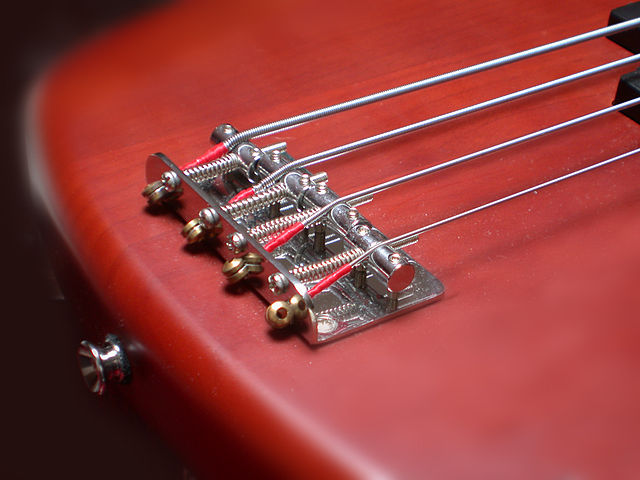
My brother kept playing music over the years, in local bands in the town where he lived, doing gigs on weekends and teaching full-time. He has multiple guitars and takes several wherever he goes. I understand this is a condition common to guitarists.

I graduated to short stories in junior high and high school, some of them longer. I called them novels, but they weren’t. Novellas, maybe. We will draw a veil over the plot about the circus.

At some point I began writing a mystery. Through various drafts it got better, and I was sending it out to agents. Then I got the idea for the book that became my first published novel, Kindred Crimes, and everything got pushed to one side while I wrote that.

Publishing lightening struck and I won the St. Martin’s Press Private Eye Writers of America contest for best first PI novel. I was to pick up the award at Bouchercon, which was in Philadelphia that year. My parents were so proud and excited they got on a plane and flew to Philly to see me get that award.

From then on, they were my biggest promoters. Dad was a salesman. He’d carry copies of Kindred Crimes in the trunk of his car, telling everyone about his daughter the writer. And if his audience had a glimmer of interest, he’d pop open the trunk and sell them a book. Mom did her part, too, selling books to family and friends alike. She would buy them when a new book came out and give them as gifts, too.

Dad is long gone. Mom died in August, just over a month ago. Mom being Mom, she left detailed instructions about her memorial service, right down to the Bible verses and the songs. She specified that she wanted my brother to sing a song he’d written. Of course, he had a guitar with him. He didn’t think that any of his rock or blues songs would be appropriate, so he wrote a new one for Mom.

The other instruction was that I was to read something from one of my books. As I stood in front of the people at the church, I prefaced that by saying, “Well, Mom, I write crime novels.”

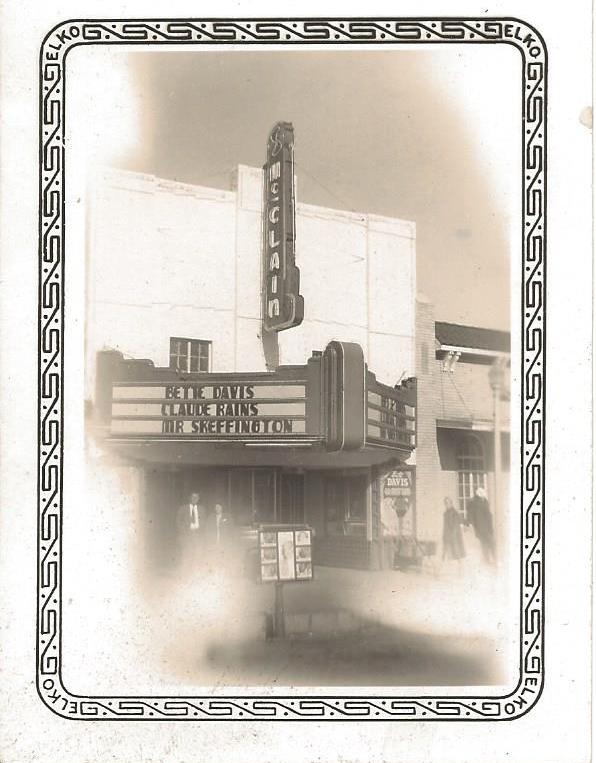
Then I read a few paragraphs from Bit Player. That’s the book where my private eye Jeri Howard gets involved in a decades-old Hollywood murder because she learns that her grandmother, an aspiring actress in the 1940s, was once questioned by the police. It seemed the appropriate choice, since Mom grew up selling tickets and watching every available picture at the movies theaters her family owned. In fact, that’s where she met Dad, at the ticket booth of the family movie palace during World War II.

Here’s to Mom, a love letter from one of your creative children.