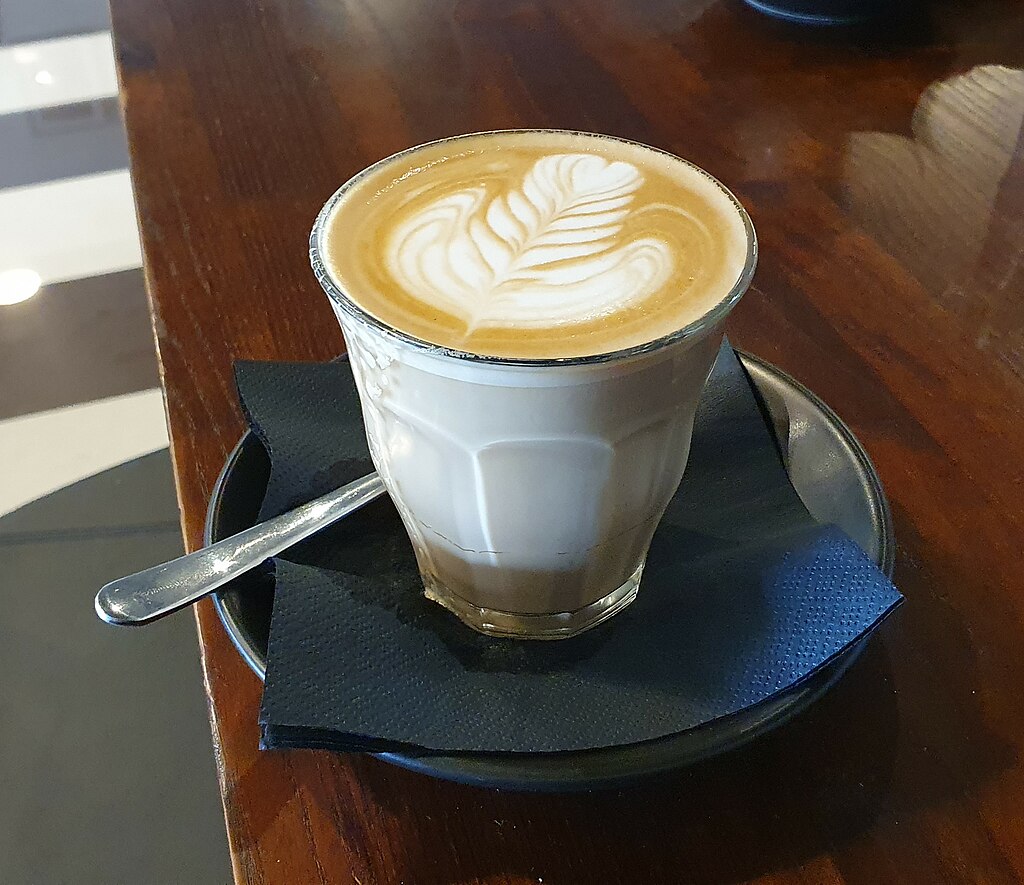
A reader once commented that Jeri Howard, the private investigator in my long-running series, drinks a lot of coffee. Indeed she does. More than I do. Her favorite drink, and mine, is a latte. And none of that pumpkin spice stuff for either of us.
From a writer’s standpoint, there are perfectly good reasons for Jeri’s coffee habit. Attribution for one. And adding flavor to the scene for another.
Let’s look at attribution. When one character is having a conversation with another character, you can get lost in a forest of “said.” He said this, she said that. As a reader, I like it when I can tell which character is talking, and I’ve read far too many books where I lose track of who is saying what. Having Jeri talk with a witness over a cup of java helps.
Here’s an example from The Things We Keep. Jeri leads into the conversation:
“What about you? How did you deal with it?”
He took another sip of his cappuccino and set the cup in the saucer. “Funny you should ask…”
As for adding flavor to the narrative, in the early stages of a book, I often write scenes with minimal details and lots of dialog. Then I’ll go back and add details to flesh out the scene and reveal things about the characters.
Another example, this one from Water Signs, where Jeri talks with a security guard who works on a site where there’s been a death.
Dupre got out, wearing his Manville Security uniform. He walked toward me, gesturing toward the door to the Peerless retail outlet. “Can I get a coffee first?”
I saluted him with my own cup. “Far be it from me to get between a man and his caffeine.”
Dupre laughed and went inside, coming out a moment later with the largest available cup. He took a sip and sighed. “Oh, yeah, I needed that.”
Coffee also gives Jeri camouflage in Cold Trail. Here, she’s trailed a potential suspect to a Starbucks, where he meets up with a defense attorney who hasn’t been returning Jeri’s phone calls.
The two men went inside the Starbucks. I followed. They queued up to order drinks, plain coffee for Scott, a cappuccino for Rhine, who paid for the drinks. When they got their coffees, I took my turn and ordered an iced latte. They found a table near the back. I got my latte and sat down at a nearby table, making sure Scott’s back was to me. . . . I got out my cell phone, pretending to take a call. I snapped a couple of photos of the two men, hoping the noise of the coffee shop would mask the sound of the shutter.
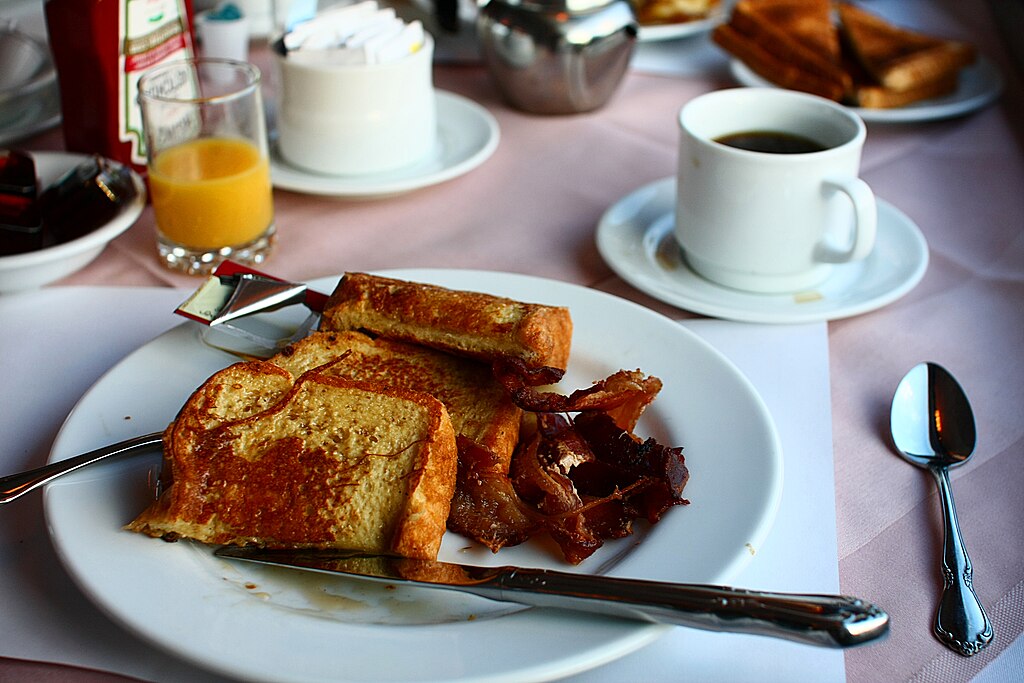
When it comes to food, well, lots of opportunities to flesh out characters. My sleuthing Zephyrette Jill McLeod rides the rails on the old California Zephyr, where her favorite dining car breakfast is French toast with crisp bacon, and coffee, of course. In the first book in the series, Death Rides the Zephyr, Jill has already had breakfast when she encounters two passengers heading into the dining car—Mrs. Tidsdale and Emily, the little girl she’s chaperoning on the trip to Denver.
Mrs. Tidsdale looked as though she wasn’t quite awake. . . . “God, I need coffee, and plenty of it,” she said, in response to Jill’s greeting.
We have really good French toast,” Jill told Emily. “You should try it.”
Mrs. Tidsdale blanched. “Can I get a Bloody Mary instead?”
“You’d have to go to the lounge for that.”
“Don’t worry, I will. As soon as we get some breakfast. Come to think of it, I could make the acquaintance of some ham and eggs.” Mrs. Tidsdale looked down at Emily. “Does that sound good, sweetie?”
Emily looked dubious. “I like French toast. With bacon.”
“Then French toast and bacon for you, ham and eggs for me,” Mrs. Tidsdale said.
Of course, there could be a downside to consuming all that coffee. One of my books features someone whose cup of java has been spiked with a deadly poison. No, I won’t tell you which book.
Good food and good coffee, great ways for this writer to flavor my fiction.
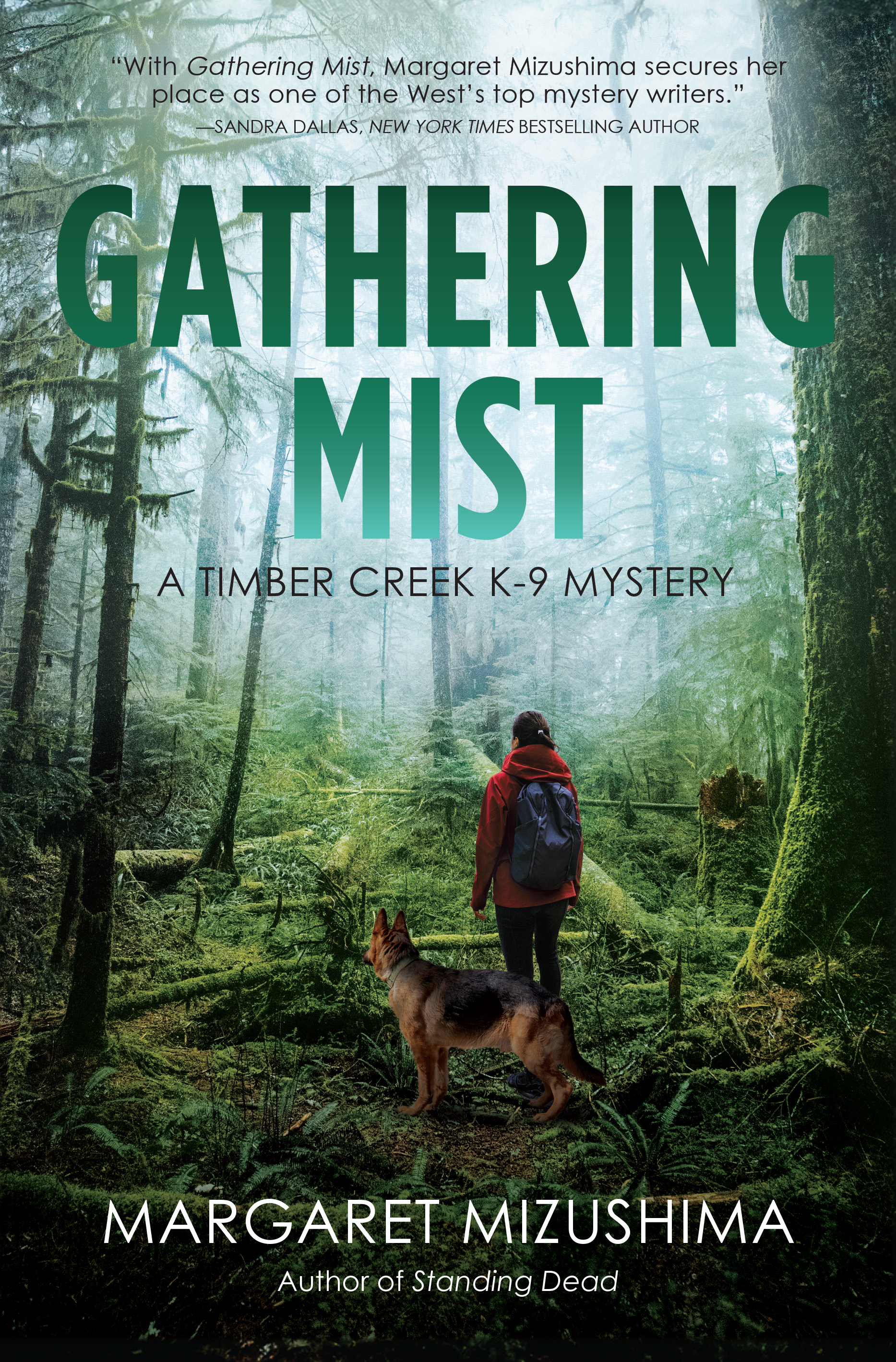
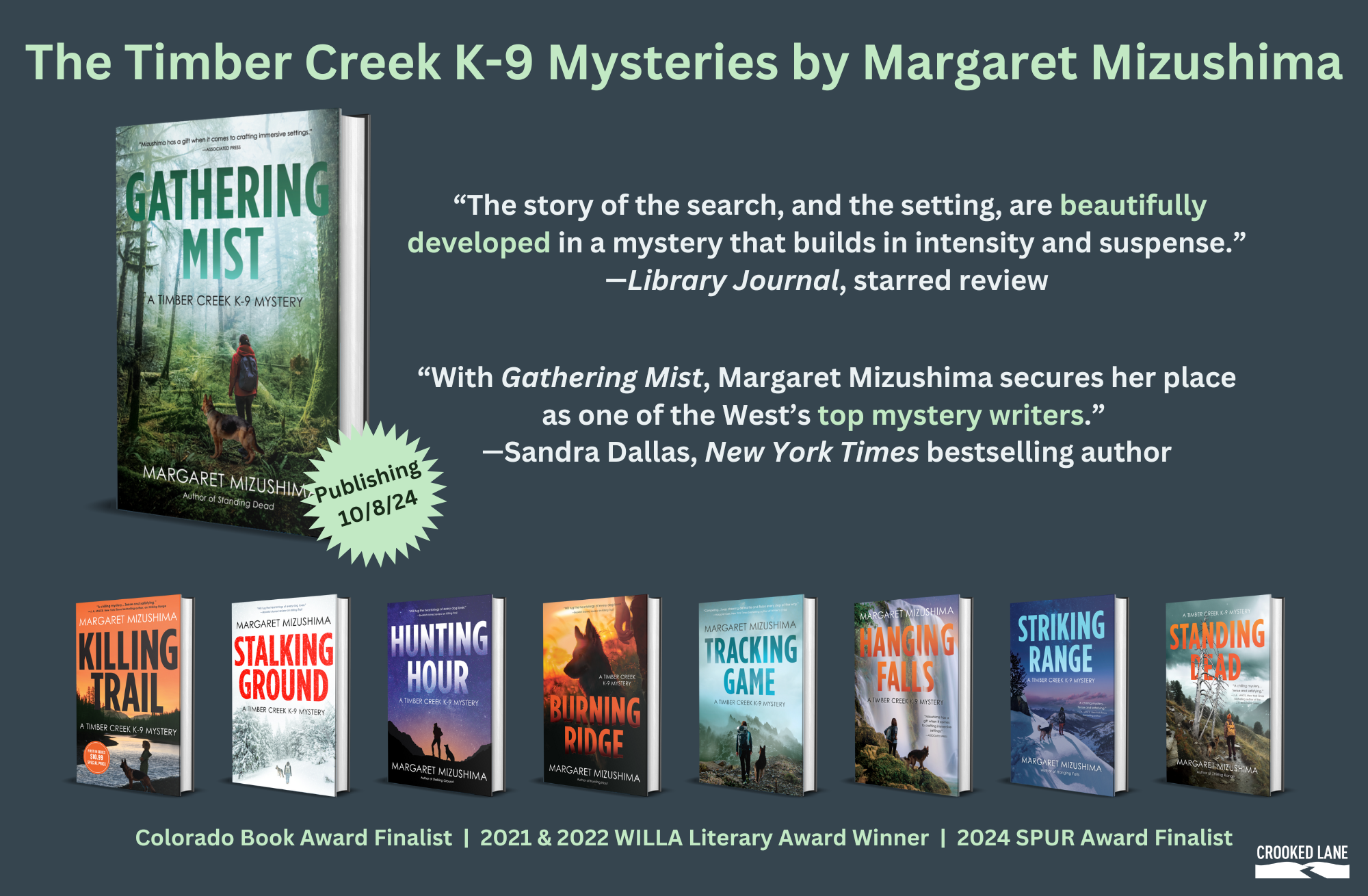
This is my first guest post for Paty’s Ladies of Mystery, and I’m so happy to be here. I write the Timber Creek K-9 Mysteries, a series comprised of eight published books and a new episode titled GATHERING MIST that launches on October 8th. I’m excited for this book to be released, because it’s set in an entirely different place than the rest of the series, resulting from a move that my husband and I made in 2022.
Our move across country from northern Colorado to the state of Washington began two years prior to the actual event. My husband Charlie is a veterinarian who established his practice of forty-two years on our property outside the city limits of a small town north of Fort Collins, CO. We also raised a herd of Angus cattle, quarter horses, and a multitude of pets there. It was our beloved home, and we planned to stay there forever.
But then…the school district bought the plot of ground next to ours and began to build a three-school campus, complete with football, baseball, and soccer fields. Oh my! The construction noise rocked our home. The atmosphere of our peaceful country life was destroyed. We looked at each other and said, “We’ve gotta move.”
Fortunately, it was time for my husband to retire. It took two years to disperse our cattle herd, sell our farm equipment, close the vet practice and get ready to go. We decided to head to Washington to be closer to one of our daughters. Because of the boom in the real estate market, cash buyers reigned. Since no one would entertain an offer from someone with a contingency, we were unable to buy a place to move to until after our property sold.
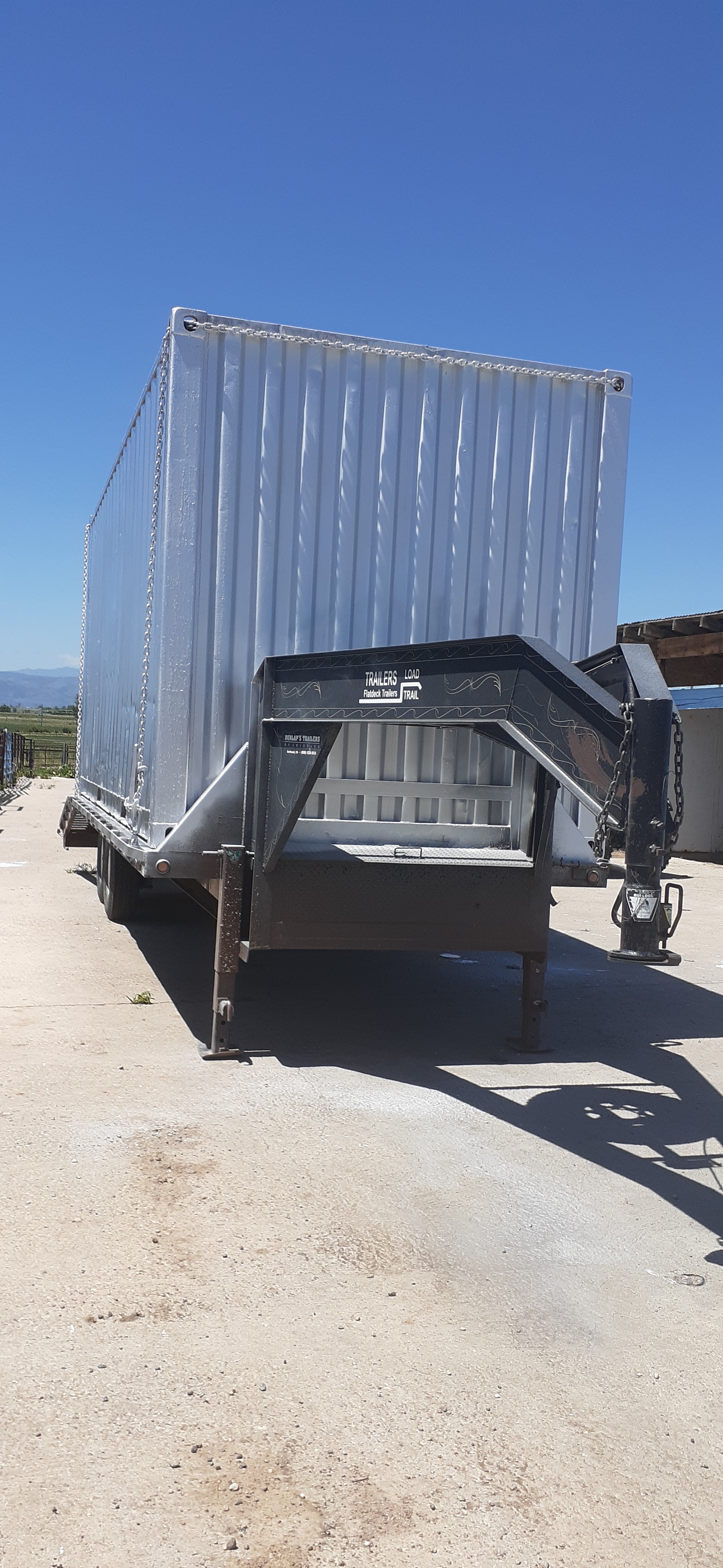
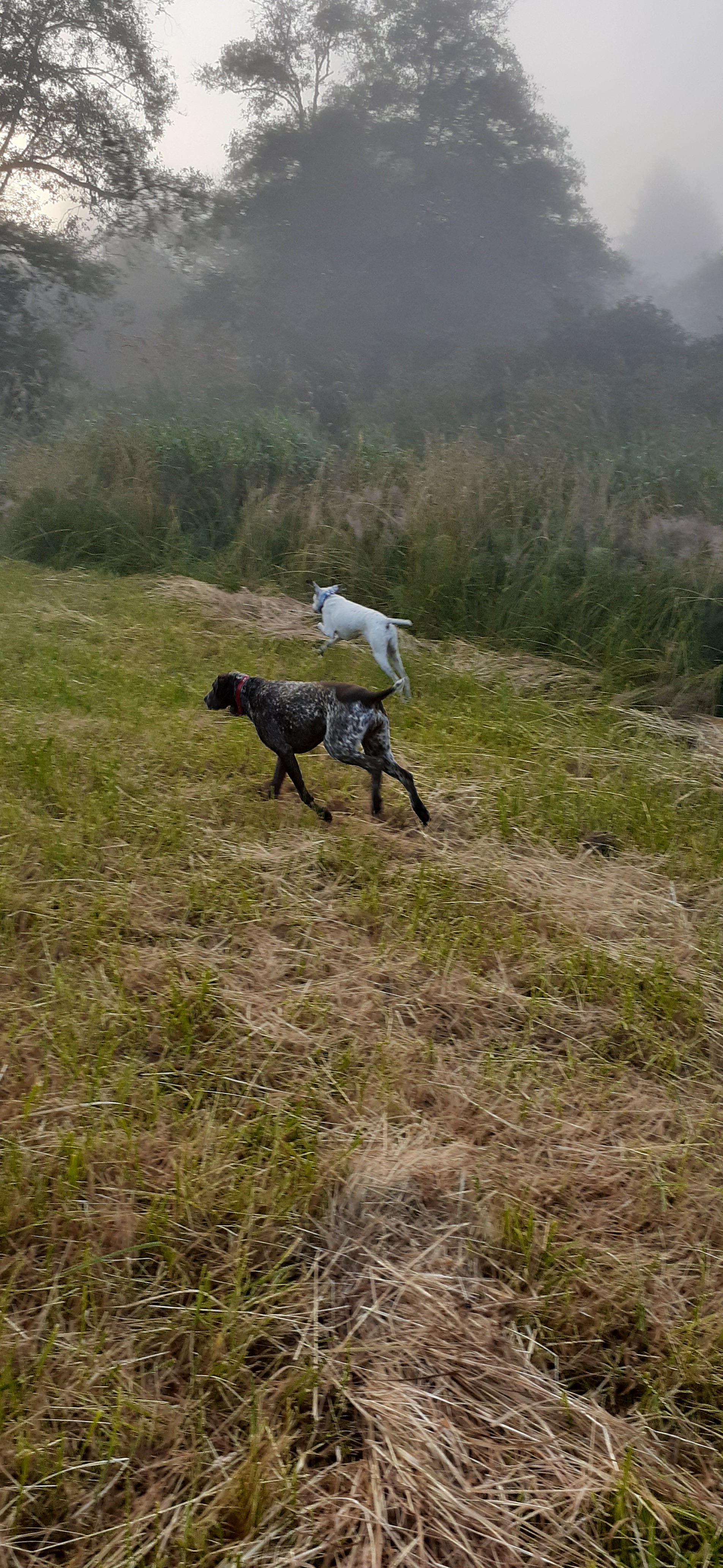
The last month before we left was intense. We pared down our belongings and loaded what was left into one stock trailer and a container strapped to our hay trailer, which we stored on our friends’ property. We loaded our two German shorthaired pointers into the car and headed west to Washington State. What a trip! Both dogs and humans were shell-shocked when we arrived.
Our daughter had found a place for us to rent near her home in a beautiful river valley. It was on a rural property surrounded by giant Douglas fir that smelled amazing at night. Our landlady let us bring our dogs and they had a large meadow they could run in each morning. We’ll always be grateful for her gracious hospitality.
Four months later, we found our new home and made the final move. We settled in and I discovered a wonderful setting for the ninth book in my series, a fictional spot on Washington’s Olympic peninsula.
In GATHERING MIST, Deputy Mattie Wray and her K-9 partner Robo leave their home a week before Mattie’s wedding to join a search and rescue mission for a celebrity’s missing son. They face unfamiliar territory and unfriendly locals on the misty, rain-soaked Olympic peninsula, and they uncover secrets that have lain buried in the dense forest. When it becomes apparent that there is something more sinister than a lost child in play, the searchers grow desperate as they strive to find the missing boy before he is lost forever.
We’ve not only found a new home here in Washington, but I found a new setting that I loved using in this book. I invite you to read Mattie and Robo’s adventures that are set in both Colorado and Washington, starting with book one, KILLING TRAIL. Or, if you prefer, start anywhere in the series, because the mystery in each episode stands alone. I hope you enjoy the books!
GATHERING MIST
Secrets hide within the fog deep in the mossy forests of the Pacific Northwest, in this ninth thrilling installment in award-winning author Margaret Mizushima’s Timber Creek K-9 Mystery series.
Deputy Mattie Wray, formerly Mattie Cobb, is summoned to Washington’s Olympic peninsula for an urgent search and rescue mission to find a celebrity’s missing child. With only a week left before her wedding, Mattie is hesitant to leave Timber Creek, but her K-9 partner Robo’s tracking skills are needed.
Dense forest, chilling rain, and unfriendly locals hamper their efforts, and soon Mattie suspects something more sinister than a lost child is at play. When one of the SAR dogs becomes ill, her fiancé Cole Walker suspects poison. Fearing for Mattie’s and Robo’s safety, Cole joins the search and rescue team as veterinary support.
Secrets that have lain hidden within the rugged terrain come to light and when it is uncovered that the missing child was kidnapped, the search becomes a full-blown crime scene investigation, forcing Mattie, Robo, and Cole into a desperate search to find the missing child before it’s too late.
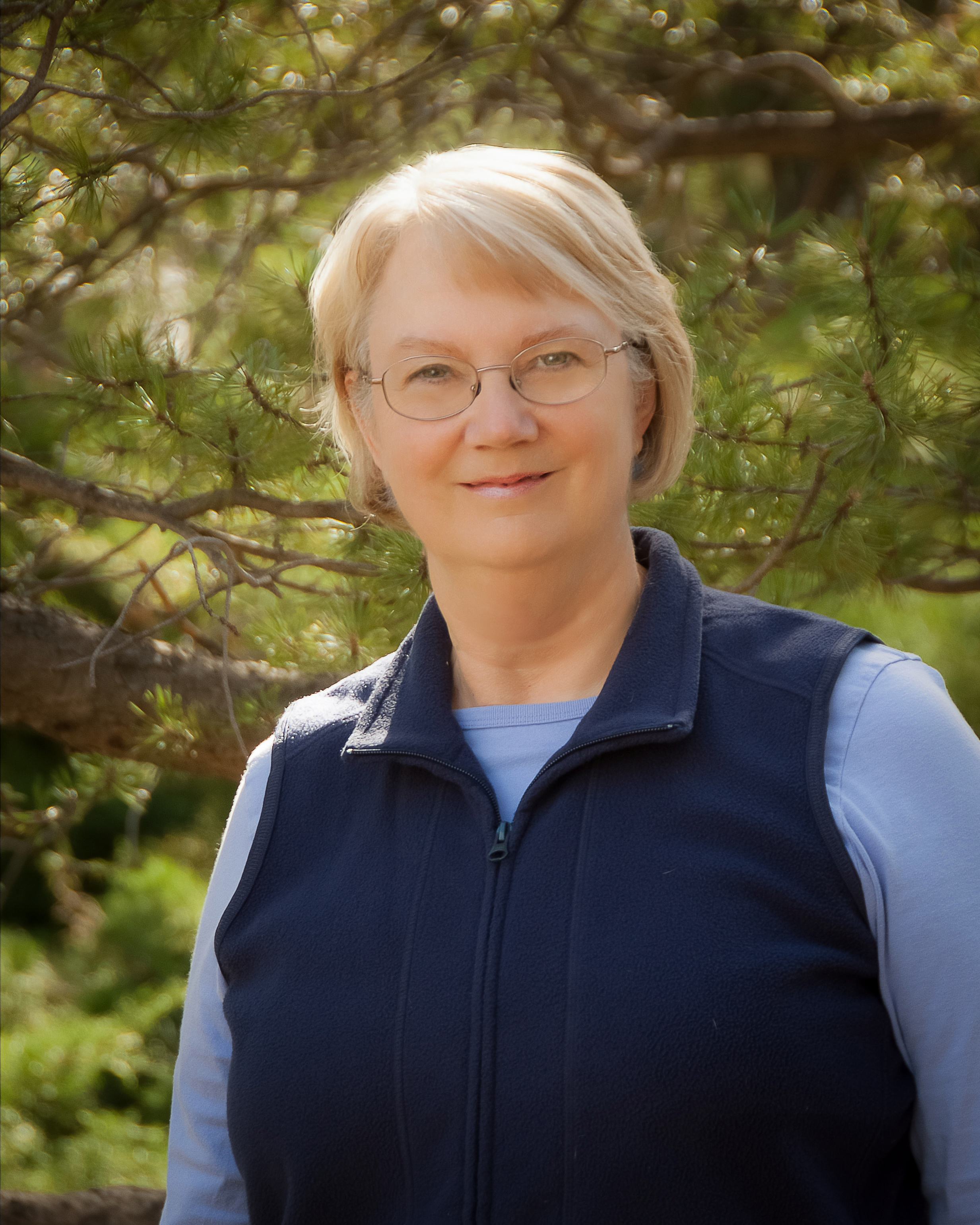
Margaret Mizushima writes the internationally published Timber Creek K-9 Mysteries. She serves as past president of the Rocky Mountain Chapter of Mystery Writers of America and was elected Writer of the Year by Rocky Mountain Fiction Writers. She is the recipient of a Colorado Authors League Award, a Benjamin Franklin Book Award, a CIBA CLUE Award, and two Willa Literary Awards by Women Writing the West. Her books have been finalists for a SPUR Award by Western Writers of America, a Killer Nashville Silver Falchion Award, and the Colorado Book Award. She and her husband recently moved from Colorado, where they raised two daughters and a multitude of animals, to a home in the Pacific Northwest. Find her on Facebook/AuthorMargaretMizushima, X @margmizu, Instagram @margmizu, and her website www.margaretmizushima.com.
I don’t think any one of us can deny the pure pleasure of writing. And when others read our work, it’s an added joy. Sometimes I forget that despite being a professional writer – in that readers spend money and time on my books – I really don’t write for them. True, I make a contract with the reader in the beginning of the story, usually within the first few paragraphs, that I am going to deliver a mystery of a certain style that will have an overall happy ending. I don’t tie up everything with a pert little bow, but satisfaction of a sort is guaranteed. That’s because I would like nothing better than to tie Life up with a pert little bow. In my writing world I can. Most of the time. Certainly, in my cozies.
My standalone, Murder under the Big Top, is not a cozy, but I’m still trying to figure out what it is. It’s definitely darker than my other novels. Everyone comes on scene with a secret, a secret that has brought on unhappiness. Through the years I have called it a mystery, a noir, a docu-drama, a docu-noir, and I’m still coming up with a term to fit. As this book made its debut in 2014, categorizing it doesn’t look good.
Murder under the Big Top (originally called Death of a Clown) is loosely based on my mother’s short time in Ringling Bros. and Barnum & Bailey Circus of the early 40s. The story and plot are totally made up. But the day-to-day existence of life during the golden age of the “Greatest Show on Earth” was much documented and is the spot-on truth. It was a world unto itself, unique and colorful. If I haven’t mentioned it, my mother began her circus career as a First of May (a novice performer or worker in their first season), and my father was an elephant handler. They met in the circus and married. My mother worked her way up to specialty acts and my father became an elephant trainer. I was actually born during the yearly hiatus of the circus. So, I really felt obligated to give the story – fiction though it may be – full justice.
The novel took me six years to write and was a success of sorts. Despite winning a silver IPPY, it was never a big seller. Some readers think it’s my best work. Others couldn’t even get through it. It was a departure from my other books, and those used to my cozies weren’t happy about that. Maybe I should have called myself H. L. Haven on the cover instead of my usual moniker, as a warning. Maybe I should have turned it into a circus series, as a few fellow writers suggested. But here’s the truth: I couldn’t face writing another book feeling that level of obligation, even though no one put me there but me.
The other standalone, Christmas Trifle, started out as a romance novel. I was dancing around Hallmark, and it was suggested I write a romance novel for them. Come to discover, I don’t give good romance. I found that out at Chapter 8 when I would have preferred to clean out the dryer’s filter or even the county’s prison lavatories than sit down and write. Writing became a drudgery.
Rather than throw-up, I decided to throw in a murder. Wow! The story had a few heartbeats and then came to life. I added a few more deceased members of the human race and was off and away. It all came together. I was happy. Apparently, there’s nothing like a corpse to make my day. Forget romance. Forget writing what I know. Toss in a few dead bodies. That’s the ticket.
The Persephone Cole Vintage Mysteries came about due to a challenge from an editor. Could I create an atypical female protagonist? It couldn’t have come at a better time because I had done tons of research for Murder under the Big Top, very specifically the year 1942, and wanted to use that knowledge. Time to write a private dick of the 40s. Listening to my editor, I came up with Persephone ‘Percy’ Cole, a five-foot eleven-inch, overweight single mother, thirty-five-years old, with a wicked sense of humor and a right hook akin to that of a heavyweight boxer. A female counterpart to every male shamus of the era, but with an eight-year-old son who gives her life meaning.
I was with a small publishing house and wrote two of the novels during that time, The Dagger Before Me and Iced Diamonds. I left, became independent, and wrote two more novels, The Chocolate Kiss-Off and Hotshot Shamus. The series was never a big seller, but just mad fun to write. Percy Cole makes her way in a man’s world of seventy-plus years ago during WWII and does it without apology. Who doesn’t like a no s–t lady?
The Alvarez Family Murder Mysteries hit a stride soon after I began writing the series. It is by far my most popular and sells well. That’s “well” by my standards. I don’t think I could ever buy a yacht from the proceeds should the impulse strike me. Maybe a sailboat. Hmmm. No, not a sailboat. Those are pretty pricey. All that canvas, donchaknow. A rowboat. Probably a rowboat. With a hole in it. But I’m not whining, even though I live in wine country (bada-boom).
The truth is, as an adult I don’t do one-on-one with the ocean. Having been born and raised on the coastline of southern Florida, I know only too well what lives in and under all that sparkling salt water. As a kid, I’ve stepped on enough horseshoe crabs, who are not horseshoes nor crabs. Burrowing just under the sand, their spiny exoskeleton has ruined many a lovely day and naked foot. I’ve been stung by enough snarky jellyfish who loved the backseat of my bathing suit. And don’t get me started on sea urchins who seemed to have it out for me. As a youth, I remember splashing about in the Atlantic Ocean, minding my own business, only to be hauled out by lifeguards as a shiver of sharks swam by. They may have been well-fed from their stopover in Ft. Lauderdale, but it was hard to know their hunger deficit by the time they got to Miami, so out of the water we got and waved them on to the Bahamas.
But I digress. I love to write about Lee Alvarez’s escapades and her colorful family. Readers seem smitten with the series, as well, so this is the perfect combo. But keep this under your hat: Lee is not my favorite protagonist. That would be Corliss, from a short story of the same name, from Corliss and Other Award-Winning Stories, my one and only anthology. I love Corliss. I’m not even sure why. She’s my youngest protag, vulnerable and easily pushed around. But she has resilience, and learns life lessons fast and well. When I think of all of the characters I write about, she’s the one who makes the greatest changes in her life yet still remains who she is at her core. Wait a minute. I may have solved why I like her best. But she is done. Completely done. And there’s no reason to go back and write more about a character I am totally satisfied with.
Another of my favorite protagonists is a dog. I wrote Jemma and the Shoe, another short story included in Corliss and Other Award-Winning Stories, as a gift for my dearest heart-sister who lost her beloved Bulldog to old age. I have to say it was more than a labor of love. It became a testament as to why I like to bring people and animals alive again through writing. In this way, my beliefs are similar to that of the ancient Egyptians who carved names of pharaohs and others on the walls of temples, tombs, and pyramids. Say the name, think of the individual, love them, revere them, and they are alive again, if only for that moment. I did this with my own cats, Tugger and then Baba, now characters in the Alvarez Family. This passion is not unique to me, for sure, but I try to practice this ritual every day. The older I get, the more loved ones I have to remember, revere, and miss.
Oh, jeesh. Now I’ve not only digressed, I’ve become maudlin. But we’re back to the truth of things for me. I love to write, whether it’s short stories, articles, posts, plays, ad copy, newspaper columns, or novels. I’m grateful to the readers who enjoy my work, because that is the wondrous byproduct of what I do.
But I write for me. It gets me through the day. It makes me feel alive. It keeps me sane. Okay, saner. And for a time, a fleeting moment, I sometimes feel the touch of a hand or paw from those no longer with me but always in my heart.
As a retired K-9 handler for Sherlock Hounds Detection Canines, I spent the last 19 years working to help keep schools safe with my four-legged partners. We used friendly dogs to find drugs, alcohol and gunpowder. When I started this career, I had no idea how much it would influence my writing and genre.
I have so many stories and memories about my experiences with the dogs. One that always comes to mind happened with my first dog, Sammy. Sammy and I arrived at one of our schools and the principal said, “I believe we have a kid dealing drugs here, but we’re not sure where he’s keeping them. Do you mind if we check the parking lot?”
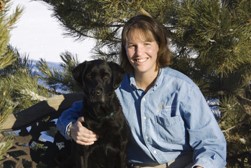
KATHLEEN & SAMMY
I agreed and off Sammy and I went to sniff around some vehicles. I insist on keeping any checks random so that we’re never targeting a student, but I did ask the principal to tell me the color of the car. It was black. So that day, we started checking black cars in the parking lot. After checking a few vehicles, we came upon a black four-door coupe and Sammy’s body language changed. Her tail pointed straight up in the air and her muscles tensed. Even her breathing changed as she inhaled the air and worked to pinpoint a scent. She alerted on the front passenger door.
But she didn’t stop there.
Whipping around, she ran back in front of me and went to the trunk of the vehicle, promptly alerting there as well. The phrase, “trust your dog” kept repeating through my head. I told the principal that we needed to check not only the interior of the car, but also the trunk. Sammy had alerted on both spots on the vehicle for a reason. I would soon find out it was a very good reason.
In the front glovebox, there was marijuana. But what was in the trunk? The student didn’t want to open it and I soon discovered why. When he did, there was a sawed-off shotgun. I rewarded Sammy with her toy and praised her for a job well done. She’d not only helped to keep a school safe and maybe even saved a life, but she had also solved a mystery.
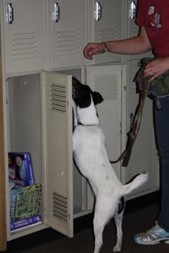
NELLIE WORKING A LOCKER
As I continued to work and gained experience with more dogs, I started to realize how much dogs, or more specifically their noses, could help us solve mysteries. When we would recertify with our trainer in Oklahoma, he would always show us the dogs he had in training for law enforcement. I watched him work the dogs for tracking, apprehension, finding narcotics, and much more. Our trainer had arson dogs and even told stories about training dogs to find human remains.
Meanwhile, I was pursuing my other passion of writing. As I learned more about writing mysteries and thrillers, I thought, why am I not including a K-9 character in my books? They are the ultimate crime solving partners. At this point I had worked K-9s for about ten years and I had a better understanding of the bond between dog and handler. I knew that my next book would have a K-9.
That was the beginning of the National Forest K-9 series. Now, three books in, with the latest release being KILLER SECRETS, I have found as much passion for writing dogs on the page as I did working dogs. In fact, this fall I am not going back to school. I am now a retired K-9 handler. I’m looking forward to continuing to write my stories and let my main character, US Forest Service law enforcement officer Maya Thompson and her K-9 Juniper, a two year old Malinois, solve mysteries in a fictional Colorado forest.
I love weaving in the strong bond between dog and handler. Along with Maya and Juniper, I have a new series coming out in late 2025. This is a romantic suspense series and the first book will feature an FBI Crisis Canine and his handler. As I wrote a new canine character, I enjoyed diving into a different type of K-9 work. They are amazing animals.
I’m not the only one who thinks so. In fact, I think over the past few years, there are enough K-9 crime solvers that I would say it has become its own genre. I’d love to know, do you love K-9s in books? I look forward to hearing from you and I also want to thank the Ladies of Mystery for inviting me to their blog as a guest.
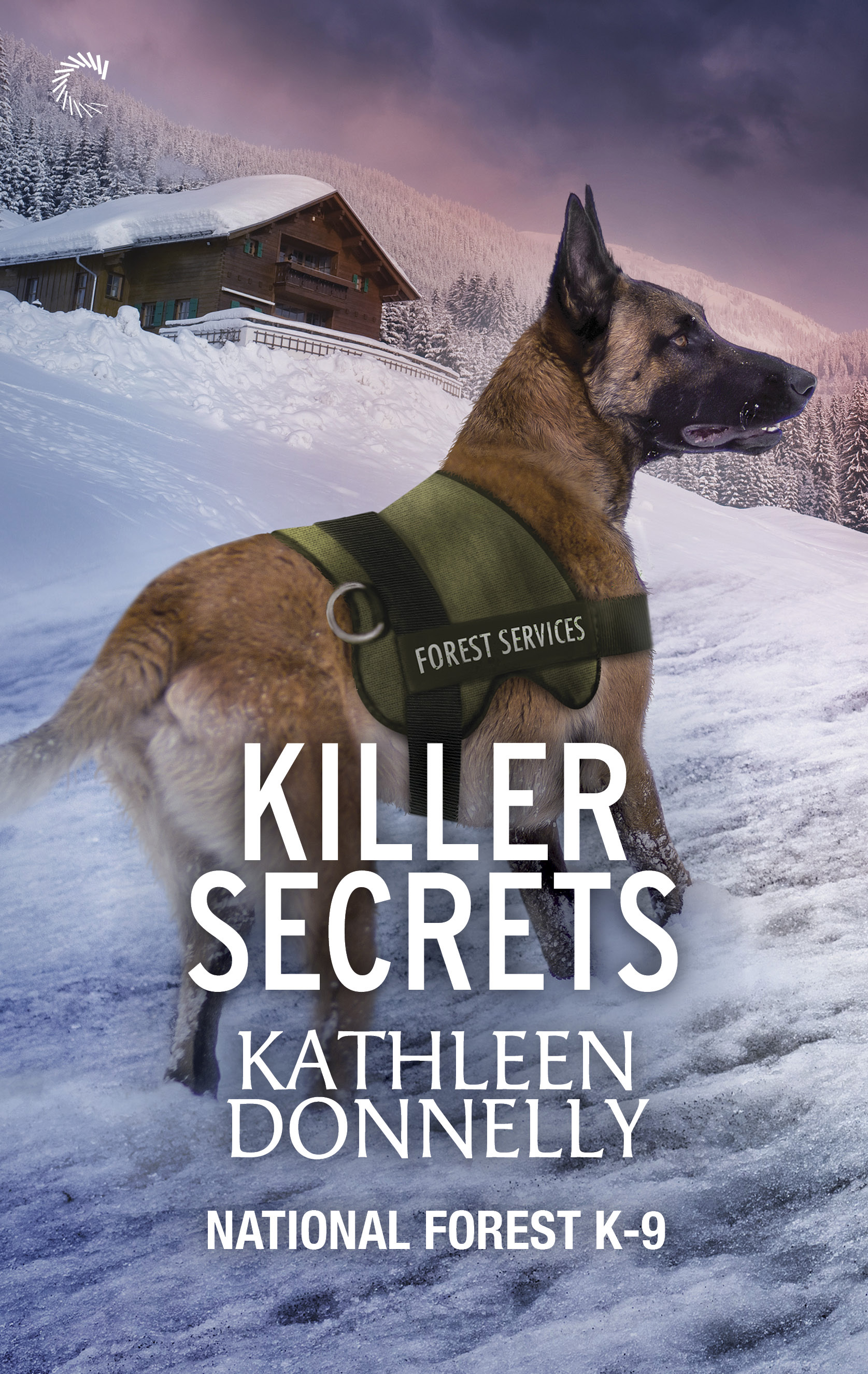
Killer Secrets:
A small town’s deadly past is exposed in the newest installment of the suspenseful National Forest K-9 series by Kathleen Donnelly.
Until an avalanche ripped down a mountainside, exposing a serial killer’s dumping grounds, Antler Valley, Colorado was a quiet town. Now Forest Service officer Maya Thompson and her beautiful K-9, Juniper, must catch the murderer before they become the next targets.
With the neighboring town’s new overconfident sheriff deterring the entire investigation, a murderer on the loose and heartthrob deputy Josh Colton racing through her mind, Maya is at a crossroads. Josh is ready to go all in, but Maya has one foot out the door. As she lets her guard down, she needs to accept that she’s falling deeply in love with him, no matter how risky it may be.
When evidence from the Antler Valley victims links the murders to deaths in other ski towns, secrets long buried are unearthed. Maya and Juniper must run toward an answer, though finding it might lead them directly into a fatal trap…
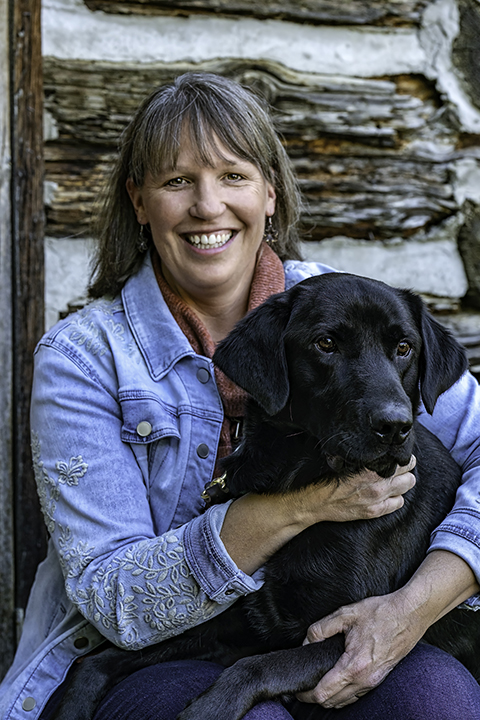
Award-winning author Kathleen Donnelly is a retired K-9 handler. She loves crafting realism into her fictional stories from her dog-handling experience. Her debut novel, Chasing Justice, won a Best Book Award from the American Book Fest, a PenCraft Award and was a 2023 Silver Falchion finalist in the Suspense category and Readers’ Choice Award. Her second book, Hunting The Truth, was a Colorado Authors League finalist in the mystery category and a Silver Falchion finalist for the Readers’ Choice Awards. She lives near the Colorado foothills with her husband and four-legged coworkers. You can sign up for Kathleen’s newsletter to receive her free short story eBook collection, Working Tails.
For the last few weeks I’ve been thinking about the old mss left unfinished. Some are in my computer. Some of them are on paper, stacked in a closet, shoved into the back where I can’t see them. That’s probably a good thing because if they were visible I’d pull them out and litter my desk with them.
There’s nothing wrong with any one of them, and several came very close to a sale. But there is something not quite right. Every writer knows what I’m talking about—the story we loved and worked on and with a gasp of hope sent off to an editor or an agent. And then it sat there, on someone’s computer or desk, gathering dust of being pushed lower and lower on the list of titles in the TBR file. The question becomes, what do we do with them? Do we reread and rework them? That’s a definite possibility. The more I learn, the more I rethink what I’ve done and recognize where I could have improved the story by changing the setting, developing the villain more, heightening the tension, or removing the extra secondary characters. But I don’t do these things in a novel. I might do some in a short story, but not in a longer work. And I think I know why.
Some years ago I was an avid fan of Margery Allingham’s Albert Campion mysteries. The first one appeared in 1929, The Crime at Black Dudley, and others followed fairly regularly into the 1960s. I don’t know if many people read her work anymore, but she was considered one of the great British mystery writers of her time. After reading through her entire list including a couple of novellas, I came across her first mystery, The White Cottage Mystery, published in 1928. This is only a year before her first Albert Campion story. And I was startled at the difference between the two., and the extent of her growth and development as a writer between her first and her second book. It’s an experience I have always remembered.
We grow and change as writers. If our work sounds the same year after year, we’re not growing and it’s time to stop and ask why. I don’t want to write the same book year after year. There has to be something different, some sign of a new perspective, a new challenge. I can see this same ambition in some of the writers I read, but not in others.
When I pulled out some of my old mss and had the passing thought of rewriting and updating them, I was frozen, and here I think I was so for a good reason. Whoever I was back then I am not her now. To bring one of those old mss up to the level I would want to write today would be to dismantle and basically erase it. Each line, each feeling and action would have to be different because I’m different. The story was good for its time and in some instances that’s twenty or more years ago. I was different and the world was different.
I’m in a long phase of decluttering the house I’ve lived in for over forty years, but I doubt I’ll toss out those mss, not just yet. Each one tells me something about writing, finding a voice, developing a voice through time, challenging ideas and creating new ones. I liked some of those stories more than others, and the failure of some weighed on me more than others, but like any other experience that comes to an end, I let those novels go and moved on.
The one important thing I remember is that even though they didn’t sell, they made me the writer I am today, with their lessons and discoveries, their pitfalls and graces. For that alone I will probably keep them for a while longer.











 Ladies of Mystery
You must be logged in to post a comment.