Why We Kill

by Janis Patterson

It is not, as some of my friends have said, because I am an old grump who wants to do away with everyone who annoys me. Not all the time, at least.

That said, however, taking someone whom you dislike intensely, who has been egregiously rude/cruel/unmannerly/whatever, and offing them can be very relaxing and therapeutic. (Of course, I’m talking about killing only in pixels.) It’s cheaper than therapy, can be done multiple times if the first time is not satisfying enough and no one gets really hurt. And, if you’re lucky, you can make a little money.

But why do people want to read about people being killed? After all, killing is messy. It’s permanent. And it’s very very illegal. I think the reasons are as varied as the readers. And the writers. Sublimation. Wish fulfillment. Excitement. The thrill of the chase. All basic human emotions, but I think the main reason is that in a mystery novel we want the assurance that all will turn out right – the murderer will be caught and properly punished. Balance in the world is restored. Justice is served.

I believe every rational person has a deep sense of justice. A lot of times the murder is committed because in some possibly twisted way it fulfills the murderer’s sense of justice – as incomprehensible as it might be to anyone else.

When we write or read mysteries we are not only indulging in escapism, we are shoring up the foundations of justice. The crime is solved. Balance returns. Our inner world is stable once more, even if the real world is far less simple or predictable.

Which means that we as writers are fortunate. I mean, how many people can say that we not only entertain, but we contribute to the happiness and mental health of the world? And all by killing people…

Creating more ‘dramatic’ characters

Carpenter photo_WEB gifBy Sally Carpenter

When I began writing in earnest, I was more interested in playwrighting than penning novels. As a kid, I checked out plays from the local library to read instead of novels. Plays read fast (knock one off in an hour!), had lot of white space on the page, and got to the action immediately. Books had hundreds of pages of close-set type, long passages of boring description and slow moving plots.

Now that I’m entrenched in writing cozies, the skills I learned as a playwright are still serving me well. One of the primary tools for character development that I picked up from acting class is major meanings. The following is an over-simplification of the process.

Every person has major meanings in her life. These are the two to three things the person needs to have a fulfilling life. Major meanings are tangible items, not abstract ideas like joy, peace, security and safety (although the major meanings might provide such things.)

The major meanings create tension among each other. When one major meaning is realized, another meaning may be neglected.

An example: a middle age female executive has the major meanings of career advancement, family and sobriety. However, climbing the corporate ladder leaves little time to spend with family. Business lunches and networking parties with an abundance of booze flowing might tempt her sobriety. She may forgo a job promotion so she can care for an aging parent.

Watch the sparks fly when two characters have different major meaning. The wife values peace and quiet but hubby, who loves auto racing, wants his buddies over to watch the Indy 500 on the big screen TV. Resolving the conflict to everyone’s satisfaction (or not—that’s when the murder occurs) is the stuff of good storytelling.

For the writer, major meanings are often not planned in advance and may pop up as the manuscript progresses. The author should never state major meanings outright but let the reader discover them.

When an actor approaches a play, she reads the script until she finds her character’s major meanings and then she internalizes them. She imagines herself as the character living out her major meanings and life history. When the meanings are ingrained, the actress goes on stage and, as she says a line or listens to the other characters, the right feeling and reaction will occur because the major meanings will spring to the surface naturally and in the moment. This provides a more natural performance than for the actor to plan to advance how she will say or react to a line.

 In my writing I often imagine myself in the character’s place or “see” the character acting out the scene in my mind. If I’m stuck for what the character will do or say next, I let the major meanings simmer and the character will do the right thing. (Writing is harder work than acting. An actor only had to build one character whereas the author has to do the work for several!)

To put this idea into practice, take a favorite novel, play or movie and find the protagonist’s major meanings. How do these meanings cause the character to make the choices she does? How do the major meanings of the other characters, cause conflict for the heroine?


When Readers Attack

IMG_1610As an indie author, (I love that, it sounds so  much more hip and cutting edge than self-published), every aspect of the publishing process for my Daisy Dunlop Mystery series is down to me.  I don’t have an agent to send my work to for feedback, nor do I have an in-house editor at a publishing house. In order to work out if a book is any good, or not, I am solely reliant on the kindness and honesty of others.

As I write each of my books I’m sure they’re rubbish. The plots don’t work, the characters are out of character, the ending sucks, and on and on the never ending negativity goes. When I start out I have a vague idea of what the book is going to be about, but I’m usually a third of the way in before it even starts to  make sense to me. I never have a detailed plot because I prefer my writing to be like my life, unexpected, traumatic and a never ending series of embarrassing and yet funny disasters. Honestly, I have as much fun writing the stories to find out what is going to happen as I hope readers have reading them.

I have some lovely people who critique and beta read for me, including this blogs very own Amber Foxx. These people are in my corner, and I know I can trust them to tell me when something is not working. I rewrote the end of Lost & Found because Amber said it needed more, and she was right. I also have a wonderful Greek editor, (Yep she’s Greek and her English grammar is better than mine), who edits my books at a discount for me.

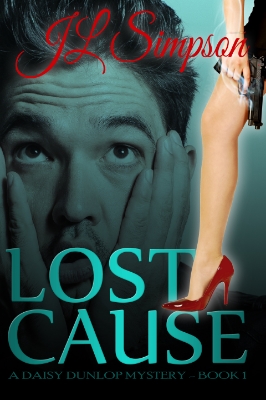
My lovely Greek editor, Sotia Lazu also does my book covers, oh to be multi-talented. Lost Cause 400When this is all done, the book formatted, the blurb written, the price chosen and the book goes live I then sit and wait for an audience response. Sales of my books are never meteoric, Daisy and I console ourselves with the fact we are working on a long term plan. After Lost Cause being out for eight months I have now decided to give it away free everywhere to help Daisy get some traction. Anyway, I am now getting emails almost daily from readers.

What are they saying? Funnily enough they all like the book. Honestly! Who would have thought people who bother to email an author would be people who enjoy the book? That’s not to say they don’t have something negative to say. The people who I am now claiming as fans fall into three basic categories, ex pat Brits (all men) who love the English slang, the swearing and the feel of home my books give them. Did I mention they’re set on the South Coast of England where I grew up? The next group are UK and US readers who love everything about the book, and the third are US readers who like the story despite the slang and/or the bad language.

lostfound_02So, my dilemma, one group love the slang and bad language, and one group is not so keen. I read a lot of US books and some days I’m not sure they’re even written in English, but I muddle through. I have cut the slang back to just enough to give it an authentic UK feel and even my Irish PI is less Irish than any Irish person I’ve ever met. Maybe my readers will learn some new exciting phrases they can use at home. Reading is an adventure like world travel, it broadens the mind without the risk of Delhi belly and sunburn.

Language is unique in every culture, but you learn to adapt. When we first emigrated to Australia my husband had a job in Melbourne and one of the guys asked him what he wanted for smoko. My husband told him he didn’t smoke. The guy looked confused and said, “No mate do you want something for smoko?” My husband, “I don’t smoke.” The irrate dude, “Something to eat?” My husband, “Oh morning tea?” The rest of the construction crew now wetting themselves laughing at the pompous sounding Englishman.

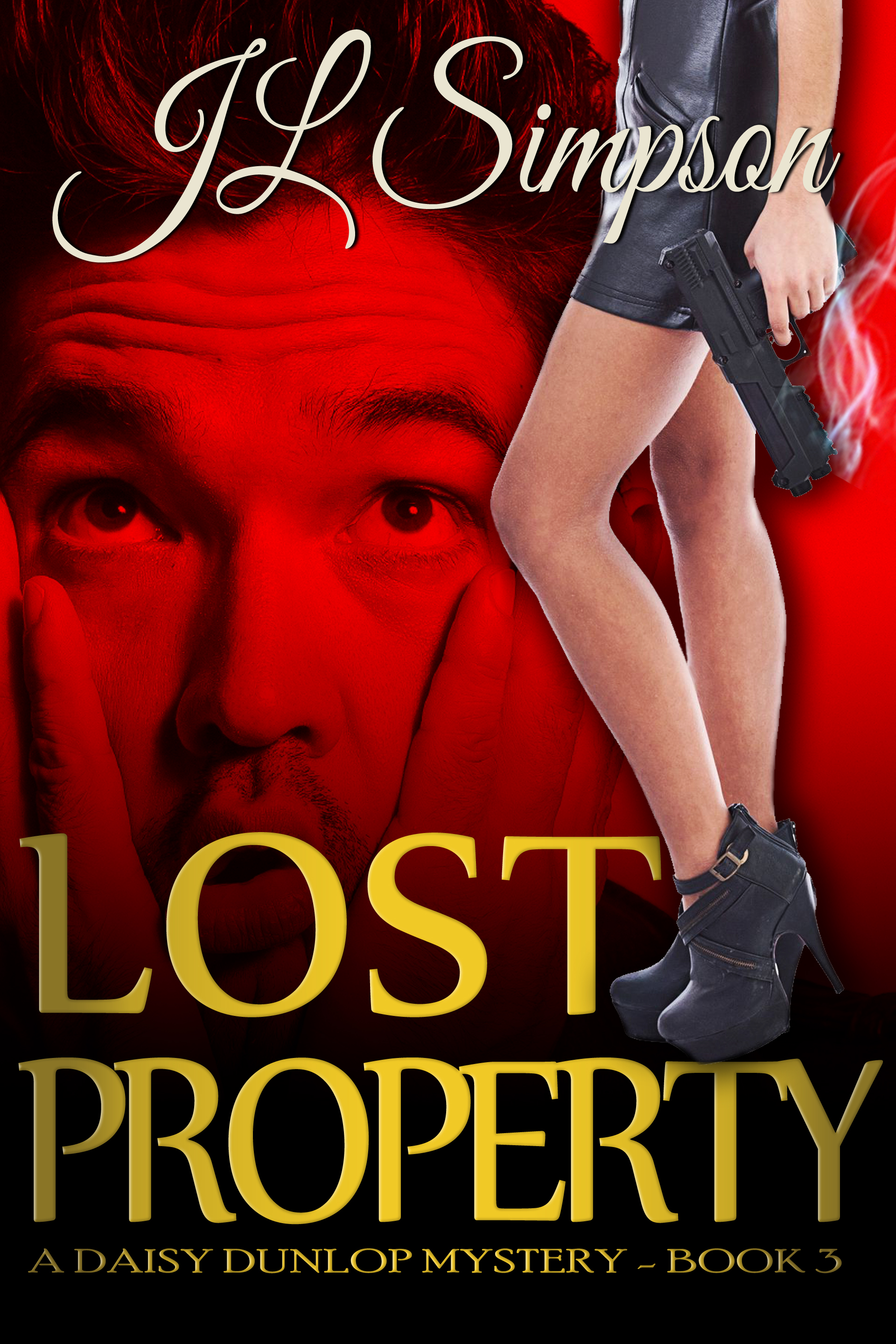
So, I think, in Book 3 Lost Property which is still a work in progress, Daisy will have too continue swearing, just a little, and Solomon will have to LostProperty_05_HDkeep sounding Irish. I figure if the Greek editor can muddle through and make sense of it, then the readers can work out what is going on. Besides, if you have no idea what something in a book is make it up. That’s what I do. Whenever I read the word banquette, and it comes up more often than you would think in a US book, I imagine a massive sofa with flashing lights, or a huge feast set out for a king, like a banquet but bigger…who knows what it really is? But most times I can get the plot without having to understand every US thing in the book.  I dare you, come with me, download Lost Cause for free and come on a UK adventure that will show you an England you never knew existed.

JL Simpson

Where mystery and mayhem collide.

Website  | Facebook | Twitter | Goodreads | Amazon

Guest Blogger- Joanne Guidoccio

On the Road to Reinvention by Joanne

 Move over chick. It’s time for this hen to strut her stuff. (LuAnn Schindler)

Seven years ago, a hen strut wasn’t even on my radar. I had just retired from a 31-year teaching career and was still experimenting with a new and (sometimes unsettling) stage of life. Sleeping in each morning. Leisurely breakfasts. New hobbies. Volunteering.

Three months into retirement, I realized that I needed more than this patchwork quilt of activities. Everything came to a head at a luncheon. After a pleasant meal with stimulating conversation, I watched as over two hundred retired professional women swooned over the entertainment: an Elvis impersonator. They stood and hollered, waving dinner napkins and program. They coveted the flimsy polyester scarves he was draping around the necks of selected women. I took that luncheon as a sign from the universe. It was time to go down another road.

After some reflection, I decided to resurrect a writing dream from my high school years. Within days of making this decision, I received a call from an editor who offered to publish one of my travel articles. Excited, I started my wordsmith business and ordered my first set of business cards.

That first article was only beginner’s luck.

It took twenty-one months to get another one published. In the meantime, I attended creative writing workshops, took online courses, and continued to send out queries. Slowly, a writing practice emerged and articles, book reviews and short stories started appearing in newspapers, magazines and online. This was gratifying, but it wasn’t enough to satisfy my creative bent. I wanted more.

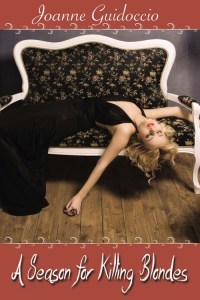
“More” translated into a novel. In my case, two novels: A Season for Killing Blondes and Between Land and Sea. The murder mystery failed to launch. Agents and editors were amused by the premise—A brunette lottery winner never has an alibi when dead blondes turn up in dumpsters near her favorite haunts—but they passed on the novel. Between Land and Sea, a fantasy about a middle-aged mermaid, didn’t fare much better.

Frustrated, I sought the advice of a visiting author. He met with me after reading the first 25 pages of my novel. He got right down to business.

“You’ve got an interesting premise here. Excellent plot development. And I like what you’ve done with the female characters, but—”

“Go on, I can take it.”

He sighed and shook his head. “The “b” word. It’s all over these pages.”

I couldn’t remember using any inappropriate language, let alone the “b” word. What on earth was he talking about?

“Boomers,” he whispered. “All the characters are over 50. You need youngins.”

“What do you mean by youngins?”

“Characters in their twenties and early thirties. That’s what selling now.”

I thanked him for his time but decided not to follow his advice. Unfortunately, that wasn’t the end of the anti-boomer talk. At every creative writing workshop and seminar during that spring, I encountered more of the “youth” talk, most of it spoken in hushed tones.

 “It’s okay to have an older woman as a sleuth but make sure you surround her with younger characters.”

 “Don’t mention anything about boomers in your query letter.”

 “Don’t even think about using retirement homes or nursing homes in your novel.”

I persisted, determined more than ever to feature boomer women and their older sisters as protagonists in my novels. I would love to say that the universe saw fit to reward my efforts, but that was not the case. Instead, more rejection letters followed.

In 2012, the winds of change started blowing.

The term “boomer lit” was bandied about on social media, and groups formed on Twitter and Facebook. The Best Exotic Marigold Hotel, The Intouchables and Quartet attracted record crowds and Downton Abbey became a worldwide sensation.

People were taking a closer look at heavyweights like Maggie Smith, Dame Judy Dench, Bill Nighy and Francois Cluzet. The younger supporting casts added color, but for the most part were forgettable and expendable. I don’t think anyone can imagine Downton Abbey without the Dowager Countess.

Those favorable boomer winds also blew in my direction. On January 31, 2013, senior editor Debby Gilbert of Soul Mate Publishing offered me a contract for Between Land and Sea. The novel was released in mid September 2013.

Feeling validated, I revisited A Season for Killing Blondes and reworked several plot issues and characters. After one round of editors, the cozy mystery found a home. On August 16, 2014, editor Johanna Melaragno of The Wild Rose Press offered me a contract.

Blurb- A Season for Killing Blondes

ThreeASeasonforKillingBlondes_w9101_750 (2) thousand euros worth of pastries. Can you believe it?
When I agreed to import the pastries, I had no idea I would be subsidizing the failing Italian economy and helping Silvio Berlusconi stay in power for a few weeks longer. Left to my own devices, I would have gone down the street to Regency Bakery, picked up some pastries and just walked them over. But my mother and Aunt Amelia were adamant. The open house for my new career counseling office needed a proper launch, one that could only be achieved with pastries from a Sicilian bakery.

To be fair, both of them were horrified when they saw that final four-figure amount on the invoice and swore me to secrecy. While conspicuous consumption is valued in the Italian community, being taken for a ride is not, and we would never hear the end of it from Uncle Paolo who is still complaining about the ten cents he has to pay for a shopping bag at No Frills.

I watched my mother rearrange the amaretto cookies, stuffed figs, biscotti, and other delicacies that had arrived yesterday. She and Aunt Amelia had brought in their best silver trays and carts and spent hours—according to Uncle Paolo—creating a colorful Italian corner.

“Everything is perfect. Maybe too perfect.” My mother made the sign of the cross and mumbled a Hail Mary.

“Relax, Ma. I’ve got everything under control. Nothing bad will happen.”

“Things have been going too well, Gilda. The lottery win. Your new career. This beautiful office. I’ve had one of my dreams, and you know what that means.”

Buy Links

 Amazon (Canada) – http://is.gd/t0g1KZ

Amazon (United States) – http://is.gd/jADjPp

Amazon (United Kingdom) – http://is.gd/8mknFJ

Amazon (Australia) – http://is.gd/r843iX

Kobo – http://is.gd/BpO9gY

Bio

Guidoccio 001In high school, Joanne dabbled in poetry, but it would be over three decades before she entertained the idea of writing as a career. She listened to her practical Italian side and earned degrees in mathematics and education. She experienced many fulfilling moments as she watched her students develop an appreciation (and sometimes, love) of mathematics. Later, she obtained a post-graduate diploma as a career development practitioner and put that skill set to use in the co-operative education classroom. She welcomed this opportunity to help her students experience personal growth and acquire career direction through their placements.

In 2008, she took advantage of early retirement and decided to launch a second career that would tap into her creative side and utilize her well-honed organizational skills. Slowly, a writing practice emerged. Her articles and book reviews were published in newspapers, magazines, and online. When she tried her hand at fiction, she made reinvention a recurring theme in her novels and short stories. A member of Sisters in Crime, Crime Writers of Canada, and Romance Writers of America, Joanne writes paranormal romance, cozy mysteries, and inspirational literature from her home base of Guelph, Ontario.

Where to find Joanne…

Website:   http://joanneguidoccio.com/

Twitter:   https://twitter.com/joanneguidoccio

Facebook:  https://www.facebook.com/authorjoanneguidoccio

LinkedIn: https://www.linkedin.com/in/joanneguidoccio

Pinterest:   http://pinterest.com/jguidoccio/

Goodreads:  https://www.goodreads.com/author/show/7277706.Joanne_Guidoccio

Guest Author Marianne Jones

Sisters in Crime (or The Birth of a Murder Mystery)

I blame my sister. For years she has been a huge mystery fan, especially of Agatha Christie and the various British detective series’ on television. I had been pursuing the literary life since childhood, and had published a mixed bag of poetry, dramas, short fiction, newspaper and magazine articles, and children’s books. Yet I had never considered attempting a murder mystery.

And then my sister Karen said to me one day, “You should write a murder mystery set in Thunder Bay.”

Thunder Bay, Ontario, our home town, is a small city in the center of Canada, nestled at the head of Lake Superior. It’s set in the midst of some of the loveliest natural beauty you’ll ever see, but because it is geographically isolated, most people are unaware of it. Those that are aware tend to ignore it. Karen thought that made it the ideal location for a good whodunit.

At first I dismissed the idea. But Karen is nothing if not persistent. Finally, I relented enough to say, “If you come up with an idea, I’ll write it.”

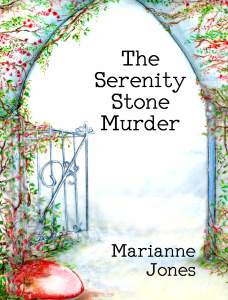
Of course, you know what happened. She called my bluff. She gave me a story idea loosely based on a disastrous women’s retreat she had attended. As she described the unfortunate event, I began to visualize my protagonists, middle-aged church ladies Margaret and Louise in the middle of it. At that point I was hooked, and The Serenity Stone Murder was conceived.

Sometimes I hit a snag with the story, and would call on Karen and her daughter Kirsti for advice. Over nachos and ciders at our favourite Thunder Bay restaurant, (appropriately called The Madhouse), the three of us partners in crime plotted together.

It was especially fun to write about Thunder Bay and the surrounding area, with its familiar landmarks. The fictional town of Jackpine, where my intrepid heroines reside, was modelled on any number of the small towns in Northwestern Ontario. Having lived in one of those small towns for five years, I knew well the winter longings of their residents to come to the “big city” of Thunder Bay for shopping and entertainment.

Writing CoverThe Serenity Stone Murder has been a fun ride. Happily, Stacey Voss, editor and owner of Split Tree Publishing, thought it was a great read as well. And readers from as far away as Kenya and New Zealand, have been enjoying it as well! So now there is no stopping Margaret and Louise. They’re already embarking on their next adventure—in the Thunder Bay region, of course!

The Serenity Stone Murder

What are two nice middle-aged church ladies doing at a New Age goddess conference? And what does it have to do with the mysterious death of Thunder Bay’s casino manager? Will Mary Carlisle, organist at St. Stephen’s Church, capture the heart of Thomas Greenfield, church gardener?

Find out the answers to these, and other burning questions in The Serenity Stone Murder, a kinder, gentler murder mystery set in Thunder Bay, Ontario, home of the Sleeping Giant, the Hoito Restaurant, and the world-famous Persion cinnamon bun. For those who like their mysteries served up with a side dish of humour.

Buy links: http://www.amazon.com/Serenity-Stone-Murder-Marianne-Jones-ebook/dp/B00ODELIZA

http://www.barnesandnoble.com/w/the-serenity-stone-murder-marianne-jones/1120454547?ean=9780981251684

https://itunes.apple.com/ca/book/the-serenity-stone-murder/id928612148?mt=11

https://store.kobobooks.com/ebook/the-serenity-stone-murder

Writer Bio

Marianne Jones is a retired teacher from Thunder Bay, Ontario. Her work has appeared in Reader’s Digest, Canadian Living, The Globe and Mail, and numerous literary and denominational publications. Her books include The Land of Mogan, a children’s fantasy novel, Here, on the Ground, an award-winning collection of poetry, Great- Grandma’s Gifts, a picture book for preschool and early elementary, and The Serenity Stone Murder, a cozy mystery set in Thunder Bay.

Marianne has been named International Poet Laureate by Utmost Christian Writers. Her poetry has won numerous awards, and some of them are permanently installed at Prince Arthur’s Landing at Marina Park in Thunder Bay.

Social media links:

Facebook Author Page    https://www.facebook.com/MarianneJonesAuthor

Twitter                               https://www.twitter.com/MarianneJones@Mariann36863659

LinkedIn                             https://www.linkedin.com/mariannejones

Google+                             https://mail.google.com/jonesmarianne2@gmail.com

Goodreads                         https://www.goodreads.com/marianne   jones

Amazon Author Page       https://www.amazon.com/author/jonesmarianne

Website                         https://www.mariannejones.ca