On the Trail of Inspiration

Some of my friends here think I’m crazy. Not because I’m any more peculiar than most people in Truth or Consequences—that would be more difficult than the odd thing they question, which is running at noon. In the desert. In July.

It’s much more pleasant than it sounds, though it would have been hell in June before the rains came. Now the temperatures are in the upper eighties or low nineties, with a few little storm systems flirting with the mountains, and no one around except the quails and jackrabbits and lizards. Snakes are hiding from the midday sun, and all the humans are out on the lake. That’s the way I like it. Not that I have anything against snakes, but I prefer not to meet them—or my own species—while I run. I want to be alone. It may look as if I’m only exercising, but actually, I’m writing.

With my train of thought taking a crooked path between lizard sightings and admiration of quail chicks, cacti and the rain-promising sky, I get creative. At the beginning of the run I pick a plot problem and turn my mind loose to play with it. Something about the free flow of running breaks mental dams. Key lines of dialog and important character goals arrive, ideas that refused to show up at my computer the night before. Snake Face has a lot of music in it, and all of those songs came to me on my favorite trail in Elephant Butte Lake State Park, complete with melodies no one will ever hear.

Over the past couple of years, someone has had the urge to make art along that trail. First, there was the miniature Stonehenge. Now there’s a spiral of pebbles presided over by a bulbous lava rock that looks like the Venus of Willendorf with a few too many endowments, and another that looks remarkably like a fluffed-up bird. The bird rock faces out, with its clutch of egg pebbles nearby. The fertility goddess squats on a large flat rock overlooking the spiral. All along the trail I keep noticing additional smaller arrangements, such as a square white rock placed in the center of the square red patch on a larger white rock. I find light green on dark green, bright yellow on dark brown and gold, all sorts of little rocks arranged on shape-and-color-compatible members of the community of stones marking the trail’s boundaries. These creations required time and thought and close observation.

As I wondered how long they took and try to picture the person behind them, a plot puzzle I was struggling with resolved itself. These little henges and heaps are going to find their way into the book in progress, perfectly suited to a certain character and his needs. Art meets art on the trail of inspiration.
Mysteries that take you places

thumb_IMG_1225_1024Warsaw’s Royal Palace dominates one bank of the Wisła River. It has been a royal residence and cultural center, a site of devastation and of hope. It is also where Łukasz Kaminski was left to die.

The Royal Palace marks the easternmost edge of the Stare Miasto, Warsaw’s Old Town, a cobblestone-paved area that stretches west toward Warsaw’s modern business district. Scars etched into the walls of the palace paint a picture of a long history, showing repairs, additions and changes wrought upon the structure over the past seven centuries.

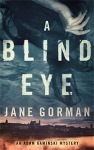
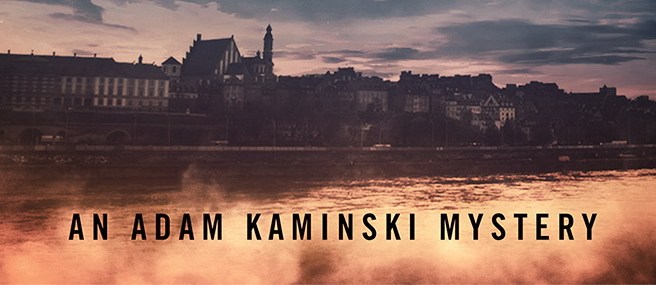
I use the Old Town as the opening scene in A Blind Eye. One of my characters, Łukasz Kaminski, has been beaten and left for dead. As he slowly recovers—both his strength and his memory—he makes his painful way through the Old Town to the Royal Palace. The photograph on the book’s cover shows the scene, looking at the Palace from across the Wisła River.

A-Blind-Eye-Web-Small

It’s a fascinating place, and well worth a visit if you ever find yourself in Warsaw.

The Great Tower was erected in the fourteenth century and the palace expanded significantly in the sixteenth and seventeenth centuries. It was a royal residence, the place where parliamentary deliberations were held and the administrative and cultural center of the country. Like so many places in Poland, however, it suffered through wars and partitions.

Once a site of great artistic collections, its art and artifacts were looted. In the nineteenth century, during the partitions of Poland, most of the collections ended up in Russia. Only some of the collections were returned when Poland regained its independence.

World War II brought yet more destruction. Warsaw’s Old Town was devastated during the war, the Royal Palace no exception. If you’re on Pinterest (and I know it’s not for everyone), I’ve pinned some images there showing the brutal impact of the war on the built environment.

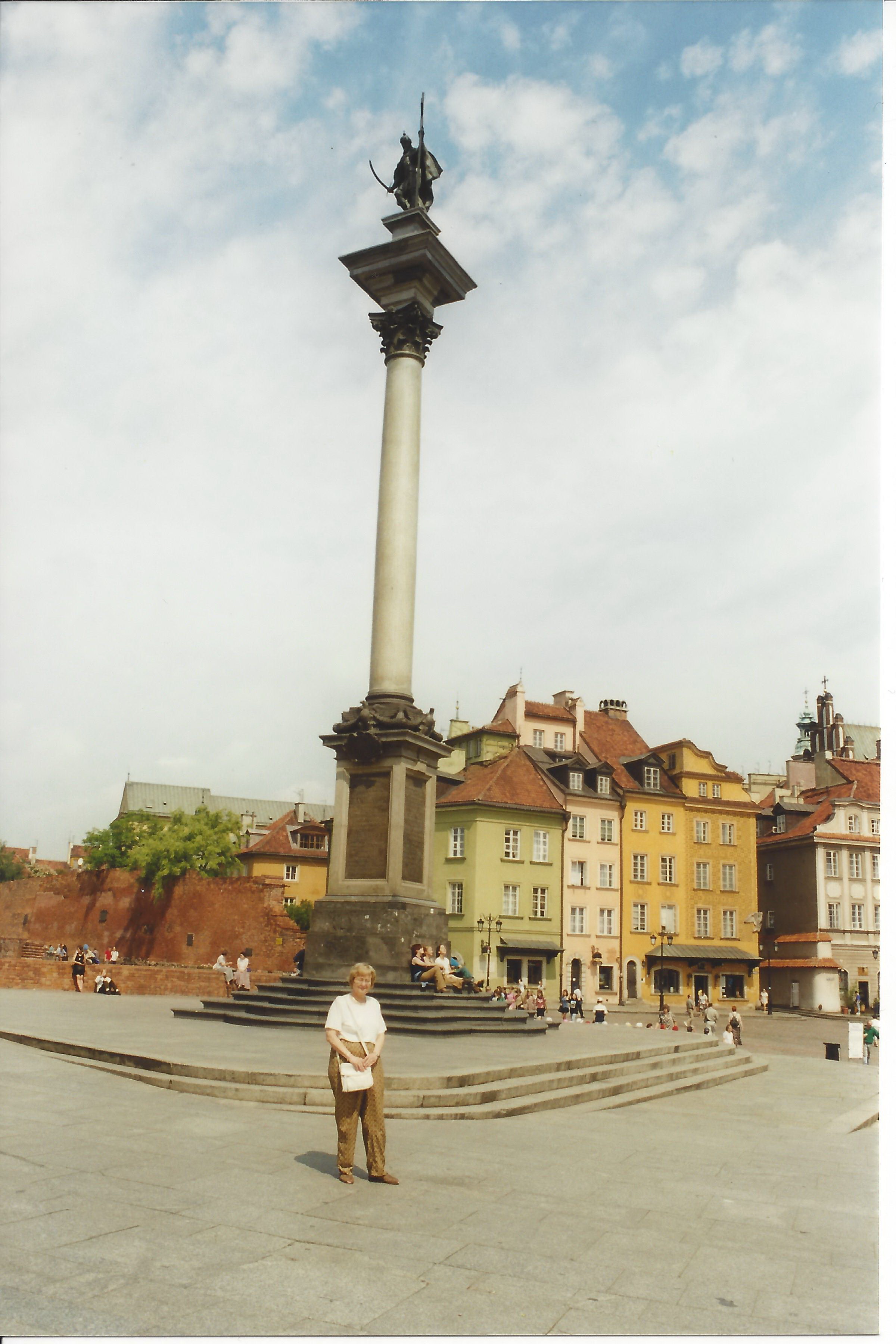
The decision to rebuild the castle was made in 1971, but funds were solely lacking. The Polish people came together to rebuild. I remember my mother telling me about her childhood in Poland, collecting used tin cans to send back to Warsaw for the rebuilding Royal Palace Zygmunteffort. Every little bit helped. Thanks to the dedication of the Polish people, the needed funds became available in 1980. In 1984, the reconstructed interiors were opened to the general public. Here is a photo of my family (many years ago) in front of the Royal Palace and another of my mother in front of Zygmunt’s Column in the Old Town.

The Royal Palace is just one of the many fascinating places I explore through fiction. I’ll share more in future posts. How about you, what wonderful places have you visited through the joys of reading?

Short Stories v. Novels

copy The Short Mystery Fiction Society (SMFS) has been hosting an on-line discussion about whether a writer should begin by writing short stories before tackling novels. Several of the contributors think that writing short stories is a good way to hone writing skills before tackling the longer work. Others say short stories often provided material which later turned into novels, while there are some who feel that these are separate skills to master. I like to write short stories between novels, giving myself a break, developing other characters and situations, but I wouldn’t say I am an accomplished short story writer. Short stories aren’t easy to write. They require at least as much skill as writing novels, maybe more. The idea that an aspiring writer can learn how to write novels by writing short stories doesn’t seem accurate to me. Generally, the best short story writers write only those. I have a tendency to add too much extraneous material in a short story, turning it into not quite a novella but something which is too long for a story and too short for anything else. The short story writer needs to stick to the point of the story, forget the extra material that crops up, and, particularly with mystery short stories, work toward an ending that will at least slightly surprise the reader. O’Henry, of course, was the master of the plot twist, as was Saki, but those are classics, and few of us write classics. But readers often feel cheated if the story ends with a whimper, not with at least a small bang. Literary short stories are different in that they don’t need a surprise ending, but they do need an epiphany of some sort on the part of the protagonist, some change in him or her. Alice Munro, a favorite of mine, writes only short stories, and she is a master. Most of her stories take place in rural Canada, and I identify with her characters and the setting because of years I spent as a child in rural upstate New York. Her stories are long for short stories, encompassing a lot of her characters’ experiences and often their whole lives. But the main character always experiences some change, some new realization in the way she sees the world. Read them all, and you’ll see. Such writing isn’t easy to do. In my opinion, writing short stories requires an equal or greater amount of skill than writing novels. The writer can hone her writing skills on them, but in order to write them well, she needs to master that art. Still, writing a short story from beginning to end can be very rewarding. There’s no need to go back to it day after day, week after week, month after month, as with a novel. Short stories may have a dreaded middle, but it’s a short middle, unlike the middle of the novel. The dreaded middle of the novel occurs when the writer, full of enthusiasm, has set up the premise, developed the characters and setting, told the reader what the conflict is, and has the reader in suspense about how the conflict will be resolved; but there are at least a hundred pages before the beginning of the ending. We’ve all read those: the novel that starts out terrifically with great characters and an interesting plot and setting that then goes limp in the middle.  We wonder why we started reading the novel in the first place, wonder if we should just quit, but we can’t just jump ahead because something may happen that makes the ending understandable. The shortness of the story makes that middle not nearly so dangerous. Just make it a shorter story! I’ve had people say to me, “I don’t like short stories because it takes time to figure out who’s doing what and why and then the story’s over, and I have to start all over again.” Those readers like novels. They like to immerse themselves in a world where they’ve met the characters and know the setting, the problems, and the difficulty of finding the solution. Then they can luxuriate in that world for days or even weeks. Others like short stories because they can move quickly into a new setting with new characters, determine the problem and reach the climax, all in a short time. Each story is an exploration of a new experience. What do you, my readers, think? Do you read short stories? Do you like them, or do you prefer novels? Why? Let’s talk.

Short Stories v. Mysteries

copyThe Short Mystery Fiction Society (SMFS) has been hosting an on-line discussion about whether a writer should begin by writing short stories before tackling novels. Several of the contributors think that writing short stories is a good way to hone writing skills before tackling the longer work. Others say short stories often provide material which later turn into novels while there are some who feel that they are separate skills to master. I like to write short stories between novels, giving myself a break, developing other characters and situations, but I wouldn’t say I was an accomplished short story writer.

Short stories aren’t easy to write. They require at least as much skill as writing novels, maybe more. The idea that you can learn how to write novels by writing short stories doesn’t seem accurate to me. Generally, the best short story writers write only those.
I have a tendency to add too much extraneous material in a short story, turning it into not quite a novella but something which is too long for a story and too short for anything else. The short story writer needs to stick to the point of the story, forget the extra material that crops up, and, particularly with mystery short stories, work toward an ending that will at least slightly surprise the reader. O’Henry, of course, was the master of the plot twist, as was Saki, but those are classics, and few of us write classics. But readers feel cheated if the story ends with a whimper, not at least a small bang.

Literary short stories are different in that they don’t need a surprise ending, but they do need an epiphany of some sort on the part of the protagonist, some change in him or her. Alice Munro, a favorite of mine, writes only short stories, and she is a master. Most of her stories take place in rural Canada, and I identify with her characters and the setting because of years I spent as a child in rural upstate New York. Her stories are long for short stories, encompassing a lot of their characters’ experiences, often their whole lives. But the main character always experiences some change, some new realization in the way she sees the world. Such writing is not easy to do. I think writing short stories requires an equal or greater amount of skill than writing novels. You can hone your writing skills on them, but in order to write them well, you need to master that art.

Still, writing a short story from beginning to end can be very rewarding. There’s no need to go back to it day after day, week after week, month after month, as with a novel. Short stories may have a dreaded middle, but it’s a short middle, unlike the middle of the novel.
The dreaded middle of the novel occurs when the writer, full of enthusiasm, has set up the premise, developed the characters and setting, told the reader what the conflict is, and has the reader in suspense about how the conflict will be solved; but there are at least a hundred pages before the beginning of the ending. We’ve all read those: the novels that start out terrifically with great characters and an interesting plot and setting that then go limp in the middle. We wonder why we started reading the novel in the first place, wonder if we should just quit, but we can’t just jump ahead because something may happen that makes the end understandable. The shortness of the story makes that middle not nearly so dangerous. Just make it a shorter story!

I’ve had people say to me, “I don’t like short stories because it takes time to figure out who’s doing what and why and then the story’s over, and I have to start all over again.” Those readers like novels, where they can immerse themselves in a world: they meet the characters, know the setting and learn the problems and the difficulty of finding the solution. Then they can luxuriate in that world for days or even weeks. Others like short stories because they can move quickly into a new setting with new characters, determine the problem and reach the climax, all in a short time. Each story is an exploration of a new experience.

What do you, my readers, think? Do you read short stories? Do you like them or do you prefer novels, and why? Let’s talk.

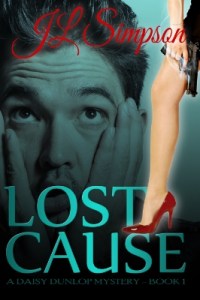
Review – Lost Cause by JL Simpson

paty shadow (1)I’ve slowly started integrating my fellow Ladies of Mystery authors into my “to be read” pile.  To let everyone know I won’t give a 5 star review unless I loved the book and if a book doesn’t work for me, I’ll not review unless I liked it enough for a 4 or 5.  And again this is my opinion.

I am a picky reader. The characters have to grab me right away and I have to become engaged in the story in the first chapter or I stop reading. I don’t have excess time to read. I have to love a book enough to make time to read. While eating lunch, while cooking dinner, while my husband is watching some TV show I could care less about. I spend most of my day helping on our 280 acres and writing.

Lost Cause 400Lost Cause by J.L. Simpson

Daisy Dunlop thinks “heir hunting” is a perfect career. Too bad she has to work with her husband’s best mate, Irish PI Solomon Liffey. They’ve barely spoken since he took her husband Paul’s request to keep her safe far too literally and handcuffed her to the kitchen sink.

Solomon has no interest in babysitting a new partner, especially this one. The woman’s a bleedin’ liability. She has no concept of danger and could flirt for England at the next Olympics. As if that isn’t bad enough, she has a habit of sticking her nose where it’s not wanted, including into Solomon’s very private life.

Determined to keep Daisy safely out of his way, Solomon sets her the task of finding a missing lord. Her investigations land her in the middle of his case. Bullets fly, bombs explode, and the body count rises. When Solomon goes missing, the tables are turned. Now it’s his life that is in Daisy’s hands, and she has two missing men to find before it’s too late.

MY REVIEW – 5 Stars

I loved this book. I made time to read it. Every time I stopped reading I had a huge smile on my face. This book is cheeky, funny, and a well written intrigue.

Daisy Dunlop is a wonderful character. She lights up the page and has a vivid vocabulary. Her love hate relationship with Solomon is witty and well-played.  The two make a raucous duo uncovering the mystery and uncovering the secrets in Solomon’s life. What I also liked is while Daisy is working with this woman-killer PI she never once forgets how lucky she is to have a loving husband. The scenes between Daisy and her husband are hot and loving.

The secondary characters were rounded, moved the story along, and well depicted.

If you are looking for a humorous whodunit, this is the book for you!

BONUS!  This book is free right now! Amazon 

www.patyjager.net

Writing into the Sunset