Villainous ‘Tells’

by Janis Patterson

Once upon a time, in most books and movies everyone smoked. Not to smoke was abnormal, if not downright suspicious. It showed the character was weak or of no account. Likewise, any unkempt or scruffy person, especially one with no manners or a rough/insufficient vocabulary, was instantly suspect. Today it’s exactly the opposite. Anyone who smokes, dresses above the average, is conspicuously erudite and has exquisite manners is automatically regarded as a potential villain, especially in a contemporary story.

There are all sorts of sociological and psychological reasons for this reversal, none of which are the business of this blog. What I’m trying to do is spotlight the ‘tell’ – the little nuances of behavior that ‘tell’ the reader the person is a villain, and there are many.

It has become almost a cliché that he/she who smokes is a villain. When was the last time you read about a hero (or heroine) who smokes? Except in an historical novel, of course, even though it’s fairly rare even there.

Almost equally obvious is the conventional straight-laced man who wears a suit and tie, cares about his grammar and is punctilious in his manners. He is either gay and the heroine’s best friend, or her stuffy beau who wants to give her a nice house, nice children and a nice, unexciting life but with no excitement, or he is an untrustworthy villain. Or, in some rare cases, he can be the comic relief, but usually he turns out to be the villain.

Yet another is the older, avuncular, seemingly trustworthy character – of either sex – who seems to exist only to care and guide the hero/heroine but who secretly hiding a dreadful secret. Great-Aunt Hattie as a serial murderer? Why not? Anyone who is so ostentatiously innocent is automatically suspect.

A cheap shot is when a seemingly normal character makes an appearance early on and then isn’t seen very much at all until the end of the book, when it is revealed that he is the diabolical killer. Several TV shows use this trope – so much so that it has become almost laughable.

There are other ‘tells.’ For example, the character with the habit that eventually points him out as the killer, such as folding the paper from his soda straw in a certain way, or a particular scent he wears. Any character, guilty or innocent, can do anything; it is how the author handles it whether it becomes a ‘tell’ or not.

And I guess that’s the crux of the matter. Idiosyncrasy or ‘tell’ – which? As a writer you should play fair with your reader, but that doesn’t mean you can’t play with them. Misdirect them. Confuse them. Can they figure the mystery out? Or do you hand it to them on a plate?
What’s so mysterious about black cats?

Carpenter photo_WEB gif

By Sally Carpenter

One of the common images seen in crime and mystery stories as well as Halloween decorations is that of a black cat prowling in the night, a sinister and evil figure. Yet most black cats are just as friendly and playful as other cats. In the words of Curly Howard, they’re “a victim of circumstance!” How did black cats get such a bum rap?

A black cat is not a specific breed. The Cat Fanciers Association allows solid black coloring in 22 of its recognized breeds. The only breed with all-black felines is the Bombay, produced by mating a Burmese with a black American Shorthair. Male cats are more likely to be black than females.

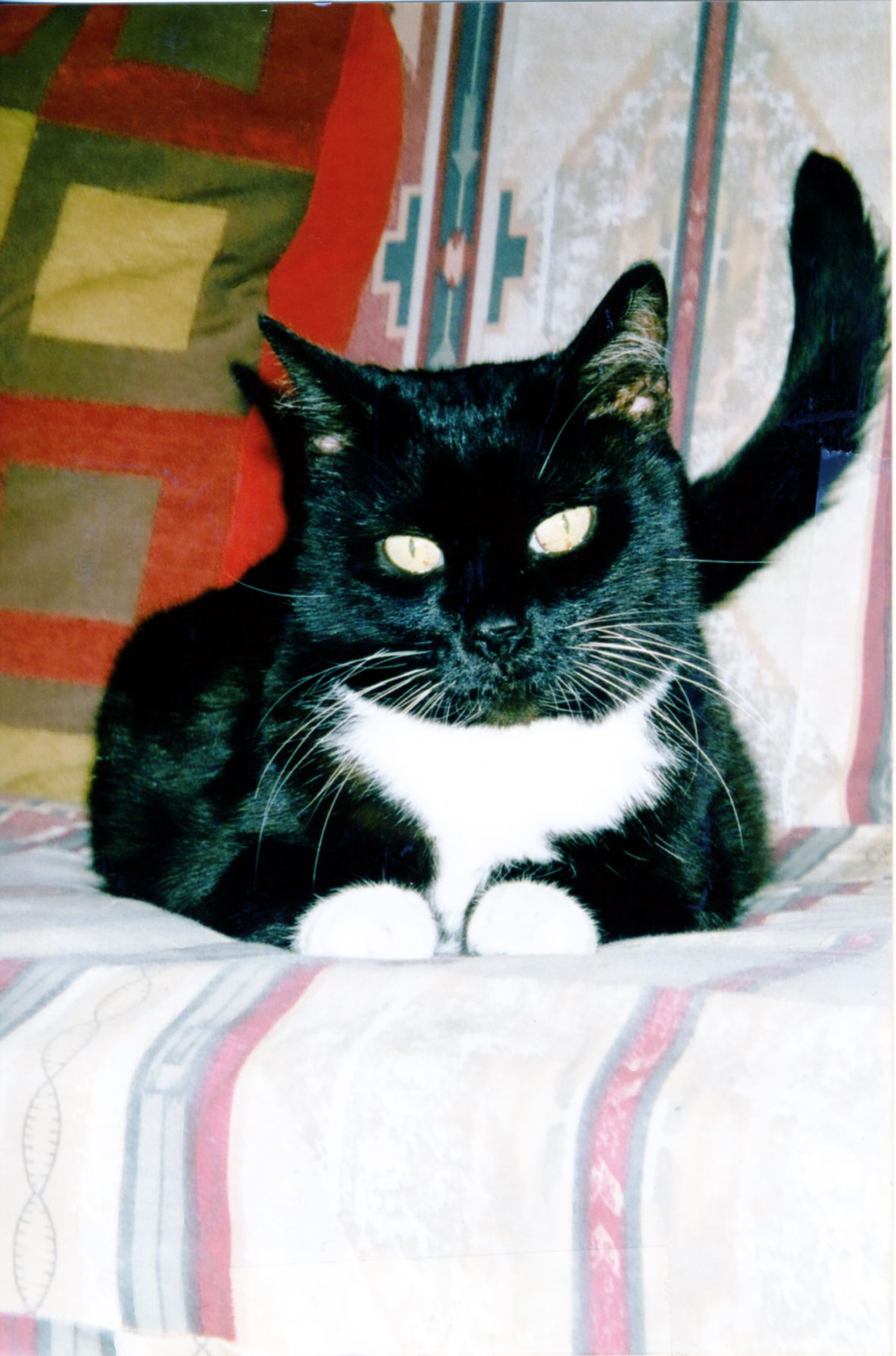
A common variation on the color is the “tuxedo cat,” a black cat with a white chest and sometimes white paws, as illustrated by my dumpling, Boots.

Boots

Pop culture has produced such black cat heroes as Felix, who debuted in 1920s silent cartoons, and Snowball II of “The Simpsons.” In the 1970s John Lennon had a black cat named Salt and a white one dubbed Pepper.

Famous fictional tuxedo cats are: Sylvester of Warner Bros. cartoons, Figaro of Disney’s 1940 animated “Pinocchio,” and Mr. Mistofflelees of Andrew Lloyd Webber’s musical “Cats,” based on T.S. Eliot’s “Old Possum’s Book of Practical Cats.”

Black cats were not always stigmatized. In Egypt around 3,000 B.C., cats were worshiped. The goddess Bast (also spelled Baast or Bastet) was often depicted as a black cat or a woman with the head of a cat. Killing a cat was a capital offense, and dead cats were often mummified. As early as 1,000 B.C. cats were domesticated as pets.

In Asia and Scotland, black cats are considered lucky.

But in Europe during the Middle Ages, cats were seen as the familiars of witches. The sight of poor, single women feeding feral cats gave rise to this idea. The belief was that cats could change into human form and spy on persons. Early settlers to America brought their superstitions with them.

In the 1300s, communities killed hundreds of cats, resulting in a rise in the number of rats that then spreaded bubonic plague, the “Black Death” that killed millions of Europeans.

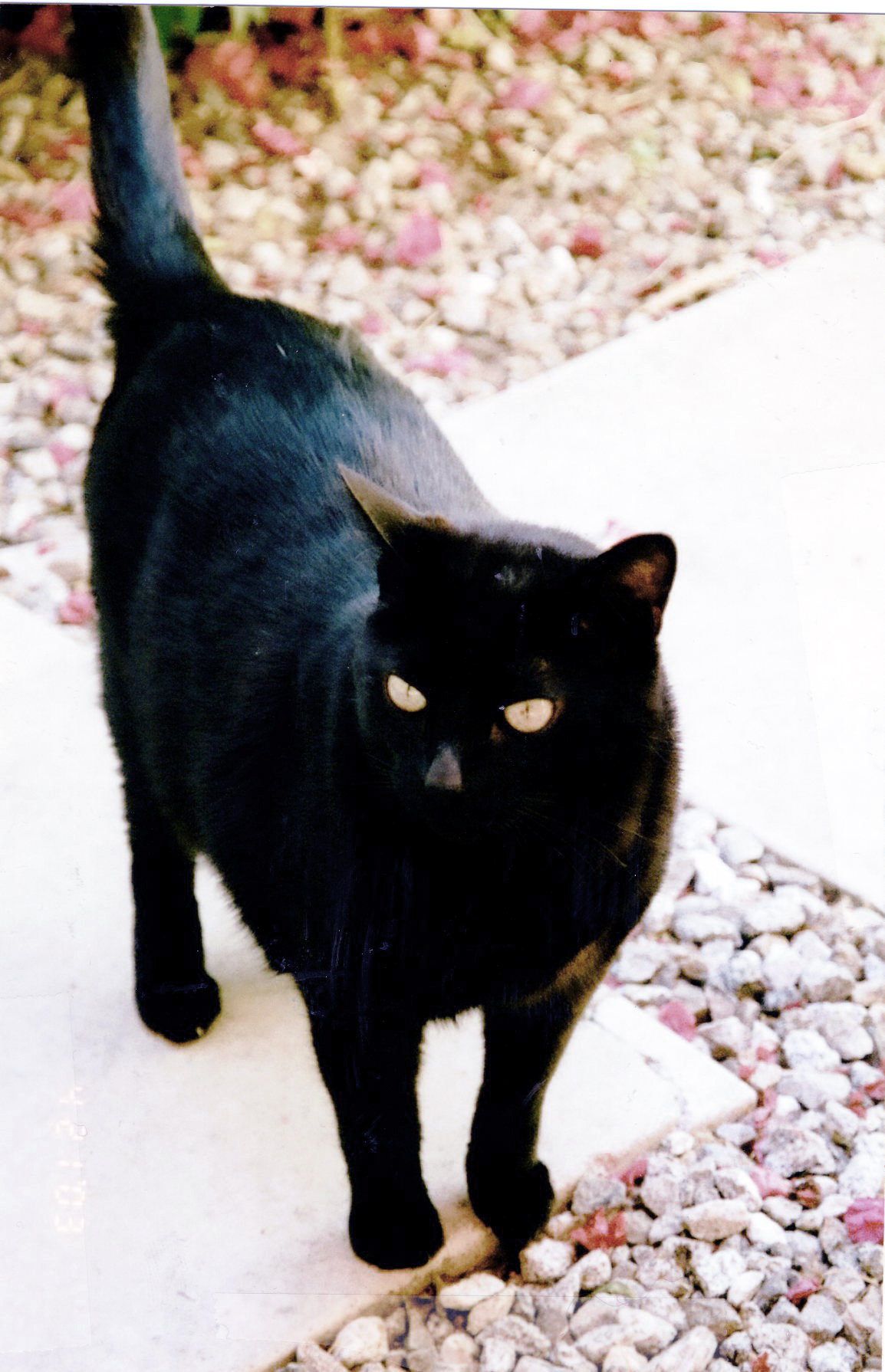
In modern times, blacks still have bad luck. In animal shelters, black cats are often the last color of animal adopted and the first that is put to sleep. Shelters often have more black cats than any other cat color. One local shelter stated that guests often see the more brightly colored animals before they notice the black cats, so the darker pets are often missed. This is Felix, a stray that some people found and turned over to my vet for treatment and who ended up in my house.

Felix

Pet owners in England are ditching their black cats because they claim the animals don’t photography well in selfies, according to www.mirror.co.uk. The RSPCA (Royal Society for the Prevention of Cruelty to Animals) reports that 70 percent of the unwanted cats housed in its national animal centres in England are black or black and white.

But according to my experience, black cats make wonderful pets. I don’t know why but all of my cats have been gray or black. I didn’t set out as a “black-only” owner; in one case the cat chose me. Maybe these felines know I’m a sucker for an outcast or a hard-luck story.

So next time you’re writing that detective story, pause before putting that black cat in a dark alleyway. Why not make it white dog?

This post is based on an article previously published in the Acorn Newsapers.

Guest Author – Kathleen Kaska

Inspirations from Long Ago

Typewriter, newspaper, glasses and a cup of coffee on desk, high angle view, close up

As soon as I graduated from college, I packed two bags and my dog and left Austin to
experience life in the Big Apple. I’d grown up in a small town, worked my butt off to get
through college, and after receiving my diploma, headed straight to New York City. No job
awaited me there; I had no place to live and very little money; and I knew hardly anyone.

But adventure called. Miraculously, everything worked out and I stayed for eighteen months. That was thirty-five years ago. At the time I had no aspirations of becoming a writer. I just wanted to experience life in one of the most thrilling cities on the planet. Little did I realize that my time in NYC would become valuable to my future writing.

I’m now working on a new mystery series; this one is set in 1945 in Manhattan. Mickey
Spillane, Rex Stout, Dashiell Hammett, and Raymond Chandler were inspirational in my
decision to try my hand at hardboiled crime fiction. Once I began writing, memories of my time in New York came flooding back; the jazz club on Seventh Avenue where I bartended; the homeless woman who went by the name of Rooster; an elderly woman who lived in Hell’s Kitchen who believed the entire state of Texas was responsible for assassinating JKF (and since I was a Texan, I was part of that conspiracy); my apartment on 30th and Madison; the Dubrovnik Hotel down the street; a dark, eerie bar I happened to walk into one day; and the deli near my apartment where I learned to order cream cheese with my bagel by asking for a schmear. All these find their way into my new book.

I am glad I took time to visit some of Manhattan’s other institutions while living there, and not just the popular venues on every tourist’s list like the Empire State Building, United
Nations, Statue of Liberty, and Central Park; but places frequented by locals: Carnegie’s Deli in Midtown (famous for corned-beef and pastrami sandwiches); Sardi’s Restaurant in the theatre district (known for the caricatures of show-business celebrities displayed on the walls); and what became my favorite Italian restaurant in Little Italy, Luna’s on Mulberry Street. All these establishments have become my down-and-out detective protagonist’s regular hangouts. He also moves into the Dubrovnik Hotel after his apartment is ransacked and most of his positions destroyed. Rooster and the elderly woman are regulars on the street corners of Hell’s Kitchen where he lives in an apartment over Frank’s Place (based on that eerie bar).

But what really helped me develop a sense of place were the sounds and smells I vividly recall: I loved hearing the staccato chatter of short-order cooks behind the deli counter on the first floor in my apartment building; those early morning, marshy smells wafting in from the East River as I strolled down Water Street, damp with dew, in Lower Manhattan; the noise of food purveyor trucks rattling down the street on their way to make restaurant deliveries—all come alive in my story. I’m only halfway through the first draft, and am eager for more tidbits to pop up from the treasure trove of memories I’d stored up more than three decades ago.

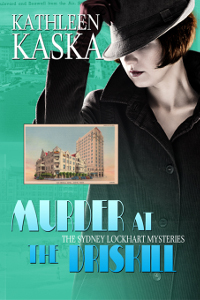
300_Murder at the Driskill_mockup01About Kathleen

Kathleen Kaska is a writer of mysteries, nonfiction, travel articles, and stage plays. When she is not writing, she spends much of her time with her husband traveling the back roads and byways around the country, looking for new venues for her mysteries and bird watching along the Texas coast and beyond. Her latest mystery is Murder at the Driskill (LL-Publications). It was her passion for birds that led to the publication The Man Who Saved the Whooping Crane: The Robert Porter Allen Story (University Press of Florida).

Buy Link: goo.gl/lnf2WU

http://www.kathleenkaska.com

http://www.kathleenkaskawrites.blogspot.com/

http://www.facebook.com/kathleenkaska

https://twitter.com/KKaskaAuthor

Guest Blogger – Lea Wait

Old houses have always fascinated me.

I’ve lived in old houses – in fact, I’ve never lived in a home or apartment built after 1920. I’ve even bought old homes that needed a lot of love (and money) to give them amenities like plumbing and heat.

The house I live in now was built in 1774 on an island in a Maine river. In 1832 it was moved across the frozen river and pulled up a steep hill to where it is today. My family has only owned this home since the mid-1950s, but I often think of the people who lived here in the eighteenth and nineteenth centuries, and I’ve actually included them in some of my historical novels.

The history of the house itself was the basis for Shadows on the Coast of Maine, the second in my Shadows Antique Print Mystery series. (And – no – the mystery is fictional. We didn’t find THAT when we uncovered the original fireplace.)

I’ve loved the homes I’ve lived in. But I’ve always had a special fascination for old deserted, dilapidated, houses.

Victorian farmhouses crumbling next to their barns on land that’s now fallow. Elegant mansions that became too expensive to heat, or too easy to tax, that were abandoned, perhaps eventually to become office buildings, or apartments, or turned into nursing homes or bed and breakfasts. Or, sadly and too often, bulldozed to make way for more modern, more cost-effective, buildings.

I love books centered around mysterious houses, too. I can’t resist books by authors like Mary Stewart and Daphne du Maurier and Kate Morton. I love mysteries by Linda Fairstein because, although they’re not exactly about large houses, they do incorporate the hidden history of famous New York City landmarks.

I even dream of immense houses full of rooms. I dream of walking through corridors and planning how I’m going to fix up the rooms for people in my family, or for people who are homeless. The houses in my dreams are always in poor condition, but I know they can be brought back to life. The empty rooms can become a home.

I’ve been having dreams like that since I was a child. (Any psychoanalysts out there?)

So it probably isn’t a surprise that my latest book is about – guess what? A large nineteenth century estate on the coast of Maine that, in 1970, was the place a teenaged girl died.

No one has lived in the house for years.

No question. It’s my kind of house.

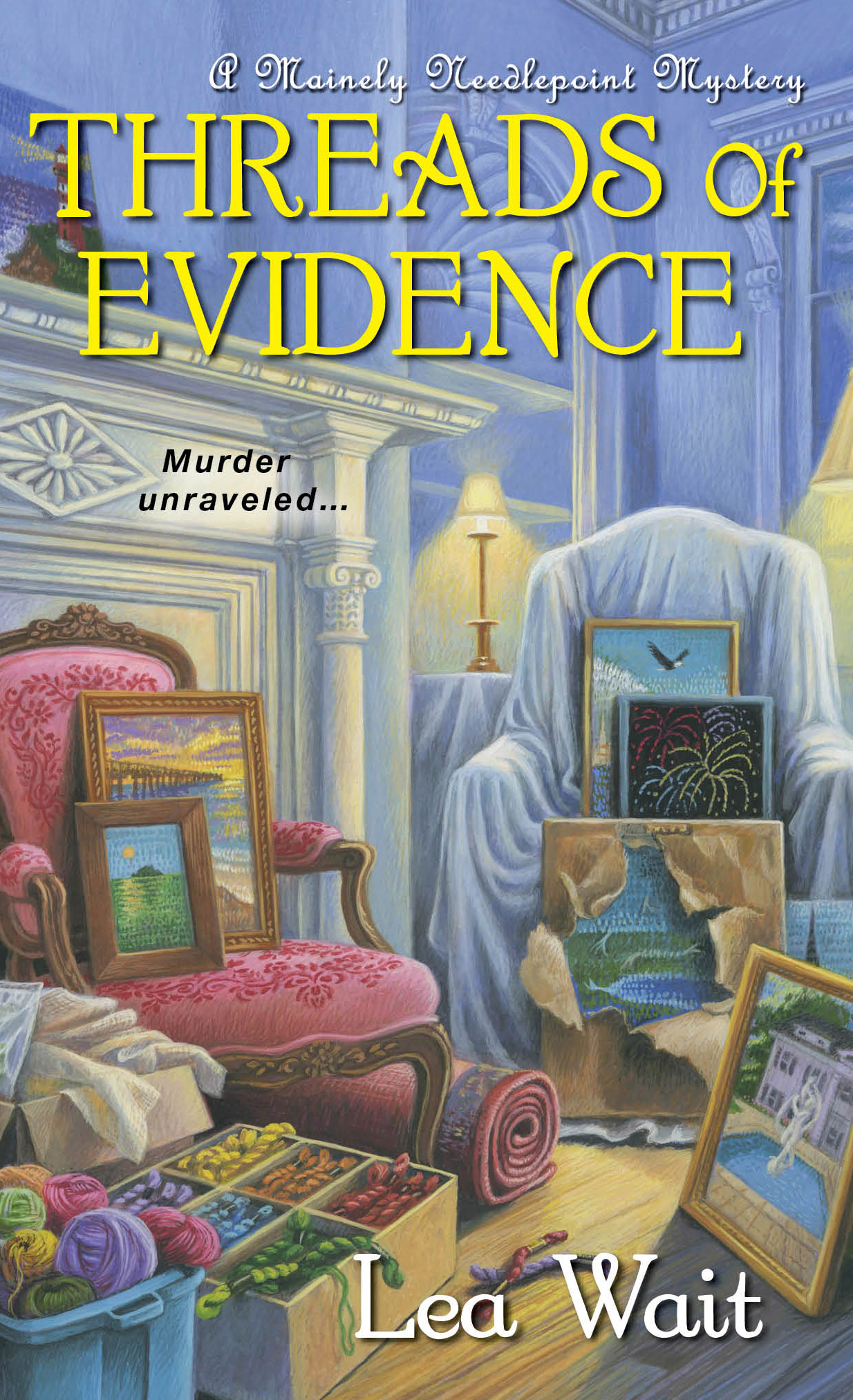
THREADSOFEVIDENCELea’s latest book is THREADS OF EVIDENCE. The old Gardner estate in Haven Harbor, Maine been deserted for years. Folks in town thought it should be torn down. But now a famous Hollywood actress has bought it. Does she have a special reason to come to Haven Harbor? The small village is full of old secrets. When needlepointer Angie Curtis is asked to restore a series of old needlepoint pictures found in the Gardener house, she finds clues that may lead to discovering what really happened in 1970, when seventeen-year-old Jasmine Gardener died there.

Amazon link:

http://www. amazon.com/Threads-Evidence-&pebp=1433544126655&perid=OTJPND2814N6ZJ8AS7F1

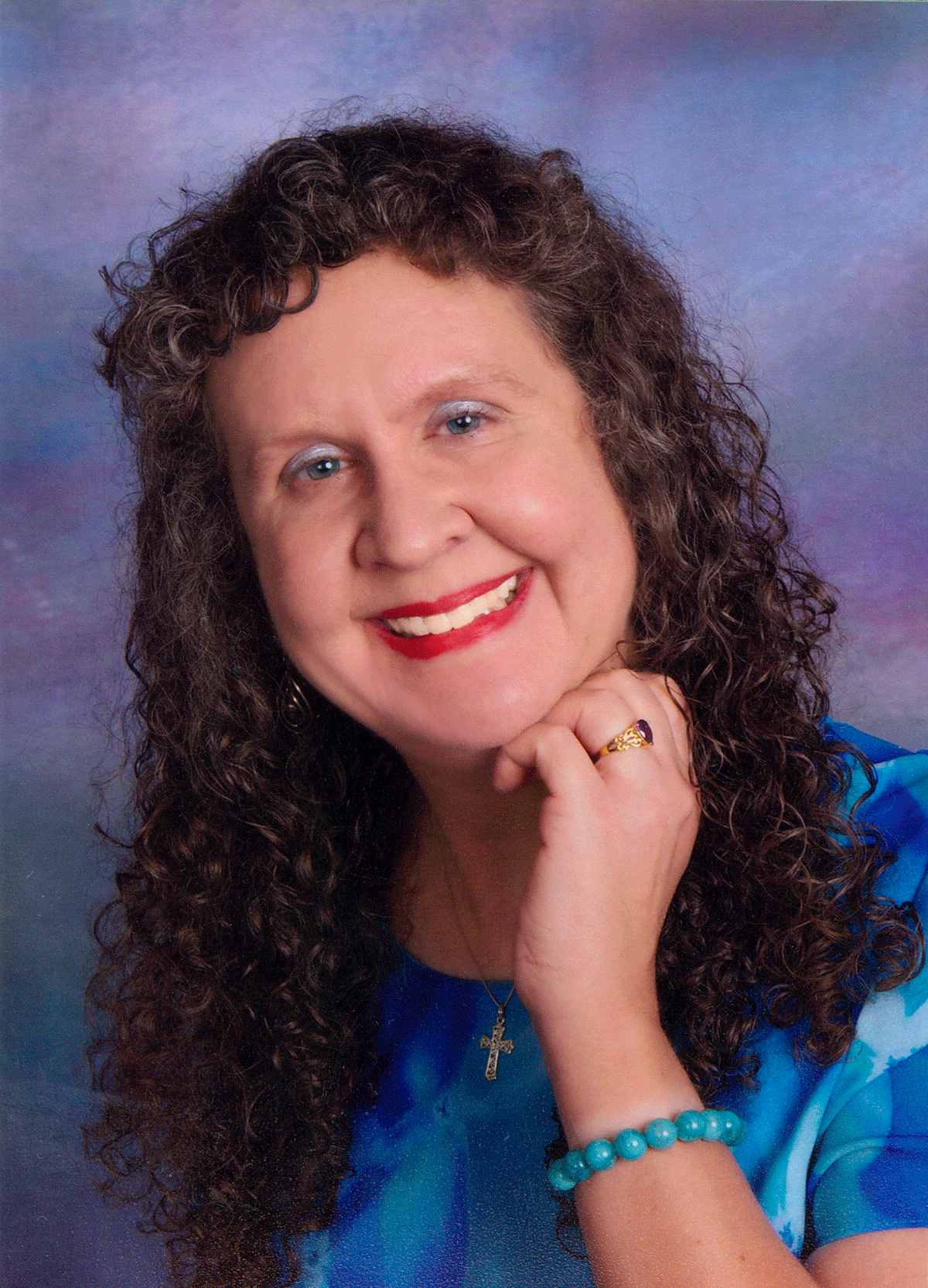
DSC01566Lea Wait writes the Shadows Antique Print mystery series, the Mainely Needlepoint series, and historical novels for young people. As a single parent she adopted her four daughters from different Asian countries. She’s now the grandmother of eight, and lives on the coast of Maine with her husband, artist Bob Thomas, and their black cat, Shadow. To learn more about Lea and her books, see http://www.leawait.com and friend her on Facebook and Goodreads.

Mystical Mysteries

Mystical Mysteries

If I could channel the spirit of any author to mentor me, it would be the late James D. Doss of Los Alamos, New Mexico. I discovered him through a review in New Mexico Magazine and read all seventeen of his Charlie Moon mysteries, some of them more than once, and I know I’ll read the whole series again. Though I don’t attempt to write like Doss—no one else could—he influenced me greatly as a writer of unconventional and mystical mysteries, where the ordinary and the spiritual meet.

Here’s a short list of the things I love about Doss’s books:

  • Characters. Complex and eccentric, they surprise the reader. I love the ongoing characters and the unique, colorful people introduced in each of the books. My favorite one-book character is six-year-old Butter Flye in The Night Visitor. Doss wrote child characters with unsentimental realism. Butter is tough and strange and yet likeable, and I have never laughed louder or longer reading any book, let alone a mystery, than I did when I read the encounter between Charlie’s irascible aunt, the shaman Daisy Perika, and Butter in the back seat of a truck.
  • Spirituality. The visionary experiences that Daisy and her ward Sarah Frank have are written in a way that makes me feel as if I’ve taken the shaman’s journey with them. The spirit world is integrated seamlessly with earthy realism and humor that says Doss understood this aspect of Indian culture: the sacred and the comic are not opposite or incompatible. He mixed Catholic mysticism into the books as well with beauty and sensitivity, another Southwest truth. Many people adhere to both Native religions and Catholicism at the same time. My favorite character for expressing that unique blend of spiritual worldviews is Nahum Yacitii, the old Ute shepherd who apparently ascended to heaven in a windstorm and comes back to visit the few who can see him.
  • Language. I read a Doss book and I am in the place. When he takes us for walk in the Canyon of the Spirits with Daisy, I hear every step and smell and feel the air. Even the description of the nervous, jerky second hand of a ticking clock is a marvel of observation that sets the mood of a scene perfectly. (I leave you to find this treasure, also in The Night Visitor.)
  • Mastery of the omniscient narrator. Most writers can’t pull this off, but Doss could show the thoughts of every character in a scene without causing the slightest confusion or disorientation in the reader, often to humorous effect. He could even use the point of view of an animal—a bird, a deer, or a prairie dog—as the only witness to an event, and make it work.
  • Hanging out with the guys. Doss wrote real, not hyper-masculine, male characters. Charlie often fails to understand the women around him, but he does it so sincerely I like him for it. The friendship and repartee between Charlie and Scott give me a sense of hanging out with the guys in a way a woman doesn’t often get a chance to in real life, even when some of her best friends are men.
  • Humor. I get a kick out tall tales Charlie Moon tells just for the fun of it, pulling people’s legs. While the essence of each book is serious, dealing with life and death and love, there is a layer of humor as well, coming from the genuine interactions between characters and from their various eccentricities. Daisy is a spiritual visionary and also a quirky, cranky old lady.

Doss resolved the tangles of Charlie’s love life finally in the last book. I wonder if there were more books in his mind when he left this world, though. Daisy was the oldest living member of the Southern Ute tribe, and Sarah Frank, a young adult by the end of the series, was trained—somewhat—as Daisy’s shaman’s apprentice. Was Sarah destined to inherit all the spirits in the canyon, and the ancient little spirit-man living in a badger hole, the pitukupf? I’ll never know. It’s the sign of a good series, though—I still think about it. The characters live on.

This is revised from a tribute to Doss originally posted on http://amberfoxxmysteries.wordpress.com.