Guest Blogger -D.J. Williams

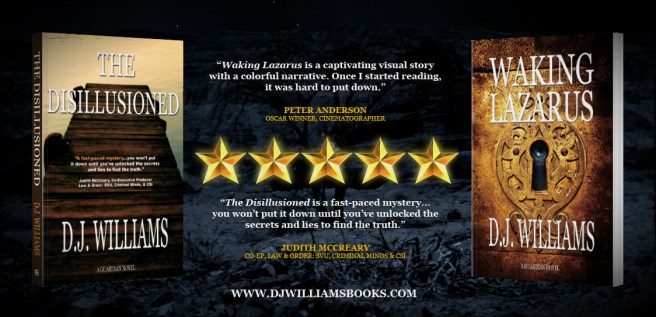
I sat across from Michael Connelly’s agent and wondered how I ended up there. To say that Connelly was an influence in my pursuit to be a storyteller would be an understatement. Along with Grisham and Patterson, he is in the top three of my favorite authors. Connelly’s agent had read my first novel, The Disillusioned, or at least enough of it to request a meeting. I listened as he shared how they had built Connelly’s career culminating with finalizing the Amazon deal for Bosch. I shared with him a story idea that had been resonating for a few years and knew from his response that I had something unique.
When I left his office I knew that The Disillusioned was only the first novel in the Guardian series. But what was next? As I thought about my story idea and my conversation with Connelly’s agent, I had a moment of inspiration. To move the series ahead, a story from the 1920’s would become an underlying mystery revealed throughout the series. It wasn’t enough on it’s own. The challenge was to bridge the gap between these two eras. Eight months later I had a first draft of Waking Lazarus, an epic global adventure filled with riveting characters and page turning twists and turns. While I had written a first draft of Waking Lazarus in less than a year, it took months of rewriting and editing to cross the finish line.
I write in this genre because I love mysteries filled with suspense. I love the rush of diving into a scene and seeing what happens next. And I love writing stories that go beyond entertainment. As you’ll find in the first two novels of the Guardian series there are key themes of light versus darkness, religion versus faith, and power versus innocence that drives the characters forward. You’ll also find that there are strong female characters and colorful settings throughout to keep readers on edge.
One month ago, Waking Lazarus was released worldwide. Once again I’ve been humbled to capture the attention of industry veterans including Peter Anderson, Oscar Winner/Cinematographer, who has endorsed this latest adventure, “Waking Lazarus is a captivating visual story with a colorful narrative. Once I started reading, it was hard to put down.”
I will always remember those few hours being taught a master class in how to build a series that could potentially go the distance. Thank you Michael Connelly’s agent for imparting your words of wisdom!
Lazarus
Waking Lazarus
by D.J. Williams
Jake Harris’ life hasn’t turned out the way he planned. Battling his addictions, and the shattered pieces of his family, he is hired to ghostwrite a memoir. From the 1920’s story of a controversial evangelist, to the present day mystery of a former District Attorney, everything changes when his search for the truth leads to an atrocity hidden from history. With a past he can’t remember, he begins to discover that he is not the person he believed himself to be. Rather, he is a threat to a secret society that has remained in the shadows for nearly a century. Jake is drawn deep inside a world he never knew existed that brings him closer to his own extraordinary destiny.
 

guardiancomboad

A Letter from the Antagonist

handwritten_letter_texture_for_layers_(2980933249)

For one weekend this past fall, my personal antagonist was Amber in tree finaltechnology. I’ll spare you the whole story. The short version is this: I couldn’t access my work in progress due to various computer issues and I was having severe withdrawal symptoms from not writing all day. It’s as bad as not exercising—I feel strange and incomplete if I go without either for a full day. I had to write by hand.

Fortunately, there’s one thing I always do by hand for each book, and I was at exactly the right point in the work in progress to do it. Before the final version of the plot is set, but after I can see where it’s going, I write the story in the first person from the antagonist’s point of view. No scenes, no dialog, just that character’s voice telling what happened and why. This exercise gives me insight into the complexity of the oppositional characters’ feelings about their actions. It also helps me keep track of events offstage, so I can weave in all the loose ends. Since I never include scenes from the antagonist’s point of view in a book, this process doesn’t have to be polished. All it needs to do is flow.

My mysteries aren’t about murder, so my antagonist characters aren’t villains or killers, though the opposition character in Snake Face comes close. Sometimes they commit crimes; sometimes they manipulate people without being criminal. I noticed, after reading Princeton professor Harry Frankfurt’s concise, humorously titled but serious work of philosophy, On Bullshit, that I tend to cast bullshitters in the antagonist’s role—Charlie in The Calling and Jill in Soul Loss. Maybe, after years in academia, I’ve come to think bullshit is a crime.

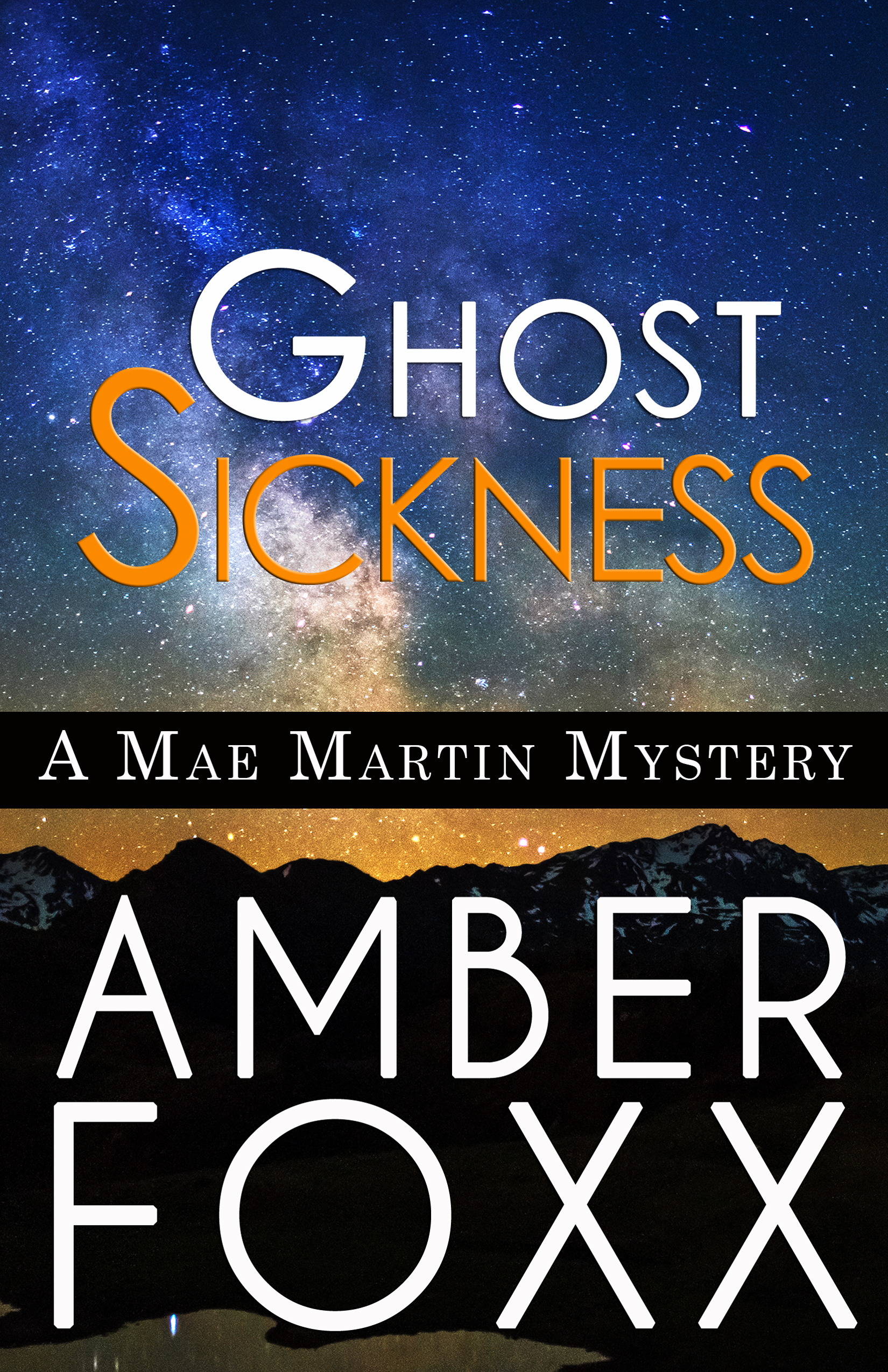
During my weekend without a computer, I invited a puzzling and deeply secretive character to tell his story as if he were sitting down and confiding in me. Or I might say, since I ended up with his hand-written narrative, he wrote me a letter. From that document I discovered which clues would need to come next in gradually revealing his story, and what would need to be saved for the end. He told me things I didn’t know about the people who helped him, and surprised me with a revelation of his deepest motive. I’ve recently wrapped up the book, Ghost Sickness, which is coming out in August, and I’m looking forward to doing this exercise with the new work in progress, even without enforced separation from my computer.ghost sickness ebook

*****

 Yesterday, inspired by a power outage, I posted on my other blog about an additional writing-by-hand creative process, the story mandala. https://amberfoxxmysteries.com/2016/07/20/monsoon-moon-and-mandala

A Reluctant Hero

thumb_IMG_1225_1024

The Adam Kaminski mystery books each take place in a different city or town around the world, but they all have one thing in common: Detective Adam Kaminski.

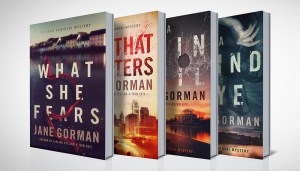
I’d like to use this month to introduce you to Adam, give you a chance to get to know him a bit. He’s a strong man, a brave man, but also a man with a few problems. In fact, for What She Fears, book 4 in the series, I had to write a psychological evaluation of Adam (something to do with his behavior in All That Glitters…). That was an eye opening project!

For this blog, instead of providing a psychologist’s perception of Adam, I thought I’d let Adam speak for himself. So here’s Adam Kaminski, describing himself in his own words:

GrangerLogoI grew up in Philadelphia. The Port Richmond neighborhood, d’you know it? It’s not bad. We were happy. Well, I was happy. Dad worked hard. A lot. Mom, too. Dad’s first generation American. His dad came from Poland with his father — my great grandfather — during the war. Lots of stories there, I’m still looking into that.
We didn’t have a lot of money but my folks managed to put me and my sister through college. I helped out. I had a couple of scholarships, a few part time jobs. It all paid off — I got a teaching gig right out of college. I guess it’s easier to get a job teaching history if you’re willing to work in the city. I didn’t see a reason not to. It’s where I lived, where I grew up. Why not teach the kids growing up around me?

Man, my folks were proud of me. They always taught me how important education was. The most important thing, right after family…

Excuse me.

Adam pauses to take a sip of the water on the table next to him, wiping the condensation from his hands onto the legs of his jeans.

I’m still in Philly. But I don’t teach anymore. Not anymore, not after….

Look, all that matters is, now I’m a cop. There are bad guys out there and it’s my job to catch ’em, to stop them from hurting anyone else. Turns out there is something even more important than education. I learned the hard way, you gotta keep your kids alive before you can think about teaching ’em. You can’t teach a dead kid.

The psychologist suggests a break, but Adam shakes his head. He’s fine to go on, just get this over with.

I liked teaching. I’d like to think there’ll be a time I can do it again. Without remembering those other kids. The ones who didn’t live. The ones I didn’t protect.

For now, I’m focusing on the job. It’s good. I’ve got a great partner, Pete. He keeps me in line. I can get angry sometimes but Pete, well, he’s by the book. Absolutely. Keeps me steady.

Adam’s leg has been bouncing up and down as he speaks. He seems to notice it and he crosses his legs, right ankle on left knee, the chair squeaking as he shifts his large frame.

Oh, but on the plus side, I just got engaged. Kind of exciting. It’s been a rocky relationship, but I think we’re good now. She’s not close to her family. I met her when I was in Warsaw. I went out there for some easy, political visit. Right? Ended up solving a murder. Trouble seems to follow me. It was tough, but it brought me closer to my cousin in Warsaw and I met her, so that’s good.

Now I just need to convince her that my job is a good career. There’s nothing wrong with being a cop. She should be proud of what I do. She doesn’t like to talk about it much. With her friends, at her job. But I think she’ll get it. Then I’ll know we’ve made it.

The psychologist asks what lessons Adam has taken away from his life experiences.

Always protect the ones you love. And do the right thing. It’s not always easy. But it’s worth it.

Adam-Kaminski-Mystery-Series

Learn more about the Adam Kaminski mysteries at my website, janegorman.com.

Start with the first in the series, A Blind Eye, available at Amazon, Nook, iBooks, and other retailers.


Books, Book Clubs, and Surprises

by Janis Patterson

We all know that a writer’s work is far from glamorous. We work weird hours, usually in pajamas or sweats or grotty jeans. Deadlines make us crazy, ill-behaving characters even crazier. Sometimes people just don’t understand that the people in our heads can be more real than those live people beside us. However, sometimes something lovely and sparkly and so incredibly ego-boosting happens and we feel as pampered and admired as movie stars.

Earlier this week a friend welcomed me to speak at her book club about my Egyptian murder mystery A KILLING AT EL KAB. We had arranged the date several weeks before, and each member bought the book to read by the meeting time. The ladies bought snacks based on some of the meals described in the book. I figured since they were so invested in the story, I’d go above and beyond and bring in a little theatre. (Yes, I’m a long-time and admitted ham…)

I wore the beautiful silvery-blue galabeyah I had tailored in Egypt and several pieces of Egyptian jewelry, including my incredibly ornate Berber silver necklace. I took two other titles (THE EGYPTIAN FILE and THE JERUSALEM CONNECTION) to give away as door prizes. I took my big 17” laptop (the same one I hauled all over Egypt last year) to show a small collection of 50 or so pictures out of the 2,500 or so.

It was a most pleasurable evening! The ladies wanted to know about how the book came to be, and were suitably impressed that The Husband and I had been invited to stay at a dig house – which NEVER happens to civilians. They were overawed that our host, the Director of the Belgian Archaeological Mission to El Kab worked his way through three dense layers of Egyptian bureaucracy to get us official permission to come. Remember, the Egyptians invented bureaucracy – that’s why they had all those statues of scribes!

Several of the ladies were interested in the process of writing a book, as if there were any kind of single answer to that! I told them how I wrote – which in the best of times is a skimble-skamble kind of affair – all the while telling them every writer had their own way. I wish I were more organized; I wish I were more disciplined; however – if I haven’t become either by this time it’s probably not going to happen, so I just go on the best way I can. Then one of the ladies asked how I created my characters; specifically, why had I chosen to make Sandra, the protagonist, a fake psychic.

Okay, there comes a time when everyone must reveal their dirty little secrets. I told the ladies about several ways writers created characters – interviews, lists, etc. – and then confessed mine. As expected, they were startled as I told them I didn’t create characters. Oh, I had tried – I had made lists, decided what my characters’ grandmother’s maiden name was, what flavor of jell-o they liked, etc, until I had a nice long description of what the character was. A description that was never used, because the character became a dead thing, a creation without life that simply lay there flaccidly on the page.

What I do, I said, is nothing. My characters simply march in, demand to be written about, and let me get to know them as we go along. Once I had two characters – a major one and a minor one – who fought viciously through the whole book. In the last third, the major character was talking to another major character, and just happened to drop the little bit of news that he and the minor character were divorced.

Well, that startled me, right along with the entire rest of the book’s cast. And the ladies. Some of them – mostly the ones who were ex-schoolteachers – were appalled. I shrugged, said that was the way I was built, and that if the writer wasn’t surprised, the readers wouldn’t be surprised.

The ladies were certainly surprised, but I guess they’ll get over it. Maybe they already have – they’ve asked me to come back next year!