The rest of this month, I am home 13 days! That means every one of those days I need to put my fanny in the chair and get the next Gabriel Hawke book written. Because August is going to be hit and miss to get writing done.
I swear, each summer gets busier and busier! I was able to get more writing done when I sat all day in a swather or tractor raking hay during hay season than I do now.
As our family grows so do the family commitments as well as I’m trying to get my books seen more by actual people. I’ve found that if someone meets a writer and sees their enthusiasm for their books, the reader is more likely to purchase the book. Then if the like that first purchase they come back for more.
I started this month with an in-person event that I’ve not attended before. It was a Renaissance Faire (loosely). I sold 26 books over two days. All but one of the sales were to new to me readers. I’m hoping they will enjoy what they purchased and come back for more next year, as my following has done for the Sumpter Flea Market each year.
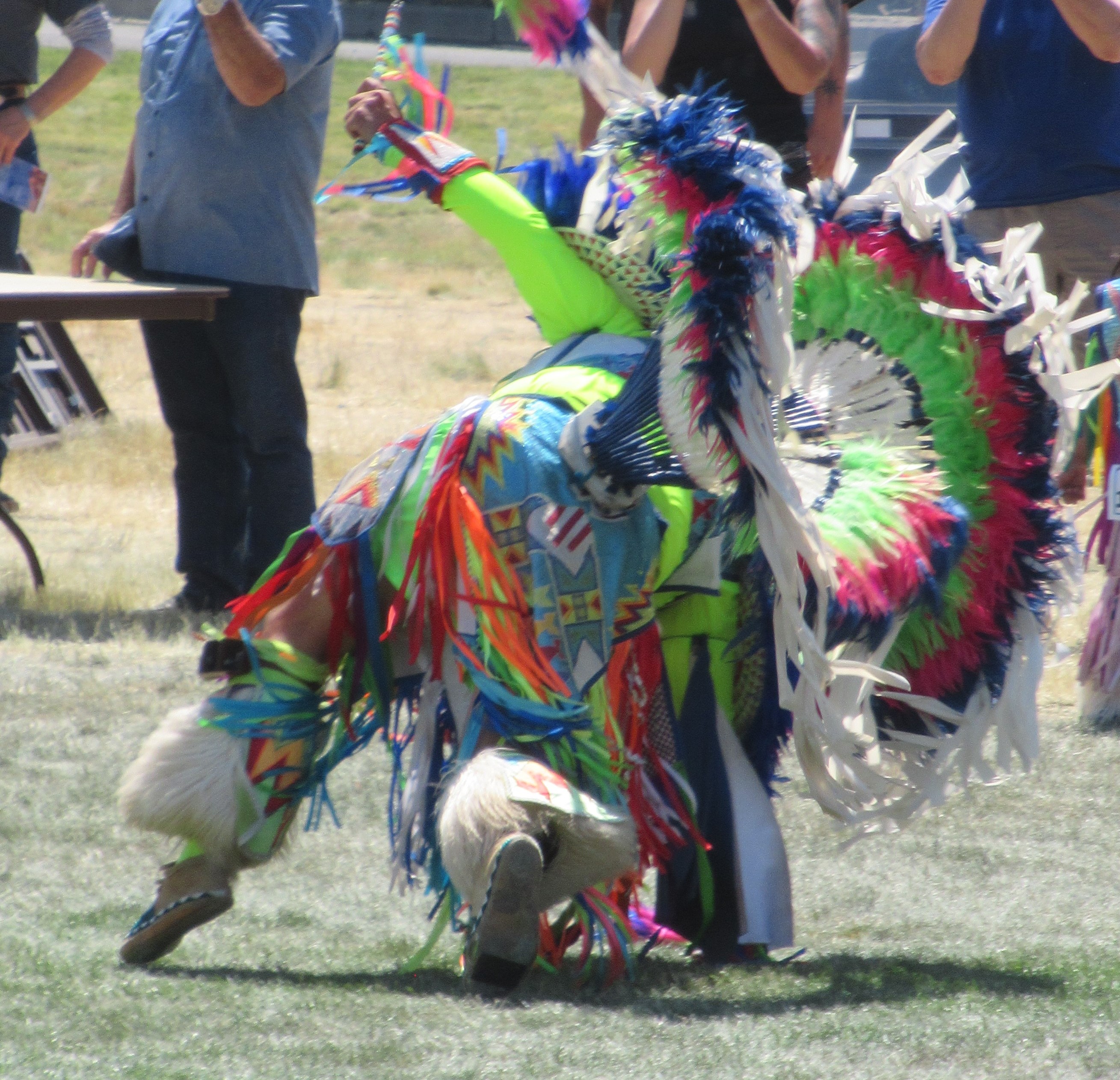
The rest of this month I will be attending Miner’s Jubilee in Baker City, OR, to see if it will be something to do next summer, and I’m attending the Tamkaliks Powwow in Wallowa, OR. I’ve been attending this for several years to help me better see my characters and because I find it healing. The last two Mondays of the month, I’ll be judging at county fairs. That’s what makes the summer get busy for me. But I love talking to the 4-Hers and discovering their love for their projects.
When I am home, I make myself write. I have to. My readers let me know they are impatiently waiting for the next book. I can’t let them down. I’m a people pleaser. My greatest flaw. It gets me more work than I can sometimes do, but there it is. It is who I am.
I’m also mentoring two mystery writers and a friend who has been writing the same book for too long. I’m her weekly reminder to sit down in the chair and move the story forward, don’t keep making it perfect. That comes after the story is all out and waiting to be prettied.
It is these mentorships that keep me from opening the internet first thing in the morning and getting words written before I look at an email or see who liked a meme on Facebook. While I coach other writers on finding time to write, finding ways to streamline their days and writing, I follow my own guidance by making sure I’m writing and moving my story forward.
My greatest strength is that when I set my mind to something, I do it. And right now my mind is set on getting this book written this month so I can “pretty it up” next month when I’m attending a family reunion, a grandson’s wedding, judging at another county fair and state fair, and then selling my books for two days at the State Fair. Because most of those trips are on the opposite side of the state from where I live, it requires a day’s travel to and a day’s travel back. Which eats up a lot of the days in August! Half of August I’ll be away from home- 15 days to travel and attend the events.
That is why my fanny is in my chair and I’m writing! I’m halfway through the book and should get it done in the next 13 days. Yipee!
Authors, are you on a deadline this month, or do you give yourself slack in the summertime? If you’re a reader, how impatient do you get for the next book in a series?
I don’t recall what the sentence said. I no longer know the subject of the report that contained it, although you’d think these details would have impressed themselves on my mind.
All I remember is the yelling.
I was working in my first editorial job, for a firm of international economics consultants. My role was to tidy up the grammar and punctuation in the proposals and reports that the economists produced.
The sentence in question was critical to the central point that the document was making. But it needed one small change. I inserted a comma. After making a few other tweaks, I sent the report back to the economist who’d written it.
When it came back to me for the next round of editing, my little fixes were intact. Except for that comma—the author had taken it out. So I put it back.
A few days later the report landed on my desk again. Time for the final proofreading.
Once more, the comma was missing.
Now, some commas are optional. Some are a matter of style. But the presence or absence of a comma can be crucial to the meaning of the sentence.
Take the title of author and editor Lynne Truss’s handbook on punctuation, Eats, Shoots & Leaves. It comes from an old joke about a panda that comes into a café, consumes a sandwich, and then fires a gun at the waiter. As the panda walks out, the manager yells, “Hey, what did you do that for?” The panda calls back, “I’m a panda! Look it up.” The manager finds a dictionary and checks the definition: “Panda: a black-and-white, bearlike mammal found in Asia. Eats shoots and leaves.” Simple and straightforward. But add that comma after eats . . .
Or consider this sentence from an Associated Press article I saw a while back: “Netanyahu has been an outspoken critic of the international efforts to negotiate a deal with Iran, which does not recognize the Jewish state, and supports anti-Israeli militants like Lebanon’s Hezbollah and Palestinian Hamas.” Having two commas makes a nonrestrictive clause of the words in between them (the ones I’ve italicized). This means that if you take out those words, the sentence should retain its meaning. But when you do that in this case, you’re left with “Netanyahu has been an outspoken critic … and supports anti-Israeli militants …” Not what the author intended. You have to remove that second comma from the original sentence to make its meaning clear.
Of course other small changes in punctuation and, for that matter, spacing can alter meaning too. Consider the difference in response you’d get to these two ads:
Wanted: one nightstand. Wanted: one-night stand.
And notice how changing periods to commas and changing their placement around gives you a different impression of an evening’s events (from KidsCanReadandWrite.com):
I ate. My mother washed the dishes. Then I went to bed. I ate my mother, washed the dishes, then I went to bed.
The comma in the economist’s report was like these examples—its presence or absence altered the meaning of the sentence. It needed to be there, yet the author kept taking it out. So I trekked down the hall to his office to explain why I’d added it and why keeping it was important.
He didn’t believe me. I was younger than he was, I was female, and I held only a lowly B.A. while he had Ph.D. He assumed that all of these factors were reasons to dismiss my arguments. In his opinion the comma was clutter, the sentence looked cleaner without it, and so it had to go.
I’m a calm and reasonable person by nature, not given to raising my voice. So I’m not quite sure how our discussion turned into a shouting match. But there we were, screaming at each other over a comma, while everyone else in the workplace gathered in the corridor outside his office to enjoy the entertainment
Finally the economist yelled, “Prove it! Show me the rule.”
“Okay, I will,” I snapped back, and I stomped away.
I spent the rest of the day scouring grammar guides and style manuals. Finally I found a statement about comma usage that was so clear and so close to the case of our particular little comma that I figured even he would get it. I ran back to his office and thrust the open book at him, jabbing my finger at the proof. “Here it is. See? See?”
Am I weird? (Wait – don’t ask my husband that – we all know what he’ll say!) But regarding writing, I think I really am totally out of step.
Got an ad this morning from yet another one of those proliferating ‘publicity’ sites offering a new site/protocol/scheme for publicizing my books and ‘helping me to personally interact with my readers.’ I don’t get that. Yes, I know the lifeblood of a book is publicity, and I’m willing to pay for that, but interacting with my readers on a personal level? Really?
I don’t want to interact with my readers and turn them into friends. I have a lovely bunch of friends, some of many decades’ standing, and don’t need nor particularly want to make loads of new friends ‘with whom I can share things’ – especially not through the mechanical grist mill of the internet. I don’t see why my readers would want to talk about – or even be particularly interested in – my private life. My biography is on my website, and it covers everything, if not a little more, about me than any reader should want to know.
What difference is it to the readers how I take my coffee or what color my kitchen curtains are (or if I have curtains in my kitchen at all!) or what I name my pets? How does knowing that affect their enjoyment of my books? Or, more to the point, what business is it of theirs? They are buying my books, but should that also give them access to my private life?
One thing that these ‘I really want to know the real you’ type readers never seem to accept is that the time spent with them discussing pets, kitchen curtains, coffee or any other personal thing is time taken from my writing the next book. ‘Oh, but I’ll only take a little bit of time,’ they croon, ‘I don’t want to bother you…’ without realizing that if I spend ‘a little bit of time’ with everyone who wants a piece of my life all my writing time will be gone and there will be no more books, as I refuse to sacrifice a moment of my family/home time for anything on this earth.
Why is being privy to another’s life – another whom you will probably never meet in person or have a real relationship with – considered so important? Isn’t it my stories that caught their attention to begin with? Why can’t they be satisfied with them? It’s none of their business how I drink my coffee or decorate my house or anything else.
I write the books. They buy and read the books. That is the basic equation, and is all both writers and readers should need.
And although the holiday is over, my new anthology THE FOURTH OF JULY MURDERS is still available on Amazon… Four authors. Four murders. Four wars. It’s great fun!
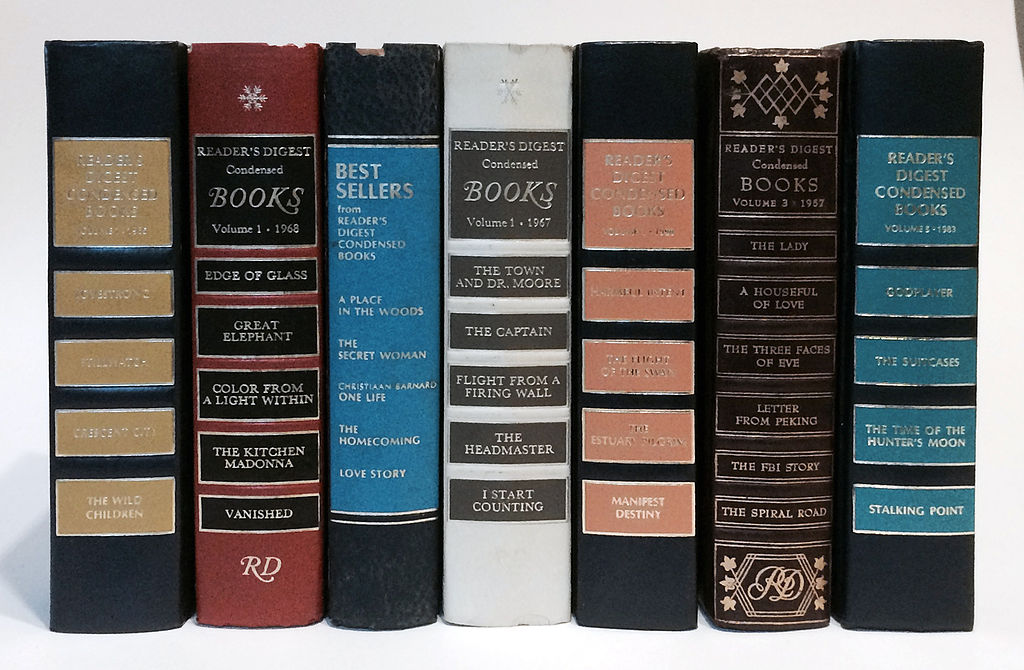
Well, actually, with the Readers Digest Condensed Books. Wikipedia tells me it was Volume 57, published in the spring of 1964. The last book in that volume was by an author I’d never encountered before.
His name was Dick Francis.
I devoured that book. And every single one since. Francis wrote over 40 novels. I love all of them. In addition to being wonderful, they are comfort reads, old reliables—rather like a bowl of chili on a cold rainy night. I can always count on Dick Francis and his steadfast, practical and courageous heroes. Especially Sid Halley, who appears in five books, the closest thing to a series Francis ever wrote.
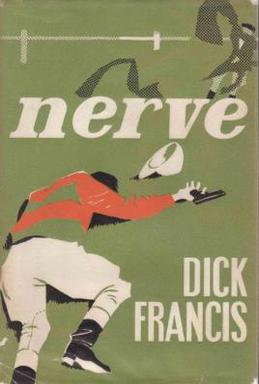
All his books have something to do with horse racing, for Francis was a steeplechase jockey for many years. And a sportswriter for a decade and a half before turning his hand to fiction. In the early books, his protagonist is a jockey, such as up-and-comer Rob Finn in Nerve, his second novel. In his fourth, Odds Against, Sid Halley puts in his first appearance, as a jockey who has retired due to injuries and is now working as a private investigator. In later books, protagonists have other professions—glassblower, banker, photographer—but there’s always that connection to horse racing. Among my other favorites are his sportswriter hero James Tyrone in Forfeit and pilot Matt Shore in Rat Race.
Dick Francis and I share a birthday—Halloween. I was thrilled to meet him several times, at book signings and once at the Edgar Awards ceremony. That was in 1996, the year he was awarded Grand Master and won the Best Novel award for Come to Grief—a Sid Halley book.
By that time, I was writing mysteries myself. With eight books published featuring my longtime protagonist, Oakland private eye Jeri Howard, I decided I really wanted to write a horse racing novel. When I started the book, I quickly learned how much I didn’t know about horse racing. Books, the internet and Dick Francis will only take a writer so far. Write what you know is a commonly used catchphrase, but I use another one. If I don’t know, I go find out. So, Jeri and I went to the races.
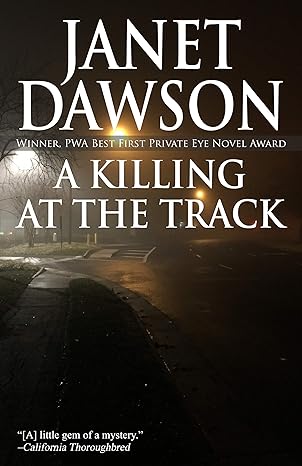
An email message to an acquaintance led me to a friend of hers who knew a woman who trained racehorses. Which is how I wound up at a Bay Area racetrack at six in the morning. I spent the whole day following the trainer around from stables to grandstands, talking with trainers, a vet, even a horse player who tried to educate me on statistics, which are still a mystery to me. I even got a tour of the jockeys’ changing room. Of course, that scene had to go into the book. When I’m presented with such great material I have to use it. That’s why Jeri is in the changing room, bantering with a jockey dressed in nothing but a towel. It was all great fun and I hope the resulting novel was fairly accurate. That’s A Killing at the Track, by the way, which has Jeri investigating the murder of a trainer at a fictional racetrack. More bodies turn up and Jeri actually wins a few bucks playing the ponies.
I’ll close with another comment about the Readers Digest Condensed Books. I don’t know how long Mom subscribed to these, but I do know these abridged volumes introduced me to a lot of good books and authors. Abridged or no, the whole point was to get people reading. And I certainly did.
Earlier volumes included books by authors who later became favorites: Victoria Holt, Anya Seton, James Michener, Mary Stewart—and the redoubtable Agatha Christie. As for Volume 57 from 1964, the tome that introduced me to Dick Francis, it contained two other books I enjoyed and remember to this day. The first was nonfiction, written by Gene Smith, titled When the Cheering Stopped: The Last Years of Woodrow Wilson. The second was by English novelist Paul Gallico. It was called The Hand of Mary Constable, and it had seances, a ghostbuster and twists galore. Great fun.
Often you can tell when a writer’s research begins and ends with a keyboard search: telltale signs include incomplete knowledge and/or cliché-based assumptions, creating eye-roll moments in our readership—something it’s safe to say none of us wants to do. So when Professor Google falls down on the job, it’s time to fold up that laptop and do a different kind of investigating, one that involves people instead of pixels.
First, an example of what to avoid. Some years ago I was reading a novel with a scene set in MCI-Cedar Junction, a maximum-security prison in Massachusetts. Our protagonist steps inside and notes that the foyer smells like vomit, a sensory detail illustrating the degradation of the incarcerated.
Slight problem, however. I used to teach at that prison, and on precisely zero of the many occasions I’ve been there did the foyer smell like vomit. The only time it smelled of anything other than air was one day when an inmate was mopping the floor, at which point it smelled like Pine-Sol. That, combined with a variety of hilarious gaps in said author’s knowledge of prison security protocols, absolutely trumpeted the fact that he never bothered to visit the facility or even call. I have not picked up one of his books since.
I should add that he absolutely nailed his description of the exterior of the prison. In other words, he googled it, saw what the place looked like, and ended his investigation there.
Circumventing such blunders consists of several steps. First, find an expert. Second, contact them and politely ask for a few minutes of their time. If you are on the shy side, Step Three is, in the immortal words of Douglas Adams, “Don’t Panic.” The words “I’m a writer” convey more gravitas than you might expect, and the phrase “I’m writing a book with a character like you, and I want to be sure I get it right” is usually greeted with enthusiasm. Most people are delighted to share their expertise, especially if they belong to a profession or culture that is frequently misrepresented in popular media. On behalf of my books, I have interviewed prison guards, FBI agents, a Marine who served in Afghanistan, a parole officer, a rabbi, and more; and in almost every case, the interview went over time because we were enjoying ourselves so much.
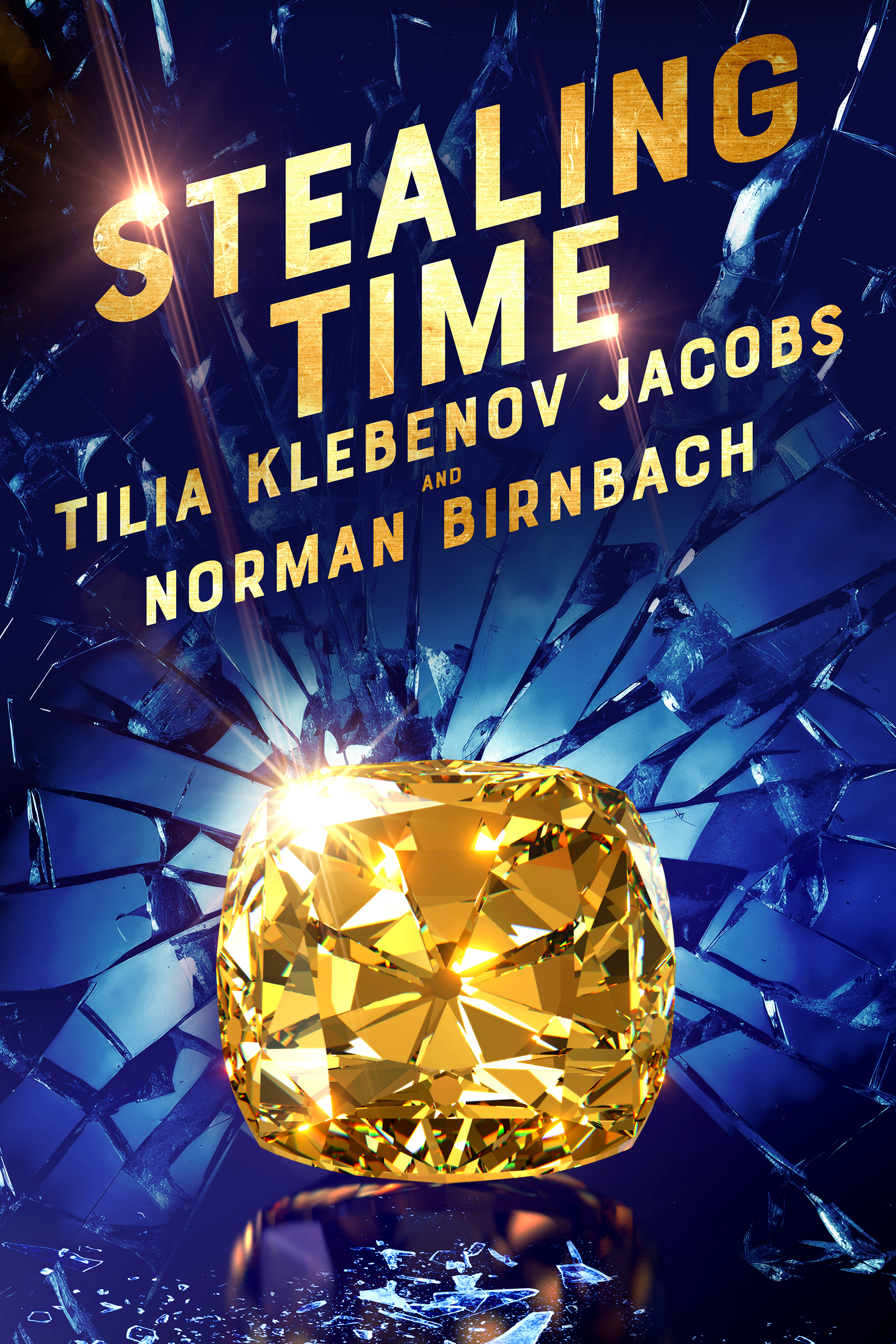
My most recent book, Stealing Time (co-authored with Norman Birnbach), is set largely in 1980. While we wrote it, we had the very great pleasure of plumbing the expertise of John Barelli, former head of security at the Metropolitan Museum of Art in New York; and Jonathan Campbell, a Boston-based architect. In both cases, our question was this: how can our bad guys rob a museum—in 1980? We needed specific information about rooftops, scaffolding, and museum security in that era, and the internet was tired of our questions.
I discovered Mr. Barelli via his memoir, Stealing the Show: A History of Art and Crime in Six Thefts. It describes his tenure at the Met from 1978 to 2016, years that neatly overlapped the era of our book. I emailed him to ask for an interview. He replied in the affirmative, and he and Norman and I spent a delightful evening chatting about security arcana of the late twentieth century. Since my partner and I needed to insert one of our baddies into the museum, we asked how long it would have taken for someone to be hired as a security guard at that time. Were there extensive background checks? What about fingerprinting? Mr. Barelli laughed. “Back then, we had a saying,” he told us. “‘If it breathes, put a uniform on it.’”
Thus reassured, we wrote a scene in which our criminal is quickly hired to guard a hall full of precious gemstones. Our editor later urged us to change it, since he was confident the guards’ union would have prohibited such slipshod operations. But we had done our homework with an unimpeachable source, and were able to allay our editor’s concerns. The scene stayed put in all its scintillating historical accuracy.
The second expert, Jonathan Campbell, was easier to find because I went to high school with him. Once again, I needed very specific information for our baddies, whose plan involved climbing scaffolding in order to break into the museum; and once again, the internet failed to answer some basic questions, such as,
Is this possible?
How?
What will our degenerates find on the way up?
During a delightful February afternoon, Jonathan led me cantering about the rooftops of Boston in search of verisimilitude. I learned that,
Yes, it’s possible.
But dangerous. Anyone seeking to climb scaffolding needs to adhere to the “three points of contact rule,” meaning that at all times one must have at least two hands and one foot, or two feet and one hand, in contact with the structure; unless, of course, one wants a very brief flying lesson.
Roofs are messy. Based on my experience, our band of reprobates might reasonably be expected to find pigeon poop; ductwork for HVAC; plastic buckets full of rainwater and chains; and stray tools left behind by construction workers. All of this makes such areas difficult to navigate, which was bad for our baddies but good for us.
Factuality is not meant to set a reader’s pulse a-twitter; for that we have finely etched characters, snappy dialogue, and wicked plot twists. Instead, it is a load-bearing wall: we may not be aware of its function, but it holds our disbelief aloft. Unconventional kinds of research can be fantastically rewarding, and they give our work both solidity and sparkle that come from no place else.
STEALING TIME
Good news for everyone who loved Back to the Future, The Time Traveler’s Wife, and Time and Again: the newest page-turner is Stealing Time, a smart, funny caper that will steal your heart.
When there’s no time left, you have to steal it!
New York, 2020. Tori’s world is falling apart. Between the pandemic and her parents’ divorce, what else could go wrong?
Plenty! Like discovering that a jewelry heist forty years ago sent her grandfather to jail and destroyed her family.
New York, 1980. Bobby’s life is pretty great—until a strange girl shows up in his apartment claiming to be a visitor from the future. Specifically, his future, which apparently stinks. Oh, and did she mention she’s his daughter?
Soon Bobby and Tori have joined forces to save the mystical gemstone at the heart of all their troubles. But a gang of thugs wants it too, and they’re not about to let a couple of teenagers get in their way.
This time-travel jewelry heist will keep you guessing till the end!
Tilia Klebenov Jacobs is a bestselling novelist and short story writer. She is vice president of Mystery Writers of America-New England, and is proud to say that HarperCollins calls her one of “crime fiction’s top authors.” Tilia has taught middle school, high school, and college, as well as classes for inmates in Massachusetts state prisons. She lives near Boston with her husband, two children, and pleasantly neurotic standard poodle.
Norman Birnbach is an award-winning writer who has published over a hundred short stories and articles. His work has appeared in The New York Times, The New York Times Magazine, The Wall St. Journal, Chicago Tribune, Miami Herald, San Francisco Chronicle, McSweeney’s Internet Tendency, New York Magazine, The Magazine of Fantasy & Science Fiction, and Militant Grammarian. He has also studied gemology at the Gemological Institute of America. Stealing Time is his debut novel. A native New Yorker, he lives outside Boston with his wife, three children, and dog, Taxi.













 Ladies of Mystery
You must be logged in to post a comment.