
Summer sun and mutating ideas!

JordainaHey folks. What’s new with you?

I don’t know if you’ve heard, but here in the UK, we’re suffering through a heatwave. (I’m English—gotta talk about the weather! I went to Nashville a few years ago now (we can talk about my Nashville adventures another time) and mentioned the weather to someone, like “It’s warm today”. They replied with, “Yeah, it is.” And that was it. Back home, that’s at least twenty minutes worth of conversation, right there. Or maybe he just didn’t like me … ).

And, yes, I did say, “suffering”! It’s lovely to see the sun, but shoot! I wouldn’t mind a bit of cloud as well. Maybe even a breeze. (I’m complaining about this now, next time week speak I’ll be whining about the rain!)

Anyway, with it being England, summers are unpredictable which sucks because whenever I can, I love to write outside. Maybe it’s because it’s rare to have days when it’s warm enough to do this. I feel like when I write inside my ideas are contained. They’re trapped in the room with me, and they can’t mutate into much better ideas because there isn’t space and then they suffocate each other, and I have to go downstairs to get a chocolate bar and a cup of tea.

giphy-4But when I write outside? I imagine my ideas multiplying and changing and growing limitlessly. I want to say they dance around on the breeze, like Julia Andrews in The Sound of Music but, in reality, I think it’s probably more like what happens to that alien in Evolution when they hit it with napalm. Only my ideas are much prettier. Maybe.

My point is being outside makes me feel more creative. Or imaginative. Maybe it’s because there’s more going on outside so there are more stimuli. For example, I love watching the planes fly over and wonder where the passengers are going. Are they going on holiday? Coming back? Did they find a holiday romance? Are they moving away and starting a new life? Are they leaving a new life and coming back to their old one because the new one didn’t work out? Are they on their first leg of an around the world adventure? Are they coming back from an around the world adventure wholly changed? What are their plans now?

I’m pretty sure everyone thinks about this when they see planes. Or maybe they wave their fist at the plane, super annoyed that they’re not on that plane, going on holiday. (I’ve been there. I briefly worked in a retail store in the departures area of an airport. It killed me! Killed me. I had to go through security every day as if I were going on holiday … but I was just going to work. Gut-wrenchingly depressing.)

To get back on track, even when it rains, I’m outside. I might be huddled under my garden umbrella, clinging onto my hot-water bottle as I type, but I’m outside. I thought about investing in a fancy summer house, but it still has that “inside” feel to it.

lisa-in-coffee-shopI know people who write in coffee shops, but I just can’t be doing with all that noise and commotion. And, oh my days, there would be so many conversations to eavesdrop on I’d never get anything done!

Is there anywhere you love to write? Anywhere that fills you full of inspiration? Add a comment and let me know!

Until next time …

Jordaina 🙂
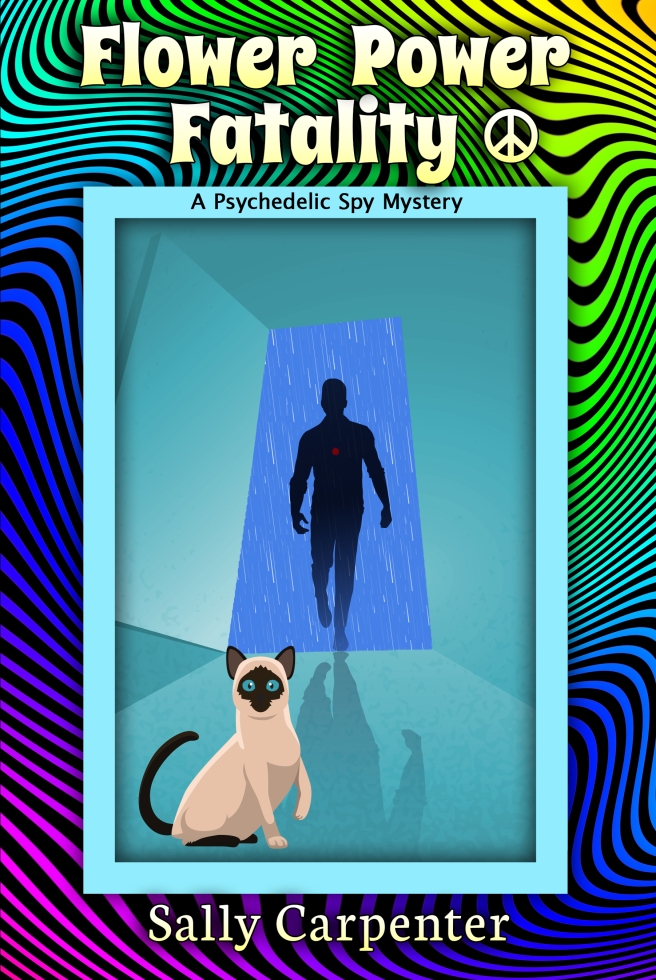
A groovy new book

By Sally Carpenter

Flower_Power_Fatality_jpg (1)

My new retro-cozy, “Flower Power Fatality,” seems like it’s taken forever to write. I estimate the actual writing time at about 1.5 years but it’s been on my mind for much longer.

The idea originated a number of years ago at a fundraising concert at my parish. A group of ‘60s rockers were performing and I thought a cozy set in the 1960s was a pretty far out idea. I only know of one other mystery series in the ‘60s so the field seemed ripe for exploiting.

I considered a series with a college student as a protagonist (campus unrest was a big topic in the era), one book for each year of school. However, high-achieving students are too busy with classes, homework and extra-curricular activities to have time for sleuthing (except for the Hardy Boys who always seem to be on a school holiday). Writing scenes about someone sitting in lecture classes all day didn’t interest me either (my apologies to those of you who write school mysteries).

I didn’t want to write about a rock musician, because I already had a musician in my Sandy Fairfax series. Hippies are interesting characters, but they make poor sleuths. They don’t want to deal with the cops and frankly, some of them are too strung out much of the time to be of use.

One of my writer acquaintances is a Doris Day fan, so I started watching Doris Day movies. The idea clicked with “The Glass Bottom Boat.” Doris plays a civilian who unwitting gets mixed up with spies. Aha!

The 1960s was the height of the Cold War between the U.S. and Russia, with nuclear annihilation of both countries only a button-push away. Everyone knew about CIA and KGB spies, no matter how hard they tried to keep their activities a secret. Mad Magazine made light of this conflict in the wordless “Spy vs. Spy” cartoons.

The spy genre was popular entertainment in the 1960s, kicked off, of course by the James Bond craze. Soon Bond found himself parodied in the Derek Flint and Matt Helm films and in the 1967 “Casino Royale.”

Spies took over TV as well with such shows as “I Spy,” “The Man From UNCLE,” “Mission: Impossible” and “Get Smart.” One could argue “Batman” followed suit as well, with its many bat-gadgets, droll sense of humor and over-the-top presentation like the Bond movies.

“UNCLE” episodes featured a new “innocent” (guest star) each week, a civilian recruited by the agency to help the spies with the mission, much like the protagonist in my book, an actress who stumbles upon a murder and missing microdots.

But I couldn’t start writing right away. I wanted to crank out another Sandy Fairfax book, so I put the new idea on the back burner. Then I researched a big presentation for my parish. Then I wrote a short story for the “Cozy Cats Shorts” anthology (2017). And along the way I was still writing my monthly Ladies of Mystery post and my newspaper column.

At long last I put everything aside to work on the new idea.

Sometimes letting an idea simmer makes it tastier. I used the time to research my setting and the 1960s in general. Being a kid at the time, much of what was going on went right over my head. I also had to check on every product and piece of music mentioned in the book to make sure it was time-appropriate.

And the book has a pet cat. Well, that one was easy to research. I just looked in my yard.

Guest Blogger- C.T. Collier

New Voices in Academic Mysteries

by C.T. Collier

Sipped_ coverEven before I joined the ranks of college faculty, I loved a good academic mystery—one with a professor solving a murder, whether it happened on campus or on vacation. Now that I write academic mysteries (The Penningtons Investigate) I’m loving the fresh voices among the ladies of mystery whose sleuths are professors. Here are just a few.

An environmental educator and researcher, Charlene D’Avanzo’s debut Cold Blood Hot Sea throws the reader into the contentious field of marine research. Sleuth Dr. Mara Tusconi is a smart resourceful warm-hearted scholar at the Maine Oceanographic Institution, where eager students and ambitious colleagues surround her. Every twist of D’Avanzo’s page-turner reveals more about research methods, the young scholars in training who will carry the work forward, and the sabotage that undermines experiments.

Lori Rader-Day’s academic mystery, The Black Hour, is a dark gritty look at the power differential between professors and students that sometimes has deadly consequences. The story highlights the fascinating ways both professors and students confront, ignore, or rationalize blatantly unethical behavior.

Drawing on an academic career in psychology, Lesley A. Diehl brings humor to the campus scene in her sleuth, psychology professor Laura Murphy. In Failure is Fatal, Laura’s study of sexual harassment on campus is compromised when a student is murdered and a detailed written description of the murder is among the surveys submitted days before the murder occurred. Besides her intelligence and dogged determination, Laura uses her unique ability to tick people off on her way to finding the killer.

There’s still more humor in Alexia Gordon’s debut mystery, Murder in G Major. Sleuth Gethsemane Brown, an award-winning musician, is challenged with shaping up a school orchestra in time to win back a coveted trophy. At the same time, the ghost of a famous musician who expects her to find out who murdered him haunts her house. Gethsemane uses gumption, moxie, spunk, and many belts of bourbon to save the day.

Author and music professor Carolyn Marie Wilkins pens another music-themed academic mystery in Melody for Murder. Protagonist Bertie Bigelow is a music professor at a community college in Chicago’s South Side, where she walks easily between the poverty of her students’ world and the glitz of charity galas among the nearby African American community.

Cynthia Kuhn has a fresh take on tenure, the bane of every young professor’s existence. Kuhn’s sleuth, English professor Lila Maclean, is just starting her academic career and dealing with all the challenges of being single in a new town and a new job. Lila’s crafty department chair continually manipulates her into extra work by dangling the carrot of tenure in front of her or cracking the whip of tenure behind her. Those extras propel Lila into murderous complications that demonstrate her investigative skills, ingenuity, and charm.

Whether your taste runs to thrillers or cozies, these lady authors of academic mysteries are sure to please. I hope you’ll share your thoughts in a comment.

Blurb:

Meet the Penningtons: Lyssa, Ph.D. Economics, and her husband “the handsome Brit” Kyle, Ph.D. Computer Science. When their clever minds ask questions, clever killers can’t hide.

After a rough semester, Professor Lyssa Pennington just wants to post her grades and join her husband, Kyle, in Cornwall for Christmas. First, though, she’s expected to host an elegant dinner for Emile Duval, the soon-to-be Chair of Languages at Tompkins College.

Too bad no one told Lyssa murder is on the menu. And, by the way, Emile Duval is an imposter.

Who is he really? And who wanted him dead? Without those answers, the Penningtons can kiss Christmas in Cornwall goodbye.

 Buy Links:

Amazon: https://tinyurl.com/y8rkglpe

Barnes & Noble: https://tinyurl.com/y8thfleb

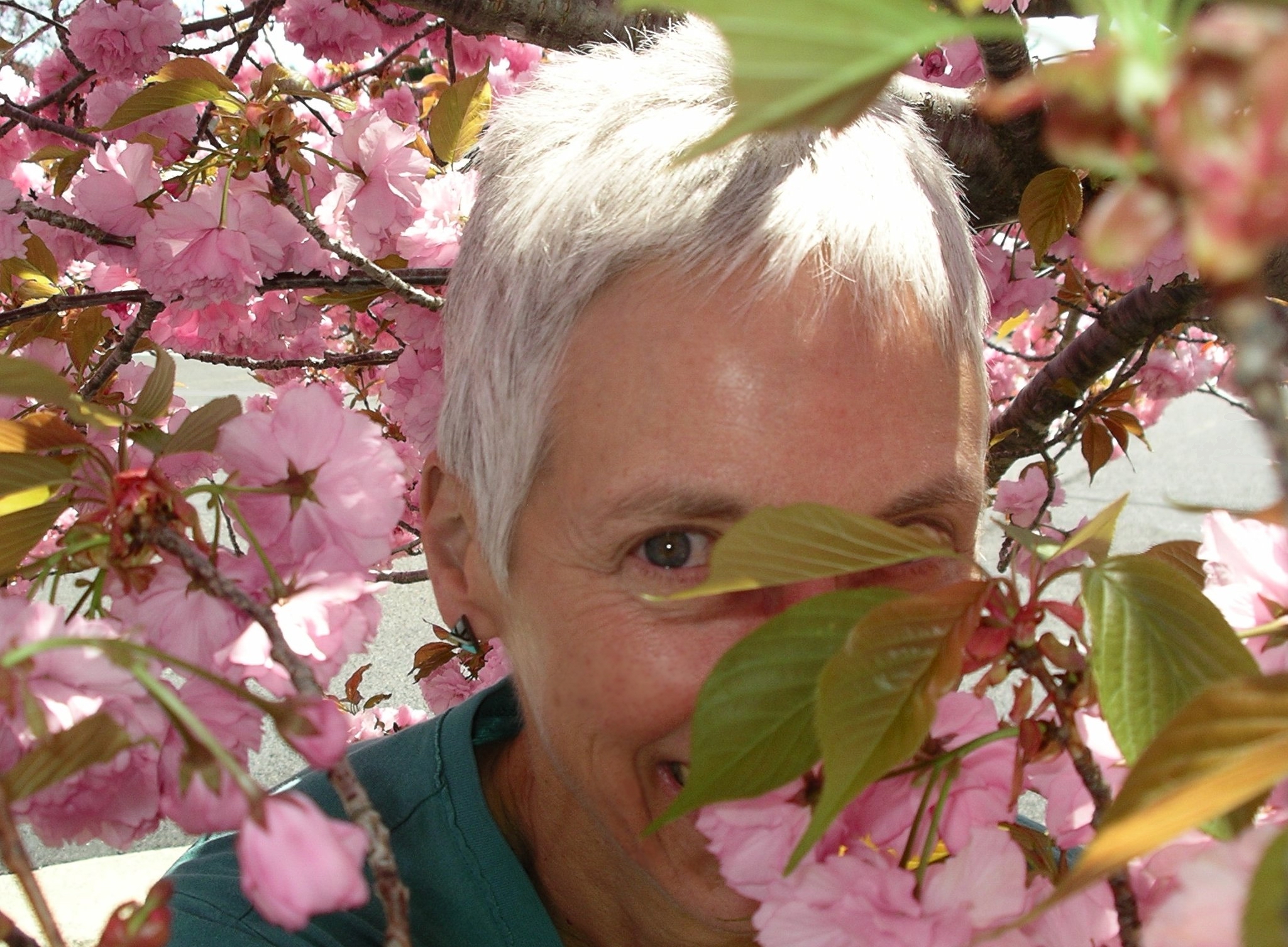
Kate-B'ville 7-6-17C.T. Collier was born to solve logic puzzles, wear tweed, and drink Earl Grey tea. Her professional experience in cutthroat high tech and backstabbing higher education gave her endless opportunity to study intrigue. Add to that her longtime love of mysteries, and it’s no wonder she writes academic mysteries (The Penningtons Investigate) that draw inspiration from traditional whodunits.
Links:

Website:  https://drkatecollier.wordpress.com

Facebook: kate.collier.315

Twitter: @TompkinsFalls

Goodreads: http://tinyurl.com/zds5zps

Call Me Inaccessible

Cell phones are so convenient in real life life and so inconvenient in fiction when you want to strand a city girl on an unlit road in the desert on a cold winter night. So inconvenient when you want characters to be inaccessible to each other. Unless you set your stories far enough in the past, people can be reached and can call for help. Normally, I work the hyper-connected nature of life into my plots, but once in a while I need to cut off my characters’ communication. How can I do it without over-using the obvious and without too much of a deus ex machina effect?

Battery running out? I’ve used it a total of twice, in different books and with different characters, and I think that’s about as many times as I should use it.

Phone lost or stolen? In Snake Face, I have a stalker take her victim’s phone. In Death Omen, I have two children hide an adult’s phone so he won’t receive a call that would get them in trouble.  I think I’ve hit my lost-or-stolen maximum.

Phone turned off while driving?  One of my ongoing characters does this. He doesn’t trust himself to handle any distractions. I leave mine on and ignore it until I can pull over, but I see plenty of people talking on phones or even texting while they drive. They don’t make any effort to be safe. The National Safety Council and the Scientific American both say that hands-free devices are no safer than hand-held phones, but it’s not uncommon to believe that hands-free systems must be safe since they’re often built into new cars. If we’re writing realistically, not idealistically, that means driving isn’t an obstacle for a lot of folks. They can be reached by phone, even with a short delay for the safety nuts like me.

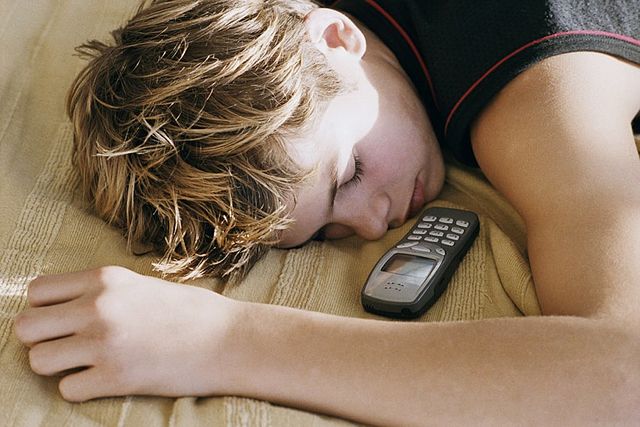
Phone off for sleeping? Maybe. But some people take their phones to bed with them.

No signal? I’m about to use that for the first time. In traveling all over the country, I’ve seldom been in a place with no signal, but when I was doing research for my work in progress set partially in the ghost town of Chloride, New Mexico, one of the many unexpected facts I learned was that there’s no cell phone reception in town or within a ten-mile radius. It makes sense. The town is in a canyon. But it hadn’t occurred to me to use my phone any of the times I’d been there. The museum owner told me about the cell signal problem when I asked about internet service. I’d expected there might not be any, but Chloride stays in touch with the world through DSL internet—and landline-only phone access. (In case you’re wondering: ghost towns aren’t always uninhabited. They are ghosts of their former selves. Fourteen people live in this one.) I’d wanted to have a character get stuck on a country road outside Chloride at night, unable to make a call, and I’m so glad it’s realistic. I’ll be able to set it up as an established fact of life there well in advance.

Have you used up your quota of no-signal events? How about something strange?

Recently, I tried to make a cell phone call to a local business and got the message: “This call cannot be completed as dialed.” I checked the number in the phone book, called again, and got the same message. I looked up the business online. It was still open, with the same number listed. Weird. My bill was paid and my phone was working. I didn’t get bad reception or no reception, and when I tried calling friends, I got the same message. Naturally, I researched this phenomenon. For most people who experience it, it’s an ongoing (though unexplained) problem in a specific place. I was calling from my apartment, where the phone has worked well for a year. Could there have been too much cell phone traffic? In Truth or Consequences? June is the off-season, when it’s too hot for tourists to come to the hot springs. Some locals who can manage it leave town, too. Who could be making all those calls? If I want this mysterious problem to occur in a book, it had better be a frequent one and not pop up out of the blue when I need it. It hasn’t happened to me again, and that’s just too random for fiction. Fiction has to be more believable than the chance events of real life.

Another option for making people hard to reach is to cast low-tech characters. For my other work in progress (yes, I have two in progress in the same series), this works well for my protagonist’s former in-laws. I know people who don’t have cell phones, and some who don’t even use e-mail. One of my yoga students accidentally left her phone turned off for three weeks and didn’t notice. Not everyone who has the technology is particularly attached to it.

Any other ideas? Have you needed to cut off your characters’ phone access and found a creative way to do it?

An Adventurous Research Trip

My next Deputy Tempe Crabtree book is set in Tehachapi, California, a mountain community famous for its wind machines. However, it has a lot more going for it and though I’m writing a mystery, I wanted to show some of the wonders of Tehachapi.

Tehachapi Wind Turbines

My daughter, Lisa, is always willing to go with me as the driver. Our first stop was the Keene Café where we intended to eat breakfast, but it was closed due to a water problem. Off we went up a very windy road to the lookout point for the railroad. There was a huge long train looped around but it wasn’t moving. We headed on into Tehachapi (long drive) and found a great café and had a delicious breakfast.

Because I mention the police station in my book, we stopped and I went inside, looked around the lobby and asked the man who came to the window a few questions, which he answered. He wasn’t in uniform nor did he have any ID.

From there we went to a really great community called Stallion Springs—also in the book. Good thing we went there because it is much different from what I thought from my Internet research. Also found some other things I need to change.

We went back to the café where we’d had breakfast to eat dinner, then to a yogurt place for desert. By that time we were done and headed to our hotel.

After breakfast, we checked out of the hotel, and went on a self-guided tour I’d found on the Internet of the wind machines. Wow! That was great! We followed a two lane road up and down and around, got out sometimes, and checked out the various sizes and kinds of the turbos—all huge! We went into the back country and saw hideaway homes and ranches.

Because I have a scene near the Pacific Coast Trail, we stopped there to check out if what I’d written will work. (I’ll have to make a few changes.) We met a young hiker who’d been following the PCT and hurt his ankle. His companions had gone ahead. He asked if we’d take him to town. We were done with our tour and agreed. He started on his hike in Mexico, plans to keep on going all the way to Canada, next big hike Mt. Whitney. And though I don’t usually pick up hitch-hikers it was obvious he was who he said he was.

We dropped him off and we went to a toy shop, daughter was interested in. Lunch was at Thaihachapi—because it also in the book. We went back to the Loop this time just in time to see the tail end of a train. We waited but nothing else came along.

We made another trip to Stallion Springs and found other interesting things such as a covered bridge.

On our way out, we stopped again at the Loop, but the only action was an engine and truck doing some work on the track. Time to head home.

So glad I made the trip as I need to make some major changes in the book. And we had fun!

Marilyn