Guest Blogger- Daisy Pettles

Why I Write a Humorous Cozy Mystery Series for Feisty Older Ladies

Here’s a mystery for you … a study by Sisters in Crime, a professional women writers mystery and crime association, found that the vast majority of mystery readers are women. Moreover, 71% of the genre’s readers are 50 or older. (Source Link:https://cdn.ymaws.com/www.sistersincrime.org/resource/resmgr/imported/ConsumerBuyingBookReport.pdf)

The mystery? Why is it, then, that the leading lady of the cozy mystery today is a baby-faced, early career, 30-something, rather than a mature, perhaps somewhat disgruntled, widowed or divorced, half-retired woman of 50+ years?

I turned 60 this year, and I read like a demon, devouring novels like M&M’s. Why, I wondered, was my feisty generation—all prime readers for Pete’s sake—so invisible in women’s mystery fiction today?

I found myself agreeing with one sister in crime writer, Dianne Harman,  https://www.huffingtonpost.com/dianne-harman/boomer-reads_b_3210208.html, who mused in 2013 that, “[Boomer Lit] is the most overlooked, underwritten genre out there.”

OK, so the term “baby boomer lit” has gotten a bad rap. Much of that is justified. The indie market is awash with badly written “boomer” novels that feature highly forgettable “senior sleuths,” seeking second chances in the confines of gated retirement villages.

Too much of this lit pounds home a “sundowner” theme – think cancer, moving into assisted living, fighting over men with competing ladies in Leisure Village – OR a “second chance” theme. Think “widower dares to date again” or “the search for the one that got away.”

Problem. I don’t see my life as in need of “second chances.” I see it as more of what it always has been: a bit of a hair-raising adventure. Why not, I thought, write about cantankerous, every day women who are aging, but who are also busy having a go at life, every morning, pretty much as they always have?

Oldsters are as varied as youngsters (really, they are). Being of the mind that if there’s a problem it’s my responsibility to engineer a solution – a great notion from the 70’s when I first hit the road out of high school — I began to create a new crime comedy series loaded with oldsters of all varieties.

In my new amateur detective series, The Shady Hoosier Detective Agency, the protagonists are lifelong gal pals, ages 67 and 71, living in small town Indiana. They share a house, a 1960 Chevy, and reluctant custody of grown children who still reside in their basement.

One in particular (Veenie) has been a lifelong snoop. The other (Ruby Jane) has great computer skills. For them, the decision to punch a time clock post-retirement as sleuths with the Harry Shades Detective Agency is as much a way to exercise their curiosity as it is a path to supplementing their social security.

Back in the 90’s the TV drama “Golden Girls,” about older widowed and divorced women sharing a home and laughter, broke through ageism to show that the closing chapters of life can be as varied and exciting as the beginning and middle. I believe that there remains pent up demand for older, feisty women characters in the cozy mystery niche.

My goal in creating the Shady Hoosier Detective Agency, with Book 3, The Chickenlandia Mystery, coming out as this is posted, is to update the cozy to better serve publishing’s core reading demographic by creating books that mirror the more diverse evolving lives of Boomer women like me.

Like all publishing undertakings, it is up to the cosmos to decide if the series will find a readership, but a few stars do seem to be aligning. The Shady Hoosiers’ debut book, Ghost Busting Mystery, has thus far won three Best Indie Humor Book Awards and two Best Indie Cozy Mystery Book Awards,

In the end, I write what I want to read. There has never been a more active, curious, diverse, witty, kick-ass generation of women. Why not gift ourselves leisure reading that reflects this?

Author Daisy Pettles
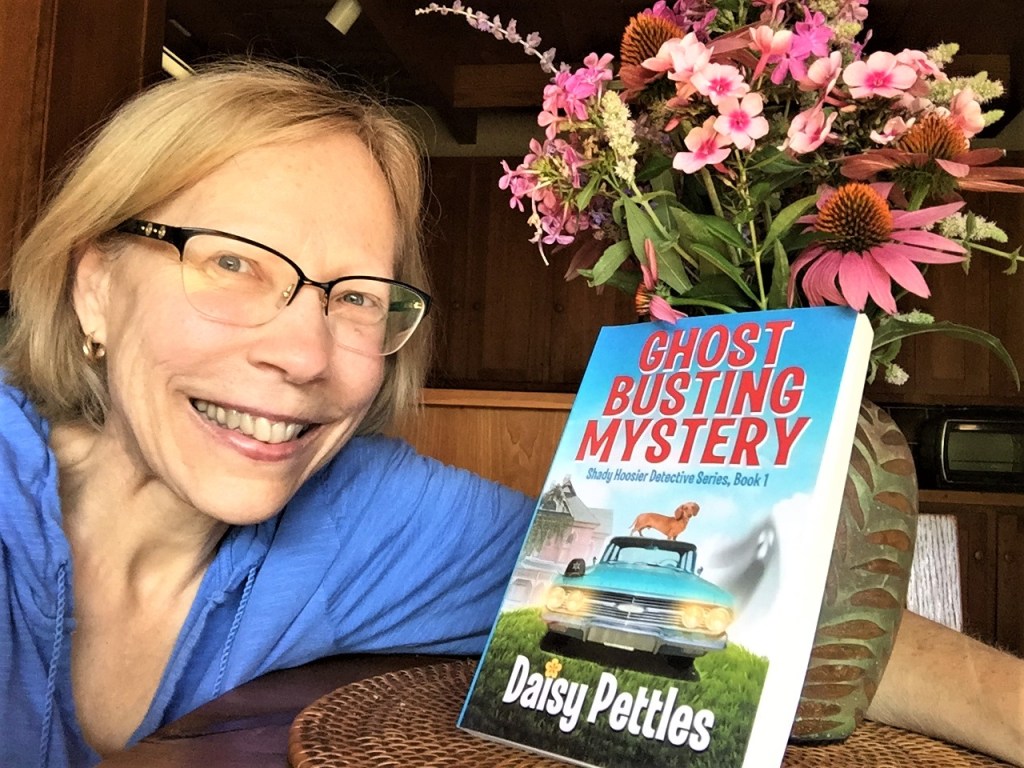
Daisy Pettles was born in southern Indiana, in a tiny river town. As a child, she was fed a steady diet of books, pies, and Bible stories. Her debut cozy series, the Shady Hoosier Detective Agency, crime comedies set in fictional Pawpaw County, Indiana, won the 2019 Gold Medal as Best Humor Book from the Indie Reader, The Next Generation Indie Book Awards, and the American Fiction Awards. Visit her anytime at https://www.daisypettles.com

CONTACT: Daisy@daisypettles.com

TWITTER: @DaisyPettles

FB: https://www.facebook.com/daisypettles

WEB: https://www.daisypettles.com

Amazon Buy Links:

Ghost Busting Mystery (Book 1)

Baby Daddy Mystery (Book 2)

Chickenlandia Mystery (Book 3)
Topsy and the Apple Pie by Heather Haven

Judy Garland used to sing the song, “I Was Born In A Trunk At The Princess Theatre.” I often sing “I Was Born ON A Trunk At Ringling Brothers Circus.” My parents met and married at Ringling Brothers during the early forties. She started out as a First of May, he an elephant handler. Her professional name was Jerull Deane. His was Whitey Haven.

Within a couple of years, Mom worked her way up to a specialty act with the elephants. My father worked his way up to being an elephant trainer. They both loved working with these large but sweet-natured animals.

My mother used to say one of the reasons she fell in love with my father was because he didn’t use the eye hook, or let any of his men use them, either. He was kind and loving to his charges, and she adored the man all the more for it. Topsy was one of the elephants Mom worked with and she liked to tell stories about her beloved pachyderm.

As a married couple, they had a little more privacy than other people, and lived in a small trailer on the backlot next to the animals. One of her favorite stories was about the time she took up baking. She would bake a fruit pie – apple, peach, berry, depending on what you could get right after the war – and put them on the windowsill in front of a partially opened window to cool. But pies kept disappearing, not all the time but most of the time. She couldn’t figure out who was stealing them. Also, Mom was running out of pie tins. They cost a lot of money and there were only so many of them, as rationing was still ongoing.

So she set up a watch. She baked an apple pie, put it in the window to cool and waited out of sight. About half an hour later, a grey trunk slowly appeared in the window sniffing the air. Once it located the pie, it pushed the small window open entirely, reached in, and pulled out huge chunks of pie, disappearing out the window with them. After most of the pie was gone, the trunk sucked on the metal of the pie tin, and pulled it out of the window, too.

Mom appeared at the window and looked down at the thief. She recognized Topsy right away. Pie tin on the ground, Topsy was slurping on the remnants like she was a vacuum cleaner. When the elephant had finished the last crumb, she picked up the empty tin and turned to a nearby trashcan.  Mom had had enough.

“Topsy,” she yelled from inside the small window. “Don’t you dare throw that tin in the trash!”

The elephant froze in place then slowly turned around to face her performing partner in the ring, pie tin dangling from her trunk.

“You bring that here right now,” Mom demanded.

The elephant slowly crept toward the sound of her partner’s voice.

“Did you steal that pie?”

Topsy lowered her head.

“You did, didn’t you?”

Topsy nodded once, pie tin scraping on the ground.

“You give me that pie tin. You hear me? Right now.”

Mom reached her hand out the small window. Topsy raised the tin up for Mom to take.

“You’re a bad, girl,” Mom said eye level with Topsy’s face. Topsy reached her trunk into the window and stroked Mom’s cheek with the finger at the tip end of her trunk.

Mom laughed, took the grey trunk in her hand, and kissed it lightly on the tip, a tip that smelled of cinnamon and baked apples.

“No, you’re not,” she crooned. “You’re a very good girl and you’re my baby doll.”

Even though her ‘baby doll’ weighed in at 5.5 tons, every now and then Mom would bake an extra fruit pie for Topsy. Especially apple. Topsy loved apple. But Mom stopped cooling any of them on the windowsill after that.

I’ve always been taken with the stories of my mother’s life in the circus, especially during its golden age. As a mystery writer, her stories prompted me to write a noir mystery, Murder under the Big Top, using my perception of her during that time as my muse. I even used a photo of her on top of Topsy as the book cover. I lost Mom in 2014. I’m proud to say Murder under the Big Top won the IPPY Silver for Best Mystery/thriller that same year and right around Mother’s Day.

I like to think Mom was looking down on me then, smiling. Maybe Topsy was, too!


Writing without Pen in Hand

Numerous myths have grown around writers, and all are almost unshakable. One of these is that real writers write every day.

I was thinking about this last week because I finished a manuscript, wrote a blurb and a short synopsis, and sent everything off to my agent. And then I tackled a short story that had been germinating in the back of my mind for weeks. When that was done, I looked around and wondered, “So, what’s next?”

Last year at Crime Bake, Walter Mosley said, “When I finish a book one day, I begin another the following day.” He just keeps writing, day after day, and never gives a thought to taking a break. Many writers I know take their laptops or notepads with them on vacation, and make sure to get in a few hours or less on their current project. I’ve done the same. These thoughts rambled through my brain as I spent more time on FB, reading articles on crime fiction, and wondering if now was the time to wash the windows. It was.

Before I headed off to remove the grime of years in the living room panes, I made two pages of notes on a talk I plan to give later in the year. But because it wasn’t a story or a novel, I didn’t consider it real writing. Standing on a stepladder outside trying to reach the top storm window (we have windows built and installed in the 1880s), I got a different look into the house. The dog stood in the doorway looking back at me, confused and hurt that I was outside and he was still inside. I could see into the hallway, where my husband had left his shoes. I took note of more details, the new perspective, thinking, I could use this in a story. It was a sunny day, perfect for a stroll and dog walking. I enjoy watching people pass by from the porch. But outside, hidden behind shrubbery, I heard more and longer snatches of conversation, and, again I thought, I could use this in a story.

By late afternoon I finished washing the fourth window just as it started to rain. I collected my ladder and Windex and towels, and headed inside. This was a good day of rest away from writing, or was it?

Whenever I think I’m going to take time to regenerate after finishing a story or novel, I come back to the same observation: I can’t stop seeing the world in terms of writing and story, as a moving frame of scenes to be captured and considered, with certain ones pulled out to use in other narratives. While on vacation in India a few years ago, I came across an article about rising debt in the villages, which reminded me of the debts our maidservant had contracted when she worked for us years ago. In a moment, waiting for my tea in a cafe as I watched waders in the shallow waves, an entire novel came to me. I hadn’t been looking for a new story idea, but there it was, When Krishna Calls, the fourth Anita Ray mystery.

Writers write every day with or without pen or laptop because we never stop seeing the world in terms of narrative, story-telling, a drama playing out in front of us, inviting us to reinvent, shape, and share what we see and imagine with the rest of the world.

Changing Pace by Amber Foxx

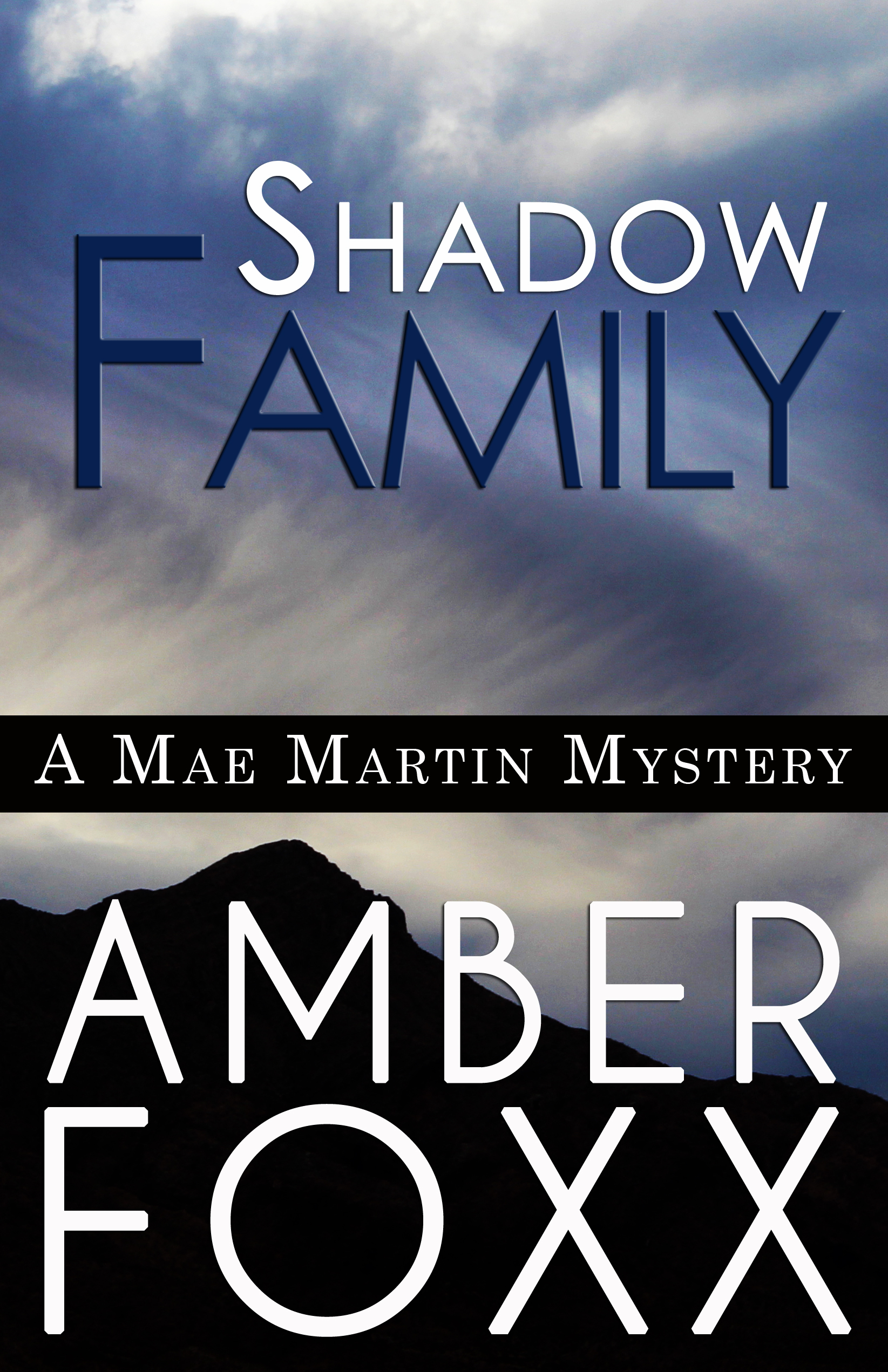
I sent Shadow Family, the seventh Mae Martin Psychic Mystery, to my editor at 3:30 a.m. Monday September 16th. I lived with this book for seventeen months from first draft to hitting send. I was immersed in it for weeks nonstop as my deadline approached, hardly getting out except for running or teaching yoga, while I worked through feedback from multiple beta readers and critique partners. After that round of cuts and revisions, I read the whole book aloud, acting it out as if recording an audiobook in order to make the final adjustments. For a few days after I hit send, I had to remind myself not to read a finished scene aloud as I worked on the next book. It’s useful later in the process, but it slows me down when I should be letting my imagination fly. And I’m still reminding myself not to perfect every line. After all, I may end up cutting it.

I’m experiencing something like the disoriented state of mind that used to hit at the end of a college semester when I’d turned in final grades and had no more faculty meetings to attend, no deadlines, and practically no schedule. Open space in my life and in my head. Having time to catch up on my neglected social life feels wonderful. I’m also free to explore and experiment with the new work in progress, discovering its themes and its depths, surprising myself as I go. After the perfectionism of the previous weeks, it’s liberating. I’m free to mess up!

Boo! Just in Time for Halloween

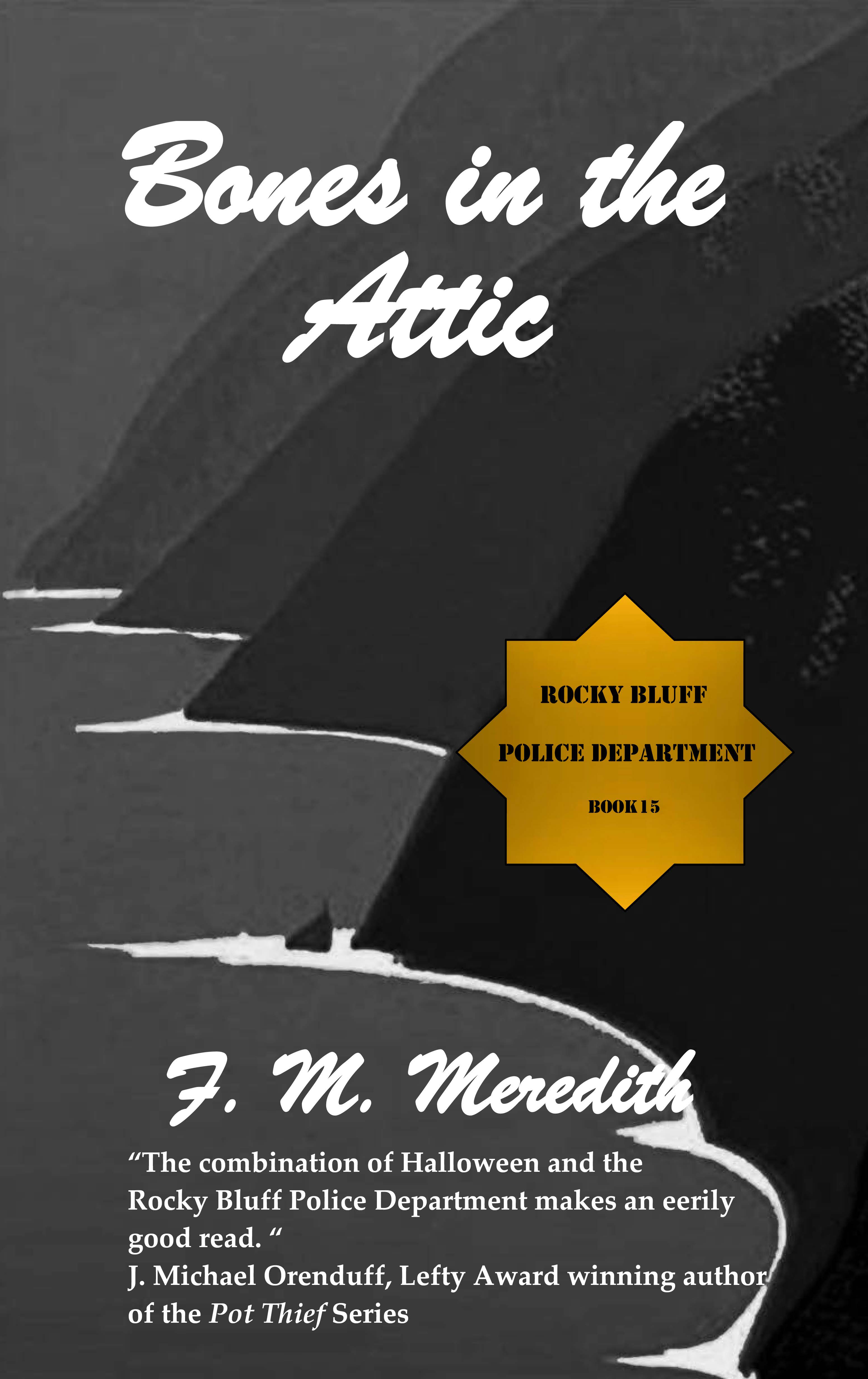
Bones in the Attic

Though I’ve written several scary novels, some more horror than anything, Bones in the Attic, my latest Rocky Bluff P.D. mystery is the first that focuses on Halloween.

When I first started writing it, I wasn’t thinking about it being a Halloween book, but it definitely is, but not in the way you might think.

For those of you who have read any of the RBPD mysteries know that a lot of every book is about family issues, and this one is no different. It begins with Detective Milligan’s daughter Beth and her high school art club decorating an abandoned house for Halloween. They intend to make money for their club by selling tickets to their Haunted House.

When one of the members decides to explore the old house and finds a skeleton in a trunk in the attic, their plans are doomed. Or are they?

Of course the majority of the book focuses on the RBPD trying to find out who the bones belong to, and why were they in a trunk?

As always, there is more about what is happening with the various families of the police department:  There is an issue with Sergeant Abel Navarro’s widowed father, more about Sergeant Strickland’s daughter with Down syndrome, the romance between Police Chief Tucker and Mayor Devon Duvall, and a crisis with the mayor’s daughter.

And, to make it even more intriguing, there is a bit threat to all of the beach community of Rocky Bluff.

I hope some of you will try it out! Though it is a series, each book is complete when it comes to the mystery.

Buy link: https://tinyurl.com/yxpd8mxy

Marilyn who writes this series as F. M. Meredith