Boo! Just in Time for Halloween

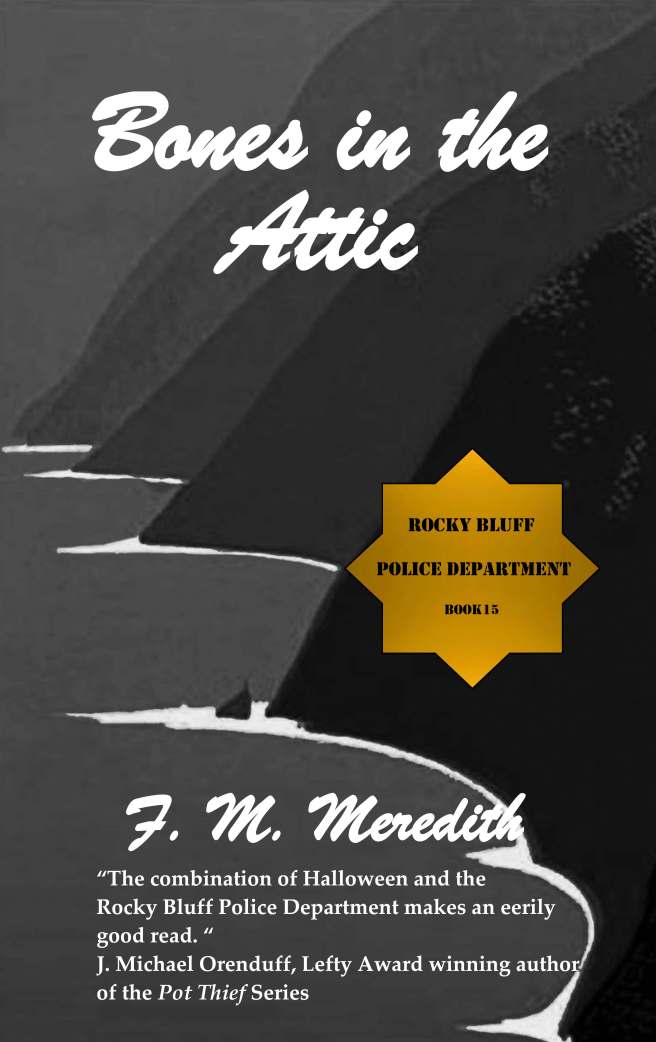
Bones in the Attic

Though I’ve written several scary novels, some more horror than anything, Bones in the Attic, my latest Rocky Bluff P.D. mystery is the first that focuses on Halloween.

When I first started writing it, I wasn’t thinking about it being a Halloween book, but it definitely is, but not in the way you might think.

For those of you who have read any of the RBPD mysteries know that a lot of every book is about family issues, and this one is no different. It begins with Detective Milligan’s daughter Beth and her high school art club decorating an abandoned house for Halloween. They intend to make money for their club by selling tickets to their Haunted House.

When one of the members decides to explore the old house and finds a skeleton in a trunk in the attic, their plans are doomed. Or are they?

Of course the majority of the book focuses on the RBPD trying to find out who the bones belong to, and why were they in a trunk?

As always, there is more about what is happening with the various families of the police department:  There is an issue with Sergeant Abel Navarro’s widowed father, more about Sergeant Strickland’s daughter with Down syndrome, the romance between Police Chief Tucker and Mayor Devon Duvall, and a crisis with the mayor’s daughter.

And, to make it even more intriguing, there is a bit threat to all of the beach community of Rocky Bluff.

I hope some of you will try it out! Though it is a series, each book is complete when it comes to the mystery.

Buy link: https://tinyurl.com/yxpd8mxy

Marilyn who writes this series as F. M. Meredith


What Everyone Likes

I’m trying to find a way to write this so that it doesn’t sound whiny or excessively paranoid. However, that is the way I’m feeling at the moment. I just sent two stories off for consideration for a national anthology, and while one was nicely polished and hit all the marks for voice and accuracy, the other was less so.

I am not looking for sympathy comments, by the way. It’s just that people keep saying they want to know what goes on in a writer’s head. I can’t imagine why. It’s a messy, scary place, at times.

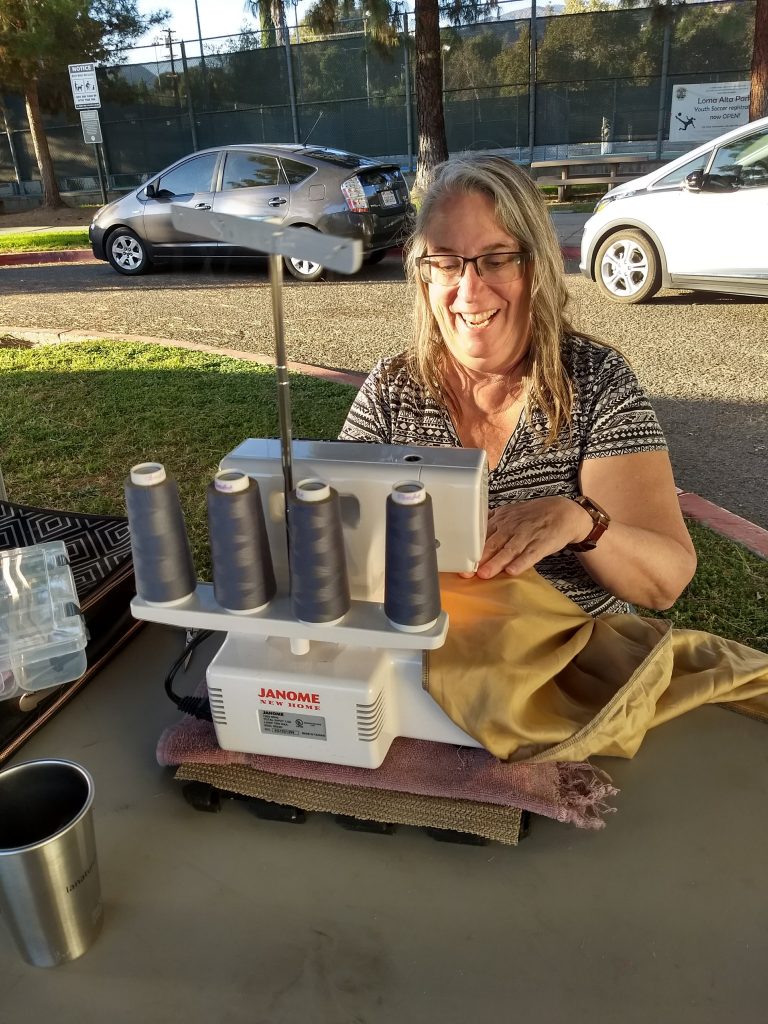
This is me, normally, when I’m sewing.

It started yesterday, when I was laying out a couple pairs of shorts. I’ve been sewing my entire adult life, so it’s not entirely crazy that I would be teaching myself to make jeans. Since I’m trying to figure out how best to fit my body, I was laying out the adjusted versions of two different patterns to see which fits the best. As I was laying out the second pattern (which had fit in the front really well, but the back didn’t come up near far enough on mine), I noticed that I really hated the back pockets.

Now, this was a pattern that had gotten rave reviews on a certain sewing forum I’m on. I mean, huge. Everybody loved this freaking pattern, in particular, the back pockets, which were slightly curved and supposedly more flattering. to one’s bum. Now, I have ogled many a bum in my day, and even with the pictures that were posted, couldn’t see what the benefit of the curve was. I do know what a PITA it was to sew that curved pocket. So, I used the pocket from the other jeans.

I was once again reminded that if people are raving about something, the odds are not good that I’m going to like it. I’m not trying to be obtuse, mind you, and I do like some things that are incredibly popular. It’s just that I’ve been to restaurants that have lines of people waiting to get in and usually find that the food doesn’t justify the wait. Movies? Super hits? Even serious films that everyone thought were wonderful. I’ve sat through so many of them, bored to tears that if someone even utters the word “hit,” I won’t go.

Sadly, the reverse is true. If I like it, chances nobody is going to. I love those small town cozies that everyone else loves looking down on. I love the 1812 Overture, never mind how immature that taste is. Someone actually said that to me, which is why I’m not naming names here. I don’t want anybody feeling bad if I write that their favorite composer drives me nuts with his over-wrought earworms.

This is no big deal under normal circumstances. Indeed, I often revel in being the only person to hate a given show because it’s the same three overwrought songs sung over and over. However, I just sent off two stories to be judged by other people. I liked those stories. I really liked them.

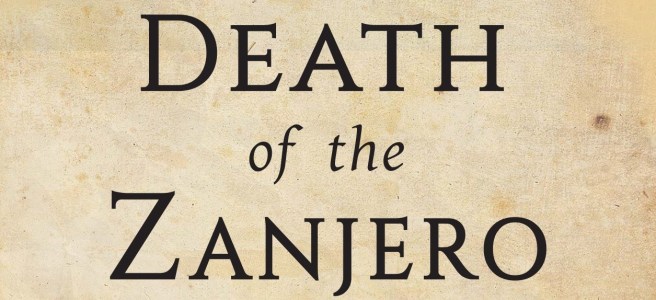
It’s not that there isn’t a market for my writing. Lots of people have read my books and liked them. I was even at a book festival recently where a total stranger told me he’d bought my book, Death of the Zanjero, the year before and liked it so much that he’d come back to buy the sequel, Death of the City Marshal. Someone else met me in a hallway and told me how much she liked my book. And thank God for the Internet. People like me may be few and far between, but the Internet can connect us.

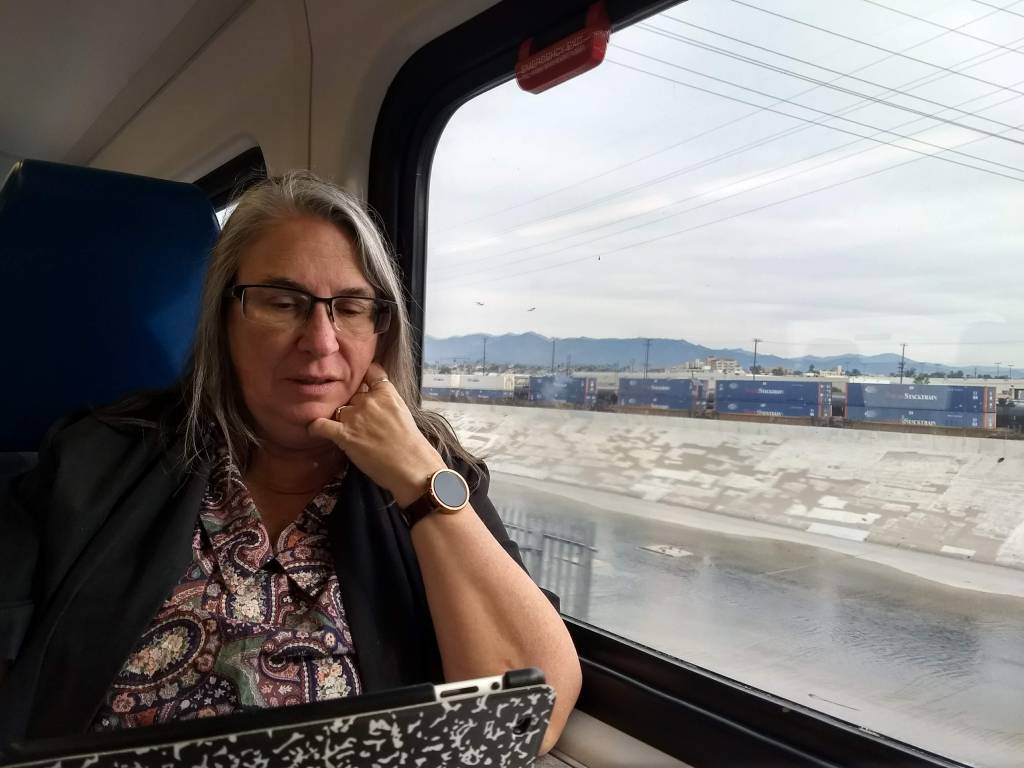
This me worrying about my writing.

It’s the paranoia and terror of rejection that envelops me every time I submit something. I’ve been rejected a lot, mostly because they can’t figure out how to sell my work. At least, that’s the comment I get more than any other. Worse yet, I know that second story could have been better because I wrote it at the last second. I’d had a brilliant idea and couldn’t resist. Only it doesn’t feel so brilliant now.

I did shop my first story around for critiquing and the comments were excellent, but the suggestions were to make my story into something I hate reading. Argh. I mean, what’s a woman to do? Try to do what everybody else likes and I hate (which probably won’t work because I hate it)? Or shoot myself in the foot by sticking to my guns?

The good news is that I will be past all this moaning and groaning soon. I am nothing if not resilient, and will soon be back to snarking on overwrought ear worms and reveling in my own unique tastes. If I am rejected, I will bounce back.

In the meantime, I will be whiny and paranoid, because that’s where I’m at right now. It’s scary and messy to be inside a writer’s head, whether any of us likes it or not.

Why it’s Okay Sometimes Not to Write by Karen Shughart

We traveled a lot this past spring and summer: family gatherings, a wedding, visits with our children who live on the east and west coasts, a reunion with friends in Florida and a very long trip last month to the Atlantic and Maritime provinces.  I don’t use a laptop but instead write with a desktop PC, and during those times we were away I didn’t write, not a blog, not a newsletter or social media posting, nor a chapter of the book I’m working on now. At one point we were on a ship, so not only didn’t I have use of a computer, I also didn’t have internet. Talk about being removed from the world!

IMG_0183

At first, I felt pressured. And guilty. Many of us authors try and write something every day. It makes good sense, keeps us in the flow of our current work, and keeps us on our feet. Not writing for several days was anathema to me, and I was uneasy that I wasn’t producing at least something on the written page.  But then it hit me.

After a couple big sighs, I gave myself permission to take a break. In fact, in my estimation taking some time off can result in better writing. For one, I was able to enjoy and experience our trips and register those experiences both in my mind and with photographs that I might, someday, be able to weave into my story lines for other novels or blogs. I was able to be in the present and savor those moments and experiences with family and friends.

It wasn’t that I didn’t think about writing. On occasion, I mulled over chapters I’d been working on or thought about topics for this blog. But I didn’t spend all that much time doing it. The “ah ha”! moment came when I realized that not writing for a while cleared my head. And that was a good thing.

Once we were back home from our trips, the laundry done and bills paid, we settled back into our routine. I turned the computer on and started writing again. What I realized was that I was able to approach my work with a fresh perspective, and I could be more objective about the chapters I was writing and more critical of what was working and what was not.

I discovered that taking a break made me more creative. I’ve added chapters that should have been written in the first place and removed others that didn’t add much to the plot. I’ve diversified language, and dialogue has become brighter and more interesting. By reading my own work with a fresh eye and committing to making changes, the book is better.  Taking a break from the writing for a few weeks wasn’t the disaster I had portended; in fact, it helped. My perspective has changed, my energy level  has increased, and I’m much more at ease with tackling the tough parts with relaxed determination.


Missye K. Clarke’s Nekkid Take on Titles

Don’t blame me for the face-palming, audibly groaning, or eye-rolling reactions y’all sometimes give me in the titles I conjure for this medium, or for the ones you might’ve seen in my first novel’s ToC. I squarely finger-point my peculiar, odd, and downright Is she fkn CRAZY?!? headline-drafting from two sources: Balls-to-the-wall deadlines–much like last month’s post when I couldn’t think of ONE damn thing to write not already said! Okay, diamonds are created from carbon via pressure and time, but c’mon now, that sh*t’s not even CLOSE to being cute! 🙂

The second: The New York Post.

Wayback Machine set to 1985. Back to the Future is a monster hit in theaters, Born in the U.S.A. made Springsteen “Boss,” and the media couldn’t get enough of their darlings in Madonna and Cyndi Lauper. I was 19, back in my City That Never Sleeps, a shiny-new high-school grad. Despite my mother’s illness inevitably terminal, I was ready-set-go to take on the world. No kids, no beau, no bills. Nobody to answer to or to tell me no. Zero responsibilities, looking for work, and kickin’ off a year from anything academic.

I totally had my sh*t together.

(Suuuure I did. But I didn’t know that, then. Didn’t much care, either.)

Heading to Queens on the #44 for something to do or another, I’m giggling uncontrollably at a tabloid headline, but I had to pull myself together long enough to read the article. What was it that made me drop my 35 cents for, made the bus driver look at me as if I were on his ride stark nekkid? Bold as lightning, brave as a poltergeist during a church service, front page, dead center on the Post:

NUT SCREWS & BOLTS

No way I could help cracking up. C’mon! Everybody knows that toolbox reference, so it naturally resonated with anyone to HAVE to read the piece. And the New York Post is notorious for its pithy, off-color, oft-tasteless headlines. But in a crowded news town like the Big Apple is, unless it’s a heavy news day–a celeb death, war declared, a murder one case of notoriety, or an only-in-New-York story even Podunk, Kansas will get in their newsfeeds–a catchy headline moves units and pays the paper staff.

Did you expect anything less from such a rag founded by one of the most colorful, controversial men in history, Alexander Hamilton? Of course not.

The story the twisted banner refers to is this: An inpatient (the NUT) to a since-shuttered Queens, New York sanitarium, after a vicious rape of two female nurses (SCREWS), and beating the holy hell of two male orderlies one of the women screamed for help for, the inpatient made his grand escape through a cut fence after bashing an unguarded doctor’s window (& BOLTS). The escapee was captured after a three day-run and transferred to a more secured nuthouse–Bellevue–after a decently long Rikers visit before his arraignment.

One of the reasons the headline stuck with me, apart from its ignoble, seamy story inspiring it–it went there. As authors, we have to. Nor should we second-guess having to. Elmore Leonard himself said if we’re not writing dangerously–genre-depending, naturally, but even then, you can still push that envelope more than you do–what’s the point? If you’re gonna go there, DO IT! Stand behind it! The Post did with the Creedmore inpatient story, and has unapologetically gone there with their headlines since.

Another banner doing the same was where the Post had a blown-up oval shot of Hamilton with a lone tear running down his face. This was to indicate their reporters, editors, and copy-staff were on strike, and subsequently, the paper would be shuttered permanently, or in the lesser extreme, not print for a time. No words were needed for Page One, as further details could be found inside. This was in the mid 1990s.

Having been horrid at this angle of my writing career prior, I’ve since made it a mission to contrive slick, envelope-pushing, instigating titles. Not all my headlines are in-your-face takin’ it there, though. A sweet one I did for an online site for my Hunter College/CUNY years was in tribute to my being a lifelong fan of PEANUTS® creator, Charles M. Schulz. But it didn’t happen without a heap of sweat. Full of hubris, I thought, “Hey, I’m a writer! I can drum up anything good! Girl, you GOT this!”

I had a week to create a Page Two feature, but came up empty on several tries, all having to be approved by my journalism prof. Time ticked.

Plucked more ideas. All were dandelion weeds of nothing.

Even dug in the discarded garbage ideas at home for something. Zilch.

Time ticked on.

And ticked more.

Desperation, first a sink drip, soon torrented in.

Asked for a deadline extension. Professor said no.

Stress levels shot me from rocket boosters to mushroom clouds. A third of my semester grade depended on this sh*t!

Cried to my husband for assistance. His answer? “You got this, babe, you always do.”

Typical man–might as well suggest I swim the English Channel in cinderblock boots. G-R-R-R!!! 

Five days before deadline. Panic hit ionospheric levels.

In February 2000, Charles Schulz passed, four days before my feature was due. Two days before, Tom Landry did, too. As a touch morbid as it was, the story clicked in place in my mind like the 1K piece puzzle you finally know where each section goes without eyestrain and a neck crick. Being a PEANUTS lover since I’m seven and owning a Snoopy lunchbox does that.

Quick interview emails to three comic strip artists whom Schulz inspired to see their work for the dailies like he’d done–they were the creators of Marmaduke, Beetle Bailey, and B.C.,–and to United Features Syndicate for a one-time use of five of the PEANUTS® cast, “You Were An Ace, Charlie Brown!” came to pass. From Schulz’s doodles while in the Army during World War 2 to his enrolling in The Art Institute when returning stateside, this put him on the lane to becoming a handful of cartoonists drafting memorable characters like Ziggy, Popeye, Betty Boop, Garfield, and Rocky & Bullwinkle.

The prof loved the article, loved more I made deadline with twelve hours to spare. I pushed hard for an A plus, but he wouldn’t give it. No matter. The piece’s ending, “Way to go, Chuck. You finally kicked that e-Lucy-ive football through the uprights, after all” rounded out the title, and A plus enough for me.

So how do you craft titles? Here’s a few tips I’ve stumbled over in drafting mine during my writing career.

GO BOLD

If the words you happen to string together make you laugh, smile, pissed, gasp, have you go, “Wait, what?” or you’re left speechless, breathless, or perceived thoughtless, GOOD! You’re not only doing your job, but this pushes you out of your comfort zone. If you have the title before the scene, chapter, or story completed, of course you’ll fit it accordingly. If the scene, chapter, or story needs a banner, dig into the work’s theme, point, or subtext for your word choice. Sometimes the work comes first, sometimes the title does. Whichever lands first, don’t be scared, worried, or second-guess your going there. You’ll be glad you did.

MAKE IT PUNNY

You read right. Play on words is a form of satire a lost art nowadays with some walking among us more sensitive to words and the delivery than my albino skin is to too much sun. Like the hideous crime story the Post told in an otherwise hilarious way, sometimes serious topics need a funny, punny, or wry banner title to drive its point home. In Chapter 3 of JERSEY DOGS’s, “Logan and I Hold A Civil Conversation,” anger a rolling boil before exploding, narrator Casper’s in a vicious fight scene with cousin Logan. After, and as physical fights do once adrenaline’s expelled, Casper barely holds it together emotionally, realizing his new normal leading to the fight was literally a gut-punch.

BEG, BORROW, AND STEAL TITLE IDEAS MERCILESSLY

I yanked title subtext ideas from Xanth fantasy author Piers Anthony, J.K. Rowling’s chapter titles in the Harry Potter series–“Wormtail, Mooney, Padfoot, and Prongs” especially stands out and is a personal favorite–Rick Riordan’s chapter titles in the Percy Jackson books, and E.B. White’s endearing banners in Charlotte’s Web. Appreciating another author’s use of context and subtext in the banners’ content, this forced me to know my chapters’ work, drive, and theme more than I figured, so I had to plumb further. While working on Casebook #1 in 2013, an author in a critique group felt another chapter should be added to stronger bridge JERSEY’s middle. In literally two hours, I banged out what’s now “A Little Rusk Nikk’d Us.” After a few tweaks, most in the group, including the one suggesting this, found the addition gave a layer of complexity to the story, and enriched the McG’s soulful element and the danger bearing down on them even more than I’d hoped. (For the record, you CAN pop out a slice of whichever your writing project is in a skin of time and nail it on the first go. It happens more often than you think. A post I’ll expound on for October’s update, so don’t lift it. I know where y’all live :). )

Don’t get me wrong–if you, dear Author/Reader prefer your chapters in a more traditional format–numbered, dated, time-stamped, or named for alternating POVs–as it fits your story or tastes, do you. One fantastic YA read, LIFELINE by Abbey Lee Nash, used the 28 days Eli Ross needed to tell his story while in rehab after almost dying from an overdose. This was a fresh take on an old chapter heading spin, but it worked for the story, and made it flow near seamlessly.

Like the saying goes, we all can’t be NFL players. If word titles aren’t your thing, whichever your reasons, please don’t try it. Creating a book project’s peripherals–a synopsis, a blurb, a tagline, jacket copy, etc.–is irksome enough. Don’t saddle yourself with something not in your talent, energy, or heart’s wheelhouse to do, and appreciate those who can. On the other hand, you don’t know what you’re capable of until you try. Give it a spin–you may be surprised.

I just realized: Although I’m tight with titles, I suck doing synopses. Talk about a sliver of sick irony.

Good grief. Guess that’s my e-Lucy-ive football through the writing life uprights.

The Tyranny of Deadlines

by Janis Patterson

If you’re a writer, you have felt the heavy hand of a deadline. Whether dictated by a publisher or self-inflicted, they are always there, overshadowing your life, waiting for you like Nemesis. And, sadly, it seems like the more productive you are, the closer they come together, squeezing more and more words out of you. It’s a vicious circle.

That said, I pride myself on never missing a deadline… at least, not by more than 18 hours for a book – with one exception. I had been in a car accident close to deadline and pretty much slept through it. Since I had been very reliable up until then the publisher (I was publishing exclusively traditional then) was very understanding and we worked things out. During my recent hospitalization I was on deadline (several months away) but knew there was no way I’d be able to make it, so I contacted the publisher (a different one) and ended up buying back my contract. They understood and have offered me a new contract since then, so everything turned out all right.

There are horror tales about deadlines, though; the worst one I have personal knowledge of was years ago, during the print-only era. I had been contracted for a book and, as I had a lot of things on my plate, had finished it early. (My habit is to finish a book, then let it go cold for at least a week or two to cleanse my mind before going through the first self-edit.) My editor called me one day, quite distraught and almost crying.

Publishing schedules then were pretty much immutable things, set up months if not years in advance. She had long before contracted a book from an author with whom she had never worked before. That day was the author’s deadline. The author had called the editor, saying she had had a lot going on and hadn’t finished the book, but she would be sure to send the manuscript along as soon as she did. She was, she announced proudly, almost half through with it! The editor told her not to bother and I never heard of that writer again.

Knowing that I usually wrote ahead of time, my editor called me and begged to know if I had a finished book. She was, I realized, crying so of course I told her that the rough draft was finished, but it needed work. She told me about the publishing schedule and the perfidious writer and that the book needed to enter the system that day. Well, I’m good, but I’m not magic, so I told her I needed at least two days to get it into a publishable form and ready to mail to her. (No email in those primitive days!) She agreed, so I cancelled everything I had on deck, made a pot of coffee and sat down to work. Twenty-four sleepless hours later, exhausted, I sent the manuscript off by the fastest mail possible (horribly expensive, but she personally reimbursed me for that.)

In a way, though, I’m sorry I did it. There was a lot more that could have been done with that book; I could have done a better job. Even though it was a good story at heart it’s not one of my better efforts, and I feel that. On the other hand, that editor was able to salvage her publishing schedule with just a little juggling, which saved her reputation and maybe her job. And after that incident that editor thought I walked on water. Every book I submitted was an automatic buy – and at a larger advance. The only bad thing was that just two years after this she retired and went off into another field. After a while we lost contact. And I never was able to sell another book to that publisher, why I don’t know.

Good or bad, deadlines are a reality in this business. They can either be lures to entice you into finishing the project, or a threat of something dire rushing toward you like an oncoming freight train. Or both. Whatever it is, you have to learn to use it, because a deadline is an inescapable part of this business.

I was fortunate. I grew up in my parents’ ad agency, writing copy and doing layouts since the age of 12, and therefore learned early. Deadlines were a part of daily life, sometimes coming two or three a day, depending on the project and what state it was in. Anyone who is going to be a professional writer – books, articles, pamphlets, whatever – is going to have to learn to use and respect deadlines. Even if we don’t like them!